Santa Eulària des Riu Travel Guide: Where to Stay, Eat & Explore in Luxury
Here is a mild confession: Santa Eulària des Riu is the part of Ibiza that people who claim not to like Ibiza tend to like the most. It is, in the most affectionate possible sense, the island’s best-kept open secret – a place that sits quietly on the eastern coast while its more famous neighbour to the southwest gets all the column inches, the Instagram geotags, and the morning-after regrets. Santa Eulària does not close at dawn. It doesn’t need to. It has something rather more interesting than a DJ residency: a river (the only one in the Balearic Islands, since you ask), a genuinely lovely promenade, a Roman ruin on the hill, and an atmosphere that suggests the island was always meant to feel this calm.
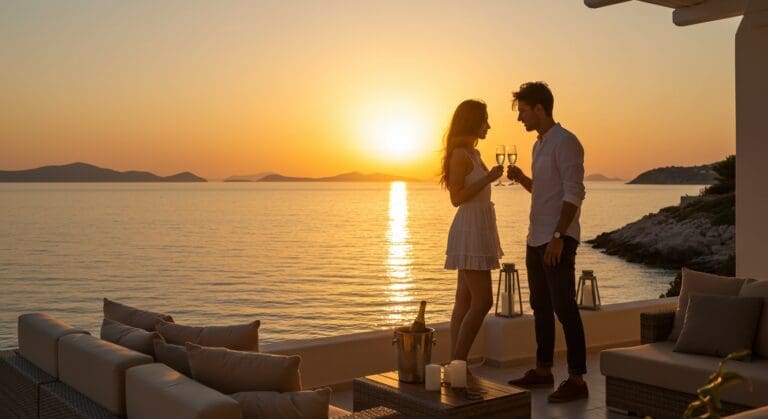
This is not, to be clear, a destination for people who came to Ibiza specifically for the clubs. Those people will find Santa Eulària pleasant but may grow restless by Tuesday. Everyone else – and this is quite a large group – will find it close to ideal. Families who want privacy, space, and a private pool without the chaos of high-season Playa d’en Bossa will feel immediately at home here. Couples on milestone trips – anniversaries, honeymoons, the kind of holiday that needs to live up to the occasion – will find the combination of fine dining, beautiful landscapes, and unhurried pace genuinely romantic rather than performatively so. Groups of friends who want something more interesting than a resort complex but don’t need to be in a queue at 2am will appreciate the easy sociability of the marina and the quality of the restaurants. And then there are the remote workers – a growing contingent – who have discovered that a luxury villa in the Ibizan countryside, with reliable connectivity and a pool to think beside, makes London or New York feel very far away in the best possible way. Wellness-focused guests, meanwhile, have been quietly decamping here for years, drawn by the hiking trails, the yoga retreats, and the particular quality of doing very little in very warm sunshine.
Getting to Santa Eulària des Riu: Easier Than You’d Think, Better Than You’d Expect
Ibiza Airport – formally Aeropuerto de Ibiza, though almost nobody calls it that – sits about 25 kilometres from Santa Eulària des Riu, and the transfer is straightforward enough that it will not eat meaningfully into your holiday. By taxi it takes around 25 to 35 minutes depending on traffic, which in July and August can add a certain meditative quality to the journey. Pre-booked private transfers are the sensible choice for families travelling with luggage and children, or for anyone arriving at a villa with a specific check-in window. Several quality operators offer this service, and it’s worth arranging before you land rather than discovering, at the taxi rank, that half of Europe has had the same idea.
Flights from the United Kingdom take roughly two to two and a half hours from most major airports, with direct routes operating from London, Manchester, Birmingham, and Edinburgh throughout the summer season, and some services continuing into October. From mainland Spain, Barcelona and Valencia offer short connections, and ferry services from both cities are available for those who find sea crossings romantic rather than inconvenient.
Once you’re in Santa Eulària, the town itself is easily navigable on foot. The promenade, the marina, the main restaurant strip, and the market area are all within comfortable walking distance of each other. For the wider municipality – which includes beautiful villages like Sant Carles de Peralta and Santa Gertrudis, as well as scattered rural fincas – a hire car is genuinely useful. The roads are good, the signage is reasonable, and driving through the Ibizan countryside in the late afternoon light is, frankly, one of the better free activities on offer.
Where to Eat in Santa Eulària des Riu: A Scene That Has No Right to Be This Good
Fine Dining
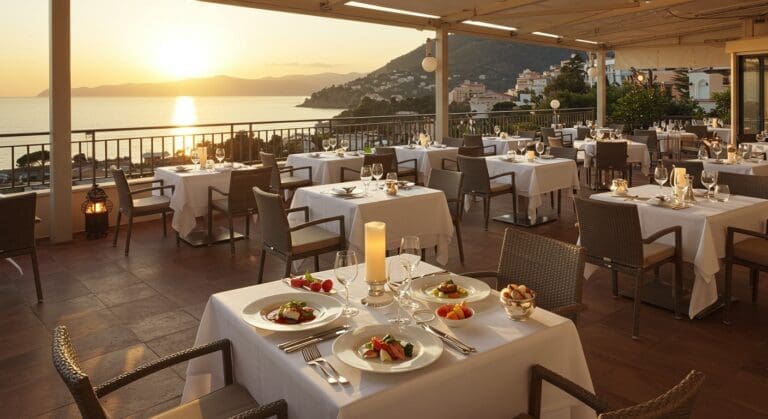
The headline act, and rightly so, is Sa Talassa at the Insotel Fenicia Prestige Suites & Spa. Chef Álvaro Sanz holds a Michelin star – the first chef on the island to achieve that distinction – alongside a Michelin Green Star for sustainability and two Repsol suns, which is a combination that ought to make reservations feel urgent. The cooking is rooted in the Mediterranean but the execution is precise, creative, and clearly in conversation with something beyond the merely competent. Reviewers have described the food as “absolutely amazing” (we’ve banned that word, but we’ll allow it when it’s a direct quote) and the service as warm and genuinely attentive – two things that don’t always coexist at restaurants with this level of recognition. The setting, within the hotel’s elegant surroundings, adds to the sense of occasion without tipping into formality. Book well ahead in summer. This is not the kind of restaurant you walk past and decide to try on impulse.
For a different register of fine dining, Origens at the ME Ibiza hotel in S’Argamassa brings a confident bohemian sensibility to Mediterranean cuisine. The sea views from the terrace set an appropriately generous backdrop, and the kitchen works with fresh, seasonal, organic ingredients to produce dishes that feel considered rather than fussy. It holds a 9.5 out of 10 on TheFork and is consistently ranked among the area’s most popular restaurants – a rating that reflects not just quality but consistency, which is often the harder achievement. It works beautifully for a long, unhurried lunch, particularly if you’re the kind of person who can spend forty minutes debating whether to have a second glass of wine. (The answer, here, is yes.)
Where the Locals Eat
The marina at Santa Eulalia is the natural gathering point for the town’s evening ritual, and it’s here that Jatayu Indian Experience occupies a position that is both surprising and, once you’ve been, entirely logical. The restaurant is the passion project of Anuj, a native of New Delhi who spent twenty years in the United Kingdom before choosing Ibiza to open a restaurant dedicated to Indian food done properly. That means no pre-made sauces, no approximations, no compromises in the direction of perceived European taste. Just painstakingly recreated classics, served by bilingual staff who know what they’re talking about, in an elegant space overlooking the water. The TheFork rating of 9.5 is well earned. It is also, for those who enjoy a mild irony, one of the best Indian restaurants in Europe – and it’s in Ibiza.
Beyond the marina, the town’s central streets have a good range of relaxed restaurants, tapas bars, and beach clubs where the emphasis is on fresh fish, grilled vegetables, and the kind of simplicity that only works when the ingredients are excellent. The beach clubs along the promenade are particularly good for a long midday meal – the kind that starts with water and ends with local hierbas ibicencas, the island’s herbal liqueur, which tastes like something your grandmother would have used medicinally but which is, in fact, quite pleasant.
Hidden Gems Worth Seeking Out
Can Curreu Restaurant, located up in the hills behind the famous Las Dalias market near Sant Carles, is one of those places that rewards a hire car and a slightly adventurous attitude to dinner planning. The restaurant sits within an agrotourism hotel that grows its own vegetables – a fact that matters because you can taste it. The setting is a beautifully restored traditional Ibizan farmhouse, a “casa payesa”, surrounded by lemon, olive, and orange trees, with a sense of unhurried civility that feels very far from the island’s louder reputation. The service is charming and genuinely warm. It is, by almost any measure, an ideal venue for a romantic dinner – though it’s equally good for a table of friends who want to eat well, drink generously, and feel like they’ve discovered something the guidebooks don’t always mention. (They do. We’re mentioning it now.)
The Lay of the Land: Understanding Santa Eulària’s Quietly Varied Landscape
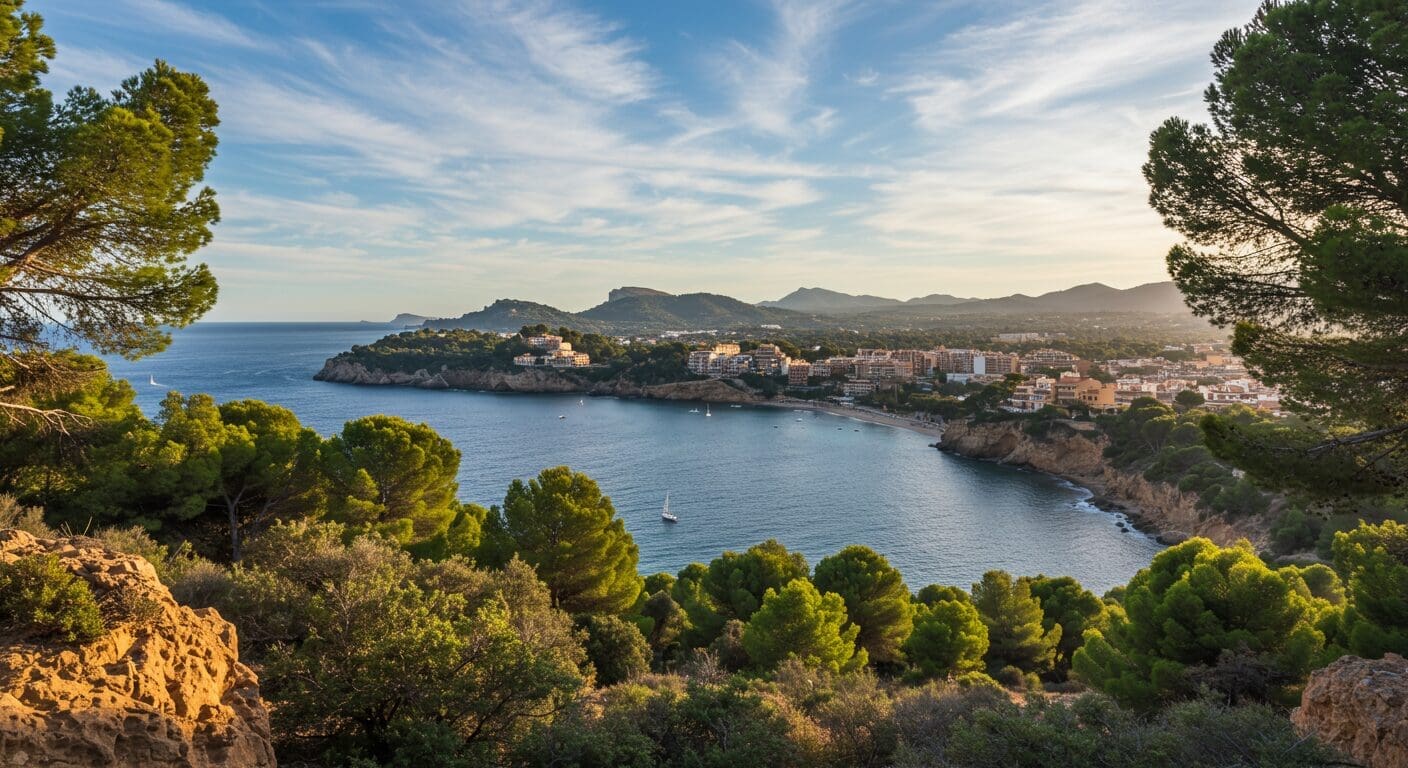
Santa Eulària des Riu is not a single place so much as a municipality with excellent range. The town itself sits on the eastern coast, its waterfront promenade curving in a gentle arc beside a marina that manages to be lively without being overwhelming. Behind it, low hills rise through pine forests and almond orchards, and the landscape quickly becomes the kind of rural Ibiza that visitors who’ve only seen the island from a sun lounger didn’t know existed.
Drive north from the town and you’ll pass through Sant Carles de Peralta, a small, genuinely pretty village that serves as something of a cultural fulcrum for the area. It has a beautiful whitewashed church, a legendary hippie market, and the kind of café culture that invites lingering. Further north, the landscape becomes wilder, with dramatic cliffs and quieter coves that feel considerably further from civilisation than they actually are.
To the west, Santa Gertrudis de Fruitera – technically in the municipality of Sant Josep, but close enough to merit the detour – has evolved into one of the island’s most charming villages, with art galleries, good restaurants, and a village square that is precisely as lovely as the photographs suggest. The road between Santa Eulària and Santa Gertrudis passes through some of the island’s most characteristic countryside: red earth, dry-stone walls, ancient olive trees, and the occasional goat regarding you with complete indifference from a roadside.
The coastline within the municipality offers a number of beaches of varied character. Cala Martina, Cala Llenya, and Cala Nova each have their own personality – the former relaxed and family-friendly, the latter popular with younger visitors and those drawn to the beach clubs that operate there in summer. Es Canar and S’Argamassa provide more amenities and slightly more animation. None of them are secret, exactly, but several require enough local knowledge to reach that they remain, in high season, agreeably uncrowded.
Things to Do in Santa Eulària des Riu: More Than You’d Reasonably Need
The most important thing to say about activities in Santa Eulària is that the place has a quiet genius for making you feel that not doing very much is, in fact, doing quite a lot. A morning walk along the Passeig de s’Alamera, the town’s tree-lined promenade, followed by coffee at a terrace table watching the boats move gently in the marina, is an entirely legitimate way to spend several hours. This should be acknowledged before listing everything else.
The Puig de Missa, the small hill that rises above the town and is crowned with a whitewashed hilltop church, is the single most rewarding short walk in the area. The church dates to the sixteenth century and the views from the top – across the town, the marina, and the sea beyond – are the kind that inspire both photography and a certain quiet satisfaction. The Ethnological Museum of Ibiza is housed in a traditional farmhouse on the same hill and provides an absorbing introduction to the island’s domestic history, which turns out to be considerably more interesting than the phrase “domestic history” implies.
The Las Dalias Hippy Market, held every Saturday in Sant Carles, is one of the island’s great institutions. It has been operating since 1954 in various forms and has evolved into a genuinely enjoyable market with jewellery, textiles, art, and the kind of artisan food stalls that make an afternoon of it very easy indeed. There is also a night market during the summer months, which operates on Monday and Tuesday evenings and has a rather different, more atmospheric character.
Day trips to Ibiza Town – Es Vedrà – the extraordinary rock formation that rises from the sea near Sant Josep – and the northern tip of the island around Portinatx and Sant Joan de Labritja are all accessible and worthwhile. Boat trips along the coast, available from the marina, provide a different perspective on an island that really does look its best from the water.
Adventure and Active Pursuits: The Other Side of a Very Blue Sea
The waters around Santa Eulària are clear, warm, and significantly underappreciated as a diving destination. The area has several dive sites of genuine quality, including underwater rock formations, sea caves, and the kind of marine life – octopus, moray eels, sea bream, the occasional eagle ray – that makes an unhurried dive feel like a proper wildlife encounter. Multiple dive schools and operators in the area cater to all experience levels, from complete beginners to those seeking PADI certification or more advanced guided dives.
Snorkelling from the coves north and south of the town is excellent, particularly at Cala Llenya and the smaller, less visited inlets accessible by kayak. Kayak and stand-up paddleboard rental is widely available, and paddling along the coast on a calm morning – before the sun has fully committed to its day’s work – is one of those experiences that tends to produce rather good memories.
Sailing is taken seriously here. The Club Náutico Santa Eulalia has a full programme of racing and cruising activities, and charter sailing from the marina – anything from a half-day trip on a skippered catamaran to a week-long itinerary around the Balearics – is available and popular. The crossing to Formentera, Ibiza’s smaller, quieter neighbour, takes roughly an hour by fast boat and is entirely worth the effort for a day trip, though anyone who arrives and immediately starts planning to come back for longer is behaving completely rationally.
On land, the network of cycling and hiking trails across the municipality is extensive and increasingly well-signed. The route to the lighthouse at Far de ses Coves Blanques, or the longer loop through the interior via Sant Carles and back through pine forest, offer proper exercise alongside the kind of scenery that makes the effort feel disproportionately rewarded. Mountain bikes can be hired in the town, and several operators offer guided cycling tours that take care of the route-planning and the inevitable question of where to stop for lunch.
Santa Eulària des Riu with Children: Where Family Holidays Actually Work
If there is a case to be made for Santa Eulària des Riu as one of the best family destinations in the Balearics, it begins with the beaches and ends with the private villa pool. In between, there is rather a lot to recommend it. The town’s beaches are calm and shallow-shelving, the promenade is flat and buggy-friendly, and the general atmosphere is one of relaxed tolerance towards small people who occasionally make noise. Nobody is going to regard a child ordering ice cream at a marina café as an intrusion.
The beaches at Es Canar and Santa Eulalia town itself offer pedal boats, kayaks, and gentle water sports that work well for younger children, while Cala Llenya and Cala Martina have the kind of clear, protected water that parents find deeply reassuring and children find endlessly entertaining. The Hippy Market at Las Dalias on a Saturday morning is a genuine family experience – colourful, engaging, and with enough food stalls to manage even the most particular of junior critics.
What elevates the family holiday here, though, is the private villa. The ability to keep children’s routines intact, to have a private pool that is available at 7am or 9pm rather than operating on hotel hours, to prepare meals on the days when nobody wants to be in a restaurant, and to give everyone – adults included – the space that prevents the particular brand of low-level collective irritability that hotels sometimes produce: these are not small things. They are, for many families, the difference between a good holiday and a genuinely great one.
Culture, History, and the Ibiza That Predates the Superclubs
Ibiza’s history is considerably longer and more layered than its modern reputation suggests, and Santa Eulària des Riu is one of the better places on the island to encounter it. The Puig de Missa church, sitting on its small fortified hill above the town, dates to the sixteenth century and reflects the island’s long history of coastal defence against Ottoman and Moorish raids – a context that gives the fortified churches scattered across rural Ibiza a rather more interesting meaning than simple architectural curiosity.
The Ethnological Museum at the church complex has a genuinely absorbing collection of traditional Ibizan objects: agricultural tools, period dress, domestic artefacts, and exhibits that trace the island’s cultural identity through the Phoenician, Roman, Moorish, and Spanish periods. It is the kind of museum that takes two hours and leaves you feeling that you understand a place considerably better than you did before, which is quite a high standard for any museum to meet.
The river for which the town is named – the riu, the only river in the Balearics – runs through the centre of town and has a quiet significance in the local landscape. The Roman bridge nearby, and the remnants of earlier settlement in the area, speak to a continuity of habitation that stretches back well beyond the island’s current associations. The hippie culture that arrived in the 1960s and 1970s – and which gave rise to the markets, the artisan community, and a certain philosophical openness that persists – is itself a layer of history now, and the area around Sant Carles and the Las Dalias market is its most visible living expression.
The church at Sant Carles de Peralta, like most of Ibiza’s rural churches, operates as a focal point for the village and the surrounding farmland, and the rhythms of local life – the Sunday paseo, the market day, the quiet afternoons – give the area a cultural texture that repays slow observation.
Shopping in Santa Eulària des Riu: Markets, Boutiques, and Things Worth Carrying Home
The Las Dalias Saturday Market is the undisputed centrepiece of shopping in the Santa Eulària area, and it earns its reputation. The market was founded in 1954 and has evolved through several distinct phases – from agricultural market to hippie gathering point to the large, well-organised artisan market it is today – without entirely losing the spirit of any of them. The jewellery stalls are particularly good, with many pieces made by local artisans working in silver, leather, and semi-precious stones. Textiles, ceramics, Ibizan adlib fashion, and hand-crafted accessories fill the rest of the stalls, and the food court area has enough variety to make a full afternoon of it.
The town itself has a good concentration of boutiques along and around the Carrer Sant Vicent and the marina area. The Ibizan adlib fashion movement – loose, white, and unmistakably Mediterranean – has its spiritual home on this island, and several boutiques in Santa Eulària carry pieces by local designers that are considerably more wearable than the phrase “festival fashion” might imply. They also travel well, which is a practical consideration that tends to matter more on the return journey than the outward one.
Local food products make genuinely good gifts and are widely available in delis and specialist shops: hierbas ibicencas (the local herbal liqueur), flor de sal from the Ses Salines salt flats, almonds, figs, and locally produced honey. The market at Es Canar, held every Wednesday during the summer, is smaller than Las Dalias but has a loyal following and a particularly good selection of artisan food products.
Practical Things Worth Knowing Before You Go
The currency is the euro. The language is officially Catalan (specifically the Ibizan dialect) and Spanish, with English spoken widely throughout the tourist areas – this is an island that has been receiving international visitors for decades and has adjusted accordingly. French, German, and Italian are also common in the busier months. Making some effort with Spanish basics is appreciated, though not strictly necessary for navigating the town.
Tipping is customary but not compulsory. A rounding-up of the bill or around ten percent in restaurants is the general norm; taxi drivers appreciate a small addition to the fare. No one will be offended if you don’t tip, and no one will be surprised if you do.
The best time to visit depends entirely on what you want from the trip. July and August are the peak months: warm (consistently above 30°C), busy, with the full programme of markets, beach clubs, and events in operation. June and September are widely considered the optimal compromise – warm enough for swimming, busy enough for atmosphere, but noticeably quieter and, in the case of September, when the sea has had all summer to warm up, excellent for water sports. May and October are the shoulder-season sweet spots for those who prioritise tranquillity and value: the restaurants and beaches are open, the prices are lower, and the island has a different, more contemplative quality.
The sun is strong. This seems obvious but bears mentioning because a remarkable number of otherwise sensible people discover it empirically rather than theoretically on their first afternoon. Factor 30 as a starting point, and more if you’re fair-skinned or spending extended time on the water. The evenings, even in August, can carry a light breeze off the sea that makes outdoor dining genuinely pleasant rather than merely endurable.
Healthcare on the island is accessible, with a hospital in Ibiza Town and a local health centre in Santa Eulària. European visitors should carry their EHIC or GHIC cards for reciprocal healthcare access; those travelling from outside the EU should ensure their travel insurance covers medical expenses.
Why a Luxury Villa in Santa Eulària des Riu Is, in the End, Simply the Better Choice
There is a version of Ibiza that can be had in a hotel – and several of the island’s hotels are genuinely excellent. But Santa Eulària des Riu, in particular, is a destination that reveals itself most fully to those who have the space and privacy of a private villa. It is not a town you want to be rushed through on a hotel breakfast schedule; it is a place you want to inhabit, slowly, over the course of a week or two.
The private villa model suits Santa Eulària in several specific ways. The municipality is spread across a beautiful, varied landscape – rural fincas, coastal villas, hillside retreats – and a villa gives you a base within that landscape rather than in the centre of town, which means waking up to pine trees and bougainvillea rather than the mild hum of a hotel corridor. The private pool is not a luxury in the marketing-copy sense; in an Ibizan summer, it is a functional necessity that allows you to swim at 7am before the world wakes up, or at midnight under the stars, without reference to opening hours or the question of whether there are any sunloungers left.
For families, the advantages are structural: the kitchen for early breakfasts, the outdoor space for children to range freely, the evening flexibility that means parents can eat well on the terrace after children are asleep rather than reorganising the entire day around restaurant booking times. For groups of friends, the shared living spaces – the long dining table, the poolside terrace, the kitchen where someone always ends up cooking something far better than they intended – provide the kind of collective experience that a hotel corridor simply cannot replicate.
For couples, the privacy is the point. Seclusion and intimacy are not incidental benefits of a luxury villa in Santa Eulària des Riu; they are the central proposition. A villa with a private pool, a terrace view across the Ibizan countryside, and a kitchen stocked before arrival is, on a milestone trip, simply the right setting.
Remote workers have discovered that many of the area’s villas now offer high-speed connectivity, in some cases via Starlink, which means the combination of excellent internet, a comfortable indoor workspace, and a pool to think beside is genuinely available rather than aspirationally approximate. A day that begins with a swim, moves through four hours of focused work, and ends with a long dinner at Can Curreu is not a bad template for a working week.
Wellness-focused guests will find that the villa model supports the kind of programme – early morning yoga on a terrace, cold swimming, long walks, good food, early nights – that hotel timetables tend to complicate. Several villas in the area come with outdoor gyms, infrared saunas, and dedicated wellness spaces; others can arrange in-villa therapists, yoga instructors, and nutritional catering as part of a concierge package.
Excellence Luxury Villas offers an extensive portfolio of luxury villas in Santa Eulària des Riu with private pool, ranging from intimate two-bedroom retreats to substantial multi-generational properties sleeping twelve or more. Each is selected for quality, location, and the specific advantages that make a private villa the right way to experience this particular corner of Ibiza.
More Santa Eulària des Riu Travel Guides
- Best Restaurants in Santa Eulària des Riu: Fine Dining, Local Gems & Where to Eat
- Santa Eulària des Riu Food & Wine Guide: Local Cuisine, Markets & Wine Estates
- Santa Eulària des Riu with Kids: The Ultimate Family Holiday Guide
- Best Time to Visit Santa Eulària des Riu: Month by Month Weather, Crowds & Tips
- Santa Eulària des Riu Luxury Itinerary: The Perfect 7-Day Guide
- Romantic Santa Eulària des Riu: The Ultimate Couples & Honeymoon Guide
What is the best time to visit Santa Eulària des Riu?
June and September are the sweet spots for most visitors – warm enough for swimming and outdoor dining, with the full complement of restaurants and markets open, but noticeably quieter and better value than the peak of July and August. July and August bring the full high-season programme – all markets, beach clubs, and events in operation – but also the highest prices and the busiest beaches. May and October suit those who prioritise calm and value above all else; the sea is cooler but the landscape is beautiful, and many restaurants and villas are available at significantly reduced rates.
How do I get to Santa Eulària des Riu?
The nearest airport is Ibiza Airport (IBZ), approximately 25 kilometres from Santa Eulària des Riu – around 25 to 35 minutes by taxi or private transfer. Direct flights operate from across the United Kingdom (London, Manchester, Birmingham, Edinburgh) and much of Europe throughout the summer season, with some routes extending into October. From mainland Spain, direct flights from Barcelona and Valencia are short and frequent. Ferry services from Barcelona and Valencia to Ibiza port are also available for those who prefer to combine the journey with a sea crossing. Pre-booked private transfers from the airport are recommended for families and groups travelling with luggage.
Is Santa Eulària des Riu good for families?
It is one of the best family destinations in the Balearics. The town’s beaches are calm and shallow, the promenade is easy to navigate with children, and the general atmosphere is relaxed and welcoming. The beaches at Es Canar and Santa Eulalia town offer gentle water sports and activities suited to younger children, while the Saturday market at Las Dalias is a genuinely engaging family outing. The private villa option – with a pool, outdoor space, and kitchen – is particularly well suited to families who want flexibility and privacy rather than the constraints of hotel schedules.
Why rent a luxury villa in Santa Eulària des Riu?
A private luxury villa gives you something a hotel cannot: space, privacy, and the freedom to inhabit a place on your own terms. In Santa Eulària des Riu specifically, a villa situates you within the island’s beautiful landscape – countryside, coastline, pine forest – rather than simply in the centre of town. The private pool means swimming at any hour without reference to hotel schedules. The kitchen and outdoor terrace create the conditions for the kind of long, unhurried meals and mornings that are the real point of a holiday. For families, the space and flexibility are transformative; for couples, the privacy is the whole proposal; for groups, the shared living spaces create experiences that hotels simply don’t offer. Concierge services, private chefs, and pre-arrival stocking are all available through Excellence Luxury Villas.
Are there private villas in Santa Eulària des Riu suitable for large groups or multi-generational families?
Yes – the Excellence Luxury Villas portfolio in the Santa Eulària des Riu area includes properties ranging from two-bedroom retreats to large villas sleeping twelve or more guests. Many of the larger properties feature multiple bedroom wings or separate guest annexes, which provide the privacy that multi-generational groups (grandparents, parents, children) tend to require alongside shared spaces for collective meals and evenings. Private pools, outdoor dining areas, and generous living spaces are standard in the premium category. Villa concierge services can arrange private chefs, childcare, airport transfers, and in-villa catering to support large-group stays.
Can I find a luxury villa in Santa Eulària des Riu with good internet for remote working?
Increasingly, yes. Many luxury villas in the Santa Eulària des Riu area now offer high-speed fibre broadband, and a growing number have Starlink satellite connectivity, which provides reliable, fast internet regardless of location – including more rural and hillside properties where traditional connectivity has historically been variable. When booking through Excellence Luxury Villas, connectivity requirements can be confirmed in advance. Many villas also have dedicated indoor workspace areas, which combined with a private pool and the general quality of the Ibizan working environment, make the prospect of a working holiday here considerably more attractive than it might sound in theory.
What makes Santa Eulària des Riu a good destination for a wellness retreat?
The combination of landscape, pace, and climate creates a naturally restorative environment. Hiking and cycling trails through the rural interior, clear warm water for swimming and paddleboarding, and a food culture rooted in fresh Mediterranean produce all support a wellness-oriented stay without requiring any particular effort. Several luxury villas in the area come with outdoor gyms, infrared saunas, cold plunge pools, and dedicated wellness spaces; others can arrange in-villa yoga instructors, massage therapists, and nutrition-focused catering through concierge services. The general pace of life in Santa Eulària –