Best Time to Visit Apulia: Month by Month Weather, Crowds & Tips
Best Time to Visit Apulia: Month by Month Weather, Crowds & Tips
Here is a mild confession: August is probably the worst month to visit Apulia. There. Said it. For a destination that practically runs on summer tourism – the trulli, the coastline, the long lunches under olive trees – this might seem like heresy. But the heel of Italy in the height of summer is a study in beautiful chaos: baking heat, gridlocked coast roads, beaches that look less like the Adriatic and more like a demonstration of how many people can occupy one square metre without incident. Which is all perfectly survivable, of course. Just go in knowing what you’re walking into. Because the good news – and there is a great deal of good news here – is that Apulia rewards those willing to think even slightly outside the peak-season playbook.
Spring in Apulia: March, April & May
If Apulia has a secret season, this is it. From March onwards, the landscape goes quietly extraordinary. The almond trees flower first, followed by the wildflowers that carpet the inland plateau of the Murgia – carpets of red poppies and yellow broom rolling out across a landscape that looks, on a good day, like someone turned up the saturation on the whole world. Temperatures are gentle, ranging from around 14°C in March to a very agreeable 22-24°C by late May. Rain is possible but rarely ruinous – mostly short showers that clear by afternoon.
Crowds are genuinely thin in March and April. Alberobello, which in August has the energy of a theme park, in April has the energy of an actual village. You can walk the trulli district at your own pace, have a pastry, and not accidentally be in someone’s holiday photograph. Easter is the notable exception – Apulian Holy Week celebrations are deeply rooted and draw visitors from across the country, particularly in Taranto, where the Good Friday processions are among the most atmospheric in southern Italy. Book ahead for that specific window.
May is perhaps the ideal month for couples and for anyone who values eating outdoors without sweating through their linen. Restaurant terraces are open, the masserie are operating at full swing without the premium August pricing, and the sea – though not quite swimmable for everyone – is beginning to warm up. Families with older children do well here too. Beach infrastructure isn’t fully open in early spring, but by late May the lidos are dusting off their sunbeds and the mood is distinctly optimistic.
Summer in Apulia: June, July & August
The full picture, honestly. June is excellent – warm enough for swimming, the coast is alive and buzzing, and the crowds haven’t yet reached peak intensity. Temperatures hover around 28-30°C, the evenings are long and golden, and the social atmosphere in towns like Polignano a Mare and Ostuni reaches a particular pitch of animated Italian life that is quite irresistible. If you are going to visit in summer, June is the sweet spot.
July turns up the heat in every sense. Temperatures regularly climb to 34-36°C inland, the coast gets busy, and prices for villas and hotels reflect the demand. That said, the evening passeggiata culture comes into its own – Apulians are expert at making the best use of the cooler hours, and dining at 9pm under the stars in a whitewashed piazza with a glass of Primitivo is not something you should pass up on ideological grounds.
August is the month of Ferragosto, the Italian summer exodus that sees the whole country descend on the coast simultaneously. Apulia is a major beneficiary of this migration, and towns like Otranto and Gallipoli become genuinely packed. Prices peak. Beaches fill by 10am. Road traffic on the coastal routes can test even the most serene traveller’s patience. None of this makes it impossible – just loud, full, and expensive. Groups of friends who want the full Italian summer party atmosphere? August delivers. Those seeking contemplative wandering through silent baroque towns? Perhaps recalibrate.
Summer is also festival season. The Festival della Valle d’Itria in Martina Franca brings opera and classical music to a genuinely beautiful setting in late July and August – one of those events that manages to feel both serious and gloriously convivial at once. Coastal towns host evening markets, music events, and the sort of spontaneous street entertainment that only happens when warm weather and idle evenings coincide.
Autumn in Apulia: September, October & November
September is, by a significant margin, the most underrated month to visit Apulia. The summer crowds begin to thin from the second week onwards, but the weather remains reliably warm – typically 26-29°C in early September, easing to a still-comfortable 22°C by early October. The sea stays swimmable well into October, having spent three months accumulating heat. Prices drop from their August highs noticeably.
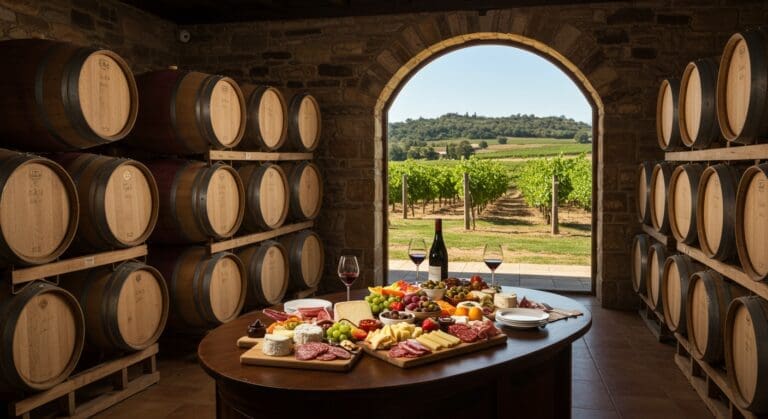
The other reason September matters: the harvest. Apulia is the largest wine-producing region in Italy by volume – a fact people often find surprising, having assumed it was somewhere more photogenic. The grape harvest in September fills the masseria estates with an industrious, celebratory atmosphere, and the olive harvest follows in October and November, the landscape transformed by the sight of nets spread beneath silver-grey trees. If the rhythm of the agricultural year appeals to you even slightly, autumn makes it tangible rather than merely aesthetic.
October is well suited to walkers, cyclists, and those visiting for food and culture rather than beach time. The Sassi of Matera (a very short drive across the border into Basilicata, and absolutely worth the detour) are far easier to appreciate without competing with tour groups for sightlines. November sees most beach infrastructure close and some coastal restaurants move to winter hours or shut entirely – but the inland towns continue to function with their usual rhythm, and you’ll find a warmth of welcome in quieter trattorias that the summer season, frankly, doesn’t always allow.
Winter in Apulia: December, January & February
Apulia does not do harsh winters in any northern European sense. December temperatures hover around 12-14°C during the day, which is perfectly manageable with a good coat and the sort of moral fortitude that sees you order a hot chocolate somewhere warm when needed. January and February can bring rain and occasional cold snaps, but the light has a particular quality in winter – clear, low, golden in the afternoons – that photographers and those who’ve spent time here will recognise immediately.
The honest reality is that a significant portion of the tourist infrastructure does close or reduce hours in the depths of winter. Coastal areas especially become quiet to the point of emptiness. But Lecce – the baroque city that repays any visit regardless of season – keeps its cafés, churches, and culture operating year-round. Bari, the regional capital, has a proper metropolitan life that doesn’t depend on tourism to function. And the Christmas markets and nativity scenes (the presepe tradition is taken seriously here) give December a warmth and local character that the summer season, for all its charms, doesn’t quite replicate.
Winter is ideal for those who want Apulia on their own terms – the architecture without the queue, the food without the markup, the landscape without another rental car tailgating them down a country lane. It is also, in practical terms, significantly cheaper. Couples and slow travellers willing to embrace the quieter rhythms will find this version of Apulia quietly compelling.
A Practical Summary: Who Should Go When
For families with young children, June and early July offer the best combination of reliable heat, open beaches, and operational infrastructure without the full intensity of August. September is also excellent once school summer holidays end in other countries, which can ease the crowds meaningfully. For couples, May and September are the months that seem almost tailor-made – warm enough, beautiful, and with a pace of life that allows actual conversation rather than navigation. For groups of friends who want the full summer experience – the noise, the heat, the long nights – July and August deliver exactly what they promise. Just book well in advance and accept that there will be traffic.
The shoulder seasons deserve more credit than they typically receive. The difference in price between August and September for a luxury villa in the Itria Valley can be substantial. The weather gap, by contrast, is minimal. That calculation is worth making.
For a deeper overview of the region – the towns, the food, the things that make Apulia worth the journey in any month – the Apulia Travel Guide covers the full picture.
Whenever you decide to visit, the quality of where you stay makes a significant difference to what the experience actually feels like. Browse our collection of luxury villas in Apulia – from masserie surrounded by olive groves to contemporary retreats on the Adriatic coast – and find something that suits not just your budget but your particular version of this place.
What is the best month to visit Apulia for good weather without the crowds?
September is the standout choice for most travellers. Temperatures remain warm – typically between 22°C and 28°C – the sea is swimmable after a full summer of heating up, and the August crowds have thinned considerably. Prices for villas and accommodation also drop from their summer peak, making it genuinely better value. Late May runs it close, particularly for those happy to delay swimming until the sea warms a little more.
Is Apulia worth visiting in winter?
Yes, with the right expectations. Apulia’s winters are mild by most standards, and cities like Lecce and Bari remain fully alive year-round. Much of the coastal tourist infrastructure closes from November onwards, but the inland towns, baroque architecture, food culture, and quieter pace of life make a winter visit genuinely rewarding. Prices are at their lowest, and you’ll experience the region in a more local, unhurried way than the summer season allows.
When is Apulia most expensive to visit?
August is consistently the most expensive month, driven by Italian Ferragosto holidays and the peak of international summer tourism. Prices for villas, masserie, and hotels can be significantly higher than in June or September, and availability in popular areas like the Itria Valley and the Salento coast goes fast. Booking three to six months ahead for an August stay is not excessive – it is simply necessary.