Athens Travel Guide: Where to Stay, Eat & Explore in Luxury
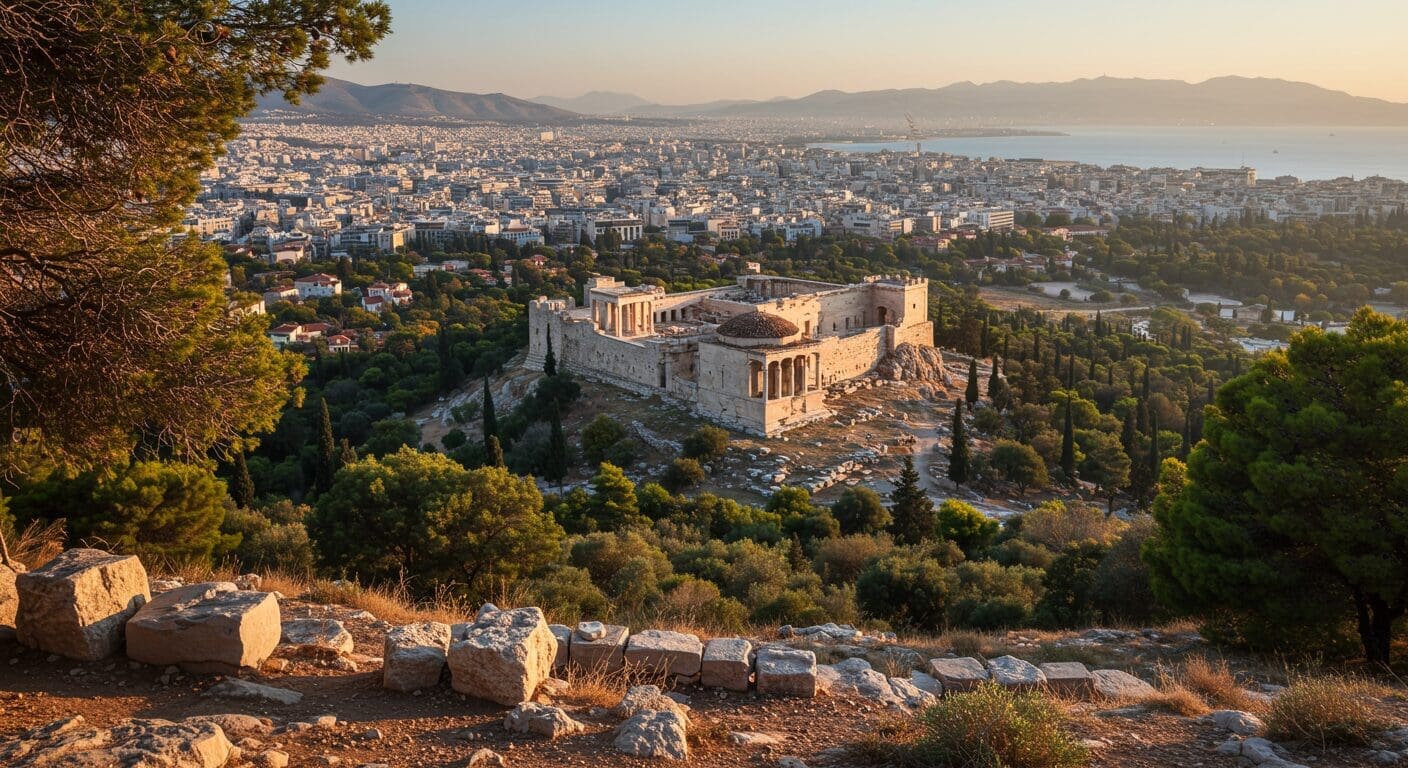
Six in the morning, and the Acropolis is doing something the postcards never quite capture. The light arrives sideways, the way it only does in early summer in the eastern Mediterranean, turning the Parthenon’s marble from white to the colour of warm honey. Below, the city is mostly asleep. A man is opening a kafeneion on a corner in Monastiraki, stacking chairs with practiced economy, and somewhere up the hill a cat – Athens has approximately one cat per resident, which is not a complaint – is watching the whole thing with the detached authority of someone who was here long before the tourists. This is the Athens that rewards the early riser, the one who chose a villa with a rooftop terrace and had the foresight to set an alarm.
Athens is one of those rare cities that works brilliantly for almost everyone – provided you come with curiosity rather than a checklist. Couples celebrating a milestone anniversary find it effortlessly romantic without being saccharine about it; the city is too old and too knowing for that. Families with older children who have outgrown water parks but aren’t quite ready for wine tours discover something here that no classroom has managed: history made genuinely, visibly alive. Groups of friends who want a base with culture by day and excellent restaurants by night will find Athens absurdly obliging. Remote workers – and Athens has quietly become one of Europe‘s more civilised places to work from anywhere – appreciate the reliable connectivity, the manageable time zones, and the particular pleasure of closing a laptop at noon and walking to a site that was ancient when Rome was young. Wellness-focused travellers, meanwhile, come for the light, the olive oil, the unhurried pace of an afternoon, and leave having done more walking than they’d planned and feeling considerably better than they deserve.
Athens Is Closer Than You Think – and Easier to Get To
Athens Eleftherios Venizelos International Airport – known to everyone as ATH – sits about 35 kilometres east of the city centre, and it is, by the standards of major European hubs, a genuinely pleasant airport to pass through. Direct flights connect Athens to most major cities across Europe, the Middle East, and North America, with United States travellers typically routing through major East Coast hubs. From London, it’s roughly three and a half hours – shorter than the drive from the United Kingdom‘s northern cities to Heathrow, which is either reassuring or maddening, depending on where you live.
From the airport, the Metro line 3 runs directly to Syntagma Square in around 40 minutes and costs a handful of euros – commendably efficient, though if you’re arriving with luggage, children, or the vague feeling that you’re on holiday now and shouldn’t be consulting transport apps, a private transfer is the sensible choice. Taxis from the official rank are metered and regulated; the flat rate to the city centre is fixed (currently around €38 during the day, slightly more at night), which removes the anxious mental arithmetic that accompanies taxi journeys in less organised cities.
Within Athens itself, the combination of Metro, tram, and one’s own feet covers most of what a luxury traveller needs. The city is more walkable than its reputation suggests – Monastiraki, Plaka, Syntagma, Kolonaki and the area around the Acropolis are all connected by streets that invite wandering. The Metro is clean, frequent, and genuinely useful, and many of the stations are minor archaeological exhibitions in their own right, having turned up ancient finds during construction. Taxis and ride-hailing apps are readily available for longer distances, and for day trips beyond the city, hiring a car or arranging a private driver opens up the coast road to Cape Sounion, the Saronic Gulf, and the wine regions of Attica.
Where to Eat in Athens: A City That Has Quietly Become One of Europe’s Great Food Destinations
Fine Dining
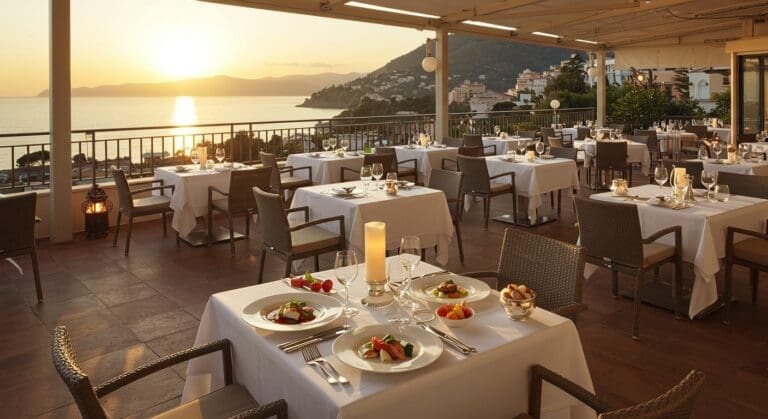
The Athens fine dining scene has arrived – decisively and without apology. The city now holds a respectable collection of Michelin stars and has developed a culinary identity that is distinctly its own: Greek ingredients and technique, elevated by precision and imagination, without the fussy deference to French classicism that once defined what “fine dining” meant in this part of the world.
CTC Urban Gastronomy in Metaxourgio is perhaps the most arresting example. Chef Alexandros Tsiotinis – Michelin-starred, and with the kind of focused intelligence that makes watching a kitchen feel like watching a laboratory – has created something genuinely unusual here. The restaurant occupies the courtyard of a neoclassical building, and the menu takes the form of “the Voyage”: an 11-course tasting experience whose contents you will not know until each dish arrives. This is either thrillingly spontaneous or mildly alarming, depending on your relationship with menus. Either way, the cooking – French technique applied to Greek seasonal produce – is worth every moment of culinary suspense.
Hytra, located in the heart of the city, is the other name that appears on every serious list. A Michelin star restaurant recognised in the FNL Best Restaurant Awards 2025 as a top-tier Greek Haute Cuisine destination, Hytra operates with a quiet confidence: locally sourced ingredients, imaginative combinations, a modern atmosphere that never tips into minimalist coldness. It is the kind of restaurant where you arrive for dinner and notice, two hours later, that the room has filled around you without you registering the moment it happened.
Cookoovaya – whose name means “owl” in Greek, and whose approach carries a certain owl-like wisdom – operates near the Hilton area in Ilisia and takes a different path: sharing plates, bold flavours, a menu that pushes Greek fine dining toward something more communal. Chef Periklis Koskinas’s grilled octopus with fava and the tarama with grilled phyllo have achieved a kind of quiet legend among people who know Athens well. A 2-star recipient in the FNL Best Restaurant Awards 2025, it is the sort of place that earns its reputation without needing to announce itself.
Where the Locals Eat
Away from the tasting menus, Athens offers the kind of casual eating that makes you genuinely regret that you only have one stomach. The city’s neighbourhood tavernas – particularly in areas like Koukaki, Pangrati and Exarcheia – operate on the logic that good ingredients, a wood grill, and a table outside in the evening air are all you really need. They are largely correct.
Nolan, in central Athens, is a Bib Gourmand restaurant that has become a touchstone for anyone interested in where the city’s cooking is going. The concept is simple in description and remarkable in execution: Greek and Japanese flavours merged into small dishes, served as soon as they’re ready rather than in a conventional sequence. The effect is more relaxed than that sounds – almost a counter-service energy, but the food is anything but casual. Lunch here is one of those unexpectedly memorable Athens experiences that people mention unprompted for months afterwards.
For the markets, the Central Market on Athinas Street – Varvakios Agora – is the kind of place where Athens feeds itself rather than performing for visitors, and is correspondingly chaotic, vivid, and worth an early morning hour of anyone’s time. The fish hall alone justifies the visit.
Hidden Gems Worth Seeking Out
Pharaoh, tucked into a backstreet in Exarcheia – a neighbourhood that rewards the slightly adventurous – is the kind of restaurant that becomes the story you tell when people ask about the trip. Chef Manolis Papoutsakis runs a Michelin Bib Gourmand kitchen from a room that looks like it was designed by someone who loved raw concrete, zinc bars, neon lights, and stacks of firewood equally and saw no reason to choose. The menu changes daily, is cooked entirely on wood ovens, and carries a distinctive spirit: modern Greek cooking that knows exactly where it came from and has absolutely no interest in being quaint about it. It opened to immediate acclaim and has maintained the kind of cult following that makes booking advisable.
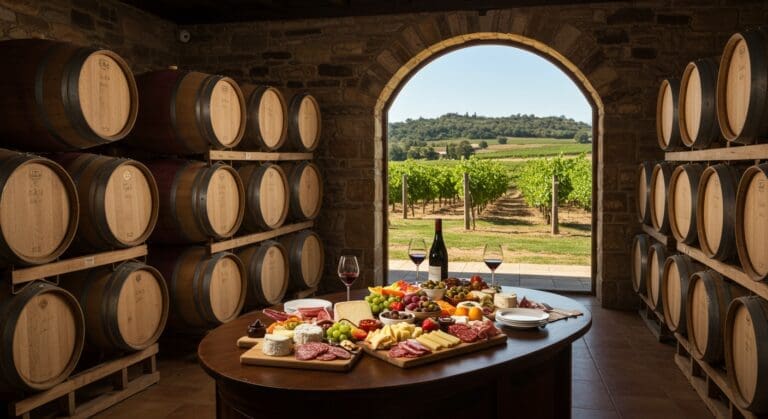
For wine, the natural wine bar scene in Koukaki and around Petralona has matured considerably – small neighbourhood bars with excellent lists weighted toward Greek producers, the kind of places where the owner will pour you a glass of something unusual from Nemea or Santorini and talk you through it for fifteen minutes without any of this feeling like a sales pitch.
The Lay of the Land: Athens and Its Neighbourhoods
Athens is not one city. It is about a dozen cities occupying the same geography, each with its own character, its own food, its own architectural personality. Understanding even the broad outlines of this geography transforms a visit from a series of sites into an actual experience of the place.
The Acropolis sits at the literal and figurative centre of everything, rising from the limestone rock of Attica with a theatrical confidence that 2,500 years have not diminished. Around it, the neighbourhoods radiate outward in concentric rings of history. Plaka, immediately below the rock, is the oldest continuously inhabited neighbourhood in Athens – pretty, ancient, and aware of its appeal in the way that very old beautiful things sometimes are. Monastiraki, to the north, is the city at its most market-driven and kinetic, a neighbourhood of street food, flea markets, Ottoman heritage, and the sort of pleasant chaos that makes walking feel like an event. Syntagma is administrative Athens, formal and wide-avenuéd, built around the parliament building with a certain Bavarian grandeur – the Greek state, in its nineteenth-century reinvention, hired a lot of Bavarian architects, which explains several things about the centre.
Kolonaki, climbing the lower slopes of Lycabettus Hill, is Athens as it wants to see itself: boutiques, gallery openings, expensive coffee, and a slightly self-congratulatory beauty that is, nonetheless, genuinely attractive. Koukaki and Petralona, south and west of the Acropolis respectively, are the neighbourhoods where Athenians who care about food and don’t care about being seen have been eating and drinking for the past decade – quieter, more residential, and full of the sort of places that look unpromising from the outside and extraordinary once you’re in. Exarcheia, further north, is politically charged and deliberately scruffy, and contains some of the most interesting eating in the city, Pharaoh being only the most celebrated example.
Beyond the city itself, Athens is the gateway to the Attica peninsula: the Saronic Gulf to the south with its chain of reachable islands, the pine-covered slopes of Mount Parnitha to the north, the wine country of the Marathon valley to the northeast, and the entire Peloponnese accessible by road across the Corinth Canal. Athens rewards those who treat it as a base as much as a destination.
What to Actually Do: Athens Beyond the Guidebook Highlights
Yes, you go to the Acropolis. Of course you do. Rising from the city on its fortified limestone plateau, the Parthenon is one of those structures that manages the rare trick of exceeding expectations even after decades of being described, photographed, and used as the default desktop wallpaper of classical civilisation. Go early – before 9am if you can – before the heat and the organised tour groups arrive in roughly equal measure. The site itself is vast enough that even at peak season you can find a quiet corner and a few minutes of something close to solitude, which is more than the experience of standing in the queue suggests.
The Acropolis Museum, at the foot of the rock, is among the best modern museum experiences in Europe. Opened in 2009 and designed by architect Bernard Tschumi with a glass floor through which you can see ongoing excavations, it houses the surviving sculptures from the Parthenon with a clarity and lighting that the British Museum – which holds the other half – has found difficult to match. It is worth going both before and after the hill itself, which sounds excessive until you do it.
The National Archaeological Museum on Patission Street houses one of the most comprehensive collections of ancient Greek art in the world. The Antikythera Mechanism alone – an ancient analogue computer of extraordinary sophistication recovered from a first-century BC shipwreck – justifies a detour. People stand in front of it with the slightly stunned expression of someone revising their assumptions about what “ancient” means.
The Athens street art scene – centred on the area between Exarcheia and Omonia – is legitimately world-class, and walking it with a guide who knows which walls belong to which artists and what the imagery means is an afternoon well spent. The contrast with the marble and columns of the classical city, two kilometres away, is the sort of thing that makes Athens unlike anywhere else in Europe.
Day trips from Athens are numerous and excellent: Delphi, where the Oracle held court above the Parnassus mountains, is two and a half hours each way and entirely worth the drive. Cape Sounion, at the southern tip of Attica, where the Temple of Poseidon sits above the sea with an authority that suggests even gods had good taste in real estate, is an hour from the city and ideal for a late afternoon visit timed to coincide with sunset.
For the Active Traveller: Athens Has More Than You’d Expect
Athens is not typically thought of as an adventure sports destination, and in the strict sense – there is no ski mountain within the city limits, no surf break in the harbour – that is fair. But within a reasonable radius, the options expand considerably, and within the city itself there is more for the physically inclined than is usually acknowledged.
Hiking is the most obvious place to start. The Acropolis is the famous hill, but Lycabettus – the steep pine-covered peak that rises unexpectedly from the middle of Kolonaki – offers a genuine 40-minute climb with panoramic views of the city and, on clear days, the islands. Mount Hymettus, the long ridge directly east of Athens, has marked trails through scented scrubland and Byzantine monasteries, and is frequently empty of everyone except locals walking their dogs and occasional serious trail runners. Mount Parnitha, the largest mountain in Attica, north of the city, offers proper multi-hour hikes through national park terrain – wolves and deer included, though encounters are not guaranteed.
Sailing is the Attica coastal activity par excellence. The Saronic Gulf is one of the most accessible and beautiful sailing grounds in the Mediterranean, and Athens – specifically the marinas at Zea and Flisvos in Piraeus – is a major bareboat and skippered charter base. Day sails to Aegina, Poros, or Hydra give you an island experience without the airport, and the return to Athens as the sun drops and the city lights come on across the water is, genuinely, one of the better views available to anyone.
Scuba diving along the Attica coast has improved significantly since the lifting of restrictions on diving near archaeological sites. The waters off Vouliagmeni and Cape Sounion are clear, warm from late spring through October, and contain enough marine life – and occasional ancient pottery shards, which you are absolutely not permitted to touch – to keep divers engaged. Kitesurfing and windsurfing conditions are reliable at several beaches on the south coast, particularly around Lagonisi and Anavissos, where the meltemi wind provides consistent conditions through the summer months.
Road cycling around Attica is growing in popularity, with routes to Marathon, Cape Sounion, and through the wine valleys of the interior offering long, low-traffic roads and the particular satisfaction of arriving at a site of ancient significance on a bicycle, slightly out of breath.
Athens with Children: Surprisingly, Genuinely Excellent
The conventional wisdom on Athens with young children tends toward caution – the heat, the ancient ruins, the general marble-and-queuing character of the key sites. The conventional wisdom is only partially right. Athens with the right approach, and particularly with a private villa as your base, is an exceptionally good family destination.
The city operates on a schedule that is inherently child-compatible. Athenians eat late, which means the streets of Plaka and Monastiraki at 9pm are full of families, not just tourists, and the social pressure to have children asleep at seven has been pleasingly absent for several thousand years. Ice cream is available at all hours. Cats are available at all hours. Children, it turns out, find these things sufficient.
For older children and teenagers, the history is the selling point rather than the obstacle – when the Acropolis Museum frames the Parthenon sculptures as the surviving evidence of an almost-lost civilisation, and when you can stand on the actual hill where democracy was invented and look out over the city it eventually shaped, history stops being a school subject and becomes something considerably more real. The Hellenic Children’s Museum in Plaka offers hands-on exhibits for younger visitors, and the Attica Zoological Park north of the city is reliably popular with the under-tens.
Beaches are a 30 to 40-minute drive from the city centre along the Athenian Riviera – the coastal stretch from Glyfada to Vouliagmeni – where a series of organised beach clubs and stretches of sandy coast provide exactly the combination of sunbeds, sea, and cold drinks that family holidays require. Vouliagmeni Lake, a thermal spring-fed lagoon, is warm, clean, and shallow enough for children to wade in with confidence.
The private villa with pool advantage here is considerable. The ability to return from a morning of sightseeing to your own pool, your own kitchen, your own shade – without the negotiation of hotel common areas or the particular purgatory of hotel buffet lunches – transforms a family holiday from a logistical exercise into an actual rest. Staff options at the villa level mean that the adults, occasionally, get to eat dinner in peace.
A City Built on Argument: The Culture and History of Athens
Athens is roughly 3,400 years old, which puts most cities’ claims to heritage in appropriate perspective. It was the largest city in the ancient Greek world by the fifth century BC, the birthplace of democracy, of theatre as an art form, of philosophy as a discipline, and of the kind of fierce intellectual argument that its citizens apparently conducted in the agora – the ancient market – from morning until the wine ran out. Some things persist.
The classical period – particularly the fifth century BC, when Pericles rebuilt the Acropolis after the Persian sack and Sophocles was winning playwriting competitions – is the history that most visitors come for, and it is well preserved. But Athens has been continuously inhabited and continuously significant for far longer than the postcard version suggests. Byzantine churches sit in the shadows of Roman temples. Ottoman minarets were removed and replaced by nineteenth-century neoclassical buildings. The city absorbed successive layers of empire and reinvention and emerged as something that is, architecturally, slightly chaotic and, historically, endlessly layered.
The Byzantine and Christian Museum in Kolonaki is one of the under-visited greats of Athens – a superb collection of post-classical Greek art and culture housed in a nineteenth-century mansion, often quiet when the Acropolis Museum is crowded. The Benaki Museum, also in Kolonaki, traces Greek culture from prehistory to the twentieth century and contains, among other things, remarkable displays of traditional Greek dress, jewellery, and decorative arts that bridge the gap between the ancient city and the modern one.
Athens’s festivals are worth timing a visit around. The Athens Epidaurus Festival, running through summer, stages ancient drama and contemporary performance in both the ancient Odeon of Herodes Atticus – a Roman-era amphitheatre at the foot of the Acropolis with a view that no architect alive could improve on – and at the ancient theatre of Epidaurus in the Peloponnese. Watching a play by Sophocles or Euripides in a theatre that was built when the playwright was still living is the sort of experience that makes all other theatre feel slightly provisional.
Shopping in Athens: What to Bring Home Beyond the Obvious
Athens is a better shopping destination than it often gets credit for, provided you know where not to go. The tourist shops of Plaka – with their mass-produced alabaster columns, miniature Parthenons, and quantities of Greek evil eye jewellery – are best understood as a feature of the streetscape rather than a shopping opportunity. Walk through, enjoy the atmosphere, resist the impulse.
The real shopping is elsewhere. Monastiraki’s flea market – at its most vivid on Sunday mornings, spreading across the streets around Avissinias Square – sells a remarkable mixture of genuine antiques, curiosities, vintage clothing, and enthusiastically priced decorative objects of uncertain provenance. Negotiation is expected. Arriving early with patience and low expectations, and leaving with something you didn’t plan to buy, is the correct approach.
For food, the shops around the Central Market and along Athinas and Evripidou streets sell Greek food products of a quality that justifies the baggage allowance: excellent olive oils from Attica and Kalamata, mountain herbs from Epirus, excellent thyme honey, mastiha products from Chios, tarama, and bottles of excellent small-producer Greek wine unavailable outside the country. Evripidou Street is known as the “spice street” and is an aromatic, slightly overwhelming education in the depth of the Greek larder.
Kolonaki and the streets around Voukourestiou Street in Syntagma house international luxury retail alongside Greek designers worth knowing: Parthenis, one of Athens’s most respected fashion houses, occupies a beautiful space on Didotou Street in Kolonaki; the jewellery boutiques of Voukourestiou offer exceptional contemporary Greek goldsmithing. For ceramics, pottery studios in Monastiraki and around the craft quarters near Kerameikos produce work ranging from traditionally inspired to thoroughly contemporary.
The Practical Stuff: What You Actually Need to Know
Greece uses the euro. Tipping is customary but not rigidly enforced – rounding up a restaurant bill or leaving five to ten percent is considered appropriate and appreciated; tipping in cash is preferred to adding it to a card payment. VAT is included in all displayed prices. ATMs are widely available throughout Athens and most major international cards are accepted everywhere except the smallest neighbourhood establishments, which may be cash only. It is worth having a small amount of cash available for markets, corner cafes, and the occasional taxi driver who has mysteriously run out of card signal.
The language is Greek – genuinely, beautifully Greek, in both its ancient and modern forms. English is very widely spoken in the hospitality and tourism sectors; less so in some residential neighbourhoods and markets, where a handful of Greek words (kalimera for good morning, efcharistó for thank you, parakalo for please) will be received with disproportionate warmth. Greeks respond to effort.
Safety: Athens is a safe city by any European standard. The usual awareness required in any major city – pockets, bags, unlocked phones on café tables – applies, particularly in Monastiraki and around Omonia, but violent crime is rare and the city does not have the organised tourist-targeting that characterises some other Mediterranean capitals.
Best time to visit: May and June are the considered consensus answer among people who know Athens well, and they are right. The temperature sits between 22 and 28 degrees, the summer crowds have not yet peaked, the Athenian social calendar is in full swing, and the light – the extraordinary Attic light that painters have been trying to describe for centuries – is at its most extraordinary. September and October are the underrated alternative: the city exhales after summer, temperatures remain warm, the sea is at its warmest of the year, and the cultural season – exhibitions, festivals, restaurants returning from August breaks – resumes with energy. July and August are hot (reliably above 35 degrees in peak summer), crowded, and demanding, though the evenings recover pleasantly and the beach clubs of the Athenian Riviera make the heat navigable. Winter – November through February – brings cool, occasionally rainy weather but also uncrowded sites, low prices, and the pleasure of having the Acropolis almost to yourself on a clear January morning. Which is its own kind of extraordinary.
The dress code for churches and monasteries requires covered shoulders and knees. The etiquette for everything else in Athens is fairly straightforward: arrive late for dinner (before 9pm is considered early), linger over meals, and avoid hurrying anyone.
Why the Smartest Travellers to Athens Stay in a Villa
There is a version of the Athens hotel experience that is genuinely good – the city has excellent design hotels in Kolonaki and Syntagma, some with Acropolis views that would make a grown adult briefly emotional. And then there is the villa experience, which operates by different rules entirely and is, for most traveller types that Athens attracts, the considerably better option.
Privacy is the foundational argument. Athens at peak season is a city of four million people plus an appreciable fraction of the world’s tourist population; returning at the end of the day to a private villa, your own pool, your own terrace, your own kitchen, and the absence of any other guests whatsoever is less a luxury than a genuine restoration. A hotel lobby, however beautiful, is a public space. A private pool terrace with a view of the Acropolis at dusk is something else entirely.
For families, the practical advantages accumulate quickly. Self-catering kitchens mean that the logistics of feeding children on Greek time – which tends toward the late side of the European range – become entirely manageable. Private pools mean that the question of entertaining small children in August heat has a clear answer. Multiple bedrooms mean that adults and children can occupy the same property with their respective rhythms intact, which is the essential condition of an actual family holiday rather than merely a family expedition.
For groups – friends travelling together, multi-generational families, milestone birthday parties – villa living removes the awkwardness of separate hotel rooms and replaces it with a shared space that can actually accommodate everyone at a single table. The better villas in Athens and the surrounding Attica region come with private chefs, concierge services, and the kind of staff-to-guest ratio that turns a property into a curated experience rather than simply a place to sleep.
For remote workers – and Athens, in a city of genuine culture at a latitude that provides reliable sunshine from April through October, has become a quietly excellent workation destination – the combination of reliable high-speed connectivity (many premium villas now offer Starlink or equivalent high-bandwidth solutions), serious workspace, and the knowledge that the Acropolis is forty minutes away and the sea is an hour is a persuasive arrangement. A luxury holiday athens needn’t be a holiday at all, strictly speaking, if your employer doesn’t need to know the details.
Wellness travellers find that villas in Athens and along the Athenian Riviera often come equipped with the full complement: private pools and hot tubs, outdoor yoga platforms, home gym facilities, and the kind of outdoor kitchen-and-terrace arrangement that makes eating well feel effortless. Add in the Mediterranean diet that is genuinely the local cuisine rather than a branded concept, the walking that Athens’s topography naturally provides, and the quality of light and air at a villa removed from the city’s density, and the wellness case makes itself.
Excellence Luxury Villas offers an extensive portfolio of carefully selected properties across Athens and the Attica region – from private villas above Vouliagmeni with direct sea access, to hillside properties in the northern suburbs with Acropolis views that no camera does justice to. Browse our full collection of luxury holiday villas in Athens and find the property that fits your group, your rhythm, and your version of what a perfect Athens visit looks like.
More Athens Travel Guides
- Best Restaurants in Athens: Fine Dining, Local Gems & Where to Eat
- Athens Food & Wine Guide: Local Cuisine, Markets & Wine Estates
- Athens with Kids: The Ultimate Family Holiday Guide
- Best Time to Visit Athens: Month by Month Weather, Crowds & Tips
- Athens Luxury Itinerary: The Perfect 7-Day Guide
- Romantic Athens: The Ultimate Couples & Honeymoon Guide
What is the best time to visit Athens?
May and June are the sweet spot – warm, bright, and not yet at full summer capacity. The temperature sits comfortably between 22 and 28 degrees, the light is extraordinary, and the city’s cultural calendar is active. September and October are the underrated alternative: the sea is at its warmest, crowds thin after August, and the city resumes its cultural season with energy. July and August are hot and busy but manageable, particularly if you have a private pool to return to. Winter visits – November through February – offer cool, uncrowded sites and considerably lower prices; a clear January morning on the Acropolis is something very few people have experienced and almost everyone who has would recommend.
How do I get to Athens?
Athens Eleftherios Venizelos International Airport (ATH) is the main entry point, located around 35 kilometres east of the city centre. Direct flights connect Athens to most major European cities, the Middle East, and key US hubs. From London, flight time is approximately three and a half hours. From the airport, the Metro line 3 runs directly to Syntagma Square in around 40 minutes at low cost. Private airport transfers are widely available and recommended for villa guests arriving with luggage or families – expect journey times of 40 to 60 minutes depending on traffic and destination within the city or Attica region.
Is Athens good for families?
Genuinely, yes – with a few caveats about planning. Athens operates on a late Mediterranean schedule that is actually well-suited to families: streets and squares are lively and safe until late evening, restaurants welcome children at dinner without any of the nervous hovering that characterises some European dining cultures, and the combination of history, beaches, and cats provides more entertainment than most children’s itineraries can match. The Athenian Riviera – 30 to 40 minutes from the city centre – offers excellent beach clubs and swimming. For younger children, the heat of July and August requires management; May, June, September and October are considerably more comfortable. A villa with a private pool changes the family holiday calculation entirely.
Why rent a luxury villa in Athens?
Privacy, space, and the particular pleasure of having the Acropolis view to yourself rather than shared with a hotel corridor. Luxury villas in Athens offer private pools, multiple bedrooms, full kitchens, and outdoor living spaces that hotels cannot replicate at any price point. For families, the self-catering kitchen and private pool remove most of the logistical friction of a city break with children. For groups, a shared villa provides a social base that separate hotel rooms simply do not. Many properties come with concierge services, private chef options, and staff-to-guest ratios that create a genuinely curated stay. The best villas also offer high-speed connectivity, making them excellent workation bases for remote workers.