Barcelona Travel Guide: Best Restaurants, Culture & Luxury Villas
What does a city look like when it refuses to choose between the ancient and the not-yet-finished? Barcelona has been answering that question for centuries, and it still hasn’t quite settled on a reply. The Gothic Quarter has stood since the Romans decided this particular hill above the sea was worth defending. The Sagrada Família has been under construction since 1882 and, depending on who you ask, might be done by 2026. In between those two data points sits a city of extraordinary food, serious architecture, a coastline that genuinely delivers, and a population that considers lunch a two-hour minimum commitment. It is, in short, one of the great cities of the world – and it knows it, which ought to be insufferable but somehow isn’t.
Barcelona works beautifully for an almost suspicious range of travellers. Couples marking a significant anniversary find a city that matches the occasion – romantic without being cloying, sophisticated without making you feel underdressed. Families seeking the particular privacy that only a villa with a private pool provides discover that Barcelona rewards children just as generously as adults: beaches, markets, architecture that reads like a fever dream, and food they’ll actually eat. Groups of friends who want a proper holiday – late dinners, long afternoons, somewhere to gather that isn’t a hotel corridor – find the city delivers on every front. Remote workers who’ve learned that “working from paradise” requires actual fibre broadband rather than romantic aspiration will find the city’s connectivity thoroughly reliable. And those seeking a wellness-focused escape will find Mediterranean rhythm does more for the nervous system than most spa programmes. A luxury holiday in Barcelona, in other words, tends to suit everyone except people who don’t enjoy excellent food. Those people are on their own.
Getting to Barcelona: Easier Than You’d Think, Better Than You Remember
Barcelona-El Prat Airport sits roughly 12 kilometres southwest of the city centre – close enough that you won’t spend the first hour of your holiday staring at motorway gantries, far enough that the approach into the city, with the Mediterranean glittering to your left, feels like a proper arrival. It is Spain’s second-busiest airport and serves direct flights from across Europe, North America, the Middle East and beyond. British travellers have direct connections from London, Edinburgh, Manchester and several other cities. Flying time from London is around two hours, which means you can conceivably be sitting on your private terrace with a glass of Priorat before dinner on the same day you left.
From the airport, a private transfer is the cleanest option – arrange it in advance and a driver will be waiting regardless of delays. Taxis are plentiful and metered. The Aerobus runs direct to Plaça de Catalunya in roughly 35 minutes and is perfectly efficient if you’re travelling light. The suburban train (RENFE) also connects the airport to the city centre, though it involves a shuttle bus between terminals and is best described as “character-building.”
Within the city, Barcelona is genuinely walkable in its central neighbourhoods – the Gothic Quarter, El Born, the Eixample grid – but the Metro is excellent, clean and comprehensive when legs give out. Taxis and Uber both operate freely. For those staying in villas on the hills above the city, a rental car or regular private transfers make life considerably easier. The city also has a solid cycling infrastructure, and the coastal cycling path between Barceloneta and the Forum is one of urban cycling’s more civilised offerings.
Eating in Barcelona: A City That Takes This Seriously (and Has the Stars to Prove It)
Fine Dining
Barcelona holds 24 Michelin-starred restaurants, which is the kind of statistic that sounds like it belongs in a press release but is, in fact, entirely accurate and worth taking seriously. The city’s food culture runs deep – this is Catalonia, not Spain-in-general, and the distinction matters to locals rather a lot – and the high end of the dining scene reflects both technical ambition and genuine pride in ingredient and place.
At the absolute summit sits Disfrutar, which is not just one of Barcelona’s best restaurants but, by most credible reckonings, one of the finest restaurants on the planet – currently ranked number two in the World’s 50 Best. What makes it remarkable, beyond the food, is the atmosphere: it is genuinely pleasant to be there. The three chefs – Oriol Castro, Eduard Xatruch, and Mateu Casañas – trained together at elBulli, and they’ve channelled that extraordinary collective experience into a tasting menu that plays elaborate, delightful tricks on expectation. A “gazpacho sandwich” arrives looking exactly like sliced bread; it is, in fact, tomato-flavoured meringue encasing gazpacho sorbet. Your brain says sandwich. Your mouth says something else entirely. Booking a table requires the kind of forward planning usually associated with school admissions.
For something equally serious, Lasarte carries three Michelin stars under the direction of Martín Berasategui – the most decorated Spanish chef in the world by star count – and represents Basque culinary tradition translated into something genuinely spectacular. ABaC, also three-starred and led by the telegenic Jordi Cruz, takes a different approach: modern, cerebral, presented in a sleek space where the minimalism of the room ensures nothing competes with what arrives on the plate. Both require advance reservations and appropriate seriousness of purpose. Neither will disappoint.
For those who want Michelin-level thinking without the full ceremony, Cocina Hermanos Torres – two stars, twin chefs, theatrical open kitchen – delivers modern Catalan cuisine in a setting that feels more like watching performance than sitting through a formal dinner. It is spectacular in the best possible sense.
Where the Locals Eat
The Boqueria market on La Rambla is beautiful but has largely become a tourist experience. Locals, if pressed, will point you toward the Mercat de Santa Caterina in El Born – less photographed, genuinely working, with a mosaic roof that’s worth the detour on its own. Buy jamón, manchego, a bottle of something local and find a bench. This is not a hardship.
Barceloneta, the old fishing neighbourhood that sits between the city and the sea, rewards those who resist the obvious beachfront terraces and push slightly further inland, where family-run restaurants have been serving the same rice dishes for generations. Fideuà – a noodle-based cousin of paella, cooked in the same wide pans – is the local preference and frequently the better choice. The wine list in most of these places runs to approximately two options. Both are fine.
The Eixample grid – the 19th-century planned extension that gives Barcelona its distinctive aerial appearance – contains some of the city’s best neighbourhood bars and restaurants, away from the tourist circuits. Evening in the Esquerra de l’Eixample (the left side of the grid, which locals will tell you is the better side, and they’re not wrong) involves long tables, good vermouth, and the quiet satisfaction of a meal that didn’t require a reservation three months in advance.
Hidden Gems Worth Seeking Out
Mont Bar, a single Michelin star tucked into the Eixample, deserves particular attention. It operates on the premise that tapas can be taken seriously without becoming solemn – seasonal ingredients, considered wine pairings, a room warm enough that you’ll stay longer than planned. It is the kind of place that regulars guard with considerable jealousy, which is always a reliable indicator of quality.
The Palau de la Música neighbourhood and El Born generally reward wandering without agenda. A vermut (vermouth, served with olives and crisps, ideally before noon, which is when locals drink it and tourists are still eating breakfast) in any bar that doesn’t have an English menu is almost always a reliable starting point for a good afternoon.
Wine-focused: Catalunya produces serious wines – Priorat, Penedès, Empordà – and several small wine bars in El Born and Gràcia have lists that concentrate on these regions without the international filler. Ask for something local. The answer will be better than you expect.
Barcelona by Neighbourhood: How to Navigate a City That Rewards Getting Lost
Barcelona is deceptive in the best way. It looks, on a map, comprehensible – the medieval tangle of the Gothic Quarter giving way to the logical grid of the Eixample, flanked by water to the east and hills to the north. In practice, each neighbourhood has its own atmosphere, pace and unspoken rules, and understanding the distinctions turns a good holiday into a great one.
The Gothic Quarter (Barri Gòtic) is where you start and, if you’re not careful, where you get stuck. The Roman walls, the medieval cathedral, the narrow lanes where the light falls at extraordinary angles in the early morning – it is genuinely compelling. It is also where the crowds are thickest by mid-morning, which is worth bearing in mind. Go early, stay for coffee, move on.
El Born is where Barcelona’s creative and gastronomic energies currently concentrate. Boutique shops, galleries, the extraordinary Santa Maria del Mar basilica (Gothic, 14th century, built by the people of the Ribera neighbourhood who carried each stone from the beach themselves – a detail that gives the building a different kind of weight), and a restaurant and bar scene that sustains serious interest. It is, without question, the neighbourhood where one spends the most time and the most money.
Gràcia, uphill from the Eixample, has the feeling of a village that hasn’t quite noticed it’s been absorbed into a major city. Its plazas fill with locals in the evenings – not tourists performing the idea of evening in Spain, but actual people who live nearby and have nowhere better to be, which is the highest possible compliment. The Festival de Gràcia in August, when residents compete to decorate their streets with increasingly elaborate themes, is one of the city’s more joyful spectacles.
Barceloneta needs its own paragraph simply because the combination of beach, sea and proximity to a functioning great city is so unlikely and so successful. The beach itself is man-made – created from scratch for the 1992 Olympics – which somehow makes its existence even more impressive. The water is clean, the infrastructure is good, and on a Tuesday in May it can feel like the most civilised thing in Europe.
For those staying in villas above the city, the Sarrià-Sant Gervasi and Pedralbes areas offer a quieter Barcelona – tree-lined streets, the sense of height and perspective, and easy access to the city below via the FGC suburban railway. The Tibidabo area, even higher, has the added feature of an amusement park perched improbably on a hilltop, which children find immediately and adults find surprisingly charming.
Things to Do in Barcelona That Aren’t Just Staring at the Sagrada Família
The Sagrada Família demands its own section and gets one (below). But Barcelona’s activities run considerably wider than architecture, and the best luxury holidays in Barcelona are built from experiences that mix the iconic with the unexpected.
The beaches are the obvious starting point – seven kilometres of coast running northeast from Barceloneta – but the city’s relationship with the sea extends beyond sunbathing. Charter yacht trips along the Costa Brava, day sails toward the Garraf coast, or private boat hire for exploring the coves around Sitges (45 minutes south by car) all provide the kind of afternoon that makes the question “what did you do today?” almost impossibly good to answer.
Day trips from Barcelona are exceptional value in terms of return on effort. Montserrat – the extraordinary serrated mountain range an hour north of the city, topped by a Benedictine monastery and offering hiking trails that feel genuinely other-worldly – rewards an early start and a full day. The Costa Brava to the north delivers dramatic cliff scenery and small fishing villages that have resisted the worst of resort development. Sitges to the south is compact, cultured and considerably less chaotic than Barcelona itself on a summer weekend.
Wine tours into the Penedès wine region – home to Catalunya’s best cava production and an increasingly impressive range of still wines – combine beautifully with lunch at a winery. Several operate cellar-door tastings at a level that takes the category seriously. The drive through the vineyards is, as the season turns, genuinely striking.
Football. It would be irresponsible not to mention it. Camp Nou – or rather, the Estadi Olímpic Lluís Companys while the new Camp Nou is completed – is a pilgrimage for a certain kind of traveller who will sit through no amount of other cultural programming but will absolutely spend three hours analysing the substitution decisions in a Liga match. The FC Barcelona museum is, for what it is, one of the best-visited attractions in Spain. These things are facts, not judgements.
Active Barcelona: The City Where the Adventure Starts Before Breakfast
Barcelona occupies one of the more physically gifted positions of any major European city – sea to one side, mountains within reach on the other, and a climate that makes outdoor activity feel like pleasure rather than virtue. The active traveller finds Barcelona quietly extraordinary.
Cycling is the obvious start. The city’s cycling infrastructure has improved enormously over the past decade, and the beachfront path is just the gateway. Guided cycling tours of the Eixample and the Gothic Quarter offer a speed and perspective that walking can’t match. For those wanting something more committed, the roads climbing into the Collserola hills behind the city – the natural park that sits above Tibidabo – provide proper cycling gradients and the peculiar satisfaction of looking down at a major city while getting out of breath.
Water sports off Barceloneta range from paddleboarding (serene before 9am, obstacle course thereafter) to kayaking along the coast, kitesurfing in the waters near the Forum, and sailing lessons at the various clubs operating out of the Olympic Port. The sailing infrastructure from the 1992 Olympics left Barcelona with excellent facilities, and private yacht charters for day sails or sunset trips are straightforwardly bookable through any good concierge service.
Hiking in Montserrat is a category of its own – the trails vary from gentle ridge walks to genuine scrambles on the rock formations, and the views across Catalunya on a clear day extend to the sea in one direction and the Pyrenees in the other. Return for dinner in Barcelona and you will have had, objectively, an excellent day.
For those interested in diving, the Costa Brava’s marine reserves – particularly around the Cap de Creus and Medes Islands – offer some of the best diving in the western Mediterranean. Day trips are bookable from Barcelona, and the visibility in the right conditions is exceptional.
Climbing, running, open-water swimming, paragliding from the heights above the city: the range is serious. Barcelona rewards the active traveller without ever suggesting that activity is compulsory. You can equally spend three days eating and sitting by your villa pool and defend that decision without embarrassment.
Barcelona with Children: Why Privacy Changes Everything
The received wisdom is that Barcelona is a city holiday, and city holidays with children require considerable management. This is only partially true. Barcelona with children is actually excellent – what changes the equation entirely is how you stay.
A private villa with its own pool transforms the logistics immediately. Children have space to run, a pool to disappear into, and breakfast in their own time rather than the particular theatre of a hotel buffet. Parents have the ability to order lunch from a local market, eat at normal human times rather than the Spanish-adjusted schedule (dinner at 9pm is culturally authentic; it is also, for a five-year-old, essentially the middle of the night), and put children to bed without the noise anxiety that accompanies hotel corridors.
The city itself is genuinely child-friendly. Parc Güell is a Gaudí park that children read immediately as somewhere an architect decided to ignore the rules, which is correct, and they find it thrilling. The Aquarium Barcelona, on the waterfront near the Olympic Port, is serious in scale – the oceanarium tunnel with sharks overhead has been successfully impressing children since 1995 and shows no signs of declining in effectiveness. Tibidabo amusement park on the hill above the city combines rides with the kind of view that adults appreciate considerably more than children do, but this is fine.
The beach needs no explanation. Seven kilometres of sand, clean water, and the ability to walk (or cycle, or train) from the centre of a great city to the sea in under twenty minutes is a gift that families with children should not take lightly. The Barceloneta area has good facilities – sunbeds, volleyball, the whole infrastructure of a proper beach – while the beaches further northeast near Poblenou are slightly quieter and attract a more local crowd.
Multi-generational holidays – grandparents included – work particularly well in a large villa where different generations can occupy different spaces, gather for meals, and operate at their own pace without the compromise that hotel accommodation demands of everyone simultaneously.
The Architecture, the History, and the Ongoing Argument About What Catalonia Is
It is impossible to spend time in Barcelona without engaging, at some level, with its architectural and cultural identity – and that identity is Catalan first, Spanish second, a distinction the city has been making since long before it became politically complicated to say so. The Catalan language is co-official with Spanish and widely spoken; signage is predominantly in Catalan; the culture, food, architecture and civic sensibility are distinctly, proudly regional. Visitors who treat Barcelona simply as “Spain” tend to miss the point rather significantly.
The architecture alone constitutes a cultural education. La Sagrada Família is the obvious entry point – Antoni Gaudí’s basilica has been under construction since 1882, is recognised by UNESCO, is the most visited site in Spain, and is expected to be completed in 2026, making it one of history’s more patient construction projects. The interior, flooded with coloured light through stained glass designed to create a forest of stone, is startling even for visitors who thought they knew what to expect. Book tickets in advance, arrive early, go to the towers.
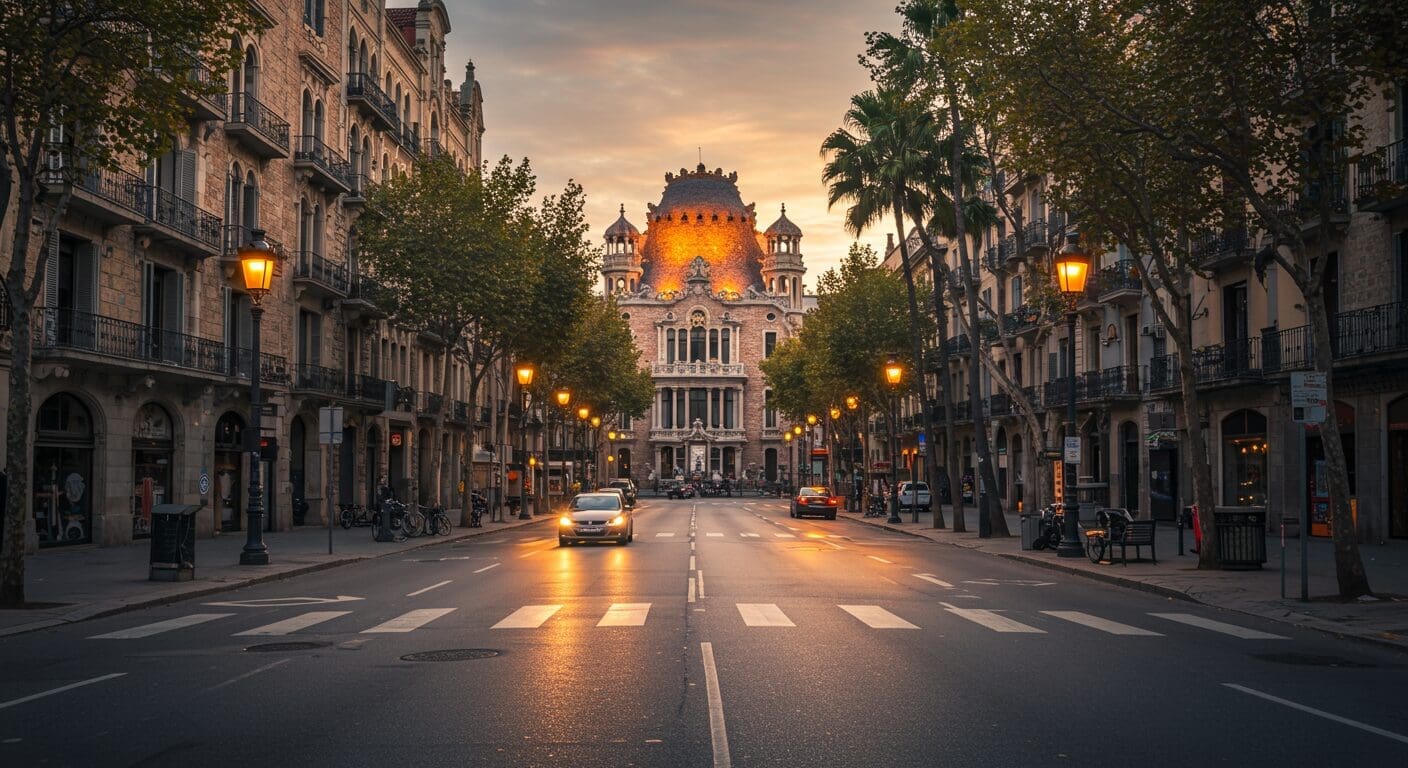
Gaudí’s other works scatter across the city like a portfolio review: the Palau Güell near the Rambla, the sinuous Casa Batlló and Casa Milà (La Pedrera) on the Passeig de Gràcia, the ceramic magic of Parc Güell. The Eixample block between Passeig de Gràcia, Aragon, Pau Claris and Consell de Cent is known as the Manzana de la Discordia (Block of Discord) and contains three extraordinary Modernista buildings – Gaudí’s Casa Batlló, Domènech i Montaner’s Casa Lleó Morera, and Puig i Cadafalch’s Casa Amatller – all competing for attention on the same street. They manage this with considerable style.
The Palau de la Música Catalana, built in 1908 by Lluís Domènech i Montaner and a UNESCO World Heritage Site, is perhaps the most extraordinary concert hall in Europe. The stained glass, the sculpture, the ceramic detail, the rose window – every surface is working at full capacity, and yet the whole somehow coheres into something genuinely magnificent rather than merely busy. Attend a concert if you possibly can; the acoustic experience matches the visual one.
The Museu Picasso in El Born holds over 4,000 works spanning the artist’s career, with particular strength in his early Barcelona years and the Blue Period. Picasso lived in Barcelona as a young man and the city clearly marked him; seeing the work in context, in a medieval palace in the neighbourhood where he walked, gives the collection a resonance that a neutral international gallery can’t quite replicate.
History runs deeper still. The Roman settlement of Barcino, the medieval Jewish quarter (Call) tucked into the Gothic Quarter’s lanes, the remnants of the 1714 siege that ended Catalan independence until the 20th century democracy restored it – and then the subsequent complications – all of it sits beneath and around the modern city. Scratch the surface of Barcelona and you find another layer immediately. This is, honestly, one of its more compelling qualities.
Shopping in Barcelona: What to Buy and Where to Find It
Barcelona is an excellent city in which to spend money, which it facilitates with considerable infrastructure. The Passeig de Gràcia is the international luxury address – Chanel, Hermès, Louis Vuitton and their peers occupying ground floors of Modernista buildings, which is either a pleasing irony or a perfect marriage depending on your perspective. The Portal de l’Àngel pedestrian street handles the middle market with considerable foot traffic and limited charm. These are shopping experiences you could broadly replicate in London or Paris. The better investment is time in the places you couldn’t.
El Born is where Barcelona’s independent retail lives. Concept stores, small fashion labels, ceramics studios, bookshops with actual curation, art galleries operating at the level where you could reasonably buy something – the neighbourhood rewards slow, deliberate walking and the occasional willingness to enter a shop without knowing quite what you’re looking for.
For food and drink to take home: a serious olive oil from a specialist, cava from a small producer in the Penedès (not the supermarket shelf versions), jamón ibérico de bellota vacuum-packed for travel, and a bottle of something from Priorat that you won’t find at home. The Boqueria has the ingredients but also the tourist premium; the smaller neighbourhood markets – Santa Caterina in El Born, Abaceria in Gràcia – offer the same produce with considerably less performance around it.
Catalan ceramics, particularly from small ateliers in the Gothic Quarter and El Born, make genuinely distinguished things to bring home. Espadrilles, made properly from esparto grass and sold by specialists who’ve been making them for generations, are another. Avoid the Las Ramblas souvenir economy unless you’ve always wanted a ceramic bull refrigerator magnet, in which case the choice is extensive.
Practical Things That Are Actually Worth Knowing
Currency is the euro. Tipping is appreciated but not, as in the United States, structurally mandatory – five to ten percent in restaurants is generous, rounding up in bars is sufficient, nothing in taxis is entirely normal. Cards are accepted almost everywhere. ATMs are plentiful in the centre and tourist areas.
Language: Spanish is universally understood and spoken. Catalan is widely spoken and, in many contexts, preferred – a simple “gràcies” (thank you) or “bon dia” (good morning) is noticed and appreciated. English is spoken competently in most tourist-facing contexts. Making any effort with local languages, however limited, is never wasted.
Safety: Barcelona has, historically, a notable problem with pickpocketing on Las Ramblas and around the main tourist sites – it is one of Europe’s busier destinations for this particular activity. Keep phones and valuables in front pockets or secure bags, be aware in crowds, and treat the tourist-heavy zones with appropriate vigilance. The city is broadly safe; this is a specific and manageable risk rather than a general concern.
Best time to visit: May and June are exceptional – the light is perfect, the weather reliable, the crowds not yet at peak summer intensity, and the restaurant terraces open. September and October offer similar conditions after the August peak. July and August are hot, crowded and expensive; they are also when the city is most vibrantly alive, so the trade-off is genuine. Winter is mild by northern European standards and offers the city largely to itself, which has real advantages for those willing to accept a closed beach club.
The city operates on its own schedule, which runs approximately two hours later than the rest of Europe. Lunch is 2pm to 4pm. Dinner is 9pm to 11pm. Appearing at a restaurant at 7pm will be accommodated with the gracious patience of someone who has seen this before. Going with the flow, even partially, is strongly recommended.
Why a Private Villa Redefines What a Luxury Holiday in Barcelona Actually Means
There is a version of Barcelona that runs through hotels – excellent ones, several of them, with rooftop bars and efficient service and the particular anonymous luxury of a room that has been prepared for you by someone you’ll never meet. It is a perfectly good version. It is also not the best one available.
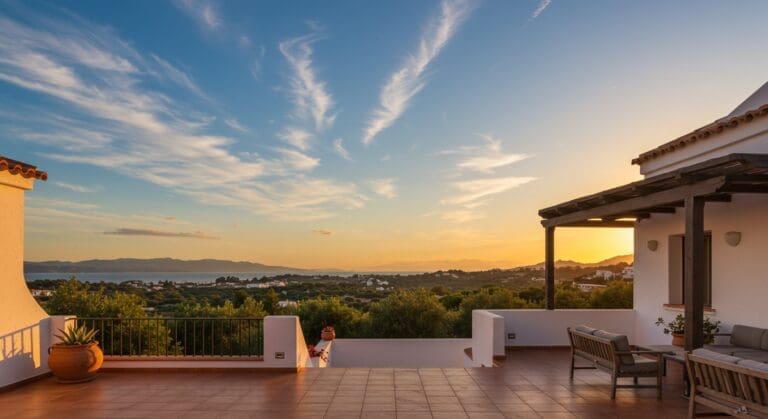
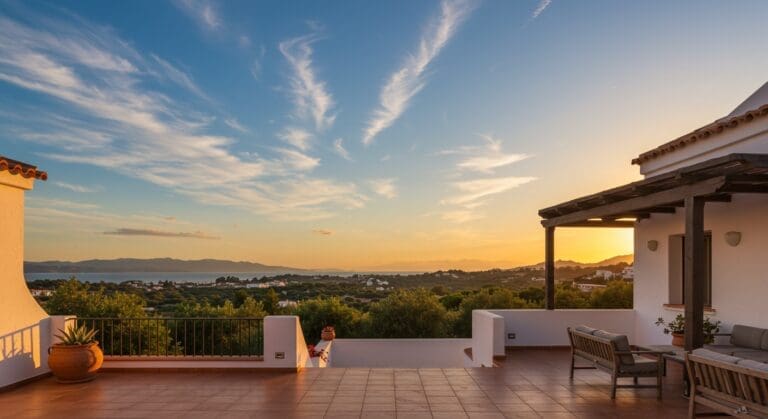
A private villa in Barcelona – whether perched in the Sarrià hills above the city with views down to the sea, tucked into the leafy calm of Pedralbes, or positioned for direct access to the coast – offers something that no hotel can replicate: the experience of the city entirely on your own terms. Breakfast whenever you want it, made in your own kitchen from Boqueria provisions, or prepared by a private chef who arrived at 8am and knows what you asked for. A pool that is yours alone, which sounds like a small thing until you have children or until July arrives. Space to gather as a group without a lobby between you.
For families, this is transformative. For groups of friends who’ve rented a villa together, the economics make sense and the experience far exceeds what twelve individual hotel rooms can provide. For couples on milestone trips, a villa with a private terrace and a view of the Collserola at dusk is a different category of romantic from even the best hotel suite.
Remote workers – and Barcelona’s connectivity is genuinely excellent, with fast fibre broadband standard in quality villas – find that the ability to close the laptop and be in the pool within thirty seconds does something positive for the working day that shared office spaces and hotel desks simply cannot match. The city’s time zone alignment with the rest of Europe makes it, practically speaking, one of the better options for anyone working to UK or central European hours.
Wellness-focused stays benefit from the villa format in ways that extend beyond the obvious pool advantage: private yoga sessions on a terrace with a view, in-house massage therapists, a kitchen stocked with whatever nutritional programme is currently in favour, and a pace set entirely by the guests rather than the hotel’s schedule. The Mediterranean air and light do the rest, and they are, it should be said, extremely good at their job.
Staff options for villa stays range from daily housekeeping to full concierge, private chef and butler services – the level of support scales to the occasion, the group size and the desire for genuine effortlessness. Excellence Luxury Villas has the collection and the local knowledge to match the right property to the right trip. Explore our full range of luxury villas and apartments in Barcelona and find the one that makes the city entirely yours.
More Barcelona Travel Guides
- Best Restaurants in Barcelona: Fine Dining, Local Gems & Where to Eat
- Barcelona Food & Wine Guide: Local Cuisine, Markets & Wine Estates
- Barcelona with Kids: The Ultimate Family Holiday Guide
- Best Time to Visit Barcelona: Month by Month Weather, Crowds & Tips
- Barcelona Luxury Itinerary: The Perfect 7-Day Guide
- Romantic Barcelona: The Ultimate Couples & Honeymoon Guide
What is the best time to visit Barcelona?
May, June, September and October are the most rewarding months – the weather is reliably warm, the light is exceptional, and the city hasn’t yet reached the full intensity of August. July and August are peak season: hotter, busier, more expensive, and undeniably energetic. For those who want the city largely to themselves with mild winter temperatures and no beach crowds, November through March is underrated and offers significantly better villa rates. If the beach is central to your trip, aim for late May through June – water temperature is comfortable and the summer chaos hasn’t fully arrived.
How do I get to Barcelona?
Barcelona-El Prat Airport (BCN) is the primary gateway, located approximately 12 kilometres southwest of the city centre. It receives direct long-haul flights from North America and the Middle East, and direct connections from across Europe including multiple UK airports (London Heathrow, Gatwick, Stansted, Manchester, Edinburgh). Flight time from London is around two hours. A private transfer from the airport is the most comfortable option for villa guests; the Aerobus express service runs to Plaça de Catalunya in around 35 minutes for those travelling lighter. The city also has an excellent high-speed rail connection (AVE) to Madrid, making a two-city trip very straightforward.
Is Barcelona good for families?
Genuinely excellent, particularly when staying in a private villa. The combination of beach, world-class cultural attractions and a city designed for outdoor life at a human pace makes Barcelona a very strong family destination. Highlights for children include Parc Güell, the Barcelona Aquarium, Tibidabo amusement park, and the straightforward pleasure of seven kilometres of accessible beach. The practical advantage of a villa – private pool, flexible mealtimes, space for different ages to occupy simultaneously – addresses most of the friction that city holidays with children can involve. Multi-generational groups in particular benefit enormously from the space and privacy a villa provides versus hotel accommodation.
Why rent a luxury villa in Barcelona?
A private villa offers something no hotel can replicate: total control over your environment and your time. Private pool, private outdoor space, the ability to eat breakfast at 7am or noon without judgement, and a staff-to-guest ratio that simply isn’t achievable in even the finest hotels. For families, the additional space eliminates the friction of city hotel stays with children. For groups, the economics of a villa versus multiple hotel rooms frequently compare favourably while the experience is incomparably better. For couples, a private villa with a terrace and views is a genuinely different category of luxury from a hotel suite. Excellence Luxury Villas can add private chef, concierge, housekeeping and butler services to tailor the level of support to your trip.
Are there private villas in Barcelona suitable for large groups or multi-generational families?
Yes – the collection includes properties sleeping from four guests to well over twenty, with configurations that suit multi-generational families (separate wings, ground-floor bedrooms for those who need them, multiple living spaces) and large friend groups equally well. Many larger villas on the hills above the city feature multiple terraces, private pools, outdoor dining areas and staff accommodation, making them genuinely self-contained for the duration of a stay. For multi-generational trips in particular, the ability for different generations to gather or separate according to preference – without the mediation of hotel corridors and shared public spaces – is one of the most significant advantages of villa accommodation.
Can I find a luxury villa in Barcelona with good internet for remote working?
Barcelona’s connectivity infrastructure is excellent, and quality villas in the city and surrounding hills routinely feature fast fibre broadband as standard. For remote workers, the city’s time zone (CET – one hour ahead of UK, in line with the rest of continental Europe) makes it a practical base for anyone working to European hours. Many villa guests specifically choose Barcelona for extended working stays – a dedicated workspace, reliable high-speed internet, and the ability to close the laptop and be in the pool in seconds is a combination that shared co-working spaces and hotel rooms genuinely cannot match. Confirm connectivity specifications with Excellence