Calpe Travel Guide: Where to Stay, Eat & Explore in Luxury
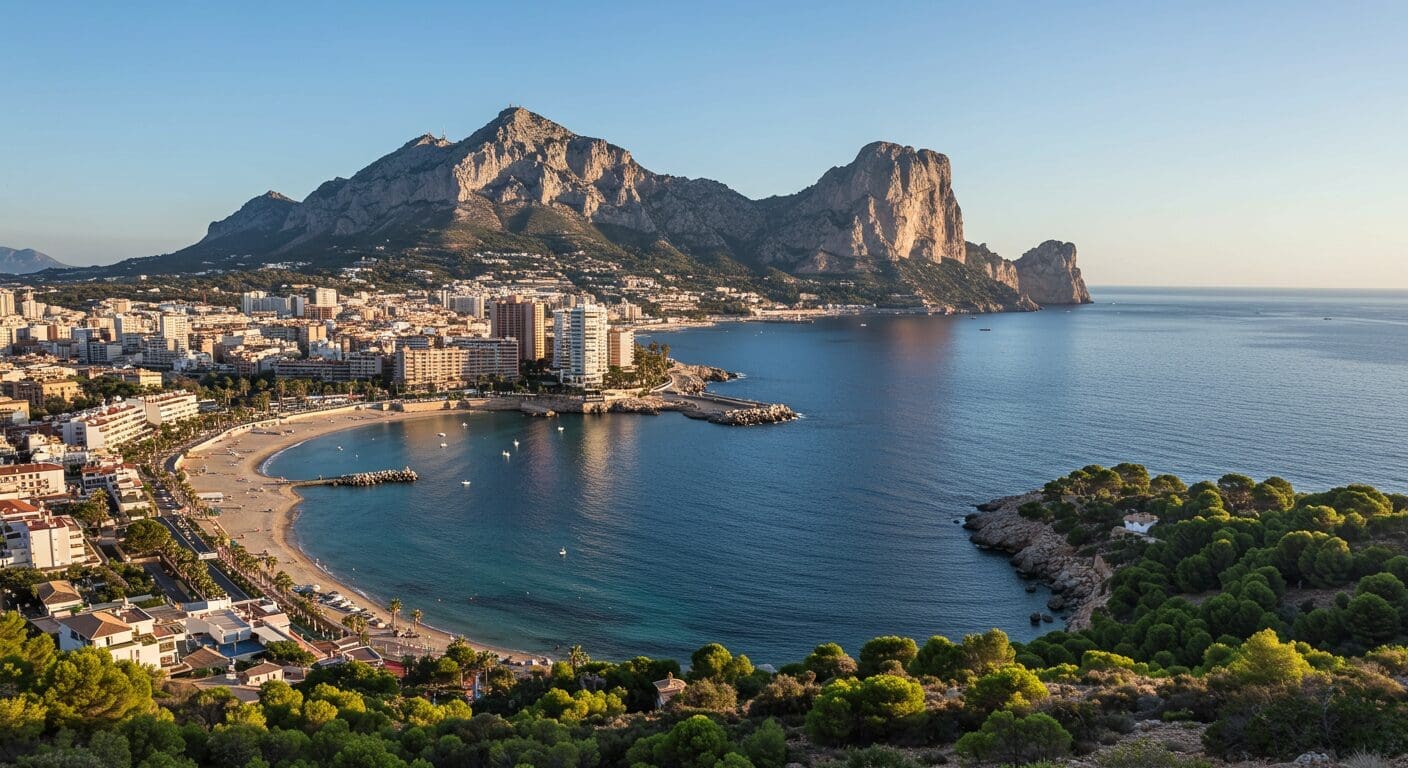
There are places in Spain where the Med simply looks like the Med – blue, beautiful, reliably photogenic. And then there is Calpe, where a 332-metre limestone monolith erupts from the sea like a geological afterthought and turns an already lovely stretch of Costa Blanca coastline into something genuinely theatrical. The Peñón de Ifach is not subtle. It does not ease itself into the landscape. It simply stands there, enormous and ancient, casting its shadow over the town below and featuring, without fail, in every single photograph taken within a five-kilometre radius. You can try to frame a shot without it. You will fail. The thing is unavoidable, and this is precisely the point – nowhere else on this coast offers that particular combination of Moorish history, Michelin-starred dining, crystalline water and a landmark so dramatic it reads as fiction.
What makes Calpe interesting – genuinely interesting, rather than brochure-interesting – is that it works for almost everyone without feeling like it’s trying to. Families seeking the privacy and space that no hotel corridor can provide find it here, particularly in the hillside villa zones where a private pool and a sea view come as standard expectations rather than luxury exceptions. Couples on milestone trips – anniversaries, honeymoons, the significant birthday being handled with appropriate ceremony – discover that three Michelin-starred restaurants within a single small town is not a coincidence but a statement of culinary intent. Groups of friends who want the coast without the chaos of Benidorm (which is, for context, visible from here on a clear day, which rather makes the point) find Calpe’s pace a relief. Remote workers who’ve quietly relocated their laptops to somewhere with better light than their home office find the connectivity perfectly adequate for a video call and the view considerably more inspiring. And wellness-focused travellers who want hiking, open-water swimming, clean eating and a landscape that feels restorative rather than relentless find all of it within easy reach. Calpe, in short, is one of those rare places that has figured out what it is without making a fuss about it.
Getting Here Without the Ordeal: Airports, Transfers and Getting Around
Calpe sits on the northern Costa Blanca, roughly equidistant between two airports that serve it perfectly well. Alicante-Elche Miguel Hernández Airport is the more commonly used option – around 75 kilometres south, which translates to approximately an hour by road depending on traffic, time of year, and whether you’ve chosen to drive through Benidorm at peak season (a decision that requires reflection). Valencia Airport lies about 120 kilometres to the north, offering a slightly longer transfer of around 90 minutes but often with better flight options from certain European hubs. Both are well-served by UK carriers, with direct flights from most major British airports operating year-round, though summer schedules expand considerably.
For a luxury holiday in Calpe, a private transfer from either airport is the obvious choice – and not merely for comfort, though sliding into an air-conditioned vehicle after a flight with a driver holding your name on a tablet is undeniably pleasant. It also makes practical sense: public transport connections to Calpe are workable but not exactly aspirational, involving a combination of TRAM services and buses that function perfectly well if your definition of a holiday includes timetable consultation. Driving from Alicante is straightforward via the AP-7 toll motorway, and once in Calpe, a hire car earns its keep for day trips along the coast and into the interior. Within Calpe itself, the town is compact enough to navigate on foot between the old quarter, the beaches and the marina, though the hillside villa zones are best reached by car. Taxis are available and affordable by Western European standards. Nobody is ever truly stranded.
Three Michelin Stars and Change: Eating Extraordinarily Well in Calpe
Fine Dining
Three Michelin-starred restaurants in a town of roughly 22,000 people. For context, many major cities would be quietly envious. Calpe has, through some combination of culinary ambition and very good fortune, assembled a dining scene that punches at a weight entirely disproportionate to its size, and the results are worth travelling specifically for.
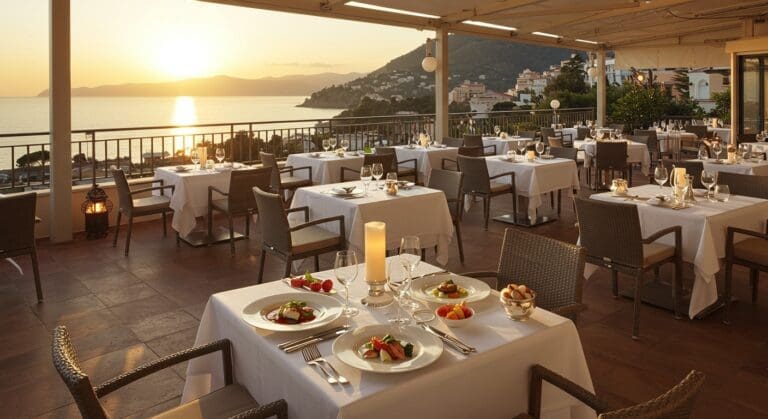
The conversation invariably begins with Orobianco, and for good reason. Holding a star in the 2025 MICHELIN Guide España and scoring a near-perfect 9.8 out of 10 on TheFork, Orobianco is the only Italian restaurant in Spain with a Michelin star – a distinction that would be impressive anywhere, and is frankly extraordinary here. The restaurant operates under the direction of Paolo Casagrande, the three-star chef behind Lasarte in Barcelona, and the kitchen draws on Italian culinary tradition while leaning into exceptional local ingredients with genuine creativity. Cuttlefish tagliatelle, watercress risotto with red prawns from these very waters, spaghettoni with a pil-pil sauce that nods to Basque technique – these are dishes that know exactly what they are. The setting, perched on the hillside above Calpe with the Peñón de Ifach and the bay spread below, is so preposterously beautiful that it almost distracts from the food. Almost.
Audrey’s Restaurant, named with characteristic elegance for Audrey Hepburn, takes its Michelin star and wears it with the kind of assured confidence that comes from chef Rafa Soler knowing precisely what he’s doing. Located on Avenida Juan Carlos I, the dining room is bright and refined, the atmosphere unhurried, and the wine pairings consistently described by reviewers as spectacular. It scores 9.1 on TheFork, which suggests that the people eating there are not disappointed. This would be a destination restaurant in any city in Europe. In Calpe, it’s simply Tuesday.
Beat Restaurant completes the trio, and the story behind it is worth knowing. Chef José Manuel Miguel trained with Berasategui and Arzak – names that carry considerable weight in Spanish gastronomy – before earning Michelin star experience at Il Vino in Paris. When he came to Calpe and opened Beat, the prediction was that he would be very good indeed. He was. The contemporary Mediterranean menu earns a 9.3 on TheFork, and TripAdvisor reviewers reliably note the quality and presentation as exceptional. Three Michelin-starred restaurants in one town. Book early. All three of them.
Where the Locals Eat
Step away from the constellation of stars and Calpe reveals a more relaxed, sun-bleached dining culture that is no less satisfying for being considerably more affordable. The waterfront promenades and the streets behind the beaches host the kind of seafood restaurants that have been feeding people well for decades – places where the grilled fish arrived this morning and the rice dishes take the time they need to take. Paella on the Costa Blanca is a serious matter, approached with regional pride. Order it, wait for it, and eat it without asking for it to arrive faster.
The marina area draws a lively crowd in the evenings, with terrace bars and casual restaurants filling progressively as the sun drops and the light turns that particular golden colour that makes everything look like a film set. The local wine – mostly Valencian denominaciones, robust and food-friendly – is invariably on pour, reasonably priced, and perfectly suited to the food. There are also excellent beach clubs along the Playa de la Fossa and Playa del Arenal-Bol, where the line between lunch and late afternoon is usefully blurred.
Hidden Gems Worth Seeking Out
Los Dos Cañones, tucked into the old town of Calpe, is the kind of place you find by wandering rather than searching, which is arguably the correct way to find it. Reviewers describe it as “a real gem set in the old town” – a phrase that could be applied to approximately a thousand restaurants in Europe and usually isn’t quite true, but in this case appears to be entirely accurate. The menu covers authentic Spanish and Mediterranean ground: paellas, seafood, grilled meats. The setting in the old quarter adds the kind of atmosphere that no amount of interior design budget can manufacture. It consistently appears on Yelp and Wanderlog’s top lists for the town, which means locals and return visitors know something worth sharing.
For something genuinely unexpected, Restaurante Casita Suiza offers a Swiss dining experience that has no logical reason to be this good in a Spanish coastal town and yet apparently is. It’s the sort of hidden gem that prompts the question “how did this end up here?” – a question best answered by ordering something and not worrying about it.
The Lay of the Land: What Calpe’s Geography Actually Looks Like
Understanding Calpe requires understanding the Peñón de Ifach first, because everything else organises itself around it. This limestone massif – a natural park since 1987, protected and properly dramatic – divides the coastline into two distinct beaches: the Playa del Arenal-Bol to the south and the Playa de la Fossa (also known as Playa de Levante) to the north. Between them, the town spreads across a gentle slope rising from the sea, with the old quarter, the Barrio de la Villa, sitting on higher ground behind the rock and the more modern resort development extending along the coast in both directions.
The old town is small, whitewashed and genuinely historic – the kind of place where the streets are narrow enough that two people walking side by side constitute a mild traffic situation. The remains of medieval walls and towers survive, along with a historic church and the quiet, slightly unhurried atmosphere of a quarter that predates tourism by several centuries and has decided not to be too impressed by it.
Beyond the immediate coastline, the landscape shifts quickly into something more rugged and inland. The Muntanya Gran and the surrounding hills offer elevated terrain with views that on clear days extend along the coast in both directions. To the north, the resort coast runs through Moraira and towards the Cap de la Nau. To the south, Altea is close enough for a half-day trip. Inland, the Jalon Valley – known for its almond orchards and local wine production – is within comfortable driving distance and represents a useful corrective to anyone who thinks the Costa Blanca is only about beaches. It isn’t. The interior is older, quieter and considerably more interesting than its coastal reputation suggests.
Things to Do in Calpe That Go Beyond Horizontal Time on a Sunlounger
The best things to do in Calpe begin, reasonably enough, with the Peñón de Ifach itself. A marked trail leads from the base through a tunnel carved into the rock and up to the summit at 332 metres, offering views along the coast that are worth every slightly breathless step. The climb is accessible to anyone in reasonable fitness – it’s not technical mountaineering, though the upper section does require hands and care – and the reward is a panorama that makes the Peñón’s dominance of every photograph entirely understandable. Allow two to three hours, bring water, and try to go early before the midday heat turns the exposed rock into a reliable source of personal suffering.
The beaches themselves deserve more than passing mention in a list of activities. Playa de la Fossa is a long, gently curved stretch of blue-flag sand that manages to accommodate reasonable summer crowds without feeling claustrophobic, partly because it is simply very large. Playa del Arenal-Bol is more sheltered, with calmer water that makes it particularly well-suited to families with younger children. Both have the kind of clear Mediterranean water that makes snorkelling a genuine pleasure rather than a murky disappointment.
The salt lakes – Les Salines de Calp – sit just inland from the southern beach and represent one of those unexpected natural assets that many visitors walk straight past on their way to the sand. The lagoons are a protected natural space and a significant habitat for flamingos and other waterbirds. Flamingos on the Costa Blanca is not something that features heavily in the promotional literature, which makes encountering them rather more satisfying. A boat trip from the marina explores the coastline, sea caves and the base of the Peñón from the water, which offers a perspective that the land-based visitor entirely misses.
For Those Who Prefer Their Holidays with an Element of Physical Consequence
Calpe’s adventure credentials are better than its reputation as a resort town might suggest. The Peñón de Ifach is the obvious centrepiece for climbers – the rock face offers a range of bolted routes across difficulty grades, and the natural park setting means the experience is properly atmospheric rather than merely athletic. Via ferrata routes are available for those who want the exposure of climbing with slightly more metal assistance along the way.
Diving in these waters is rewarded by impressive marine biodiversity. The base of the Peñón creates varied underwater topography, and the clarity of the Mediterranean here – particularly outside peak summer months when water temperatures and visibility both perform at their best – makes this genuinely worthwhile diving rather than the murky finger-following that passes for it elsewhere. Several dive operators in the town offer equipment hire and guided dives for all certification levels.
Kayaking along the coastline and into the sea caves around the Peñón is achievable independently or with guided tours that cover more ground and include safety briefings for the uninitiated. Stand-up paddleboarding has established itself firmly on both main beaches. Sailing and motorboat hire from the marina caters to those who want the sea beneath them rather than a beach towel. Cycling the coastal paths and, more ambitiously, the inland routes into the mountains rewards fitness with scenery. The hiking trails beyond the Peñón extend into the surrounding natural park and the sierra behind the town, where the gradients are genuine and the rewards proportionate. This is not a destination that has to apologise for its outdoor offering.
Why Families Keep Coming Back: Calpe’s Quiet Gift to Parents Everywhere
A luxury holiday in Calpe with children is, counterintuitively, one of the more stress-reducing versions of a family holiday available on this coast. The reasons are not complicated. The beaches are calm, clean and graduated in their entry – no sudden drops, no dangerous currents, no surf to concern parents of small children. The town is compact enough that distances between beach, food and accommodation don’t require military logistics. And crucially, the private villa with pool combination – the cornerstone of how most families choose to stay here – removes an entire category of family holiday friction at a stroke.
When children have their own pool available from the moment they wake up, the pressure on parents to perform beach logistics twice daily diminishes considerably. Villa accommodation in Calpe’s hillside zones typically offers multiple bedrooms, outdoor dining space, covered terraces for the inevitable afternoon when one child needs to nap and the others do not, and the privacy that means nobody is judging anyone for the 7am splashing incident. Multi-generational family groups – grandparents, parents, children occupying the same property – find that space is the great peacemaker. There is enough of it that everyone can have a version of the holiday they actually wanted.
For families requiring entertainment beyond the villa, Calpe’s beaches offer pedalo hire, children’s clubs at certain beach clubs, and the watersports operators who can take older children out on the water safely. The Peñón trail, done at child pace with appropriate breaks for snacks and mild complaints, is achievable for children from around eight or nine years old and produces a genuine sense of accomplishment in most of them. Calpe is not a theme park destination. It is better than that.
Calpe’s Long Memory: History, Culture and What the Old Town is Actually Telling You
Calpe has been inhabited, in one form or another, since the Iberians. The Romans knew it – the name itself derives from the Latin Calpe, which was also used to refer to the Rock of Gibraltar, suggesting that ancient cartographers had a system for naming dramatic limestone formations that rose from the sea. The Moors arrived in the eighth century and stayed for several hundred years, leaving their mark on the street pattern of the old quarter and the remains of the defensive walls that still partially survive above the town.
The Barrio de la Villa – the historic core – rewards unhurried exploration. The fifteenth-century church of Nuestra Señora de las Nieves stands at its heart, built in the Gothic-Renaissance transition style that characterises so much of the Valencian interior. The surrounding streets are narrow, the houses whitewashed, and the atmosphere one of genuine age rather than carefully maintained simulation. The Casa de la Cultura houses local historical exhibits and art, and the archaeological museum – modest in scale but thoughtful in curation – covers the Iberian and Roman periods that shaped this stretch of coast before Christianity arrived and reorganised everything.
The festival calendar adds another dimension. Moors and Christians festivals – the mock battles between Moorish and Christian forces that commemorate the Reconquista – are celebrated across the region with enormous enthusiasm and considerable noise. Calpe’s version takes place in October and involves elaborate costuming, processions, and the kind of communal energy that no amount of cultural tourism budget can manufacture. The Fiesta Mayor in August brings the town together around its patron saint celebrations with music, fireworks and the general sense that normal civic life has been temporarily and happily suspended.
Shopping in Calpe: What to Buy and Where to Actually Find It
Calpe is not a shopping destination in the way that some cities are shopping destinations. This is either a limitation or an enormous relief, depending on your relationship with retail. What it does offer is specific and worth knowing about. The weekly market – held on Wednesdays and Saturdays in the town – mixes fresh local produce with clothing, crafts and the miscellaneous category of market goods that defies easy description. The produce section is the point: local fruits and vegetables, regional cheeses, the sort of cured meats that make airport security a diplomatic challenge on the return journey.
Local ceramics and hand-painted tiles represent the most transportable version of Valencian craft tradition, available from shops in the old town and at the market. Locally produced olive oil and wines from the nearby Jalon Valley make sensible and specific gifts – the kind that demonstrate you actually went somewhere rather than purchasing at the departure gate. The marina area has boutiques selling the expected coastal lifestyle goods: linens, espadrilles, the kind of lightweight clothing that looks appropriate in the sun and slightly aspirational when worn back home.
For serious retail, Alicante and Valencia are within easy reach and offer the full range of Spanish fashion and international brands. But Calpe itself is probably best appreciated as a place that does not require you to spend much time in shops, which is, in the context of a Mediterranean holiday, entirely reasonable.
The Practical Essentials That Make All the Difference
The currency is the euro, ATMs are plentiful, and card payment is accepted almost universally in restaurants and shops. The notable exception is the market, where cash remains the lingua franca of commerce. Spanish is the official language; Valencian (a variant of Catalan) is widely spoken alongside it and has official status in the Valencian Community. English is spoken to a working standard in most tourist-facing businesses, though making any attempt at Spanish – however approximate – is always appreciated and occasionally produces a warmth that would not otherwise materialise.
Tipping in Spain follows no rigid rule but is considered good form in restaurants, typically rounding up or leaving five to ten percent in nicer establishments. Nobody will be offended by the absence of a tip; nobody will object to its presence. The local etiquette in restaurants involves the understanding that service operates at a Mediterranean pace by design rather than neglect, and that requesting the bill requires active signalling rather than patient waiting. Flagging down a waiter is not rude. It is simply how it works.
The best time to visit Calpe for a luxury holiday depends, as always, on what you want from it. July and August deliver heat, full beach conditions and the complete social programme of a working resort – this is when Calpe is busiest, prices peak, and restaurant reservations at the Michelin-starred establishments require forward planning of the kind that rewards organisation. May, June, September and October offer the sea warm enough for swimming, the temperatures manageable for hiking and sightseeing, significantly fewer crowds, and a town that feels more like itself. April is lovely if the weather cooperates. Winter is quiet, mild by northern European standards, and perfectly suited to walking, cycling and eating very well indeed without anyone else getting in the way.
Safety presents no particular concerns – Calpe is a well-ordered, low-crime environment. Sun protection in summer is not optional. The healthcare system in Spain is excellent, and the town has medical facilities adequate for the common needs of holidaymakers.
The Villa Argument: Why Staying in a Private Property in Calpe Is a Qualitatively Different Holiday
There is a version of Calpe that exists in hotels – pleasant rooms, shared pools, restaurant breakfast, the proximity of other people’s children at all times and their parents’ complicated feelings about this. And then there is the villa version, which is a different proposition entirely. Not marginally better. Structurally different.
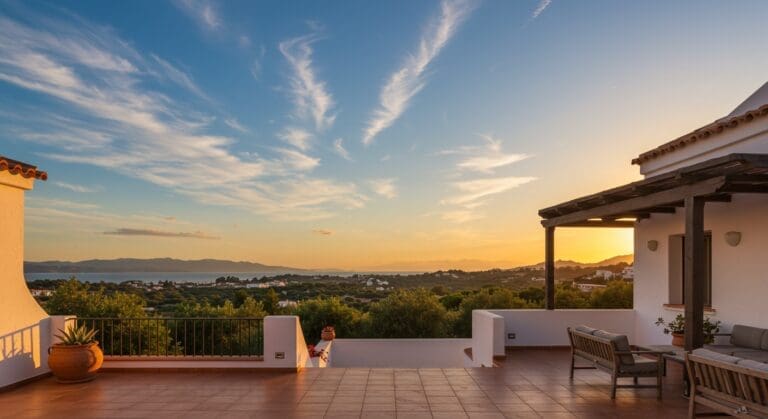
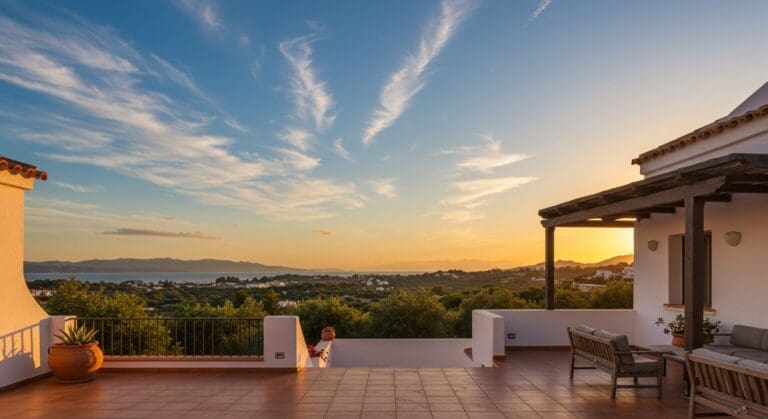
A private luxury villa in Calpe – and the hillside zones above the town offer some of the most impressive residential architecture on this coast – delivers the kind of space that hotels cannot approximate. Multiple bedrooms without the corridor separation. A pool that belongs, for the duration of your stay, exclusively to you and the people you chose to be here with. A terrace that is yours from sunrise through to the small hours without anyone placing a towel reservation on it. The ability to have lunch in a swimsuit without negotiating a public dining room. These are not trivial advantages. They are the difference between a holiday and an experience.
For groups of friends, a villa provides the communal space – large kitchen, generous outdoor dining, shared living areas – that allows everyone to be together without being on top of each other. For multi-generational families, where the age range between youngest and oldest might span sixty years of entirely different requirements, the space allows everyone to have the version of the holiday they actually need simultaneously. For couples, a villa with a private pool and an uninterrupted sea view is simply the correct backdrop for a significant occasion. The Michelin-starred restaurants handle the evenings; the villa handles everything else.
The remote working consideration is increasingly relevant. Calpe’s villa properties are generally well-served by fibre broadband, with higher-spec properties offering connectivity options that make a morning of video calls entirely manageable before the afternoon is surrendered to the pool and the view. This is the kind of working environment that makes the commute – from the desk to the terrace – the best part of the working day.
Wellness-focused stays benefit from the villa format in obvious ways: private pool for early morning laps, outdoor space for yoga or meditation without audience participation, the proximity of hiking trails and open water, and the ability to have a villa chef prepare the kind of clean, local, ingredient-led food that a wellness intention actually requires rather than hotel buffet compromise. Some villa properties in Calpe include dedicated gym facilities, steam rooms and spa equipment as standard features rather than supplementary bookings.
Excellence Luxury Villas offers a curated selection of properties in Calpe across a range of sizes and configurations, each vetted for quality, location and the specific things that make a luxury villa stay actually luxurious rather than merely expensive. Browse our collection of luxury villas in Calpe with private pool and find the one that fits your version of the holiday you’ve been thinking about.
More Calpe Travel Guides
- Best Restaurants in Calpe: Fine Dining, Local Gems & Where to Eat
- Calpe Food & Wine Guide: Local Cuisine, Markets & Wine Estates
- Calpe with Kids: The Ultimate Family Holiday Guide
- Best Time to Visit Calpe: Month by Month Weather, Crowds & Tips
- Calpe Luxury Itinerary: The Perfect 7-Day Guide
- Romantic Calpe: The Ultimate Couples & Honeymoon Guide
What is the best time to visit Calpe?
For the best balance of warmth, manageable crowds and value, May, June, September and October are the strongest months. The sea is warm enough for swimming, temperatures are pleasant for hiking and sightseeing, and restaurants are easier to get into – including the Michelin-starred ones that fill rapidly in high summer. July and August deliver full Mediterranean conditions and the complete resort experience but require booking further in advance and accepting higher prices. Winter is mild by northern European standards, very quiet, and ideal for walking holidays and unhurried cultural exploration.
How do I get to Calpe?
The nearest airport is Alicante-Elche Miguel Hernández Airport, approximately 75 kilometres south of Calpe and around one hour by road. Valencia Airport, roughly 120 kilometres to the north, offers an alternative with a transfer time of around 90 minutes. Both airports have direct flights from most major UK airports and numerous European hubs. A private transfer from either airport is recommended for a luxury villa stay. Driving from Alicante via the AP-7 motorway is straightforward, and a hire car is useful for day trips once in Calpe.
Is Calpe good for families?
Very much so. The two main beaches – Playa de la Fossa and Playa del Arenal-Bol – are calm, clean and blue-flagged, with gentle water entry well-suited to young children. The town is compact and easy to navigate. The real advantage for families, however, is the private villa format: a property with its own pool and outdoor space removes the logistical pressure of shared facilities and provides the kind of space that allows different ages and energy levels to coexist happily. Multi-generational groups in particular find Calpe’s villa offering very well matched to their requirements.
Why rent a luxury villa in Calpe?
A private villa in Calpe gives you something no hotel can: exclusive use of a pool, outdoor dining and living space that belongs to your group alone, the freedom to operate entirely on your own schedule, and a staff-to-guest ratio – for fully staffed properties – that is simply not achievable in any hotel at any price point. For families, the space eliminates the friction of shared resort facilities. For couples, the privacy and setting create conditions that no hotel room reproduces. For groups, the communal areas allow everyone to be together without compromise. It is a qualitatively different kind of holiday, not just a more expensive version of the same one.
Are there private villas in Calpe suitable for large groups or multi-generational families?
Yes, and Calpe’s villa landscape is well-suited to this. Properties in the hillside zones above the town range from intimate two-bedroom retreats to large, architecturally impressive villas with six or more bedrooms, multiple bathrooms, separate living zones and private pools of a size that accommodates a group comfortably. Some properties are configured with distinct wings or separate guest annexes that provide privacy within the wider group – an arrangement that multi-generational families tend to find invaluable. Larger properties can also be arranged with concierge services, private chefs and additional staffing that scales appropriately with the size of the group.
Can I find a luxury villa in Calpe with good internet for remote working?
Connectivity in Calpe’s luxury villa properties is generally reliable, with fibre broadband available across most of the town and hillside zones. Premium properties increasingly advertise high-speed internet as a standard feature, and some offer Starlink or upgraded business-grade connectivity for guests who require consistent bandwidth for video conferencing and large file transfers. If reliable connectivity is a priority, it is worth confirming speeds and setup with the villa concierge before arrival. The practical arrangement – morning work from a well-connected desk or terrace, afternoon devoted to the pool and coast – is one that Calpe facilitates rather more agreeably than most offices.
What makes Calpe a good destination for a wellness retreat?
Calpe offers an unusually complete set of wellness conditions in a single location. The outdoor options alone – hiking the Peñón de Ifach, open-water swimming in clean Mediterranean water, coastal cycling and kayaking – provide the kind of physical engagement that structured wellness programmes try to replicate artificially. The pace of life is genuinely unhurried outside peak summer. The food culture, particularly in the Michelin-starred restaurants and the local market, is built around fresh, seasonal, Mediterranean ingredients that align naturally with clean eating intentions. Private villa accommodation adds the infrastructure: pools for morning laps, outdoor space for yoga, and in many premium properties, dedicated gym equipment, steam rooms and spa facilities. The combination of landscape, food quality and private space is difficult to replicate elsewhere on this coast.