Best Time to Visit Central Italy: Month by Month Weather, Crowds & Tips
Best Time to Visit Central Italy: Month by Month Weather, Crowds & Tips
It is half past seven on a Tuesday morning in late May. The hill town is almost silent. A woman in house slippers crosses the piazza with a string bag. A cat, apparently employed full-time as an ornament, watches from a warm step. The bar is open, the coffee costs one euro twenty, and from the terrace wall you can see three valleys, seven cypress trees doing their best impression of exclamation marks, and no one else. Not a tour group. Not a selfie stick. Just Central Italy doing what it does best, with the calm confidence of somewhere that has been practising for two thousand years. Knowing when to show up for a moment like that – that is the whole art of timing a trip here.
Why Timing Matters More in Central Italy Than Almost Anywhere Else
Central Italy – covering Tuscany, Umbria, Le Marche, Lazio and Abruzzo – is one of those destinations where the difference between a transcendent experience and a slightly exhausting one comes down almost entirely to the calendar. The landscape does not change. The food does not get worse. But the crowd levels, the light, the prices, the temperature on a vine-covered terrace, the likelihood of actually getting a table at a restaurant without booking three weeks in advance – all of these swing dramatically depending on whether you arrive in February or August. The region rewards the traveller who pays attention to the clock and the calendar. This guide is designed to help you do exactly that.
For a broader orientation to the region before diving into the seasonal detail, our Central Italy Travel Guide covers everything from geography to gastronomy.
Spring: March, April and May
Spring is Central Italy’s most seductive season – and it knows it. By March, the countryside around Siena and Spoleto is already exhaling after winter, the hills shading from pale gold to a green so vivid it seems almost aggressive. Temperatures range from around 10-15°C in early March to a very comfortable 20-22°C by the end of May. Rain is possible, particularly in March and early April, but it tends to be honest about itself – a morning shower, then sunshine by noon, then a sky the colour of good faience.
Crowds are manageable until Easter weekend, which can bring a sharp spike – particularly in Rome and Florence, which sit at the edges of the region and funnel tourists through. After Easter, things calm again. April and May represent something close to the ideal: the poppies appear in the wheat fields of the Val d’Orcia, the wisteria drops over the walls of Cortona, the hill towns have their shutters open and their museums staffed, and the restaurants are cooking without the mechanical efficiency that descends in July when they are feeding six hundred people a day.
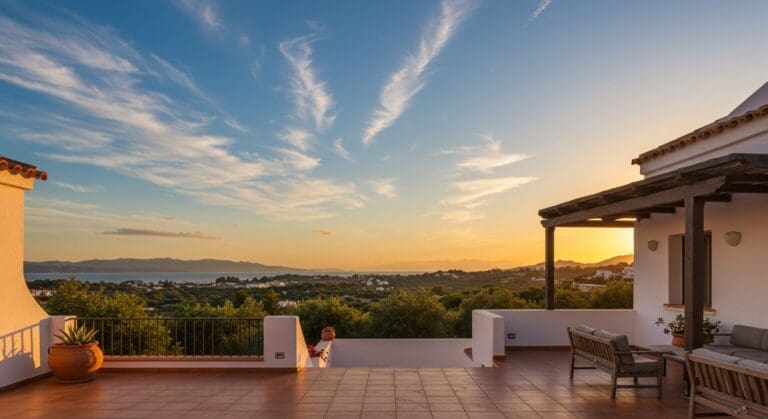
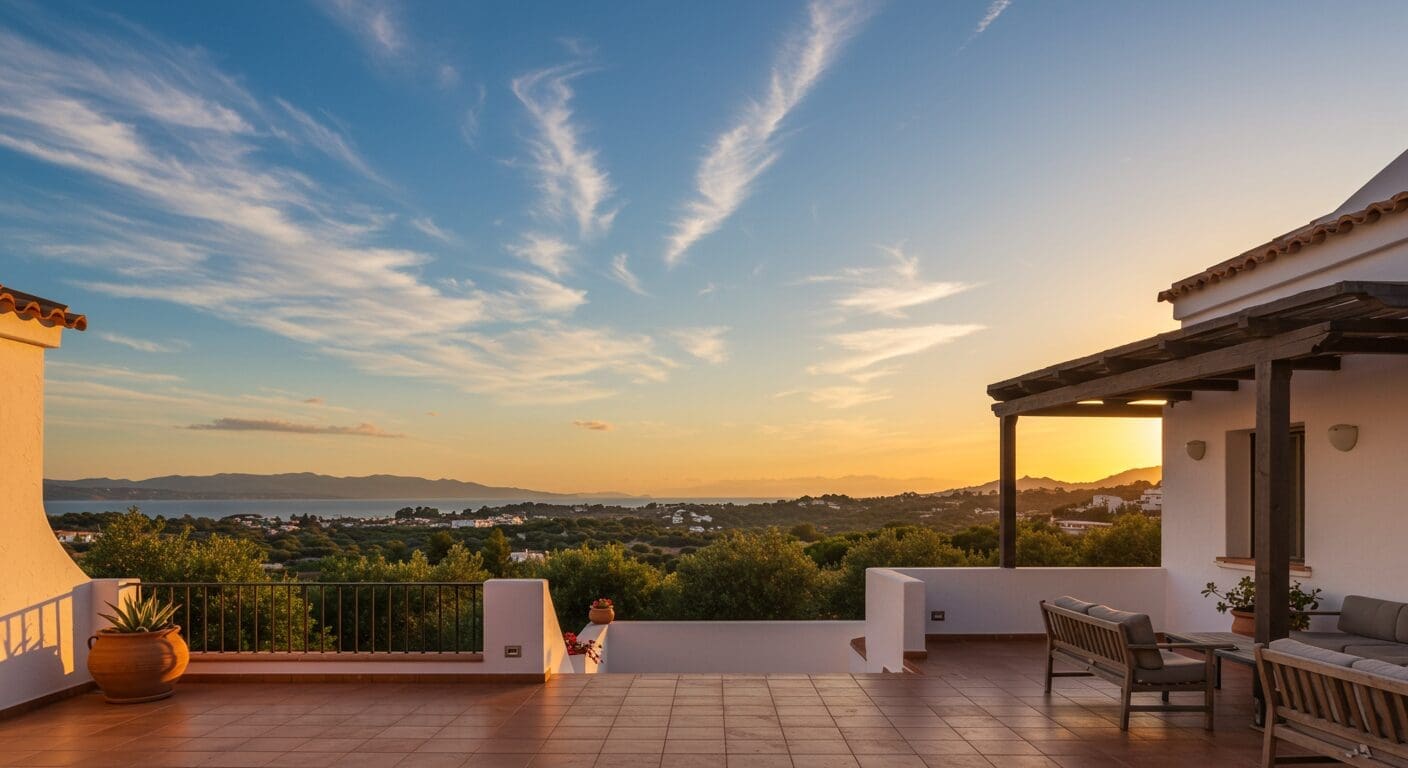
May is particularly compelling for villa stays. You can sit outside for dinner comfortably, the pools are beginning to warm (though a dip requires a certain determination in early May – or a good Negroni first), and the light in the late afternoon is the light that painters came here for. Families will find this period manageable, with school groups mostly absent until June. Couples will find it close to perfect. Prices are noticeably lower than peak summer. The word “shoulder season” is used so frequently in travel writing that it has lost most of its meaning, but in Central Italy’s case, it genuinely earns its reputation.
Festivals worth noting: Easter processions throughout the region are genuinely moving, particularly in smaller Umbrian towns. The Calendimaggio festival in Assisi takes place in early May – a medieval pageant that manages to be spectacular without feeling theme-parky, which is more difficult to achieve than it sounds.
Summer: June, July and August
Let us be honest about summer. June is still lovely – warm, long-eveninged, with the sunflowers just beginning to turn their faces south and the olive groves looking industrious and purposeful. Temperatures hover between 25-28°C, which is warm enough to feel like a proper Mediterranean holiday without tipping into something that requires a rethink of your plans for the afternoon. June is arguably the last month when Central Italy feels like itself.
July and August are a different proposition. Temperatures regularly reach 32-38°C in inland Tuscany and Umbria. Florence – not strictly Central Italy but close enough to influence touring patterns – becomes genuinely difficult. The queues for major sites stretch in the heat. The roads to the hill towns fill with rental cars driven by people who have underestimated Italian rural road geometry. The restaurants in tourist centres operate at full industrial capacity. And yet: people come, in enormous numbers, because the region is still beautiful even when it is busy, and because August in particular is when Italians themselves take their holidays, which gives towns like Lucignano and Montalcino a particular festive energy that is quite different from the tourist season.
If you are visiting in summer, a villa with a private pool is not a luxury – it is a logistical necessity. The strategy of most experienced visitors is to be out early (before ten), retreat to the villa between noon and four, then emerge again in the evening when the light softens and the temperature drops to something merciful. August also brings some of the region’s most celebrated festivals: the Palio di Siena runs on 2nd August (and 2nd July), a horse race of mediaeval intensity that is unlike anything else in Italy and worth the crowds, if you are prepared for the crowds.
Prices are at their annual peak throughout July and August. Availability at the better villas tightens considerably. Book early – very early – or be flexible about your dates.
Autumn: September, October and November
September is the quiet triumph of the Central Italian calendar. The crowds thin almost overnight after the first week. The temperatures settle into the high twenties and then ease gently through October towards the mid-teens. The light changes – it becomes something richer, more amber, as if the landscape has switched from watercolour to oil. The grape harvest begins, and the smell of fermenting must drifts through the wine country of Chianti and Montalcino with an almost physical generosity.
October brings the truffle season to Umbria and Le Marche. The white truffle fairs in Acqualagna and the surrounding towns are a serious affair – not merely a market but a kind of collective autumn ritual, with hunters arriving at dawn and restaurateurs arriving shortly afterwards with the focused energy of people who know exactly what they want. Eating truffles in the region where they were found, in October, when the air has a first coolness to it and the wood fires have been lit – this is one of those experiences that reorganises your understanding of what food can be.
November is underrated and undervisited. Some tourist facilities close, particularly in smaller hill towns. But the museums are open and empty, the restaurants are cooking for pleasure rather than volume, and the landscape takes on a melancholy grandeur – bare vines, mist in the valleys in the morning, the red flash of persimmons on leafless trees. It is not the season for everyone. It is the season for people who understand that beauty does not require sunshine.
Winter: December, January and February
December brings Christmas to Central Italy with considerable flair. Towns hang lights across their medieval streets, markets appear in the piazzas, and the churches – which are always worth entering – gain an extra layer of candlelit warmth. Temperatures drop to between 4-10°C across the region, and snow is not unknown in the higher parts of Umbria and Abruzzo, where it settles on the Apennines with an indifference to your travel plans.
January and February are the quietest months of the year. Almost everything in the smaller towns closes or operates on reduced hours. The visitor-facing infrastructure contracts. But the region does not disappear – it simply becomes the version of itself that locals actually inhabit. Restaurants fill for Sunday lunch with families who have been coming for thirty years. The Uffizi can be visited in something approaching peace. The roads through the Val d’Orcia, empty of rental cars, belong to whoever has thought to come.
Winter suits a particular kind of traveller – one interested in the culture more than the climate, in depth rather than beach days, in arriving at a place on its own terms. Villa stays in winter offer excellent value, and there is something undeniably appealing about a large fireplace, a good bottle of Brunello, and the sound of rain on stone outside.
Month by Month at a Glance
January: Cold, quiet, cheap. Museums near-empty. Some closures in smaller towns. Ideal for culture-focused travellers and those seeking genuine solitude.
February: Similar to January with a slight warming. Carnival celebrations in some towns add a festive note. Still excellent value.
March: The region wakes up. Rain possible but increasingly sunny. Prices begin to rise. Countryside greening beautifully.
April: Excellent conditions. Easter crowds spike briefly, then subside. Flowers, mild temperatures, manageable visitor numbers.
May: Peak shoulder season – possibly the finest month of the year. Warm, beautiful, not yet overwhelmed. Book ahead for the best villas.
June: Warm and still manageable, particularly early in the month. The last comfortable month before peak summer heat arrives.
July: Hot. Very hot. Busy. The Palio in Siena on the 2nd is extraordinary. Plan around the heat.
August: Peak season in every sense. Maximum crowds, maximum heat, maximum prices. A villa with a pool becomes essential rather than optional.
September: The best-kept secret of the Central Italian calendar. Crowds thin, temperatures ease, harvest begins. Outstanding.
October: Truffle season. Autumn colour. Quieter roads. The light is extraordinary. One of the two best months to visit.
November: Quiet, cooler, some closures. For the independent traveller who prefers authenticity to amenity.
December: Christmas atmosphere is genuine and warm. Temperatures low but the towns are lit and festive. A rewarding time to visit the cities.
Who Should Visit When
Families with school-age children are largely restricted to the summer months and the Easter period, which is perfectly fine – the region handles families well, and the summer festivals and outdoor life suit children. Aim for June rather than August if you have any flexibility, and book a villa with outdoor space so that the afternoon heat becomes an opportunity for pool time rather than a problem.
Couples, particularly those without school schedule constraints, should consider May or September as a first choice and October as an equally strong second. The atmosphere in these months – more intimate, less managed, more genuinely Italian – suits a romantic itinerary far better than the peak season equivalent.
Groups and multi-generational travellers often find September the sweet spot: warm enough for everyone, the landscape at its most dramatic, and the social infrastructure of the region – the restaurants, the wineries, the markets – operating with full enthusiasm after the summer season rather than the slightly mechanical efficiency of August.
The Case for the Off-Season Villa Stay
There is an argument – a genuinely persuasive one – for renting a villa in Central Italy in November or February that goes beyond the obvious appeal of lower prices. The experience of the region in the quieter months is simply different in kind, not just degree. The Tuscan farmhouse that sits behind a queue of tour buses in August is, in February, sitting in absolute silence with a view over bare-vined hills and nothing moving except the occasional wild boar, which has its own charm if you are prepared for it. The restaurants are cooking for regulars. The owners of the agriturismo down the road have time to talk. The whole place exhales.
Winter villa stays suit those who want to read, to walk, to eat and drink well, and to feel that they have actually arrived somewhere rather than passed through it. It is a very particular kind of travel. Not everyone’s. But for those it suits, it is close to irreplaceable.
Plan Your Stay with Excellence Luxury Villas
Whenever you choose to come – whether it is for the poppy fields of May, the truffle fairs of October, or the firelit solitude of January – the right villa makes every difference. Browse our collection of luxury villas in Central Italy to find the property that fits your season, your group and your style of travel. Each villa is personally vetted, and our team knows the region in the kind of detail that only comes from actually spending time there – which, as it happens, is the best possible research.
What is the best month to visit Central Italy to avoid crowds?
May and September are consistently the best months for avoiding the peak-season crush while still enjoying warm, settled weather. May offers the spring countryside at its most vivid, while September brings the harvest season, beautiful light and a noticeable thinning of visitor numbers after the August peak. For those willing to travel in the genuine off-season, October and early November offer remarkable quiet combined with truffle festivals, autumn colour and excellent restaurant experiences.
Is Central Italy worth visiting in winter?
Yes, for the right kind of traveller. Temperatures between December and February are cold – typically 4-10°C – and some visitor facilities in smaller hill towns close or reduce their hours. However, the major museums and cultural sites remain open, prices are at their annual low, and the experience of the region is considerably more authentic. Cities like Siena, Perugia and Orvieto take on a very different character in winter, and a well-equipped villa with good heating and an open fire can be an excellent base for a culture-focused trip.
When is the weather best for outdoor dining and villa stays in Central Italy?
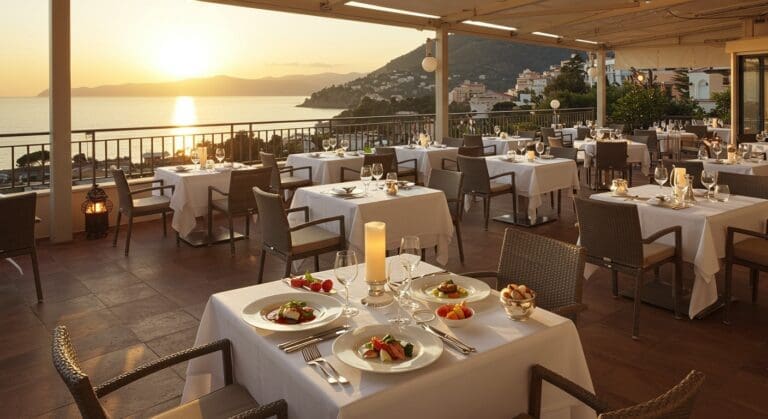
For reliable outdoor dining conditions, aim for late April through to mid-October. The sweet spots are May (warm but not hot, evenings comfortable from around 18°C upwards) and September (temperatures easing from summer peaks to around 22-25°C, ideal for long outdoor evenings). July and August are viable but require planning around the midday heat – the traditional Italian approach of retreating indoors between noon and four and returning to outdoor life in the evening is genuinely the best strategy, and a villa with a shaded terrace and pool makes this rhythm easy to adopt.