Central Italy Travel Guide: Where to Stay, Eat & Explore in Luxury
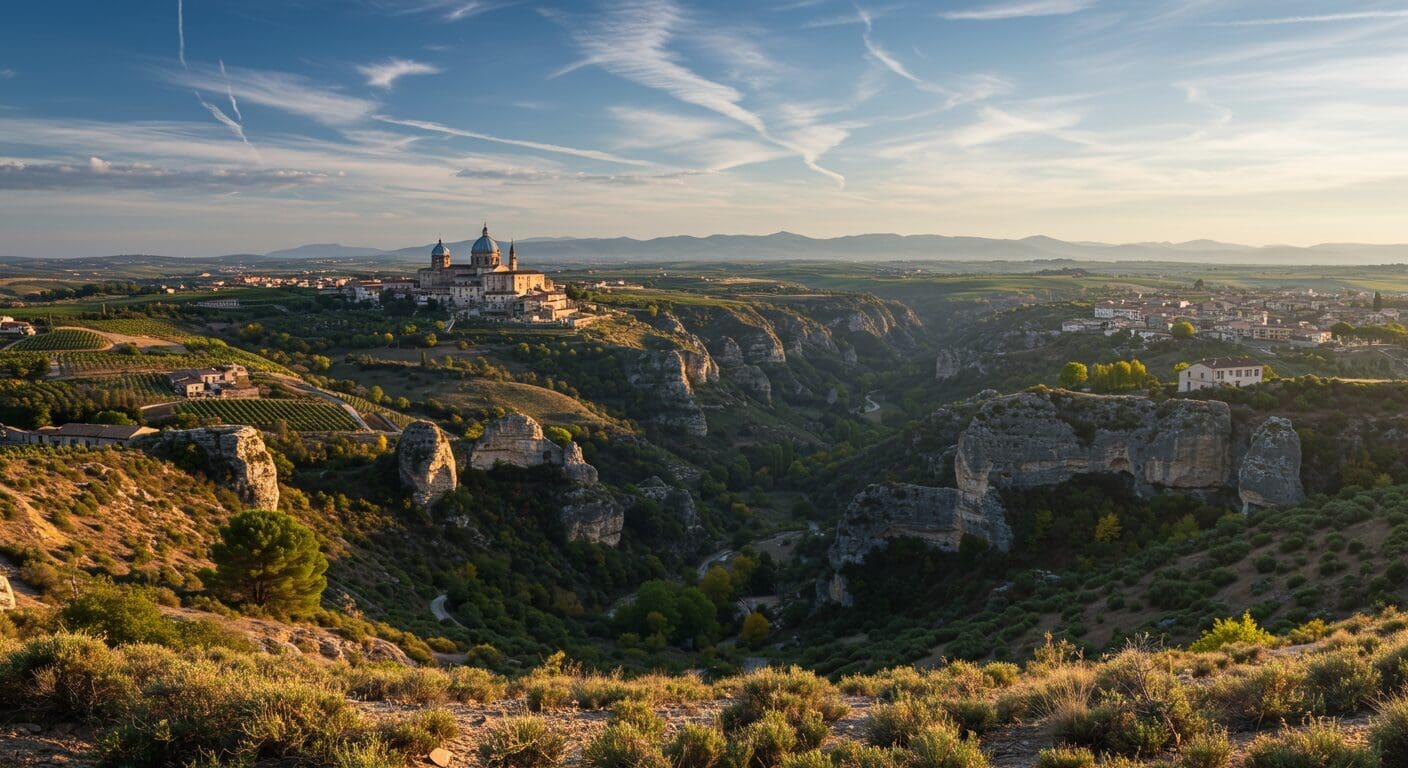
The olive oil arrives before you’ve had a chance to look at the menu. It comes in a small ceramic jug, greenish-gold, and the bread is already warm. Outside the window, the Val d’Orcia rolls away into the middle distance like a painting that hasn’t quite decided whether it wants to be real. A church bell sounds somewhere. You pour the oil. You think: I should move here. You won’t, of course, but the thought feels completely reasonable, which tells you everything about what Central Italy does to people.
This is a place that rewards the traveller who wants more than a checklist. Couples marking a decade together or planning a honeymoon find in Tuscany and Umbria a romance that hotels simply cannot replicate – the kind that comes from a private terrace above the vines with no one else in sight. Families who have tried the Costa del Sol and lived to tell the tale discover that a private Lazio farmhouse with a pool and a garden transforms even the most screen-addicted teenager into someone who voluntarily eats outside. Groups of friends celebrating milestone birthdays find the whole arrangement – a Marche hillside villa, a dozen bedrooms, a chef coming in three evenings a week – conspicuously more civilised than any hotel ever managed. And the quietly growing tribe of remote workers who have clocked that fibre broadband now reaches deep into the Umbrian hills are booking for months, not weeks. A luxury holiday in Central Italy is, in other words, not one thing. It is whatever you need it to be, served with exceptional olive oil.
Finding Your Way In: Airports, Transfers, and the Glorious Business of Arriving
Central Italy is served by several airports, and choosing the right one is worth a moment’s thought rather than just defaulting to Rome. Rome Fiumicino (Leonardo da Vinci) is the obvious hub – vast, efficient by Italian standards, with direct flights from across Europe, North America, and beyond. If your villa is in Lazio or southern Tuscany, Fiumicino makes excellent sense. Ciampino, Rome’s second airport, handles many low-cost carriers and is closer to the city centre, though the transfer infrastructure is more ad hoc. For northern and central Tuscany, Florence’s Peretola airport (now officially named Amerigo Vespucci) is far more convenient – smaller, manageable, and a mere 20 minutes from the city. Pisa’s Galileo Galilei airport handles significant transatlantic and European traffic and is well-positioned for the Chianti region and Siena province. For Marche, Ancona Falconara is the regional gateway, though some travellers prefer to fly into Bologna or Rimini and drive south.
The drive from any of these airports, it should be said, is part of the experience. The autostrada gives way to the superstrada, which gives way to the provinciale, which gives way – eventually, wonderfully – to a white gravel track between cypress trees. Private transfers are the civilised choice, particularly if you are arriving with luggage, children, wine knowledge, or any combination of the three. Hire cars give you freedom and are worth it for a week or more; Italian drivers are considerably less terrifying than their reputation suggests, provided you treat the horn as punctuation rather than profanity. Trains deserve mention: the high-speed Trenitalia network is genuinely excellent between Rome, Florence, and Bologna, and many villa guests use it for day trips, leaving the car parked at the property.
The Table Is the Point: Eating Your Way Through Central Italy
Fine Dining
Central Italy is not short of Michelin stars, and two restaurants in particular represent the absolute apex of what Italian fine dining can achieve – which is to say, quite a lot.
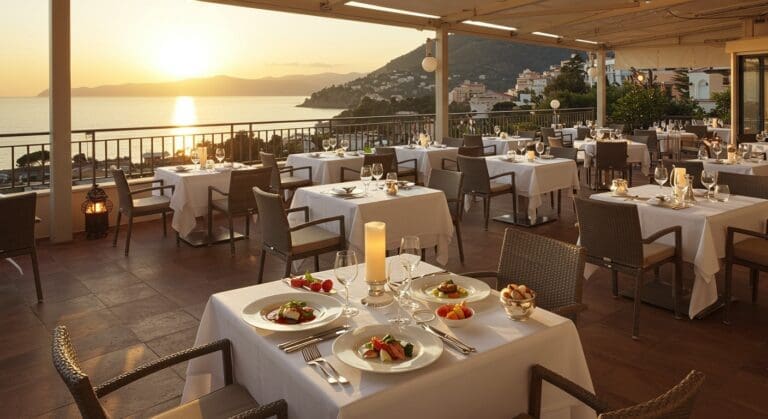
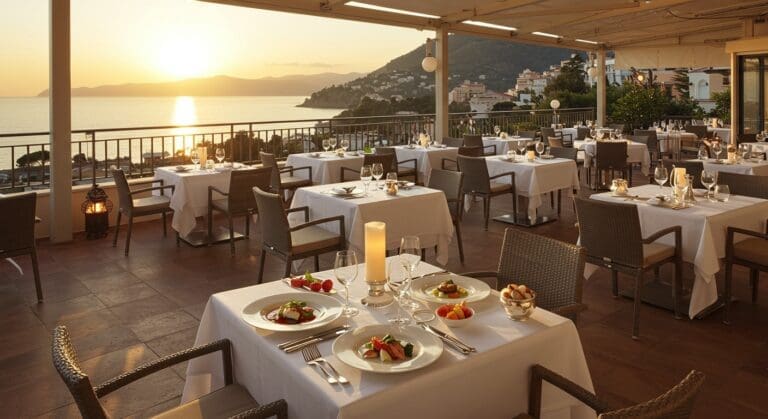
In Rome, Heinz Beck’s La Pergola sits above the city on the top floor of the Rome Cavalieri hotel, with a panoramic view that would be entirely sufficient reason to visit even if the food were mediocre. It is emphatically not mediocre. Three Michelin stars, recently reconfirmed, and a sommelier who navigates the cellar with the calm authority of someone who has read the situation and found it promising. The dishes are classical in instinct and precise in execution – not the sort of cooking that explains itself at length, but the kind that makes sense the moment it arrives. La Pergola is a set-piece dinner for a milestone occasion, the kind you remember in considerable detail twenty years later.
Florence has Enoteca Pinchiorri, which has been described, not inaccurately, as a temple of taste. Three Michelin stars, a Gambero Rosso Tre Forchette, and a cellar that contains over 100,000 bottles across more than 4,000 labels – a figure that invites both admiration and a certain sympathetic vertigo. Giorgio Pinchiorri and Annie Féolde have been running this operation together for over forty years, which is either a love story or a business plan or both. Florence as a whole now counts twelve Michelin-starred restaurants in the 2025 guide, making it an entirely serious food destination in its own right.
Also in Rome, Il Pagliaccio under Chef Anthony Genovese holds two Michelin stars and the Gambero Rosso’s Tre Forchette – a combination that places it firmly among the capital’s culinary elite. The cooking here has a more experimental edge than Beck’s, drawing on Genovese’s international background in ways that feel considered rather than showy.
For something with a lighter touch – and a very good Instagram caption – the Gucci Osteria da Massimo Bottura inside the Gucci Garden in Florence manages the considerable trick of being both fashionable and genuinely, seriously good. Massimo Bottura’s fingerprints are on a menu that plays inventively with Tuscan seasonal produce, and the room itself is the kind of place that makes you feel better-dressed than you are. One Michelin star.
Where the Locals Eat
The locals, by and large, are not eating at the places above. They are eating in the kind of trattoria that has no website, has been run by the same family since approximately the Korean War, and does not offer a tasting menu. Seek these out with determination. In Umbria especially – Spoleto, Norcia, Todi – the neighbourhood restaurant is still an institution rather than a concept, and the food is priced accordingly. Wild boar ragù, handmade strangozzi pasta, black truffle shaved over eggs so simply prepared they should not taste as extraordinary as they do. The wine will arrive in a small terracotta jug and will be locally made and correctly drinkable.
In Rome, the neighbourhood trattorias of Testaccio – historically the city’s slaughterhouse district, now its food conscience – offer some of the most honest cooking in the capital. Supplì, cacio e pepe, coda alla vaccinara. Markets are essential everywhere: the Campo de’ Fiori in Rome, the Mercato Centrale in Florence, the weekly Thursday market in Spoleto. Go hungry.
Hidden Gems Worth Seeking Out
In the Val d’Orcia, Dopolavoro La Foce is one of those places that rewards the traveller willing to do a little research. Originally built as a recreational centre for the workers of the La Foce estate – whose gardens are among the finest in all of Italy – it now operates as a farm-to-table restaurant and bar with the kind of menu that makes seasonal produce sound like a manifesto. Homemade pici with ragù, local pecorino with marmalades, an ample wine list drawn heavily from Brunello country. It is friendly, unhurried, and set in a landscape so lovely it constitutes mild emotional ambush. Book ahead.
In Marche, seek out the osterie of the Conero Riviera, where the Adriatic catch comes in daily and the Verdicchio dei Castelli di Jesi in your glass has often travelled no further than fifteen kilometres. This corner of central Italy remains undervisited, which is either a secret or a scandal depending on your perspective. Those in the know tend to keep quiet about it.
The Landscape Itself: Four Regions, Infinite Moods
Central Italy is not one place. This sounds obvious until you actually travel it, at which point it becomes revelatory. Lazio sprawls from Rome’s chaotic beauty down through volcanic lakes, Etruscan hill towns, and the Pontine coast – a region that most international visitors use purely as a gateway but which repays proper exploration. Drive forty minutes from Rome in almost any direction and the city dissolves entirely.
Tuscany is what most people imagine when they close their eyes and think “Italy” – the cypress-lined roads, the terracotta rooftops, the light in September that makes even competent photographers look gifted. But Tuscany is enormous, and its variety is underestimated. The Maremma coast is wild and unspoilt, with long stretches of beach backed by macchia and the occasional Etruscan ruin. The Garfagnana in the north is mountain country – rugged, unpretentious, and largely free of tourists. The Crete Senesi south of Siena are lunar and strange in a way that catches first-time visitors completely off guard. And then there is Chianti, which is exactly what the brochure promised and somehow still exceeds expectations.
Umbria positions itself as “the green heart of Italy,” which is accurate enough to be forgiven for being the tourist board’s doing. The hills are rounder and lusher than Tuscany’s, the towns smaller and less visited, the pace slower still. Assisi, Perugia, Gubbio, Orvieto perched improbably on its volcanic rock – each is worth a day, ideally two. Lake Trasimeno sits in the middle of the region like a rumour, low-banked and still, perfect for an afternoon of absolutely nothing.
Marche, meanwhile, remains one of Central Italy’s best arguments for going somewhere your friends haven’t been. The Sibillini Mountains rise to serious altitude in the west; the Conero promontory drops to the Adriatic in the east; between them, a landscape of castles, medieval towns, and agricultural valleys that gets on quietly with being beautiful without making a fuss about it. Urbino alone – a Renaissance city of rare completeness – would justify the journey.
What to Actually Do: From Vineyard to Volcano
The classic Central Italy activity list writes itself: cook a pasta course, visit a winery, take a guided walk through Rome, book a Uffizi skip-the-line ticket, spend a morning in a hill town that nobody else has found yet (there are still a few). All of these are worthwhile. None of them requires further advocacy here. What is worth saying is that the best experiences in this region tend to happen when you stop optimising the itinerary.
That said, the Chianti wine tasting circuit deserves specific mention. The SS222 Chiantigiana road – running south from Florence through Greve, Panzano, Radda, and Gaiole – is the spine of one of the world’s great wine routes. Estate tastings at Antinori nel Chianti Classico (which has a rather extraordinary gravity-fed cellar built into the hillside), Badia a Coltibuono, and Castello di Ama represent Chianti at its most serious. Book ahead, dress reasonably, and don’t schedule anything difficult for the afternoon. The Brunello zone around Montalcino, and the Montepulciano DOCG further east, reward equally serious attention.
Rome, self-evidently, is a full programme in itself. The Forum and Palatine Hill in the morning before the crowds arrive, the Vatican Museums ideally pre-booked and preferably pre-8am when they open for early access visits, the Borghese Gallery which limits entry and rewards punctuality. Less obviously: the Protestant Cemetery in Testaccio (Keats is buried there, in one of the most beautiful small gardens in the city), the Centrale Montemartini where classical sculpture is displayed against the backdrop of a disused industrial power station, and the Appia Antica on a weekday morning when the only company is joggers and archaeologists.
Truffle hunting in Umbria and northern Tuscany is an experience that either makes you evangelical or leaves you wondering what the fuss was about. Most guests who try it become evangelical. Half a morning with a trufaraio and their dog in the woods outside Norcia, followed by lunch involving the morning’s findings, is the kind of thing people put at the top of their “what we actually did” list when they get home.
The Outdoors as It Was Meant to Be: Active Adventures in Central Italy
Hiking in the Sibillini Mountains is properly spectacular – the Piano Grande plateau in June, when it flowers in a way that strains credulity, is one of the great sights of Italian nature. Trails vary from gentle half-day walks to serious multi-day routes along the ridge, and the mountain towns of Norcia and Castelluccio make excellent bases. The Apennines generally offer far more hiking infrastructure than visitors expect, particularly in summer.
Cycling has had a serious upgrade across the region over the past decade. The Val d’Orcia by e-bike is now a managed and well-signed experience, and the gravel roads of the Crete Senesi are increasingly frequented by riders who have worked out that Tuscany’s terrain rewards two wheels. Road cyclists who are fit enough will know that Tuscany’s climbs have a certain reputation – the Strade Bianche race uses the white gravel roads in and around Siena for good reason. Rental shops with quality kit are now found in all major towns.
The Tyrrhenian coast offers sailing from the marinas at Argentario and Castiglione della Pescaia, with the Tuscan Archipelago – Elba, Giglio, Giannutri – accessible for day sails or longer liveaboards. Sea kayaking around the Conero promontory on the Adriatic coast is a more intimate experience: the sea is clear, the cliffs dramatic, and the beaches only reachable by water. Kite surfing is popular at Orbetello lagoon in southern Tuscany, where the conditions are considered among the best in central Italy.
For winter visitors – and this is underappreciated – the Apennines above Norcia and in the Abruzzo border region offer skiing. Modest by Alpine standards, certainly, but the absence of Alpine crowds and prices is its own form of luxury. Campo Imperatore and Terminillo are the best-known pistes; neither will challenge Zermatt, but both will leave you considerably less exhausted by the apres.
Travelling with Children: Why Central Italy Works Better Than You’d Think
The assumption that Central Italy is a “grown-up destination” is worth interrogating. It comes partly from the art-and-wine framing, and partly from parents who have taken small children to Florence in August and found it overwhelming. Both reasonable inputs. But the reality of a family staying in a private villa in Umbria or Marche – with a pool, a garden, enough space for children to disappear into for an afternoon, and a kitchen for pasta-making experiments – is a quite different proposition.
Children in Italy are treated as full participants in public life rather than problems to be managed, which makes restaurants considerably less stressful than their equivalents in the United Kingdom. A family lunch in a Tuscan trattoria, with breadsticks arriving approximately thirty seconds after you sit down, is actually one of the more relaxing meals a parent can have. The hill towns – Civita di Bagnoregio, Monteriggioni, Spello – are exactly the right size for small legs, and the combination of medieval castle, gelato, and a pigeon to chase is surprisingly effective family programming.
Practical specifics: the Maremma Etruscan Coast has long sandy beaches with relatively shallow water, good for nervous young swimmers. The Orvieto funicular is a five-minute ride that children treat as a major event. The Rome Borghese Gallery’s museum of contemporary art upstairs from the main collection is frequently, and correctly, enjoyed by teenagers who have been informed that the older stuff is non-negotiable. Pools at private villas in the Chianti or Umbrian hills handle the rest.
Three Thousand Years of History, Trying to Be Casual About It
Central Italy contains a quantity of history that would be frankly unreasonable if it weren’t distributed across such beautiful landscape. Rome alone accounts for the better part of Western civilisation’s formative mythology – the Republic, the Empire, the Catholic Church, the Renaissance papacy, the Grand Tour, the Dolce Vita. The Forum, the Colosseum, the Pantheon, St Peter’s: these are things that photographs have not adequately prepared you for. The Pantheon in particular, standing nearly two thousand years after construction, still manages to make architects quietly miserable.
Tuscany’s contribution to the Italian Renaissance is the sort of claim that sounds like hyperbole until you spend a morning in the Uffizi. Botticelli’s Primavera and Birth of Venus, Michelangelo’s Doni Tondo, Leonardo’s Annunciation: all in the same building, on the same morning, before lunch. The Accademia in Florence has the David, which is both larger and more emotionally affecting than expected. The Bargello, less visited, has the early Donatello bronzes and rather less of a queue.
Umbria’s Assisi is one of the most coherent medieval towns in Italy, with the Basilica di San Francesco – its Giotto frescoes intact after a painstaking post-earthquake restoration – as the centrepiece. Orvieto’s Duomo, with its Luca Signorelli Last Judgment frescoes in the Cappella di San Brizio, is among the great surprises of Italian art history: a chapel that Michelangelo reputedly came to study before beginning the Sistine ceiling. In Marche, Urbino’s Palazzo Ducale houses the Galleria Nazionale delle Marche and Piero della Francesca’s extraordinary Flagellation of Christ – a small painting in a large room that has generated more scholarly argument per square centimetre than almost anything else in Italian art.
Festivals are worth building a trip around. Siena’s Palio in July and August is genuinely medieval in character, not reconstructed – the jockeys ride bareback, the civic passions run unironically high, and the piazza transforms into something ancient. Spoleto’s Festival dei Due Mondi in June and July turns an already charming hill town into a world-class arts programme for three weeks. Umbria Jazz in Perugia in July draws an international crowd; the Infiorata flower festivals of Spello and Genzano in June involve petal carpets of such intricacy that photographing them feels mildly inadequate.
Shopping with Intent: What to Bring Home
The standard advice about bringing home olive oil and wine and local ceramics is correct and requires no embellishment. What is worth adding is where to find these things at their best. For olive oil, head to the producers directly in the Sabina valley north of Rome (DOP Sabina is among Italy’s finest) or the Lucca area in Tuscany – either buy at the mill or at the farm, and avoid anything in a supermarket-sized bottle with a photogenic label. For wine, the Brunello producers around Montalcino, the Sagrantino estates of Montefalco in Umbria, and the Verdicchio cooperatives of Marche are all worth visiting in person, not just because the prices are better but because the conversation is richer.
Ceramics from Deruta in Umbria are the real thing – the town has been producing majolica since the Middle Ages and the craft remains genuinely alive, with workshops that will paint to commission. Leather in Florence is a known quantity; the better pieces are found in the small workshops around the Oltrarno rather than the stalls on the Ponte Vecchio. Paper and stationery from the Florentine houses – Pineider, Giulio Giannini – make beautiful, packable souvenirs. Truffles from Norcia in season (October to December for the black truffle) travel well in oil or paste and are unambiguously superior to anything available in British supermarkets.
Marche has its own craft tradition – wrought ironwork from Pesaro province, hand-embroidered linens from the hill towns, Verdicchio in its distinctive amphora-shaped bottle – and the absence of tourist crowds means prices remain sane. The weekly markets everywhere – Thursday in Spoleto, Saturday in Greve in Chianti, daily in the Campo de’ Fiori – offer the most democratic and enjoyable shopping of all.
The Practical Stuff, Delivered Without Condescension
Currency is the euro. Credit cards are widely accepted in cities and larger restaurants; keep cash for village bars, market stalls, small trattorias, and toll roads. The language is Italian, which is phonetically consistent and forgiving of learners – a reasonable attempt at pronunciation is received with genuine warmth. English is spoken fluently in the main tourist areas and less reliably in the countryside, which is one of many arguments for learning buongiorno, grazie, posso avere il conto, and un bicchiere di vino rosso, per favore before you go.
Tipping is not the institution it is in the United States. A coperto (cover charge) appears on most restaurant bills and is standard. Rounding up for a coffee, leaving a few euros on the table for a good trattoria meal – both are appreciated and both are genuinely optional. Taxi tips are not expected.
The best time to visit requires some nuance. April, May, and early June offer the most benign combination of warm weather, long days, lower prices, and manageable crowds. September and October are arguably even better for those who can travel then – the harvests are underway (olives in October, grapes in September), the light is extraordinary, the temperatures are rational, and Florence in the second week of September is noticeably less hectic than in July. July and August are popular for good reason – the weather is reliable, the beaches are open, and the festival season is at its height – but cities like Rome and Florence reach temperatures and visitor numbers that require some strategic thinking. Book early, visit the major sites before 9am, retreat to the villa pool between noon and four. Winter, November through February, is cold in the hills and largely wonderful in Rome, and the absence of other tourists at Orvieto or Urbino is its own reward.
Safety is not a meaningful concern for ordinary travel in Central Italy – the region is among the safer destinations in Southern Europe. Standard urban precautions apply in Rome and Florence: watch your phone on the metro, be aware of your surroundings in crowded tourist areas, keep passports in the hotel safe. The countryside is entirely unthreatening. Dress codes at religious sites are enforced – shoulders and knees covered – and this is worth remembering not as a bureaucratic inconvenience but as a basic courtesy. Churches that contain Raphael frescoes deserve that much.
Why a Luxury Villa in Central Italy Is Simply the Better Option
There is a version of a Central Italy holiday that involves a hotel, and it is fine. The better boutique hotels in Tuscany and Rome are excellent, and this is not a brief against them. But the villa experience – particularly for anything beyond a solo traveller or a couple on two or three nights – operates in a different register altogether, and it is worth explaining why before someone books twelve hotel rooms and spends the week texting each other about breakfast times.
Privacy is the obvious starting point, and it is genuinely significant. A luxury villa in Central Italy gives you a property – a real property, a house, a farm, sometimes a castle – that is entirely yours for the duration. No shared pool. No lobby. No one else’s children. The mornings are quiet in a way that hotels, with their optimistic croissant machinery and elevator music, simply cannot achieve. You have breakfast when you want it, where you want it, at whatever speed suits the mood of the group. This sounds minor until day three, when you realise it is actually foundational to the quality of the holiday.
Space matters for groups and families in ways that compound over a week. A villa with eight or ten bedrooms and multiple living areas allows people to be together when they want to be together and to disappear when they need to – a social engineering problem that even the most talented hotel designer has never quite solved. Multi-generational families, in particular, find the villa format transformative: grandparents can retire at nine, teenagers can be on a separate terrace, parents can eat dinner in something approaching peace. The private pool, in summer, is not an amenity – it is the social and logistical spine of the day.
Staff and concierge options at the better villa properties allow for a level of personalisation that no hotel can match. A private chef coming in for four evenings during the week – sourcing from the local market, cooking dishes tied to the landscape you can see from the terrace – is not a performance or a service. It is, genuinely, one of the great pleasures available to the modern traveller. Housekeeping, a driver for day trips, a sommelière to guide the villa’s cellar: all of this is standard at the luxury end, and the staff-to-guest ratio is simply different from any hotel.
For remote workers – and there are more of them every year – a luxury villa in Central Italy with reliable connectivity is not a compromise. The combination of high-speed internet (fibre-to-the-property in many Tuscan and Umbrian villas, Starlink in more rural locations), a proper working environment, and the knowledge that the pool and the Brunello are both available at 6pm is, professionally speaking, highly motivating. The time zone alignment with Northern and Western European business hours makes Central Italy a logical choice for those extending a stay beyond a standard holiday week.
Wellness-focused guests find the villa format particularly well-suited to the kind of rest that actually works. Yoga on a private terrace, a morning swim before the world wakes up, the slow meals and early evenings that the Italian countryside quietly enforces – none of this requires a wellness programme or a spa brochure. It simply happens, in the way that good environments shape good habits without making a fuss about it.
Excellence Luxury Villas has over 27,000 properties worldwide, and the Central Italy collection reflects the full range of what the region offers – from working wine estates in Chianti to restored medieval towers in Umbria, from coastal villas above the Tuscan Maremma to stone farmhouses in the Marche hills. Browse luxury villas in Central Italy with private pool and find the property that fits your group, your pace, and your version of what a perfect Italian week should look like.
More Central Italy Travel Guides
- Best Restaurants in Central Italy: Fine Dining, Local Gems & Where to Eat
- Central Italy Food & Wine Guide: Local Cuisine, Markets & Wine Estates
- Central Italy with Kids: The Ultimate Family Holiday Guide
- Best Time to Visit Central Italy: Month by Month Weather, Crowds & Tips
- Central Italy Luxury Itinerary: The Perfect 7-Day Guide
- Romantic Central Italy: The Ultimate Couples & Honeymoon Guide
What is the best time to visit Central Italy?
April to early June and September to October are the sweet spots. Spring brings wildflowers, cooler temperatures, and a fraction of the summer crowds; autumn brings the harvests – grapes in September, olives and truffles in October – and the most beautiful light of the year. July and August are reliably hot and popular, particularly on the coast, but cities like Florence and Rome require early starts and a strategic commitment to shade between noon and four. Winter in Rome is underrated: cold, yes, but the Pantheon with no queue is an entirely different experience from the summer version.
How do I get to Central Italy?
The main gateway airports are Rome Fiumicino (for Lazio and southern Tuscany), Florence Peretola (for northern and central Tuscany), Pisa Galileo Galilei (for Chianti and Siena province), and Ancona Falconara (for Marche). Bologna is also a practical option for northern Tuscany and Emilia. Direct flights operate from most major European hubs, and transatlantic routes into Rome are extensive. High-speed trains connect Rome, Florence, and Bologna efficiently for those basing themselves in one location and day-tripping. Private transfers from the airport to your villa are strongly recommended, particularly for groups and families with luggage.
Is Central Italy good for families?
Genuinely, yes – particularly for families renting a private villa. The combination of a private pool, outdoor space, and a kitchen for flexible mealtimes removes most of the logistical friction of travelling with children. Italian culture is warmly child-inclusive: restaurants welcome children without ceremony, and the scale of Central Italy’s hill towns is well-suited to small legs. Beaches on the Maremma and Conero coasts offer calm, relatively shallow water. The cultural sights – Assisi, Siena’s Palio, the Florence funicular up to Piazzale Michelangelo – hold children’s attention considerably better than the average art museum.
Why rent a luxury villa in Central Italy?
A private villa gives you something that even the best hotel cannot: the property is entirely yours. No shared spaces, no other guests, no schedules imposed by anyone else’s timetable. For families, the private pool and multiple living areas transform the daily rhythm. For couples, the privacy and seclusion are unmatched. For groups, the combination of bedrooms, outdoor terraces, a kitchen, and often a private chef creates a social environment that hotel stays simply cannot replicate. The staff-to-guest ratio at the luxury villa level – housekeeping, a dedicated concierge, optional chef and driver services – exceeds what any hotel offers at a comparable price point.
Are there private villas in Central Italy suitable for large groups or multi-generational families?
Yes, extensively. The Excellence Luxury Villas Central Italy collection includes properties ranging from intimate four-bedroom farmhouses to large restored estates with ten or more bedrooms, multiple pools, separate guest annexes, and full staff. Multi-generational families in particular benefit from villas with distinct wings or separate cottages within the property boundary – allowing privacy within the group without losing the shared communal spaces. Many larger properties include staff accommodation, wine cellars, outdoor dining structures, and grounds spacious enough that different generations can occupy the same property without any of the difficulties that