
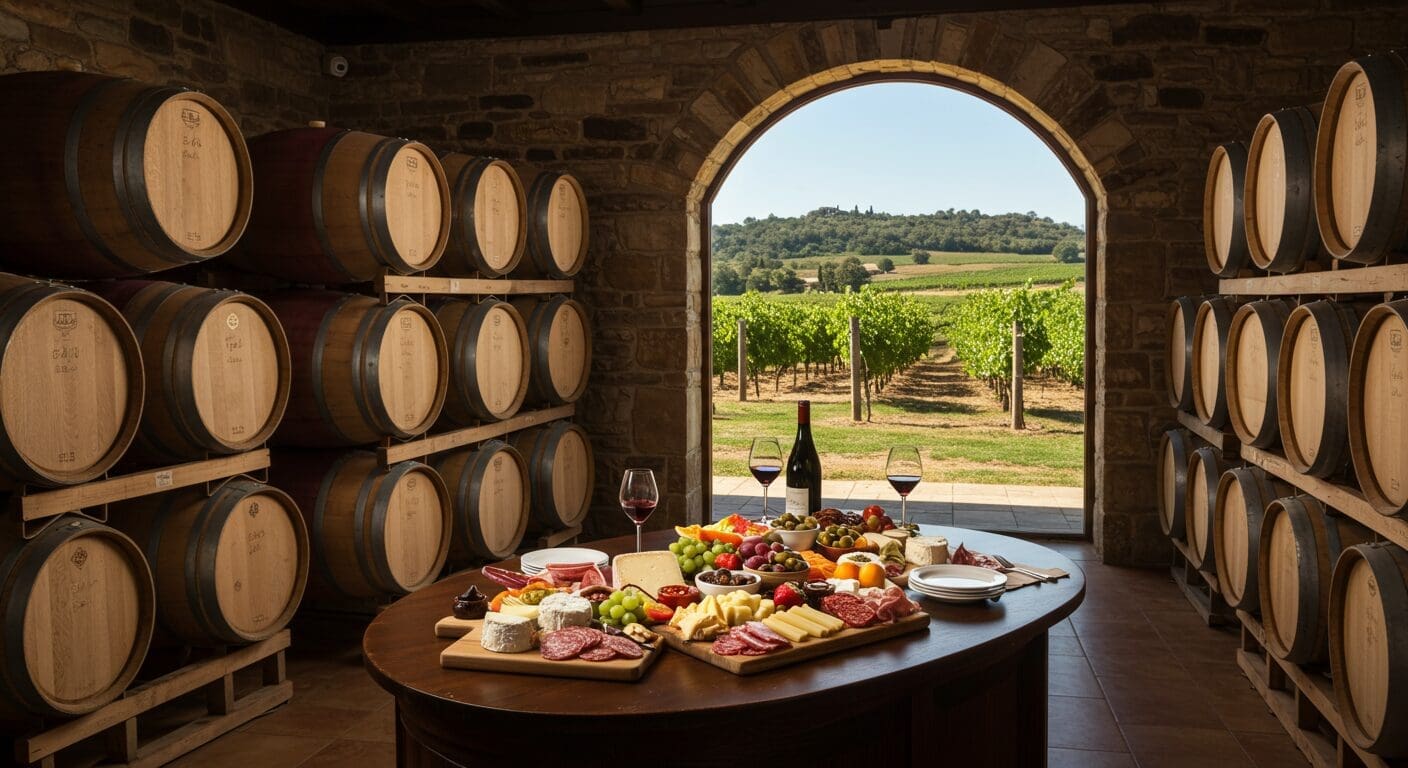
Chania Food & Wine Guide: Local Cuisine, Markets & Wine Estates
What does it actually mean to eat well in Crete? Not the postcard version – the one where you dutifully order a Greek salad with a view and call it authentic – but the real thing, where olive oil is treated with more reverence than most wine cellars in France, where the bread arrives still warm and slightly charred, and where a slow-roasted lamb dish has been in the oven since before you woke up? If you want that version, Chania is where you come. Western Crete’s capital city sits at the apex of what might be Greece’s most serious food culture, and this guide exists to help you eat your way through it properly.
The Food Culture of Western Crete: A Tradition Worth Understanding
Crete is not Greece in miniature. It is its own culinary universe, shaped by millennia of Minoan, Venetian, and Ottoman influence, by a landscape of mountain herbs and ancient olive groves, and by a population that has always regarded food as something close to philosophy. Western Crete, anchored by Chania, is the most pronounced expression of this. The cooking here is older, more considered, and rather more confident than you might find elsewhere in the Greek islands. There are fewer concessions to tourist taste. Fewer menus in six languages. This is either a feature or a bug depending on your perspective, but for those who care about food, it is unambiguously the former.
The Cretan diet – which predates the fashionable Mediterranean diet by several thousand years – is built on wild greens, legumes, olive oil of startling quality, fresh herbs gathered from the White Mountains, and meat used sparingly but memorably. Dishes are not decorated. They are built. The emphasis is on ingredients with genuine provenance, cooked with technique that has been passed down through kitchens rather than culinary schools. To eat here is to understand that restraint, when it comes from confidence rather than austerity, is its own kind of luxury.
Signature Dishes You Must Order in Chania
Start with dakos, the Cretan bruschetta that puts every other version of the concept to shame. A barley rusk soaked in ripe tomato juice until just soft, topped with crumbled mizithra cheese, capers, and olive oil. It sounds simple. It is simple. That is entirely the point, and the gulf between a good dakos and a mediocre one will teach you everything you need to know about ingredient quality.
Stifado – slow-braised meat with shallots, wine, and spices – appears across Greece, but in Crete it tends towards rabbit or hare, cooked low and long until the flavours collapse into one another in the most agreeable way. Apaki is smoked pork, cured with vinegar and aromatic herbs before cold smoking, sliced thin and served as a meze with a glass of raki – the local grape spirit that functions as both welcome and farewell in equal measure.
Do not overlook the wild greens, collectively known as horta. Boiled and dressed with lemon and olive oil, they arrive as a side dish in most tavernas and are frequently the most interesting thing on the table. Chania’s mountain villages supply greens that change by season and by altitude: chicory, mustard greens, amaranth, and varieties that have no English name because nobody outside of Crete has bothered to cultivate them commercially.
For something more substantial, seek out lamb with stamnagathi – a wild chicory native to Crete – or gamopilafo, the wedding rice dish cooked in meat broth until it reaches a consistency somewhere between risotto and cloud. It is technically a celebration dish. One need not be celebrating anything in particular to order it.
Chania’s Markets: Where the Cooking Begins
The Chania Municipal Market – the covered market building in the town centre, shaped like a cross and built in 1913 on the model of the Marseille market – is where serious cooks come to think. It is also where tourists come to take photographs of serious cooks thinking, which changes the atmosphere slightly, but not terminally. Inside, you will find butchers, cheese vendors, herb sellers, olive oil producers, and stalls piled with dried goods that look more like a natural history exhibit than a grocery shop.
The cheese alone warrants an hour. Cretan graviera – firm, golden, with a sweetness and complexity that makes mainland Greek cheese seem perfunctory – is sold in large wheels and vacuum-packed portions. Mizithra, both fresh and aged, appears in several forms. Anthotyros, soft and light, eaten for breakfast or crumbled over almost everything. Buy more than you think you need. Airport security permitting, bring it home.
For fruit, vegetables, and the wild herbs that underpin so much of local cooking, the Saturday farmers’ market in the Minoa district offers a more working-class counterpoint to the municipal market’s slightly theatrical charm. Stalls are run by producers from the surrounding villages. Prices reflect the fact that this is where locals actually shop. Arrive early.
Olive Oil in Chania: The Premium Ingredient
Crete produces approximately a third of Greece’s olive oil, and the region around Chania – with its ancient Koroneiki olive trees, some of which are centuries old and look precisely as dramatic as they sound – produces some of the best of it. Cretan extra-virgin olive oil regularly achieves acidity levels below 0.3%, placing it firmly in the premium category by international standards.
For visitors with more than a passing interest, several producers in the Chania region offer estate visits and tastings. The experience has more in common with a wine estate visit than a factory tour – you walk among trees that predate most European nation-states, observe the pressing process (in season, from October onwards), and taste oils at various stages with the focused attention you would normally reserve for a serious Burgundy. The vocabulary is similar: fruitiness, bitterness, peppery finish, the quality of the green. The investment of attention repays itself generously.
Look for single-estate oils from the Apokoronas and Kefalas areas, where small producers are increasingly bottling limited quantities for the premium market. Good restaurants in Chania will tell you exactly whose oil they use. In some cases, with the particular pride of a sommelier naming a Grand Cru vintage.
Cretan Wine: Underestimated, Increasingly Unmissable
Greek wine’s rehabilitation in international consciousness has been one of the quieter food stories of the past two decades. Cretan wine’s rehabilitation has been even quieter still, which is either a scandal or an opportunity depending on how much you enjoy discovering things before everyone else does. The island has its own native grape varieties – Vidiano, Thrapsathiri, Dafni, Kotsifali, Mandilari – that produce wines with a character entirely distinct from anything produced elsewhere, and the high-altitude vineyards of western Crete are drawing serious attention from wine professionals who know which questions to ask.
White wines from the Chania region tend towards freshness and aromatic complexity: Vidiano in particular, vinified well, produces a white with textural richness and minerality that stands comparison with quality white Burgundy. (That comparison will annoy purists on both sides, which is partly why it is useful.) Dafni – named for its distinctive bay leaf character – is one of those varieties that stops experienced tasters mid-sip.
Red wines made from Kotsifali and Mandilari blends are earthier and more structured than the popular image of Greek red wine might suggest. Cooked slowly into a stifado, or opened alongside aged graviera on a warm Cretan evening, they make a compelling case for being taken seriously. Several producers in the wider Chania region have invested significantly in both vineyard management and winery technology, and the results show in the glass.
Wine Estates Near Chania: Where to Visit
The wine estates of western Crete are concentrated in several key zones – the Apokoronas plateau, the foothills of the White Mountains, and the areas around Kissamos to the west – and a number offer visits that go well beyond the standard swirl-and-spit format. This is a relatively young wine tourism scene, which means the experiences tend to be more personal and less choreographed than you might find in, say, Tuscany or Bordeaux. A phone call is often all it takes. The winemaker may well pour for you personally.
For those based in Chania, a half-day estate visit combined with lunch and a tasting of four to six wines is a thoroughly good use of a morning. Several estates produce organic or biodynamic wines from native varieties, and the conversation around viticulture here tends to be genuinely engaged rather than reflexively fashionable. Ask about the transition to native varieties, about altitude, about how the Libyan Sea influence changes the character of coastal versus mountain-grown fruit. You will receive interesting answers.
Wine tour operators based in Chania can arrange private visits to producers who do not publicise themselves widely, which for a certain type of traveller is exactly the point. Pairing a wine estate visit with a stop at an olive oil producer and lunch in a village taverna makes for one of the more satisfying days the region offers – the kind of day that, with apologies to every restaurant with a sea view, you will actually remember.
Cooking Classes and Food Experiences Worth Paying For
The cooking class has become something of a travel industry staple, which means the quality varies enormously. In Chania, the best experiences tend to begin at the market – selecting ingredients with someone who actually knows what they are looking for – before moving to a kitchen, whether that is a professional teaching space or a domestic setting in a village home. The latter is considerably more instructive and considerably more fun, assuming you are comfortable with the gentle chaos of an unfamiliar kitchen.
Several operators in the Chania area offer market-to-table experiences that are pitched at a genuinely sophisticated level: not simply learning to make dakos (though you should do this), but understanding the agricultural context behind each ingredient, the seasonal logic of traditional recipes, and the relationship between Cretan cooking and the land it comes from. Some experiences include visits to herb gatherers, cheesemakers, or beekeepers – Cretan thyme honey is another of the region’s signature products and one that transports in a suitcase rather well.
For those with serious culinary interests, private experiences can be arranged with local chefs who combine professional training with deep roots in Cretan food tradition. These are not cheap. They are worth it in the way that things worth doing are worth doing – not because of the cost, but because of what you come away knowing.
The Best Food Experiences Money Can Buy in Chania
At the premium end of the food experience spectrum in Chania, several categories deserve particular attention. A private dinner prepared in your villa by a chef with genuine knowledge of Cretan cuisine – using local produce sourced that morning, paired with wines chosen from the island’s most interesting small producers – is something that no restaurant booking can quite replicate. The setting, the pace, the ability to ask questions while the cooking happens: it changes what dinner means entirely.
For a different register entirely, consider a privately guided foraging walk in the foothills of the White Mountains, led by someone with the knowledge to distinguish edible from inadvisable (a distinction more important than it sounds). Spring is the optimal season, when wild greens and herbs are at their most abundant. The walk concludes, ideally, with those ingredients appearing in a meal prepared from them. The distance between field and fork, measured in minutes rather than food miles, is its own revelation.
Truffle culture is not a major feature of Cretan cuisine, and any operator selling you a Cretan truffle hunting experience is selling you something that does not quite exist in the tradition here. The region’s foraging riches lie elsewhere – in the herbs, the greens, the carob, the honey – and these are amply worth your attention.
Private wine dinners, arranged in collaboration with a small estate and featuring vertical tastings of their best vintages alongside a multi-course dinner, represent another category of experience that rewards both the palate and the understanding. They are available but require advance arrangement. Most things worth doing in Chania do.
For the complete picture of planning your time in western Crete – from beaches and history to boat trips and culture – our Chania Travel Guide covers the destination in full.
Stay in Chania: Villas for the Food-Focused Traveller
The practical case for staying in a villa rather than a hotel when visiting Chania for food is straightforward: a kitchen, a garden, a table large enough to spread things across. The ability to bring cheese home from the market, olive oil from a producer visit, wine from an estate, and arrange them for dinner on your own terms. The freedom to have a chef in rather than go out – or to go out and return late without navigating hotel lobbies. The space to properly inhabit a place rather than occupy a room in it.
Our collection of luxury villas in Chania includes properties with exceptional kitchens for those who want to cook, outdoor dining arrangements for those who want to entertain, and concierge support for those who want to arrange the kinds of private food and wine experiences described above. If you are coming to Chania to eat seriously – and you should – a villa is not an indulgence. It is a practical necessity. (We are biased. We are also correct.)