Costa Blanca Travel Guide: Best Beaches, Restaurants & Luxury Villas
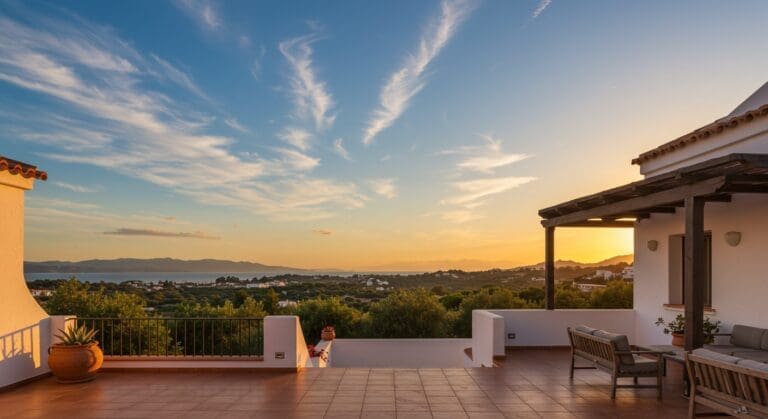
It is seven in the morning and the light on the water is doing something almost unreasonable. You are sitting on the terrace of your villa above Jávea, coffee cooling slightly faster than you’d like, watching a fishing boat make its slow diagonal across a sea that cannot decide whether it wants to be turquoise or cobalt and has, apparently, settled on both. The almond trees on the hillside behind you are catching the first heat of the day. A gecko has taken up position on the warm stone wall with the attitude of someone who owns the place – which, in every way that matters, it does. This is the Costa Blanca before the tourists wake up. It is, quietly, one of the finest places in Europe to be alive.
The Costa Blanca rewards people who bother to understand it. Families seeking genuine privacy – not the managed kind you get at a resort, but the real kind, where no one can see your children’s inflatable situation from the road – find here exactly what they came for. Couples marking something significant: a fortieth birthday, a twentieth anniversary, the end of something difficult and the beginning of something better – discover that this stretch of Spanish coastline has a rare talent for ceremony. Groups of friends who have graduated from package holidays but haven’t gone full Balearic Islands yet will find the Costa Blanca hits a particular sweet spot: sophisticated without trying too hard, beautiful without being vain about it. Remote workers who need fibre broadband, a desk with a view, and a pool within reach for the 3pm creative crisis are increasingly choosing villas here over city apartments. And the wellness-minded traveller – the one who wants yoga on a terrace, long coastal walks, exceptional local produce, and to sleep for nine hours without guilt – will find the Costa Blanca quietly transformative. The trick, as with most great places, is knowing where to go. That is what this guide is for.
Getting Here is Easier Than You Deserve (Given How Good It Is)
The Costa Blanca sits along the southeastern Mediterranean coast of Spain, in the Valencia region, stretching roughly from Dénia in the north to Torrevieja in the south – about 200 kilometres of coastline that contains more variety than that distance suggests. Two airports serve the region, and between them they cover most bases.
Alicante-Elche Miguel Hernández Airport is the main gateway, well connected to most major European cities with both full-service and low-cost carriers running frequent routes, especially from April through October. For the northern reaches of the coast – Jávea, Moraira, Dénia – Valencia Airport is often the more sensible choice, particularly if you’re travelling with a driver or private transfer, since it shaves a useful chunk off the journey. Flying into Alicante and driving north through the mountains on the AP-7 motorway, watching the landscape shift from flat coastal plain to the dramatic hinterland of the Montgó massif, is a journey worth scheduling in daylight if you can manage it.
A private transfer from either airport to a villa is the civilised choice – and for groups, it makes straightforward economic sense. Car hire is widely available and, once you’ve collected a vehicle, the road network is generally excellent. The motorway system connects most of the coast efficiently; the mountain roads connecting inland villages require more patience and rather better brakes. Sat nav will occasionally suggest routes that prompt quiet panic. This is part of the experience.
A Food Scene That Has No Business Being This Good
Fine Dining
The Costa Blanca has something it probably shouldn’t: a legitimate claim to being one of the great fine dining destinations in Europe. Not merely “good for Spain” or “impressive considering the location,” but genuinely, internationally significant. The evidence is conclusive and comes with stars attached.
Quique Dacosta Restaurante in Dénia holds three Michelin stars – the only restaurant in the region to do so, and one of a very small number in the world to be considered genuinely essential. The single tasting menu, named “Cocinar Belleza” (to cook beauty, which sounds pretentious until you experience it), is built around Valencian ingredients treated with a kind of reverence that would embarrass a sommelier. Each course arrives as something between a dish and a theatrical scene – unlikely combinations, unexpected textures, the occasional ingredient that makes you stop mid-sentence. Booking well in advance is not optional. This is not the place to discover your dislike of tasting menus.
BonAmb in Jávea is, if anything, more approachable in setting while losing nothing in ambition. Chef Alberto Ferruz runs a kitchen with two Michelin stars and a position on the world’s 50 best restaurants list, which is the kind of achievement you don’t mention at the start of a meal because it sets expectations at a level that could only end in disappointment – and yet doesn’t. Overlooking the Montgó Natural Park with the Mediterranean as backdrop, the cooking is intensely seasonal, rooted in the best local ingredients, and possessed of the kind of clarity that only comes from genuine confidence. The open kitchen adds a sense of theatre without performative distraction.
Inland, about 40 kilometres from the coast near Cocentaina, L’Escaleta makes a compelling case for deviation. Two Michelin stars, headed by chef Kiko Moya with sommelier Alberto Redrado – named Best Sommelier in Spain in 2019 – and a menu shaped by the herb and spice garden that surrounds the old finca. The Sierra de Mariola mountains visible through the windows. The integration of modern technique with deep Mediterranean tradition. The drive to get there is, genuinely, part of the meal.
Back on the coast at Moraira, Peix & Brases offers single Michelin-starred dining with a focus that its name announces directly: peix (fish) and brases (charcoal grill). The Mediterranean-Asian fusion approach might sound like a formula that has been done before – and it has – but here it is executed with enough precision and personality to feel entirely its own. The fish, caught locally and treated with appropriate respect, is the star the kitchen quite rightly allows it to be.
Where the Locals Eat
The local eating culture is built around things that need no improvement and rarely receive any: fresh seafood, excellent olive oil, rice dishes cooked properly, and the understanding that a meal is an event with no natural time limit. Markets are the starting point. Dénia’s twice-weekly market draws locals who know exactly which stall carries the best gambas rojas – the red prawns that are this stretch of coast’s particular contribution to gastronomy. They are worth eating more than once. The Mercat Municipal in Alicante is an education in what Spanish food can be when no one is packaging it for export.
Purobeach Dénia provides the luxury beach club experience with the intelligence to match: an infinity pool, Balinese beds, Mediterranean food that takes itself seriously, and an atmosphere that has managed the difficult trick of being genuinely relaxed while being quietly exclusive. The midday stop for a long lunch that becomes an afternoon that becomes an early evening is, here, not decadence. It is schedule management.
Hidden Gems Worth Seeking Out
El Xato in La Nucía has been operating for over a century, which in restaurant terms is the equivalent of winning every argument. Family-run, warm-interioried, and possessed of a commitment to traditional Spanish cooking that is not nostalgia but practice, it turns out a Pulpo a la Brasa (grilled octopus) and a Fideuà – the pasta-based cousin of paella that is, frankly, more interesting than its more famous relative – that justify the drive from wherever you happen to be staying. The service has the unhurried confidence of an establishment that has never needed to panic.
The beach bars along the less-visited northern coast – particularly around Calpe and the quieter stretches near Cap de la Nau – serve the kind of honest fried fish and cold local wine that reminds you why Mediterranean food became a global template. These are not discoveries in the Instagram sense. They are pleasures in the older sense.
A Coastline That Refuses to Be Monotonous
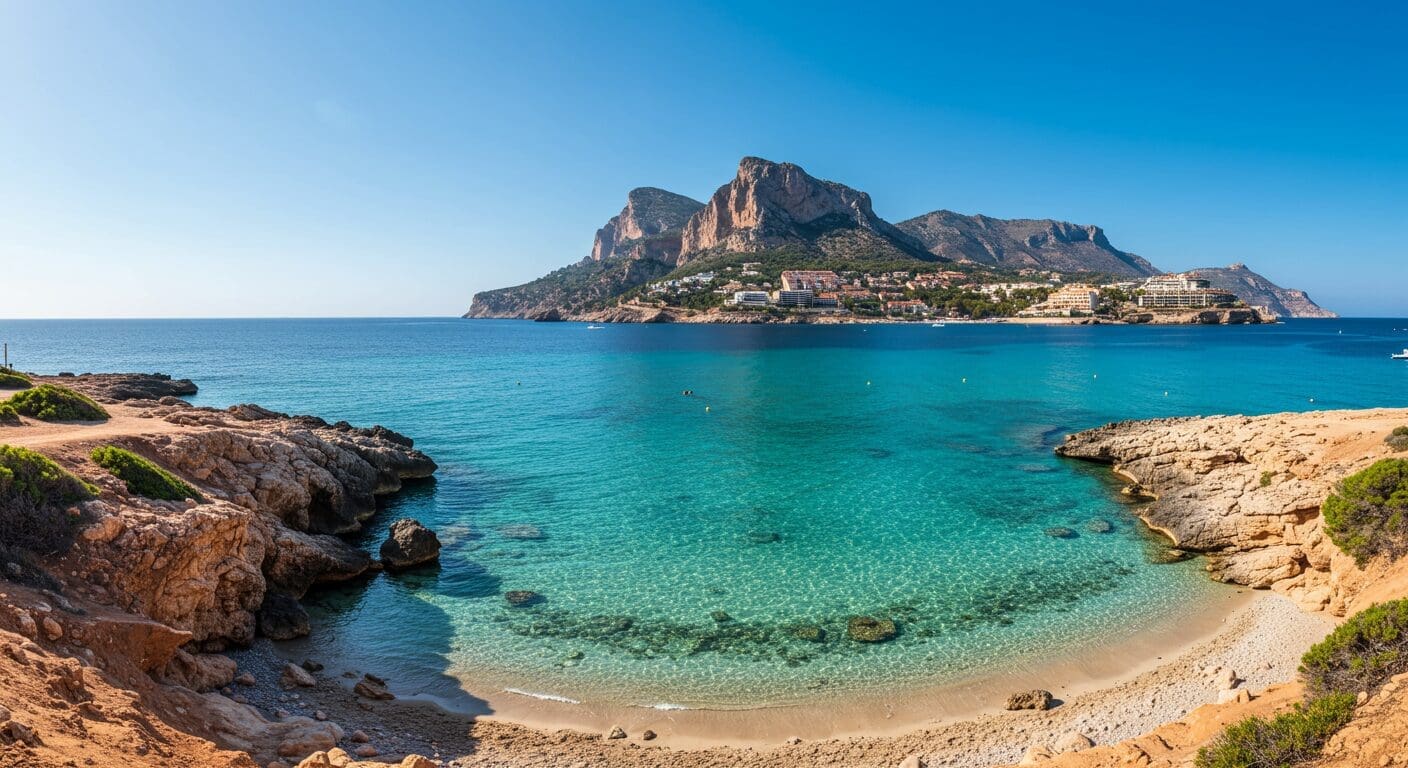
The Costa Blanca’s name – White Coast – refers to the colour of its sand and limestone cliffs, and the clarity of light that bounces between them. It is an accurate name, which is rarer than you’d expect in marketing. The coastline runs from the flat rice paddies and wetlands near Dénia in the north to the salt lakes and resorty sprawl of Torrevieja in the south, and in between it contains more variety than its singular name implies.
The northern stretch, from Dénia to Altea, is the one that tends to convert people permanently. Jávea (Xàbia in Valencian) sits around a natural bay surrounded by the Montgó massif, with three distinct areas – the old town, the port, and the beach – that function almost as separate villages and somehow all work. The coves around Cap de la Nau require some navigation to reach, which is their primary quality: small, largely stone-beached, clear-watered, and quiet in a way that larger beaches are not. Playa de la Granadella, tucked into the cliffs south of Jávea, is one of the most beautiful small beaches on the Spanish Mediterranean. The walk down is steep. This is the correct price of admission.
Moraira is the choice for those who have done their research. Small, relatively restrained in its tourism, possessed of a working castle that actually looks like a castle rather than a theme park version of one, and ringed by coves that remain genuinely accessible without becoming genuinely crowded. The beach at El Portet is particularly worth an afternoon.
Calpe announces itself with the Peñón de Ifach – a 332-metre rock that rises from the sea with a frankly overdramatic confidence that you cannot help but respect. The beaches on either side of it are wide and sandy; the rock itself is a natural park with a path to the summit that offers views of the entire northern coast and, on clear days, all the way to Ibiza. The town below has been somewhat consumed by its tourist industry, but the fish market at the port still operates with serious intent.
The beach clubs along this stretch – Purobeach Dénia chief among them – have understood something the resorts further south occasionally miss: that luxury and relaxation are not competing states but the same state at different volumes.
Things to Do That Aren’t Just Sitting by the Pool (Though That Is Also Valid)
The honest answer to the question of what to do in Costa Blanca is: whatever pace suits you, because the infrastructure for almost any version of a holiday exists here. But there are things that repay attention.
The Montgó Natural Park, sitting between Dénia and Jávea, is perhaps the most accessible serious walking country on the coast – proper limestone massif with marked trails, wild orchids in spring, and the occasional vulture overhead who is not, despite appearances, following you personally. The ascent to the summit at 753 metres takes two to three hours and delivers views that comprehensively justify the effort.
The inland town of Guadalest is one of those places that every guidebook recommends and that therefore requires some management of expectations regarding crowds during peak season. The setting – a castle village perched on a rock pinnacle above a reservoir of extraordinary colour – is legitimately worth seeing. Go early in the morning. Go in spring. Go on a Tuesday. The village itself, once you’ve navigated the souvenir shops, contains a series of small private museums ranging from the eccentric to the genuinely interesting, which is about the right ratio.
Day trips along the coast reward spontaneity. Altea, just south of Calpe, is a white village of narrow streets, blue-domed church, and serious art galleries that has managed the tricky balance of being charming without being self-congratulatory about it. Alicante itself is frequently overlooked by people staying on the northern coast but has a proper old town, the dramatically positioned Castillo de Santa Bárbara, and a palm-lined promenade – the Explanada de España – that is one of the better urban walking experiences on the Mediterranean.
Boat trips from most marina towns allow access to coves unreachable by road. Private charter – a small motorboat for a day, stocked with whatever the local deli can contribute – is a straightforward upgrade over shared excursions and the sort of decision you congratulate yourself on for the entire afternoon.
Adventure by Land, Sea, and the Occasional Vertical Surface
The Costa Blanca has a quiet reputation among rock climbers that sits slightly oddly with its sunny-holiday image but is entirely deserved. The area around Finestrat and Sella, and particularly the crags at El Chorro and the sport climbing routes throughout the Alicante province, attract climbers from across Europe, drawn by reliable winter sunshine (the rock dries quickly and the temperatures are mild enough for outdoor climbing when most of continental Europe is under cloud) and an exceptional density of quality routes across all grades.
Diving is a serious occupation along this coast. The clear water – visibility regularly exceeding 20 metres – and the variety of marine environments around the Peñón de Ifach and the Isla de Benidorm make for diving that doesn’t require certification in surprise: seagrass meadows, rocky reefs, the occasional wreck, cephalopods of various sizes behaving with their customary air of mild offence at being observed.
Kitesurfing has established itself at several points along the coast, with the flat water areas near Santa Pola and the more exposed beaches towards Torrevieja providing the wind conditions the sport requires. Sailing from any of the marinas – Dénia, Jávea, Moraira, Calpe – is straightforward, with charter companies providing everything from skippered yachts to bareboat hire for those with the relevant certificates and the relevant confidence.
Cycling on the northern Costa Blanca has developed infrastructure in recent years – a combination of coastal routes and mountain passes that make it a reasonable destination for road cyclists who want the views without committing to a full mountain stage. The routes through the Sierra de Bernia and the Jalón valley, where the almond blossom in January and February turns the hillsides a soft white, are among the most scenically rewarding in the Valencia region. The climbs are honest about being climbs. This is not a destination for flat riding.
Why Families Come Back Every Single Year
There is a particular expression that appears on the faces of parents who have rented a private villa with a pool in the Costa Blanca rather than a hotel room. It is the expression of people who have solved a problem they had been solving incorrectly for several years. The villa – private garden, private pool, no negotiation required about sunloungers, children’s noise absorbed by the space rather than reverberating down a corridor – changes the fundamental arithmetic of a family holiday.
Practically speaking, the Costa Blanca is genuinely well-organised for families. The beaches across the northern stretch – particularly around Jávea and Moraira – are sheltered bays with calm water and the kind of gradual depth that allows parents to look at their phones occasionally without immediate existential anxiety. Water parks exist for the days when no one can agree on what to do and something with a slide solves the argument; Aqualandia in Benidorm and Terra Mítica are both within reasonable driving distance of most villa locations.
The food culture is helpful: Spanish children’s menus are not the degraded experience they can be elsewhere in Europe, and the local custom of eating late and treating restaurants as extended social events means children who push their bedtimes are not anomalies but participants. The markets provide entertainment of the non-organised kind. The boats can be hired for days. Teenagers with snorkelling equipment and access to a rocky cove become, temporarily and miraculously, pleasant company.
For multi-generational groups – the grandparents, the parents, the teenagers, possibly a baby making its international debut – the villa solution scales in a way that hotels simply cannot. Separate bedrooms, shared spaces, a pool for the grandchildren and a shaded terrace with adequate wine supply for their grandparents. Everyone goes to bed having had the holiday they came for.
History Wearing Its Suntan Lightly
The Costa Blanca has been considered desirable real estate for considerably longer than the package holiday industry has been operating. The Iberians settled this coast. The Romans improved it, in the way Romans improved everything by first conquering it and then building things that outlasted their ambition. The Moors arrived in the 8th century and remained for five centuries, leaving behind an agricultural system of terracing and irrigation that still shapes the landscape, and an architectural vocabulary still visible in the hilltop castles and the narrow streets of the old towns.
Alicante’s Castillo de Santa Bárbara is the most dramatic single historical site on the coast – a Moorish fortress extended by Spanish monarchs, positioned on a rocky outcrop 166 metres above the city, accessible by lift (the pragmatic option) or foot (the scenic one). The views alone justify the visit; the history inside, told with more care than many comparable Spanish castle museums, makes it worth an extra hour.
The old town of Dénia, clustered below its own castle, has layers of occupation – Roman, Moorish, Christian – that reward walking without any particular agenda. The Dénia castle museum is honest about the complexity of the place’s history in a way that more touristified sites are not. The Iberian settlement of La Serreta near Alcoy, and the Roman ruins visible in several inland towns, complete a picture of a coast that has been actively interesting to humans for several millennia. The fact that it is also excellent for a week by the pool does not diminish this. The two things coexist here with unusual ease.
The Moros y Cristianos festivals – re-enactments of the battles between Moorish and Christian forces staged across dozens of towns in the region throughout the summer and autumn – are among the most spectacular local celebrations in Spain. Alcoy holds the most famous version; Villajoyosa the most theatrical. Both involve elaborate costumes, considerable noise, and an entire town’s worth of collective joy that is, briefly and completely, contagious.
Shopping With Restraint (Or Without It – No Judgement)
The Costa Blanca is not primarily a shopping destination in the way that, say, Milan or even Barcelona positions itself. This is, actually, one of its better qualities. The shopping that exists here is rooted in the place – local ceramics, particularly the work coming out of the pottery towns of the Valencian interior, are genuinely worth taking home. The tradition dates back to Moorish occupation and the quality of the contemporary work, available in studios and markets across the region, is high enough to justify the luggage reorganisation required to get it home safely.
Local produce deserves serious attention as a category of souvenir. The olive oil from the Alicante province – particularly from the Jalón valley’s Alfafara mills – travels well and is noticeably better than the export versions available elsewhere in Europe. Turrón, the almond nougat made in Jijona and Alicante since the 16th century, is one of those local specialities that tastes different and better in its place of origin. The Jijona factory does tours, which is more interesting than it sounds. Locally produced wines from the Marina Alta DO, the wine region covering much of the northern Costa Blanca, are improving steadily year on year and remain largely unknown outside the region – which keeps the prices honest.
The weekly markets in Dénia, Jávea, and Moraira are the sensible first stop for anyone wanting local craft work without the retail markup. Altea’s art quarter contains a small concentration of galleries and studios with work of genuinely variable quality – which is, ultimately, more interesting than a street of shops selling uniformly identical things at uniformly identical prices.
What You Actually Need to Know Before You Go
The Costa Blanca is in Spain, which means the currency is the euro and the tipping culture is the relaxed version: rounding up a bill or leaving a small amount is appreciated but the obligation-by-convention that characterises American or British tipping culture does not apply. A 5-10% tip in a good restaurant, nothing at all in a café, is contextually correct. No one will notice either way with any particular feeling.
Spanish is the primary language throughout the region; Valencian (a dialect of Catalan, although Valencians will explain the distinction at length if asked) is co-official and widely spoken, particularly in the smaller inland towns and northern coastal villages. English is spoken with varying degrees of fluency in tourist-facing businesses along the coast. In the interior, a phrase book or translation app is genuinely useful rather than merely polite.
The best time to visit depends entirely on what you’re visiting for. July and August deliver guaranteed heat – 30°C-plus, almost no rain, seas warm enough to be comfortable from mid-morning – along with the largest crowds and the highest prices. June and September are the sensible answer to this problem: warm enough, quieter, and with a different quality of light that photographers notice and everyone else benefits from without quite articulating why. April and May are exceptional for walkers, cyclists, and anyone who prefers a landscape that has colour in it – the wildflower season is brief and not predictable, but when it arrives it is remarkable.
The pace of local life runs late by northern European standards. Lunch before 2pm is technically possible but culturally premature; dinner before 9pm marks you out as either northern European or deeply hungry. The siesta culture is real in the smaller towns and means that attempting to find anything open between approximately 2pm and 5pm on a weekday will either teach patience or frustrate it, depending on disposition. Surrendering to the schedule is easier and more pleasant than resisting it.
Safety is not a significant concern. The Costa Blanca is one of the more straightforward destinations in Europe in this regard – standard urban precautions apply in Alicante city; the resort towns and villa areas along the northern coast require no particular vigilance beyond the universal.
Why a Villa Is Simply the Better Answer
The luxury holiday Costa Blanca offers through a private villa is a categorically different experience from anything a hotel can provide – not because hotels are without merit, but because they are solving a different problem. A hotel provides services to multiple guests simultaneously. A villa provides services to you. This is not a subtle distinction.
The privacy of a well-chosen villa in this region – particularly in the hills above Jávea or Moraira, or along the clifftops near Cap de la Nau – is the kind that affects the nervous system. No lobby to walk through, no early morning lounger reservation required, no assessment of whether your children’s noise is disturbing other guests. A private pool in a private garden in a private piece of Mediterranean hillside: the arithmetic of this is not complicated.
For groups – whether that means eight friends who have finally coordinated diaries, or three generations of a family who have decided to do something properly – the villa scales in ways that compound its advantage. A six-bedroom villa with a private chef and concierge, divided among eight people, frequently costs less per head than a comparable hotel room, while delivering more space, more privacy, and a level of personalisation that no hotel can match. The concierge who arranges your restaurant reservations at BonAmb, organises a private boat for the Tuesday, and sources the specific local wine you asked about after dinner on the first night is not a luxury add-on. It is, increasingly, the point.
For remote workers who have realised that “working from home” and “working from a villa with a terrace above the Mediterranean and reliable fibre broadband” are technically the same thing but practically very different, the Costa Blanca villas available through Excellence Luxury Villas come with the connectivity that modern remote work requires. Starlink is available in many of the premium properties for the rural locations where standard broadband is patchier. A proper desk, a proper chair, and a pool visible from the window: this is an office upgrade that no corporate real estate budget could otherwise achieve.
The wellness infrastructure in a properly equipped villa – private pool, gym, outdoor yoga terrace, proximity to walking country and clean water – means that the wellness-focused guest does not need a spa hotel’s programming to achieve what they came for. The Costa Blanca’s landscape and climate are, fundamentally, restorative. The villa is the vehicle that allows you to experience them at your own tempo.
With over 27,000 properties worldwide, Excellence Luxury Villas can match the specifics of what you’re looking for to the right property in the right location. If this guide has suggested that the Costa Blanca might be worth more than a passing glance, the next sensible step is to explore our collection of beachfront luxury villas in Costa Blanca – properties that take the best of this coast and make it, for a week or two, entirely yours.
More Costa Blanca Travel Guides
- Best Restaurants in Costa Blanca: Fine Dining, Local Gems & Where to Eat
- Best Beaches in Costa Blanca: Hidden Coves, Beach Clubs & Coastal Secrets
- Costa Blanca with Kids: The Ultimate Family Holiday Guide
- Best Time to Visit Costa Blanca: Month by Month Weather, Crowds & Tips
- Costa Blanca Luxury Itinerary: The Perfect 7-Day Guide
- Romantic Costa Blanca: The Ultimate Couples & Honeymoon Guide
What is the best time to visit Costa Blanca?
For most travellers, June and September represent the optimal balance: warm temperatures in the high 20s, seas comfortable for swimming, meaningfully fewer crowds than July and August, and prices that reflect the reduction in competition for the same beach. July and August guarantee heat and guaranteed company – the northern coast handles high season better than the southern resort towns, but it is still high season. Spring, particularly April and May, is exceptional for walking, cycling and wildflower season. Winter in the Costa Blanca is mild enough to be genuinely appealing – daytime temperatures regularly reach 18-20°C, and the quietness of the coast between November and March has its own considerable appeal for those who prefer a landscape without other people standing in front of it.
How do I get to Costa Blanca?
Alicante-Elche Miguel Hernández Airport is the primary gateway, with direct flights from most major European cities operated by both full-service and low-cost carriers. For the northern stretch of the coast – Dénia, Jávea, Moraira, Calpe – Valencia Airport is often the better option, cutting journey time to many villa locations. From Alicante airport to the centre of the northern coast is approximately 60-90 minutes by road depending on exact destination; from Valencia Airport, roughly 60-75 minutes to Dénia and Jávea. Private transfers are available from both airports and are the recommended option for groups or anyone arriving with significant luggage. Car hire from either airport provides the flexibility the region rewards, given that many of the best beaches, restaurants and inland villages require independent transport.
Is Costa Blanca good for families?
Genuinely, yes – and not in the “it’s fine” way but in the way that produces return visits. The northern coast has sheltered bays with calm, clear water and gradual beach depth suited to children of all ages. The private villa with pool solves the fundamental hotel problem of shared space and managed noise. Spanish food culture is accommodating for children – portions are generous, late dining is normal, and local restaurants treat families as participants rather than problems. The infrastructure for family activity – boat trips, water parks within driving distance, snorkelling coves, mountain walks at varied difficulty levels – is genuinely broad. For multi-generational groups, larger villas with private pools and separate living spaces allow different ages to coexist with their own rhythms. The concierge service through luxury villa companies can organise child-specific activities, private guides and equipment rental, removing the planning burden that tends to accumulate on one parent.
Why rent a luxury villa in Costa Blanca?
The fundamental reason is space and privacy at a ratio that hotels cannot match. A private villa means a private pool, a private garden, your own kitchen and living areas, and the ability to set your own schedule without the hotel’s timetable imposed on top of it. For groups of more than four people, the per-head cost of a luxury villa frequently compares favourably with equivalent hotel rooms, while delivering more space, more privacy and the option of additional services – private chef, daily housekeeping, concierge – on request. For families, the difference between a hotel corridor at 10pm with tired children and a villa garden is not subtle. For couples, the seclusion and personalisation of a well-chosen villa – the right terrace, the right view, a pool that is genuinely private – creates conditions for the kind of holiday that justifies the journey.
Are there private villas in Costa Blanca suitable for large groups or multi-generational families?
Yes, and this is one of the Costa Blanca’s particular strengths as a villa destination. The region has a well-developed stock of larger properties – six, eight and ten-bedroom villas – designed to accommodate extended groups without the cramped compromise of hotel blocks. Many of the premium properties feature separate guest wings or annexes that allow different family units to maintain their own privacy while sharing communal spaces: the pool, the terrace, the dining area. Private chefs can be arranged for groups, removing the logistical challenge of feeding large numbers at restaurants. Concierge services handle the organisation of group activities – boat charters, restaurant reservations, car hire – at a scale that would be difficult to coordinate independently. The Costa Blanca’s landscape, with its combination of coastal access and hillside privacy, provides the right physical setting for large group villas that genuinely feel like retreats rather than managed facilities.
Can I find a luxury villa in Costa Blanca with good internet for remote working?
Increasingly, yes – and the quality of connectivity has improved significantly across the region in recent years. Fibre broadband is standard in most premium villa properties along the northern coast; towns such as Jávea, Moraira and Dénia have good infrastructure. For more rural or clifftop locations where standard broadband is patchier, Starlink satellite internet is available in a number of premium properties and delivers the consistent high-speed connection that video calls and cloud-based work require. When booking, it is worth specifying connectivity requirements explicitly – Excellence Luxury Villas can confirm the exact broadband setup in any property. Most villa bookings for remote workers benefit from a dedicated workspace: a desk with natural light, reliable power and a view that makes extended screen time considerably more bearable than any office alternative.
What makes Costa Blanca a good destination for a wellness retreat?
Several things converge here in a way that is not accidental. The climate delivers over 300 days of sunshine annually, which is a blunt but effective wellness instrument. The landscape – coastal walking paths, mountain trails, clean water for swimming – provides the outdoor infrastructure that wellness requires without any particular organisation. The local food