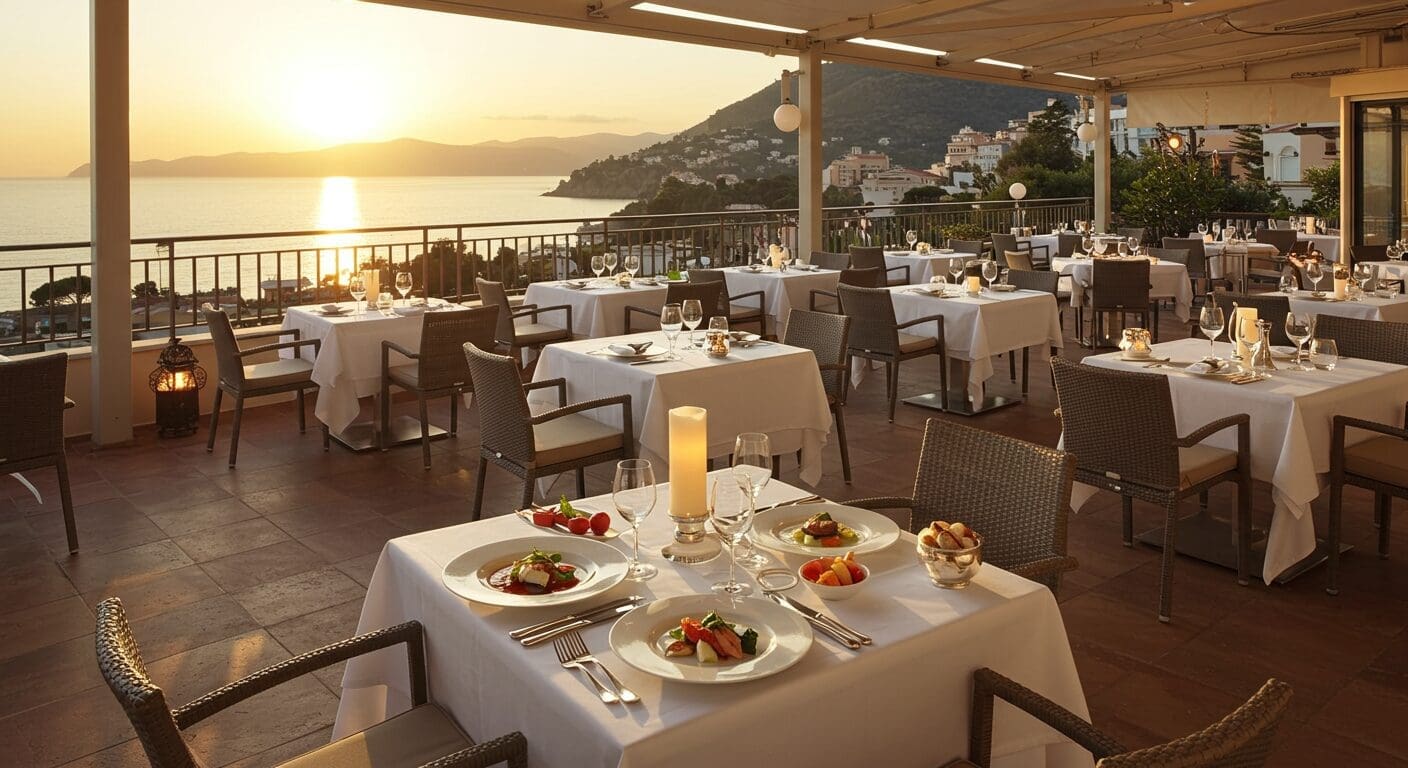
Best Restaurants in Dubrovnik-Neretva County: Fine Dining, Local Gems & Where to Eat
What does it actually mean to eat well on the Dalmatian coast – and does Dubrovnik, with its cruise ships and selfie sticks and queues that would embarrass a theme park, still have the culinary credibility to answer that question? The short answer is yes. The longer answer is what follows: a county that stretches from the walled city itself out through the Pelješac peninsula, across the Neretva delta and down to the islands of Korčula and Mljet, all of it producing food and wine of a quality that has absolutely no interest in living up to a postcard. The olive groves are old. The oysters are extraordinary. The wine is better than most of Europe has yet noticed. And if you know where to look – and you will, after this – the restaurants range from Michelin-starred kitchens doing genuinely thrilling things with Adriatic produce to stone-walled konobas where the menu is handwritten, the fish was swimming this morning, and nobody has thought to put it on Instagram.
The Fine Dining Scene: Michelin Stars and Culinary Ambition
Dubrovnik-Neretva County does not have the sheer density of Michelin stars you might find in, say, coastal Istria, but what it lacks in quantity it more than compensates for in quality and setting. The restaurants that have earned recognition here have done so in genuinely competitive circumstances – cooking for an international audience that arrives with very high expectations and, occasionally, very low patience for anything that feels like effort.
At the apex of the fine dining scene sits Restaurant 360, which has held its Michelin star every year from 2018 through 2024 and shows no sign of relinquishing it. Located in the Old Town’s harbour, the terrace stretches along the medieval walls and St. John’s Fortress – a setting so inherently theatrical that a lesser kitchen might simply coast on the view. Chef Marijo Curić does not coast. His cuisine is technically precise, rooted in Mediterranean produce but enriched with Asian inflections and finished with classical French technique. It is the kind of cooking that makes you pay attention to what is on the plate rather than what is behind it. That, in this particular postcode, is no small achievement.
Equally formidable – and rather more old-school in its grandeur – is Nautika, positioned at Pile near the western entrance to the Old City, with two panoramic terraces that offer views across the Adriatic to the Lovrijenac and Bokar fortresses. Chef Mario Bunda’s insistence on fresh, locally sourced ingredients gives the menu its backbone: shellfish lead the charge, from shrimp risotto to St. Jacob’s scallops, while meat lovers are not left to stare wistfully at their companions’ plates – veal fillet in wine sauce is the kind of dish that justifies booking the second terrace table from the left. Two tasting menus are available, five or seven courses, both of them earning their price.
Restaurant Dubrovnik rounds out the formal fine dining triumvirate and, if anything, offers the most complete front-of-house experience of the three. A guest greeter at the bottom of the stairs, a maître d’ at the top, and a sommelier who actually knows what they are talking about – it is all rather reassuring in a county where the phrase “fine dining” can occasionally mean a white tablecloth and a printer that formats menus in Papyrus. The cooking is classically European with Adriatic leanings: sea bass, steak, and duck anchor the signature mains, while the kitchen’s creative intelligence shows itself most clearly in presentation and the layering of accompanying flavours. The Michelin Guide listing is well deserved and well defended.
Local Gems: Where the Cooking Gets Personal
The finest meal you eat in Dubrovnik-Neretva County may well not come with a tasting menu or a sommelier. It may come from a kitchen with four tables, a chef who is also the owner’s wife, and a wine list that is essentially a conversation. These places are harder to find, easier to love, and considerably harder to get a reservation at once word gets out.
Tavulin, listed in the Michelin Guide, occupies that interesting middle ground between neighbourhood restaurant and genuine culinary destination. It sits in a tourist-heavy corner of the Old Town – a location that has felled many a kitchen’s ambition – and has chosen to respond by cooking with focus and genuine local intent. The evening menu is where Tavulin’s keep-it-local-but-be-inventive philosophy comes through most clearly: mussels in white sauce and an octopus ragout that tends to linger in the memory long after the walking tour has been forgotten. It is exactly the kind of restaurant that rewards visitors who do their research over those who wander in because there was a free table.
Then there is Bura Bistro & Bar, beside Dubrovnik Cathedral, co-owned by professional sommelier Marin, who has spent years travelling in pursuit of good food and interesting wine. The result is a concise, seasonal menu that changes with genuine conviction, matched to an intelligently curated wine list and cocktails that are not an afterthought. Named for the bora wind that barrels down from the Dinaric Alps and into the Adriatic – a wind locals discuss with a kind of fond exasperation – Bura has that quality that the best small restaurants share: you feel you have discovered it, even if it turns out everyone already knows.
Beyond the city walls, the county rewards exploration. Villages on the Pelješac peninsula – particularly around Ston and Mali Ston – harbour konobas of real quality, most of them built around the oysters and mussels that have been farmed in the Mali Ston bay for centuries. These are not refined experiences in the Restaurant 360 sense. They are something arguably better: places where the produce is exceptional, the cooking is honest, and the terrace looks out over the very water the food came from that morning.
Beach Clubs and Casual Dining
There is a version of eating in Dubrovnik-Neretva County that involves a sun lounger, a view, and a glass of something cold arriving with minimal ceremony. This version is also very good, and there is no shame in it whatsoever.
The islands of Korčula and Mljet both offer beach-adjacent dining of genuine quality – not the limp salads and frozen chips of lesser resorts, but grilled fish pulled from the water that morning, plates of local cheese and cured meats, and rosé served at the correct temperature. On Korčula, the town itself has several well-regarded spots along the harbour where the line between casual lunch and serious gastronomy pleasantly blurs. Mljet, being quieter and more deliberately unhurried, tends toward the simple and excellent: grilled lamb, freshly caught fish, local olive oil that makes you reconsider every olive oil you have used before.
Closer to Dubrovnik, the Lapad peninsula and Babin Kuk area offer beach club dining that caters to a sophisticated international crowd without entirely losing sight of local flavour. The quality varies – as it does everywhere – but the better establishments take their wine lists and their fish sourcing seriously, and the setting, with the Adriatic doing its unhurried thing in front of you, tends to make almost everything taste better than it would anywhere else.
Food Markets and Local Produce
If you want to understand what makes this county’s restaurants so compelling, start at the market. Dubrovnik’s Gunduličeva Poljana market, in the heart of the Old Town, runs most mornings and is the kind of place that reminds you food has seasons. Farmers from the Konavle valley bring vegetables with actual flavour. There is local olive oil, figs, dried herbs, and small producers selling homemade rakija with the confidence of people who know perfectly well it is excellent.
Further afield, the Neretva delta – that unlikely agricultural corner of a county most people associate purely with the coast – produces mandarins, eels, and frogs that appear on regional menus with a specificity of place that is quite striking. The delta’s restaurants are not on most tourists’ itineraries. They should be. This is the most distinctive regional cooking in the county, and it tastes like nowhere else in Croatia.
For those renting a villa and cooking independently – or working with a private chef – the local markets offer produce that will make whoever is behind the stove look considerably more talented than they perhaps are. This is a compliment to the ingredients, not a reflection on the chef.
What to Order: The Essential Dishes
Certain dishes are non-negotiable in Dubrovnik-Neretva County. The Mali Ston oysters are among the finest in the Mediterranean – clean, cold, tasting of the sea with a mineral edge that imported alternatives rarely achieve. Order them wherever you see them. Order more than you think you need.
Peka – meat or seafood slow-cooked under a bell-shaped lid buried in embers – appears across the county and should not be missed. It requires advance ordering (usually 24 hours) and rewards patience with a tenderness of texture that faster cooking cannot replicate. Octopus peka, in particular, is one of those dishes that converts sceptics.
Crni rižot – black risotto made with cuttlefish ink – is a Dalmatian staple that the best restaurants elevate to something memorably good. Alongside it, look for brudet, a fisherman’s stew of mixed catch served over polenta, and brodetto, its close coastal relative. Lamb from the islands of Brač and Hvar makes its way onto menus throughout the county and is worth following. Sheep’s cheese – paški sir, from the island of Pag – appears on every serious cheese selection and justifies its presence every time.
Wine and Local Drinks
The Pelješac peninsula is the most important wine-producing area in the county and one of the most interesting in Croatia. The Dingač appellation, carved into the south-facing slopes above the sea, produces Plavac Mali wines of genuine distinction – full-bodied, dark-fruited, with a mineral character that reflects both the limestone soil and the intensity of the Adriatic sun. Producers like Miloš, Saints Hills, and Korta Katarina have attracted international attention, and the wines stand up to that scrutiny without flinching.
White wine drinkers should seek out Pošip, a crisp, aromatic white native to the island of Korčula that has become something of a calling card for Croatian white wine in export markets. It pairs beautifully with the county’s seafood and arrives cold enough in the better establishments to make a considerable impression on a warm afternoon.
Local spirits are worth exploring, principally travarica – herb-infused grappa – and the various rakijas that appear as digestifs. They vary from rough to remarkable, and the way to tell the difference is broadly to trust your host’s recommendation over the back bar of a tourist-facing restaurant. Craft beer has made modest inroads, and coffee, consumed with a seriousness that would put several European capitals to shame, is taken at konoba counters across the county at all hours that could conceivably be called morning.
Reservation Tips and Practical Advice
Dubrovnik in high season – roughly July and August – is one of the more intensely visited places in the Mediterranean. This is not a secret and has not been one for some time. The practical consequence for restaurants is that the best tables at the most sought-after establishments disappear well in advance. Restaurant 360, Nautika, and Restaurant Dubrovnik should be booked weeks ahead during peak season, not days. Bura and Tavulin are somewhat easier but reward early planning nonetheless.
For restaurants on the islands and the Pelješac peninsula, the situation is somewhat less pressured outside of high summer, but the best konobas operate on small capacity and genuine demand – a combination that means “we’ll just turn up” rarely ends well. A phone call the day before, in any language attempted with good humour, tends to be warmly received.
Lunch is generally an underrated strategy. The finest restaurants offer lunch service, often with lighter menus and slightly calmer atmospheres than the full evening production. The light on the Adriatic at midday is not to be underestimated either. Dinner reservations at outdoor terraces during summer should ideally be timed for sunset – which means different things at different times of year, and which the restaurants themselves are very good at advising on if you simply ask.
Dress codes at the top establishments are smart casual at minimum – the worn linen shorts that felt acceptable on the boat will not do at 360 or Nautika, and attempting them at Restaurant Dubrovnik is the kind of decision that follows a person home. The broader county is more relaxed, but a degree of effort is noticed and appreciated in the way it tends to be in places that take food seriously.
For those staying in a luxury villa in Dubrovnik-Neretva County, it is worth noting that the private chef option transforms the entire equation. A chef who knows the local markets and producers, cooking on your own terrace with your own view of the Adriatic, is not merely convenient – it is, on certain evenings, the best restaurant in the county. The Mali Ston oysters can be sourced. The Plavac Mali can be selected. The peka can be arranged. And the queue at the entrance is entirely absent, which is its own form of luxury.
For more on planning your time in this exceptional corner of Croatia, the full Dubrovnik-Neretva County Travel Guide covers everything from where to stay to what to do when you are not eating – though in this particular county, the gaps between meals are perhaps best kept deliberately short.