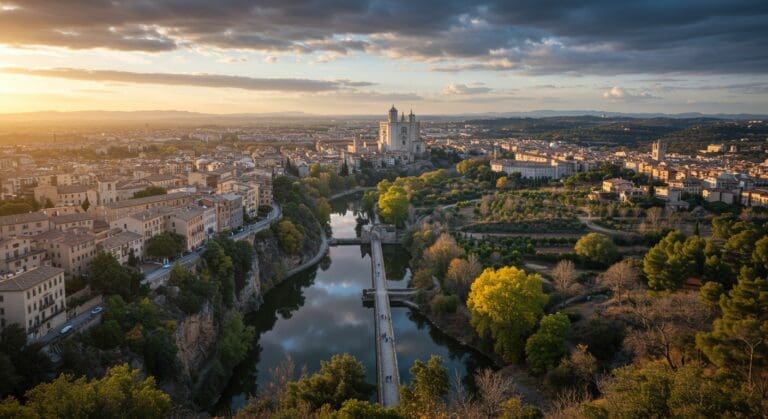
Dubrovnik-Neretva County Food & Wine Guide: Local Cuisine, Markets & Wine Estates
It begins, as the best days here tend to, with something cold and something briny. You are sitting somewhere above the Adriatic – a terrace, a harbour wall, a table under a fig tree that has been there longer than the republic that once ruled this coast – and someone has placed a plate of oysters in front of you. They came from the Mali Ston bay this morning. They are cold and clean and taste of open water, and the local white wine in your glass is so pale it is almost clear. The stone is warm. The sea is doing what the Adriatic does in the right light: turning seventeen different colours at once. You have not yet decided what to have for lunch. This is already the best decision you have made all year.
Dubrovnik-Neretva County is, in food terms, one of the most quietly serious places in the Mediterranean. It does not shout. It does not particularly care whether you have heard of it. But from the Pelješac peninsula’s celebrated wine estates to the wetland delta of the Neretva river where eels and frogs appear on menus with magnificent nonchalance, this is a region that has been eating well for centuries and sees no reason to stop now. This is your complete Dubrovnik-Neretva County food and wine guide: local cuisine, markets and wine estates – the knowledge you need to eat and drink like someone who actually lives here.
The Regional Cuisine: What Dubrovnik-Neretva County Actually Tastes Like
The cuisine of this county is a product of geography first, history second, and stubbornness a close third. You have the coast, which gives you fish, shellfish, salt and olive oil. You have the limestone hinterland – the karst – which is where you find lamb so flavoured by wild herbs it barely needs seasoning. You have the Neretva delta, which is where things get genuinely interesting, because here the freshwater and saltwater traditions collide and produce dishes that you will not find anywhere else in Croatia, or arguably anywhere else at all.
Dalmatian cooking is technically simple and deceptively skilled. The signature technique is peka – meat or fish cooked slowly under a bell-shaped iron lid, buried in embers, producing something that is simultaneously a braise and a roast and a very good argument for slowing down entirely. Lamb under peka. Octopus under peka. Veal with vegetables under peka. The principle never changes. The results are never the same twice, and that is rather the point.
Fish is treated with a reverence that borders on ceremonial. Grilled sea bass and bream are the backbone of coastal menus, but the real pleasures are in the smaller, less photogenic species – scorpion fish in a slow-cooked brodetto stew, salted anchovies dressed with olive oil and capers, sardines grilled over the embers until the skin crackles. Dubrovnik itself has its own culinary identity: pasticada, the city’s defining dish, is beef slow-braised in a sweet-sour sauce of wine, prunes and spices that takes two days to make properly. It is served with gnocchi. It is extraordinary. It is also, for better or worse, what every grandmother in Dubrovnik believes she makes better than everyone else’s grandmother.
The Neretva delta introduces a whole different register. Here, eel is king – grilled, stewed, served with polenta – and frog legs appear on menus in a way that surprises visitors but makes perfect sense once you have stood at the edge of those vast green wetlands at dusk and heard the noise coming out of them. The delta is also the place for mandarins: the valley produces some of the finest in Europe, and in season, their perfume drifts through the whole valley.
The Wines of Pelješac: A Peninsula That Deserves More Attention Than It Gets
The Pelješac peninsula is one of the great under-sung wine regions of Europe. Wine professionals know this. Wine tourists are beginning to realise it. Everyone else has been catching up, which suits the people who were already here just fine.
The star is Plavac Mali – a red grape indigenous to Dalmatia, genetically related to Zinfandel and Primitivo, which should give you some sense of what it is capable of. On Pelješac’s steep south-facing slopes, in the sub-appellations of Dingač and Postup, it produces wines of concentrated power and considerable elegance: dark fruit, iron, dried herbs, a tannic structure that rewards time in the cellar and patience at the table. Dingač, carved into the map in 1961 as Croatia’s first designated wine appellation, is the more celebrated. Postup, slightly further west, produces wines that are perhaps more approachable in youth. The argument between their respective advocates is passionate, cheerful, and likely to end with another glass being poured.
Producers to seek out include the Miloš winery in Ponikve, whose Dingač has genuine international standing, and Saints Hills – a larger operation with modern winemaking facilities and wines that have attracted serious critical attention. Korta Katarina, on the outskirts of Orebić, pairs excellent Plavac Mali with olive oil production and has a restaurant terrace that makes lingering unavoidable. The Grgić estate, founded by the Napa Valley legend Mike Grgich after Croatian independence, produces a white Pošip from Korčula as well as Plavac Mali, and visiting it carries the particular pleasure of a story well told.
For white wines, look to Pošip and Grk from the island of Korčula, both indigenous varieties with a minerality that speaks directly of limestone soils and sea air. Pošip in particular – aromatic, full-bodied, with an elegance that makes it embarrassingly easy to drink in quantity – is having a deserved moment in the wider wine world.
Wine Estates and Cellar Doors: Where to Go and What to Expect
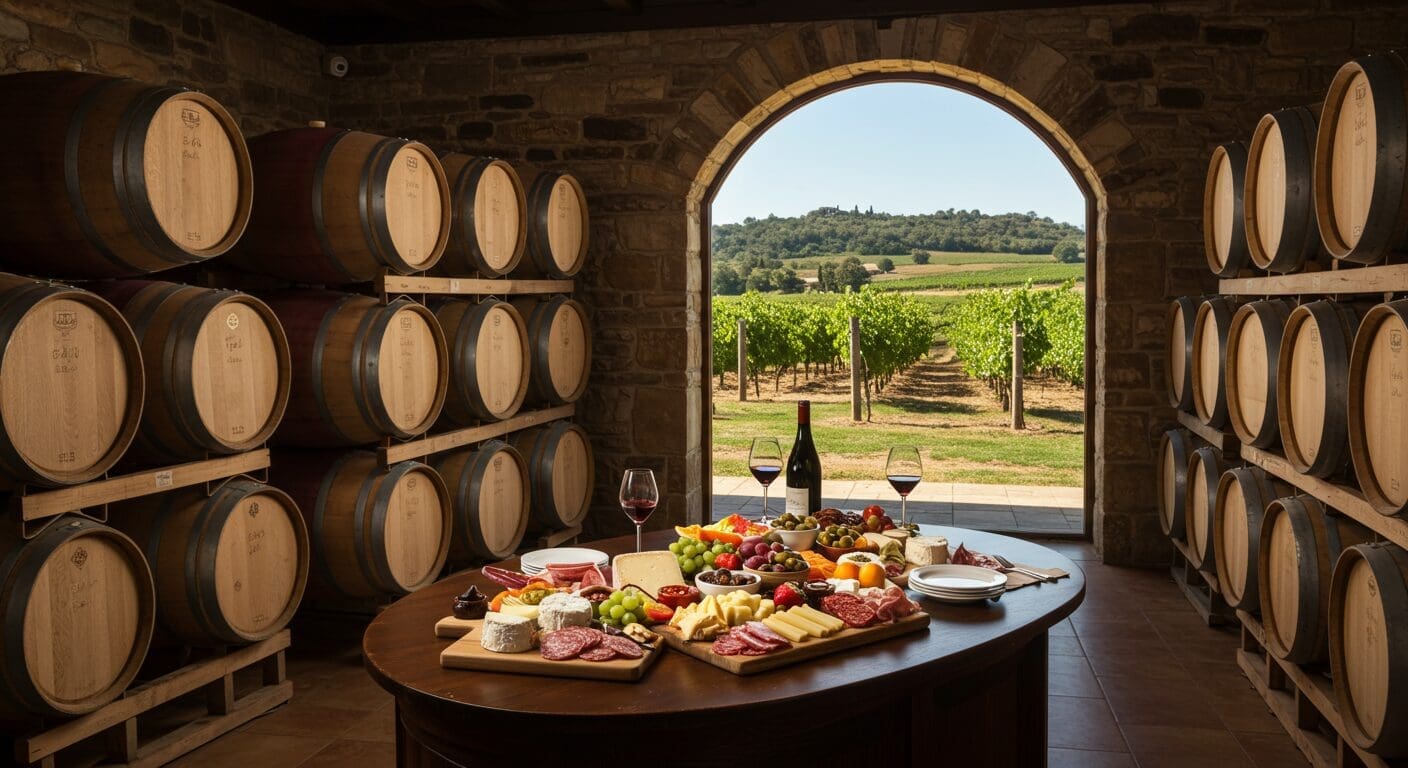
Wine tourism in Dubrovnik-Neretva County is still, mercifully, a relatively human-scale affair. You will not find vast tasting rooms with gift shops and corporate efficiency. What you will find are family operations where the person who makes the wine is often the person who opens the bottle, and where the conversation over a glass tends to be the most useful wine education you will receive all year.
The Pelješac wine road – which runs through the peninsula connecting the wine villages of Potomje, Trstenik and Janjina among others – rewards a slow day at the wheel (or better yet, a driver and no obligations). Potomje is the centre of Dingač production, a small village with a tunnel bored through the mountain to give vintners access to those ferociously steep southern slopes. Stop here and look down at the terraced vineyards falling toward the sea. It will recalibrate your understanding of how seriously these growers take their work.
Saints Hills offers a more polished visitor experience, with organised tastings and a striking contemporary winery building. Korta Katarina combines a cellar visit with exceptional olive oil tasting, which is worth factoring in as its own experience. For something more intimate, smaller family producers across the peninsula will often welcome visitors who have made contact in advance – this is where you will drink the wine that never makes it into export markets, and that is very much not a hardship.
Korčula’s wine producers, particularly around the village of Čara and the Pošip heartland of the island’s interior, are also worth the ferry crossing if you are spending time in the county more broadly. The island has a gentler landscape than Pelješac’s dramatic slopes, but the wines have their own authority.
Food Markets: Where the County Does Its Shopping
Dubrovnik’s Gunduličeva Poljana market is one of those places that manages to be both a genuine working food market and an extremely photogenic one, which is a harder balance to strike than it sounds. It occupies a square in the old city and runs on weekday and Saturday mornings with local producers selling vegetables, fruit, honey, olive oil, cheese and dried herbs. The lavender sachets and embroidered linens at the edges are for tourists. The tomatoes and the local sheep’s cheese are for everyone. The distinction matters.
The market at Gruž, in the port district outside the old city walls, is rather less visited and rather more real – a larger, louder, more workaday affair where the fish stalls are particularly impressive and the prices reflect local purchasing power rather than the premium attached to historic stone surrounds. If you are staying in a villa with a kitchen and any intention of cooking, Gruž is where you want to be on a weekday morning.
On Pelješac and the islands, smaller local markets appear in season with a produce that reflects the microclimate: local figs, olive oil in unlabelled bottles from a neighbour’s grove, Plavac Mali sold directly from a producer’s garage with a handwritten sign. These are the discoveries that make slow travel worthwhile. You cannot find them on an app. You find them by driving slowly and stopping when something looks interesting.
Olive Oil: The Region’s Other Liquid Gold
The olive groves of Dalmatia are ancient – some of the trees on the islands are genuinely centuries old, gnarled and enormous and apparently indifferent to the passage of time. The county’s olive oil production is smaller in scale than, say, Istria’s celebrated output, but the quality at its best is exceptional: early-harvest oils of intense green fruitiness and considerable pepper, produced in quantities that mean most of it never leaves the region.
Korta Katarina on Pelješac is perhaps the most accessible producer for visitors, combining wine and olive oil under one roof with the sort of tasting experience that makes the relationship between these two crops feel natural rather than coincidental. But across the county – on Korčula, on Mljet, in the villages behind Dubrovnik – you will encounter private production on a scale ranging from a few dozen litres to serious commercial operations, and the oil you buy directly from a producer will be among the best things you bring home.
The harvest period, typically October into November, is the time to be here for oil – and also, incidentally, for wine. The county in autumn is quieter, cooler, and arguably at its most itself.
Cooking Classes and Culinary Experiences Worth Booking
The cooking class market in Dubrovnik has matured considerably in recent years, which means there is now a meaningful difference between experiences that offer genuine insight into Dalmatian cuisine and those that offer a pleasant morning, a glass of wine, and a recipe you will probably not repeat at home. Both have their place. But if you want the former, the key is to look for classes that begin at the market, involve real technique, and are taught by people who cook this food for reasons other than tourism.
Several operators in the Dubrovnik area offer market-to-table experiences that cover the fundamentals of Dalmatian cooking: how to build a brodetto, how to prepare a proper pasticada (this takes patience and ideally begins the day before), how to work with seasonal produce and the flavour combinations that define coastal Dalmatian cooking – olive oil, capers, anchovies, lemon, fresh herbs. Some classes venture into the old city’s domestic architecture, cooking in historic stone kitchens that lend the whole enterprise an appropriate sense of place.
On Pelješac, certain wine estates offer food and wine pairing experiences that go beyond the standard tasting format, pairing locally produced wines with food that reflects the terroir of the region. These half-day or full-day experiences are among the better ways to understand why Plavac Mali and slow-cooked lamb are not simply a traditional pairing but a genuinely logical one – the tannins, the fat, the herb-inflected meat, the iron in the wine. It all makes sense in context.
The Best Food Experiences Money Can Buy in Dubrovnik-Neretva County
For those who want to eat at the highest level the region offers, a few experiences stand out as non-negotiable. First: the oysters and mussels of Mali Ston. The bay at Mali Ston, sheltered and cool, has been producing shellfish since Roman times – this is not marketing hyperbole, there are actual Roman references to the quality of these oysters – and a lunch at one of the restaurants on the waterfront, eating oysters pulled from the water that morning with local white wine, is one of the genuinely irreducible pleasures of this part of the Adriatic. Simple does not mean easy to replicate. This one cannot be replicated anywhere else.
Second: a private peka dinner, ideally arranged through your villa, with a local cook who has been making this dish for decades. The logistics of peka – the fire, the timing, the patience – mean it is best experienced in a domestic or private setting rather than a restaurant, and the best villas in the county can arrange exactly this. It is the kind of meal that becomes the reference point for all subsequent slow-cooked meat discussions. The bar will be set unreasonably high. This is not our problem.
Third: a day on Pelješac that moves between wineries and the sea, with lunch somewhere that the wine list is essentially the surrounding hillside and the food is whatever came in that morning. There is no single address for this experience because it depends on the season, who you know, and a certain willingness to improvise. But it is available to those who ask the right questions – which is, when you think about it, how the best travel always works.
For a broader picture of the region – its islands, its landscape, its history, and how to structure your time here – our Dubrovnik-Neretva County Travel Guide covers all of it in the necessary detail.
Plan Your Table: Eating and Drinking Well Across the County
The county’s food and wine culture rewards the same approach as its landscape: slow down, pay attention, and resist the itinerary. The best meal you eat here may well be one that involves a roadside sign, a handshake, and a table in someone’s courtyard. Or it may be a long, formal lunch at a waterfront restaurant on Korčula with three courses and a half-bottle of Pošip. Both are right. The region accommodates appetite in all its forms.
What it does not accommodate well is haste. A county that has been growing Plavac Mali on near-vertical slopes and farming oysters in sheltered bays for the better part of recorded history is under no obligation to speed up for visitors. The sensible response is to slow down to its rhythm. The food, when you do, will taste better for it.
The best base for all of this – the cellars, the markets, the shoreline lunches, the evening plates of things that arrived this morning – is a well-chosen villa, which puts a kitchen, a terrace and a degree of autonomy between you and the question of where to eat tonight. Explore our collection of luxury villas in Dubrovnik-Neretva County and find somewhere worthy of the table you are about to set.