
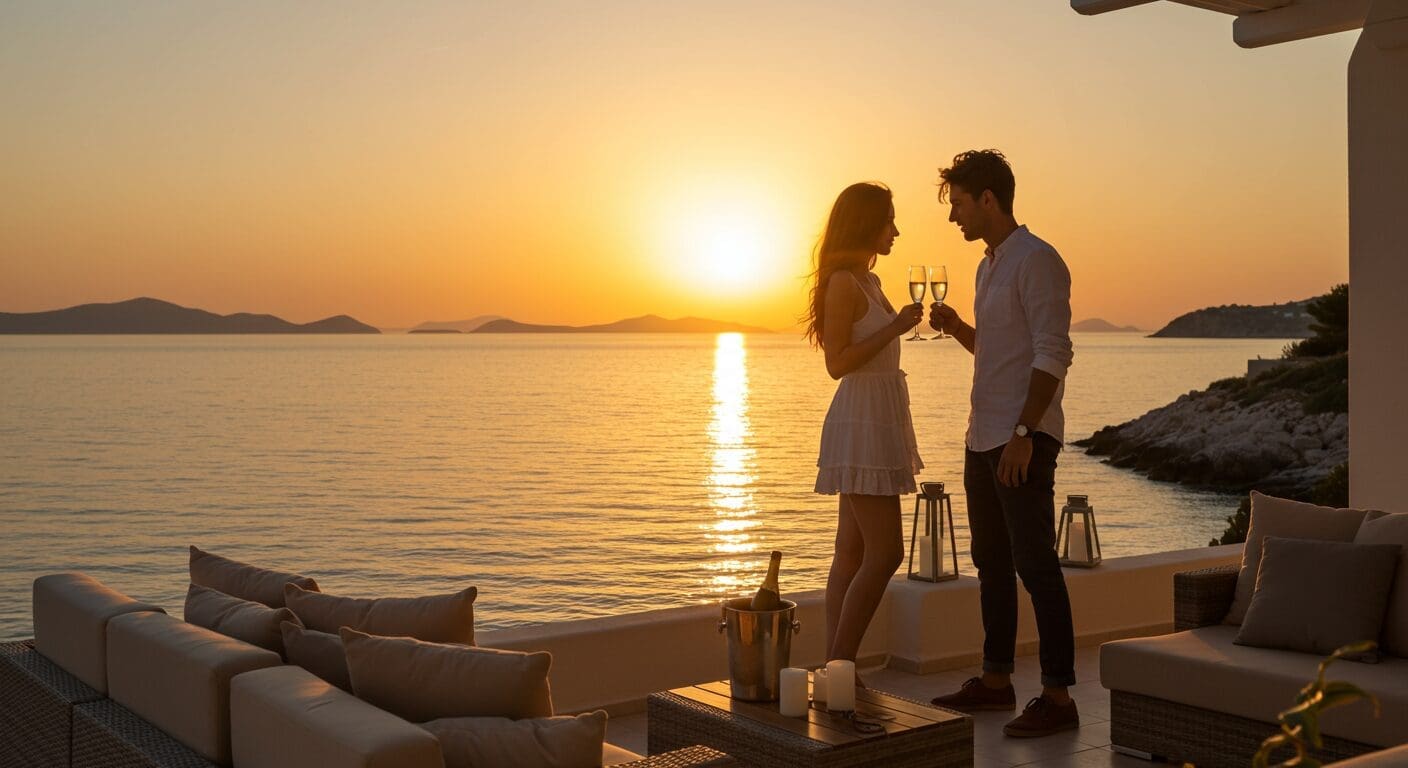
Romantic Dubrovnik-Neretva County: The Ultimate Couples & Honeymoon Guide
Romantic Dubrovnik-Neretva County: The Ultimate Couples & Honeymoon Guide
Here is the confession: Dubrovnik-Neretva County is almost too beautiful for its own good. The Old City of Dubrovnik is, at peak summer, an experience that involves rather a lot of other people’s elbows. And yet – and this is the part the brochures never quite explain – the county stretches far beyond those famous limestone walls into a landscape so varied, so quietly extraordinary, that couples who venture beyond the city gates consistently report it as one of the most romantic places they have ever been. The Elaphiti Islands, the Pelješac peninsula, the emerald delta of the Neretva river, the utterly unhurried villages of the Konavle valley: this is a destination that rewards curiosity, and punishes those who stay only on the cable car queue. Come here with someone you love, and come properly.
Why Dubrovnik-Neretva County Is Exceptional for Couples
There is a particular alchemy at work in this corner of Croatia. The light does something different here – softer in the morning, almost theatrical by evening, the kind of gold that makes everything look like a painting you would genuinely want to hang in your house. The Adriatic is impossibly clear. The wine is local and serious and largely unknown outside Croatia, which means you get to discover it together. The food is honest and rooted – fresh fish, lamb from the hills, oysters from Mali Ston that have been farmed in the same bay since the Romans – and a good meal here feels earned rather than performed.
For couples, the particular genius of Dubrovnik-Neretva County is its range. You can have one day that is grand and cinematic – walls, sunsets, white tablecloths – and the next that is entirely private: a rented boat, a hidden bay, two people and a bottle of pošip. The county offers both urban drama and profound rural quiet within the same geography. Honeymoon couples tend to want intensity and relief in equal measure, and this destination provides both without requiring much effort.
The island of Korčula – technically within the county’s reach – brings yet another register: medieval cobbles, dark wine, the kind of calm that settles over you after the second afternoon swim. The scale of the county is generous. You will not run out of things to discover, and you will not be fighting for territory with a thousand other couples trying to have a moment.
The Most Romantic Settings in the County
Let us begin with the obvious and then move on. The city walls of Dubrovnik at dawn, before the cruise ships dock, are legitimately one of the great romantic sights in Europe. Two kilometres of medieval fortifications, the Adriatic on one side, terracotta rooftops on the other, and an almost uncanny silence. The same walls at 11am in August are a different proposition entirely. Timing, in Dubrovnik, is everything.
Beyond the city, the Elaphiti Islands – Šipan, Lopud, and Koločep – offer something quieter and more lingering. Šipan in particular has the feel of a place that has simply declined to participate in modernity. There are no cars. There are old stone villas and overgrown gardens and a harbour where cats outnumber tourists most of the year. A day trip by boat, or better still a night on the island, resets the nervous system entirely.
The Pelješac peninsula is where the landscape opens up into something more dramatic – vineyards descending to the sea, the long spine of the hills, a light that turns everything amber by four in the afternoon. The village of Trsteno, with its Renaissance arboretum, is one of the more quietly enchanting places in the county: ancient plane trees, a working aqueduct, and a garden that has been tended by human hands since 1494. It is not shouting for your attention. That is precisely the point.
And then there is Mali Ston – a small fortified town at the base of the peninsula where the oyster beds are famous and the walls are walkable and the pace suggests that nobody here has ever been in a particular hurry. For couples who know what a good meal is worth, Mali Ston belongs near the top of any itinerary.
Best Restaurants for a Special Dinner
Dining well in Dubrovnik-Neretva County requires a small amount of navigation. There are tourist-facing establishments in the Old City that would prefer you not to look too carefully at the bill, and then there are places where the cooking is a genuine expression of where you are. The latter are worth seeking out.
Within Dubrovnik’s Old City, the restaurants on the upper terraces above Stradun offer both privacy and extraordinary views – particularly at dusk, when the sky does the heavy lifting and even an ordinary bottle of wine tastes better than it has any right to. For something more intimate, the smaller konobas on the back streets of the old town – those family-run rooms with four tables and no reservations system to speak of – tend to deliver the most honest cooking and the most memorable evenings.
In Mali Ston, the shellfish restaurants that have made the village quietly famous among food-literate travellers are where you want to be for a truly special occasion. The oysters arrive within minutes of being pulled from the bay. There is a directness to this that is, in its own way, profoundly romantic – the idea that what you are eating exists here and almost nowhere else, that you have come far enough to deserve it.
On Pelješac, restaurants attached to local wine estates offer the particular pleasure of eating above the vines, with the peninsula spread out below and a glass of Dingač on the table. Dingač – a red wine made from plavac mali grapes on the south-facing slopes of Pelješac – is the county’s most serious wine, and sharing a first bottle of it in its home territory is one of those small experiences that becomes disproportionately meaningful in retrospect.
Couples Activities: Sailing, Spa, Wine and More
Sailing is the activity that transforms a holiday in Dubrovnik-Neretva County into something else entirely. Chartering a boat – skippered, if you prefer someone else to worry about the navigation – and spending two or three days moving between islands is one of the great romantic experiences available in the Mediterranean. The pace is unhurried by definition. The swimming stops are spontaneous. The evenings in small harbour towns have a specific quality that no land-based holiday can quite replicate. You eat what the harbour restaurant has today. You sleep well. The combination of physical ease and constant beauty does something very good for relationships.
Wine tasting on the Pelješac peninsula is serious business dressed in casual clothes. The winemakers here – small family estates for the most part – are proud of what they produce and pleased when visitors take it seriously. A private tasting at a Pelješac estate, moving through the local varieties with someone who can explain what you are tasting and why it matters, is an afternoon that repays itself many times over. Book in advance, go slowly, and do not attempt to drive afterwards.
Cooking classes focused on the food traditions of the Konavle valley – the rural hinterland south of Dubrovnik – offer couples something grounded and genuinely local. The cuisine here is distinct from the coastal cooking: slower, earthier, rooted in the landscape rather than the sea. Learning to make peka – meat and vegetables cooked slowly under the bell-shaped lid buried in embers – is one of those activities that sounds like tourism and turns into something you actually remember.
Spa and wellness experiences are available at the better hotels around Dubrovnik, but for couples staying in a private villa, the most romantic version is simpler: arrange an in-villa treatment, a private masseuse arriving at the terrace as the evening light begins to soften. The setting does most of the work.
The Most Romantic Areas for Accommodation
Where you stay shapes everything. Within Dubrovnik, the Old City itself is atmospheric but can feel crowded – sound travels strangely through those old stone streets at night, and the romance of it all is slightly undercut by audible strangers. The Lapad and Babin Kuk peninsulas offer more space, private terraces, and the sense of having retreated slightly from the spectacle.
For couples willing to drive twenty minutes, the villages of the Konavle valley offer stone villas and complete privacy, the sound of nothing in particular, and a version of Croatia that has not been adjusted for international visitors. This is where you go if the performance of being romantic is less interesting to you than the actual experience of it.
The islands – Šipan especially, but also Lopud – are for those who want water on all sides and zero temptation to be anywhere else. Getting there requires a ferry or a water taxi, which is either inconvenient or perfect depending on what you came for. Most couples who have tried it vote for perfect.
Pelješac is the underrated choice. A villa above the vineyards with a pool and views of the channel: this is the kind of place that becomes the benchmark by which all future holidays are unfairly measured. The peninsula is connected enough that you can eat well without driving far, and private enough that you are never quite sure where all the other tourists have gone. They haven’t found Pelješac yet. Enjoy it accordingly.
Proposal-Worthy Spots
If you are reading this section for professional rather than personal reasons, the first thing to know is that you are not short of options. The second is that the most memorable proposals tend to involve either complete privacy or a setting so extraordinary that the grandeur does the work for you. Dubrovnik-Neretva County offers both.
For grandeur: the walls of Dubrovnik at dawn. Fort Lovrijenac, the free-standing fortress west of the Old City, with the sea on three sides and the city behind you. The terrace of a cliff-side restaurant above Dubrovnik as the sun drops behind the islands. These are the locations that turn a good story into a great one.
For privacy: a boat, a secluded bay on one of the Elaphiti Islands, and nothing but water and rock and the two of you. A hilltop vineyard on Pelješac at the end of a private tasting. The overgrown garden of the Trsteno arboretum on a quiet weekday morning. The beauty of these is that they require slightly more effort – a conversation with a boat charter company, a call to a winery, arriving somewhere early – and that effort is, in its own way, part of the gesture.
One practical note: if you are planning a proposal in the Old City itself, choose your timing carefully. A private moment in a crowd of two thousand people requires precision. Dawn, again. Always dawn.
Anniversary and Honeymoon Ideas
For anniversaries, the county lends itself to building an itinerary around a single theme and executing it thoroughly. An anniversary focused entirely on wine and food – Pelješac, Mali Ston, a long lunch at a Konavle konoba, dinner in the Old City – takes perhaps four days and covers enough ground to feel like a genuine journey while remaining contained and unhurried. The alternative theme is the water: a sailing charter through the Elaphiti Islands with swimming stops, evening harbours, and nothing on the schedule that cannot be ignored.
For honeymooners, the practical consideration is timing. May, June, and September are the months when the county is at its best for couples – warm enough, light enough, and not yet at the high-season density that can make August in Dubrovnik feel less like romance and more like logistics. Late September into early October is particularly good: the light takes on a quality that photographers and cinematographers have been travelling here to capture for decades, the crowds are thinning, and the restaurants are still fully operational and relieved that the summer is almost over.
A honeymoon itinerary that works: two nights in or near Dubrovnik for the city experience, then a transfer to a private villa on Pelješac or a boat charter through the islands for the remainder. The shift from the social energy of the city to genuine privacy is itself a pleasure, and the contrast makes both parts feel more vivid. You see Dubrovnik properly because you are not living in it for a week. You appreciate the quiet of the peninsula because you earned it.
Why a Private Villa Is the Ideal Romantic Base
Hotels are excellent places to stay when you want someone to bring you breakfast and sort out your dry cleaning. For a romantic trip – particularly a honeymoon or significant anniversary – the private villa is a different proposition. The privacy is absolute. The terrace is yours. The pool is yours at midnight. The kitchen is available if one of you decides to cook, and nobody is going to knock on the door at half nine to turn down the beds.
In Dubrovnik-Neretva County, the private villa landscape is particularly strong. Stone properties with historical character, contemporary villas with infinity pools above the Adriatic, island retreats accessible only by water – the range is wide and the standard at the upper end is genuinely high. A well-chosen villa provides the setting around which the rest of the holiday organises itself: you go out into the county and come back to something that feels like yours, that rewards returning to.
There is also something to be said for the intimacy of a shared domestic space on a romantic trip. The rhythm of making coffee in the morning, of deciding together where to go and when to stay, of eating on a terrace as the evening comes in: these small things accumulate into something that a hotel room, however well-appointed, does not quite provide. The villa, in this context, is not just accommodation. It is the trip itself.
For an expertly curated selection, explore our range of luxury private villas in Dubrovnik-Neretva County – each chosen for character, privacy, and the particular quality of what they offer to couples who have come here to get away from everything except each other.
For a broader guide to planning your time in the region, the Dubrovnik-Neretva County Travel Guide covers everything from getting there to the beaches, islands, and practical details that make the difference between a good trip and a great one.
When is the best time of year for a honeymoon or romantic trip to Dubrovnik-Neretva County?
Late May, June, and September are widely considered the ideal months for couples. The weather is warm and reliable, the Adriatic is swimmable, and the crowds have not yet reached peak summer intensity. Late September and early October are particularly special – the light is extraordinary, the restaurants are still excellent, and the county takes on a quieter, more intimate quality that suits a honeymoon or anniversary trip very well. If you are committed to August, a private villa rather than a city hotel will help you maintain the sense of privacy and calm that a romantic holiday demands.
Which part of Dubrovnik-Neretva County is most romantic for couples: the city, the islands, or the Pelješac peninsula?
Each part of the county offers a different register of romance. Dubrovnik city provides drama, history, and exceptional dining – it is the grand opening act. The Elaphiti Islands, particularly Šipan and Lopud, offer genuine seclusion and the slow pleasure of island life with no cars and very little urgency. Pelješac delivers wine country beauty and a combination of privacy and good food that is difficult to find elsewhere in Croatia. The ideal romantic itinerary for couples with a week or more typically combines two or three of these areas, moving from the city’s energy into progressively deeper quiet.
Is Dubrovnik-Neretva County suitable for a honeymoon, or is it too touristy?
The honest answer is that Dubrovnik city in high summer is genuinely very busy, and couples who expect undiluted solitude within the Old City walls may be surprised. But the county as a whole is another matter entirely. A honeymoon based in a private villa on Pelješac, the Konavle valley, or one of the islands will feel entirely private and far removed from tourist trails. The key is in the planning: choosing the right base, travelling in the right months, and treating the Old City as a day trip rather than the entire experience. Done this way, Dubrovnik-Neretva County is among the finest honeymoon destinations in Europe.