
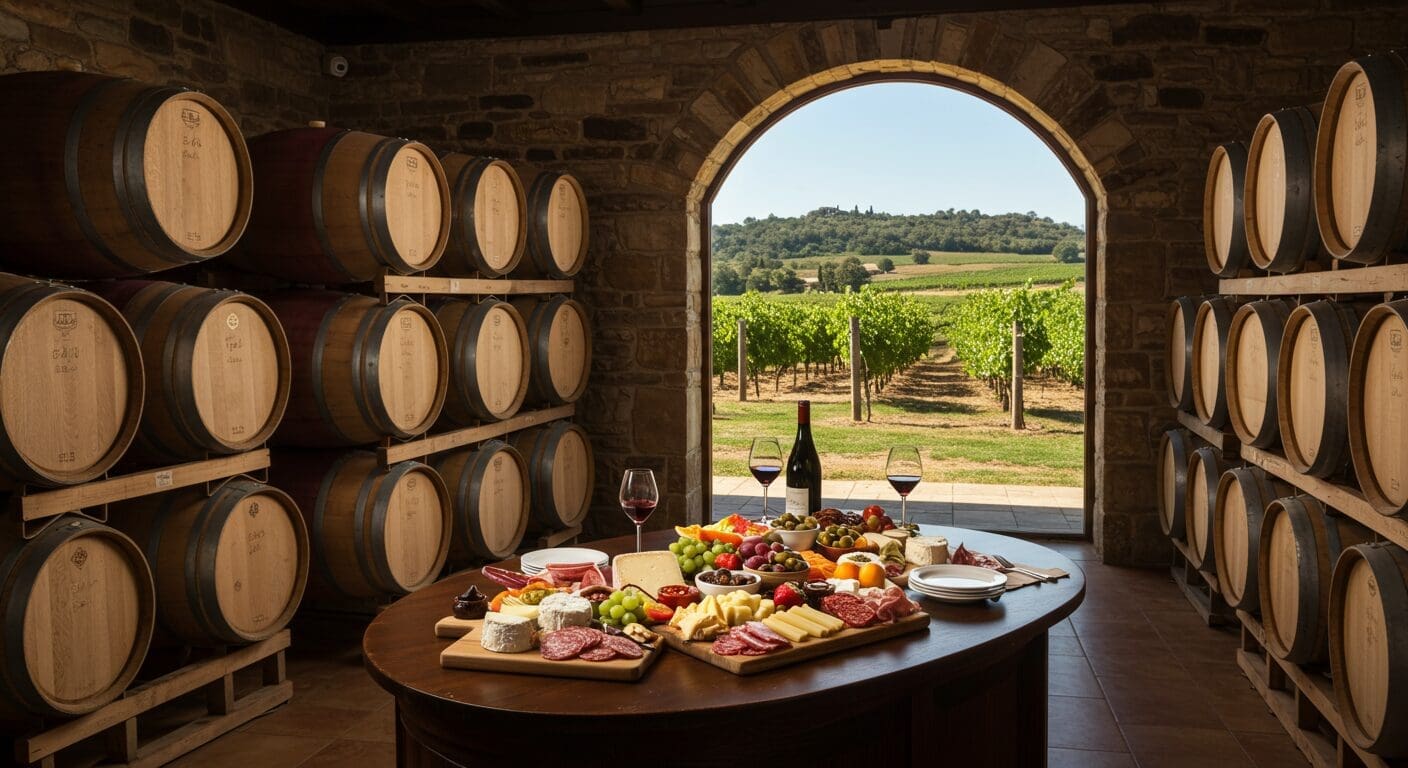
Gloucestershire Food & Wine Guide: Local Cuisine, Markets & Wine Estates
Gloucestershire Food & Wine Guide: Local Cuisine, Markets & Wine Estates
Come autumn, something rather extraordinary happens to Gloucestershire. The Cotswold stone villages turn the colour of clotted cream and old honey, the orchards along the Severn Vale sag with perry pears and cider apples, and the air smells faintly of woodsmoke and something slow-cooking that you can’t quite identify but very much want to find. This is a county that has always known how to eat well – quietly, confidently, without making a fuss about it. The farmers here have been doing this for centuries. The chefs have merely caught up.
Whether you’re planning a week in a private manor house in the Cotswolds or a long weekend somewhere overlooking the Severn, this Gloucestershire food & wine guide covers everything worth knowing: the regional cuisine, the wine estates producing bottles that will surprise you, the food markets, the immersive experiences, and the producers who make this one of England’s most quietly serious food destinations. For the full picture of what the county offers beyond the table, our Gloucestershire Travel Guide is the place to start.
The Regional Cuisine: What Gloucestershire Actually Tastes Like
Gloucestershire is not a county that needs to borrow flavour from elsewhere. The land here is exceptionally productive – the lush Vale of Gloucester, fattened by the River Severn, has been grazing cattle and growing orchards since the Romans arrived and sensibly decided to stay. The result is a regional food identity that is rooted, seasonal and, increasingly, celebrated.
The signature ingredient is, without question, Old Spot pork. The Gloucestershire Old Spot is one of Britain’s most storied rare breeds – a large, docile, apple-spotted pig that has been raised in these orchards for centuries. The meat is well-marbled, full of flavour, and entirely different from the pallid industrial stuff. You’ll find it on menus across the county in every form: slow-roasted belly, charcuterie platters, sausages served with proper mustard, and cured cuts that would hold their own in any Italian deli. (It has been said that the spots are caused by fallen apples bruising the pig’s back. This is not true. It is, however, a lovely story.)
Then there is the cheese. Double Gloucester – the real thing, made with milk from Gloucester cattle – is a semi-hard, subtly nutty cheese with a deep orange hue and a richness that mild Cheddar can only dream of. Single Gloucester, slightly lower in fat and with a more delicate flavour, holds PDO status and can only be made in the county using milk from Old Gloucester cows. Both are worth seeking out from specialist producers rather than supermarket shelves.
Elvers – juvenile eels harvested from the Severn – were once a staple of the working-class diet here, pan-fried with bacon and eaten in vast quantities each spring. Overfishing has made them scarce and expensive, but they occasionally appear on the menus of ambitious local restaurants as a serious seasonal delicacy. If you see them, order them.
Wine Estates: English Wine Has Found Its Cotswolds Chapter
English wine no longer requires an apology, and nowhere illustrates this more neatly than Gloucestershire. The county sits in a band of southern England that has proved surprisingly well-suited to viticulture – the limestone soils, the sheltered valleys, the long summer days. The results, particularly in sparkling wine, have gone from curiosity to genuine quality over the past two decades.
Woodchester Valley Vineyard, in the Woodchester Valley south of Stroud, is one of the county’s most respected estates and well worth a visit. Set in a narrow, wooded valley of considerable drama, it produces sparkling wines using traditional method techniques – the Blanc de Blancs in particular has drawn serious critical attention. Tours and tastings are available and offer a genuinely informative introduction to English winemaking, without any of the po-faced ceremony you might find further south. The setting alone makes the drive worthwhile.
Gloucestershire also benefits from proximity to the wider Cotswolds wine scene, with several smaller producers operating across the county’s rolling farmland. Many offer private tastings and vineyard walks as part of a wider experience – ideal if you’re staying in a villa and looking to build an itinerary that doesn’t revolve entirely around driving from one honey-stone village to the next. (Not that there’s anything wrong with that.)
Look out for producers working with Pinot Noir, Chardonnay and Bacchus – the latter a German crossing that has become something of an English wine signature, producing aromatic whites with elderflower and herb characters that pair exceptionally well with local fish and cheese.
Food Markets: Where Gloucestershire Shops for Itself
The best food markets in Gloucestershire are not tourist attractions with overpriced jam. They are places where people who grow and make things sell them to people who intend to cook and eat them – a transaction of the most satisfying kind. The distinction matters, and in Gloucestershire you will find both types. The trick is knowing which to seek out.
Stroud Farmers’ Market is widely regarded as one of the finest farmers’ markets in England – a serious claim, seriously justified. Held on Saturday mornings in the centre of Stroud, it draws producers from across Gloucestershire and the wider region: raw milk cheeses, rare breed meats, freshly baked sourdough from wood-fired ovens, wild garlic in spring, game in autumn, perry and cider from the Vale’s orchards year-round. The atmosphere is genuinely convivial – this is a market where the stallholders know their customers and vice versa. Arrive early. The good bread goes quickly, and the queue for the salt beef rolls is not metaphorical.
Cheltenham also has a regular farmers’ market, held on the second and last Friday of each month, which brings together a strong selection of local and regional producers in the town centre. Given Cheltenham’s general air of well-maintained prosperity, the market tends toward the polished end of things – artisan preserves, boutique bakeries, carefully labelled provenance – but the quality is consistent and the setting, between the Regency terraces, is rather pleasant.
Beyond the regular markets, the county’s village shows and agricultural fairs – particularly in late summer and early autumn – are where you’ll encounter Gloucestershire’s food culture in its most unfiltered form: giant vegetables, enthusiastically judged preserves, hog roasts with an almost architectural ambition. The Stroud Show and various Cotswold agricultural events reward the curious visitor who doesn’t mind a bit of good-natured chaos.
The Best Food Experiences Money Can Buy
Gloucestershire rewards the traveller who treats food as a destination in itself rather than a footnote to the sightseeing. The experiences available here range from the intimate to the genuinely immersive, and several are worth building an entire visit around.
Private foraging walks with local guides have become one of the county’s standout food experiences. The Cotswold woodlands and Severn Vale hedgerows are extraordinarily rich in edible plants, fungi and herbs – wild garlic, wood sorrel, hedgerow berries, and in autumn, a proliferation of mushrooms that will make you look at the forest floor with entirely new respect. Several operators run guided half-day and full-day foraging experiences, often culminating in a cooking session or al fresco meal using what has been gathered. This is not a gimmick. Done properly, it is one of the most direct ways to understand a landscape through its food.
Truffle hunting has arrived in the Cotswolds with rather more fanfare than anyone expected. English black truffles – Tuber aestivum, the summer truffle – have been found in limestone woodland across the region, and a small number of specialist operators now offer truffle hunting experiences with trained dogs. The truffle season runs roughly from late summer into autumn. The experience is atmospheric, occasionally muddy, and ends with something that smells extraordinary. It is entirely worth it.
Cooking classes anchored in Gloucestershire’s produce are available from several private chefs and cookery schools across the county. The best ones focus on the county’s own larder – curing Old Spot pork, making Double Gloucester pastry dishes, working with foraged ingredients – rather than offering generic technique courses you could take anywhere. If you’re staying in a villa with a serious kitchen, a private chef or cookery tutor who comes to you is often the most satisfying option of all.
For those who simply want to eat very well without lifting a finger, the county’s restaurant scene has quietly matured into something worth tracking. Cheltenham in particular has developed a food culture that punches well above its weight, with several independently owned restaurants doing serious, ingredient-led cooking. The town’s proximity to exceptional producers gives its best kitchens a distinct advantage, and the results – particularly around seasonal tasting menus – can be genuinely memorable.
Cider, Perry and the Drinks of the Severn Vale
To talk about Gloucestershire food and wine without addressing cider and perry would be to miss something fundamental. The Vale of Gloucester – the broad, flat plain between the Cotswold escarpment and the Forest of Dean – is one of the last strongholds of traditional perry production in England. Perry pears, many of them ancient varieties with names like Stinking Bishop (yes, also a cheese) and Merrylegs, grow only in this region, and the perry made from them is nothing like the fizzy pear cider sold in pubs. It is complex, aromatic, sometimes austere, occasionally transcendent.
Several producers in the area – particularly around Newent and the villages near Dymock – maintain traditional orchards and make perry and cider using methods that predate most of the world’s wine regions. Visiting these small, often family-run operations is one of the most authentic food and drink experiences available in the county. Many sell directly from the farm gate. Bring an empty boot.
Real cider is equally serious here – made from bittersweet and bittersharp apple varieties that you would not eat in polite company but which ferment into something with genuine backbone and character. The best examples are bone-dry, tannic and complex in a way that surprises people who associate cider with sweetness and summer festivals.
Cheesemaking and Dairy: The County’s Quietest Luxury
Gloucestershire’s dairy heritage is older than almost anywhere in England. The Old Gloucester cow, a handsome dark-red breed with a distinctive white stripe along its back, was nearly extinct by the 1970s and has since been carefully brought back to viable numbers. The milk is rich and well-suited to cheesemaking, and a small number of dedicated producers now make both Single and Double Gloucester to traditional recipes using raw milk from Old Gloucester herds.
Seeking these cheeses out at source – visiting a farm, meeting the cheesemaker, tasting a cheese that was made within the week – is an experience that changes the way you think about what you’re eating. These are not merely regional specialities for tourist boards to celebrate. They are living food traditions maintained by people with a genuine commitment to something worth preserving.
The Stinking Bishop cheese – a washed-rind variety made by Charles Martell & Son in Dymock, washed in perry made from Stinking Bishop pears – deserves special mention. Its reputation for pungency is not exaggerated. Its reputation for flavour is equally well-founded. It is one of the great British cheeses and should be eaten with good bread, ripe pear, and no important meetings scheduled for the afternoon.
Planning a Food-Led Visit: Practical Notes
The best time to visit Gloucestershire for food is late summer through to the end of autumn – roughly August to November. This is when the orchards are heavy, the fungi are appearing in the woodlands, the game season is under way, and the farmers’ markets are at their most abundant. The Cheltenham Food & Drink Festival, typically held in October, brings together producers, chefs and artisan makers from across the region and is a particularly good way to get a concentrated introduction to what the county offers.
Spring has its own pleasures – wild garlic is at its peak in April in the Cotswold woodlands, the elver season briefly opens on the Severn, and the lambs that will become next winter’s mutton are visible in every field. Summer brings strawberries and soft fruit from the Vale, lavender from farm estates that double as cutting gardens, and the long evenings that make eating outside in a Cotswold garden feel like an entirely reasonable life decision.
For the most immersive food experience, staying in a private villa with a well-equipped kitchen allows you to shop the markets, visit the producers, and bring what you’ve gathered back to cook for yourself – or to hand to a private chef who can do the cooking while you handle the wine. This is, objectively, the ideal arrangement.
Explore our collection of luxury villas in Gloucestershire – each one chosen for the quality of its setting, its kitchen, and its proximity to everything that makes this county worth eating your way through.
What are the most important local foods to try in Gloucestershire?
Gloucestershire Old Spot pork, Double and Single Gloucester cheese, Stinking Bishop washed-rind cheese, and traditional perry and cider from the Severn Vale are the county’s most distinctive food and drink products. Elvers – juvenile eels from the Severn – are a rare seasonal delicacy worth trying if you visit in early spring. Stroud Farmers’ Market is the best single place to encounter the range of local produce in one visit.
Are there wine estates to visit in Gloucestershire?
Yes – Woodchester Valley Vineyard near Stroud is one of the county’s best-known estates and offers tours and tastings. The vineyard produces sparkling wines using traditional method techniques, with the Blanc de Blancs receiving particular praise. Several smaller producers also operate across the county’s limestone valleys, and the wider Cotswolds wine scene extends into neighbouring counties. Private tastings can often be arranged for groups staying in the area.
What is the best time of year to visit Gloucestershire for food experiences?
Late summer through autumn – roughly August to November – is when Gloucestershire’s food calendar is at its most eventful. Orchards are being harvested, fungi are appearing in the woodlands, the game season is open, and farmers’ markets are at peak abundance. The Cheltenham Food & Drink Festival in October is a highlight of the regional calendar. Spring is also rewarding for wild garlic foraging, the elver season on the Severn, and early-season lamb.