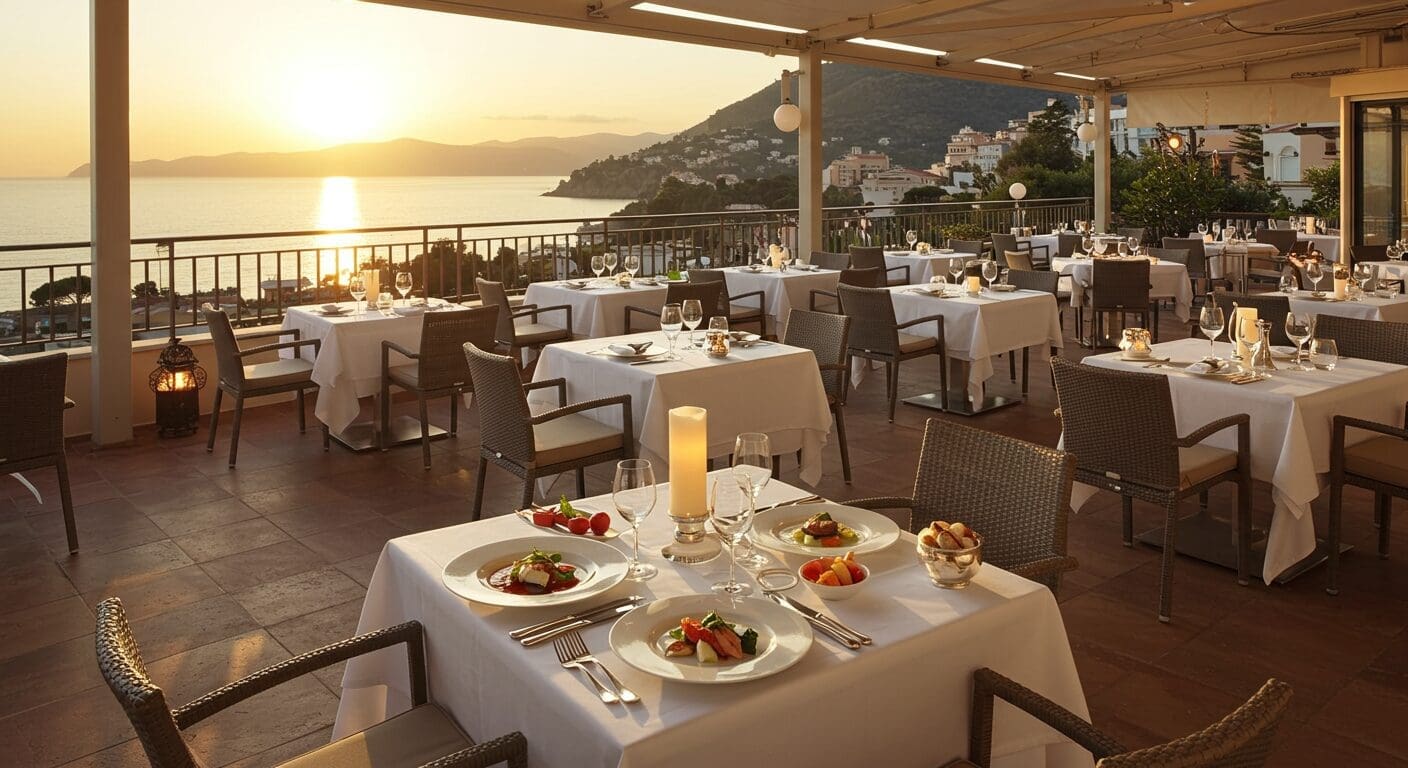
Best Restaurants in Lazio: Fine Dining, Local Gems & Where to Eat
Come to Lazio in October and you will understand, perhaps for the first time, why Italians speak about food with the intensity other people reserve for religion. The light softens to something amber and forgiving, the summer crowds have largely retreated to wherever summer crowds go, and the region’s markets fill with porcini mushrooms, fat chestnuts, and the last wild figs of the season. Rome itself seems to exhale. Restaurants that spent August feeding tourists now feed Romans again, which is an entirely different – and considerably more demanding – proposition. This is when the kitchens sharpen up. This is when you should be here, fork in hand.
Lazio is not a region that shouts about its food. It doesn’t need to. The cuisine is ancient, precise, and built on a handful of extraordinary ingredients: pecorino romano, guanciale, cured pig cheek that makes lesser pancetta look apologetic, dried pasta, offal handled with confidence, and a wine tradition stretching back to the Romans themselves. But Lazio in the twenty-first century also contains some of Italy’s most ambitious fine dining, Michelin stars included, alongside trattorie so good they make you genuinely angry that you don’t live closer. The following is a guide to where to eat well in this region – from three-star temples of gastronomy to the kind of neighbourhood place that doesn’t have a website and doesn’t want one.
Fine Dining in Lazio: The Michelin Star Scene
Rome is not Milan. It has never particularly rushed to embrace the modernist, architectural style of fine dining that made northern Italian cities famous in international food circles. Rome’s relationship with innovation is complicated – the city has, after all, been doing things its own way for roughly two thousand years and has a certain confidence about this. Which makes the restaurants that have broken through into Michelin’s upper echelons all the more interesting, because they’ve had to earn that recognition in a city that views fussiness with mild suspicion.
At the pinnacle sits La Pergola, perched atop the Rome Cavalieri Waldorf Astoria and the only restaurant in Rome to hold three Michelin stars – a distinction it has not quietly squandered. German-born chef Heinz Beck has been here since 1994, and what he has built is something genuinely remarkable: cuisine that brings a lightness and technical discipline to Italian ingredients that feels almost paradoxical, given that Italian cooking’s genius has always been in its apparent simplicity. Beck’s food is anything but simple, and yet it never tips into the overwrought. The wine cellar runs to over 53,000 bottles, some of them a century old. You will not, on balance, struggle to find something to drink. If you are visiting Lazio for any serious culinary purpose, an evening at La Pergola is less an option and more an obligation.
At two stars, Il Pagliaccio offers something more intimate and, for some diners, more exciting in the way that a tightly coiled spring is exciting. Chef Anthony Genovese – whose 2026 Michelin confirmation arrived with the quiet authority of a foregone conclusion – fuses Italian foundations with Japanese precision and a global sensibility that could easily feel affected and somehow doesn’t. Each dish arrives with the sense that something particular is being said, that ingredients have been arranged in this way for a reason that will become clear, and usually does. It’s the kind of restaurant that provokes genuine conversation about the food, which is rarer than it ought to be.
In Trastevere, that eternally romantic quarter where cobblestones and candlelight conspire against good judgment, Glass Hostaria holds a single Michelin star and the neighbourhood’s most serious culinary reputation. Chef Cristina Bowerman’s cooking is bold, design-conscious, and technically accomplished – dishes that use colour and texture as deliberately as flavour. The room itself is sleek and modern in a way that feels deliberately incongruous with its ancient surroundings, which turns out to be rather the point. On the Corso Vittorio Emanuele II, Pipero Roma rounds out the starred scene with one Michelin star and the kind of polished, seasonal Italian cooking that reinterprets tradition without dismantling it. Chef Ciro Scamardella changes the menu with the seasons – another reason to visit in autumn, when the produce gives him something genuinely worth working with.
The Essential Roman Classics: What You Must Eat in Lazio
Before we go further, a brief and entirely necessary digression on what to actually order. Lazio’s culinary identity rests on four pasta dishes so perfectly constructed that the region has never felt particularly compelled to invent more. Cacio e pepe – pecorino, black pepper, pasta water, and nothing else – is a dish that takes about four ingredients and thirty years to master properly. Carbonara, made here with guanciale rather than bacon and without the cream that elsewhere constitutes a minor food crime. Amatriciana, the tomato-and-guanciale combination that traces its origins to the town of Amatrice in the Apennines. And gricia, which is essentially amatriciana before the tomatoes arrived from the Americas – older, simpler, and very much worth your time.
Beyond pasta: supplì (fried rice balls, Rome’s answer to the arancino), carciofi alla giudia from the Jewish Ghetto – artichokes fried until they open like bronze flowers – and abbacchio, milk-fed lamb that appears on menus in spring with the kind of seasonal urgency that supermarkets have entirely ruined for younger generations. Offal features prominently on traditional Roman menus. The city has always eaten nose to tail, not as a trendy philosophical position, but because it always has.
Roscioli: The Place Everyone Mentions and Still Manages to Be Right About
There is a particular type of restaurant that becomes so universally recommended that a mild contrarianism sets in – you half expect to be disappointed out of sheer reflexive resistance. Roscioli Salumeria con Cucina, a few steps from Campo de’ Fiori, is one of those places. It is a bakery, a delicatessen, a wine shop, and a restaurant simultaneously, which sounds chaotic and is instead deeply satisfying. The carbonara here is the one food writers return to when they need to prove a point about Roman food. The wine list is vast and intelligently assembled. The salumi and cheese selection behind the counter will make you reconsider every deli you have ever visited. Travel writers across the internet have independently concluded that Roscioli is essential – and on this occasion, the consensus is correct.
Reserve well in advance. The room is small, Campo de’ Fiori is popular, and Roscioli has no intention of making itself easier to access than it already is.
Local Trattorias, Tavernas and Hidden Gems Beyond Rome
One of the underrated pleasures of Lazio is the ease with which you can leave Rome behind and find yourself in a completely different culinary world within an hour. The Castelli Romani hills south of the city produce Frascati wine – easy, unpretentious white wine that is best drunk young and locally, where it has not had time to travel badly – and a tradition of simple, generous cooking built around porchetta, roast pork seasoned with wild fennel and rosemary. Every town in these hills has at least one trattoria where the menu is written on a blackboard in handwriting that may or may not be legible, and the house wine arrives in a ceramic jug. This is not an affectation. It is simply how things are.
In the Viterbo province and the Tuscia region to the north, the cooking takes on earthier notes – lentils from Onano, acquacotta (literally “cooked water”, a peasant soup that is considerably more interesting than its name suggests), and freshwater fish from Lago di Bolsena. These are not restaurants that feature in international guides, which is precisely why they deserve your attention. Ask your villa manager. Ask the person at the alimentari. Someone will know where the locals actually eat, and it won’t be where the satnav suggests.
Along the coast – at Sperlonga, at Gaeta, at the beaches of the Maremma laziale – seafood comes into its own. Beach clubs here operate on a different philosophy to the Amalfi Coast or Sardinia: less fashion, more fish. Spaghetti alle vongole eaten at a plastic table with a view of the Tyrrhenian Sea, served by someone who couldn’t care less whether you find the restaurant on Instagram, is an experience that stubbornly resists improvement.
Food Markets in Lazio: Where to Shop Like a Local
Rome’s Testaccio Market is the city’s most respected food market – not the most theatrical, but the most genuine. Chefs shop here. You will find produce vendors, cheese stalls, a butcher whose offal selection confirms everything you need to know about the Roman relationship with the whole animal, and excellent ready-to-eat street food at the market’s small kitchen counters. The Campo de’ Fiori market is more central and more photographed, which naturally means it has drifted somewhat towards tourist appetite over the years, though the produce remains good and the morning atmosphere is worth experiencing before the selfie sticks arrive.
Outside Rome, local weekly markets in smaller Lazio towns – Viterbo, Rieti, Latina – operate on the kind of agricultural honesty that has largely vanished from urban food retail. Cheese that was made within thirty kilometres. Bread that was baked that morning. Seasonal vegetables that look irregular and taste extraordinary. If your luxury villa in Lazio comes with a private chef – and many of them do – a morning spent at a local market before returning to a villa kitchen is one of the genuinely useful pleasures a private holiday can provide.
Wine, Local Drinks and What to Order at the Bar
Lazio’s wine reputation has historically lived in the comfortable shadow of more celebrated Italian regions, which suits it fine. The Castelli Romani DOC produces whites – Frascati chief among them – that are cheerful rather than profound, exactly right for a long lunch in the hills. Est! Est!! Est!!! di Montefiascone, a wine whose name is considerably more dramatic than its contents, comes from the shores of Lago di Bolsena and has an origin story involving a German bishop’s wine scout that remains the best marketing campaign in the history of Italian wine.
More serious wine exploration in Lazio leads to Cesanese del Piglio in the Frosinone hills – a red grape variety that produces wines with real depth and character, and which remains obscure enough that sommeliers at Rome’s better restaurants take visible pleasure in introducing it to guests. Aperitivo culture in Rome follows its own rules: a spritz or a Campari soda before dinner, taken standing up at a bar counter, is as much a ritual as a drink. The pace of a Roman evening – aperitivo, dinner at nine, no real hurry about anything – is something the city does not export and cannot be replicated at home, no matter how late you eat.
A Roman Pasta Cooking Class: Learning to Do It Properly
Lazio’s four canonical pasta dishes come from peasant traditions built on simplicity, economy, and absolute precision about a small number of techniques. Taking a Roman pasta cooking class is one of those activities that sounds somewhat cheesy in brochure form and turns out to be genuinely illuminating in practice. The moment you understand why the pasta water matters, why guanciale is not a substitute for pancetta but a different ingredient entirely, and why adding cream to carbonara is an act of culinary vandalism rather than a harmless variation, something clicks. You will cook these dishes differently for the rest of your life. This is not a small thing.
Classes range from informal kitchen sessions with local home cooks – often the most enjoyable – to more structured culinary experiences at dedicated cooking schools in Rome. If you’re staying in a luxury villa in Lazio with a well-equipped kitchen, it’s worth asking your concierge or villa manager to arrange a private session: a local chef, your villa kitchen, and the four pasta dishes of Rome. As evenings go, it’s difficult to improve upon.
Reservation Tips: How to Actually Get a Table
La Pergola books out weeks in advance, sometimes considerably more. Book as early as possible, accept that you may need to be flexible on date, and note that the dress code is formal in the way that three Michelin stars in Rome tends to be formal – which is to say, seriously so. Il Pagliaccio and Pipero Roma also require advance booking; both have online reservation systems that work well and respond promptly.
Roscioli operates a reservation system that requires some persistence – email is the recommended approach and a lead time of at least two to three weeks is sensible, more during peak season. Glass Hostaria in Trastevere can be booked via its website, though walk-ins late in the week are a lottery you may occasionally win.
For trattorias outside Rome, the calculus is different. Many smaller restaurants don’t take online bookings at all – a phone call the day before is usually sufficient, sometimes unnecessary. The implicit rule in rural Lazio is that if you arrive with good intentions and a reasonable appetite, you will be fed. This is not a region that turns away hungry people. It would consider it poor form.
For deeper context on the region – its landscapes, towns, history and how to move around it – the full Lazio Travel Guide covers everything you need before you arrive.