Lazio Food & Wine Guide: Local Cuisine, Markets & Wine Estates
First-time visitors to Lazio make the same mistake, reliably, every time. They treat the region as a corridor to Rome – a place you pass through rather than linger in, a backdrop to the city rather than a destination in its own right. This is a significant error in judgement, and one your stomach will not forgive you for. Because Lazio, beyond the eternal city and its tourist-thronged trattorias, is one of Italy’s most quietly formidable food and wine regions. Ancient volcanic soils that grow grapes of real character. Pecorino so sharp it makes your jaw ache pleasantly. Pasta sauces built on very little – a handful of ingredients, an argument about technique, a tradition stretching back centuries. If you have been eating your way through Rome and thinking you have understood Lazio, you have understood about a fifth of it.
The Foundation: What Lazio Cuisine Is Really About
Lazio’s culinary identity is, at its core, a lesson in restraint rewarded. This is cucina povera done with enormous pride – cooking born from necessity that became, over generations, cooking of genuine sophistication. The Roman table is the region’s most famous expression of this, but the broader Lazio kitchen draws from hill towns, lake shores, coastal fishing villages and farmland that bears very little resemblance to the Rome you see on postcards.
The guiding principle is ingredient honesty. A Lazio cook is not trying to impress you with technique – they are trying to express what the land and the season have given them. A ripe tomato from the volcanic soils around Viterbo does not need much done to it. Guanciale – the cured pork cheek that powers half the region’s pasta dishes – is not a supporting character. It is the point. Pecorino Romano, sharp and slightly granular, is not a garnish. It is structural. Understanding this changes how you eat here, and the eating becomes considerably more satisfying once you do.
The other thing worth knowing: portions are generous by design, not accident. Pace yourself. Nobody in the history of a Lazio lunch has ever successfully ordered a main course after genuinely committing to the antipasto.
Signature Dishes Worth Ordering Without Hesitation
The Roman pasta canon is justifiably famous, and all four of the great preparations deserve your attention. Cacio e pepe – pasta, aged Pecorino, black pepper, an almost theological amount of care – is perhaps the most deceptively difficult dish in the Italian repertoire. Amatriciana, technically from the mountain town of Amatrice in the northeast of the region, brings guanciale, tomato and Pecorino into an arrangement that should not be improved upon and frequently is not. Carbonara, the most misunderstood pasta on earth (no cream, under any circumstances), rewards a cook who understands egg and heat. Gricia is carbonara’s older, quieter sibling – guanciale and Pecorino, no egg, no tomato, nothing extra – and in the right hands it is the most satisfying of the four.
Beyond pasta: coda alla vaccinara – oxtail braised slowly with tomato, celery and a whisper of cocoa – is the kind of dish that makes you reassess your opinions about offal. Abbacchio alla romana, milk-fed lamb roasted with rosemary, garlic and white wine, is the regional Sunday lunch. Supplì – rice croquettes with a molten core of mozzarella – are Rome’s greatest street food contribution and should be consumed standing at a market stall whenever the opportunity presents itself.
On the coast, around Civitavecchia and the Pontine coastline, the table shifts toward fish soups, grilled sea bass and tuna preparations that owe more to the boat than to a recipe book. Inland, near Bolsena and Bracciano, the freshwater lakes deliver eels, perch and the local coregone – a lake fish treated with a simplicity that is, frankly, admirable.
The Wines of Lazio: More Interesting Than You Have Been Led to Believe
Lazio wine spent several decades being unfairly dismissed. The Castelli Romani wines – the broad, easy-drinking whites that flooded Roman restaurants through the twentieth century – did the region’s reputation something of a disservice, largely by being cheap, plentiful and not remotely trying. The world filed Lazio under “table wine” and moved on. This was an oversimplification, and the current generation of producers is correcting it with considerable energy.
The volcanic soils of the Colli Albani and the area around Frascati, Marino and Velletri produce whites of real mineral interest – primarily from the Malvasia Bianca di Candia and Trebbiano Toscano grapes, though the more ambitious estates have been working with Greco and Bombino Bianco with excellent results. Frascati Superiore, at its best, is dry, structured and keenly refreshing – the kind of wine that earns its place on a serious summer table.
For reds, the north of the region – particularly around Cerveteri, Tarquinia and the Viterbese hills – produces Sangiovese and Montepulciano blends of real depth. Cesanese, Lazio’s indigenous red grape, deserves particular attention. It grows in the hills southeast of Rome, around Affile and Piglio, and in the hands of a careful producer it yields a medium-bodied red with an herbal, cherry-forward character and a kind of quiet authority that takes you slightly by surprise.
The DOC and DOCG framework across Lazio is expanding – Frascati Superiore DOCG, Cesanese del Piglio DOCG, Velletri DOC and Cerveteri DOC among them – which offers useful navigational guidance when choosing without a recommendation in hand.
Wine Estates Worth Visiting in Person
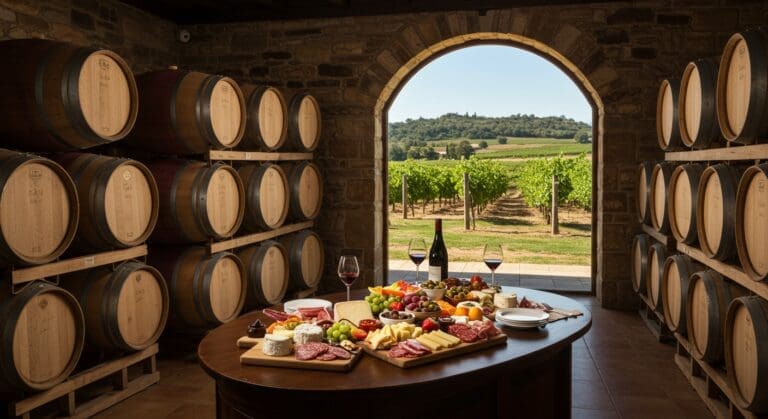
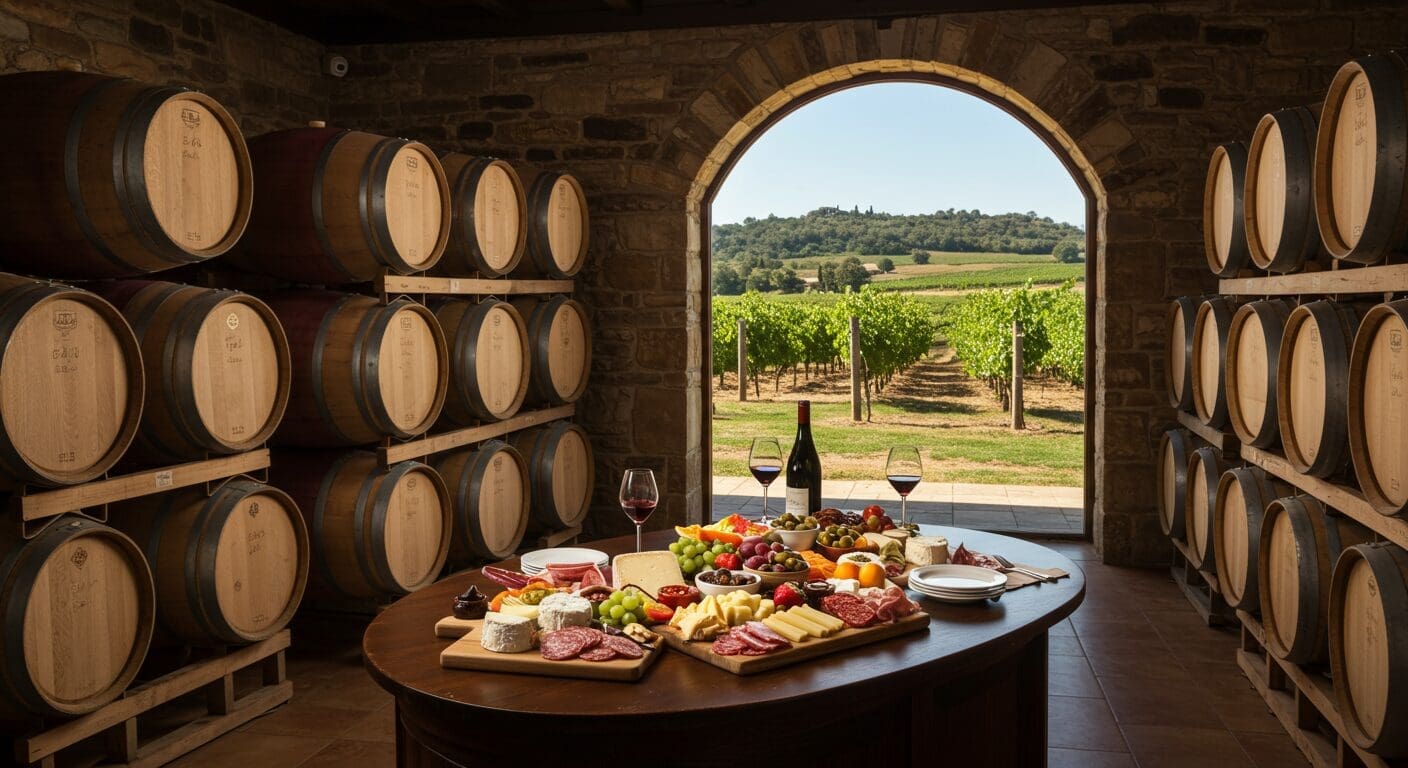
The wine estate visit is one of the great pleasures of any Lazio itinerary, partly for the wine, partly for the landscape. The Castelli Romani hills south of Rome, with their cool air and crater-lake views, are precisely the kind of place you want to spend an unhurried afternoon with a glass in hand. Estates in this area regularly offer guided cellar tours and tastings by appointment, and the more ambitious producers will pair their wines with local charcuterie, Pecorino and seasonal produce from their own estates – which, it must be said, is a significantly better use of an afternoon than any museum queue Rome has to offer.
In the Cesanese del Piglio zone, a handful of family producers work small plots with a seriousness that rewards the journey out of the city. The tasting experience here tends to be intimate and unhurried – more kitchen table than tasting room – and this is entirely to their credit. In the north, the Etruscan wine country around Tarquinia and Cerveteri pairs vineyard visits with extraordinary archaeological landscape, which means you can credibly claim the whole expedition as cultural enrichment. This is useful when explaining the itinerary to travelling companions who are less enthused about wine.
For the most complete wine tourism experience, private estate visits arranged through a specialist concierge – including a guided tour, a hosted tasting and a long lunch in the vineyard – are consistently among the highest-value experiences available to a visitor with time and means. These are not always widely advertised. They are almost always worth arranging.
Food Markets: Where Lazio Actually Shops
Rome’s Campo de’ Fiori is beautiful. It is also, by around nine in the morning, approximately forty percent tourists photographing aubergines rather than buying them. This is fine – it remains a market worth seeing – but it is not where Lazio does its serious shopping. For that, you go to the Testaccio Market, one of Rome’s best, where the stalls are dense with local produce, the vendors are not performing for cameras and the supplì available at the food stands are exceptional. The covered market in the EUR district is less visited and genuinely excellent.
Beyond Rome: the markets in Viterbo, held in the main piazza on specified days, offer the region’s northern produce in straightforward abundance – cured meats, local cheeses, seasonal vegetables and the occasional truffle vendor who will catch your eye and hold it. Rieti, in the northeast, has a weekly market that still functions as a working market rather than a leisure activity, which is a distinction worth appreciating. The market at Nettuno on the coast, where the fishing boats come in early, is one of the best places in the region to see fish bought and sold in a manner largely unchanged for generations.
Truffles, Olive Oil and the Produce the Region Does Quietly Well
Lazio is not Umbria when it comes to truffle reputation, and the Umbrians will remind you of this if given the opportunity. But the hills around Viterbo and the Cimini Mountains produce both black and white truffles of genuine quality, and truffle hunting excursions in this area – conducted with a trained dog and a local guide who has been doing this since before you were born – are among the most grounding and pleasurable food experiences available in the region. The seasonality is strict: white truffles peak from October through December, black from late autumn through winter and again in spring. Timing matters.
Olive oil deserves more attention than it typically receives here. The olive groves around Canino in the Viterbo province produce a DOP-certified oil from the Canino olive variety – intensely fruity, grassy, with a peppery finish that signals genuine quality. Estate visits and oil tastings are available during harvest season (October through November primarily), and arriving during the first cold pressing is an experience that permanently adjusts your tolerance for the supermarket bottle you have been using at home.
The Pontine Plain produces excellent artichokes – the carciofo romanesco, broad and tender, is one of the most celebrated vegetables in Italian cooking, braised with mint and garlic in the Roman style or deep-fried whole in the Jewish-Roman tradition. Strawberries from Nemi, the tiny hill town above the Alban Hills, are harvested each June and have been famous since antiquity. There is an entire festival dedicated to them. The strawberries justify it.
Cooking Classes and Hands-On Food Experiences
The cooking class industry in Italy has a significant mediocrity problem, and Rome is not immune. The solution is to be selective: the best experiences are those conducted in private homes, on working estates or in kitchens attached to genuine restaurants with actual culinary reputations. A private cooking class in a Lazio farmhouse – focused on a single regional tradition, led by someone who learned to cook these dishes from their grandmother rather than a curriculum – is a fundamentally different proposition from a tourist-facing market-to-table workshop in central Rome, however well-packaged the latter might be.
The pasta canon is the obvious focus, and rightly so – learning to make proper cacio e pepe or carbonara under knowledgeable guidance is one of those skills that pays dividends for the rest of your life. But the more interesting classes tend to focus on the broader Lazio table: slow-braised meats, Roman Jewish cooking (one of Italy’s most distinctive and underexplored food traditions), seasonal vegetable preparations and the proper technique for the Roman artichoke. Some estates in the Castelli Romani and Viterbese hills offer immersive day-long experiences combining cooking, wine pairing and a hosted lunch – these represent the highest expression of the format and are worth the premium they command.
The Best Food Experiences Money Can Buy in Lazio
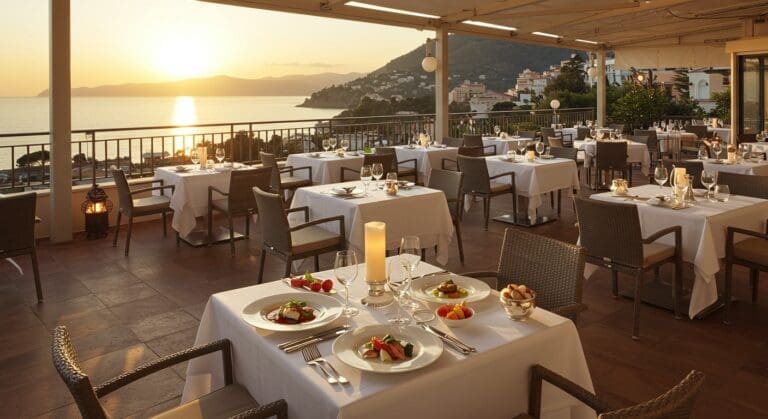
If you are going to spend seriously, spend on time rather than things. A private truffle hunt in the Cimini hills in November, followed by a lunch where the morning’s find is prepared at the table, is worth considerably more than any restaurant meal in Rome at a similar price point. A private estate dinner at a Castelli Romani vineyard – wine from the cellar, food from the kitchen garden, table set outside as the sun moves behind the hills – is the kind of evening that earns permanent residence in memory.
For the table, a tasting menu at a Michelin-recognised restaurant in Rome that draws specifically and intelligently from the Lazio larder – Cesanese alongside aged guanciale, fresh Pecorino from the Simbruini hills, lake fish from Bolsena – is the intellectual counterpart to the rustic farmhouse lunch, and the two experiences sit in productive contrast to each other across an extended stay. The region also has a growing number of agriturismo operations that operate at a genuine luxury level – working farms with beautifully restored accommodation and kitchens that cook exclusively from what the land produces. These are not compromises. They are, increasingly, the point of the whole trip.
The common thread in all the best food experiences Lazio has to offer: unhurried time, human connection, and produce grown in volcanic soil that has been doing this considerably longer than any of us have been alive. You could rush it. You could also not.
For more on planning your time in the region, our Lazio Travel Guide covers everything from itinerary planning to the best areas to base yourself across the region.
When it comes to experiencing this food and wine landscape at the pace it deserves – with a private kitchen, your own outdoor table and the freedom to return from the market and actually cook – nothing serves the purpose better than a private villa. Explore our collection of luxury villas in Lazio and find the base from which the whole region opens up.