Loulé Travel Guide: Where to Stay, Eat & Explore in Luxury
Early morning in Loulé smells like bread and stone. The bakeries get going before six, and by the time the light turns gold over the castle walls, there’s already a kind of purposeful quiet on the streets – the sort that belongs to a town that has never particularly needed to perform for anyone. The market vendors are arranging their pyramids of tomatoes with the concentration of people who have been doing this every morning for decades. A cat observes from a doorstep. Somewhere, coffee is being made the right way. This is not the Algarve of sunbeds and frozen cocktails. This is the inland heart of it – and it beats at its own, unhurried rhythm.
Loulé rewards a specific kind of traveller. It suits families who want privacy and space – who want their children to have a pool and a garden and the freedom that only a private villa provides, without sacrificing access to culture, markets and coast. It works beautifully for couples marking something significant – a milestone anniversary, a honeymoon that deliberately sidesteps the obvious – who want refinement without ostentation. Groups of friends who share a taste for good food, long lunches and hill walks that justify them will find it deeply satisfying. Remote workers who have discovered that you can have the same reliable fibre connection from a hilltop villa above Loulé as from a grey office in the United Kingdom – and that one of these options is considerably better for the soul – have been quietly colonising the area for years. And wellness-focused guests, drawn by the clean air, the walking trails, the olive groves and the particular silence of the Algarve interior, tend to arrive for a week and start looking at property on the way home. That’s the thing about Loulé. It gets under the skin without making a fuss about it.
Getting Here Is Easier Than You’d Expect (and Then the Road Gets Beautiful)
Faro International Airport is the obvious gateway, and it earns its place on the itinerary purely by virtue of being just 20 kilometres from Loulé – roughly 20 to 25 minutes by car, depending on traffic and the mood of the roundabouts. Most visitors rent a car from the airport, which is genuinely the right call. Loulé itself is walkable once you’re there, but the surrounding countryside – the rolling hills, the cork oak groves, the unmarked roads that lead to viewpoints nobody has bothered to Instagram yet – is best explored with your own wheels and no particular agenda.
Private transfers from Faro are widely available and make particular sense if you’re arriving as a group, carrying the kind of luggage that suggests you’ve packed for every conceivable social occasion (no judgement), or simply want to begin the holiday the moment you step off the plane rather than queuing for keys at a rental desk. Taxis and rideshare apps work well within the town itself. Loulé sits conveniently between Faro and Albufeira, and the A22 motorway – the Via do Infante – puts the coast roughly 15 minutes south and Silves, Monchique and Tavira all within an easy hour. If you’re coming from Lisbon, it’s a three-hour drive south or a similar journey by intercity train to Faro. Flying into Lisbon and driving down is, incidentally, one of the more enjoyable ways to enter the Algarve, assuming you can spare the time and enjoy the transition from the Atlantic plains to the dry, aromatic hills of the south. Seville and the rest of southern Spain are also within reach by car, making Loulé a plausible base for a wider European road trip of the kind that sounds ambitious in January and turns out to be the best decision you ever made.
The Loulé Table: Where Serious Food Meets Genuine Hospitality
Fine Dining
Loulé punches considerably above its weight when it comes to serious food, and the town has quietly become one of the more interesting culinary addresses in the Algarve – which is saying something, given the competition from the coast. The standard-bearer is CaféZique, where Chef Leandro Araújo holds a Michelin Bib Gourmand and deserves every syllable of it. The setting is a multilevel space with rooftop terraces overlooking the historic centre – the kind of view that makes you feel philosophical about the second bottle of wine. The food is gourmet petiscos: traditional Algarve flavours reworked with precision and occasional exotic influences that never feel gratuitous. The sharing format is ideal for groups who can’t agree on a main course and don’t really want to. Arrive without a reservation during high season and you’ll learn an important lesson about optimism.
Aurora, named by Chef Vítor Veloso after his grandmother, carries that sense of personal investment in every dish. The space itself is thoughtfully done – modern lines softened by rustic textures, the sort of interior that photographs well but actually feels better in person. The food presents seasonal Algarve produce in refined compositions that understand the difference between elevating an ingredient and overwhelming it. This is cooking that respects where things come from, which in the Algarve means sun-warm tomatoes, extraordinary seafood, and almonds from trees that look like they predate the restaurant by centuries. They probably do.
Where the Locals Eat
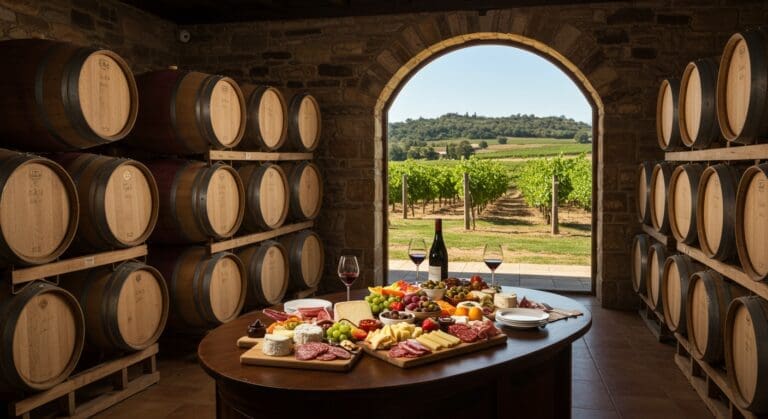
Churrasqueira Jolibela is where you go when you want to eat exactly what the town eats, for exactly what it costs the town to eat it. The piri-piri chicken is considered by a considerable number of locals to be among the best in the Algarve – a claim not made lightly in a region where piri-piri chicken is something close to a civic religion. No-frills does not mean no care: the beef dishes are equally serious, the atmosphere is warm and slightly chaotic in the best way, and the crowd mixes locals, expats and visitors with a democratic ease that tells you everything you need to know about the food. Bica Velha offers something different: a family-run restaurant with a rustic stone interior that feels like it grew out of the hillside, seasonal menus that shift with what’s available, and a wine list weighted towards Algarve producers – which is, frankly, where things have been getting interesting. The region’s wines deserve the attention they’re increasingly getting.
The Saturday market at the Mercado Municipal is an eating occasion as much as a shopping one. Arrive before ten with no fixed plan and allow the stalls to dictate breakfast. The market itself is the largest covered market in southern Portugal, built in Moorish revival style in 1908 and still operating with the kind of daily-produce intensity that makes supermarkets feel slightly absurd. It opens from 7am to 2pm every day except Sundays, but Saturday is the main event – when it spills outside into the surrounding streets, local farmers arrive with produce that was in the ground 48 hours ago, and the whole thing becomes a minor festival of exactly the kind the Algarve does well.
Hidden Gems Worth Seeking Out
Café Calcinha has been serving coffee since the 1920s and has no intention of changing, which is exactly right. The Belle Époque decor is intact – you half expect to find poet António Aleixo still in his usual corner, which would be remarkable given that he died in 1953, but the atmosphere encourages that sort of fanciful thinking. The café is known locally for its Folhado de Loulé, a regional puff pastry that is not technically a meal but can function as one if you’ve approached the morning properly. Locals treat this place with the easy familiarity of somewhere that has always existed and always will. Visitors would do well to adopt the same approach rather than treating it as a photo opportunity. The coffee is genuinely excellent. Order it at the bar, the way it was intended.
The Landscape That Most Tourists Never See
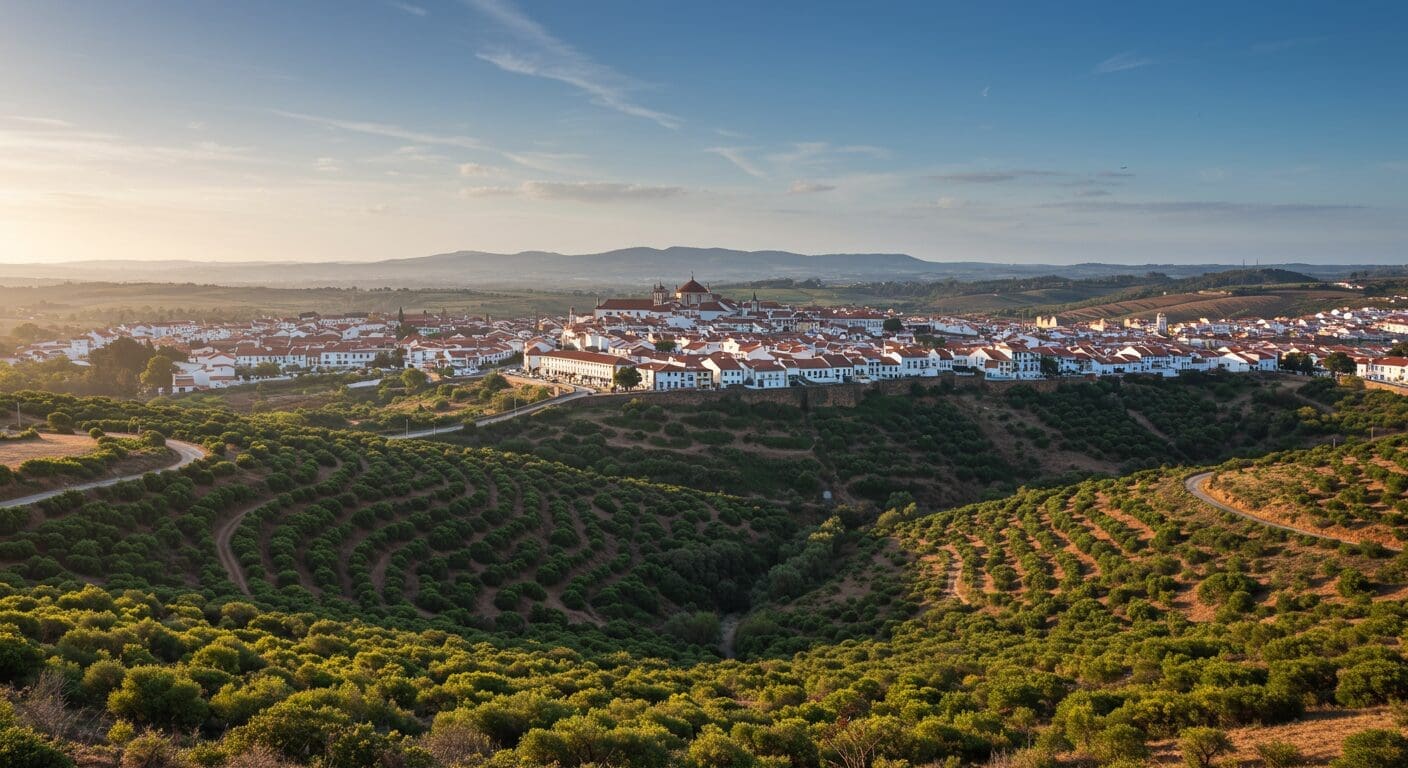
Loulé sits in the Serra do Caldeirão foothills, in the part of the Algarve that the coastal resorts tend to elide in their marketing materials. This is a mistake on their part and an opportunity on yours. The municipality is the largest in the Algarve by area and covers an extraordinary range of terrain: from the dry, cork-studded hills of the interior to the low coastal scrubland that eventually gives way to beaches of the sort that travel magazines keep running out of adjectives for. The town itself is compact and navigable – a proper Portuguese hill town with a Moorish castle, a Gothic church, and the kind of narrow streets that reward aimless walking and mild disorientation.
Head north and the landscape changes quickly. The Barrocal – the limestone band between the coast and the Serra – is ancient agricultural country: almond groves, carob trees, fig orchards, and farmhouses that sit in the landscape as though they were placed there by someone who understood geometry. In spring, the almond blossom is genuinely worth reorganising travel plans around. By summer, the hills are dry and fragrant – wild thyme, cistus, rosemary – and the light takes on that particular Mediterranean quality that makes everything look slightly more significant than it probably is. Villages like Salir, built around its own ruined Moorish castle, offer the kind of slow afternoon that reminds you why you left wherever you came from.
The coast is 20 minutes south. Vilamoura, Quarteira and the beaches of Almansil are all within easy reach of a Loulé villa, which means you get the best of both landscapes without committing to either. It’s a genuinely rare combination – cultural depth and market mornings, then a half-hour later you’re on a beach with clear Atlantic water and someone bringing you something cold.
Things to Do in Loulé That Are Worth Every Minute
The Mina de Sal-Gema – the rock salt mine beneath the city – is one of those experiences that sounds like a school trip and turns out to be genuinely extraordinary. The descent takes you 230 metres underground into geological formations that are 230 million years old. Let that number settle for a moment. The tour lasts around two hours, all safety equipment is provided, and the guided experience is both informative and atmospheric in a way that underground spaces tend to be. It’s a particularly good option for days when the August heat has moved from pleasantly warm to aggressively personal, and it has the additional merit of being a story you can actually tell when people ask what you did on holiday.
The Carnaval de Loulé is the oldest and most celebrated carnival in Portugal – a serious rival, by reputation if not by latitude, to the better-known Rio version. It takes place in February or March and transforms the town with elaborate floats, satirical costumes and the kind of organised chaos that is, paradoxically, extremely well organised. If your visit coincides, rearrange whatever else you had planned. If it doesn’t, the town’s general capacity for celebration is evident year-round in its festivals, its markets and its evident enjoyment of being itself.
Beyond Loulé, the wider Algarve offers day trips that deserve more than a day: the old town of Faro with its walled city and cathedral bones; the dramatic limestone formations of Benagil by kayak or boat; the hilltop village of Alte, considered by some the most beautiful inland village in the Algarve and modest enough about it not to overcharge for lunch; and the spa town of Monchique in the mountains, where the spring water has been considered restorative since Roman times. Whether it’s the water or simply the altitude and the view is a question best not answered definitively.
Active Pursuits for People Who Need to Feel They’ve Earned the Dinner
The Serra do Caldeirão and the Barrocal offer walking and trail running terrain of genuine quality – waymarked routes that wind through cork oak forests, along dry riverbeds and past the kind of ancient farmsteads that make you want to know their histories. Cycling is increasingly well-served, with both road and mountain biking routes making the most of terrain that rewards effort with views. The ViaAlgarviana long-distance trail crosses the municipality and is one of the more satisfying multi-day walking routes in southern Portugal, connecting the Atlantic coast to the Spanish border through landscapes most people in the Algarve never see.
The coast delivers everything you’d expect from an Algarve destination and several things you might not. The waters off the Algarve are cleaner and clearer than almost anywhere in western Europe, and scuba diving and snorkelling around the rock formations between Albufeira and Vilamoura reveal a marine environment that has benefited from protected coastline status. Sailing and boat charters are available from Vilamoura marina, one of the best-equipped marinas in the country. Kayaking, paddleboarding and coasteering around the limestone cliffs and caves of the Algarve coastline offer access to places no road leads to – which is, of course, precisely their appeal.
For golfers, the area around Loulé is frankly embarrassing in its riches. Quinta do Lago and Vale do Lobo are both within 20 minutes – championship courses of international reputation, operating at a standard that justifies the green fees and then some. The Algarve’s golf infrastructure is among the best in Europe, which is one of the reasons that a significant proportion of visitors return on a semi-permanent basis.
Why Loulé Works Brilliantly for Families (Really)
The private villa with a pool is not just a luxury preference in Loulé – it’s a practical and genuinely transformative choice for families. Small children who have their own garden and their own pool are different children than those competing for sunloungers at a hotel pool at 8am. Teenagers who have space to retreat to stop being quite as teenage about things. Multi-generational groups – grandparents, parents, cousins – can coexist in the easy, natural way that shared hotel rooms and adjoining rooms never quite facilitate. The villa is where a family holiday becomes a family experience rather than a logistical exercise.
The region itself is exceptionally well-suited to families with children of all ages. The beaches are varied enough to satisfy everyone from toddlers needing sheltered, shallow water to older children wanting waves and water sports. The salt mine tour is one of the most genuinely child-engaging activities in the region – interactive, educational and cool in both senses. The Saturday market is an experience in itself for children who’ve never seen food that doesn’t arrive in packaging. The wider Algarve has excellent water parks, boat trips to sea caves, and horse riding through the cork forests – the kind of activity programme that produces the specific exhaustion that means everyone sleeps well and nobody argues about the television.
Loulé town itself is safe, walkable and small enough for children to have some independence on the cobbled streets without parental anxiety becoming a full-time occupation. Ice cream quality is high. This should not be underestimated as a family travel metric.
History Written in Stone, Tile and Carnaval Feathers
Loulé has been inhabited for longer than most of its residents remember or mention. The Romans were here, leaving traces in the underground remains that periodically surface during construction work. The Moors were here for five centuries and shaped the town in ways that are still legible in the castle walls, the street pattern and a word or two in the local dialect. The Reconquista arrived in the 13th century and the Gothic Igreja Matriz de São Clemente rose on the foundations of what had been a mosque – which is, historically speaking, a very Iberian thing to do.
The castle ruins in the centre of town have been thoughtfully preserved and now house the local archaeological museum, which offers a surprisingly engaging account of the town’s layered past without requiring more than an hour of your time. The artisan market that operates beneath and around the castle walls continues a tradition of craft and trade that the town has maintained since its medieval heyday as a market centre for the interior Algarve.
Loulé’s craft traditions are still very much alive. Copper-working, lacemaking, weaving and the production of traditional leather goods continue in workshops that cluster around the old town – not as tourist theatre but as actual functioning trades. The annual Festa da Mãe Soberana, held in April, is a significant religious procession that fills the streets with the kind of sincere, unselfconscious ceremony that reminds visitors that they are guests in a place with its own deep spiritual life, which deserves the appropriate measure of respect and quiet observation.
The Carnaval deserves its own mention again in this context: it is the largest and oldest in Portugal, a tradition that has been running for over a century, and its satirical floats have an edge that suggests the town takes both its humour and its politics seriously. It is not an imitation of anything. It is entirely and specifically itself.
Shopping in Loulé: Buy the Real Thing
The Mercado Municipal is the obvious starting point and remains the most satisfying. Even if you’re not buying, the Saturday morning experience of the covered market expanding outward into the streets – local honey, handmade cheese, dried herbs, fresh almonds, ceramic work, embroidered linen – is worth the early alarm. The quality of the produce is exceptional by any standard, and the prices are the kind that make you briefly consider whether you could renegotiate your entire relationship with supermarkets.
The craft workshops around the castle are worth seeking out for copper pieces, hand-painted ceramic work and woven goods that are made here, not imported and relabelled. Loulé’s copperwork tradition in particular produces beautiful, functional objects – hammered trays, decorative pieces and the kind of thing that looks excellent on a kitchen shelf back home and prompts conversations about where you found it. The answer, please remember, is a workshop in the old town of an inland Algarve market town – not, emphatically, a gift shop at Faro airport.
The town centre has a good range of independent food shops where olive oil, local wine, artisan preserves, almonds and the dried fig-and-almond sweets (Dom Rodrigo is the one to know) can be found in quality that surpasses anything available in the resort towns. If you’re staying in a villa with a well-equipped kitchen, the Saturday market combined with a stop at one of these shops will produce dinners that become the ones people talk about on the flight home.
Before You Go: The Practical Details That Actually Matter
Portugal uses the euro, and Loulé is mainstream enough for card payments to be accepted almost everywhere – though carrying a little cash is wise for the market stalls, the smaller cafés and the occasional workshop where the card reader’s relationship with connectivity is more aspiration than reality. Portuguese is the language, obviously, but English is widely spoken in Loulé and across the tourist-facing parts of the region. A few words of Portuguese – obrigado, por favor, bom dia – are received with genuine warmth rather than the faintly tolerant patience you sometimes encounter in more visited places.
Tipping is not mandatory but is warmly appreciated. Around 10% in restaurants is the norm; rounding up in cafés is the habit. Nobody will make you feel bad for not doing so, and nobody will make you feel good in any demonstrative way for doing so. It’s Portugal. Dignity is maintained in all directions.
The best time to visit for most travellers is May to June or September to October. The light is extraordinary, the temperatures are in the mid-20s, the summer crowds have either not yet arrived or have recently retreated, and the landscape is at its most varied and interesting. July and August are hot – properly hot, 35°C and above – and while the coast handles this with beaches and the sea, the inland hills can feel intense. That said, a villa with a pool and an afternoon you have no intention of leaving it is one of the most pleasurable things the Algarve offers in any month. December to February brings mild, clear days that are considerably warmer than most of northern Europe, and Loulé in this period has an unhurried, authentic quality that some travellers prefer above all other seasons.
The Algarve is one of the safest destinations in Europe for travellers. Common sense precautions apply – don’t leave valuables in hire cars, particularly at beach carparks – but the ambient level of personal safety is genuinely high. The tap water is safe to drink. The sun is not, without appropriate SPF. The mosquitoes in summer are a nuisance rather than a hazard. This is, on balance, a very easy place to be.
Why a Private Villa in Loulé Changes the Nature of the Holiday Entirely
There is a particular quality of morning that a luxury villa in Loulé delivers and that no hotel, however well-managed, quite replicates. You are in your own house, in the hills above a Portuguese market town, with coffee on the terrace and a view that extends over cork oaks to where the land flattens toward the coast. Nobody is setting out a breakfast buffet. Nobody is hovering. The pool is yours, the garden is yours, the pace of the day is yours to set entirely. This is not a small thing. It is, for many people, exactly what a holiday is supposed to be.
The luxury villas in Loulé and the wider municipality range from renovated farmhouses – stone-floored, thick-walled and beautifully cool in summer – to contemporary architect-designed properties with infinity pools and the kind of kitchen equipment that makes ambitious cooks genuinely excited. Many offer staff options: a private chef who turns the Saturday market haul into a dinner worth remembering, a housekeeper who maintains the kind of order that hotel rooms have by default but that holiday rentals often struggle to sustain, a concierge who books the golf tee times and arranges the boat trip and knows which table at CaféZique to request. These are not extravagances, exactly. They are the things that allow a group of eight or ten people to actually relax rather than taking turns to manage logistics.
For multi-generational families, a villa with separate sleeping wings, multiple reception spaces and outdoor areas where different generations can be in companionable proximity without being in each other’s way is a revelation. Grandparents can have a ground-floor bedroom with easy access to the terrace. Teenagers can have a corner of the garden that is functionally their own. Parents can have a single evening that doesn’t require a risk assessment. Private pools, often heated, mean that the swimming happens on the family’s schedule rather than the hotel’s. These are practical advantages with profound effects on how the holiday actually feels.
Remote workers have discovered that a villa near Loulé with reliable fibre broadband – increasingly standard in the better properties, with some offering Starlink for total connectivity assurance – delivers something peculiar and valuable: the ability to do a full working day in the morning and spend the afternoon on a beach that looks like a desktop wallpaper. The quality of light for video calls is also, it must be said, considerably better than most offices. Colleagues in grey climates will notice. This is not your problem.
Wellness-focused stays benefit from the private pool and gardens as default amenities, but the better villas also offer yoga terraces, outdoor showers, gyms, sauna facilities and the kind of total quiet that the Algarve interior provides and that is, in itself, genuinely restorative. Combine this with the hiking trails, the clean air and the particular Mediterranean rhythm of early mornings and long evenings, and a week here functions as a reset in ways that no spa weekend in a city hotel has ever managed.
Excellence Luxury Villas holds an extensive portfolio of properties in the area, from intimate retreats for two to grand estate-style villas sleeping twenty. Browse our full collection of luxury holiday villas in Loulé and find the one that fits the specific, irrepeatable shape of your particular group, your particular itinerary and your particular idea of what a perfect holiday should feel like. Which is, in the end, the only brief that matters.
More Loulé Travel Guides
- Best Restaurants in Loulé: Fine Dining, Local Gems & Where to Eat
- Loulé Food & Wine Guide: Local Cuisine, Markets & Wine Estates
- Loulé with Kids: The Ultimate Family Holiday Guide
- Best Time to Visit Loulé: Month by Month Weather, Crowds & Tips
- Loulé Luxury Itinerary: The Perfect 7-Day Guide
- Romantic Loulé: The Ultimate Couples & Honeymoon Guide
What is the best time to visit Loulé?
May to June and September to October represent the sweet spot for most visitors – warm, clear days in the mid-20s Celsius, manageable crowds, and a landscape that is either coming into its summer abundance or settling into the warm amber of early autumn. July and August are genuinely hot (regularly above 35°C inland) and the coast gets busy, though a villa with a private pool changes that equation considerably. Winter visits – November through February – offer mild, frequently sunny weather that is significantly warmer than most of northern Europe, combined with a quiet, unhurried version of the town that many experienced travellers actually prefer. The Carnaval de Loulé in February or March is the one specific event worth timing a visit around if at all possible.
How do I get to Loulé?
Faro International Airport is the closest and most convenient gateway, located approximately 20 kilometres from Loulé – around 20 to 25 minutes by car. Direct flights operate from most major UK and European cities year-round, with frequency increasing significantly from April through October. Renting a car at the airport is strongly recommended, as the area around Loulé rewards independent exploration and the surrounding villages and countryside are best accessed with your own transport. Private airport transfers are also widely available and are particularly practical for groups or families with luggage. Travelling from Lisbon by car takes approximately three hours south via the A2 motorway.
Is Loulé good for families?
Exceptionally so, particularly for families who choose a private villa rather than a hotel. The combination of safe, walkable town centre, excellent beaches within 20 minutes, genuinely engaging activities for all ages (the rock salt mine tour is a particular highlight for children), a Saturday market that makes food interesting rather than theoretical, and the freedom and space that a villa with a private pool provides – this adds up to a family holiday that works for everyone from grandparents to toddlers. The Algarve’s wider infrastructure of water parks, boat trips, horse riding and water sports means that activity options are effectively inexhaustible. Loulé itself has a relaxed, local character that feels more authentic and less resort-packaged than many coastal Algarve destinations.
Why rent a luxury villa in Loulé?
A luxury villa in Loulé offers privacy, space and autonomy that no hotel can replicate. You have your own pool, your own garden, your own kitchen stocked from the Saturday market, and your own schedule that answers to nobody. For families, this means children have room to move and grandparents have peace. For couples, it means genuine seclusion and the ability to set the pace of each day from scratch. Optional staff – private chef, housekeeper, concierge – bring the service levels of a five-star hotel without the ambient noise and shared spaces that come with them. Many villas in the Loulé municipality sit in stunning countryside within 20 minutes of the coast, giving guests access to both landscapes from a single private base.
Are there private villas in Loulé suitable for large groups or multi-generational families?
Yes – the Loulé area has an excellent range of large villa properties capable of accommodating groups of 10, 14, 18 or more guests. Many feature separate sleeping wings or annexes that provide privacy within a shared property, multiple living and dining areas, large private pools (often heated and sometimes with a smaller children’s pool alongside), professional outdoor kitchen and barbecue facilities, and dedicated staff quarters. Multi-generational families particularly benefit from ground-floor bedroom suites for older guests, separate spaces for children and teenagers, and large communal outdoor areas where the whole group can be together without feeling on top of each other. Excellence Luxury Villas can advise on specific properties to match your group size and requirements.
Can I find a luxury villa in Loulé with good internet for remote working?
Increasingly, yes – and the standard has improved significantly in recent years. Many of the better-specified villas in the Loulé area now offer high-speed fibre broadband as standard, sufficient for video conferencing, large file transfers and multiple simultaneous users. Some premium properties have installed Starlink satellite connectivity as a backup or primary system, which provides reliable high-speed internet even in more remote rural locations where terrestrial infrastructure is inconsistent. When booking through Excellence Luxury Villas, connectivity specifications can be confirmed in advance. Many guests use Loulé-area villas as a base for a month-long remote working stay, combining morning working hours with afternoon exploration of the coast, countryside and culture.
What makes Loulé a good destination for a wellness retreat?
Several things converge in Loulé to make it genuinely suited to wellness-focused travel rather than simply wellness-marketed travel. The air quality in the inland hills is exceptional. The silence – real silence, not the managed quiet of a spa – is restorative in ways that are difficult to quantify and easy to feel. Walking and trail running trails through cork oak forests and the Serra do Caldeirão provide outdoor exercise at a quality unavailable in most urban environments. Luxury villas in the area typically offer private pools, outdoor yoga terraces, gym facilities and the unhurried pace of life that allows the nervous system to genuinely decompress. Add the exceptional local diet – olive oil, fresh fish, vegetables of real quality, Algarve wine – and a week in Loulé functions as a proper reset rather than a temporary reprieve.