Marrakesh-Safi Travel Guide: Where to Stay, Eat & Explore in Luxury
Here is a confession that most travel writers would bury in a footnote: Marrakesh is not, strictly speaking, a relaxing city. It is loud, it is labyrinthine, it will disorient you cheerfully and repeatedly, and at some point a man with a snake will appear and expect a tip. And yet – and this is the part that takes people by surprise – you will almost certainly love it. Not despite the chaos, but because of a deeper, quieter Morocco that exists just beneath it: the stillness of a riad courtyard at dusk, the Atlas Mountains turning lavender-pink on the horizon, the smell of orange blossom drifting over a villa wall at six in the morning. The Marrakesh-Safi region is one of travel’s great contradictions. It overwhelms the senses while simultaneously offering some of the most profound rest you will ever have. The trick, as with most things in life, is knowing where to go.
What makes a luxury holiday in Marrakesh-Safi genuinely interesting is how many different kinds of traveller it suits – and how different their experiences can be. Couples marking anniversaries or honeymoons find the region incomparably romantic: candlelit rooftop dinners, private hammams, the intoxicating drama of a medina sunset. Families seeking privacy and space discover that a private villa with its own pool solves almost every logistical problem that package travel creates, while giving children the kind of freedom – a garden, a splash, a cook who will make them pasta without judgment – that hotels rarely provide. Groups of friends find the region endlessly social, its food scene rich and its nightlife more sophisticated than the guidebooks suggest. Wellness-focused guests come for the hammam tradition, the hiking, the silence of the palmeraie, and the particular reset that only hot sun and unhurried days can achieve. And remote workers – an increasingly significant tribe – find that a private villa with reliable connectivity and a pool view makes the question of where to open a laptop distinctly easier to answer than it is back home.
Getting Here Is Easier Than You Think (And That Is Part of the Appeal)
Marrakesh Menara Airport sits just a few kilometres southwest of the medina – close enough that you can be sitting in a riad courtyard with a mint tea within forty minutes of landing, which is a transition speed that few destinations can match. Direct flights operate from United Kingdom airports including London Gatwick, Heathrow, Manchester and Edinburgh, with journey times typically hovering around three and a half hours. Major European carriers serve the route year-round, and competition keeps prices reasonable even in peak season.
If your plans take you to the coast – Essaouira, for instance, or the quieter Atlantic-facing stretches of the region – it is worth knowing that Essaouira has its own small airport with seasonal connections, though most visitors find it simpler to fly into Marrakesh and transfer by road. The drive from Marrakesh to Essaouira takes around two and a half hours through a landscape that shifts slowly from palm and ochre city to argan scrubland to sea-wind-battered Atlantic coast, and it is a drive worth making slowly.
Within Marrakesh itself, petits taxis are the correct answer to most journeys within the city – cheap, plentiful, and driven with a certain improvisational flair that you will either find thrilling or need a moment to adjust to. Grand taxis handle longer routes between cities. For villa stays in the palmeraie or the mountains, a private transfer arranged through your property is almost always the cleaner option, and most luxury properties will organise this without being asked.
Where to Eat: A Region That Takes Food Seriously, Sometimes Surprisingly So
Fine Dining
The dining scene in Marrakesh has matured considerably over the past decade. It was always atmospheric – few cities on earth do a candlelit rooftop quite so effortlessly – but atmosphere and actual cooking quality are different things, and the best restaurants here now deliver both. For a meal that combines the two without tipping into tourist theatre, Le Jardin in the medina at 32 Souk Sidi Abdelaziz is the place many regulars return to first. The setting is a restored 16th-century riad, all hand-painted tiles and trailing greenery – banana trees, palms, a courtyard that filters the noise of the medina down to something almost tranquil. The menu crosses Moroccan mezze with Mediterranean modern cooking, and the staff have the rare quality of being genuinely attentive rather than performatively so. It works at breakfast, at lunch, and as an unhurried shared supper. It has multiple levels, which means there is almost always a corner that feels like your own discovery.
For cocktails with genuine ambition, Barometre at 84 Rue Riad Zitoun el Jdid in Gueliz deserves more attention than it receives in mainstream guides. The Hadni brothers have created something that looks like a glamorous turn-of-the-century pharmacy and functions like a very good speakeasy – think smoke-wreathed presentations, bespoke glassware, and a food menu that earns its place alongside the drinks rather than simply tolerating their presence. It is exactly the kind of bar that would hold its own in New York or Barcelona. It is rather better than it needs to be, which is the most encouraging thing you can say about any restaurant in a tourist city.
Where the Locals Eat
The Amal Women’s Training Center and Moroccan Restaurant in Gueliz on Rue Allal Ben Ahmed is one of those places that manages to be genuinely good on multiple levels simultaneously, which is harder than it sounds. It is a non-profit organisation that trains disadvantaged women in Moroccan and international cookery, and the daily-changing menu they produce is – by the overwhelming consensus of people who have eaten there – some of the most authentic food in the city. Reviewers consistently describe it as among the best meals they had in Marrakesh, full stop. Open for lunch six days a week from noon to 3:30pm, it is busy for good reason. The prices are reasonable, the mission is inspiring, and the cooking is the point rather than a secondary consideration. Go early or book ahead.
Café des Épices on Place des Épices in the medina occupies the specific category of places that appear on every list but are, despite this, still worth visiting. The rooftop views over the Spice Square justify the visit alone, and the kitchen turns out traditional Moroccan breakfasts, tajines, salads, and sandwiches competently and without fuss. Marrakesh in summer can be genuinely hot in a way that makes sitting in direct sunlight an act of recklessness, and the café’s parasols and misting system are not an afterthought but a genuine amenity. It is the sort of place you wander into at midday feeling slightly overwhelmed by the medina and leave, an hour later, feeling that everything is probably fine.
Hidden Gems Worth Seeking Out
Beyond the established names, the most rewarding eating in Marrakesh tends to happen at places with no menu in translation, no sign visible from a main street, and a price that makes you wonder briefly if you have misunderstood something. The food stalls in Jemaa el-Fna at dusk – the great square filling with smoke and noise and competing vendors – are not a hidden gem in any technical sense, since approximately everyone knows they exist, but the experience of eating there remains distinctly non-touristy once you step past the first row of aggressively marketed seats and find yourself simply eating a bowl of harira beside people who are also eating a bowl of harira. For those willing to explore the souks beyond the main drag, small neighbourhood restaurants around Bab Doukkala and the northern medina serve set lunches – usually a salad, a tajine, bread – to working locals, with little ceremony and considerable authenticity.
In Essaouira, the harbour fish grills are exactly what they appear to be: very fresh fish, grilled simply, eaten outside, with the Atlantic doing its blustery thing in the background. The experience is refreshingly lacking in concept.
A Region of Extraordinary Range: From Red City to Atlantic Coast
The Marrakesh-Safi region covers a sweep of terrain that defies easy summary. It contains one of the world’s most famous historic cities, a dramatically beautiful Atlantic coastline, the foothills and passes of the High Atlas Mountains, vast stretches of argan forest, and the immense flat expanse of the Haouz Plain – all within a relatively compact geography that makes multi-destination travel genuinely practical rather than merely aspirational.
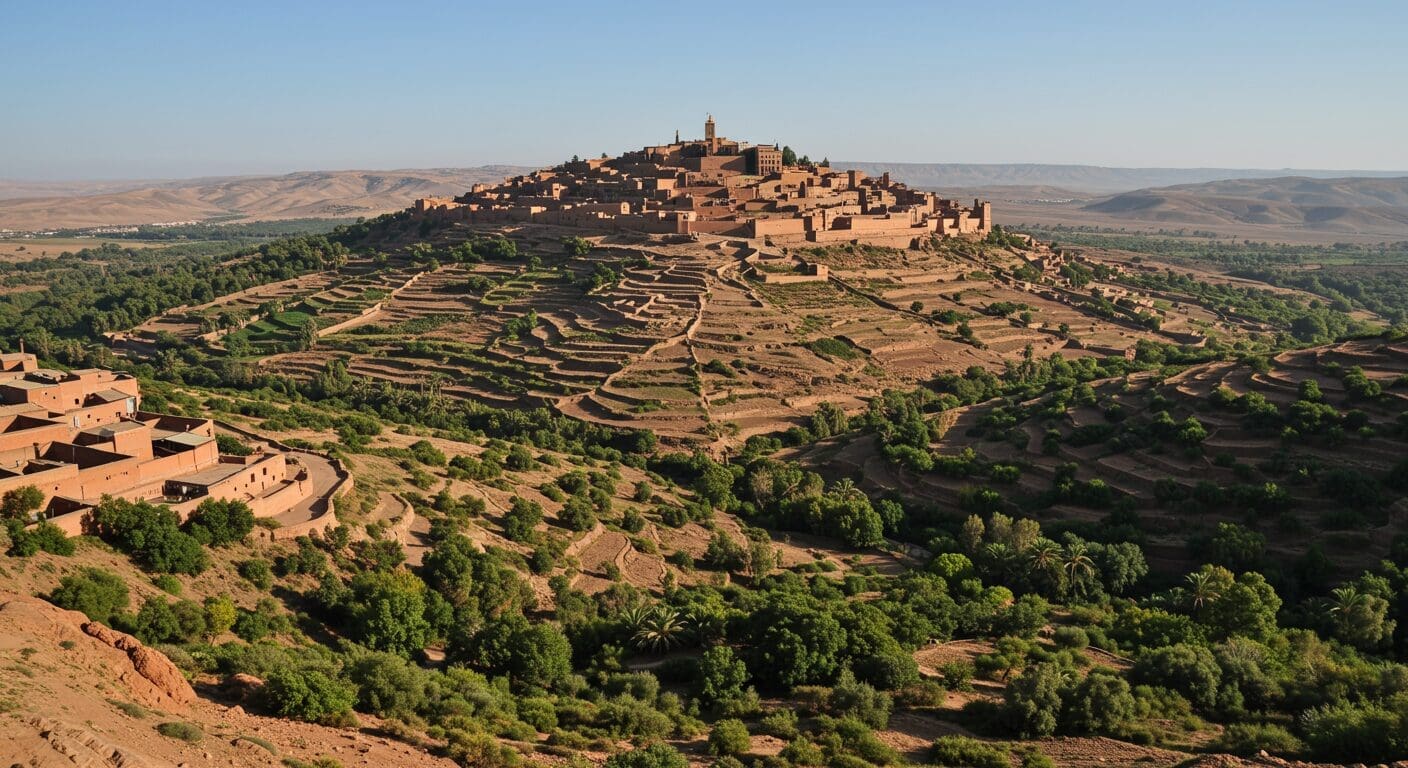
Marrakesh itself – the medina, the palmeraie, the vast modern districts of Gueliz and Hivernage – sits in the centre of this geography like an anchor. Its architecture is Berber, Arab, Andalusian and French colonial all at once, layered over centuries into something that is identifiably, irreducibly itself. The ochre walls that give the city its Red City nickname change colour through the day – pale dusty pink in morning light, burning copper at sunset – and no photograph quite captures it, which is something photographers discover with slight irritation.
The Atlantic coast to the west is a different world. Essaouira, the blue-and-white port city four hours from Marrakesh, is windswept, beautiful, and populated by an interesting mixture of Gnawa musicians, French artists who came for a weekend in 1997 and never quite left, and kitesurfers who have correctly identified the coastal winds as among the best in Africa. The coast north of Essaouira, through Safi itself – an industrial port with a surprisingly preserved medina and some excellent surf – offers a less touristed version of the region that rewards the curious.
To the south, the approach to the High Atlas provides another register entirely: cooler, quieter, vertiginously beautiful in ways that make the city feel very far away indeed. The Ourika Valley, an hour from Marrakesh, is the easiest introduction to this landscape, and on a clear day the drive alone justifies the excursion.
What to Actually Do: Beyond the Obvious (Though the Obvious Is Sometimes Worth It)
The best things to do in Marrakesh-Safi range from the unmissable to the genuinely unexpected. Starting with the unmissable: the medina souks reward hours of purposeful wandering, particularly in the early morning before the day-trip coaches arrive. The Majorelle Garden – designed by the French painter Jacques Majorelle and later owned by Yves Saint Laurent – is famous enough to attract queues but also genuinely beautiful, which is a combination that not every famous thing achieves. The Bahia Palace, with its intricate zellij tilework and carved cedar ceilings, gives a more honest sense of Moroccan architectural ambition than many of the more photographed sites.
A traditional hammam is not optional. This is not a suggestion. The combination of steam, black soap, and vigorous exfoliation that constitutes a proper Moroccan hammam is both extremely good for you and deeply unlike anything available at home. Most riads and luxury villas can arrange private hammam sessions; neighbourhood hammams in the medina offer a more communal and considerably cheaper version that is absolutely worth the mild organisational effort involved.
Day trips from Marrakesh are plentiful and varied. The Ouzoud Waterfalls, three hours northeast of the city, are the highest falls in North Africa and surrounded by a semi-wild population of Barbary macaques who have developed strong opinions about picnics. The Atlas Film Studios near Ouarzazate – a four-hour drive over the mountains – have hosted productions from Lawrence of Arabia to Game of Thrones and offer a fascinating glimpse into an industry that most visitors don’t associate with Morocco at all. Camel treks in the palmeraie are available and will appeal to those who have always wondered what it would be like to be photographed on a camel.
Adventure in Every Direction: Surf, Trek, Climb, Descend
For those who have brought their physical energy as well as their appetite, Marrakesh-Safi is quietly one of North Africa’s best adventure destinations. The High Atlas Mountains provide trekking routes for every level – from gentle valley walks in the Ourika to serious multi-day ascents of Jebel Toubkal (4,167 metres, the highest peak in North Africa, achievable by fit hikers without technical climbing experience). The summit rewards the effort with views that stretch, on a clear day, to the Sahara. This is the kind of thing that sounds exhausting until you are doing it, at which point it sounds considerably worse.
The Atlantic coast from Essaouira north through Safi is one of Morocco’s premier surfing destinations, with consistent Atlantic swells, a variety of breaks suited to beginners and experienced surfers alike, and a water temperature that remains reasonable through much of the year. Kitesurfing is particularly concentrated around Essaouira, where the trade winds – known locally as the alizé – blow with reliable force for much of the spring and summer. Several schools operate along the coast for those who want to learn.
Mountain biking through the Atlas foothills and the Haouz Plain offers a way of experiencing the landscape at a pace that feels engaged rather than enclosed. Routes through Berber villages and argan groves, with a support vehicle following at a discreet distance, can be arranged through operators in Marrakesh with relatively little advance notice. Those who prefer their adrenaline more vertical can rock climb in the Todra Gorge or around the Atlas approaches. Those who prefer it horizontal can paraglide over the mountains above Marrakesh with views that require no further description.
Why Families Find Marrakesh-Safi Works Rather Brilliantly
The honest answer to whether Marrakesh is good for families is: it depends almost entirely on where you stay. The medina with children in tow is a particular kind of adventure – thrilling for ten minutes, exhausting for the next twenty, eventually wonderful once everyone stops worrying about where the group ends and the crowd begins. Children tend to find the souks, the snake charmers, and the general sensory overload of Jemaa el-Fna genuinely exciting in the way that adults who have been dragged through too many museums have largely forgotten how to be.
The practical advantages of renting a private luxury villa in Marrakesh-Safi for families are considerable. A private pool removes the hotel poolside negotiation entirely – no booking sun loungers, no sharing lanes, no wondering whether the pool closes at six. Dedicated villa staff can accommodate children’s meal preferences without it being a production. Space – actual, generous, separate space – means that teenagers can be teenagers without it affecting everyone else’s experience. Many villas in the palmeraie and Atlas foothills come with gardens, play areas, and enough room that a family of eight can exist within the same property without constantly being aware of each other, which is a gift to multi-generational travel that cannot be overstated.
For younger children, the palmeraie – the great palm grove that spreads north and east of the city – provides a calmer, greener, cooler alternative to the medina’s intensity, and many of the most beautiful villa properties in the region sit within it. A base in the palmeraie, with day trips into the city for the cultural highlights, is often the smartest way to structure a family luxury holiday in Marrakesh-Safi.
History Thick Enough to Taste: Architecture, Tradition and Living Culture
Marrakesh was founded in 1070 by the Almoravid dynasty and served as the capital of a Berber empire that, at its height, stretched from Senegal to central Spain. This is not a historical footnote. It explains the Andalusian influence in the city’s architecture, the Arabic and Berber layers in its language and cuisine, and the particular quality of the medina’s layout – which was designed not for cars, obviously, but not quite for pedestrians either, more for a kind of purposeful, interconnected movement that requires you to relearn how to navigate space.
The Koutoubia Mosque, whose minaret has been the dominant landmark of the Marrakesh skyline for nine centuries, is one of the finest examples of Almohad architecture in the world and was the model for both the Giralda in Seville and the Hassan Tower in Rabat. Non-Muslims cannot enter, but the gardens surrounding it are open to all and provide a rare moment of calm within walking distance of Jemaa el-Fna.
The Ben Youssef Madrasa – a 14th-century Islamic college that once housed hundreds of students – is one of the most architecturally extraordinary interiors in Africa: every surface carved, painted, tiled, or inlaid, in patterns of such complexity that you run out of surface area before you run out of things to look at. It is now a museum and entirely worth the entrance fee.
Jemaa el-Fna, the great central square of the medina, is a UNESCO-listed intangible cultural heritage site – one of the few in the world designated not for a building or an artefact but for a living practice: the oral tradition of storytellers, musicians, acrobats and healers who have gathered there for centuries. At dusk, when the food stalls ignite and the square fills with smoke and sound, it remains one of the most extraordinary public performances on earth. It is also, it should be noted, where the previously mentioned snake owner will find you.
Shopping: From Souk Archaeology to Considered Craft
Shopping in Marrakesh is either one of the great pleasures of travel or a mild endurance event, depending entirely on your relationship with negotiation. The price initially quoted in the souks is a starting position, not an offer. This is universally understood, and approaching it as a hostile act rather than a social ritual will make everyone miserable. A counter-offer of around fifty to sixty percent of the opening price, delivered with good humour, is the appropriate opening move. From there, the process tends to converge pleasantly on something both parties can live with.
What you are shopping for matters. The leather goods from the Chouara tanneries – bags, belts, babouche slippers – are genuinely beautiful and considerably cheaper than equivalent quality in Europe. Hand-knotted Berber rugs from the Atlas are a longer-term investment but often the most significant thing people bring home – distinctive, durable, and available in designs that range from geometric traditional to abstract contemporary. Argan oil, in its culinary and cosmetic forms, is the region’s most famous export and available everywhere; the quality varies considerably, and buying from a women’s cooperative rather than a tourist-facing shop is both more ethical and more likely to result in actual argan oil.
The Mellah – the old Jewish quarter near the Bahia Palace – contains a concentration of antique dealers, silverworkers and jewellery shops that rewards slower, more deliberate browsing. In Essaouira, the woodworkers who craft furniture and objects from thuya root – a timber found only in this part of Morocco, with a grain like flame – produce work that is unmistakably of this place and genuinely hard to find elsewhere.
For those who prefer their retail with a degree of curation and air conditioning, the Gueliz district has a growing number of design boutiques and concept stores that source from Moroccan artisans with a contemporary sensibility. Less atmospheric than the souks, considerably less negotiation required.
The Practical Details: What You Actually Need to Know
The currency is the Moroccan Dirham (MAD), which is not freely exchangeable outside Morocco – change your money on arrival at the airport or in banks and bureaux de change rather than trying to source it beforehand. Cash remains essential in the medina; cards are accepted in hotels, upmarket restaurants, and most boutiques in Gueliz. ATMs are plentiful.
The official languages are Arabic and Amazigh (Berber), but French is widely spoken throughout the region and is essentially the language of business, hospitality, and middle-class daily life. In the tourist areas of the medina, English is common. A few words of Darija (Moroccan Arabic) – shukran for thank you, la for no, barak Allahu fik for a thank-you with warmth – will be received with genuine pleasure.
The best time to visit Marrakesh-Safi is, by broad consensus, spring (March to May) and autumn (September to November). Temperatures during these months sit in the comfortable 20-28°C range, the light is extraordinary, and the city feels manageable rather than overwhelming. Summer – particularly July and August – brings genuine heat (regularly above 38°C in Marrakesh) that concentrates activity around pools and shaded courtyards and largely removes the option of midday sightseeing. This is not necessarily a problem if your villa has a good pool and a library. Winter is mild by European standards, with daytime temperatures often reaching a pleasant 18-20°C, though evenings can be cool and the Atlas Mountains are ski-accessible from around January.
Tipping is standard and expected in restaurants (around ten percent for good service), for guides, drivers, and hammam staff. Dress modestly when visiting mosques, medersas, and more conservative residential areas of the medina – covered shoulders and knees are appropriate and respectful. Photography of individuals requires permission, which most people will grant cheerfully and some will charge for, which is entirely reasonable.
Morocco is, by any objective measure, one of the safest destinations in North Africa for international visitors. The main nuisance in the tourist areas is persistent selling and the occasional unofficial “guide” who will follow you for a surprisingly long time waiting for a tip. Firm, cheerful refusal is the correct response. The country’s political stability and well-developed tourist infrastructure make it a straightforward destination for families, solo travellers, and groups alike.
Why a Private Villa Changes the Entire Experience
There is a particular quality to arriving at a private riad or villa in Marrakesh-Safi that hotels, however beautiful, cannot replicate. It is partly the architecture – the inward-facing design of a traditional Moroccan home, its blank exterior wall opening suddenly onto a courtyard of fountains and tilework and orange trees – and partly something less tangible: the sense that this space is entirely yours. No lobby. No other guests in the corridor. No one to negotiate the pool with at 8am.
For couples on milestone trips, the intimacy of a private villa – particularly one with a rooftop terrace and a staff who will arrange a candlelit dinner on it without being asked twice – is simply incomparable with any hotel equivalent at the same price point. For families and groups, the space a villa provides solves problems that hotels create: separate sleeping configurations, a shared kitchen or cook for different dietary requirements, a private pool that children can use without the formal choreography of hotel pool rules.
Many of the finest luxury villas in the Marrakesh-Safi region come with dedicated staff – a housekeeper, a cook, sometimes a driver or a concierge who knows which restaurant to call and which souks to approach from which direction. This is not an indulgence in any pejorative sense; it is what separates a truly restorative holiday from one that requires the same logistical energy as ordinary life, just in a hotter climate.
For remote workers, the combination of a reliable villa internet connection – many properties now offer Starlink or high-capacity fibre – a private outdoor workspace, and a time zone that aligns conveniently with both European and East Coast American working hours makes Marrakesh-Safi a genuinely practical base for a working holiday. The pool at 4pm, once the calls are done, is not something your office in Clerkenwell can offer.
Wellness-focused guests find that the region’s own traditions – the hammam, the argan oil treatments, the meditative quality of a riad courtyard at first light – combine naturally with the amenities of a well-appointed villa: a private plunge pool, a yoga terrace, a garden large enough for morning movement without an audience. The pace of life outside the medina’s immediate orbit slows in a way that feels both earned and physiologically real.
Excellence Luxury Villas offers an exceptional portfolio of properties across the region, from intimate palmeraie riads to expansive Atlas foothill retreats with mountain views. Browse our full collection of luxury villas in Marrakesh-Safi with private pool and find the property that fits your particular version of what a perfect holiday looks like.
More Marrakesh-Safi Travel Guides
- Best Restaurants in Marrakesh-Safi: Fine Dining, Local Gems & Where to Eat
- Marrakesh-Safi Food & Wine Guide: Local Cuisine, Markets & Wine Estates
- Marrakesh-Safi with Kids: The Ultimate Family Holiday Guide
- Best Time to Visit Marrakesh-Safi: Month by Month Weather, Crowds & Tips
- Marrakesh-Safi Luxury Itinerary: The Perfect 7-Day Guide
- Romantic Marrakesh-Safi: The Ultimate Couples & Honeymoon Guide
What is the best time to visit Marrakesh-Safi?
Spring (March to May) and autumn (September to November) are the most comfortable and rewarding times to visit. Temperatures sit between 20-28°C, the light is exceptional, and the main sights are accessible without the intensity of high summer. July and August bring extreme heat in Marrakesh city – regularly above 38°C – which shifts the experience firmly toward villa pools and shaded interiors. Winter is mild and often underrated, with pleasant daytime temperatures around 18-20°C, fewer visitors, and the added option of Atlas Mountain skiing within a two-hour drive.
How do I get to Marrakesh-Safi?
The main entry point is Marrakesh Menara Airport, which sits approximately five kilometres southwest of the medina and receives direct flights from London, Manchester, Edinburgh and most major European hubs. Flight time from the United Kingdom is around three and a half hours. Essaouira has a smaller airport with seasonal connections, but most visitors to the Atlantic coast fly into Marrakesh and transfer by road – a scenic two-and-a-half-hour drive. Private transfers from the airport to villas in the palmeraie or Atlas foothills can be arranged through your property and are strongly recommended over attempting to navigate in an unfamiliar city on arrival.
Is Marrakesh-Safi good for families?
Yes, with the right base. The medina is genuinely exciting for children – the souks, the square, the sensory overload – but tiring for extended periods. The smartest approach for families is a private villa in the palmeraie or on the city’s quieter outskirts, with a private pool and garden, using day trips into the medina for the cultural highlights rather than trying to stay within it. A villa also removes common family travel friction points: children can eat flexibly, sleep without hotel noise, and use the pool without any of the formal choreography that hotel pools require. Multi-generational groups find that villa space – with separate wings or multiple bedrooms – creates a much more harmonious dynamic than any hotel configuration can offer.
Why rent a luxury villa in Marrakesh-Safi?
The private villa model suits Marrakesh-Safi exceptionally well, for several reasons. Traditional Moroccan riad architecture is inherently inward-facing and private – a villa or riad hire gives you the full experience of a courtyard, a rooftop terrace, and a fountain to yourself, which a hotel room cannot replicate. The staff-to-guest ratio at a private villa is typically far higher than any hotel, meaning service is genuinely personal rather than efficient. For couples, the intimacy is incomparable. For families and groups, the space, the private pool, and the flexibility of a dedicated cook and housekeeper transform the holiday dynamic entirely. At comparable price points to a luxury hotel room, a villa in Marrakesh-Safi typically offers dramatically more space, more privacy, and a more authentic experience of how Moroccan domestic life actually looks.
Are there private villas in Marrakesh-Safi suitable for large groups or multi-generational families?
Absolutely. The region has an excellent supply of large-scale villa and riad properties designed for groups – some sleeping twelve, fourteen, or more guests across multiple bedrooms and separate living wings. Many properties in the palmeraie and Atlas foothills have been purpose-built or extensively renovated to accommodate extended families or groups of friends, with private pools, multiple reception rooms, roof terraces, and full staffing including cooks, housekeepers and drivers. Separate sleeping configurations mean different generations can maintain their own rhythms without the compromise that hotel stays inevitably involve. For milestone celebrations, landmark birthdays, or family reunions, a large Marrakesh-Safi villa provides both the setting and the infrastructure that makes a gathering feel genuinely special rather than merely organised.
Can I find a luxury villa in Marrakesh-Safi with good internet for remote working?
Yes, increasingly so. The perception that Morocco means unreliable connectivity is outdated in the luxury villa market. Many premium properties in the region now offer high-speed fibre broadband or Starlink satellite connectivity, providing speeds that are entirely sufficient for video calls, file transfers and remote working. Marrakesh’s time zone (GMT, or GMT+1 in summer) aligns conveniently with European working hours and reasonably well with US East Coast schedules, making it a practical base for extended working stays. When booking, it is worth confirming connection speeds with the property directly – Excellence Luxury Villas can advise on which properties specifically cater to remote workers with dedicated workspace and reliable connectivity.
What makes Marrakesh-Safi a good destination for a wellness retreat?
The region has an unusually deep wellness tradition that predates the modern concept by several centuries. The hammam – steam, black soap, vigorous exfoliation – is an integral part of Moroccan culture rather than a spa add-on, and experiencing it properly is both genuinely restorative and culturally authentic. Argan oil treatments, native to this region and among the most nourishing skincare ingredients available, are widely offered in authentic form. Beyond the traditional, the physical landscape supports active wellness: Atlas Mountain trekking, coastal cycling, yoga retreats in the palmeraie, and surfing or kitesurfing on the Atlantic coast. Private villas with pools, gardens, yoga terraces, and in-villa massage options allow guests to