Metropolitan City of Florence Travel Guide: Best Restaurants, Culture & Luxury Villas
There is one city in the world where you can stand in front of a single painting and feel, quite genuinely, that your life has been divided into before and after. That city is Florence. Not Rome, where the grandeur can overwhelm. Not Paris, where beauty sometimes tips into self-consciousness. Florence is different – it is intimate, almost impossibly concentrated, the kind of place where a five-minute walk takes you past a Ghiberti door, a Brunelleschi dome, and the best lampredotto sandwich of your life. The Metropolitan City of Florence – the wider administrative region that spreads from the Arno valley out into vine-stitched hills and medieval hill towns – is one of the great travel destinations on earth, and it has been for roughly six hundred years. The difference now is that you can do it on your own terms, in a private villa, away from the crowds, with a glass of Chianti Classico in hand before the sun has fully cleared the cypress trees. That particular detail matters more than it might sound.
This is a destination that rewards a remarkable range of travellers, which is part of why it endures. Couples celebrating milestone anniversaries find the whole region conspires to make them feel like the only two people in the world – especially when you’re staying in a converted farmhouse with a private pool and views across twenty kilometres of uninterrupted Tuscan landscape. Families seeking privacy rather than resort-style supervision thrive here, particularly when a villa with enclosed gardens and a dedicated concierge means the children have space to roam while adults have space to breathe. Groups of friends – the kind who’ve been threatening to ‘do Tuscany properly’ for a decade – find the region scales beautifully to eight or twelve people sharing a property with a wine cellar and an outdoor kitchen. Remote workers who need reliable connectivity increasingly base themselves in Florence’s countryside for weeks at a time, trading the commute for a view of San Miniato. And for anyone on a genuine wellness journey – slow food, long walks through olive groves, thermal spas in the hills – the Metropolitan City of Florence offers a pace of recovery that is rather hard to replicate anywhere else.
Getting to Florence: Where the Journey Becomes Part of the Story
Florence is served by two airports, which between them cover most requirements. Amerigo Vespucci Airport – Florence’s own airport, known locally as Peretola – sits just four kilometres from the city centre and handles direct flights from major European hubs including London, Amsterdam, Frankfurt, and Paris. It is small, efficient, and a genuine pleasure after the orchestrated chaos of larger Italian airports. Transfers to the city take around fifteen minutes, which is the kind of journey time that makes you wonder why airports aren’t always built this way.
For wider international connections, Pisa’s Galileo Galilei Airport is around eighty kilometres west and offers a broader network of routes, including more long-haul options. A direct train from Pisa Centrale to Florence Santa Maria Novella runs regularly and takes just over an hour – comfortable, scenic, and considerably less stressful than a motorway transfer. Bologna Guglielmo Marconi Airport is also worth considering if you’re arriving from further afield, with a fast train connection to Florence in around thirty-five minutes. Private transfers from any of these airports to your villa are easy to arrange and, given the scenery on the approach through the Chianti hills, rather recommended over the rental car.
Once in the Metropolitan City of Florence, the city centre itself is largely pedestrianised and entirely walkable in the historic core. For the wider region – the hill towns of Fiesole, Impruneta, and Greve in Chianti, the wine estates and abbey visits – a car becomes useful, though not essential if your concierge is worth their salt. Many guests based in a rural villa find they want for nothing that can’t be arranged.
Where to Eat: From Three Michelin Stars to a Market Stall That Will Ruin All Other Food Markets Forever
Fine Dining
Florence’s fine dining scene is anchored by one extraordinary institution. Enoteca Pinchiorri, on Via Ghibellina, has held three Michelin stars since 1993 – which tells you something about consistency, and something about obsession. The restaurant was created by Annie Féolde, the first female chef in Italy to earn that distinction, and it remains a landmark of European gastronomy. The food is luxurious without being theatrical – high-quality ingredients given the respect and space to be themselves, rather than being dismantled and reassembled into something that requires a diagram. The wine list, curated by co-founder Giorgio Pinchiorri, is the sort of document that sommelier students fly to Florence specifically to study. The setting – a historic palazzo on one of Florence’s more quietly beautiful streets – completes a picture of what a great restaurant ought to feel like. Book well in advance. This is not a last-minute reservation.
For something equally serious but housed in rather more vertical real estate, Ristorante Santa Elisabetta holds two Michelin stars and the distinction of operating inside the Torre della Pagliazza, a 13th-century stone tower that is one of the oldest structures in Florence. Chef Rocco De Santis brings his native Campania firmly into the room – the cooking is Mediterranean in its bones, with a particular gift for fresh seafood – while the tasting menus, including the ‘Chef Experience’ and the ‘Carte Blanche’, hand control entirely to the kitchen. Which, in this case, is precisely the right move. The combination of medieval architecture and modern Italian cooking at this level is the kind of juxtaposition Florence does better than anywhere else on earth.
Il Palagio, within the Four Seasons Hotel Firenze on Via della Vigna Nuova, occupies the ground floor of the Palazzo della Gherardesca and operates under Chef Paolo Lavezzini, a man who describes himself as ‘Italian by heart and Brazilian by soul’ – an unlikely combination that somehow produces some of the most interesting reinterpretations of Tuscan culinary tradition currently being cooked in the city. Michelin-recognised and quietly confident, it represents the kind of hotel restaurant that has entirely shed the stigma of hotel restaurants. A garden terrace in summer extends the experience into something close to transcendent.
Where the Locals Eat
L’Ortone, sitting just outside the Sant’Ambrogio Market on the eastern edge of the centro storico, carries a Michelin Bib Gourmand – the red guide’s reliable signal for exceptional cooking at reasonable prices – and a local following that borders on devotion. The menu changes seasonally, anchored entirely to the best available Tuscan produce, and the result is one of those rare neighbourhood restaurants where the cooking is better than it has any obligation to be. The fact that at least one reviewer went back twice in twenty-four hours is the kind of endorsement that no PR campaign could manufacture.
The Sant’Ambrogio Market itself, which L’Ortone practically has on its doorstep, is the local alternative to the more tourist-trafficked Mercato Centrale and one of the finest food markets in Tuscany. Arrive early for the produce vendors; stay for the lunch counter inside, where the city’s market workers, architects, and considerably confused tourists all eat the same food at the same price. Democracy tastes very well here.
Florence’s tripe culture – lampredotto sandwiches from street carts, ribollita in osterie that have barely changed since the fifties, bistecca alla Fiorentina on the bone at a weight that requires its own seat – is the other side of a city that takes its food with remarkable seriousness at every level. The Oltrarno neighbourhood, south of the Arno, is where much of this happens, away from the tour groups and at a pace that rewards wandering.
Hidden Gems Worth Seeking Out
Il Santo Bevitore, on Via di Santo Spirito in the Oltrarno, is one of those places that achieves the difficult trick of being genuinely romantic without trying conspicuously to be. Flickering candles, exposed stone walls, and a wine list of several hundred bottles – with particular attention to natural wines – create an atmosphere that is simultaneously rustic and polished. The restaurant was founded by three childhood friends whose shared passion for provenance and ingredients shows in every dish. On summer evenings, when tables spill onto the street and the city does what only Florence can do at dusk, it is the kind of place you find yourself thinking about on the flight home. Then booking again for the following year.
Neighbourhoods and Landmarks: Learning to Read the City Like a Florentine
Florence is small enough to feel knowable and dense enough to keep surprising you. The historic centre – a UNESCO World Heritage Site in its entirety, which gives you a sense of the ambition involved – is organised around a series of neighbourhoods that each have their own character, their own piazza, their own version of Florentine life.
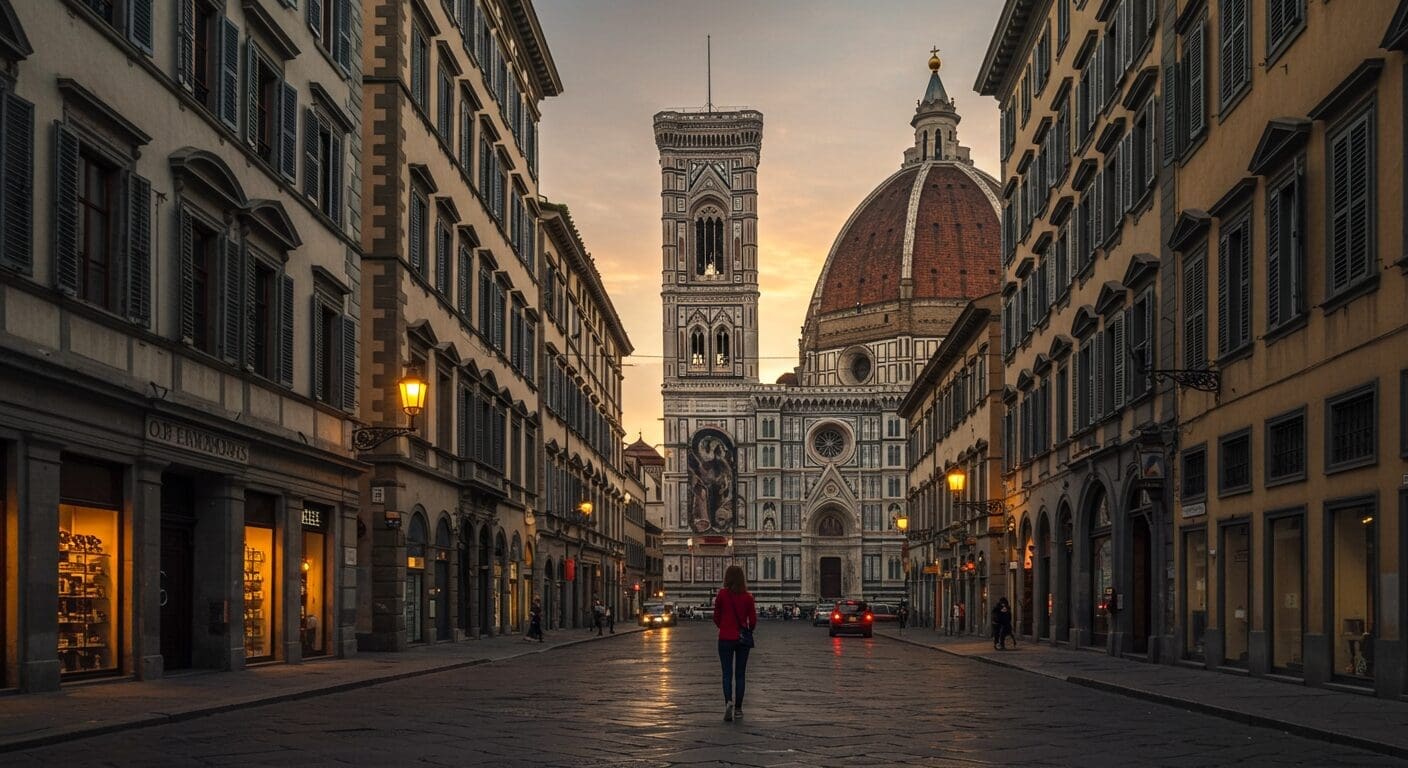
The Centro Storico is what most visitors come to see, and with good reason. The Duomo complex – Brunelleschi’s dome, Giotto’s Campanile, the Baptistery with Ghiberti’s Gates of Paradise – is one of the great architectural concentrations in Europe. The Uffizi Gallery, on the Piazzale degli Uffizi overlooking the Arno, contains the largest collection of Italian Renaissance art in the world, including Botticelli’s Birth of Venus and Primavera, both of which do something to the room that is difficult to explain in practical terms. Pre-booking is not optional; it is an act of basic self-preservation.
San Lorenzo, the neighbourhood around the Medici Basilica and the leather market, has a grittier, more working energy that feels closer to the city’s actual daily rhythm. Santa Croce, to the east, is anchored by the great Franciscan basilica – which contains the tombs of Michelangelo, Galileo, Machiavelli, and Dante (a cenotaph rather than the man himself; he died in Ravenna, which Florence has never entirely forgiven) – and a neighbourhood that has emerged in recent years as one of the more interesting parts of the city for independent restaurants and wine bars.
The Oltrarno, literally ‘beyond the Arno’, is where discerning visitors eventually migrate. It has the Pitti Palace and Boboli Gardens, the Brancacci Chapel with Masaccio’s extraordinary frescoes, and an atmosphere that feels less managed, more alive. The artisan workshops – leather-workers, bookbinders, restorers of centuries-old furniture – that still operate here in the side streets are among the genuine pleasures of Florentine life and something the city actively works to preserve.
Beyond the city limits, the wider Metropolitan City of Florence unfolds across some of the most rewarding landscape in Italy. Fiesole, on the hill above the city, offers both Etruscan and Roman ruins and a view across Florence that explains rather a lot about why this particular valley was considered worth fighting over for so long. The Chianti Classico wine zone – running south through Greve, Panzano, Radda, and Gaiole – is a landscape of medieval towers, wine estates open to visitors, and villages that appear to have reached a satisfactory arrangement with the 15th century and declined to move on.
Things to Do: Beyond the Queue for the Uffizi
The Uffizi queue is, of course, worth it. But the Metropolitan City of Florence rewards those who look sideways as well as straight ahead. The Galleria dell’Accademia – home to Michelangelo’s David, which is larger than you expect and more affecting than you’ve been told – is one of the most purely emotional museum experiences in Italy. The Bargello, which houses the greatest collection of Renaissance sculpture outside the Vatican, remains relatively undervisited in comparison to its neighbours and is all the better for it. The Museo dell’Opera del Duomo, recently transformed, houses the original Ghiberti doors and Michelangelo’s late, tormented Pietà and should be on every serious visitor’s list.
Outside the city, a wine tour through the Chianti estates – properly arranged, with a knowledgeable guide who knows which cellars offer something beyond the standard tasting room experience – is one of the most pleasurable days you can spend in this region. Cooking classes in a Florentine kitchen, private tours of the Uffizi before general admission, truffle hunting in the Mugello valley to the north, hot air ballooning over the vine-covered hills at dawn – the experience infrastructure here is mature, well-organised, and caters naturally to the kind of traveller who wants depth rather than volume.
Day trips from Florence punch well above the average. San Gimignano, with its medieval towers on the horizon, is forty-five minutes by road and worth the journey in cooler months (rather more complicated in August). Siena, a Gothic masterpiece built on a scale that its eternal rival Florence perhaps lacks, is an hour south. Lucca, walled and elegant and far less visited than it deserves to be, is an hour west. The Cinque Terre coast is three hours, which is long enough to make it a considered choice rather than a casual detour, but not so long that it feels impractical from a well-located villa base.
Active Florence: The City That Repays the Effort of Getting Up Early
Florence and its surroundings are cycling country of the first order, particularly in the hills of the Chianti and the Mugello. Road cycling between the wine towns – Greve to Panzano to Radda in a single morning, stopping for espresso and the view – is the kind of route that appears on professional riders’ personal holiday itineraries for a reason. E-bike touring has opened the terrain to a broader range of fitness levels without diminishing the pleasure in any meaningful way. Guided cycling excursions from Florence into the surrounding hills are widely available and can be arranged at whatever level of seriousness suits the group.
Hiking in the Apennines north of Florence – particularly in the Mugello valley and the Casentino forests, which are among the least-visited and most rewarding landscapes in Tuscany – offers walking of real quality with practically none of the footpath congestion you’d find in better-publicised regions. The Via degli Dei, a long-distance trail from Florence to Bologna passing through forests and over mountain ridges, has developed a quietly devoted following among those who know it. The name – Road of the Gods – is not, for once, overstating things.
River swimming in the Arno’s cleaner upper reaches, tennis at the Circolo del Tennis, and padel at any number of facilities across the wider metropolitan area round out a picture of a destination that keeps active guests very well occupied indeed. For those seeking thermal bathing, the spa town of Montecatini Terme is just forty kilometres northwest – belle époque architecture, mineral-rich thermal waters, and a pleasant sense that the early 20th century had some things entirely right.
Florence with Children: The Art History Lesson No Child Will Resent
Florence works uncommonly well for families, though it requires a different approach than the standard sightseeing sprint. Children who are old enough to grasp that someone sculpted David from a single block of marble by hand tend to find the Accademia genuinely gripping – it helps that the David is, by any standard, absolutely enormous. The science museum, the Museo Galileo on the Arno riverside, contains Galileo’s actual telescopes and, for reasons that seem deliberately designed to capture young attention, one of his preserved fingers in a reliquary. This is, objectively, the most interesting thing in any museum anywhere, and children know it immediately.
The real advantage for families travelling to the Metropolitan City of Florence with children, however, is the private villa. A hotel, however fine, is a managed environment with managed hours and managed expectations. A private villa with a pool, a garden, and a kitchen is a home, which is what families actually need. Children can eat when hungry rather than when the restaurant opens. Parents can cook a simple supper from market ingredients or have someone cook for them. Teenagers have space to disappear; younger children have safe outdoor space to occupy. The ratio of enjoyment to effort is, in villa terms, considerably more favourable than almost any alternative arrangement.
The surrounding Tuscan countryside adds further texture. Farm visits, cheese and pasta making classes aimed at younger guests, horseback riding through the hills, and swimming in private pools surrounded by vines are the kinds of experiences that children actually remember rather than merely photograph. A family that has spent a week in a Tuscan villa together will return home in a state of relative cohesion that the hotel-and-restaurant circuit rarely achieves with quite the same reliability.
Culture and History: Why Florence Matters More Than It Has Any Right To
It is worth pausing, briefly, to consider what Florence actually achieved. In the span of roughly a century and a half – from Brunelleschi’s raising of the Duomo’s dome in 1436 to the death of Michelangelo in 1564 – this single city produced an almost incomprehensible proportion of Western civilisation’s foundational art and architecture. The Medici family, bankers turned de facto rulers turned patrons of extraordinary ambition, funded much of it. Botticelli, Donatello, Leonardo, Raphael, Michelangelo – all worked in or were formed by Florence. The city invented modern perspective, modern anatomy, modern political theory (Machiavelli wrote The Prince here), modern banking, and a version of the Italian language that became the standard. For a city of around fifty thousand people in the 15th century, this is a rather substantial overperformance.
The festivals and traditions that have survived into the present give modern visitors a direct line to this history. Calcio Storico – a 16th-century form of football played in full Renaissance costume on sand in Piazza Santa Croce – takes place each June and is either a living history pageant or a organised brawl, depending on your perspective and where you’re standing. The Scoppio del Carro, the explosion of an ornate cart outside the Duomo on Easter Sunday, has been happening in some form since the Crusades. The city does not perform its history for tourists; it simply continues to live it, which is considerably more affecting.
Beyond the city, the abbeys and hermitages of the Casentino – Camaldoli, La Verna, Vallombrosa – represent a spiritual geography that predates the Renaissance by several centuries and offers a counterpoint to the art tourism of the city that serious travellers find genuinely rewarding. These are working religious communities in landscapes of considerable drama, and visiting them requires nothing more than the willingness to drive an hour east and slow down considerably.
Shopping in Florence: Where to Spend the Money You Saved by Not Booking a Hotel
Florence is one of the great shopping cities of Europe, with a particular concentration of excellence in leather goods, fine jewellery, bespoke tailoring, and the kind of artisan craftsmanship that has been operating from the same workshop address since the Renaissance. Via de’ Tornabuoni is Florence’s luxury retail spine – Gucci, Ferragamo (whose museum is here and worth visiting even if you’re not buying shoes), Versace, Prada – in a street architecture of such beauty that even window shopping feels like a cultural activity.
The Oltrarno workshops are the other end of the same story. Bookbinders on Via Maggio who make covers by hand using techniques unchanged for three centuries. Leather workshops in the San Frediano neighbourhood offering bespoke bags at prices that compare very favourably with their counterparts in any other European capital. Gold and silver jewellers on and around the Ponte Vecchio – which has been a bridge of jewellers since the Medici moved the butchers off it in the 16th century, deciding that the smell was beneath their dignity.
For food and drink to bring home: a serious Chianti Classico from a producer you’ve visited yourself, aged balsamic vinegar from a small producer in the hills, saffron from the Mugello, handmade cantucci and vin santo for the journey. The Mercato Sant’Ambrogio and the covered section of Mercato Centrale are both reliable sources. What to avoid bringing home is outside the scope of this guide, but you know who you are.
The Practical Business: What You Actually Need to Know
The Metropolitan City of Florence operates on the euro, and Italy remains, despite its best efforts, a moderately cash-dependent society in smaller establishments. Cards are accepted at all restaurants and shops of any scale, but the lampredotto vendor and the monastery gift shop may well prefer notes. Tipping is not obligatory in Italy in the way it has become in some countries, but leaving a euro or two on the table at a trattoria, or rounding up at a bar, is both customary and appreciated.
The language is Italian, and the effort of attempting even basic Italian – buongiorno, grazie, un caffè per favore – is rewarded with a warmth that the same request in English does not always produce. Florence is not unfriendly to non-Italian speakers; it is simply, understandably, more engaged with those who’ve made the minimal effort.
Best time to visit the Metropolitan City of Florence depends entirely on what you’re seeking. April, May, and early June offer the best balance of warmth, greenery, and manageable crowd levels – the city is alive but not overwhelmed, and the surrounding countryside is in its most photogenic state. September and October bring the grape harvest, lower temperatures, and a return to sanity after the August peak, when Florence empties of its own residents and fills entirely with everyone else. July and August are genuinely hot – regularly exceeding 35°C – and the tourist density in the centre tests the patience of even committed Italians. Winter, from November through February, is quieter, cooler, and occasionally revelatory – the Uffizi with a fraction of its summer attendance is an entirely different experience, and the Christmas markets along the Arno have a low-key charm that the guidebooks underplay.
Florence’s traffic restrictions – the ZTL (Zona a Traffico Limitato) camera system – catch many visitors by surprise. If you’re driving into the city centre, verify your villa or hotel’s specific guidance on access; fines for inadvertent violations arrive at home months later with the air of someone who has been waiting patiently for the right moment.
Why a Private Villa is the Only Sensible Way to Experience the Metropolitan City of Florence
The hotels of Florence are, many of them, magnificent. The Four Seasons occupies a 15th-century palazzo with a garden that alone is worth the journey. The Villa Cora and the Portrait Firenze both represent the very best of Italian luxury hospitality. None of this is disputed. And yet.
The hotel experience in Florence in high season involves queuing, competing for restaurant tables, sharing a pool with fifty strangers, and navigating a lobby at maximum capacity with luggage. A private villa in the Metropolitan City of Florence involves none of these things and instead offers something the hotel cannot replicate: the sensation that this particular stretch of Tuscany belongs, for this particular week, entirely to you.
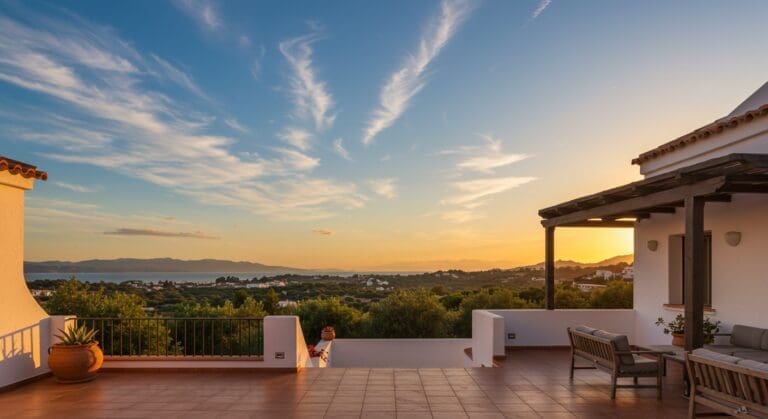
Luxury villas in the Metropolitan City of Florence range from elegant city apartments in historic palazzi to converted farmhouses in the Chianti hills, from restored medieval towers with private terraces to sprawling countryside estates with pools, tennis courts, staff, and views that extend to the horizon in every direction. Many can be taken with a private chef, a sommelier, a concierge who knows which winemaker will open the cellar for a private tasting on a Tuesday afternoon. The space – both physical and psychological – that a private villa provides to a family or a group of friends is qualitatively different from anything a hotel can offer, regardless of the hotel’s star rating.
For remote workers, the Tuscan villa proposition has become genuinely compelling in recent years. Many properties in the Metropolitan City of Florence now offer high-speed broadband or Starlink connectivity that would satisfy a demanding professional schedule, alongside the kind of working environment – a study with a loggia view over olive groves, a kitchen garden, a pool for the post-call decompression – that tends to produce rather good work. The combination of reliable connectivity and profound physical beauty is not, it turns out, as rare as it once was.
Wellness guests find that the combination of private pool, unhurried pace, access to thermal spas in the hills, walking and cycling from the doorstep, and the singular therapeutic effect of excellent Tuscan food and wine amounts to a restoration programme of considerable effectiveness. Florence does something to the nervous system that is difficult to attribute to any single cause and impossible to fully replicate elsewhere.
Excellence Luxury Villas offers an extensive collection of properties throughout the region – from private vineyard estates to historic urban residences – each selected for the quality of its accommodation and its suitability as a base for experiencing everything the region offers. Browse our full collection of luxury villa holidays in Metropolitan City of Florence and find the property that makes this particular corner of Tuscany feel entirely your own.
More Metropolitan City of Florence Travel Guides
- Best Restaurants in Metropolitan City of Florence: Fine Dining, Local Gems & Where to Eat
- Metropolitan City of Florence Food & Wine Guide: Local Cuisine, Markets & Wine Estates
- Metropolitan City of Florence with Kids: The Ultimate Family Holiday Guide
- Best Time to Visit Metropolitan City of Florence: Month by Month Weather, Crowds & Tips
- Metropolitan City of Florence Luxury Itinerary: The Perfect 7-Day Guide
- Romantic Metropolitan City of Florence: The Ultimate Couples & Honeymoon Guide
What is the best time to visit Metropolitan City of Florence?
April to early June and September to October are the optimum windows. Spring brings warmth, wildflowers in the countryside, and crowds that are busy but not yet overwhelming. Autumn coincides with the grape harvest, lower temperatures, and a palpable shift in energy as the city returns to itself after the summer peak. July and August are intensely hot and intensely crowded in the city centre, though a villa with a private pool in the Chianti hills makes the heat considerably more bearable. Winter is genuinely underrated – cooler, quieter, and with a slower pace that the city wears rather well.
How do I get to Metropolitan City of Florence?
Florence Amerigo Vespucci Airport (FLR) is the closest option, just four kilometres from the city centre with direct connections from major European hubs. Pisa Galileo Galilei Airport (PSA) is around eighty kilometres west and serves a broader range of international routes; a direct train to Florence takes just over an hour. Bologna Marconi Airport (BLQ) is also well connected and approximately thirty-five minutes from Florence by fast train. Private transfers from any airport can be arranged and are strongly recommended if your villa is located in the Chianti hills or the wider Metropolitan City area.
Is Metropolitan City of Florence good for families?
Genuinely excellent, with the right approach. The city offers hands-on cultural experiences that engage children far more effectively than most museums anywhere in Europe – the Accademia’s David, the Museo Galileo’s preserved curiosities, and the hands-on cooking and farm experiences in the wider countryside are all strong draws. A private villa in the Metropolitan City of Florence is particularly well suited to families: private pools, enclosed gardens, flexible meal times, and enough space for different generations to occupy different corners of the same property without friction. The countryside activities – horseback riding, pasta-making, cycling – give children genuine memories rather than a succession of photographs taken by their parents.
Why rent a luxury villa in Metropolitan City of Florence?
The private villa offers something the finest hotel cannot: complete privacy, dedicated space, and the ability to set your own rhythm for the day. In the Metropolitan City of Florence, that means waking to views across the Chianti hills from your own terrace, swimming in a private pool before the city is awake, having a private chef prepare dinner with ingredients from the local market, and returning to a space that is yours rather than shared. The staff-to-guest ratio at a well-staffed villa exceeds almost any hotel equivalent, and the flexibility – whether you want a quiet family week, a group wine tour, or a working retreat – is simply not available in any hotel format at any price.
Are there private villas in Metropolitan City of Florence suitable for large groups or multi-generational families?
Yes, and in considerable variety. The region’s converted farmhouses, estate properties, and countryside villas frequently offer eight, ten, or twelve bedrooms, sometimes across separate wings or outbuildings that give different family groups genuine independence while sharing communal spaces – pools, terraces, dining rooms, wine cellars. Multi-generational parties benefit particularly from this arrangement: grandparents with a ground-floor suite and a garden terrace, teenagers in a converted outbuilding, parents with a private loggia. Many larger properties come with a full staff team including a cook, housekeeper, and concierge. Excellence Luxury Villas can advise on the best large-group properties in the region.
Can I find a luxury villa in Metropolitan City of Florence with good internet for remote working?
Increasingly, yes. The connectivity infrastructure across the Metropolitan City of Florence has improved considerably, and many villa properties now offer high-speed fibre broadband or Starlink satellite connectivity suitable for video calls, large file transfers, and the full demands of a remote working week. When booking through Excellence Luxury Villas, connectivity requirements can be specified upfront so that the property recommended matches your professional needs. Many remote workers specifically choose the Chianti and Mugello areas as bases for extended stays, combining reliable broadband with an environment that makes the working day considerably more agreeable than the office ever was.
What makes Metropolitan City of Florence a good destination for a wellness retreat?
The combination of physical landscape, food culture, and pace of life creates a natural wellness environment that is difficult to engineer artificially elsewhere. The Tuscan hills offer walking and cycling from the door; the thermal spas at Montecatini Terme and in the wider region provide professional spa and hydrotherapy treatments; the local food – seasonal, ingredient-led, and produced largely within the region – supports any dietary approach from Mediterranean clean eating to full indulgence. Private villas with pools, gardens, and yoga terraces are widely available. The quality of sleep in a rural Tuscan property – complete quiet, clean air, genuine darkness – is itself a form of therapy that tends to announce itself on the second morning. Florence rewards slowing down, and slowing down here feels like an entirely reasonable ambition.