Romantic Metropolitan City of Naples: The Ultimate Couples & Honeymoon Guide
Romantic Metropolitan City of Naples: The Ultimate Couples & Honeymoon Guide
First-time visitors to the Metropolitan City of Naples almost always make the same mistake: they come for a day. They arrive, eat a margherita, look at Vesuvius from across the bay, declare it “chaotic but charming,” and leave on the 4pm train. What they miss is everything – the slow rhythm of the Amalfi Coast villages an hour south, the extraordinary quiet of an island at dusk, the way a glass of Falanghina tastes better here than it ever will anywhere else. Naples and its surrounding province are not a day trip. They are, if you give them the time they deserve, one of the most romantically charged places on earth. And that is not hypethat is geography, history, food, and volcanic drama conspiring in your favour.
Why the Metropolitan City of Naples is Exceptional for Couples
There is something about southern Italy that bypasses the rational mind entirely. The Metropolitan City of Naples – which extends well beyond the city itself to encompass Pompeii, the Campi Flegrei, the islands of Capri, Ischia and Procida, and the upper reaches of the Amalfi Coast – operates at a frequency that couples tend to find deeply affecting. It is warm in temperature and in spirit. The food is extraordinary in a way that stops conversation. The landscapes shift constantly between dramatic cliffs, turquoise water, ancient ruins and lemon groves that smell like nothing else in the world.
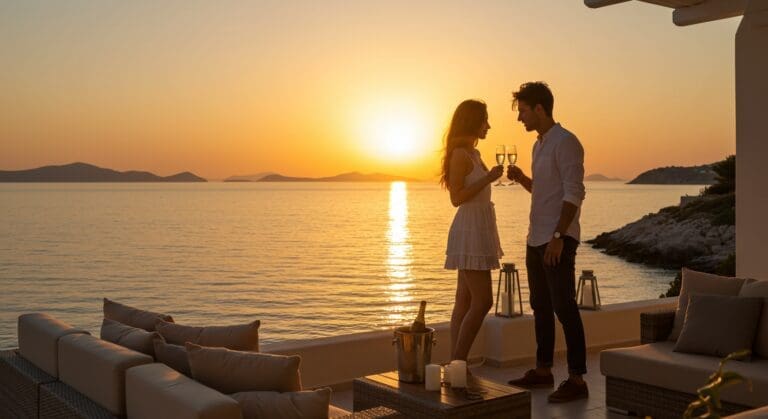
But beyond the sensory abundance, there is something more specific that makes this destination exceptional for couples. This is a place where beauty is genuinely taken seriously. Where a Sunday lunch is a three-hour act of communal pleasure. Where sitting at a harbour-side table as the light dies over the Tyrrhenian Sea is not a tourist cliché but a daily ritual. There is no performative romance here – no heart-shaped menus or “lovers’ packages.” The romance is structural. It is built into the place itself.
For couples seeking both energy and escape, the metropolitan area offers a rare range. You can spend a morning in the buzzing, slightly overwhelming city of Naples, eating sfogliatelle and walking through Spaccanapoli, and be on a boat to Capri by early afternoon. You can have it all, in other words. This is still relatively unusual in European travel.
The Most Romantic Settings and Experiences
Let us start with the obvious, because sometimes the obvious is obvious for very good reasons. The island of Capri at golden hour, when the day-trippers have retreated to their ferries and the light has gone the colour of old honey, is one of those travel experiences that genuinely lives up to its reputation. The Faraglioni rocks rising from the sea, the bougainvillea falling over pale stone walls, the sound of scooters somewhere above you on a road you cannot see – there is a reason this island has been collecting writers, artists and overwhelmed visitors since the Roman emperors decided to build palaces here.
Ischia offers a different, quieter romance – thermal spa gardens, rugged coastline, and a volcanic landscape that feels ancient in a way that even Pompeii does not quite manage. Procida, the smallest of the three main islands, is where you go when you want something rawer and less curated: fishermen’s houses in shades of yellow and ochre, lanes barely wide enough for one person, a harbour that looks like it was painted by someone in a state of deep contentment.
Back on the mainland, the Phlegraean Fields – the volcanic area west of Naples – offer genuinely otherworldly walks through craters and sulphur vents. Romantic, perhaps, in a slightly gothic way. Perfect if your relationship can withstand the occasional smell of sulphur. The royal palace at Caserta, an hour north, is another extraordinary setting – vast baroque gardens with fountains you can walk through on a hot afternoon, usually with far fewer people than the building’s grandeur would seem to demand.
Best Restaurants for a Special Dinner
The Metropolitan City of Naples is, in the most serious sense, one of the great food destinations of Europe. This is the region that gave the world pizza, pasta al ragù as it was meant to be, and a philosophy of cooking centred entirely on the quality of the ingredient rather than the complexity of the technique. For couples, this translates directly: the best meals here are not elaborate theatrical productions. They are simpler than that, and more affecting for it.
In Naples itself, the trattorias of the historic centre – particularly those around the Quartieri Spagnoli and along the waterfront in Chiaia – offer settings and cooking of real distinction. Look for restaurants with hand-written menus that change daily, a sign that the kitchen is working with whatever arrived fresh that morning rather than feeding you last week’s supplies dressed up cleverly. A candlelit table with a shared bowl of spaghetti alle vongole and a carafe of local white wine is not a complicated romantic formula, but it is a devastatingly effective one.
On Capri, where the restaurant scene is predictably elevated (and predictably priced), the best tables tend to overlook the sea in some direction or another – the trick is booking early, specifying what kind of view you want, and resisting the temptation to photograph everything before tasting it. On Ischia, family-run restaurants near the thermal spas offer exceptional local cooking – rabbit stewed with tomatoes and herbs, fresh-caught fish grilled simply, desserts made with citrus from gardens you can see from the window.
Couples Activities: Sailing, Spas, Wine and More
The Bay of Naples is one of the finest sailing environments in the Mediterranean. Chartering a private boat – anything from a skippered sailboat to a more substantial yacht – allows couples to move between the islands at their own pace, stopping in coves that are inaccessible from the shore, swimming off the back of the boat in water that in July and August reaches temperatures that require no willpower whatsoever. The Amalfi Coast is visible from the water in a way it never quite is from land, the cliff villages stacked vertiginously above you as you pass. This is where the scale of the thing truly registers.
Ischia’s thermal gardens – the island sits on volcanic activity and has been a spa destination since antiquity – are among the best in Italy. Several of the major thermal parks offer private pool access, couples’ treatments and thermal bathing experiences that combine natural hot springs with landscaped gardens. It is deeply restorative in a way that a hotel spa, however excellent, rarely matches. There is something about being in naturally heated water with the smell of citrus blossom around you that is very hard to improve upon.
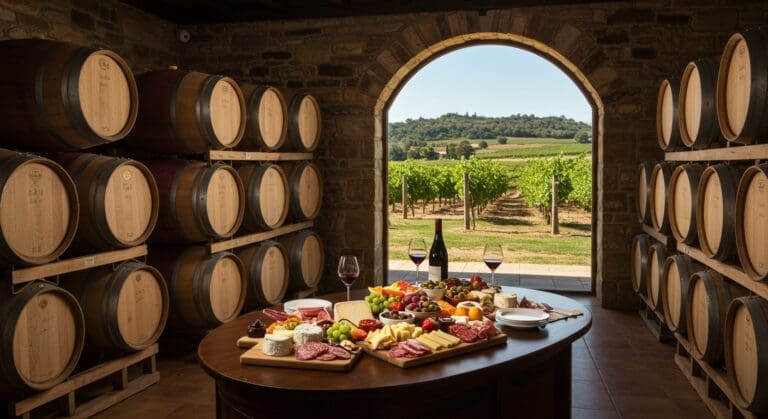
Wine tasting in this region means exploring the volcanic wines of the Campania DOC appellations – Greco di Tufo, Fiano di Avellino, and the striking reds of Taurasi, all made from indigenous grape varieties that grow nowhere else on earth. Several estates in the hills behind Naples and towards Avellino offer private tastings with food pairings in genuinely beautiful settings. Cooking classes, meanwhile, are widely available throughout the region – learning to make fresh pasta or a proper Neapolitan ragù together is, it turns out, a rather good test of a relationship. (A raised eyebrow at your partner’s pasta thickness tells you something.)
Most Romantic Areas for Accommodation
For couples, the choice of where to base yourselves in the Metropolitan City of Naples matters more than it might elsewhere, because the area is large and varied enough that the right location defines the entire tone of the trip.
Capri town and the Anacapri area above it offer the most instantly romantic setting – small hotels and private villas perched above the sea, access to the island’s best restaurants and swimming spots, and that particular quality of light that the island seems to have permanently reserved. It is not cheap. It is also not apologetic about that. The Sorrentine Peninsula – the strip of land that separates the Bay of Naples from the Gulf of Salerno – offers a slightly more accessible alternative: cliff-edge villages, gorgeous views back towards Vesuvius and Naples, excellent food, and a pace of life that feels calibrated for rest.
Within Naples itself, the Chiaia and Posillipo neighbourhoods offer the most romantic urban experience – waterfront promenades, elegant apartment buildings, and a sophisticated local cafe and restaurant culture that is quite different from the tourist-facing energy of the historic centre. For couples who want the city experience without the sensory overload of the centro storico, these areas are the answer.
Ischia’s southwestern coast – around Sant’Angelo in particular – is perhaps the most privately beautiful part of the entire province: car-free, fishing-village scaled, and quietly spectacular in a way that rewards those who do not need to announce where they are on social media to feel they have really been there.
Proposal-Worthy Spots
If you are planning to propose in the Metropolitan City of Naples, the region has the unsettling advantage of offering almost too many perfect moments. A few specifics worth considering.
The Blue Grotto on Capri – experienced ideally at the beginning or end of the day rather than during the midday queue – is one of those places where the light behaves so improbably that disbelief is the natural response. The water glows blue from below through a submerged opening; it is genuinely strange and genuinely beautiful. Early morning, when the first small rowing boats enter with very few other visitors, is when it earns its reputation.
The terrace of the Castel dell’Ovo in Naples, the ancient egg-shaped fortress on a promontory jutting into the bay, offers a panorama that takes in the full arc of the Gulf of Naples – Vesuvius to the left, the islands to the right, the city behind you. At sunset, in the ten minutes when the light is at its most operatic, this view has persuaded more than a few people to say yes to things they might otherwise have thought more carefully about.
For those who prefer something less populated, the walk from Anacapri down to the Blue Grotto – through terraced gardens and olive groves with intermittent views of the sea – is one of those routes where the destination is almost secondary to the journey. A well-chosen picnic at the right bend in the path does the rest of the work.
Anniversary Ideas in the Metropolitan City of Naples
The province accommodates anniversaries particularly well because it has so many registers available. A significant anniversary might call for the full treatment: a private villa on Capri or the Sorrentine coast, a chartered boat for a day’s sailing with lunch served on deck, a dinner reservation at one of the coast’s serious restaurants where the wine list is taken with appropriate gravity and the view is included in the price without being the only thing on offer.
A more private anniversary – the kind where you want to be somewhere beautiful without managing logistics – might mean a few days on Procida, the smallest and least visited of the bay’s islands, where the restaurants are unpretentious, the lanes are quiet, and the particular satisfaction of having found somewhere before everyone else has found it remains very much intact. Procida was the Italian Capital of Culture in 2022, which brought it a degree of attention it is slowly and not entirely willingly adjusting to.
For anniversaries that want to mark time with something more active, a private guided walk along the ancient paths above the Amalfi Coast – the famous Sentiero degli Dei, or Path of the Gods – provides genuine physical drama: the track runs along cliff edges with views that make you slightly unclear about what century you are in, which is either terrifying or romantic depending on your tolerance for heights and your general disposition towards the sublime.
Honeymoon Considerations
The Metropolitan City of Naples is an exceptional honeymoon destination with one caveat: it rewards careful pacing. The temptation, particularly for first-time visitors, is to do too much too quickly – to try to cover Capri, Naples, Pompeii, the Amalfi Coast and Ischia in ten days and end up arriving home more exhausted than when you left. (This is not the most romantic outcome.)
For a honeymoon, the recommendation is to choose one or two areas and go deeper. A week split between a private villa on the Sorrentine Peninsula and three nights on Capri or Ischia gives you city access, island experience, boat trips, excellent food and the kind of unscheduled afternoon hours that honeymooners tend to need and rarely plan for. The infrastructure for luxury travel here is excellent – private transfers, boat charters, restaurant connections – but it requires a degree of advance planning, particularly in July and August when the region is at its most magnificent and also its most visited.
Spring and early autumn are, from a purely practical standpoint, the most beautiful seasons. April and May bring wildflowers on the hillsides and temperatures in the mid-twenties. September and October retain the warmth of summer with considerably less competition for tables and boat berths. The light in October on the Bay of Naples is the kind of thing painters used to move here specifically to work with. Some still do.
Your Romantic Base: A Private Villa in Naples
There is a particular quality to staying in a private villa in this part of the world that hotels, however excellent, cannot quite replicate. Your own terrace with a sea view you do not share with anyone. A kitchen where local ingredients arrive and become dinner without a restaurant booking or a dress code. The freedom to eat breakfast at the hour you actually want to eat breakfast. For couples and honeymooners, a luxury private villa in Metropolitan City of Naples is the ultimate romantic base – the place from which everything else in this guide becomes not a day trip but a chapter in something longer and more considered.
Whether you are planning a honeymoon, a landmark anniversary, or simply a trip you have been promising each other for years, this province has a habit of exceeding what you imagined it would be. Plan it well, give it enough time, and take our wider Metropolitan City of Naples Travel Guide as your companion – it covers the practical dimensions of the destination in the depth they deserve.
When is the best time of year for a romantic trip to the Metropolitan City of Naples?
Late April through June and September through October are the most rewarding periods for couples. The weather is warm and settled, the sea is swimmable from May onwards, and the summer crowds – which peak in July and August – have not yet arrived or have begun to thin. Spring brings extraordinary wildflowers on the hillsides above the Amalfi Coast, while October offers some of the year’s most beautiful light on the bay. If you must visit in high summer, go earlier in the day to the most popular spots and prioritise private or chartered experiences – a private boat effectively lets you sidestep the worst of the peak-season crowds entirely.
Is Capri or Ischia better for a couples’ retreat?
They offer genuinely different experiences, and the right answer depends on what kind of couple you are. Capri is more dramatic in its landscape and more glamorous in its atmosphere – the views, the high-end restaurants, the sheer vertical cliff scenery make it an obvious choice for a special occasion. It is also more expensive and, in high season, more visited. Ischia is larger, quieter, more varied in its landscape, and has the additional advantage of its remarkable thermal spa tradition. For a longer stay – four nights or more – Ischia often rewards couples who want to explore properly rather than simply be seen somewhere beautiful. Procida, the smallest island, is the choice for those who want the least curated experience of the three.
What should couples book well in advance for a trip to Metropolitan City of Naples?
Private villa accommodation should be booked as early as possible – the best properties on Capri and the Sorrentine Peninsula fill months in advance for summer dates. Boat charters, particularly skippered sailing vessels for day trips around the islands, also require advance booking in the high season. If you have a specific restaurant in mind for a special occasion – and in this region, it is worth having specific restaurants in mind – reservations several weeks ahead are advisable for the better-known addresses. Private cooking classes and wine tasting experiences with smaller producers often have limited availability and are best organised before you arrive rather than on the ground.