Mexico Travel Guide: Where to Stay, Eat & Explore in Luxury
There is a version of Mexico that exists only in the imagination of people who have never been: all-inclusive resorts, watered-down margaritas, and a vague anxiety about ice cubes. Then there is the actual Mexico – a country of such staggering variety, depth and beauty that even seasoned travellers tend to come back slightly dazed, not entirely sure how one nation contains ancient jungle civilisations, baroque colonial cities, some of the world’s finest cuisine, two completely different coastlines, and a people whose warmth and pride in their culture is, frankly, humbling. Mexico is not a beach destination with cultural extras. It is one of the great travel destinations on earth. The beach just happens to be extraordinary too.
Why Mexico for a Luxury Villa Holiday
The case for a luxury villa holiday in Mexico is, in truth, not a difficult one to make. Start with the space. Mexico offers some of the most architecturally remarkable private residences in the world – places that have been designed not merely as somewhere to sleep but as a considered response to their landscape, whether that is a cliffside compound above the Pacific at Punta Mita, an open-air hacienda in the Yucatán jungle, or a sleek glass-and-concrete retreat above the rooftops of San Miguel de Allende with a plunge pool and views that would make a grown adult go very quiet indeed.
Beyond the architecture, a villa in Mexico offers something a hotel fundamentally cannot: the rhythm of the country on your own terms. You eat when you want. You can have a cook prepare a traditional mole that takes two days to make, serve it at your own table, and still be in bed by nine. You can have the pool to yourself at sunrise – which in Mexico, where the mornings are often the best part of the day before the heat builds, matters enormously. For families, the space is liberating. For couples, it is intimate in a way no hotel corridor ever quite manages.
And then there is value – not in the budget sense, but in the experiential one. A well-chosen luxury villa in Mexico, staffed, private and beautifully positioned, often delivers more for your money than a comparable offering in Europe. The currency, the staff-to-guest ratio, the quality of local produce and wine – all of it works in your favour. Mexico rewards the discerning traveller who takes the time to find the right property rather than defaulting to a resort.
The Best Regions in Mexico for Villa Rentals
Mexico is vast – roughly three times the size of Spain – and its regions have distinct personalities. Understanding which suits you is the first and most important decision you will make.
The Riviera Nayarit and Los Cabos represent the Pacific coast at its most polished. Punta Mita, a private peninsula north of Puerto Vallarta, has become something of a byword for discreet Pacific luxury – low-rise, lush, private, with access to world-class surfing and a collection of villas that sit quietly at the upper end of what “well-appointed” means. Los Cabos, at the tip of the Baja California peninsula, offers a different proposition: dramatic desert-meets-ocean scenery, a thriving restaurant scene in San José del Cabo, and consistent sunshine that borders on the relentless. Both attract a clientele who know what they want and are prepared to pay for it.
The Riviera Maya – stretching south of Cancún along the Caribbean coast – is the most visited stretch of Mexican coastline and, in the right pockets, still one of the most beautiful. Tulum has become notorious for its particular brand of wellness-adjacent boho chic (boutique hotels with no Wi-Fi, lots of cenotes, and a surprising amount of ambient house music), but the area around Akumal and the quieter stretches of coast offer genuinely extraordinary villa retreats, with turquoise water, white sand and access to the Mesoamerican Reef. Playa del Carmen offers more urban energy. The key is knowing which version of the Caribbean coast you are after.
The Yucatán Peninsula is for those who want the history and the cenotes and the colonial architecture as much as the beach. Mérida, the peninsula’s elegant, slightly under-visited capital, is surrounded by former henequen haciendas that have been converted into villa properties of real character – thick whitewashed walls, original tiled floors, gardens that have had a century or two to establish themselves. It is the sort of place that makes guests feel as though they have discovered something. Some of them have.
The Pacific South – Oaxaca Coast and Huatulco – attracts a more independent-minded traveller. The beaches here are wilder, the development lower-key, the connection to indigenous Oaxacan culture genuine rather than curated. For those who want the Pacific but without the well-heeled resort feel of Nayarit, this is the alternative.
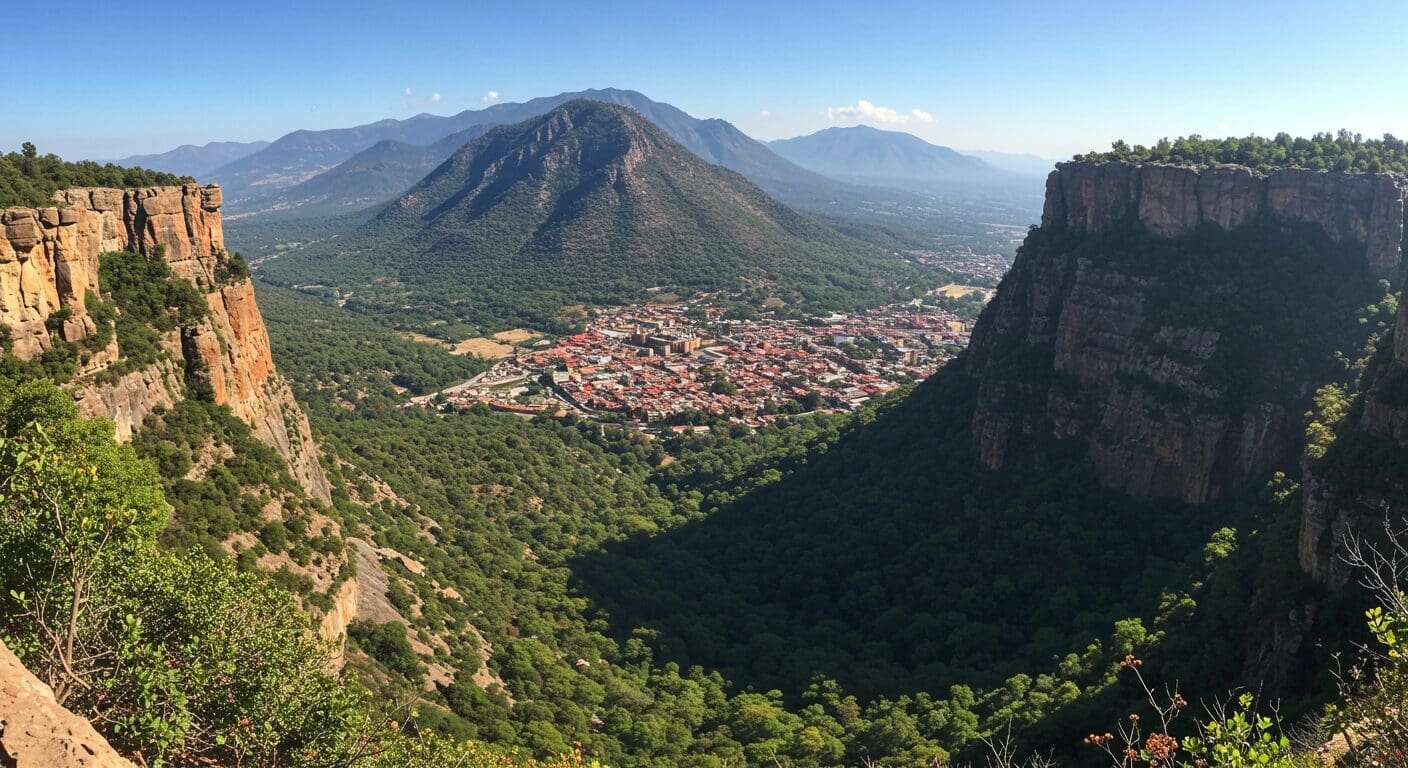
The Colonial Highlands – San Miguel de Allende, Oaxaca City, Guadalajara – are not beach destinations, but they are extraordinary villa holiday settings in their own right. San Miguel in particular has attracted an international community of artists, designers and people who came for a week in 1987 and simply never left. The villas here tend towards the architectural: courtyards, roof terraces, locally sourced art on every wall.
When to Visit Mexico
Mexico’s sheer geographic scale means there is, in practical terms, always a good time to visit somewhere in the country. But some generalisations hold well enough to be useful.
The dry season – broadly November through April – is considered the classic time to visit the Caribbean and Pacific coasts. Temperatures are warm without being aggressive, humidity is manageable, and the likelihood of sitting through a tropical downpour is low. December and January are busy, particularly in Los Cabos and the Riviera Maya, which are popular with visitors from the United States during the holidays. Book early for this period, and expect villa prices to reflect the demand.
The summer months bring the rainy season to most of the country, which sounds more daunting than it often is. Rain on the Pacific coast typically arrives in afternoon downpours rather than all-day grey drizzle – nothing like the sustained indoor weather that anyone from the United Kingdom will be familiar with. The mornings are clear, the landscape is intensely green, and the prices are considerably softer. Hurricane season runs June to November on the Caribbean coast – which does not mean storms are guaranteed, but it is a risk worth factoring in for Riviera Maya visits.
For the Colonial Highlands, season matters less. San Miguel de Allende and Oaxaca City are year-round destinations with their own microclimates – warm days, cool nights, and a cultural calendar that runs through all twelve months. November’s Día de los Muertos celebrations in Oaxaca are, for many visitors, a travel experience that defines the year.
Getting to Mexico
Direct long-haul flights from major England and European hubs to Mexico City, Cancún, Los Cabos and Puerto Vallarta are operated by a range of carriers, and competition on the transatlantic routes keeps business class options more accessible than they once were. Mexico City’s Benito Juárez International Airport is the country’s main hub, well-connected to both international routes and domestic ones, and flying internally in Mexico is genuinely straightforward – the domestic network is reasonably comprehensive and the fares rarely punishing.
For villa guests arriving at regional airports, a private transfer arranged in advance is strongly recommended. Mexican traffic in airport zones can be inventive. Knowing someone is waiting with your name on a sign and a cold bottle of water is the right way to start a holiday at any price point.
Those arriving by private jet have excellent options – Los Cabos, Puerto Vallarta and Cancún all handle private aviation with the efficiency you would expect of well-practised facilities, and FBO services at the main airports are of a good standard. Mexico City’s private terminal at AICM is a world apart from the main terminal experience, which is saying something given what the main terminal experience can be.
Food & Wine in Mexico
Mexican cuisine is a UNESCO Intangible Cultural Heritage. That designation is not awarded lightly, and in Mexico’s case it is thoroughly earned. What the rest of the world calls Mexican food and what Mexico actually eats are related in the way that a distant cousin is related to you: a family resemblance, yes, but you would not confuse one for the other at close range.
The country contains at least eight distinct regional cuisines of genuine seriousness. Oaxacan cooking – the seven moles, the tlayudas, the tetelas, the mezcal-marinated everything – has attracted international culinary attention for good reason. The seafood of the Pacific coast, cooked simply with lime and chilli and eaten at a palapa with sand between your toes, achieves a kind of perfection that no amount of technique can replicate. The Yucatán’s achiote-based cochinita pibil, slow-cooked underground and eaten with pickled habanero, is the kind of dish that makes you slightly impatient with the rest of the world’s pork offerings.
Mexico City’s restaurant scene has, in the past decade, become one of the most genuinely exciting in the world. There are chefs here cooking with native corn varieties that were nearly extinct, fermenting local ingredients in ways that nod to global technique without losing an ounce of Mexican identity, and presenting tasting menus that could hold their own anywhere on earth. The capital has done this without becoming precious about it, which is perhaps its greatest achievement.
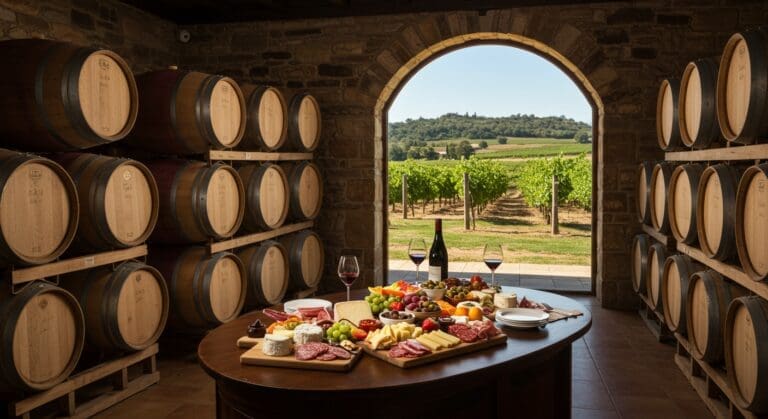
Wine is produced domestically – Baja California’s Valle de Guadalupe in particular produces bottles of real quality and considerable character – but it is mezcal and tequila that make the strongest case for local drinking. A properly made mezcal, from a small artisanal producer in Oaxaca, is a revelation to anyone who has only ever encountered the mass-market version of either spirit. Your villa host or concierge worth their salt will know exactly where to point you.
Culture & History of Mexico
The history of Mexico is, without exaggeration, one of the great stories of human civilisation. The Olmec, Maya, Zapotec, Mixtec, Toltec and Aztec cultures – all flourished here, built cities of remarkable sophistication, developed calendrical and mathematical systems of genuine ingenuity, created art of extraordinary power, and left behind monuments that still defy easy explanation. Teotihuacán, an hour outside Mexico City, was at its peak one of the largest cities on earth. The Avenue of the Dead, flanked by the Pyramid of the Sun and the Pyramid of the Moon, has a scale that you cannot quite prepare for, however many photographs you have seen. Chichén Itzá on the Yucatán Peninsula is equally famous and, to be honest, equally crowded – arriving at dawn before the tour buses helps considerably.
The Spanish colonial period layered its own extraordinary architecture and culture over pre-Columbian foundations, and the result – in cities like Oaxaca, Puebla, Mérida, Guanajuato and San Miguel de Allende – is an urban environment of exceptional beauty, where pink-painted baroque churches face zócalos where mariachi bands play and street vendors sell fresh mango with chilli. It is a lot to take in. Most visitors find they need a quiet villa afternoon to process it.
Mexico’s artistic legacy is formidable. Diego Rivera and Frida Kahlo are global figures whose work is best understood in situ – the murals in the Palacio Nacional in Mexico City, the Casa Azul (Kahlo’s home in Coyoacán) – but the country’s contemporary art scene is equally vital, particularly in the capital’s Roma and Condesa neighbourhoods, where galleries of genuine ambition operate in repurposed colonial buildings.
Activities Across Mexico
The range of activities available in Mexico is, frankly, unfair to everywhere else. The underwater world of the Riviera Maya – centring on the Mesoamerican Barrier Reef, the second largest in the world – offers world-class diving and snorkelling, including the extraordinary experience of swimming in cenotes: ancient underground sinkholes of crystalline fresh water, many of them connecting to vast subterranean river systems. It is the sort of thing that sounds like a modest outing and turns out to be a memory that stays with you for decades.
Surfing the Pacific coast ranges from beginner-friendly breaks near Sayulita to serious point breaks for experienced surfers. Deep-sea fishing in the waters off Los Cabos is world-renowned – the convergence of the Pacific and the Sea of Cortez creates conditions that produce marlin, sailfish, dorado and wahoo of impressive proportions. Sport fishermen plan entire trips around it.
For the culturally inclined, the range of day trips from well-positioned villas is extraordinary: Mayan archaeological sites, colonial haciendas, traditional artisan markets, mezcal distillery visits in Oaxaca, cooking classes with local chefs, hot air ballooning over the Valle de Teotihuacán at dawn. Mexico rewards curiosity at every turn. The challenge is not finding things to do – it is choosing between them with a finite number of days.
Wellness has become a significant draw, particularly in Tulum and the wider Yucatán, where cenote swimming, jungle yoga retreats and temazcal (traditional steam lodge) ceremonies have attracted a devoted following. Some of it is genuinely meaningful. Some of it is a yoga mat on a beach at inflated prices. The distinction is worth making before you book.
Family Holidays in Mexico
Mexico is an excellent destination for families, and a private villa makes it significantly more so. The logistics of a family holiday in a hotel – the noise considerations, the communal pool politics, the restaurant timing, the general performance anxiety of travelling with children in shared spaces – evaporate in a private villa. Children who are bored of the pool can play in the garden. Parents who need ten minutes of silence can have ten minutes of silence. Everyone eats at the same time without involving a reservation system.
The Riviera Maya is the most family-visited part of the coast, and for good reason: the Caribbean water is calm, warm and turquoise, the reefs accessible and vivid, and the archaeological sites close enough for a day trip that genuinely engages children old enough to find ancient civilisations interesting. Most of them, presented with a pyramid and the suggestion that people were once sacrificed at the top, find this extremely interesting.
Los Cabos offers a more active family experience – whale watching between December and April (the grey whale migration up the Pacific coast is one of nature’s more spectacular productions), sea kayaking, guided hikes in the desert – with the added advantage of consistent, dry Pacific sunshine. The water on the Pacific side at Cabo can have a stronger current than the Caribbean, which is worth knowing before small children go anywhere near it.
Villa staff in Mexico are typically wonderful with children, and a cook who can be asked to prepare simpler meals alongside more ambitious adult cooking is worth factoring into your property selection. Most luxury villas of any seriousness can arrange this. A good concierge can also organise child-appropriate day trips, local guides who speak enough English to hold a child’s attention, and – when necessary – babysitting by trusted local staff, so that parents can have at least one dinner that does not involve negotiating over what constitutes a reasonable bedtime.
Practical Information for Mexico
Currency is the Mexican Peso. US dollars are widely accepted in tourist areas – often preferred – but using pesos at local markets, restaurants and small businesses is both more respectful and better value. ATMs in resort areas work reliably with international cards, though fees can be creative. Inform your bank before travel.
The official language is Spanish, and outside major tourist centres and upmarket hotels, English is not as widely spoken as visitors sometimes assume. A basic working vocabulary of Spanish – please, thank you, where is, how much – is both practically useful and appreciated. Mexicans are, as a general observation, extremely warm to anyone who makes even a modest effort with the language.
Health considerations are fairly manageable with standard precautions. The water in most parts of Mexico is not safe to drink straight from the tap – bottled or filtered water is the standard, and all good villas will provide it. Food at well-regarded restaurants and from your villa’s own kitchen is not a concern. Street food from busy, reputable stalls is generally fine and often extraordinary. The abandoned-looking taco cart at 2am requires a personal risk assessment.
Tipping is customary and expected in Mexico – broadly 10 to 15 percent in restaurants, similar for drivers and guides, and a small daily amount for villa and hotel staff. It is an important part of service workers’ income and should be considered a baseline, not an optional extra.
Connectivity is generally good in resort areas and cities. Mobile coverage from major carriers is extensive. Villa properties of any quality will have reliable Wi-Fi, though if you are arriving at a remote eco-retreat with a specific claim to digital detox credentials, they do mean it. Plan accordingly.
Luxury Villas in Mexico
Mexico’s luxury villa market has matured considerably in the past decade, and the quality available at the top end of the market is genuinely world-class. Properties on the Pacific coast typically offer dramatic architecture – clean lines, open-plan living spaces that dissolve into outdoor terraces, infinity pools that appear to pour into the ocean below, staff quarters that operate discreetly in the background. On the Caribbean coast, the aesthetic shifts towards something lusher and more verdant – natural materials, ceilinged palapa roofs, gardens that feel like they are perpetually in conversation with the jungle.
The best villas come with staffing that transforms the experience: a chef who can do anything from a simple breakfast to an eight-course dinner showcasing regional ingredients, a concierge who has the right contacts to get a table somewhere that does not take reservations and to arrange a private archaeological site visit before the crowds arrive, and housekeeping that appears and disappears with the sort of discretion that suggests they may be very slightly supernatural.
Choosing the right property in the right region for your particular group and priorities is where genuine expertise matters. Mexico is too large and too varied for one-size-fits-all recommendations. A well-chosen villa in Punta Mita is a completely different holiday from a well-chosen hacienda outside Mérida – both excellent, neither interchangeable. Getting that match right from the outset is what separates a very good holiday from an exceptional one.
Browse our full collection of private villa rentals in Mexico and let our team help you find the property that makes the most of everything this remarkable country has to offer.
What is the best region in Mexico for a villa holiday?
It depends entirely on what you are after – which is not a diplomatic non-answer, it is a genuine reflection of how diverse Mexico is. For Pacific coast luxury with excellent dining and surf access, the Riviera Nayarit and Punta Mita area is hard to beat. For Caribbean colour, cenote swimming and Mayan heritage, the Riviera Maya and Yucatán Peninsula offer extraordinary villa options with real depth of experience nearby. Los Cabos suits those who want dramatic desert-meets-ocean scenery and consistent sunshine. And for a purely cultural villa experience, San Miguel de Allende and Oaxaca are in a category of their own. Talk to our team about your priorities and we can narrow it down considerably.
When is the best time to visit Mexico?
For the coasts, the dry season from November to April offers the most reliably good conditions – warm temperatures, low humidity and minimal rain. December through February is the busiest period, particularly in Los Cabos and Cancún, so book well in advance. The shoulder months of November and April offer a sweet spot of good weather and slightly softer demand. The rainy season (May to October) brings afternoon downpours rather than all-day rain on most of the Pacific coast, greener landscapes and better villa rates. Hurricane season on the Caribbean coast runs June to November – not a reason to avoid the region entirely, but a factor worth considering when planning. The Colonial Highlands are genuinely year-round destinations with mild, pleasant climates throughout.
Is Mexico good for families?
Very much so, particularly when you choose a private villa over a hotel. The Riviera Maya offers calm Caribbean water, accessible reef snorkelling and day trips to Mayan archaeological sites that tend to captivate children more effectively than most things involving a screen. Los Cabos delivers active outdoor options – whale watching, kayaking, desert hiking – with reliable Pacific sunshine. A private villa removes most of the friction of travelling with children: shared meals at your own pace, a private pool, staff who are typically warm and engaged with younger guests, and the space for everyone to decompress without performing holiday happiness in a public setting. A good villa concierge can also arrange age-appropriate excursions and trusted babysitting for the evenings you would like to yourselves.
Why choose a luxury villa in Mexico over a hotel?
A luxury villa in Mexico gives you things a hotel cannot – and in Mexico, those things matter. Privacy is the obvious one: your own pool, your own outdoor space, no lobby, no shared breakfast room, no negotiating over sun loungers. But beyond privacy, it is the staffing model that changes the experience. A villa chef who can prepare a traditional regional dinner at your own table, using local market produce, is not a hotel restaurant equivalent – it is a fundamentally different kind of hospitality. A villa concierge who knows you, knows your group and can anticipate what you need is more effective than a hotel desk fielding a hundred guests simultaneously. And for families or groups, the economics often work strongly in favour of a villa once you factor in the space, the meals and the exclusivity. Mexico’s villa market is sophisticated and competitive – the quality available is exceptional.