Middle East Food & Wine Guide: Local Cuisine, Markets & Wine Estates
Middle East Food & Wine Guide: Local Cuisine, Markets & Wine Estates
There are places that feed you well, and there are places that change your relationship with food entirely. The Middle East does the latter. It is the only region on earth where you can eat a dish whose recipe predates the Roman Empire, drink a wine grown in a Bekaa Valley vineyard older than most European nations, then wander into a souk where spice merchants will explain the difference between seven varieties of cumin with the seriousness of a Michelin-starred sommelier. The food here is not cuisine in the polished, restaurant-menu sense. It is culture. It is hospitality made edible. And for the luxury traveller who has done Tuscany and Burgundy and believes they have tasted the world – the Middle East has a quiet word to say about that.
The Foundations of Middle Eastern Cuisine
To understand this food, you need to understand generosity as a culinary principle. Across Lebanon, Jordan, Israel, Oman, the UAE and beyond, the table is never considered full until it is almost structurally unsound. The mezze tradition – small dishes arriving in waves, each one more insistent than the last – is not just a style of eating. It is a philosophy. You come hungry. You leave unable to make decisions about whether you want more.
The foundations are deceptively simple: legumes, grains, herbs, olive oil, and spices traded along routes that have been active for millennia. Hummus – properly made, with good tahini and a generous lake of olive oil in the centre – is one of those dishes that makes you quietly furious about every version you have eaten elsewhere. Falafel, when fried to order and still shattering at the edges, is a revelation. Fattoush brings crunch and brightness. Kibbeh – lamb and bulgur wheat, shaped and fried with the kind of care that suggests someone’s grandmother is watching – is one of the great underrated dishes of the world.
Move beyond the well-known and you find extraordinary depth. Mansaf, Jordan’s national dish of slow-cooked lamb in fermented yoghurt sauce served over rice and flatbread, is ceremonial in its generosity. Omani shuwa – whole lamb marinated in spices, wrapped in banana leaves and slow-cooked underground for up to 48 hours – is cooking as an act of patience. Persian-influenced dishes in the Gulf bring rose water, saffron and pomegranate into savoury territory with an elegance that feels genuinely sophisticated.
The Spice Markets: Where Serious Cooking Begins
No food guide to the Middle East is complete without spending meaningful time in its spice markets, and none of them could be described as a quick browse. Dubai’s Spice Souk in Deira is the entry point most visitors find first – and it earns its reputation. The air there has a physical quality, a density of cardamom, saffron, dried limes, sumac and za’atar that makes breathing feel productive. Merchants here stock spice blends for specific dishes, and if you ask rather than simply pointing, you will leave with a genuinely useful education and considerably more cardamom than you intended to buy.
In Muscat, the Muttrah Souk is older, denser, and rewards the kind of unhurried exploration that is only possible when you are not trying to get anywhere. The frankincense stalls here sell the resin in several grades – a detail that sounds arcane until someone explains the differences with the kind of focused enthusiasm that makes you want to take notes. In Jerusalem’s Old City, the souk inside the Muslim Quarter winds through alleyways that smell of fresh bread, dried fruit and roasting coffee in equal measure. This is one of those markets where your phone becomes a liability rather than an asset. Put it away. Look around.
For the luxury traveller, the best approach to any of these markets is a private guided visit arranged through your villa team or a specialist food tour operator, who can arrange tastings, translate the quieter conversations with vendors, and ensure you leave with the right things rather than simply the most pungent ones.
Lebanese Wine: The Region’s Most Compelling Bottles
The Middle East’s relationship with wine is more nuanced than outsiders typically expect – and Lebanon is where that nuance becomes genuinely exciting. The Bekaa Valley, sitting at altitude between two mountain ranges with a climate that manages to be both arid and surprisingly cool, produces wines of real character. This is not wine-by-association, trading on ancient winemaking heritage for tourism purposes. Several Lebanese producers are making bottles that stand comparison with European counterparts on blind tasting.
Château Ksara is the oldest and most historically significant winery in Lebanon, founded in the mid-19th century by Jesuit monks who clearly had their priorities in order. Their cellars, carved into natural Roman-era caves, are extraordinary spaces to visit – and the wines, particularly the red blends incorporating Cabernet Sauvignon, Tempranillo and Syrah, are serious and age-worthy. Château Musar is arguably Lebanon’s most internationally celebrated producer, famous for its long-lived reds and its uncompromising winemaking philosophy. The Hochar family has continued making wine through circumstances that would have defeated most European estates. Respect is the appropriate response.
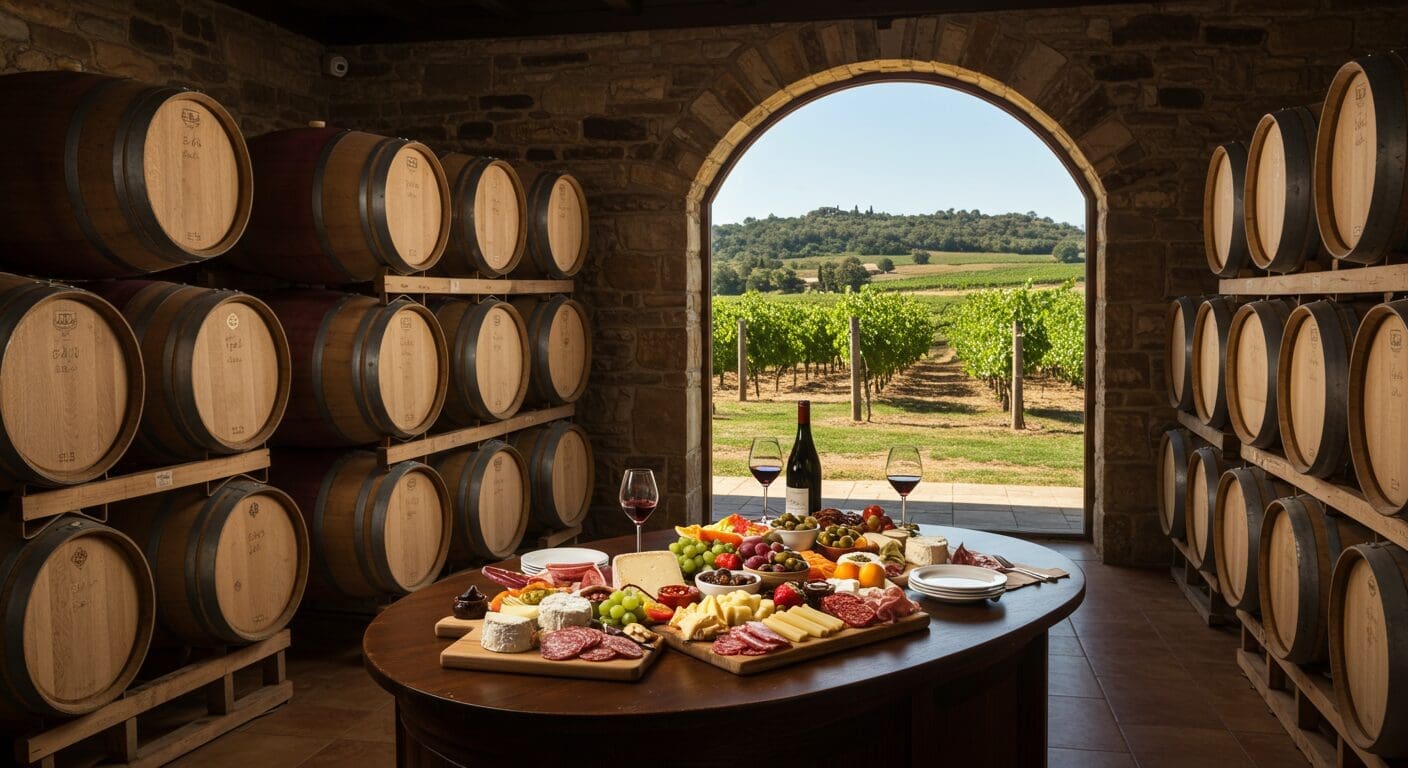
Domaine des Tourelles in the Bekaa is a more boutique operation producing wines that emphasise indigenous grape varieties alongside international ones, with an approach that feels genuinely artisanal. Ixsir, with its dramatic hillside winery in the northern highlands, brings a more contemporary design sensibility to Lebanese wine, producing fresh whites and complex reds from high-altitude vineyards. A private winery tour here, followed by a tasting lunch on the terrace, is one of those food experiences that costs money and is worth every dirham.
Wine Estates to Visit in Person
Lebanon is the clear destination for estate visits, and the Bekaa Valley rewards a dedicated day or two rather than a single rushed afternoon. Most estates welcome private visits by appointment, and the experience of arriving at a vineyard in this ancient landscape – where the soil feels like it has been growing things since long before anyone was keeping records – is notably different from rolling up to a Napa tasting room.
Château Kefraya produces some of the Bekaa’s most interesting wines and offers one of the more organised visitor experiences, with knowledgeable guides and a substantial range to taste. Their Comte de M blend has genuine ambition. Massaya, co-founded with French partners from the Rhône Valley, brings a Franco-Lebanese sensibility to its winemaking that shows in every glass – the rosés in particular are excellent, and the setting of the estate, against the backdrop of the Anti-Lebanon mountains, is worth the drive independently of the wine.
For those travelling in Israel, the wine regions of the Galilee and Judean Hills produce wines of increasing quality and international recognition. The Judean Hills in particular – high-altitude, cool-night viticulture producing elegant whites and structured reds – have attracted winemakers of genuine talent. A private tour arranged through a specialist guide will open doors that the standard tourist route does not.
Truffles, Olive Oil and the Rarer Pleasures
The Middle East’s truffle story is one that deserves far more attention than it receives in western food media. Desert truffles – known variously as zubaidi, zubaydi or black truffle of Arabia depending on where you are – appear across Jordan, Saudi Arabia, Kuwait and Iraq following winter rains. They are not the same as European truffles in flavour (earthier, more subtle, with a texture closer to potato than the French or Italian varieties), but they are eaten with great enthusiasm locally, often simply grilled with butter or incorporated into rice dishes.
In Jordan, truffle hunting in the desert with local guides is an increasingly available experience for adventurous travellers, and it has a particular charm – the image of scanning sandy scrubland for small bumps that indicate something worth eating is a long way from the manicured Périgord truffle hunt, and all the more memorable for it.
Olive oil deserves a longer conversation than most visitors allow it. Palestinian olive oil, produced from ancient groves in the West Bank from varieties like Rumi and Souri, has a complexity and peppery intensity that stands alongside the best Sicilian or Greek production. Visiting a traditional press during the October-November harvest is possible with the right connections, and the experience of tasting oil directly from the press – grassy, green, almost alarmingly fresh – is one that recalibrates your supermarket shelf expectations permanently. Jordan’s olive-growing regions around Ajloun and the Jordan Valley produce oil that is similarly characterful, and several producers now offer private harvest experiences for serious food travellers.
Cooking Classes and Culinary Immersion
The best cooking classes in the Middle East have a domestic quality that cannot be replicated in a commercial kitchen school. The tradition of hospitality here means that learning to cook in someone’s home – arranged through a trusted cultural operator – produces a different kind of learning from the demonstration-and-participation format familiar in European cooking schools. You are not a student. You are a guest who happens to be allowed to help.
In Lebanon, a private cooking class with a local home cook in Beirut or the surrounding villages covers the kind of dishes that do not appear on restaurant menus: properly made kibbeh nayeh, the Lebanese version of steak tartare; slow-cooked beans with caramelised onions; the specific ratio of lemon to tahini in the definitive hummus. In Jordan, cooking experiences in Petra’s surrounding villages or in Wadi Rum’s desert camps incorporate Bedouin cooking traditions – the technique of cooking in an underground pit, the art of the right spice balance for slow-cooked lamb – that have a directness and flavour that no amount of fine dining can replicate.
Dubai and Abu Dhabi offer more formal culinary experiences through the hotels and at various food festivals, but the most interesting cooking in the UAE tends to happen in Emirati homes rather than tourist-facing venues. Specialist cultural operators can sometimes arrange private Emirati dining experiences that include a cooking component – these require advance planning and the right introductions, but for a serious food traveller, they are worth pursuing.
The Best Food Experiences Money Can Buy
There is a version of eating in the Middle East that requires nothing but a few dirhams and the willingness to follow your nose into a market. That version is excellent. But there is also a version designed for the traveller who wants to apply proper resources to the question of what to eat, and that version is extraordinary.
A private picnic in Wadi Rum – prepared by a local cook using desert herbs and freshly baked flatbread, eaten as the light shifts across the sandstone cliffs at sunset – is one of those experiences that sits in a different category from restaurants entirely. A dinner at a private Beirut table overlooking the city, prepared by a chef who trained in Europe but cooks in Lebanese – where the technique is French and the soul is entirely local – is another. A private spice tour of Dubai’s Deira district, followed by a cooking session in a villa kitchen with a specialist chef who has done the shopping for you, produces food that has none of the performance of restaurant dining and all of the pleasure.
For those visiting Lebanon specifically, a full-day food journey from Beirut through the Bekaa Valley – market in the morning, winery visit and lunch in the afternoon, dinner back in the city – covers more genuine culinary ground than most travellers manage in a week. This is the kind of itinerary that requires organisation, the right driver, and a clear sense of priorities. But this is, after all, a region where food is taken very seriously. You might as well respond in kind.
Plan Your Stay
The Middle East rewards slow travel and a well-positioned base. A private villa gives you the kitchen space to actually use what you bring back from the markets, the privacy to invite local connections for dinner, and the kind of unhurried mornings that make a proper mezze breakfast possible rather than aspirational. For a curated selection of properties across the region, explore our luxury villas in Middle East – from Beirut hillside retreats to Gulf coast escapes, each one chosen with the food-focused traveller firmly in mind.
For broader destination planning across the region, our Middle East Travel Guide covers everything from the best time to visit to the cultural context that makes this part of the world so profoundly worth understanding.
What is the best time of year to visit Lebanon’s Bekaa Valley wine estates?
The harvest season from September through to early November is the most rewarding time to visit the Bekaa Valley vineyards, when the estates are at their most active and private harvest experiences can be arranged. Spring – April and May – is also excellent, with cooler temperatures and a landscape that is genuinely lush by regional standards. Summer visits are possible but hot; winter is quiet and several smaller estates reduce their visiting hours significantly.
Is wine widely available to drink across the Middle East, or are there restrictions travellers should be aware of?
The situation varies significantly by country. Lebanon is the region’s most open wine culture, with wine served freely in restaurants, bars and at estates. Israel similarly has a well-established wine and dining culture with no restrictions for visitors. Jordan permits alcohol in licensed venues, hotels and many restaurants. The UAE serves alcohol in licensed hotel venues and private clubs, though not in public spaces or unlicensed restaurants. Saudi Arabia does not permit alcohol for visitors or residents. Oman permits alcohol in licensed hotel venues. If wine is an important part of your travel experience, Lebanon and Israel offer the most straightforward and rewarding environments.
Can I arrange private cooking classes or home dining experiences as a villa guest in the Middle East?
Yes – and this is one of the genuine advantages of staying in a private villa rather than a hotel. Many villa management teams can connect guests with local chefs, home cooks and market guides who offer private cooking experiences either in the villa kitchen or in a home setting. In Lebanon and Jordan particularly, these experiences are well established and can be arranged with reasonable notice. In the UAE and Oman, specialist cultural operators offer Emirati and Omani home cooking and dining experiences that give access to a culinary tradition most visitors never encounter. It is worth discussing your specific interests with your villa team well in advance of arrival to allow time for the right arrangements to be made.