Romantic Middle East: The Ultimate Couples & Honeymoon Guide
Romantic Middle East: The Ultimate Couples & Honeymoon Guide
Paris has the Eiffel Tower. The Maldives has the overwater bungalow. Tuscany has the vineyard at golden hour. All of them are magnificent, and all of them are exactly what everyone expects. The Middle East, on the other hand, gives you something no other region on earth quite manages: the vertigo of standing between civilisations so ancient that the very concept of romance was being written about here – literally, in verse, in Arabic – while much of the Western world was still figuring out agriculture. There is a depth to this part of the world that gets under your skin. The deserts are genuinely vast. The cities are genuinely extraordinary. The hospitality is, by any reasonable measure, the finest on earth. And somehow, tucked inside all of that history and spectacle and sensory overload, is one of the most quietly, persistently romantic destinations a couple can choose. This is your guide to the romantic Middle East – the ultimate couples and honeymoon experience, done properly.
Why the Middle East Is Exceptional for Couples
The Middle East rewards couples who pay attention. That might sound like faint praise, but it is the opposite. So many celebrated romantic destinations simply offer the backdrop and leave you to it – a pretty view, a decent restaurant, the standard anniversary photo. The Middle East does something different. It draws you in together, makes you both feel slightly wonderstruck, slightly disoriented, and deeply curious, which is, when you think about it, almost exactly what falling in love feels like.
The scale helps. Whether you are standing at the edge of Wadi Rum at dusk watching the sandstone cliffs shift from orange to deep violet, or sailing out of a marina in Dubai as the skyline ignites behind you, there is a theatrical quality to the light and landscape here that simply cannot be manufactured. The region spans dramatically different environments – from the turquoise coastlines of Oman and the UAE to the ancient canyon landscapes of Jordan, from the historic medinas of Morocco to the frankly implausible architectural ambitions of the Gulf cities – and all of it is experienced in an atmosphere of extraordinary warmth. People here take hospitality personally. A couple arriving at a private villa or a boutique desert camp is not a booking reference; they are guests, and the distinction matters.
There is also the matter of luxury. The Middle East, particularly the Gulf states, has invested in hospitality infrastructure at a level that most destinations simply cannot match. The private pools, the spa facilities, the fine dining – the standard is, without labouring the point, genuinely high. For honeymoons especially, that consistency of quality makes an enormous difference.
The Most Romantic Settings and Experiences
Start with the obvious and work inward. The desert. Not a desert – the desert. The Arabian desert, particularly the dunes around Dubai’s outskirts, the rose-red canyons of Wadi Rum in Jordan, or the Empty Quarter on the Omani border, is among the most romantic landscapes on earth. The silence at dawn is something couples return from talking about for years. Arrive by private transfer at a luxury desert camp as the sun drops, sit outside your tent with a glass of something cold, and watch the sky do things you did not think skies could do. This is not an experience that needs embellishment.
In contrast, the cities offer a different but equally powerful romantic charge. Dubai’s Creek district, lit up at night and crossed by traditional abra boats, is quietly lovely in a way the skyscraper postcards never quite capture. Old Muscat, the capital of Oman, has a breezy, slightly melancholy elegance – all whitewashed walls and mountain backdrops and corniche walks at twilight. Jerusalem carries a weight of human feeling so concentrated it affects people who have never considered themselves sentimental. And Petra, the rose-red city carved from rock in the Jordanian desert, seen at dawn before the tour groups arrive, is one of those places that makes couples quietly reach for each other’s hand. There is something about beauty on that scale that does that.
For those who want their romance on the water, the coastlines of Oman and the UAE offer sailing, snorkelling, and private dhow cruises along routes where the landscape changes from modern marina to wild mountain coast within an hour. The Red Sea, particularly around Aqaba in Jordan or the Saudi coastline, is among the finest snorkelling and diving water on the planet – and experiencing an underwater world together, in silence, has a particular intimacy that is hard to replicate at dinner.
Best Restaurants for a Special Dinner
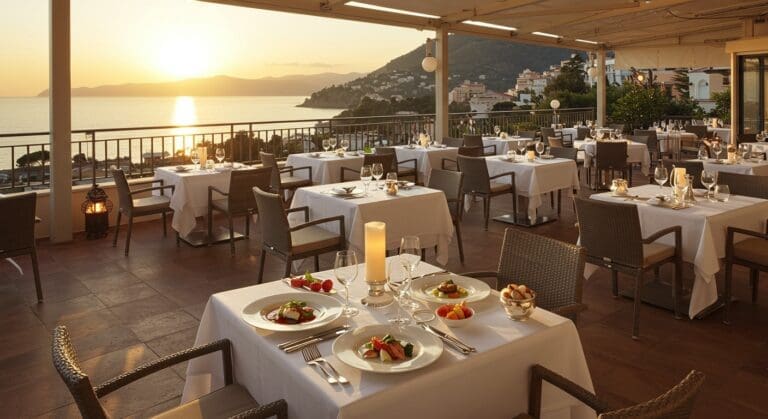
The dining scene across the Middle East has matured considerably, though it varies enormously by country and city. In Dubai and Abu Dhabi, the restaurant offer is among the most sophisticated in the world – you will find outposts of globally acclaimed chefs alongside genuinely excellent regional cuisine that deserves far more attention than it typically receives. For a special occasion dinner, look for rooftop restaurants with skyline or sea views, ideally in the cooler evening air between October and April when outdoor terraces are genuinely enjoyable. Many of the region’s finest dining rooms are within five-star hotels, which is occasionally frustrating for those who prefer their dinner to feel less like a lobby, but the quality is rarely in doubt.
In Jordan, particularly in Amman and the areas around Petra and the Dead Sea, the local cuisine – mezze, slow-cooked lamb, extraordinary breads, pomegranate-heavy sauces – is romantic in the most fundamental sense: it is designed to be shared. A long meal of small plates in a candlelit Ammani restaurant, with a bottle of surprisingly good Jordanian wine, is an evening worth planning your entire trip around. Oman’s coastal restaurants, particularly around Muscat’s marina district, offer fresh seafood in settings where the mountains meet the sea in a way that makes even a simple grilled fish feel like an occasion. Dress well. Order slowly. Let the evening take its time. The Middle East does not hurry dinner, and neither should you.
Couples Activities: From the Serene to the Spectacular
The activity range for couples across the Middle East is broader than most people expect, which tends to surprise those who arrive thinking they will spend their entire honeymoon in a spa (though, for the record, that is also an entirely valid plan – the spa culture here is extraordinary).
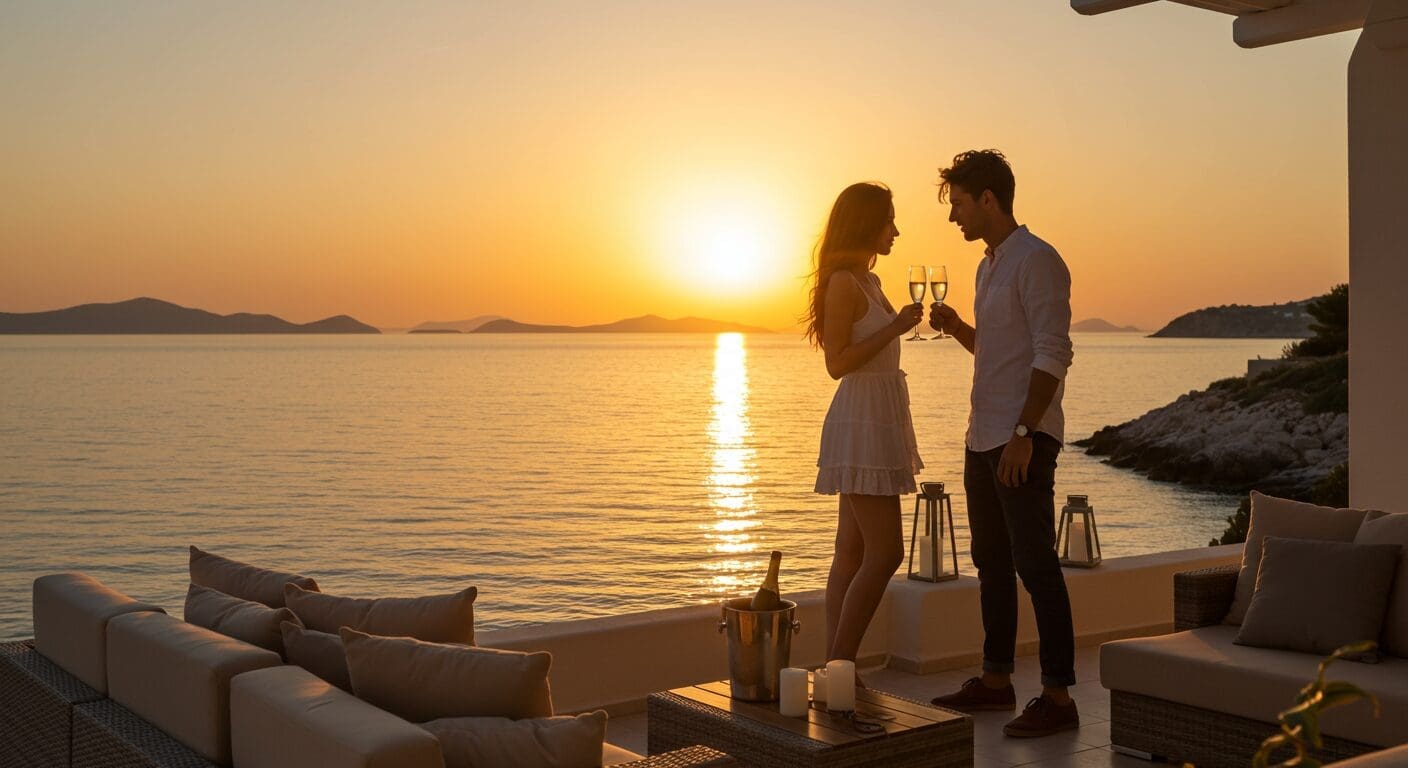
Private dhow sailing is perhaps the most characteristically romantic option in the Gulf and Oman. These traditional wooden vessels, hired privately for the day or evening with a crew, allow couples to move at their own pace between coastlines, anchor in quiet bays, swim off the stern, and eat on deck as the sun sets. The contrast between the ancient boat and the modern skyline visible from some routes creates a visual tension that is, somehow, rather beautiful.
Cooking classes are available across the region, from professional kitchens in Dubai to traditional Jordanian family homes in Amman and community projects in Morocco, and they are almost universally excellent. Learning to make proper mezze, or to fold the perfect kibbeh, or to understand the architecture of a Moroccan tagine, gives couples a shared skill and a shared meal – a genuinely useful souvenir. Hammam spa experiences, available throughout the region in varying degrees of grandeur, are worth booking for at least one afternoon. The combination of steam, scrub, and subsequent horizontal immobility is deeply conducive to the kind of conversation that only happens on holiday.
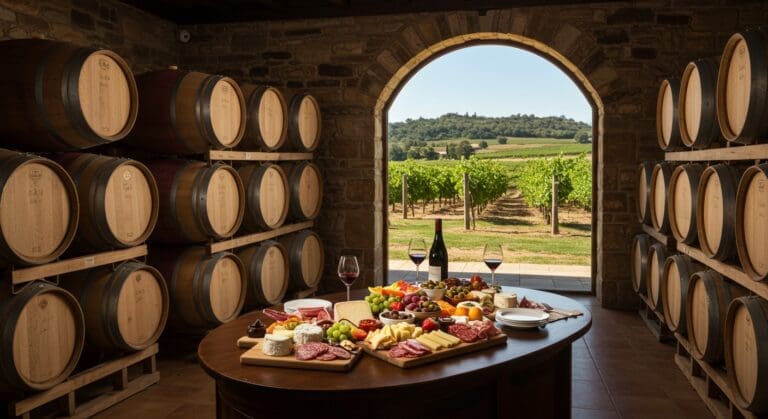
For the more active, hot air ballooning over Cappadocia or Wadi Rum at dawn, camel trekking into the desert at sunset, and kite-surfing on the Red Sea coastline all offer the shared adrenaline and shared laughter that make for genuinely good holiday memories. The Middle East is also, perhaps counterintuitively, excellent for wine tourism – Jordan’s Bekaa-adjacent wine regions and the growing viticultural scene in certain parts of Lebanon and Israel offer tastings and vineyard visits that would satisfy any serious wine-travelling couple.
Most Romantic Areas to Stay
The geography of romance in the Middle East is usefully varied. In the UAE, the choice broadly comes down to the curated glamour of Dubai – particularly the Palm Jumeirah and Downtown areas – versus the quieter, more considered luxury of Abu Dhabi’s coastal resorts and Saadiyat Island, which has a cultural depth and a beach quality that Dubai sometimes trades for spectacle. Both are excellent. They are different in character, much like choosing between Venice and the Amalfi Coast – the question is what kind of holiday you want.
In Jordan, the Dead Sea area offers resort-level luxury in a landscape so singular – floating effortlessly in the saltiest body of water on earth, at the lowest point on the planet’s surface – that it feels almost obligatory for a honeymoon tick list. Wadi Rum’s luxury desert camps have improved dramatically and offer couples a level of privacy and seclusion that is frankly difficult to find anywhere else on earth. In Oman, the Musandam Peninsula – a dramatic fjord landscape in the far north – and the coastal stretches around Muscat and Salalah offer the kind of untouched natural beauty that sophisticated travellers increasingly prioritise over pool bars. Morocco’s riads in Marrakech’s medina are romantic almost against their will: the architecture, the sound of fountains, the smell of orange blossom – it accumulates.
Proposal-Worthy Spots
The Middle East has no shortage of locations grand enough to frame a question that changes everything. The practical advice, which is worth stating clearly: choose a moment early in the day or at dusk, before the crowds, before the heat, and somewhere that means something specifically to the two of you rather than simply somewhere impressive on Instagram. That said, some locations are simply hard to argue with.
The Treasury at Petra, seen at first light before the site opens to the public (which requires a very early alarm call and a slightly stern conversation with your tour operator), is perhaps the most cinematically dramatic proposal backdrop in the entire region. The Dead Sea at sunset, floating in silence together in that extraordinary mineral-heavy water, has an otherworldly quality that makes declarations of intent feel entirely natural. The rooftop of a traditional riad in Marrakech as the call to prayer echoes across the medina at dusk is both beautiful and genuinely moving in a way that photographs never quite communicate. In Dubai, a private yacht at twilight with the city skyline behind you is, admittedly, rather spectacular – though proposals here should come with the understanding that the person being asked will almost certainly know what is coming. The yacht is not subtle.
Anniversary Ideas and Experiences
Anniversaries in the Middle East benefit from the region’s almost competitive enthusiasm for marking occasions properly. Private dining in the desert – a table set in the dunes at night, lit by lanterns, with a chef and a sommelier and absolutely nothing else for miles – is the kind of experience that several luxury operators in the UAE and Jordan offer and which delivers rather dramatically on the effort-to-memory ratio. Couples who have honeymooned here before sometimes return specifically to recreate the desert experience, which says something.
For milestone anniversaries, consider a multi-destination journey: a few nights in the ancient city of Jerash or Petra in Jordan, followed by a few days on the Omani coast, finished in a private villa in Dubai. The Middle East’s compact geography – flights between these destinations are short and frequent – makes such a journey more practical than it sounds. Alternatively, a luxury sailing charter along the Omani coastline, stopping at uninhabited beaches and mountain wadis, offers the kind of self-contained romantic world that anniversaries genuinely deserve.
Honeymoon Considerations
Honeymooning in the Middle East requires a small amount of cultural homework, which is worth doing properly rather than arriving with assumptions in either direction. The region is not monolithic – the social norms of Dubai are genuinely different from those of conservative rural Jordan, and both are different again from cosmopolitan Amman or the beach resorts of Oman. In most tourist-facing areas across the Gulf states and Jordan, couples – married or otherwise – are welcomed warmly and treated with discretion. Public displays of affection should be kept gentle, particularly away from resort environments, not because the locals are unwelcoming but because it is, simply, the respectful and appropriate approach.
The practical advantage of honeymooning here is considerable. Flights from Europe to the Gulf are typically six to eight hours – long enough to feel like a proper escape, short enough not to begin your honeymoon already jet-lagged. The infrastructure for luxury travel is excellent. Private villa rentals, in particular, offer honeymoon couples something that even the finest hotel cannot quite replicate: complete privacy, a pool to yourselves, a kitchen for lazy late breakfasts, and the particular joy of not having to put clothes on to fetch a coffee. The weather window matters – October through April is broadly ideal across most of the region, with March and April particularly beautiful in Jordan when the wildflowers are out. July and August in the Gulf is best approached with managed expectations. The heat is not romantic. It is simply hot.
For the most seamless honeymoon experience, consider building your trip around a luxury private villa in Middle East – a private residence rather than a hotel room gives a honeymoon its own geography, its own rhythm, and a level of intimacy that the finest five-star suite simply cannot match. It is the difference between visiting somewhere and temporarily living somewhere, and that distinction, for a honeymoon, is rather the whole point. For broader planning and destination detail, the Middle East Travel Guide is an excellent place to begin.
Is the Middle East a good honeymoon destination for couples who are not married?
In most tourist-facing areas across the Gulf states, Jordan, and Oman, unmarried couples are welcomed and accommodated without issue, particularly in luxury hotels, private villas, and resort environments. Shared rooms are standard and accepted. As with any destination, it is worth being aware of local customs and behaving respectfully in public spaces, but the practical experience for honeymooning couples – married or not – is overwhelmingly positive across the region’s major tourism destinations.
What is the best time of year for a romantic trip to the Middle East?
October through April is the ideal travel window for most of the Middle East. Temperatures are comfortable to warm rather than extreme, making outdoor experiences – desert excursions, coastal sailing, city walking – genuinely enjoyable. March and April are particularly beautiful in Jordan and the Levant, where the landscape is green and wildflowers are in bloom. The summer months (June through August) in the Gulf states bring intense heat that limits daytime activity considerably, though resorts in this period often offer significant value and excellent indoor amenities for those who do not mind working around the temperature.
Why should couples choose a private villa over a hotel for a romantic Middle East trip?
A private villa offers something fundamentally different from even an exceptional hotel: complete privacy, a pool and outdoor space that belongs entirely to you, the flexibility to eat breakfast at noon in your pyjamas without judgement, and a sense of having your own home-from-home in a remarkable part of the world. For honeymoons and anniversaries especially, this level of seclusion and intimacy is difficult to replicate in a hotel environment, however luxurious. Many private villas in the Middle East also come with dedicated staff – a villa manager, a chef, or concierge support – meaning you lose none of the service quality while gaining considerably in privacy and personal space.