Best Restaurants in Mykonos: Fine Dining, Local Gems & Where to Eat
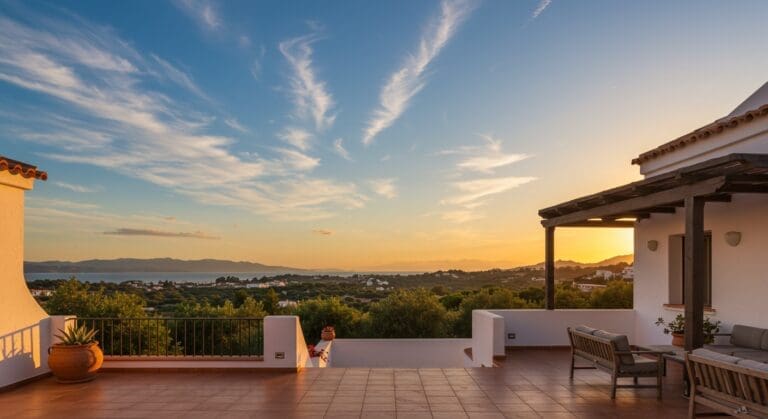
There is a particular trick that Mykonos pulls off that no other island in the Aegean quite manages: it convinces you, usually around your second glass of Assyrtiko at a clifftop table as the sun dissolves into the Aegean, that the food was always the point. Not the parties. Not the fashion. Not the magnificent theatre of watching other beautiful people try to look as though they’re not watching beautiful people. The food. And the extraordinary thing is – it’s not entirely wrong. Mykonos has quietly, determinedly built one of the most accomplished dining scenes in Greece. Fine dining sits alongside fish tavernas with plastic chairs and no menus. Beach clubs turn out food that would embarrass restaurants in London. And somewhere in the tangle of whitewashed lanes in Mykonos Town, there is almost certainly a kitchen producing something you will think about on the flight home.
This guide covers all of it: the best restaurants in Mykonos for fine dining, the local gems worth hunting down, the beach clubs that earn their prices, the dishes you must order, and the drinks that tie everything together. Consider it the starting point for eating well on an island that rewards the curious and occasionally punishes those who simply wander into the nearest place with a laminated menu and a view.
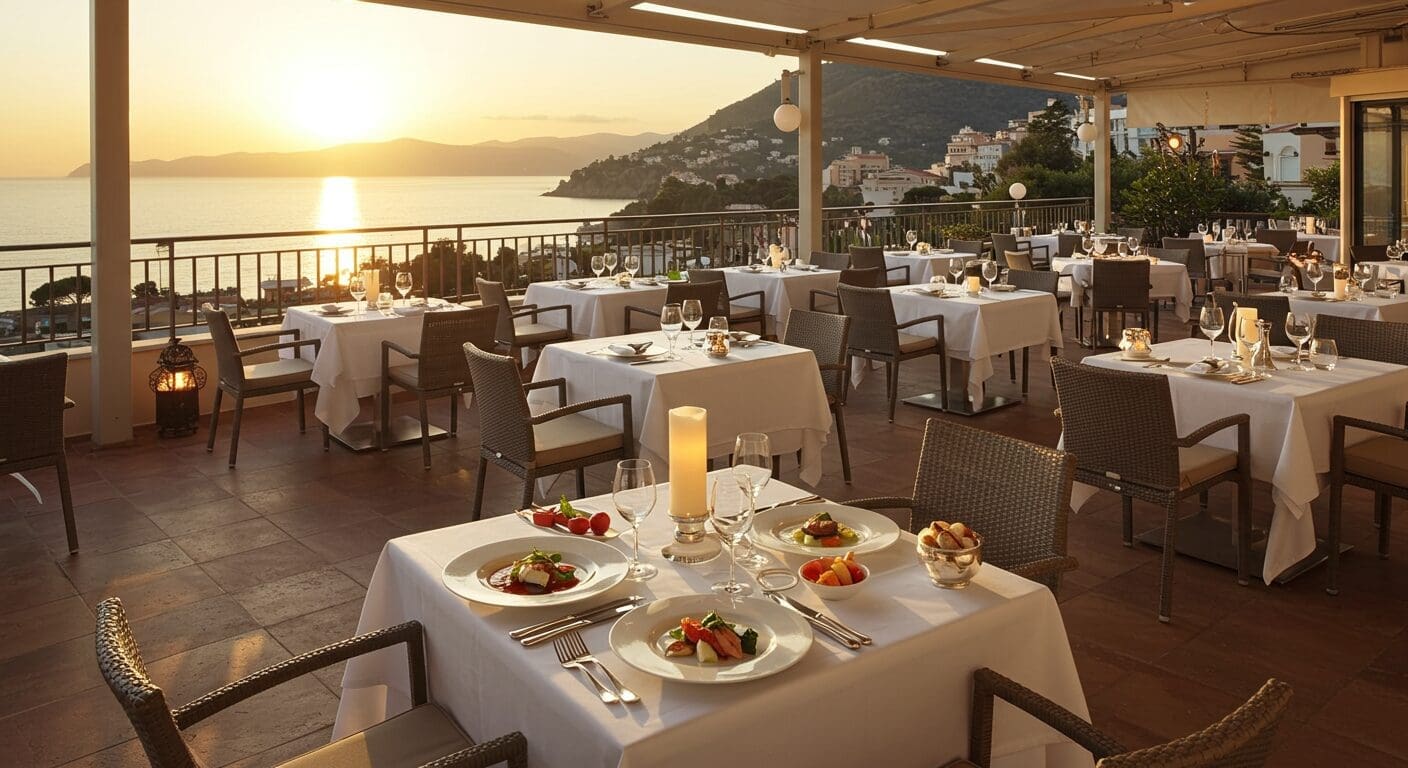
The Fine Dining Scene: Where Mykonos Gets Serious
Mykonos does not currently hold Michelin stars – the Guide’s Greek coverage remains Athens-heavy – but this should not be mistaken for an absence of ambition. The island’s top tables operate at a level that would sit comfortably in any European capital, with produce sourced from the Cyclades, kitchens staffed by chefs who have worked internationally, and dining rooms that understand that luxury is as much about how a meal feels as how it tastes.
Krama Restaurant has built a reputation as one of the finest dining experiences on the island, and it earns that reputation with a menu that is genuinely inventive without being tiresome about it. The kitchen works with seasonal ingredients of serious quality, presenting dishes that feel considered rather than contrived. This is the kind of restaurant where you arrive for dinner and realise, somewhere around the second course, that you have stopped thinking about anything else. The visual presentation is precise without being fussy – a distinction that matters more than it sounds.
Interni brings a different kind of ambition. Housed in white-washed buildings open to the Mykonian sky, with lush plants threading through luxurious décor that manages to feel genuinely elegant rather than aggressively designed, it is a restaurant that understands its setting without being enslaved by it. Chef Christos Fotos works the intersection of modern technique and traditional Greek produce with considerable skill, producing a Mediterranean menu that feels rooted and forward-looking at once. The courtyard setting in the evening – warm light, the faint sound of the town beyond the walls – is the sort of thing that makes other restaurants feel slightly insufficient by comparison.
M-Eating, tucked into a quiet corner of Mykonos Town in a beautifully restored townhouse complete with exposed beams and a serene courtyard, brings modern finesse to Cycladic cuisine without the fanfare. The menu is anchored in the islands: octopus with fava purée, sous-vide lamb with mashed onions and zucchini, slow-cooked cockerel with pastitsada. It is the kind of food that reminds you why Greek cuisine, when treated with genuine respect rather than tourist convenience, is one of the great culinary traditions in the world. Book ahead. It fills up, as the best places always do.
Zuma Mykonos: Where Japanese Precision Meets the Aegean
Zuma Mykonos, positioned close to the Old Port with sea views that justify the geography entirely, is one of those restaurants that travels well. The global Zuma brand – contemporary Japanese robata cooking with serious cocktails and a room that knows how to create atmosphere – translates to Mykonos with unexpected elegance. Tiger prawns that arrive with just the right amount of char. Wagyu beef sliced with the kind of care that makes you feel vaguely guilty for eating it so quickly. The setting is stylish in a way that feels appropriate rather than effortful, and the energy in the room by nine in the evening is exactly what you’d hope for on an island that does evenings rather well.
It is also worth noting that Zuma manages the rare feat of being a place where the food matches the social occasion – which is not always a given when a restaurant is this good-looking.
Beach Clubs: The Best Food Comes with a View
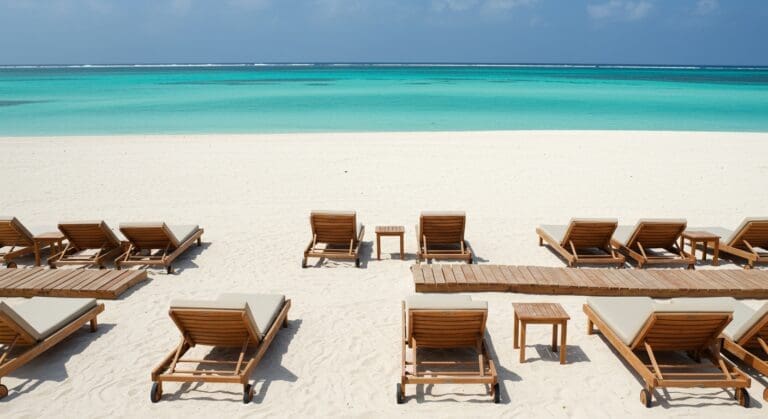
On most islands, beach clubs exist primarily to sell overpriced rosé to people who have already had enough rosé. Mykonos does not entirely escape this tendency, but its leading beach clubs have made a more serious commitment to the table – and the results are worth knowing about.
Nammos at Psarou Beach is, by any reasonable measure, one of the great beach club experiences in the Mediterranean. It has been the benchmark since it opened in 2003, and it has maintained that position not by resting on its reputation but by continuing to operate at a level most competitors cannot match. The four private Nammos Cabanas come with personal butlers, private chefs, VIP drivers and outdoor hot tubs – an arrangement that represents either peak luxury or a gentle satire of it, depending on your temperament. (There is also a helipad. For those whose journey from the yacht feels too long.) The food, served across a beach setting of considerable elegance, is a serious Mediterranean offering: fresh fish, exceptional mezze, ingredients that taste of actual sunshine rather than the idea of it. For a lunch that becomes an afternoon that becomes an early evening, Nammos remains the standard.
Scorpios, on the southern coast, offers something more quietly confident. Now part of the Soho House group, it carries that particular blend of rustic material warmth and understated contemporary design – rough textures, natural light, nothing too deliberate. The Mediterranean-inspired food during the day is genuinely good, the curated music sets at sunset are genuinely atmospheric, and the crowd tends towards the sort of people who have been to places like this before and are no longer impressed by effort alone. It is, in the best possible sense, a beach club for people who don’t want it to feel like a beach club.
BEEFBAR Mykonos brings a different energy to Agios Ioannis Beach, operating within the Bill & Coo Coast Suites with a sleek all-day format that leans into Riviera cool without overcooking it. Premium meats handled with genuine skill, excellent seafood, and what the menu calls refined comfort food – which turns out to be an accurate description rather than a contradiction in terms. For those who find beach club food an afterthought to beach club atmosphere, BEEFBAR is a useful corrective.
Local Gems: The Tavernas Worth Finding
There is a version of Mykonos dining that exists entirely outside the velvet rope, and it is often the version travellers remember most fondly. The island’s traditional tavernas – particularly those in the quieter villages inland, or the small fishing harbours away from the main circuit – serve food that is honest, generous and occasionally transcendent in the way that simple things prepared with care tend to be.
Look for tavernas in Ano Mera, the inland village that receives a fraction of the attention it deserves. The atmosphere is genuinely local in a way that parts of Mykonos Town have long ceased to be. Grilled octopus dried in the sun and charred over coals. Fresh loukoumades dusted with honey and cinnamon. Whatever fish arrived that morning, served with lemon and olive oil and the complete absence of unnecessary intervention. Prices that will make you momentarily question why you’ve been eating elsewhere.
In Mykonos Town itself, the lanes of Little Venice reward those willing to follow their instincts rather than a map. The iconic windmills are best admired from a table with a glass of ouzo at the golden hour – which is either very romantic or a perfectly calibrated tourist experience, and honestly, the distinction matters less than you’d think when the light is doing that.
What to Order: The Dishes That Define Mykonos
Start with kopanisti – the sharp, peppery cheese that is a Cycladic speciality and one of the best arguments for regional Greek food. Spread it on fresh bread with a glass of something cold and begin as you mean to go on. Louza, the cured pork fillet with a delicate spice profile, is another island classic worth seeking out on any mezze spread worth its name.
Octopus is the dish that Mykonos does consistently well: look for it grilled, dried properly, with the charred edges and yielding texture that separate the good from the excellent. Lamb is a staple of Cycladic cooking – slow-cooked until it concedes entirely, often with herbs and lemon in quantities that would make a French chef nervous. Fresh fish – particularly sea bream and red mullet – arrives simply prepared and should be ordered simply. There is no sauce that improves a fish pulled from the Aegean that morning. Resist the urge to suggest otherwise.
For dessert: loukoumades, the honey-drenched doughnuts that are best eaten standing up and slightly too hot. Then galaktoboureko if you can find a version made properly – the semolina custard pastry that is either a revelation or a disappointment depending entirely on who made it.
Wine, Ouzo and What to Drink
Assyrtiko from Santorini is the white wine that appears on virtually every serious wine list in the Cyclades, and for very good reason – mineral, bright, with a salinity that makes it one of the most naturally food-friendly wines in the world. Drink it with seafood, with cheese, with the view. It holds up to all of them.
For something locally rooted, look for Malagousia – a fragrant, aromatic Greek white that has been rescued from near-extinction and is now making the case for itself with considerable confidence. Natural wines from smaller Greek producers are increasingly well-represented on Mykonos wine lists; the better restaurants are paying attention to this, and the lists reflect it.
Ouzo, which is an acquired taste most people acquire at the wrong time of day in the wrong quantity, is best approached as an aperitif with mezze – ideally in the late afternoon when the heat has eased slightly and the harbour is golden. Rakomelo, the warm Cretan honey-and-spice spirit, appears occasionally and is the kind of thing you order once at someone’s recommendation and then order again before you’ve finished the first glass. Cocktail culture is sophisticated at the top end of the island’s bars and beach clubs, with bartenders who take the craft seriously. Tsipouro, the pomace grape spirit, is the local digestif of choice and the reliable signal that a meal is, officially, over.
Food Markets and Daytime Eating
Mykonos Town’s small market area rewards an early morning walk before the lanes fill. Local producers bring cheese, cured meats and fresh produce, and the quality of what arrives from neighbouring islands – vegetables from Naxos, honey from Ikaria, saffron from Kozani – is a reminder that the Aegean is one of the great food-producing regions of the world, regardless of how it’s packaged for export.
Bakeries open early and take bread seriously. The sesame-crusted koulouri is the correct breakfast, consumed while walking and before anyone suggests a brunch menu. For a more leisurely morning, the quieter cafes on the edges of Mykonos Town serve proper Greek coffee – dark, strong, and served with a glass of cold water in a way that feels like an entire philosophy of hospitality compressed into two small cups.
Reservation Tips: How to Actually Get a Table
Mykonos in July and August operates on the assumption that you planned ahead. At the island’s best restaurants, tables at prime times can be difficult to secure weeks in advance, and the closer you get to the date without a reservation, the more you will be relying on last-minute cancellations and the goodwill of front-of-house staff. Neither is a reliable strategy.
Book Krama, M-Eating, Interni and Zuma well in advance – ideally a month or more before peak season travel. Beach clubs like Nammos require reservations for both their beach setup and restaurant seating; the cabanas require considerably more advance planning and the kind of budget conversations best had in private. At Scorpios, the atmosphere rewards spontaneity but the sensible visitor still books.
Shoulder season – May, June and September – changes the calculation entirely. The restaurants are still operating at full quality (often higher, when the kitchen isn’t managing the chaos of peak August), the queues are shorter, and the island remembers itself. It is, if you’re flexible with dates, the shrewder choice. The food tastes exactly the same. The bill is often rather different.
If you’re staying in a luxury villa in Mykonos, it’s worth knowing that many properties offer the option of a private chef – which shifts the entire dining conversation. Exceptional local ingredients, a kitchen designed for proper cooking, and a meal served at your own pace with your own guests: sometimes the best restaurant on the island is the one no one else can book. For a broader look at planning your time on the island – beaches, itineraries, transfers and beyond – the full Mykonos Travel Guide covers everything you need before you arrive.