
New Orleans Food & Wine Guide: Local Cuisine, Markets & Wine Estates
What does it mean to eat well in a city that has never, not once in three centuries, needed anyone else to tell it what to do? New Orleans is the answer to that question rendered in cast iron, oak smoke, and roux. This is a place with its own culinary language – one that borrows liberally from French, Spanish, West African, Creole, Haitian, and Native American traditions, then refuses to give any of them back. It has produced food writers, chefs, and an entire philosophy of eating that the rest of America has spent decades trying to imitate, with mixed results. This guide is for the traveller who comes not just to taste that food, but to understand it – and to experience it at the level it genuinely deserves.
The Architecture of a Cuisine
Before you order anything, it helps to understand that New Orleans cuisine is not one thing. It is several things arguing elegantly with each other, and the argument has been going on since the 1700s. Creole cooking – born of the city itself, refined in grand restaurants and private homes – is urban, abundant, and unashamedly rich. Think bisques thickened with cream, sauces built from time and patience, and a fundamental belief that butter is a food group. Cajun cooking, which drifted in from the surrounding bayou country, is earthier, spicier, more improvisational – the cooking of people who knew how to make something remarkable from whatever the swamp provided that morning.
Both traditions rest on the same foundation: the holy trinity of onion, celery, and bell pepper. In French cooking, you have mirepoix. In New Orleans, you have something with a better name and, frankly, a better attitude. From that base, a universe unfolds – gumbo, jambalaya, étouffée, red beans and rice, grillades and grits, and enough variations on each to occupy a serious eater for a lifetime. A luxury visit to New Orleans does not mean bypassing this vernacular food for something more refined. It means finding the finest expression of it available, which in this city is very fine indeed.
Signature Dishes Worth Ordering Twice
Gumbo first – always gumbo first. This is the dish that tells you where you are and who made it. A good gumbo starts with a roux cooked low and slow until it reaches the colour of dark chocolate, and from there the possibilities branch endlessly: chicken and andouille, seafood, duck and oyster. No two versions are the same, and a New Orleanian will quietly judge you if you suggest they might be. Order it everywhere you eat. Take notes.
Crawfish étouffée is what happens when shellfish meets butter in the most committed relationship in Southern cooking. The crawfish – harvested from Louisiana’s freshwater bayous between January and June – are cooked down into a deeply flavoured sauce served over white rice. In season, this is one of the finest things you will eat anywhere. Oysters from the Louisiana Gulf – briny, fat, and served raw, char-grilled, or baked with garlic and breadcrumbs – are another essential, and the city’s oyster culture is serious enough to warrant entire evenings dedicated to it. Then there is the po’boy, technically a sandwich, practically a declaration of identity, best ordered at a counter with no particular view and eaten without ceremony. Some experiences resist luxury’s best attempts. This is one of them.
The Wine Question – and Louisiana’s Surprising Answer
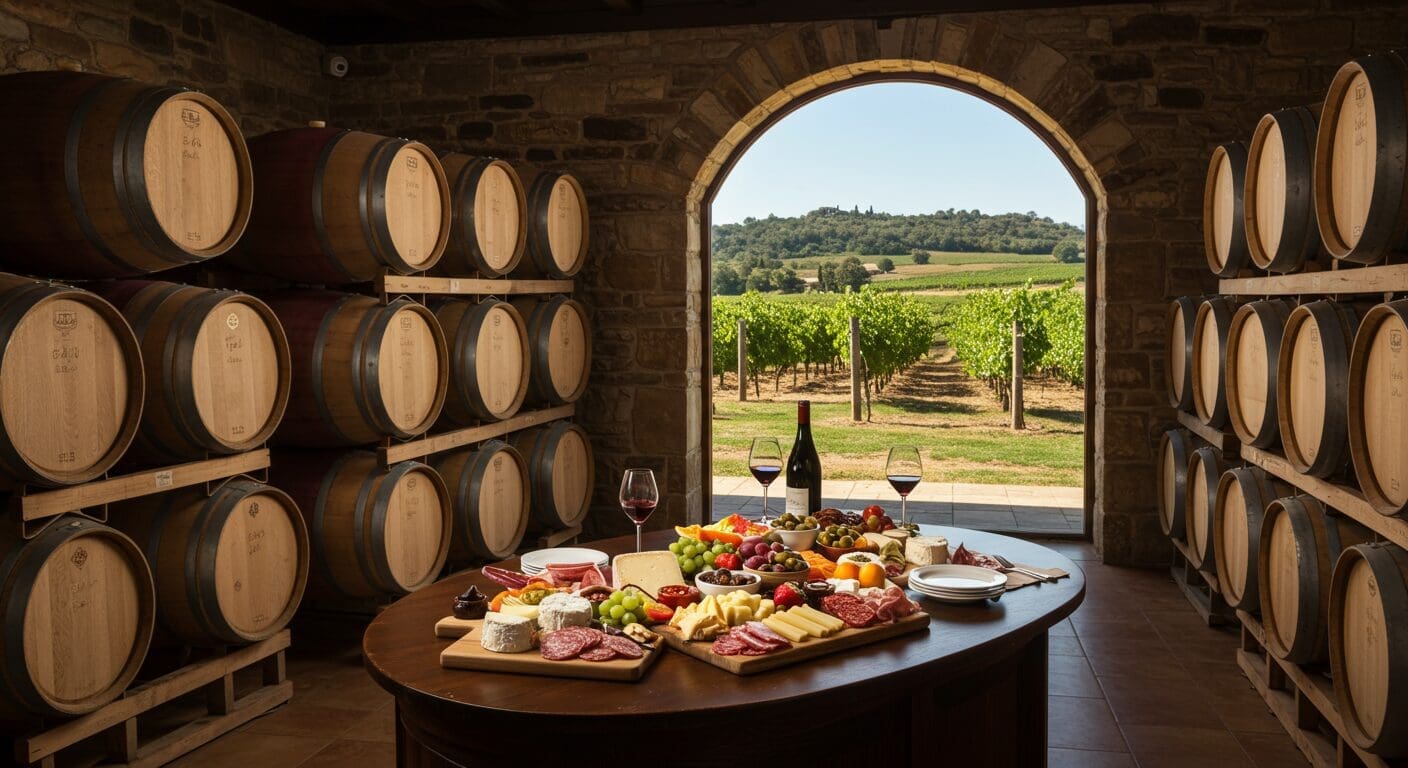
Wine in New Orleans is an interesting conversation. Louisiana is not Napa Valley. It is not Burgundy. The subtropical humidity, hurricane season, and general atmospheric enthusiasm are not, on paper, ideal conditions for viticulture. And yet winemaking here exists, is growing, and produces results that are more interesting than you might expect – particularly for travellers with an appetite for the genuinely local.
The state’s wineries largely work with muscadine grapes – thick-skinned native varieties that thrive where European vinifera would quietly expire – as well as hybrid varieties developed specifically for Southern climates. The wines tend toward the sweeter end of the spectrum, with pronounced fruit character and a frankness that feels entirely consistent with the city’s general disposition toward honesty. Pontchartrain Vineyards, located north of Lake Pontchartrain in Folsom, is the most prominent producer and well worth a visit for those staying beyond the city itself. The winery produces a range of both dry and sweet wines and offers tours and tastings in a setting that feels genuinely removed from the French Quarter’s perpetual motion. It is one of those places that rewards arriving without too many expectations and leaving with a case.
For a luxury wine experience within the city itself, the focus shifts to wine lists – and New Orleans restaurants maintain extraordinary cellars. The city’s relationship with fine dining is long and serious, and sommeliers here operate with a depth of knowledge and a hospitality that reflects the broader culture. French Burgundies, aged Bordeaux, and serious Italian bottles find natural homes on tables that are already doing most things right.
Food Markets Worth Your Morning
The Crescent City Farmers Market is the place to start any serious engagement with Louisiana’s larder. Operating at multiple locations throughout the week – the Saturday market on Magazine Street being the most substantial – it brings together the state’s agricultural richness in a way that no restaurant menu can quite replicate. Local farmers selling sweet potatoes, mirlitons, muscadine grapes, and Creole tomatoes of a quality that would embarrass most of what passes for a tomato elsewhere; fishmongers with that morning’s Gulf catch; boudin makers and small-batch hot sauce producers and people who have been growing the same heritage variety of pepper for four generations. This is research as much as shopping.
The French Market, running along the riverfront in the French Quarter, is the older institution – claiming continuous operation since 1791, which gives it a certain authority. It is more mixed in character than the farmers market, combining fresh produce with crafts and general market goods, but the covered produce section remains genuinely excellent and the atmosphere is part of the education. Go early, before the heat settles and the crowds thicken, and treat it as a slow walk rather than a mission.
Cooking Classes and Culinary Immersion
Understanding New Orleans food is one thing. Learning to make it is considerably more satisfying and rather more humbling than most people anticipate. A good roux, for instance, requires about forty-five minutes of constant attention, a high tolerance for spattering fat, and the nerve to keep going when it looks like something has gone wrong. It almost always looks like something has gone wrong. This is the lesson.
Several excellent cooking schools and private chef experiences operate in the city, ranging from intimate hands-on classes focused on Creole fundamentals to private market-to-table experiences where a chef walks you through the farmers market, selects the day’s ingredients in real time, and then builds a meal around them in your villa or rental kitchen. For luxury travellers staying in private accommodation, this format – personal, tailored, genuinely instructive – is the more rewarding option. You learn more when the kitchen is yours, and the meal, when it comes, feels earned rather than delivered.
The Southern Food and Beverage Museum is not a cooking class, but it deserves a mention here because it is one of the most intelligent and generous food museums in the United States. Its permanent collection on the history of Creole and Cajun cooking provides context that makes every subsequent meal more interesting. The museum also houses the Museum of the American Cocktail, which feels appropriate given that this is a city that has been taking its drinks as seriously as its food for longer than most countries have existed.
The Best Food Experiences Money Can Buy
New Orleans has the kind of fine dining scene that a city accumulates only through decades of seriousness. Commander’s Palace, in the Garden District, is the institution against which others measure themselves – a turquoise Victorian landmark that has trained more important American chefs than perhaps any other restaurant in the country, and that still delivers cooking of exceptional ambition and finesse. A Saturday jazz brunch here is one of those experiences that is both entirely of its place and entirely impossible to replicate anywhere else. Book well ahead. Dress properly. Stay for dessert.
August, in the Central Business District, represents the more contemporary face of New Orleans fine dining – a converted nineteenth-century warehouse with a wine list and tasting menu that draw serious food travellers from across the country. Galatoire’s on Bourbon Street is the choice for those who want to experience what Friday lunch in New Orleans has meant to certain families for over a century: long, loud, celebratory, and anchored to a menu of Creole classics that have earned the right to remain exactly where they are.
For something more singular, private dining experiences arranged through a personal chef – often a veteran of the city’s restaurant kitchens – offer a level of intimacy and customisation that no restaurant can match. A multi-course Creole dinner designed around your preferences, served in the courtyard of a Garden District villa on a warm evening, with a wine list curated specifically for the occasion: this is the kind of experience that becomes the story you tell when someone asks what you ate in New Orleans.
Beyond the Plate: Spirits, Cocktails, and Coffee Culture
No food guide to New Orleans is complete without acknowledging that the city’s liquid culture is as layered as its cooking. The Sazerac – rye whiskey, Peychaud’s bitters, a sugar cube, and an absinthe rinse – is considered by many to be the oldest American cocktail, and drinking one in the city where it was invented has a particular rightness to it. The Ramos Gin Fizz, which requires a shaking time so extended that some bars have been known to rotate bartenders mid-preparation, is the city’s other essential contribution to cocktail history and not something to order when the bar is busy.
Louisiana distilleries have expanded significantly in recent years, producing rye whiskeys, rum from Louisiana sugarcane, and spirits that reflect the same terroir-consciousness that the wine producers are developing north of the lake. Visiting a local distillery – several now offer tours and tastings – adds another dimension to what is already a deeply sensory visit. And before any of this, there is café au lait and a beignet at Café Du Monde at some impractical hour of the morning. This is not optional. The powdered sugar will get on your shirt. Make peace with it.
Planning Your Culinary Visit
Timing matters in New Orleans more than most places. Crawfish season runs roughly January through June, with March and April at its peak. The city’s festival calendar – which is extensive and deeply food-focused – includes the French Quarter Festival in April and the New Orleans Jazz and Heritage Festival, which is as much about food vendors as music, at the end of April into May. Restaurant Week and various seasonal menus make autumn a rewarding time for the more dedicated eater.
The heat of summer is real and should not be romanticised – though the restaurants are, if anything, more atmospheric when the city has baked all day and the evening air sits heavy and warm. Dress lightly, eat well, and pace yourself. New Orleans rewards exactly the kind of traveller who has nowhere better to be.
For more on planning the full New Orleans experience – from neighbourhood guides to cultural itineraries – see our New Orleans Travel Guide, which covers the city in considerably more breadth.
The finest way to experience all of this – the markets in the morning, the private dinners, the unhurried cooking classes, the wine evenings that extend well past any sensible hour – is from a private villa that gives you the space, kitchen, and freedom to make the city your own. Browse our collection of luxury villas in New Orleans and find the base from which your best meals will begin.