New Orleans Travel Guide: Where to Stay, Eat & Explore in Luxury
Most first-time visitors to New Orleans make the same mistake: they come looking for a party. Which is fine, as far as it goes – the city is perfectly happy to oblige. But arriving with Bourbon Street as your primary reference point is a bit like visiting Rome and spending most of your time at the airport. New Orleans is one of the most genuinely singular cities in the United States – not because of its reputation for excess, though that is well-earned, but because it operates on a frequency entirely its own. The food is unlike anything else in North America. The music seeps out of open doors at ten in the morning. The architecture belongs to a version of the American South that never quite existed anywhere else. There is a particular quality of light here in the late afternoon, golden and a little dissolute, that makes you understand immediately why writers have been coming here for a century and mostly never leaving. The city does not perform for tourists. It simply is, which is rarer than it sounds, and considerably more interesting.
What is perhaps less well understood is how well New Orleans rewards the considered traveller rather than the chaotic one. Couples marking milestone anniversaries find something almost cinematic about the place – the iron-lace balconies, the candlelit dining rooms, the sense that the city has been staging romance for decades and knows exactly what it is doing. Groups of friends in search of a genuinely shared experience – food, culture, music, and yes, cocktails that could floor a mule – will find New Orleans gives generously and without judgment. Families seeking privacy and space, away from the noise of the French Quarter, discover quieter neighbourhoods that are as liveable as they are lovely. Remote workers who have discovered the joys of combining reliable connectivity with serious culinary exploration will find a city that accommodates both without blinking. And those travelling with wellness in mind – perhaps surprising, given the city’s reputation – will find early mornings on the Mississippi, meandering cycle rides through oak-canopied streets, and a pace of life that, despite appearances, is fundamentally unhurried. This is a city that rewards people who stay longer than they planned. Most people do.
Getting to New Orleans: Easier Than You Might Expect, More Worth It Than You Can Imagine
Louis Armstrong New Orleans International Airport – MSY, to those who know it – sits about seventeen miles west of the city centre, and the drive in along the elevated highway offers your first proper look at the Louisiana landscape: flat, watery, fringed with cypress trees and the particular kind of sky that suggests the Gulf of Mexico is not very far away (it isn’t). The airport underwent a full replacement in 2019, which means the terminal is modern, efficient, and remarkably pleasant by American airport standards. Direct flights operate from numerous US hubs including New York, Chicago, Atlanta, Miami, and Los Angeles. International travellers typically connect through one of these, though some transatlantic options exist.
Once you land, the options are straightforward. Rideshare apps work well and are widely used. Taxis are available. For longer stays at a private villa, many guests arrange private car transfers – a worthwhile investment that costs less than you might imagine and eliminates the particular exhaustion of navigating an unfamiliar city after a long flight. The airport has a direct rail link into downtown on the Jefferson Transit E-2 bus and then streetcar, though with luggage, most visitors sensibly opt for a direct transfer.
Within the city itself, New Orleans is surprisingly walkable in its core neighbourhoods. The French Quarter, the Marigny, and the Garden District are all manageable on foot, and this is very much the recommended method – you will miss things at any greater speed. The St. Charles streetcar line, one of the oldest continuously operating street railways in the world, runs elegantly through the Garden District and Uptown neighbourhoods and costs little more than pocket change. For wider exploration, rental bikes are popular, Uber and Lyft are abundant, and taxis remain readily available. A car becomes useful only if you intend to venture into the wider Louisiana landscape, which, for the record, you absolutely should.
Where to Eat in New Orleans: A City That Takes This More Seriously Than Anywhere Has a Right To
Fine Dining
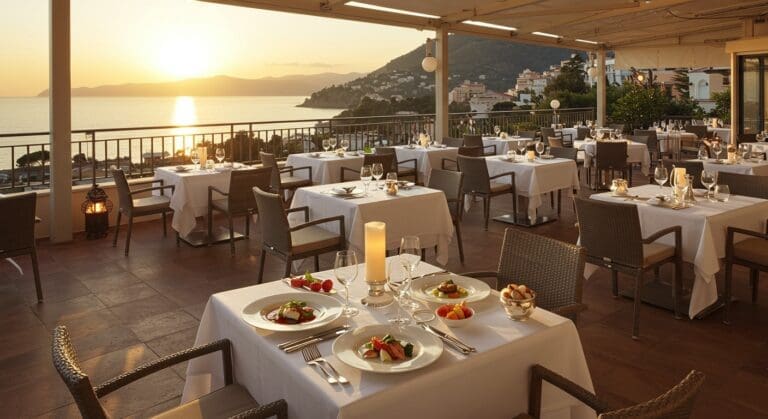
Let’s establish something immediately: New Orleans may be the finest food city in America. Not the trendiest – that title rotates between New York and Los Angeles every eighteen months. But in terms of a deep, organic, historically rooted culinary culture that produces genuinely extraordinary results across every price point, New Orleans stands apart. The fine dining scene reflects this with particular clarity.
Emeril’s at 800 Tchoupitoulas Street is the obvious centrepiece of any serious dining itinerary, and not merely out of habit. The restaurant earned two Michelin stars, and since E.J. Lagasse – son of the legendary Emeril – took over the kitchen in 2023, it has become something genuinely exciting rather than merely prestigious. The reimagined oyster stew, the trout amandine, the banana cream pie: these are dishes that carry the weight of New Orleans tradition while doing something new with it. The restaurant’s 35th anniversary dinner, which saw Chef Eric Ripert of Le Bernardin collaborating in the kitchen, gives you some sense of the culinary company this place keeps. Book well in advance. Wear something you feel good in. Take your time.
Commander’s Palace at 1403 Washington Avenue in the Garden District has been an institution since 1893, which is either reassuring or alarming depending on your relationship with tradition. In this case, thoroughly reassuring. The Jazz Brunch on Saturday and Sunday mornings is one of those experiences that makes the phrase “bucket list” feel inadequate – live jazz drifting through a dining room of that calibre, in a building of that history, in a neighbourhood of that beauty, is the kind of thing you will describe to people for years. They make every meal feel like a celebration, which in a city that celebrates as a matter of principle, is saying something.
Dakar NOLA at 4600 Freret Street won the 2024 James Beard Award for Best New Restaurant, which surprised most people – a Senegalese tasting menu in New Orleans was not the obvious prediction. In retrospect, it makes perfect sense. The city’s culinary DNA is already a complex mixture of French, African, Spanish, and Caribbean influences; a kitchen concentrating on West African seafood-forward cooking, light on dairy and gluten, executed at tasting-menu level, fits into that story more naturally than the surprise might suggest. Everyone who has been raves about it. There is a reason for this.
Where the Locals Eat
Pêche Seafood Grill at 800 Magazine Street is the kind of restaurant that continues to be brilliant fifteen years in, which is not as common as it should be. The oyster bar at the entrance sets the tone: Gulf seafood, treated with intelligence and care. Current chef Nicole Cabrera Mills has introduced global influences with a confident hand – catfish with pickled greens in a chile broth, jumbo shrimp with purple rice, fried oysters with pickled papaya and kimchi. The atmosphere radiates what might be called graceful warmth, which is harder to achieve than it looks and rarer than it should be. This is a lunch or dinner that earns its place in a serious food itinerary.
Café du Monde, the open-air café at the edge of Jackson Square that has been serving beignets and café au lait since 1862, operates twenty-four hours a day. This is not an accident. The beignets – pillows of fried dough buried under powdered sugar with the enthusiasm of someone who has decided that moderation is for other people – are everything they are supposed to be. Go in the morning before the crowds arrive, or late at night when the city is doing something else entirely. The coffee, chicory-blended and poured over steamed milk, is strong and particular. You will probably want two.
Frenchmen Street, in the Faubourg Marigny neighbourhood just beyond the French Quarter, is where locals go for live music of the kind that makes you understand why this city produced what it produced. The Spotted Cat and D.B.A. are the anchors of a strip where shows begin around 6pm and again at 9pm most evenings, with multiple clubs within a few city blocks of each other. There is no cover charge at many venues – you buy a drink and stand in a room where someone is playing something extraordinary. This is where the music is real, unpackaged, and unperformed for anyone’s benefit but its own.
Hidden Gems Worth Seeking Out
Willie Mae’s Scotch House – now operating as Willie Mae’s NOLA at 898 Baronne Street – has been serving fried chicken since the 1950s and remains unapologetically, defiantly itself despite having become, somewhere along the way, famous. The chicken is crispy, golden, and unreasonably good. The cornbread is made from scratch and buttery in the way that suggests someone actually cared. The line moves. It is worth the line. A James Beard America’s Classic award sits on its record, and any local will tell you this is thoroughly deserved.
The city’s cocktail culture warrants its own paragraph. The Sazerac – rye whiskey, Peychaud’s bitters, absinthe rinse, no ice after the mixing – was invented here and remains the city’s unofficial drink. The Bar Sazerac at the Roosevelt Hotel serves a version that operates as both cocktail and history lesson. Elsewhere, the neighbourhood bars of the Bywater and Tremé serve drinks at prices that feel almost alarming in their reasonableness. Tip accordingly and generously.
The Lay of the Land: New Orleans Neighbourhood by Neighbourhood
New Orleans is a city of distinct neighbourhoods, each operating with its own logic and atmosphere, and understanding this geography is the difference between a good visit and an exceptional one. The city sits in a bowl between the Mississippi River and Lake Pontchartrain, which goes some way to explaining both its drainage challenges and the way its street grid curves and bends in ways that defeat GPS optimism on a regular basis.
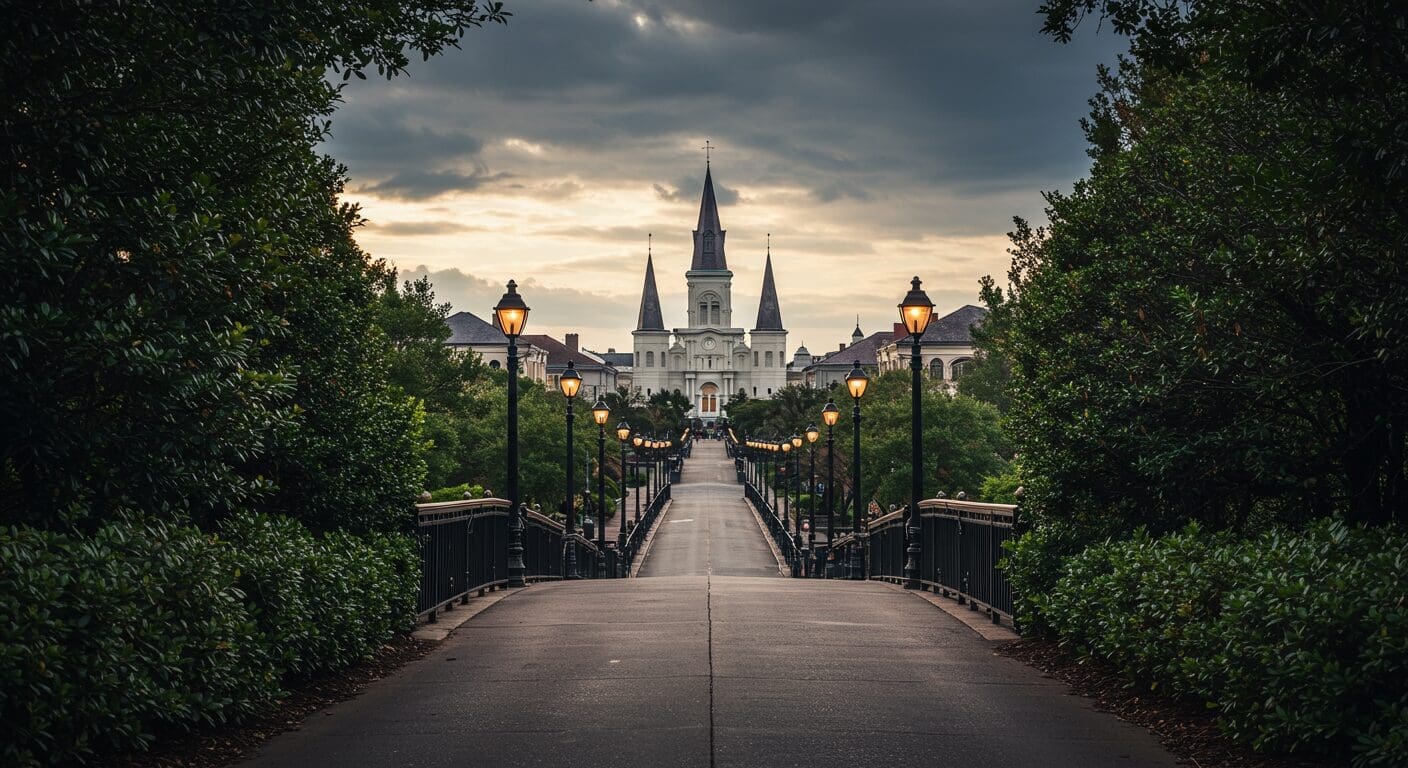
The French Quarter – the Vieux Carré – is the oldest neighbourhood, and its architecture of Spanish colonial buildings and iron-lace balconies is immediately recognisable even to people who have never been. It is also the most tourist-dense, which means Bourbon Street at night is best understood as a phenomenon rather than an experience. The narrower streets away from the main drag – Royal Street, Chartres Street, the quieter blocks near the river – are genuinely lovely and considerably less overwhelming. Jackson Square, flanked by St. Louis Cathedral, is one of the great public spaces in American urban life.
The Garden District, accessible via the St. Charles streetcar, is where the antebellum mansions are – vast, white-columned houses behind iron fences and live oak trees draped in Spanish moss. This is where many of the city’s most desirable private residences sit, and where staying in a luxury villa gives you genuine neighbourhood life rather than hotel corridor anonymity. Magazine Street, the neighbourhood’s commercial spine, offers galleries, independent restaurants, and boutiques worth browsing slowly.
The Marigny and the Bywater, just beyond the French Quarter along the river, are where the city’s creative community largely lives and works. The architecture is Creole cottage and shotgun house – modest in scale, vivid in colour, deeply characterful. Frenchmen Street anchors the Marigny’s evening life. The Bywater has become increasingly vibrant, with galleries and coffee shops and a sense that interesting things are about to happen, which in New Orleans is the natural state of affairs.
Uptown, stretching up from the Garden District along the river, is residential, leafy, and largely excellent. Tulane and Loyola universities sit here, giving the neighbourhood a certain energy without dominating it. The streetcar runs the full length. On a warm morning – and most mornings are warm – cycling along the oak-canopied streets of Uptown is one of the finest things you can do in this city.
What to Actually Do Here: Beyond Bourbon Street and the Obvious
The instinct in New Orleans is to eat, drink, and listen to music, which is a perfectly legitimate holiday strategy and one the city supports enthusiastically. But there is considerably more available for those inclined to look.
The National World War II Museum on Magazine Street is, without hyperbole, one of the finest museums in the United States. It tells the story of the American war effort with an emotional intelligence and curatorial precision that leaves most visitors unexpectedly affected. Set aside at least a half-day. Probably a full one.
The Garden District walking tour – self-guided or with a knowledgeable guide – is the best introduction to the city’s architectural history. Anne Rice lived here. Lafayette Cemetery No. 1, with its above-ground tombs (New Orleans buries its dead above ground due to the high water table, a fact that took the city’s early European settlers a single flooding season to establish), is open to visitors and genuinely fascinating rather than morbid.
The Mississippi River, which curves around the edge of the French Quarter, is accessible by ferry to Algiers Point on the opposite bank. The ferry ride itself offers a perspective on the city that is impossible from the streets. The river is vast, brown, and perpetually busy with barge traffic. It is not the decorative waterway of postcard imagination – it is an enormous, serious, working river, and understanding that changes how you understand New Orleans entirely.
Day trips from the city repay the effort considerably. The plantation houses along the River Road – Laura Plantation and Whitney Plantation in particular – present the history of Louisiana’s antebellum period with unflinching clarity, particularly Whitney’s documentation of the enslaved people whose labour built the region’s wealth. The Louisiana bayou, accessible within thirty minutes of the city, offers swamp tours that range from the genuinely educational to the slightly theme-park-adjacent. Choose carefully. The landscape itself – cypress trees rising from black water, Spanish moss, herons – is extraordinary on its own terms.
Adventure and Activity: Louisiana Has More to Offer Than You Think
New Orleans is not, to be clear, an adrenaline-sport destination in the conventional sense. It is not the place you come to hike fourteen-hour mountain trails or throw yourself off a cliff with a parachute. This is fine. The pleasures here run deeper and stranger and are better for it.
That said, the surrounding Louisiana landscape offers genuine outdoor experiences that deserve more attention than they typically receive. Kayaking and canoe trips through the bayou are available through several outfitters and offer access to a landscape that is simultaneously eerie and beautiful in a way that is difficult to describe adequately. The stillness of cypress swamp, punctuated by the occasional alligator (a reliable presence in the warmer months, rather less so in winter), is an experience entirely unlike anything available in most of the world’s tourist circuits.
Cycling is genuinely viable and genuinely rewarding within the city. The Lafitte Greenway, a converted rail corridor running from the French Quarter to Mid-City, offers a car-free route through several neighbourhoods. City Park – vast, oak-covered, and containing the New Orleans Museum of Art alongside botanical gardens, a sculpture garden, and extensive trails – is the best argument for a bicycle anyone could make.
Fishing in the Louisiana coastal marshes and Gulf waters is a serious pursuit here, with guides available for half-day and full-day excursions targeting redfish, speckled trout, and flounder. Birdwatching in the same marshes is equally rewarding, given Louisiana’s position on a major migratory flyway. Golf is available at several courses in and around the city, including City Park’s Bayou Oaks, which was extensively redesigned and reopened in recent years.
For those with wellness and movement as a priority, the city’s park system and riverside paths offer morning running routes of real quality. Yoga studios are widely available across the neighbourhoods. And the simple act of walking – slowly, with attention – through the streets of the Garden District or the Marigny at a time of day when the light is doing something extraordinary is, genuinely, one of the better physical experiences this city has to offer.
New Orleans with Children: Unexpectedly, Genuinely Brilliant
Here is something that surprises many parents: New Orleans with children is excellent. Not in spite of its reputation but, in a slightly oblique way, because of it. The city’s food culture alone makes it worth bringing young people who are curious about eating. The music is everywhere and largely age-appropriate in the way that only instrumental jazz can be. And the sheer visual interest of the place – the architecture, the street performers, the carriages, the river – maintains attention spans that New Orleans would otherwise have no obligation to consider.
The Audubon Nature Institute operates a cluster of excellent family attractions: Audubon Zoo, Audubon Aquarium of the Americas, and the Insectarium (currently housed within the aquarium building), all of which are genuinely well done rather than grudgingly educational. The Louisiana Children’s Museum, relocated to a beautiful new building in City Park in 2019, is specifically designed for younger children and operates at a high standard. City Park itself – with its carousel, miniature train, and vast open green space – is the kind of place children run around in for three hours while adults sit under oak trees and feel fortunate.
The practical advantage of a luxury villa for families in New Orleans cannot be overstated. A private pool, a proper kitchen for preparing early dinners for children who do not run on New Orleans eating hours (which are late, and later), multiple bedrooms with actual separation between the adults’ evening and the children’s bedtime, and the freedom to use the property as a base rather than a transit lounge: these things transform a holiday with children from logistics exercise to genuine pleasure. The Garden District and Uptown, in particular, offer residential neighbourhoods where children can move at ease and families can settle into something resembling actual life rather than compressed tourism.
History, Culture, and the City That Music Built
New Orleans is, among other things, one of the most historically dense cities in North America. French colony from 1718, transferred to Spanish control in 1762, briefly French again in 1800, sold to the United States as part of the Louisiana Purchase in 1803: the city’s first century alone involves more transfer of sovereignty than most places manage in a millennium. The result is a culture that is emphatically not simply American – it is Creole, a word that carries multiple meanings in this context but broadly describes the hybridised culture that emerged from French, Spanish, African, and Caribbean influences in a way that has no equivalent anywhere else in the country.
The music history alone would justify the visit. Jazz was born here, emerging from the mixture of African musical traditions, European harmony, and the particular social conditions of a city where free people of colour occupied a complex and unique position in the social order. Congo Square, in what is now Louis Armstrong Park at the edge of the French Quarter and Tremé, is where enslaved Africans were permitted to gather on Sundays and maintain their musical and cultural traditions – a permission that existed in New Orleans and largely nowhere else in the American South, and that had consequences for the musical history of the entire world.
The New Orleans Jazz Museum, housed in the Old U.S. Mint building on Esplanade Avenue, traces this history with care and intelligence. The Tremé, the neighbourhood immediately north of the French Quarter, is the oldest African American neighbourhood in the United States and the cradle of jazz culture; walking its streets, particularly around St. Augustine Church, is to be in the presence of something genuinely significant.
Mardi Gras is the city’s most famous festival and worth experiencing at least once, with the understanding that it is not a single night but a weeks-long season of neighbourhood parades, masked balls, and increasingly elaborate king cake consumption. The parades vary enormously in character, from the vast, glittering spectacles of Endymion and Bacchus on the major routes, to the neighbourhood Mardi Gras Indian gatherings, where Black masking Indians in extraordinary beaded costumes of serious artistic ambition emerge from the Tremé and Central City in one of the most visually magnificent traditions in American cultural life. Jazz Fest, in late April and early May, is the other essential calendar event: two weekends of music across multiple stages at the Fair Grounds Race Course, with a food lineup that rivals the musicians in quality and ambition. Plan considerably ahead for either.
Shopping in New Orleans: What to Buy, Where to Find It
New Orleans is not a shopping destination in the Dubai sense of the word – there is no luxury mall, no single street lined with the expected international houses. What it has instead is considerably more interesting: an ecology of independent boutiques, antique dealers, and market traders that reflects the city’s genuine cultural depth rather than its tourist surface.
Royal Street in the French Quarter is the antiques corridor, lined with dealers selling everything from Louisiana folk art to French provincial furniture to vintage jewellery of real quality. The pieces here are frequently genuinely old, often genuinely interesting, and occasionally genuinely good value. The Warehouse District, where the city’s art gallery scene is concentrated, offers contemporary Louisiana art through a cluster of galleries within easy walking distance of each other. The Arthur Roger Gallery and the Ogden Museum of Southern Art shop are both worth time.
Magazine Street, running the length of the Garden District and into Uptown, is the best shopping street in the city for independent boutiques. Six miles of galleries, home décor shops, vintage clothing dealers, and local designers, interspersed with excellent places to eat and drink. It is the kind of street that rewards an afternoon without a particular agenda. Take a streetcar to the far end and walk back.
French Market, adjacent to Café du Monde along the riverfront, is the oldest continually operating public market in the country and contains a variable but often rewarding mixture of local food producers, crafts, and general market goods. The Crescent City Farmers Market, held in multiple locations across the city through the week, is where the city’s serious cooks shop and where the quality of Louisiana produce – the okra, the Creole tomatoes, the mirliton squash, the Gulf seafood – is on full display. Bring a bag. Buy more than you planned. This is New Orleans, after all.
For those seeking something to take home that is specifically and irreducibly from here: a bottle of Peychaud’s Bitters (the original New Orleans cocktail ingredient, available everywhere), a piece of work by a local artist picked up on Magazine Street, or a bag of Café du Monde coffee and chicory blend. The latter costs almost nothing and produces, reliably, a kitchen that smells briefly like the best morning of your trip.
What You Need to Know Before You Go: The Practical Stuff, Made Useful
The currency is the US dollar. English is the primary language, though you will hear Spanish widely and occasionally, in the older Creole community, something approximating Louisiana French. Tips are not optional and not modest: fifteen percent is the floor, twenty to twenty-five is standard in restaurants and bars of any quality. This is not a suggestion – the service economy of New Orleans depends on tips in ways that are structural rather than cultural, and being parsimonious about it reflects poorly and practically harms people whose labour you have just enjoyed.
The best time to visit is, broadly, October through May. The climate during these months is warm rather than hot – highs in the mid-twenties Celsius through autumn and spring, cooler in the winter months – and the humidity, which in summer becomes genuinely oppressive, is manageable. February brings Mardi Gras (the date moves with the Catholic calendar, but it falls between early February and early March). Late April and early May means Jazz Fest. Both are superb but require booking accommodation and restaurants months in advance – a year in advance for the most sought-after villas and tables.
Summer – June through August – is hot, humid, and frequently wet with afternoon thunderstorms of impressive conviction. It is also the low season, which means prices drop and the city is somewhat quieter. Hurricane season runs through November, with the peak in September. Travel insurance is strongly recommended during this period. The city has invested enormously in flood protection infrastructure since 2005, but meteorological prudence remains sensible.
Safety: New Orleans has a variable reputation that is partly deserved and partly the product of a media narrative that concentrates on specific areas and circumstances. The tourist neighbourhoods and the Garden District are, by the standards of most major American cities, perfectly manageable with ordinary urban awareness. Walk with purpose, be aware of your surroundings, and do not leave valuables visible in a parked car. The advice you would apply anywhere, applied here. The city wants you to have a good time and is, on the whole, oriented toward making that happen.
Local etiquette note: pace yourself. New Orleans operates on a rhythm that is slower than most American cities and considerably more pleasure-forward. Rushing is both futile and slightly rude. Order another drink. The city will wait.
Luxury Villas in New Orleans: The Case for Arriving on Your Own Terms
There is a version of New Orleans that involves a hotel room with a view of a car park and a lobby bar that closes at midnight. This is not the version worth travelling for. The city’s architecture, its neighbourhoods, its fundamental character – these things reveal themselves most fully when you are living within them rather than visiting from a lobby, and that is precisely what a luxury villa makes possible.
The private villas available in New Orleans range from carefully restored Garden District mansions – high ceilings, original millwork, private gardens and pool, the sort of interiors that make sense of the phrase “gracious living” – to contemporary properties in Uptown with professional kitchens, media rooms, and the kind of outdoor entertaining spaces that make the city’s warm evenings feel like they were designed for exactly this. The difference between a villa and a hotel is not merely spatial, though the space does matter considerably when you are travelling as a family or a group: it is the difference between being a guest in someone else’s establishment and being at home in a city that repays the feeling of actually belonging to it.
For groups of friends sharing a milestone birthday or a long-planned reunion, a property with multiple bedrooms, a private pool, and a proper kitchen means the holiday flows on your own schedule rather than the hotel’s. Breakfast when you want it, made from ingredients sourced at the Crescent City Farmers Market, eaten in a garden with coffee you brewed yourself. A late-night return from Frenchmen Street with nowhere to go but your own living room. These are not small pleasures.
Couples on milestone trips – honeymoons, significant anniversaries, the kind of holiday that is supposed to mean something – will find that a private villa in the Garden District provides a backdrop that no hotel room, however well-appointed, can match. The privacy is real. The atmosphere is irreplaceable. The ability to take a morning swim before the rest of the city has quite woken up is the specific small luxury that distinguishes a very good trip from the one you still talk about in ten years.
Remote workers – and New Orleans has been quietly discovering that it is an excellent working-from-anywhere destination – will find that the better villa properties offer reliable high-speed internet, dedicated workspace, and a quality of life that makes the working hours feel earned rather than endured. The city is on Central Time, which suits East Coast and European schedules differently but workably. The food alone is worth the timezone adjustment.
Wellness-focused guests will discover that a villa with pool, private outdoor space, and proximity to the city’s parks and green corridors provides a structure that hotel living rarely matches. Morning runs along the river. Yoga on the terrace. A cook, where the villa includes staff, who can prepare meals oriented toward your requirements. The city’s natural environment, the bayou and its marshes within easy reach, the parks extensive and beautiful: all of this provides a wellness context that New Orleans does not market particularly aggressively but delivers thoroughly.
Explore our full collection of luxury villas in New Orleans with private pool and find the property that makes this city entirely your own.
More New Orleans Travel Guides
- Best Restaurants in New Orleans: Fine Dining, Local Gems & Where to Eat
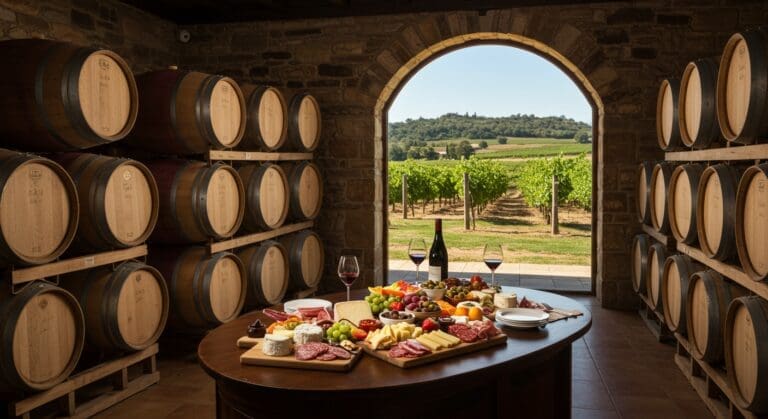
- New Orleans Food & Wine Guide: Local Cuisine, Markets & Wine Estates
- New Orleans with Kids: The Ultimate Family Holiday Guide
- Best Time to Visit New Orleans: Month by Month Weather, Crowds & Tips
- New Orleans Luxury Itinerary: The Perfect 7-Day Guide
- Romantic New Orleans: The Ultimate Couples & Honeymoon Guide
What is the best time to visit New Orleans?
October through May offers the most comfortable conditions, with warm rather than hot temperatures and manageable humidity. February typically brings Mardi Gras – extraordinary to experience but requires booking well in advance. Late April and early May means Jazz Fest, arguably the city’s finest two weekends. Summer is hot, humid, and sticky in ways that the word “humid” alone fails to convey, though prices drop and crowds thin. Hurricane season peaks in September; travel insurance is strongly advised from June through November.
How do I get to New Orleans?
Louis Armstrong New Orleans International Airport (MSY) is the main gateway, located approximately seventeen miles west of the city centre. Direct domestic flights connect from New York, Chicago, Atlanta, Miami, Los Angeles, and numerous other US hubs. International travellers typically connect through a major US hub. From the airport, private car transfers are the most convenient option for villa guests; rideshare apps and taxis are widely available alternatives. Journey time to the city centre is typically twenty-five to forty minutes depending on traffic.
Is New Orleans good for families?
Genuinely and perhaps surprisingly, yes. The Audubon Zoo, Audubon Aquarium, and the Louisiana Children’s Museum in City Park are all excellent. City Park itself – vast, oak-covered, with a carousel and miniature train – keeps children occupied for hours. The food culture is broad enough to accommodate younger palates while rewarding adults at every level. Staying in a private villa with a pool, a kitchen, and separate family living space makes the logistics of travelling with children dramatically easier and the experience considerably more enjoyable for everyone involved.
Why rent a luxury villa in New Orleans?
A luxury villa puts you inside a New Orleans neighbourhood rather than observing it from a hotel corridor. The privacy, the space, and the ability to live on your own schedule – breakfast when you want it, late nights without a lobby to navigate, a private pool for morning swims – transforms the quality of the experience. For groups and families, the ratio of space to cost compared with multiple hotel rooms is significantly advantageous. Where villas include staff or concierge services, access to local knowledge, restaurant bookings, and tailored experiences adds a layer that no hotel front desk can match at the same level of personalisation.
Are there private villas in New Orleans suitable for large groups or multi-generational families?
Yes – the collection includes larger properties with multiple bedroom suites, separate living wings, private pools, and outdoor entertaining spaces suited to groups travelling together who want shared communal space without sacrificing individual privacy. Garden District and Uptown properties in particular offer the architectural scale – high-ceilinged rooms, wide galleries, substantial gardens – that accommodates larger gatherings naturally. Some properties include staff, either resident or available on request, which significantly eases the logistics of a large-group stay.
Can I find a luxury villa in New Orleans with good internet for remote working?