Orleans Parish Travel Guide: Best Restaurants, Culture & Luxury Villas
There is a city in America where the food is genuinely better than almost anywhere else on the continent, where the music spills out of doorways at ten in the morning like it can’t help itself, where history is not a museum exhibit but a living, breathing, occasionally slightly sweaty presence on every street corner. That city is New Orleans – and specifically Orleans Parish, which is more or less the same thing, just with the administrative precision that the rest of the city conspicuously lacks. You could spend a week in Paris eating very well and feeling very sophisticated. You could spend three days in New Orleans eating better, feeling more alive, and possibly crying at a brass band. These are not mutually exclusive outcomes.
Orleans Parish rewards a specific kind of traveller – and several quite different ones, which is part of its genius. Couples celebrating milestones will find a city that takes pleasure seriously, whether that means a six-course dinner at a Michelin two-star or a bottle of something cold on a balcony while the street below does its thing. Groups of friends who’ve been threatening to “do New Orleans properly” for years will find the city more than lives up to the mythology – and considerably less forgiving of hangovers than the mythology suggests. Families seeking privacy in their own space, away from hotel corridors and shared pools, will discover that a luxury villa in Orleans Parish puts them within reach of everything while keeping them insulated from the chaos they may or may not want to explain to a seven-year-old. Remote workers needing reliable connectivity will find that New Orleans, for all its reputation for laissez-faire, is a genuinely well-connected city with serious infrastructure behind the decorative ironwork. And wellness-focused guests who need more than a massage and a green juice will find that the city’s slower rhythms, its emphasis on music and food and human connection, constitute a kind of restoration that a spa weekend simply cannot replicate.
Getting to New Orleans: Easier Than You’d Think, Better Than You Remember
Louis Armstrong New Orleans International Airport – MSY, to anyone who’s booked a flight – sits roughly twelve miles west of the French Quarter in Kenner, Louisiana. It’s a reasonably modern facility after its 2019 terminal rebuild, and it handles direct flights from most major US cities as well as international connections. From London, you’ll typically connect through Atlanta, Dallas, Houston or New York; from elsewhere in Europe, similar logic applies. The journey is manageable rather than glamorous. You make your peace with it.
From the airport, a private transfer into the city takes around twenty to thirty minutes depending on traffic and which part of Orleans Parish you’re heading to. Rideshares and taxis are plentiful; rental cars less necessary than you might assume, since the city’s neighbourhoods are largely walkable and the streetcar system – genuinely charming, genuinely useful – covers significant ground for very little money. The iconic St. Charles streetcar line runs through the Garden District and Uptown and is the kind of public transport that makes you feel, briefly, as though you live here rather than visiting. The Canal Street line connects the French Quarter to Mid-City. Once you understand those two arteries, you understand most of what you need.
For those staying in a luxury villa in Orleans Parish, many properties come with concierge services that handle airport transfers, car arrangements, and the kind of local knowledge that makes the difference between a good trip and a great one. Drive yourself around if you like, though parking in the French Quarter during peak season is an exercise in character-building.
A City That Eats Like It Means It: The Orleans Parish Food Scene
Fine Dining
New Orleans has always taken its food with exceptional seriousness – the city would sooner cancel Mardi Gras than accept a mediocre roux – and the fine dining scene reflects a tradition that is both deeply rooted and genuinely evolving. Emeril’s on Tchoupitoulas Street is the clearest evidence of that evolution: what began as Emeril Lagasse’s flagship has developed into something more considered and contemporary under his son E.J.’s influence, earning two Michelin stars in the process. The six-course tasting menu at $225 per person features signatures like smoked salmon cheesecake and lobster gumbo alongside trout amandine – dishes that read as New Orleans because they are, unapologetically, exactly that. This is not a restaurant trying to be somewhere else.
Commander’s Palace in the Garden District is one of those rare institutions that has managed to remain relevant for over a century without becoming a parody of itself. The turquoise Victorian building on Washington Avenue has been the crown jewel of the Brennan family’s considerable restaurant empire since 1880, and its Saturday and Sunday Jazz Brunch is one of the genuinely great meals you can eat in America. Dress appropriately. Arrive with appetite. Consider the possibility that you have been underestimating brunch as a concept.
Galatoire’s at 209 Bourbon Street has been operating since 1905 and requires gentlemen to wear a jacket to the dining room, a rule that feels both anachronistic and absolutely correct given the surroundings. Oysters Rockefeller, redfish with lump crabmeat, and a dining room tradition that has outlasted empires. For over 105 years it has been the grand dame of New Orleans’ old-line restaurants, and it has no intention of changing. The city respects this enormously.
Where the Locals Eat
Pêche Seafood Grill in the Warehouse District is the kind of restaurant that makes you realise how good Gulf seafood can be when someone is paying proper attention. After fifteen years, it still radiates warmth from the moment you walk in – the oyster bar near the entrance is the correct sign of things to come. Current chef Nicole Cabrera Mills has been weaving global influences into the menu with impressive dexterity: catfish with pickled greens in chile broth, jumbo shrimp with purple rice, fried oysters with pickled papaya and kimchi. These are dishes that could exist nowhere else but somehow feel inevitable here.
Beyond the celebrated names, New Orleans feeds its residents through a network of neighbourhood joints, po’boy counters, and Vietnamese-Creole hybrids that reflect the city’s particular demographic history. The Vietnamese community in New Orleans East is one of the largest in the American South, and the pho here is not an afterthought. Mid-City has excellent Creole neighbourhood restaurants that see far fewer tourists than their French Quarter counterparts and are, as a result, considerably more relaxed about everything.
Hidden Gems Worth Seeking Out
No visit to Orleans Parish is complete without understanding the significance of Dooky Chase’s Restaurant on Orleans Avenue. The late Leah Chase – chef, civil rights activist, keeper of an extraordinary art collection, person who fed everyone from Martin Luther King Jr. to Barack Obama – built something that transcended the category of restaurant entirely. In February 2025, Dooky Chase’s was named among the James Beard Foundation’s America’s Classics for the South, an honour that feels both overdue and entirely apt. The fried chicken is remarkable. The gumbo z’herbes on Holy Thursday is legendary. The paintings on the walls are worth arriving early to study properly. This is a place where you eat history, which sounds like hyperbole until you’re actually sitting there.
For coffee and pastry in the French Quarter, the morning beignet ritual at Café Du Monde is obligatory precisely once – after which you’ll have formed your own opinion about queuing in humidity for powdered sugar – and entirely optional thereafter. The city’s independent coffee scene in the Marigny and Bywater neighbourhoods is considerably more interesting and significantly less photographed.
Neighbourhood by Neighbourhood: How to Read the City Like a Local
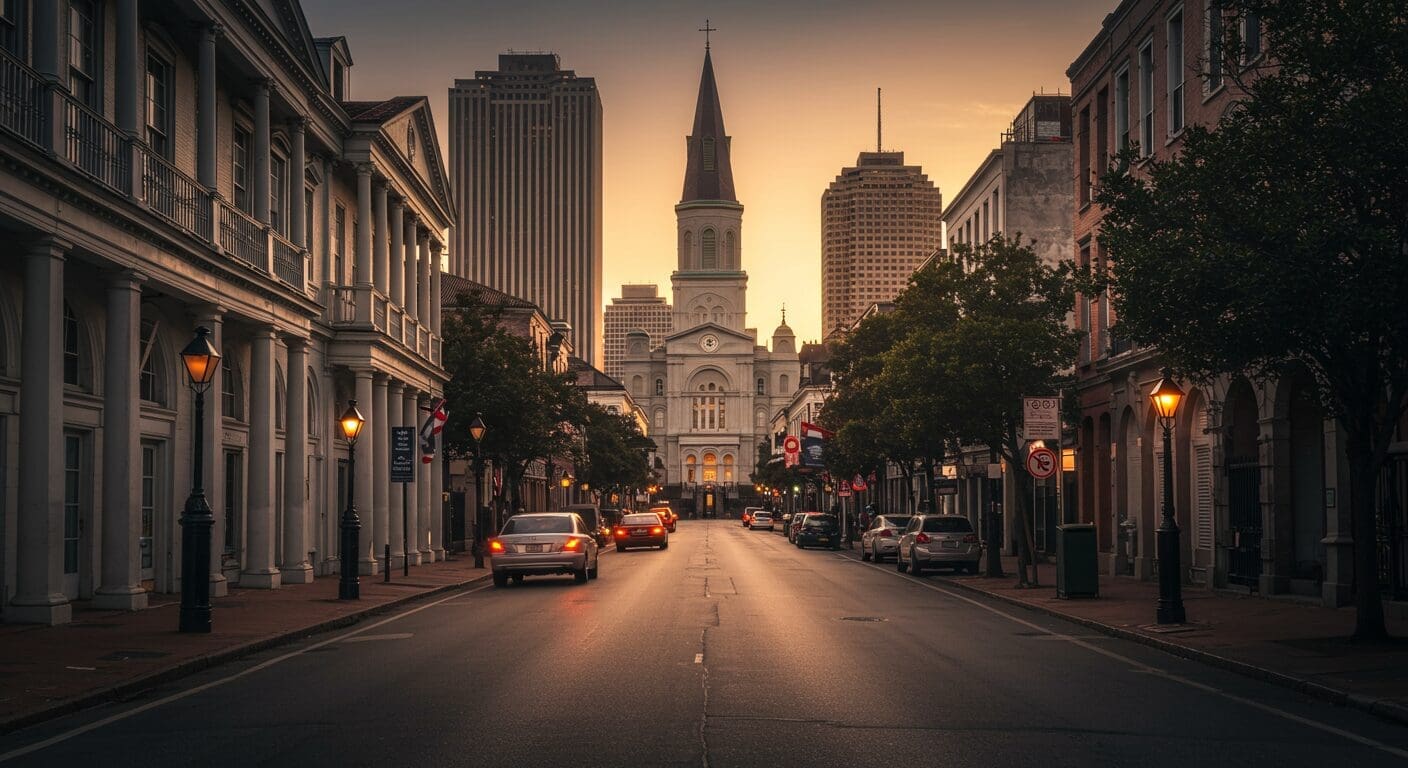
Orleans Parish divides itself into neighbourhoods with a specificity that locals take seriously and visitors sometimes find overwhelming. The French Quarter – Vieux Carré to anyone with pretensions – is the oldest and most visited section of the city, a roughly seventy-block grid of Spanish colonial architecture (the original French buildings mostly burned down, twice, which is the kind of historical footnote that New Orleans treats as entirely typical). It is simultaneously the most tourist-saturated and the most genuinely atmospheric part of the city. Bourbon Street is exactly what you’ve heard. The rest of the Quarter is considerably more interesting.
The Garden District, connected to downtown by the St. Charles streetcar, is where the American merchants built their grand antebellum mansions after finding themselves unwelcome in the Creole French Quarter. The result is a neighbourhood of extraordinary domestic architecture – Greek Revival columns, sweeping verandas, live oaks draped in Spanish moss – that manages to feel both grand and habitable. Walking Magazine Street for its boutiques and restaurants is a very pleasant way to spend an afternoon. This is also where Commander’s Palace lives, which is reason enough to visit.
The Marigny and Bywater, downriver from the French Quarter, are where the city’s creative and bohemian communities have settled – predictably, this means they are also where you’ll find the most interesting bars, music venues, and independent restaurants. Frenchmen Street in the Marigny hosts nightly live music across multiple venues and represents what the Quarter’s Bourbon Street once was and, in its better moments, still aspires to be.
Uptown encompasses the area above the Garden District toward the university campuses of Tulane and Loyola. It’s residential, leafy, and runs along the streetcar line past some of the city’s most impressive historic homes. Mid-City, roughly in the centre of the parish around City Park, is where you find the New Orleans Museum of Art, the sculpture garden, and a neighbourhood character that feels genuinely local without trying particularly hard to perform that quality.
What to Do When You’re Not Eating: Activities Across Orleans Parish
New Orleans is sometimes undersold as a “party destination” when it is, in fact, one of the most culturally dense cities in North America. The activity list is longer than most visitors allow themselves time for, which is the main argument for staying longer than a weekend.
A walking tour of the French Quarter and surrounding neighbourhoods is the correct starting point – not the ghost tours that clog the streets after dark (though these are, admittedly, excellent entertainment), but a properly guided historical walk that explains why the city is shaped the way it is, why the streets flood, why the buildings look as they do, and what actually happened here over three centuries of colonial ambition, slave trading, Creole culture-building, and post-Civil War reinvention. The National WWII Museum, located in the Warehouse District, is one of the finest history museums in the United States – full stop, no qualification needed. Plan for at least half a day; most people wish they’d allocated more.
City Park in Mid-City is 1,300 acres of live oaks, lagoons, a botanical garden, a children’s amusement park, and the New Orleans Museum of Art, all in one continuous green space that feels like a reprieve from the city’s sensory intensity. Rent a paddleboat. Walk the sculpture garden. Establish that New Orleans contains multitudes.
Swamp tours departing from the edges of the metropolitan area into the surrounding bayou country are one of the more surreal and genuinely memorable experiences available in Louisiana – the ecosystem of cypress trees, alligators, herons, and Spanish moss is unlike anything in the continental United States. Most tours run from staging areas accessible within an hour of the city centre.
The Active Side of New Orleans: Adventures Beyond the Bar Stool
New Orleans is not, it should be said, a destination primarily associated with extreme sports. The terrain is flat – remarkably, obstinately flat, given that significant portions of the city sit below sea level – and the climate for much of the year ranges from warm to aggressively warm. This does not mean the active traveller is without options.
Cycling is genuinely excellent here, particularly on the dedicated paths along the Mississippi River levee and through the quieter uptown streets. The Lafitte Greenway connects Mid-City to the French Quarter along a former freight rail corridor, now a well-maintained multi-use trail that passes through several interesting neighbourhoods. Bike rental is widely available and the terrain poses no particular challenge, which is either a feature or a limitation depending on your ambitions.
Kayaking and paddleboarding on the bayou waterways that thread through and around the city offer a genuinely different perspective on the landscape – the Bayou St. John in Mid-City is accessible from City Park and on a calm morning, with herons picking their way along the bank and the oak canopy overhead, it is one of the more unexpectedly peaceful experiences available in an urban setting. For open-water sailing and fishing, Lake Pontchartrain to the north of the city provides considerable space. Inshore and offshore fishing charters operate from multiple marinas; the Gulf of Mexico is within reasonable striking distance for those with serious fishing intentions.
Running along the Mississippi River levee path at sunrise, before the city fully wakes, is one of those experiences that regular visitors develop a habit around. The river is enormous. Watching it move is oddly grounding.
New Orleans with Children: More Manageable Than the Reputation Suggests
New Orleans has a reputation, not entirely undeserved, as a place designed for adults behaving in ways they’ll need to edit when telling the story later. This reputation obscures the fact that it is also an excellent family destination, provided you approach it with a degree of intentionality that the city itself conspicuously lacks.
City Park’s Carousel Gardens Amusement Park is a genuinely lovely small-scale attraction built around a 1906 carousel that is a National Historic Landmark – one of those details that tells you something about New Orleans’ relationship with its own history. The Audubon Nature Institute, which operates the Audubon Zoo, Aquarium of the Americas, and the Insectarium, provides multiple days of child-appropriate content within a single membership framework. The aquarium in particular, positioned at the foot of Canal Street facing the Mississippi, is excellent.
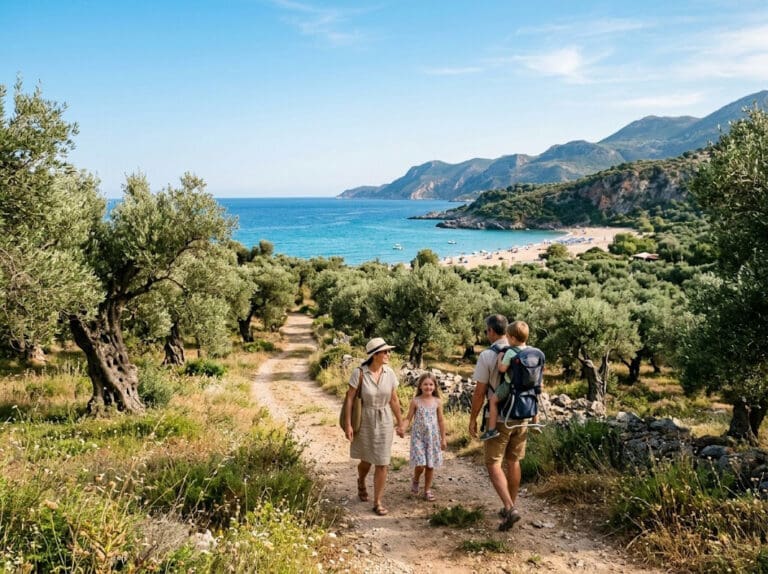
For families, the specific advantage of choosing luxury villas in Orleans Parish over hotel accommodation cannot be overstated. A private property – with its own outdoor space, its own kitchen for the evenings when restaurant dining with children sounds more like endurance than pleasure, and the ability to establish a base camp rather than negotiating hotel corridors – transforms the experience of travelling with children. Nap schedules can be respected. Pool time can happen without competition. The adults can have a quiet drink on the porch once the children are asleep, which is the goal, ultimately, of all family holidays everywhere.
Culture, History and the Music That Started It All
New Orleans is, without reasonable dispute, one of the most historically significant cities in North America – and one of the most complicated. It was the largest slave market in North America prior to the Civil War. It was the birthplace of jazz. It was the site of some of the most sophisticated Creole culture in the hemisphere. It was largely left underwater by Hurricane Katrina in 2005, and it rebuilt itself with a stubbornness that says a great deal about the character of the people who live here. Holding all of these things simultaneously is not always comfortable. It is, however, necessary.
Preservation Hall on St. Peter Street in the French Quarter is where you go to understand what jazz actually sounds like when played by people who grew up with it rather than studied it. The venue is deliberately small and deliberately acoustically primitive – no amplification, no stage lighting that would look out of place in a living room – and the collective of over one hundred local master musicians who perform there across more than 350 nights a year represent a living tradition in the most literal sense. Founded in 1961 specifically to protect and honour New Orleans jazz, Preservation Hall operates simultaneously as a music venue, a touring band, and a non-profit organisation. An evening here will recalibrate your understanding of what a performance can be.
The National WWII Museum, which opened in 2000 and has since expanded into one of the most visited museums in the United States, is a genuinely moving and comprehensive examination of the Second World War from multiple perspectives. It is also, incidentally, a reminder that New Orleans’ Higgins Industries built the landing craft that Eisenhower credited as the vehicle that won the war. The connection between this city and that history is not incidental.
Mardi Gras, Jazz Fest, the French Quarter Festival, the Essence Festival, and dozens of smaller neighbourhood celebrations punctuate the New Orleans calendar throughout the year. The city does not need an excuse to celebrate, but it appreciates having one.
Shopping in New Orleans: Where to Spend the Money You’re Saving on Taxis
New Orleans shopping rewards the curious over the impulsive. The French Quarter’s Royal Street is the destination for antiques – genuine antiques, not the decorative approximations you find in tourist markets, but serious furniture, silver, art, and objects with verifiable provenance. The dealers here are knowledgeable and, once they’ve established that you’re serious, considerably more interesting to talk to than their polished shopfronts might suggest.
Magazine Street in Uptown runs for several miles through changing neighbourhoods and contains an excellent mix of independent boutiques, home goods stores, vintage clothing, and the kind of eccentric specialist shops that you enter intending to browse briefly and exit forty-five minutes later with several purchases you hadn’t anticipated making. This is a feature, not a design flaw.
The French Market in the French Quarter – one of the oldest markets in North America – operates daily along the riverfront and offers local crafts, Louisiana food products, and the specific pleasure of wandering a covered market in the company of people who are also just wandering. For serious food shopping, the St. Roch Market has been revived as a food hall with rotating local vendors, and the Crescent City Farmers Market operates at multiple city locations throughout the week.
What to bring home: Creole spice blends, pralines from a proper candy shop (not a souvenir version), hot sauce from one of several local producers, Louisiana cane syrup, and possibly a piece of Royal Street silver that you’ll spend several hours justifying to yourself and ultimately be glad you bought.
The Practical Bits: What You Actually Need to Know Before You Go
Currency is US dollars. Language is English, with a Louisiana accent that is neither Southern nor Northern but its own particular thing – a blend of French, Spanish, African, and Caribbean influences that produced, among other outcomes, a distinct linguistic tradition that you will not encounter anywhere else. Locals are, as a general rule, friendly to visitors in a way that feels genuine rather than transactional, which is not universal among major tourist destinations.
Tipping culture is fully operative and non-optional in New Orleans – fifteen to twenty percent at restaurants, a dollar or two per drink at bars, similar for service staff. The service industry here is deeply important to the city’s economy and is staffed by people who have chosen it as a profession rather than a temporary measure. Treat it accordingly.
The best time to visit Orleans Parish for a luxury holiday involves some negotiation. February and March bring Mardi Gras, which is extraordinary and absolutely requires advance planning and significant tolerance for crowds. April and May offer the Jazz Fest, excellent weather, and a city that feels festive without being overwhelming. October and November are perhaps the optimal months for the discerning visitor: the temperature drops to genuinely comfortable levels, the tourist pressure eases, and the city continues doing exactly what it always does. July and August are brutal – the heat and humidity combination is not metaphorical – and hurricane season runs from June through November, though serious storms during the peak autumn travel months are statistically less common than the calendar might suggest.
Safety in New Orleans is contextual. The tourist areas are well-patrolled and generally safe for travellers exercising standard urban awareness. Staying in a private villa rather than a hotel often means being based in residential neighbourhoods like the Garden District or Uptown, which are quieter and safer than the French Quarter late at night. Apply the same judgement you would in any major city.
Luxury Villas in Orleans Parish: The Case for Your Own Space in the Most Fascinating City in America
Hotels in New Orleans are, in many cases, very good. Some of them are historic and atmospheric and exactly what you’d hope for. But there is a fundamental difference between staying in a hotel in New Orleans and staying in a private luxury villa in Orleans Parish, and it comes down to what you do with the hours between the city’s attractions.
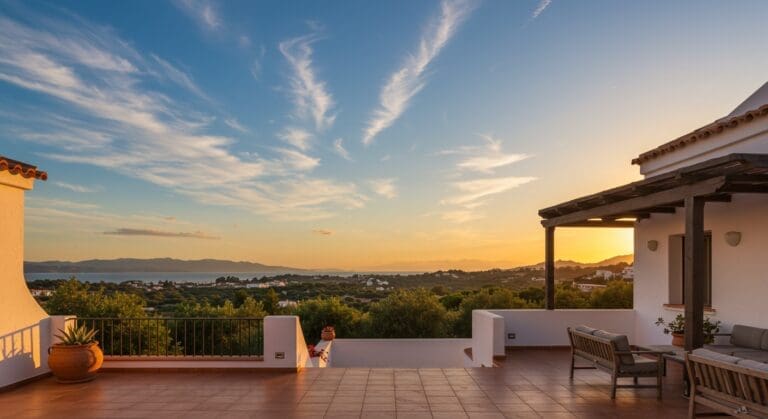
A private villa gives you a porch. In New Orleans, this matters more than it sounds. The city’s domestic architecture was built around outdoor living – the galleries and courtyards and covered verandas that allow you to be outside while remaining, technically, at home. A villa property in the Garden District or Uptown gives you that experience in full: your own courtyard with a pool, your own corner of the city to inhabit rather than just visit, your own kitchen for the evening when you want to cook Louisiana red beans and rice from a market haul rather than negotiate a reservation.
For groups – whether a collection of friends celebrating something, a multi-generational family who need both shared space and private corners, or a corporate party doing the kind of off-site gathering that actually works – a villa in Orleans Parish provides the kind of space and flexibility that no hotel can replicate. Multiple bedrooms with their own bathrooms, communal living areas that don’t feel like lobbies, a pool that is entirely yours for the duration. The economics of a large villa against multiple hotel rooms are, at this level, often more favourable than people initially assume.
Remote workers who are increasingly making location a variable in their professional lives will find New Orleans a more practical base than its reputation suggests. The city is well-connected, the time zone works efficiently with both coasts and, in many cases, with European counterparts. Many luxury villas in Orleans Parish come with high-speed fibre connectivity as standard, with some properties offering Starlink as an additional option. The setup – a private desk or study, a coffee that you’ve made yourself, the city outside when you choose to engage with it – is considerably more civilised than a hotel business centre or a shared coworking space.
For wellness-focused guests, the combination of a villa with a private pool, a city with excellent outdoor running routes along the river and through the parks, and access to some of the country’s best food – much of it genuinely nutritious when you’re not ordering the third dessert – creates a rhythm that hotel living rarely allows. You can swim at seven in the morning before anyone else is awake. You can eat what you want when you want it. You can, for once, actually rest.
Excellence Luxury Villas offers a curated collection of properties across Orleans Parish, from Garden District mansion houses to Uptown retreats with private pools and courtyard gardens, each selected for the quality of the experience it provides rather than just the number of bedrooms. If New Orleans is where you need to be – and once you’ve spent any time here, it tends to feel like a need rather than a choice – explore our range of luxury villa holidays in Orleans Parish and find the property that fits the trip you actually want to take.
More Orleans Parish Travel Guides
- Best Restaurants in Orleans Parish: Fine Dining, Local Gems & Where to Eat
- Orleans Parish Food & Wine Guide: Local Cuisine, Markets & Wine Estates
- Orleans Parish with Kids: The Ultimate Family Holiday Guide
- Best Time to Visit Orleans Parish: Month by Month Weather, Crowds & Tips
- Orleans Parish Luxury Itinerary: The Perfect 7-Day Guide
- Romantic Orleans Parish: The Ultimate Couples & Honeymoon Guide
What is the best time to visit Orleans Parish?
October and November are the sweet spot for most discerning travellers – comfortable temperatures, reduced crowds, and a city that is fully operational without the intensity of Mardi Gras or Jazz Fest season. April and May are also excellent, particularly during Jazz Fest in late April and early May. February brings Mardi Gras, which is extraordinary but demands advance planning and a high tolerance for organised chaos. Avoid July and August unless you have a specific reason and a very good air conditioning arrangement.
How do I get to Orleans Parish?
Louis Armstrong New Orleans International Airport (MSY) serves Orleans Parish with direct flights from most major US cities. International travellers typically connect through Atlanta, Dallas, Houston or New York. The airport is approximately twelve miles west of the French Quarter – around twenty to thirty minutes by private transfer or rideshare depending on traffic. Once in the city, the St. Charles and Canal Street streetcar lines cover the main neighbourhoods efficiently. A rental car is useful for day trips into the surrounding bayou country but largely unnecessary for city exploration.
Is Orleans Parish good for families?
More than its reputation suggests. The Audubon Nature Institute’s Zoo and Aquarium of the Americas are both excellent. City Park offers an 1,300-acre green space with a historic carousel, botanical garden, and the New Orleans Museum of Art. Swamp tours into the surrounding bayou country are genuinely memorable for children and adults alike. The French Quarter’s Bourbon Street is best treated as a route to walk through rather than linger in after dark. Families staying in private luxury villas – with their own pools, kitchens, and outdoor space – find the experience considerably more manageable than hotel-based accommodation.
Why rent a luxury villa in Orleans Parish?
A private villa gives you space to inhabit the city rather than simply visit it. For couples, it means privacy and a level of domestic comfort that no hotel room replicates. For groups and families, it means shared space that actually functions as a home – private pool, communal kitchen, separate bedrooms with their own bathrooms, and a porch from which to engage with New Orleans on your own terms. Many villa properties come with concierge services that handle everything from restaurant reservations to private transfers and in-villa chef arrangements. The staff-to-guest ratio is simply not comparable to a hotel.
Are there private villas in Orleans Parish suitable for large groups or multi-generational families?
Yes. Orleans Parish has a significant stock of large historic properties – particularly in the Garden District and Uptown – that lend themselves to group and multi-generational travel. These range from four-bedroom Garden District houses with private courtyards and pools to larger Uptown properties with multiple living areas, separate guest wings, and full outdoor entertaining space. Excellence Luxury Villas can advise on properties suited to specific group configurations, including those requiring separate sleeping quarters for different family generations and dedicated space for children.
Can I find a luxury villa in Orleans Parish with good internet for remote working?
New Orleans is better connected than its laid-back reputation might imply. Most luxury villa properties in Orleans Parish offer high-speed fibre broadband as standard, with some properties providing Starlink connectivity for maximum reliability. When enquiring about a specific property, it is worth confirming upload speeds if you have regular video conference requirements. The time zone – Central Standard Time – works well for coordination with both US coasts and, with some adjustment, with European business hours. Many villa properties have dedicated desk space or studies in addition to communal living areas.
What makes Orleans Parish a good destination for a wellness retreat?
New Orleans rewards a slower pace in ways that more obviously “wellness” destinations don’t always manage. The city’s emphasis on music, food, human connection, and its genuinely unhurried rhythm creates a restorative quality that a structured spa programme rarely replicates. Practically speaking, City Park and the Mississippi River levee path offer excellent morning running and cycling routes. Bayou St. John provides calm-water kayaking and paddleboarding. Several excellent spas operate across the city. Private luxury villas with their own pools allow for daily swimming without scheduling around other guests. The cumulative effect – good food, outdoor movement, music, and genuine rest in a private space – constitutes wellness in the most substantive sense of the word.