
Osceola County Food & Wine Guide: Local Cuisine, Markets & Wine Estates
Here is the thing most visitors to Central Florida never discover: beneath the surface of a county better known for theme parks and interstate highways, there is a food culture with genuine depth – rooted in cattle country, shaped by Floridian heat, and quietly elevated by a generation of chefs and producers who decided to stay rather than leave for Miami or New York. That decision, it turns out, was excellent. Osceola County is where Florida’s cowboy heritage meets Caribbean soul meets something altogether newer and more considered. The traveller who looks past the obvious will find markets fragrant with tropical fruit, wine estates producing bottles that surprise even the sceptics, and dining experiences that don’t ask you to wear a wristband or stand in a queue that loops around a building. This is Florida on its own terms. It rewards curiosity.
Understanding Osceola County’s Food Identity
To understand what you are eating in Osceola County, you need to understand where you are. This is cattle country – historically speaking, one of Florida’s most important ranching regions, where Cracker cowboys (yes, that is the actual term, and it predates anything offensive by about two centuries) drove longhorns across the scrubland long before Disney drew a line on a map. That heritage is still present in the food. You will find beef that has been raised locally, slow-cooked in ways that take patience seriously, and served without fanfare by people who have been doing it this way for generations.
Layered over that agricultural foundation is the profound influence of the region’s Latin American and Caribbean communities – particularly Puerto Rican, Cuban, Dominican, and more recently Haitian and Mexican. Kissimmee, Osceola’s largest city, has a Hispanic population that doesn’t so much influence the food scene as define large parts of it. The result is a culinary landscape that feels more like a genuine cultural dialogue than a theme. Pernil – slow-roasted pork shoulder rubbed with garlic, oregano, and achiote – appears on tables here with the kind of casual confidence that suggests it has always belonged. Because in Osceola County, it has.
Add to this the tropical abundance of Central Florida’s climate – avocados, citrus, guava, passion fruit, and sugarcane that grows with almost embarrassing ease – and you begin to see why the conversation about Osceola County food is more interesting than the county’s reputation might suggest.
Signature Dishes Worth Seeking Out
If there is one dish that most honestly represents Osceola County’s layered identity, it is the slow-roasted pork in its various permutations. Whether presented as Cuban-style lechon asado, Puerto Rican pernil, or something closer to Southern pulled pork with a citrus-forward marinade, the principle is the same: time, heat, and a refusal to rush things. Eaten at a proper family-run restaurant on a Sunday afternoon, it is the kind of meal that recalibrates your expectations for the rest of the trip.
Black beans and rice – arroz con frijoles negros – is the region’s quiet constant, appearing everywhere from roadside counters to more polished dining rooms. It sounds simple. Done properly, with beans cooked low and slow with sofrito, bay leaf, and just enough vinegar to lift it at the end, it is not simple at all. It is architecture.
Florida-specific seafood also makes its presence felt strongly here. Freshwater catfish from the county’s extensive lake system, prepared fried or in tacos, is a local staple that earns its place. Stone crab claws – technically a coastal catch but widely distributed inland – appear seasonally and are worth seeking out when available, typically from October through May. Served chilled with a sharp mustard sauce, they require no improvement.
For something that speaks specifically to the region’s ranching history, seek out beef prepared in the Cracker tradition – simply seasoned, grilled over hardwood, and served without the elaborate architectural plating that makes certain restaurants feel more like sculpture exhibitions than places to eat dinner.
Food Markets and Farm Stands
Osceola County’s markets operate with a pleasantly unhurried energy. The farmers’ markets here are not the kind where you spend forty minutes looking at artisanal soap and leave without buying anything edible. They are working markets, attended by the people who actually grow things, and the produce reflects the subtropical abundance of the region with admirable directness.
Tropical fruit is the star. Vendors arrive with mangoes in varieties most supermarkets have never heard of – Alphonso, Keitt, Kent – as well as star fruit, lychee, dragon fruit, and sapodilla. Guava appears in multiple forms: fresh, as paste, as the filling in pastries that disappear from trays with impressive speed. It is difficult to walk through without buying significantly more than you intended. This is not an accident.
Local honey – produced from hives set among Florida’s citrus groves and wildflowers – has a distinctive floral character quite different from anything commercially produced. Purchasing a jar and keeping it for the remainder of your villa stay is one of those small decisions that turns out to be extremely good. The avocados, grown locally during the summer months, are large, buttery, and arrive at peak ripeness in a way that supermarket avocados have apparently never managed.
Seasonal vegetable growers offer okra, collard greens, sweet potatoes, and field corn alongside more exotic tropical varieties. The atmosphere at these markets is genuinely local – not performed for visitors, not curated for Instagram, just people buying food from people who grew it. That distinction, in 2024, is rarer than it should be.
Wine in Florida – and Why You Should Take It Seriously
Florida wine produces a reaction in many people roughly equivalent to “Florida opera” or “Florida winter sports.” The scepticism is understandable. It is also, increasingly, out of date. The state’s wine industry has evolved substantially over the past two decades, and while the Central Florida climate presents genuine challenges for conventional viticulture – too hot, too humid, too wet in summer – producers have adapted by working with grape varieties bred specifically for these conditions, and by focusing on fruit wines that play to Florida’s extraordinary agricultural strengths rather than trying to replicate Bordeaux in a subtropical wetland. (An ambition that was never going to end well.)
Muscadine grapes, a native American variety with thick skins that resist the humidity and pest pressure that defeat European varieties, form the backbone of Florida’s wine production. Muscadine wines have a character quite distinct from anything produced in California or Europe – slightly earthy, deeply fruited, sometimes almost jammy – and they reward an open mind. The white and rosé expressions, in particular, can be genuinely elegant when produced by skilled hands.
Fruit wines made from the region’s tropical abundance are the other major category worth exploring. Mango wine with proper residual sweetness and a distinct varietal nose, guava wine that manages the tricky balance between sweetness and acidity, and passion fruit wines with an aromatic intensity that makes them natural companions for the region’s spiced and citrus-forward cuisine. These are not novelties. They are appropriate responses to where you are.
Wine Estates and Tasting Experiences Near Osceola County
Osceola County itself sits at the centre of a broader Central Florida wine region that extends into neighbouring counties, several of which host established wine estates with tasting rooms, vineyard tours, and – in the better cases – genuinely interesting portfolios. The drive from Kissimmee into the surrounding wine country passes through Florida scrub and cattle pasture in ways that feel surprisingly remote for a county that shares a border with Greater Orlando.
Estate visits in this region typically offer a combination of vineyard walking tours, guided tastings across the full portfolio, and the opportunity to purchase directly from the producer. Given the limited distribution of Florida’s smaller wine estates beyond the state’s borders, buying at the source is often the only practical way to access the more interesting bottles. The tasting rooms, for the most part, are relaxed and unhurried – the antithesis of the more performative wine tourism that has taken hold elsewhere. You are likely to find yourself talking directly to the winemaker, which is either a luxury or a responsibility depending on how strongly you hold opinions.
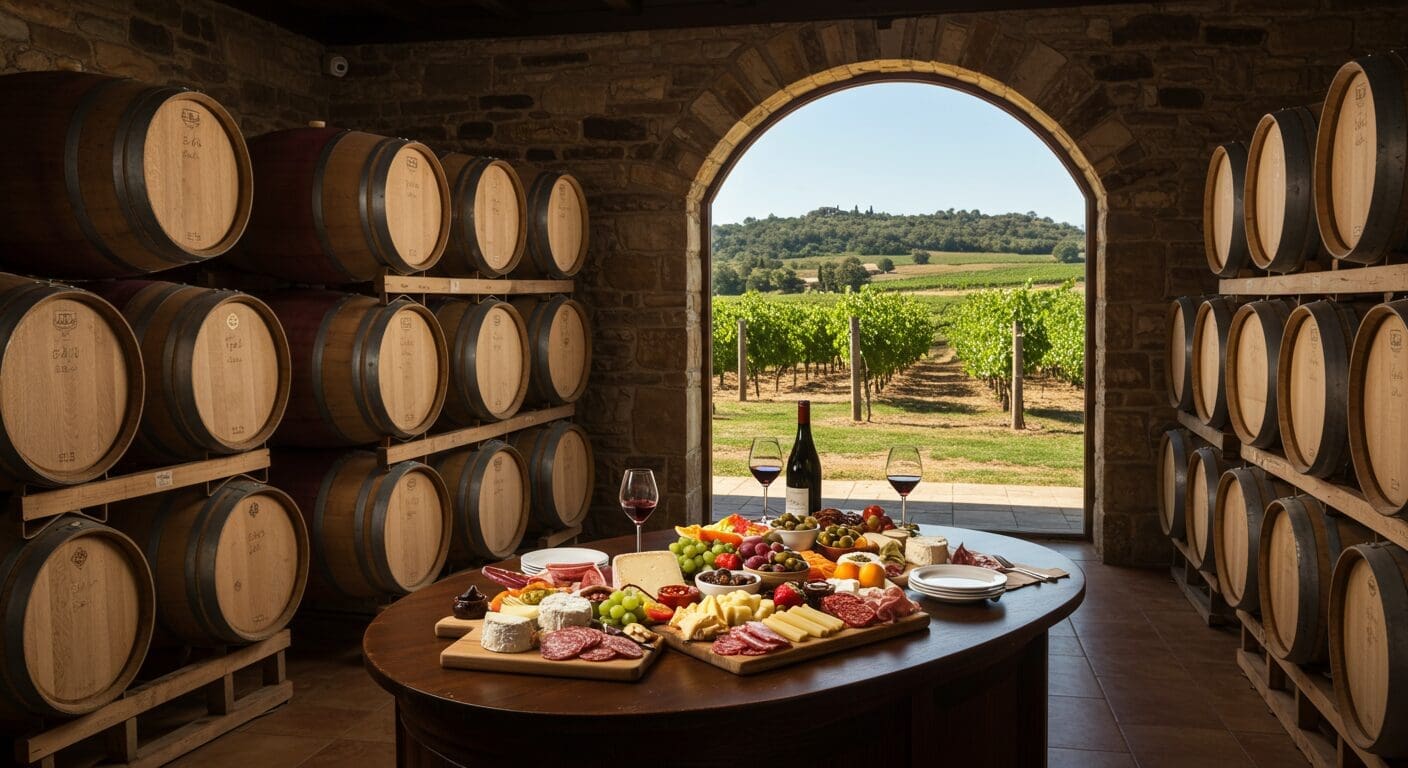
For a more elevated experience, several estates in the Central Florida region offer private tastings, barrel-room access, and food pairing events that match locally produced wines with the regional cuisine in thoughtful ways. Pairing muscadine red with slow-roasted pork and black beans is less eccentric than it sounds. It is, in fact, rather good.
Cooking Classes and Culinary Experiences
The most interesting cooking education in Osceola County does not always happen in formal settings. The region’s food culture is emphatically domestic and familial – recipes passed between generations without being written down, techniques absorbed by watching rather than reading – and the most instructive experiences often involve connecting with that living tradition rather than enrolling in a class with laminated handouts.
That said, formal culinary experiences are available in the broader Orlando-Osceola area, ranging from hands-on cooking workshops focused on Latin American cuisine to more structured classes covering Florida seafood preparation, tropical fruit desserts, and the slow-cooking techniques central to the region’s meat traditions. The better programmes are led by chefs with genuine roots in the food they are teaching rather than those who simply find it commercially convenient to offer a “Latin cooking experience” between other menu items.
Private chef services – arranged through villa management or specialist concierge contacts – represent perhaps the most direct way for a luxury traveller to access genuine regional cuisine. A talented private chef sourcing from local markets and cooking for an intimate group in a well-equipped villa kitchen can deliver an experience that no restaurant, however good, quite replicates. The informality is part of it. So is the fact that the food comes directly from the county’s markets to your table, without intermediary.
For those with a specific interest in tropical agriculture, some of the region’s citrus groves and fruit farms offer guided harvest experiences during the appropriate seasons – hands-on, educational, and considerably more pleasant than they sound when described in that way.
The Best Food Experiences Money Can Buy in Osceola County
There is a version of spending money on food that involves elaborate theatre and not very much actual flavour. Osceola County is largely mercifully free of this. The most memorable food experiences here tend to be direct encounters with genuine culinary tradition rather than elaborate constructions designed to appear on social media and dissolve on the palate.
A private market tour with a local guide who actually knows the vendors – who knows which avocado grower has the good fruit this week, which honey producer just extracted a new batch of citrus blossom, which tamale maker arrives early and sells out by ten – is worth considerably more than the modest investment it requires. Osceola County’s food geography rewards local knowledge, and the gap between what a first-time visitor finds and what a well-connected local accesses is genuinely significant.
A properly arranged private dining experience, sourced from local producers and cooked by a chef who understands the regional cuisine from the inside, represents the highest expression of what Osceola County’s food culture has to offer. The right setting – a well-appointed villa with an outdoor kitchen and adequate space for a long, unhurried table – elevates the occasion further. This is not indulgence for its own sake. It is simply eating in the way that the best ingredients and the best cooking deserve.
For wine, a private tasting curated across the Central Florida region’s best producers, conducted in the company of someone who can speak to the wines with authority, is the way to understand Florida viticulture quickly and pleasurably. The contrast between starting the evening with European preconceptions and ending it having genuinely enjoyed muscadine and mango wine is one of those small recalibrations that travel does best.
Finally, and somewhat underrated: breakfast. The Puerto Rican and Cuban breakfast tradition – mallorcas dusted with powdered sugar, café con leche thick enough to require a decision about it, tostadas with butter and guava paste – is one of the great pleasures of Osceola County mornings, available for very little money at the kind of counter restaurants that require no reservation and remember your order on the second visit. These are not experiences that money improves. They require only the willingness to find them.
Planning Your Osceola County Food Journey
The best approach to eating well in Osceola County is to resist the urge to over-plan. The food culture here is responsive and seasonal – what appears at the market this week depends on what is growing, what is ripe, and who turned up. Building flexibility into your itinerary is not a concession. It is the correct strategy.
Staying in a well-equipped luxury villa rather than a hotel is, for the food-focused visitor, the obvious choice. Access to a proper kitchen allows market purchases to become meals rather than purchases that accumulate in a hotel room refrigerator and eventually get thrown away. The ability to eat on your own schedule, with ingredients you have chosen yourself, is a form of freedom that no restaurant service entirely replicates.
For broader context on planning your visit – beyond the table – our Osceola County Travel Guide covers the region’s wider attractions, practical information, and the kind of local detail that makes the difference between a good trip and a genuinely memorable one.
Osceola County will not match your preconceptions. It will almost certainly exceed them – quietly, without announcing itself, in the way that places with genuine character tend to do. The food is part of that. It is also, by some distance, the most pleasurable way to begin understanding where you actually are.
To make the most of everything this region offers, browse our selection of luxury villas in Osceola County – properties with the space, kitchens, and settings to let the region’s remarkable food culture become a genuine part of your stay rather than an afterthought.