Best Time to Visit Paros: Month by Month Weather, Crowds & Tips
Paros has a particular talent for making you feel like you discovered it yourself. Unlike its neighbour Mykonos – which announced itself to the world some decades ago and has been charging accordingly ever since – Paros has the rare quality of feeling genuinely lived-in. The villages are real. The bakeries open early for actual reasons. The fishing boats are not decorative. It is a Cycladic island with all the beauty the archipelago is famous for, and rather less of the performance. The question is not whether to go – that one answers itself fairly quickly – but when. The answer, as ever, depends entirely on what you want from the place.
Spring in Paros: April and May
April and May are among the most quietly satisfying months on the island. Temperatures hover between 16°C and 23°C – warm enough to sit outside with a glass of something cold, cool enough to actually walk without regretting your footwear choices. The light in spring has a clarity to it that summer loses somewhere around the third consecutive week of forty-degree heat. Wildflowers still colour the hillsides. The sea is too cold for swimming for most visitors, though a certain breed of hardy northern European will disagree.
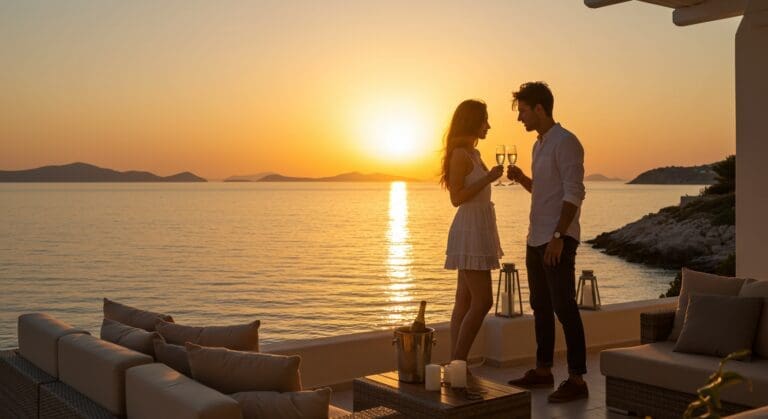
Crowds are modest in April, building gently through May as the season begins to find its rhythm. Most tavernas and shops in Naoussa and Parikia are open by mid-April. Hotels, rental agencies and excursion boats are increasingly available, though you will notice staff still warming up for the season – in the best possible way, unhurried and genuinely pleased to see you. Prices sit comfortably below the summer peak. For couples looking for a romantic, undisturbed visit, or for travellers who want to explore at their own pace without queuing for a table at dinner, this is an exceptional window. Easter, if it falls in this period, brings extraordinary atmosphere: the candlelit processions in the old quarter of Parikia are one of those experiences that quietly rearranges your priorities.
Early Summer: June
June is the month Paros hits its stride. Temperatures reach the mid-to-upper twenties, the sea has warmed to genuinely swimmable, and the island feels alive without yet feeling overwhelmed. The famous meltemi wind – the dry northerly that defines Aegean summers – begins to make its presence felt, which is both a blessing and, if you are on the wrong beach facing the wrong direction, a mild inconvenience involving your hat.
June is particularly well-suited to families who want school-holiday timing without the full August crush, and to couples who want the complete summer experience – turquoise water, whitewashed lanes, long lunches – while still being able to walk through a village without being moved along by the crowd. The windsurfing and kitesurfing scene around Golden Beach begins to come into its own: Paros has a justified reputation as one of the Aegean’s premier locations for both, and June brings ideal conditions without the competition for space that July and August bring. Restaurants are fully open. The vibe is festive but not frantic. June, frankly, has very little to apologise for.
Peak Season: July and August
Let us be honest about July and August. They are glorious and ridiculous in equal measure. Temperatures regularly reach 30°C to 35°C. The sea is warm enough to spend entire afternoons in without any plan to leave. The island is at its most social, its most festive, its most various – there are boat parties and beach clubs and evening markets and a general sense that everyone, everywhere, is on holiday simultaneously. Because they are.
This is also peak pricing, peak crowds, and peak competition for sunbeds at Kolymbithres, that extraordinary formation of smooth granite boulders that creates a series of sheltered coves on the northern coast. The village of Naoussa, always charming, becomes exceptionally busy after dark – atmospheric, certainly, but not a place for anyone seeking quiet contemplation. If you are travelling with a group of friends who want the full Greek island summer experience, July and August deliver it without reservation. If solitude is your particular luxury, you may find it requires rather more planning – which is precisely where a private villa with its own pool earns its keep. The rooms, tables and experiences that reward advance booking reward it most emphatically now.
The Paros International Film Festival typically takes place in late July or early August and brings a cultured, cosmopolitan dimension to the season that sits pleasingly alongside the louder pleasures of summer. Check exact dates before you travel.
Late Summer into Autumn: September and October
September is, by a reasonable margin, the best-kept secret in the Paros calendar – though since most seasoned Mediterranean travellers already know this, “secret” is doing some work in that sentence. The sea temperature peaks in September, often reaching 25°C or warmer. Air temperatures remain solidly in the mid-to-upper twenties. The crowds thin noticeably after the first week. Prices fall. Tables become available without a reservation made three weeks in advance. The island exhales.
October continues the pattern, cooler and quieter still, with average temperatures dropping towards the high teens by the end of the month. Some smaller establishments begin to close, but the main restaurants, bars and shops in Parikia and Naoussa remain open well into October. The meltemi wind fades. Swimming is still very much possible for most of the month. This is the season for couples who want beauty and calm in roughly equal proportions, and for anyone who has visited Paros in summer and wondered what it would be like with room to breathe. The answer is: considerably better, in several specific and measurable ways.
Winter: November through March
Paros in winter is not a secret – it is simply quiet in a way that most travel content declines to mention, since “quiet” is difficult to photograph. Temperatures range from around 10°C to 15°C. Rain is possible, particularly in December and January. Many hotels, restaurants and tour operators close entirely until spring. The ferries still run, if less frequently.
What remains is the island itself: the marble-paved lanes of Lefkes, one of the most beautiful villages in the Cyclades, almost entirely your own. The quality of light on winter afternoons is something painters understood long before photographers. A handful of local tavernas stay open year-round, serving food made for people who actually live here rather than for people who visited once and gave it three stars. If you are the kind of traveller who finds the off-season version of a place more truthful than the summer one, Paros in February will not disappoint. It will, however, require a good coat and flexible expectations about what is open.
For full context on what the island offers across all seasons – its villages, beaches, food scene and culture – see our Paros Travel Guide, which covers the island in considerably more detail.
Who Should Visit Paros, and When
The timing question, ultimately, comes down to what you are actually after. Families with school-age children are largely constrained to July and August, and Paros handles this well – it is a family-friendly island by nature, with calm shallow bays, good ferry connections, and a culture that treats children as people rather than inconveniences. Couples seeking romance and relative seclusion will find May, June and September markedly more rewarding than August, when the island’s narrow lanes can feel like a particularly scenic tube station during rush hour. Groups of friends who want nightlife, beach days and sociability should go in July or August without hesitation. Solo travellers and those who travel to think as much as to see will find October and even November quietly revelatory.
The shoulder seasons – May to early June, and September to mid-October – offer the most balanced proposition: good weather, open businesses, accessible beaches, manageable prices and the sense that you are experiencing a place rather than processing through one. These are the months that reward the traveller who has done some reading beforehand. Which, if you have got this far, is clearly you.
A Final Word on Villas
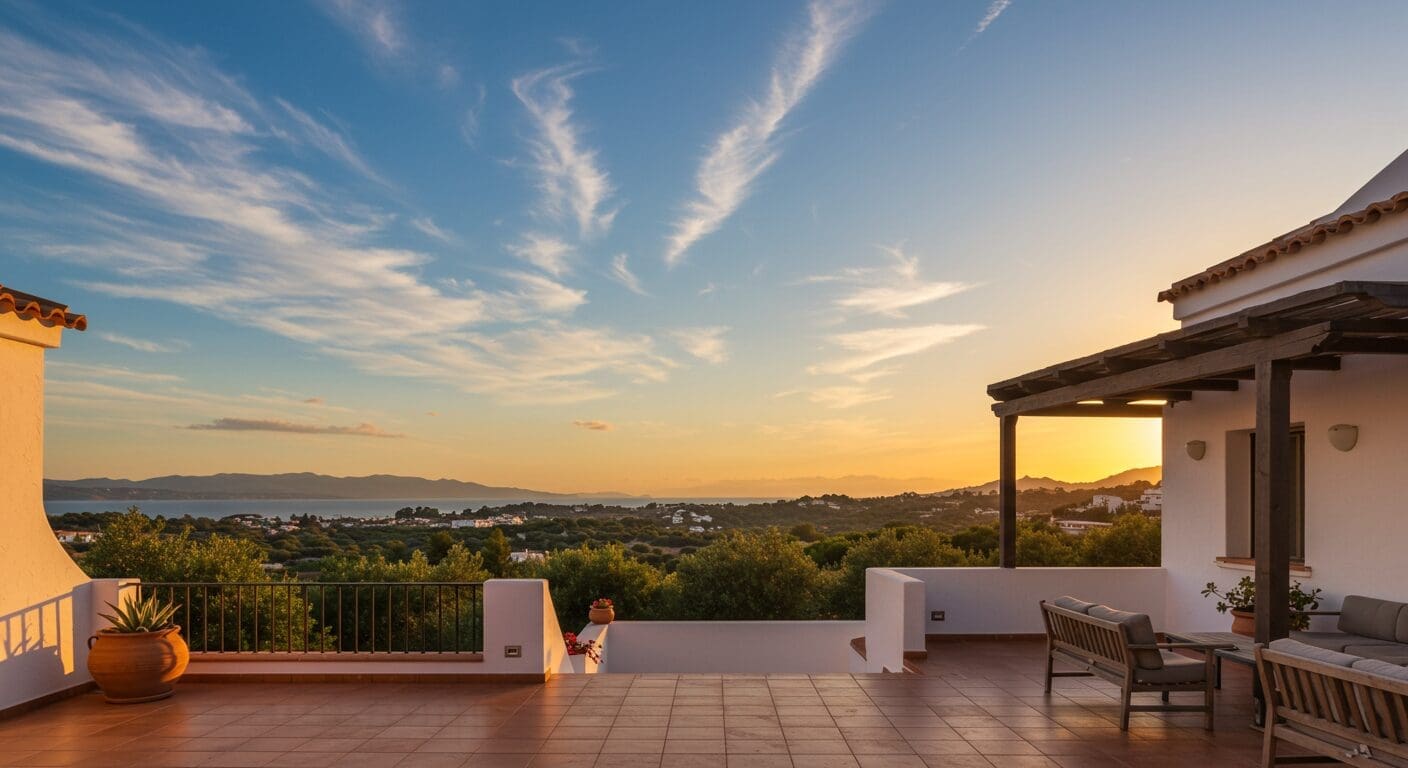
Whatever time of year you choose, the question of where you stay shapes the entire experience. On an island where the best months to visit are also often the most crowded, a private villa is less a luxury than a strategy. Your own pool, your own terrace, your own schedule – these things become meaningful very quickly when the alternative is sharing a restaurant and a sunset view with two hundred of your closest strangers. Browse our collection of luxury villas in Paros and find the right base for whichever season you choose.