Paros Travel Guide: Where to Stay, Eat & Explore in Luxury
Santorini gets the Instagram. Mykonos gets the nightlife. And Paros gets the people who’ve actually done their research. There is something quietly triumphant about arriving on this island – a feeling, hard to articulate but immediately felt, that you’ve chosen correctly. Where Santorini performs and Mykonos parties, Paros simply lives: fishermen still mending nets at dawn, whitewashed villages built for shade rather than aesthetics, a coastline that alternates between wild and gentle without any particular agenda. It has the marble that built Ancient Greece beneath its feet, some of the finest windsurfing conditions on the planet above its beaches, and a food scene that would embarrass islands three times its reputation. What Paros has that nowhere else in the Cyclades quite manages is the full package without the performance – beauty without vanity, character without costume.
It also happens to suit an unusually wide range of travellers, which is either a miracle of geography or very good fortune. Families seeking genuine privacy – the kind that doesn’t involve negotiating a hotel corridor with a buggy – find it in Paros’s private villas and calm, shallow bays. Couples marking milestone anniversaries discover an island that delivers romance without theatre. Groups of friends find the water sports, the harbour restaurants, the late evenings, all within easy reach of one another. Remote workers who’ve quietly decided that “working from home” should at least mean working from somewhere with reliable WiFi and a private pool have begun arriving with laptops and slightly too many screen-free intentions. And for wellness-focused travellers – those genuinely seeking sea air, early morning swims and meals built from ingredients that came off a boat that morning – Paros is almost irritatingly perfect.
Getting to Paros: Easier Than You Think, Lovelier Than You Expect
Most international travellers fly into Athens International Airport (Eleftherios Venizelos), which is the main hub for connections into the Greek islands. From Athens, you have two satisfyingly different options: fly or sail. The flight to Paros National Airport takes around 40 minutes and operates seasonally with Olympic Air and Sky Express – a good choice if you’re time-poor or simply not a boat person. The ferry option, departing from Athens’s port at Piraeus, takes between three and five hours depending on which service you choose, with the high-speed catamarans being considerably quicker and only marginally more expensive than the larger conventional ferries. The slower overnight boats have a certain romance to them, it should be said, though “romance” does require a degree of tolerance for deck chairs and strong Greek coffee at 6am.
Santorini and Mykonos also have regular ferry connections to Paros, making island-hopping genuinely easy. Once on the island, a hire car is the most practical way to explore freely – the roads are good, the island is compact (roughly 25 kilometres at its longest), and driving between villages takes minutes rather than hours. Scooters are popular with younger travellers and the terminally optimistic. Taxis operate from Parikia and Naoussa, and local buses connect the main towns with reasonable frequency in summer, though “reasonable frequency” on a Greek island does invite a certain philosophical flexibility with time.
Where to Eat in Paros: From Harbour Tables to the Island’s Best Kept Secrets
Fine Dining
The arrival of serious restaurant culture in Paros is one of the more welcome developments in Greek island travel in recent years, and nowhere better illustrates this than Paron, the restaurant at the Parilio hotel in Kolymbithres. Under Chef Thanos Feskos, it operates with an eco-aware, zero-waste philosophy that in lesser hands would read as worthy and in his reads as extraordinary. Local ingredients, bold combinations, beautifully considered plates – one reviewer, apparently someone who hadn’t written a review in their life, noted simply that “this place was truly special.” It earned a Top Notch award in 2025, and if the food doesn’t move you, the setting within one of the island’s most thoughtfully designed hotels almost certainly will. A luxury holiday in Paros without at least one dinner at Paron would be a mild dereliction of duty.
Mario Restaurant in Parikia sits on the harbour with views that do most of the ambient work before the food even arrives – but the food arrives well. Refined Mediterranean cuisine built around fresh seafood and local ingredients, served with the kind of attentive, unhurried service that reminds you why you left. Consistently among the best-reviewed restaurants on the island, it works equally well for a long celebratory dinner or for sitting over a glass of Assyrtiko watching the fishing boats return. Parikia often gets overshadowed by Naoussa in travel writing, which makes Mario something of an argument for spending more time in the island’s capital than most guides suggest.
Where the Locals Eat
Naoussa is the island’s most talked-about village – a former fishing port that has evolved, gracefully rather than gracelessly, into the social and culinary heart of Paros. Barbarossa, sitting right at the little port, has been feeding locals and visitors since the 1960s, which in restaurant terms is approximately the equivalent of geological time. Greek food, traditional preparations, a setting on the water that no amount of interior design could replicate. It is the kind of place where the menu is almost beside the point and you order by pointing at what someone else is having. It fills up early and justifiably.
The fish markets and small tavernas in Parikia’s backstreets offer a more everyday window into Parian life – octopus drying on lines outside open-fronted kitchens, bread arriving without being asked for, the radio playing something that may or may not be from this decade. Local wine, poured by the carafe, tends to be better than its price suggests. Paros produces its own wines under the Moraitis and Manousakis labels, among others, and the island’s dry whites and light reds are finding their way onto more serious lists. Beach clubs along Santa Maria and Golden Beach offer the daytime dining option – a long lunch in the shade between swims, unhurried, slightly salty, thoroughly enjoyable.
Hidden Gems Worth Seeking Out
Yemeni Wine Restaurant in Naoussa sits on one of the village’s most quietly lovely streets and is, by several measures, the standout dining experience on the island. Family-run in the truest sense – not as a marketing term but as an actual operating condition – it serves slow-cooked lamb, moussaka of unusual depth and texture, and fresh seafood alongside a curated Greek wine list that demonstrates considerable knowledge without any of the accompanying self-congratulation. Many who eat here describe it as among the best restaurant meals they’ve had in Greece, which is a country that does not lack for competition. Book well in advance in summer. This is not advisory boilerplate – the tables genuinely fill up, and the disappointment of discovering this is real.
Soso, also in Naoussa, is the kind of restaurant that makes you feel you’ve discovered something, which is a feeling that good small restaurants engineer with great precision. One of the smallest dining rooms on the island, it was born from Kalypso – a Naoussa native – fusing Greek cooking with global ingredients in ways that shouldn’t necessarily work and consistently do. The portions are generous, the prices reasonable, and the interior has been entirely hand-crafted by her partner, which gives it an atmosphere that no interior design budget could buy. Large servings, interesting food, a unique room: the Paros equivalent of finding a brilliant local restaurant that you immediately resolve to tell no one about, then tell everyone about.
The Island Itself: Villages, Coastlines and the Art of Getting Pleasantly Lost
Paros is built from marble – literally. The Parian marble quarried from these hills supplied Praxiteles, supplied the Venus de Milo, supplied the base of the Statue of Liberty. Walking through the old quarry at Marathi is oddly moving: enormous chambers cut into hillsides by hands working with iron tools, the stone still glowing white in the afternoon light. It lends the island a particular quality – a luminosity that photographers notice and everyone else simply enjoys without quite understanding why everything looks so well-lit.
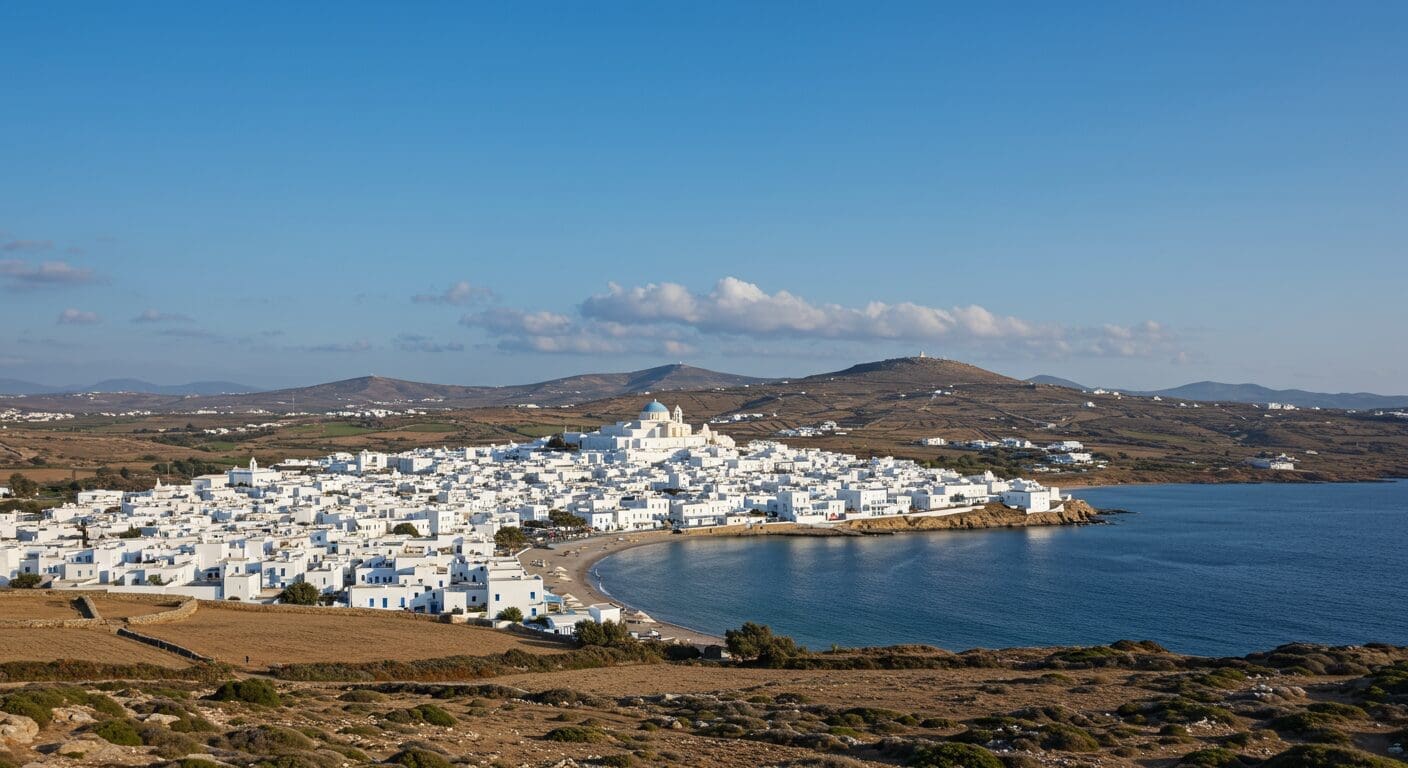
The island divides neatly into two distinct characters. Parikia, the capital and main port, is a working town first and a pretty one second – white cube architecture, a Venetian kastro rising above the harbour streets, the extraordinary Ekatontapyliani church (more on that later), fishing boats alongside the ferries, and a genuine sense that people live here year-round rather than simply staffing a tourist production. It’s underrated by people who arrive, glance at the ferry queue, and leave immediately for Naoussa.
Naoussa, in the north, is the island’s social centre in summer – a former fishing village that has accumulated exceptional restaurants, a lively harbour, good boutiques, and a nightlife that begins late and ends later without ever becoming the particular kind of loud that makes you regret your choices the next morning. Beyond these two towns, the villages of Lefkes and Marpissa offer the Cycladic village experience in something closer to its original form – cobbled streets, bougainvillea, almost no one selling you anything. Lefkes sits in the hills at Paros’s geographic centre and rewards the effort of reaching it with views down to both coasts and a village square that has clearly decided commerce is someone else’s problem.
The coastline is the island’s other great argument. The west coast beaches – Kolymbithres with its extraordinary wind-sculpted granite boulders, Naoussa Bay, the long golden stretch of Golden Beach – offer variety within a short drive. The east coast is quieter, less visited, and contains some of the most beautiful swimming in the Aegean. Logaras, Piso Livadi, and the smaller coves beyond them are where you go when you want a beach without company.
Things to Do in Paros: Beyond the Beach, Not That the Beach Needs Improving
The best things to do in Paros span a satisfying range from physically demanding to comprehensively horizontal. For those who want activity, the island delivers with unusual generosity. Day trips to Antiparos – Paros’s smaller, quieter sibling island – are among the most reliably enjoyable excursions in the Cyclades. The short ferry crossing from Pounda takes eight minutes (this is the sort of statistic that delights the efficiency-minded traveller), and the island offers a cave of serious geological interest, beaches of serious beauty, and a village of genuine charm. It also has a slightly different atmosphere to Paros – slower, less visited, the kind of place that makes you briefly consider whether you’ve made a terrible error booking the wrong island.
Cycling is a legitimate way to explore Paros, which is more hilly than it initially appears but manageable for anyone with reasonable fitness and a spirit of adventure that extends to the occasional unpaved track. The interior routes through Lefkes and the marble villages are particularly good – the landscape shifts from coastal white to green scrub to pale hillside in ways that are surprising and worth the effort. E-bikes have democratised this considerably and are widely available for hire.
Sailing and boat hire allow access to the smaller coves and sea caves that are inaccessible by road – several operators in Naoussa and Parikia offer everything from skippered day charters to multi-day sailing trips through the wider Cyclades. For those who have always thought sailing looked appealing but have never actually tried it, Paros’s sheltered bays offer a forgiving introduction. For those who know exactly what they’re doing, the open Aegean is right there.
Cultural visits reward the curious. The Byzantine Route is a mapped walking trail through churches and monasteries across the island’s interior – genuinely beautiful, rarely busy, and a useful antidote to the suspicion that Paros is purely a beach destination. The archaeological museum in Parikia is small but contains important pieces, including a fragment of the Parian Chronicle – a marble stele inscribed with Greek history from the mythological period to the third century BC, which is either the world’s first Wikipedia or the most remarkable document in ancient historiography, depending on your frame of reference.
Wind, Water and the Art of Going Very Fast Sideways
Paros has a legitimate claim to being one of the world’s great windsurfing destinations, and this is not the kind of local boosterism that island tourism offices specialise in. The meltemi wind, which blows reliably from the north across the Aegean through summer, channels with particular force along the island’s southern and eastern coasts, creating conditions that have attracted professional riders for decades. Golden Beach (Chrysi Akti) and Pounda are the central stages – Pounda hosts the annual Windsurfing World Cup, which is a reasonable credential. Equipment hire and certified instruction are widely available, making this accessible to complete beginners who want to understand why they keep falling sideways for three days before it suddenly makes sense.
Kitesurfing and kiteboarding have grown alongside windsurfing and use similar conditions to similarly spectacular effect. Santa Maria beach in the north of the island is one of the better-regarded spots for kitesurfing, offering slightly more sheltered conditions for learners while still delivering the wind needed for experienced riders to do the things that make everyone on the beach stop reading their books. Jet skiing, kayaking, and paddleboarding are available at most beaches. Scuba diving and snorkelling operate through several certified centres on the island, with dive sites ranging from beginner-friendly reefs to deeper wrecks that attract more experienced divers. The water temperature is warm enough from June through October to make extended time in it consistently enjoyable.
Hiking deserves special mention. The Byzantine Route is the most structured option, but the footpaths connecting the island’s interior villages offer a different kind of engagement with the landscape – quieter than the coast, more textured, genuinely lovely in the early morning before the heat arrives. The trail between Lefkes and Prodromos follows an old marble-paved path and is one of the most satisfying short walks in the Cyclades. It takes about an hour and requires only reasonable footwear and the good judgement to start before 10am in July.
Paros with Children: Genuinely Good, Not Just Tolerable
The honest truth about travelling with children in the Greek islands is that some islands are better at it than others, and Paros is genuinely better at it than most. The beaches are the primary reason – particularly the shallow, sandy, calm-water options on the west coast, where children can wade considerable distances without the sea becoming problematic. Kolymbithres, with its unusual granite rock formations, functions as a natural adventure playground that requires no admission fee and no queuing. Santa Maria beach in the north offers shallow water and calm conditions suited to younger swimmers who haven’t yet decided that the sea is interesting rather than frightening.
The island is compact enough that driving between activities rarely takes long enough to exhaust anyone’s patience, including adults. The day trip to Antiparos contains a cave – the Antiparos Cave – which is the kind of geological formation that has the useful property of interesting both eight-year-olds (enormous, dark, slightly mysterious) and their parents (genuinely impressive Stalactite formations dating back millions of years). Water sports facilities at Golden Beach cater to older children and teenagers, with supervised lessons and equipment sized appropriately.
The real advantage for families, though, is the private villa. A hotel in high season on a busy Greek island involves shared pools, negotiated mealtimes, and the constant low-level diplomatic effort of coordinating different ages around someone else’s schedule. A luxury villa in Paros with its own pool changes the arithmetic entirely. Children sleep in their own rooms, adults eat when they want to, the pool belongs to your party and no one else, and the particular exhaustion of family travel in public spaces is simply removed. Families with multiple generations – grandparents alongside young children – particularly benefit from the space and the separate living areas that well-appointed villas provide.
Marble, Monasteries and the Quiet Weight of Greek History
Paros has been continuously inhabited since at least 3200 BC, which puts the current tourist season in some perspective. It was an important centre of Cycladic civilisation, then a significant player in the classical Greek world, then Venetian, then Ottoman, then Greek again – the usual Aegean biography, compressed onto a small island and expressed in the layers of its architecture. The most remarkable single monument on the island is the Ekatontapyliani in Parikia – the Church of a Hundred Doors, one of the oldest and best-preserved Byzantine churches in Greece, dating to the fourth century AD. The name refers to a legend that 99 of its doors are known and the hundredth will be found when Constantinople is returned to Greece, which gives it a kind of ongoing narrative that most buildings lack. Inside, it is vast, cool, and genuinely affecting in the way that very old places of worship tend to be.
The kastro in Parikia, built by the Venetians in the thirteenth century from material largely sourced from the destruction of earlier ancient temples – you can still see ancient column drums built into its walls – sits above the town with a somewhat cavalier attitude to architectural conservation that modern archaeologists would not permit. It houses a small but well-curated archaeological museum and provides views over the harbour that justify the climb regardless of any cultural interest.
The island’s marble-working tradition continues today in small workshops and studios, particularly around Parikia and the village of Paros Town. Local sculptors and craftspeople work with the same material that supplied the classical world, which is either a satisfying historical continuity or a very good argument for buying a small sculpture as a holiday memento rather than a fridge magnet. The Cycladic art tradition – those spare, abstract human figures that feel surprisingly modern – is represented in the archaeological collections and gives the island an artistic heritage that predates most of what we consider Western civilisation by several thousand years.
In August, the Feast of the Dormition of the Virgin (August 15th) transforms Ekatontapyliani into the centre of a pilgrimage that draws Orthodox Christians from across Greece and beyond. The island fills beyond its usual summer capacity, which is saying something, and the atmosphere is equal parts religious solemnity and summer festival. It is one of those occasions where travel and real life intersect in ways that guidebooks tend to understate.
Shopping in Paros: What to Buy and Where to Find It
Naoussa is where the shopping is most satisfying – small boutiques along cobbled streets selling ceramics, jewellery, linen, and the kind of considered Greek design that has developed significantly in quality over the past decade. The island has attracted a number of designers and artisans who’ve relocated from Athens or abroad, and the result is a retail environment that feels curated rather than souvenir-driven. Greek jewellery, particularly silver work, represents excellent value relative to its quality. Paros marble carvings and sculptures from local workshops make meaningful gifts that survive the journey home with greater dignity than most holiday purchases.
Parikia’s morning market and the small shops around the kastro offer more everyday commerce – local honey (thyme honey from the Cyclades is a serious product, not a tourist conceit), dried herbs, olive oil, and bottled local wines. The Moraitis Winery, operating since 1910 near Naoussa, is open for visits and tastings and offers the chance to buy bottles that won’t be available in most export markets. Their Muscat and dry white varieties are particularly well-regarded. Leaving the island with a case of wine is a decision that seems slightly excessive at the time and completely justified three months later when you open the last bottle.
For fashion and more contemporary design, Naoussa’s boutiques carry Greek and international labels that tend toward the linen-and-white-cotton aesthetic that the Greek island context both demands and rewards. Prices are not budget, but they are considerably less than equivalent boutiques in Mykonos, which may be the most useful price comparison available.
Practical Paros: The Things Worth Knowing Before You Go
The currency is the euro, and cash remains useful on the island despite card acceptance having improved significantly. Smaller tavernas, market stalls, and some beach bars prefer cash, and having a reasonable amount on hand avoids the mild awkwardness of negotiating this in both languages simultaneously. ATMs are available in Parikia and Naoussa.
Greek is the language, and while English is widely spoken in tourist areas, any attempt at Greek – even the standard pleasantries – is received with disproportionate warmth. “Kalimera” (good morning), “efcharisto” (thank you), and “parakalo” (please/you’re welcome) will serve you well and will be remembered by the people you use them with. Tipping is customary but not obligatory – rounding up the bill or leaving 10% in restaurants is standard practice; taxi drivers appreciate rounding up to the nearest euro.
The best time to visit Paros for a luxury holiday is either June (warm, manageable crowds, everything open) or September (still warm, noticeably quieter, slightly lower villa rates, the island returning to itself after August). July and August are the peak months – hot, busy, and brilliant if you have a private villa with a pool to retreat to. The meltemi wind blows most reliably from July through August, which is excellent news for windsurfers and tolerable for everyone else, particularly in the evenings when it drops the temperature to something genuinely pleasant. October retains enough warmth for sea swimming and is increasingly popular with visitors who prefer their Greek islands without the crowds.
The island is safe. Medical facilities are adequate for standard needs; serious medical cases are transferred to Athens. Sunscreen, water, and the good sense to avoid the midday heat in July and August are the main health considerations. The tap water is drinkable, though bottled water is universally available and very cheap.
Why a Private Villa in Paros Is Simply the Better Choice
There is a version of Paros that involves hotels, shared pools, and buffet breakfasts at 8am that are quietly supervised by someone with a clipboard. It is not the version we recommend. The island is, by geography and temperament, designed for private living – the kind of holiday that unfolds on your own terms, at your own pace, in a space that belongs to you for the duration and behaves accordingly.
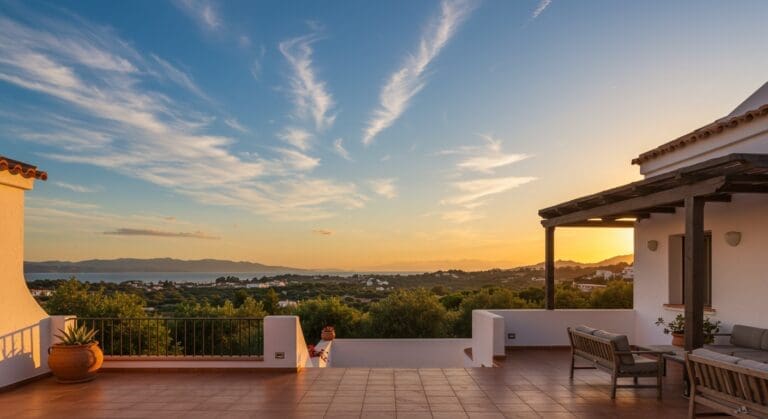
A private luxury villa in Paros changes the texture of every day. Breakfast happens when you want it to. The pool is yours – no reclaiming sun loungers at 7am, no negotiating with other families over the shallow end. Groups of friends who’ve been separated by adult life into different cities and different time zones find that a villa with six bedrooms and a terrace overlooking the Aegean does more for reconnection than any amount of brunch planning. Multi-generational families – the ones with grandparents, parents, teenagers, and small children all attempting to coexist – discover that separate living areas and a shared outdoor space create the conditions for holidays that everyone actually enjoys.
The wellness dimension is real and underappreciated. The best villas on the island come with private pools for morning swims before the heat arrives, outdoor dining areas that make every meal feel like an occasion, and – increasingly – gym equipment, yoga platforms, and spa facilities that allow the wellness-focused traveller to build a genuinely restorative routine around the island’s natural advantages. The Aegean air, the early light, the silence of a hillside or clifftop villa before the rest of the island wakes up: these are not small things.
For remote workers who’ve decided that productivity correlates with happiness rather than proximity to a commute, modern villas in Paros increasingly offer Starlink or high-speed fibre connectivity alongside the private pool and terrace. Working from a villa with a sea view is not the same as working from an office, a fact that requires very little further elaboration. Many guests discover that they work better, think more clearly, and return to their normal lives with a quality of energy that no urban staycation has ever produced.
Concierge services available through premium villa bookings handle the logistics that transform a good holiday into a genuinely seamless one: restaurant reservations at Yemeni or Paron arranged in advance, sailing charters organised, transfers from the ferry or airport, private chefs for evenings when leaving the villa feels like an effort rather than an adventure. The island is exceptional. The right villa makes it yours.
Explore our full collection of luxury villas in Paros with private pool and find the one that fits your group, your pace, and your version of the perfect Greek island holiday.
More Paros Travel Guides
- Best Restaurants in Paros: Fine Dining, Local Gems & Where to Eat
- Paros Food & Wine Guide: Local Cuisine, Markets & Wine Estates
- Paros with Kids: The Ultimate Family Holiday Guide
- Best Time to Visit Paros: Month by Month Weather, Crowds & Tips
- Paros Luxury Itinerary: The Perfect 7-Day Guide
- Romantic Paros: The Ultimate Couples & Honeymoon Guide
What is the best time to visit Paros?
June and September are the sweet spots. June brings warm temperatures, full facilities, and manageable crowds. September retains genuine warmth for sea swimming but sees the island noticeably quieter, with lower villa rates and a more relaxed pace. July and August are peak season – hot, busy, and excellent if you have a private villa to retreat to. The meltemi wind in July and August is a boon for water sports and keeps evenings pleasantly cool. October is increasingly popular with travellers who prefer their Greek islands without the high-summer intensity.
How do I get to Paros?
Most travellers fly into Athens International Airport (Eleftherios Venizelos) and then connect to Paros either by air or sea. Olympic Air and Sky Express operate seasonal direct flights to Paros National Airport – around 40 minutes in the air. Alternatively, ferries depart from Piraeus port in Athens, with high-speed catamarans making the crossing in approximately three to three and a half hours. Conventional ferries take four to five hours but are cheaper and more atmospheric. Regular connections also operate from Santorini, Mykonos, and other Cycladic islands, making Paros easy to include in an island-hopping itinerary.
Is Paros good for families?
Genuinely yes – and for more than the usual reasons. The island’s beaches include several with shallow, calm, sandy conditions ideal for young children, particularly Kolymbithres and Santa Maria. The island is compact, making travel between activities quick and easy. The day trip to Antiparos, including its impressive cave, appeals to children and adults alike. Most importantly, the availability of private villas with their own pools removes the logistical friction of shared hotel facilities, giving families the space and privacy that makes a holiday with mixed ages actually enjoyable rather than merely survivable.
Why rent a luxury villa in Paros?
The core advantages are privacy, space, and control over your own time. A luxury villa gives your group exclusive use of the pool, outdoor living areas, and all indoor space – no shared facilities, no timetabled meals, no negotiating with other guests. For families, the space to spread out is transformative. For couples, the seclusion creates an intimacy that hotels rarely match. Staff and concierge options – from private chefs to restaurant reservation services – allow the holiday to function at a genuinely elevated level without the formality of a hotel structure. The staff-to-guest ratio in a well-staffed villa typically exceeds what any hotel provides.
Are there private villas in Paros suitable for large groups or multi-generational families?
Yes – Paros has a strong supply of larger villas designed specifically for groups and multi-generational travel. Properties with five, six, or more bedrooms are available, some with separate wings or guest cottages that provide privacy within the shared property. Private pools are standard in luxury properties. Many larger villas include separate living areas for different age groups, outdoor kitchen and dining facilities for communal meals, and concierge support to coordinate activities across the group. For multi-generational holidays where grandparents, parents, and children all need different things from the same trip, a spacious villa is almost always the most practical and enjoyable solution.
Can I find a luxury villa in Paros with good internet for remote working?
Increasingly, yes. The higher end of the Paros villa market now routinely offers high-speed broadband, and a growing number of properties have installed Starlink satellite connectivity, which provides reliable, high-bandwidth internet even in more remote hillside or clifftop locations. When browsing or booking, it’s worth confirming internet specifications directly – any serious luxury villa provider should be able to confirm speeds and connectivity type. Many remote workers find that Paros’s combination of reliable connectivity, private outdoor working space, and the general quality of the light and air makes it one of the better places in Europe for productive working holidays.
What makes Paros a good destination for a wellness retreat?
Paros offers the kind of natural conditions that wellness requires and can’t be manufactured: clean Aegean air, warm sea for daily swimming, a pace of life that slows without effort, and food built from ingredients that arrived very recently and from very close by. Private villas with pools allow for morning swims and outdoor yoga before the island fully wakes up. The hiking routes through the island’s interior and Byzantine villages provide gentle physical activity in beautiful surroundings. Several hotels and spa centres on the island offer treatments and programmes. The combination of physical activity options – water sports, cycling, hiking, sailing – with the island’s inherent calm makes Paros an unusually complete wellness destination that doesn’t require booking a formal retreat to experience its benefits.