
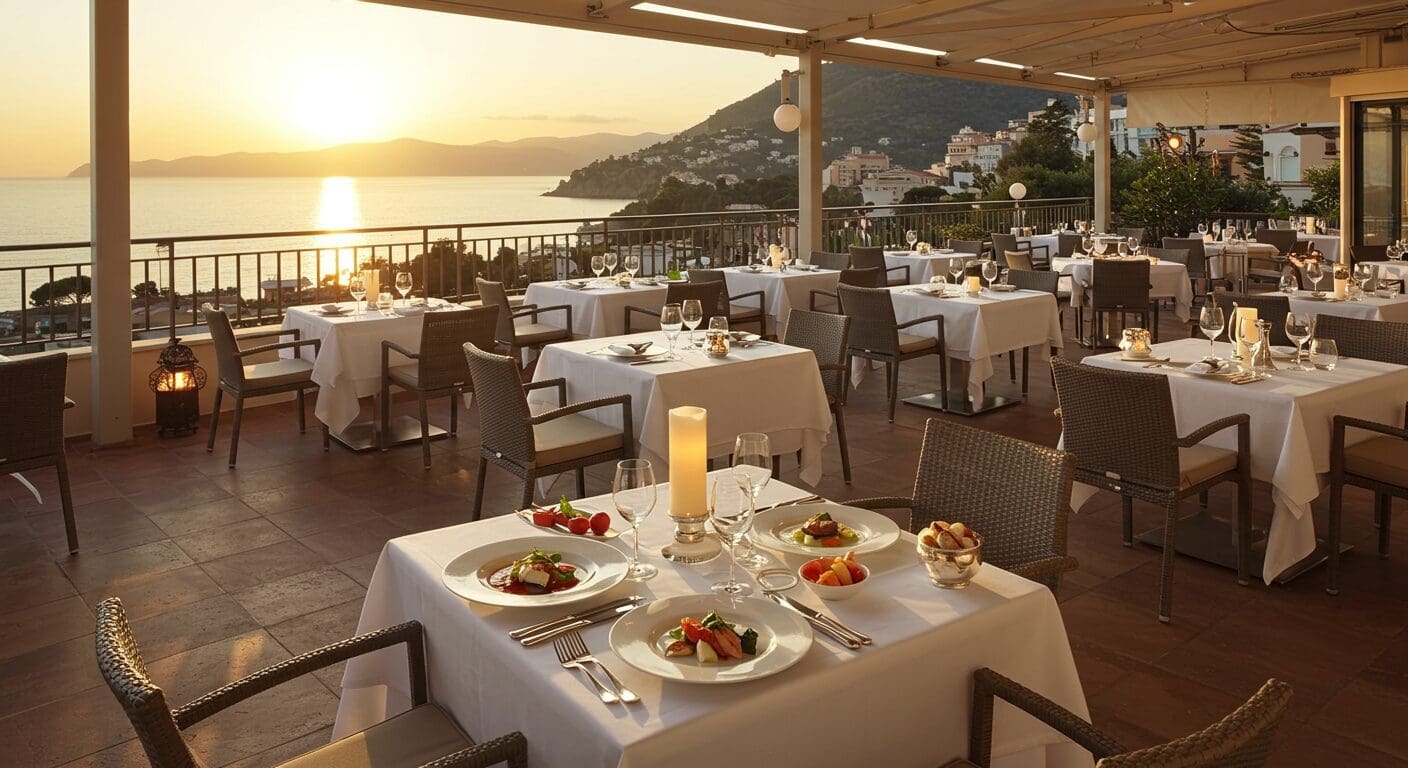
Best Restaurants in Province of Siena: Fine Dining, Local Gems & Where to Eat
Here is the thing every guidebook gets wrong about eating in the Province of Siena: they send you to Siena itself and call it a day. The city is magnificent, yes, and the restaurants within its medieval walls are genuinely worth the pilgrimage. But the province stretches far beyond those famous terracotta rooftops – across the Val d’Orcia, through the Crete Senesi, into the Chianti hills and down toward Montalcino – and some of the most quietly extraordinary eating in all of Italy happens in villages so small they don’t merit a dot on most maps. The locals know this. They have always known this. They just haven’t been particularly eager to share it, and frankly, you can understand the instinct.
What follows is a guide to eating well in the Province of Siena – from the Michelin-recognised dining rooms of the city centre to the trattorias where the menu changes depending on what arrived that morning, from the markets where you’ll spend more than you planned to the wine cellars where time passes differently. This is one of the great food regions of Europe. Approach it accordingly.
The Fine Dining Scene: Michelin Recognition & Elevated Tuscan Cuisine
Siena’s fine dining credentials are, quietly and without any fuss, exceptional. The city doesn’t trumpet itself the way Florence does, which is either charming or maddening depending on how long you’ve spent searching for a particular address. What it offers instead is serious, considered cooking rooted in Tuscan tradition – food that respects its ingredients because those ingredients happen to be extraordinary.
The name that comes up most consistently among those who actually know is La Taverna di San Giuseppe, and the reputation is entirely deserved. Michelin has been paying attention since 2007, which in restaurant terms is not recent news, and yet the kitchen continues to earn the recognition rather than coast on it. The setting alone is worth the reservation – you are dining inside what was once an Etruscan house dating to the 3rd century B.C.E., and the weight of that history lends the room a particular atmosphere that no interior designer could manufacture. The signature Malfatti Casalinghi – ricotta and spinach dumplings in cheese fondue with fresh truffle – are the kind of dish that arrives looking understated and tastes quietly devastating. The Tagliata, a grilled sirloin with fresh truffle, is equally precise. Order the wine list with some seriousness. It merits it.
Not far removed in terms of prestige is Osteria da Divo, located near the Siena Cathedral and occupying a space that incorporates actual Etruscan tombs from over two thousand years ago. The dining room, quite literally carved into ancient rock, creates an atmosphere that is equal parts extraordinary and slightly surreal. Yes, you are eating very good food in what were once burial chambers. Siena, it turns out, has a particular talent for this kind of casual juxtaposition. The cooking is refined and the prices reflect both the quality and the location – this is not a place for a spontaneous Tuesday lunch, but for a dinner that you remember in some detail years later.
Historic Favourites: Where Siena’s Intellectual Class Has Always Eaten
There is a certain type of restaurant that defies easy categorisation – too refined to be called a trattoria, too deeply rooted in local life to qualify as fine dining in the formal sense. Osteria Le Logge is exactly that. Open since 1977 and occupying a former grocery whose antique shelving, books, paintings, and accumulated objects remain beautifully intact, it has become one of those rare establishments that belongs to a city in the way that certain cafes belong to Paris. Politicians, artists, writers, and people who simply care about eating well have been gathering here for decades. The Michelin Guide acknowledges it with a red knife-and-fork symbol – recognition for atmosphere and quality combined rather than culinary fireworks, though the cooking is thoroughly accomplished.
Ask about the wine cellar. Serious wine buffs should make a particular point of this – the cellar is housed in a tunnel of Etruscan origin, which adds a dimension to the wine selection that most sommeliers in London can only dream about. The list is excellent and the staff are knowledgeable without being the slightest bit intimidating, which remains rarer than it should be.
Compagnia dei Vinattieri, on Via delle Terme, operates with a similar confidence. The wine list is extensive and treated with genuine respect, the service is attentive without hovering, and the outdoor courtyard – al fresco dining amid the medieval stonework of central Siena – is the kind of setting that makes you want to extend dinner considerably beyond what you had planned. The food holds its own against the surroundings, which is an achievement worth noting. Many visitors describe it as the best Italian food they have encountered anywhere. This might be enthusiasm talking, but it is enthusiasm earned.
Local Gems: The Places the Locals Actually Go
Tucked away on Costa Larga, a short walk from the Piazza del Campo, Osteria Permalico is the kind of place that rewards those who have done their research rather than simply followed the tourist trail to the nearest obvious option. The atmosphere is warm and genuinely welcoming – that particular quality of Italian hospitality that feels unperformed and effortless. The menu leans firmly into the Sienese tradition, and the kitchen executes it with real care.
Two dishes demand your attention here. The pici all’aglione – thick, hand-rolled pasta in a rich sauce of garlic and tomato – is a Sienese classic that varies wildly in quality depending on who is making it. At Permalico, it is made properly. The tagliatelle al ragù di Cinta Senese, using the prized local heritage pig breed, is equally good – the Cinta Senese pork has a depth of flavour that makes most supermarket pork taste faintly apologetic by comparison. Go at lunch, go early, and do not expect to be in a hurry to leave.
Beyond Siena itself, the province rewards exploration with disproportionate generosity. The small towns of the Val d’Orcia – Pienza, Montalcino, San Quirico d’Orcia – each have their own trattorias and osterie that operate on a strictly local rhythm. Hours are not always what the sign suggests. Menus follow the season rather than the calendar. This is not inefficiency; it is a different relationship with time. Adjust accordingly and the rewards are considerable.
What to Order: The Dishes That Define This Region
The Province of Siena has a culinary identity so specific that it would be a minor tragedy to work through it eating the kind of generic Italian food that appears on laminated menus near major monuments. There are certain things you must order, and certain things you should ask about even if they don’t appear on the printed menu.
Pici is non-negotiable. This hand-rolled thick pasta – coarser than spaghetti, with an irregular texture that holds sauce in a way that machine-made pasta never quite manages – is the regional staple and it appears in various forms: all’aglione (garlic and tomato), al ragù, or with wild boar. Order it wherever you see it. Ribollita, the thick bread and vegetable soup, is deeply unfashionable and completely delicious. Bistecca di Chianina – the great Tuscan steak from the white cattle of the Val di Chiana – appears on menus throughout the province and should be ordered with minimal interference. Salt, olive oil, perhaps some rosemary. Nothing further is required.
Pecorino di Pienza deserves its own moment of attention. This sheep’s milk cheese from the town of Pienza – which, incidentally, is worth visiting entirely on its own merits – comes in forms ranging from fresh and mild to aged and sharply mineral. Buy it at a market, order it as a course, eat it standing at a counter with a glass of something cold. There is no wrong approach. The Cinta Senese pork, mentioned above, appears throughout the province in various guises – cured meats, sausages, slow-cooked ragù – and the quality consistently justifies the slightly higher price.
Wine, Grappa & Local Drinks: What to Pour
The Province of Siena sits at the centre of some of Italy’s most significant wine geography, and eating here without paying serious attention to the wine list would be a considerable waste of an opportunity. Brunello di Montalcino is the headline act – one of Italy’s most celebrated red wines, produced from Sangiovese Grosso grapes grown in the hills around Montalcino, and aged for a minimum of five years before release. It is not inexpensive, and it is absolutely worth it on the right occasion.
Rosso di Montalcino is the younger, more accessible sibling – made from the same grape in the same territory, but released earlier and priced accordingly. It drinks beautifully with the region’s food and allows you to explore Montalcino’s winemaking without committing to a second mortgage. Vino Nobile di Montepulciano, from the beautiful hilltop town of the same name to the east, is another serious option – complex, structured, and frequently overlooked in the shadow of Brunello despite being entirely wonderful in its own right.
Vernaccia di San Gimignano provides the white wine answer – Italy’s first DOC, produced in the distinctive hilltowered town to the northwest of Siena, with a dry, slightly mineral character that works exceptionally well with the local antipasti and lighter pasta dishes. After dinner, grappa made from local grape pomace is the honest choice, or a Vin Santo – the amber dessert wine served with cantucci biscuits for dipping – which is one of those experiences that sounds slightly twee until you actually try it.
Food Markets & Artisan Producers: Eating Beyond the Restaurant
Some of the best eating in the Province of Siena happens standing up, paper bag in hand, with no table in sight. The weekly markets in the smaller towns are where the serious shopping happens – the Pienza market for cheese and cured meats, the Montalcino area for wine direct from producers, the weekly market in Siena itself for vegetables, oils, and the accumulated abundance of a region that grows things exceptionally well.
Siena’s covered market, the Mercato Coperto, operates daily and provides an education in local produce that no restaurant menu can fully replicate. The olive oils of the province vary significantly by area and producer – ask questions, taste before buying, and ignore anyone who dismisses the distinction as pedantry. The difference between an extraordinary Sienese olive oil and an average one is not subtle. Similarly, the honey, the saffron from San Gimignano (genuinely among the finest in Italy), and the various aged vinegars and preserves found at local producers all make for considerably more meaningful gifts than anything available in the tourist shops near the Duomo. This is not a pointed observation. (It is absolutely a pointed observation.)
Reservation Tips & Practical Advice
The Province of Siena attracts significant numbers of visitors, and the better restaurants in the city fill quickly – particularly during high season from May through September and during the weeks surrounding the Palio in July and August. La Taverna di San Giuseppe, Osteria Le Logge, and Osteria da Divo should be booked well in advance during peak periods; a week ahead is the minimum, two weeks safer for the most sought-after tables.
Lunch is often the smarter strategy. Several of the city’s better restaurants offer lunch at a fraction of the evening cost, and the food is identical. The Italians eat lunch seriously and you should too. Note that many restaurants in smaller towns and villages close for a riposo between roughly 2:30pm and 7:30pm, operate on reduced hours in winter, and occasionally close entirely when the family feels like it. This is not a complaint – it is simply useful information for planning purposes.
Dress codes in the Province of Siena are not formally enforced, but smart casual is the understood standard at any establishment worth its reputation. Arriving in full hiking gear at a Michelin-recognised restaurant is, technically, permissible. The expression on the maître d’s face will be worth observing, at least.
For those staying in the area for several days or longer, a private chef arrangement through your accommodation may be the most rewarding option of all – the ability to experience the region’s extraordinary produce cooked specifically for you, using ingredients sourced that morning from the markets and local producers, in your own space. Which leads naturally to the question of where you are staying.
Stay, Eat & Live Like a Local
The most complete way to experience the food culture of the Province of Siena is to be based somewhere that allows you to participate in it rather than merely observe from a restaurant chair. A luxury villa in Province of Siena – with a private chef who knows the local markets, the seasonal rhythms, and the producers worth visiting – transforms the entire experience. Breakfast made with local honey and fresh ricotta, a long lunch on a terrace with a bottle of Brunello, dinner prepared from whatever the Val d’Orcia decided to offer that day. This is not a fantasy version of Tuscany; it is simply what happens when you give serious thought to where you stay.
For the broader context of the province – what to see, where to go, and how to approach the whole remarkable territory – the Province of Siena Travel Guide provides the full picture.