Province of Siena Travel Guide: Where to Stay, Eat & Explore in Luxury
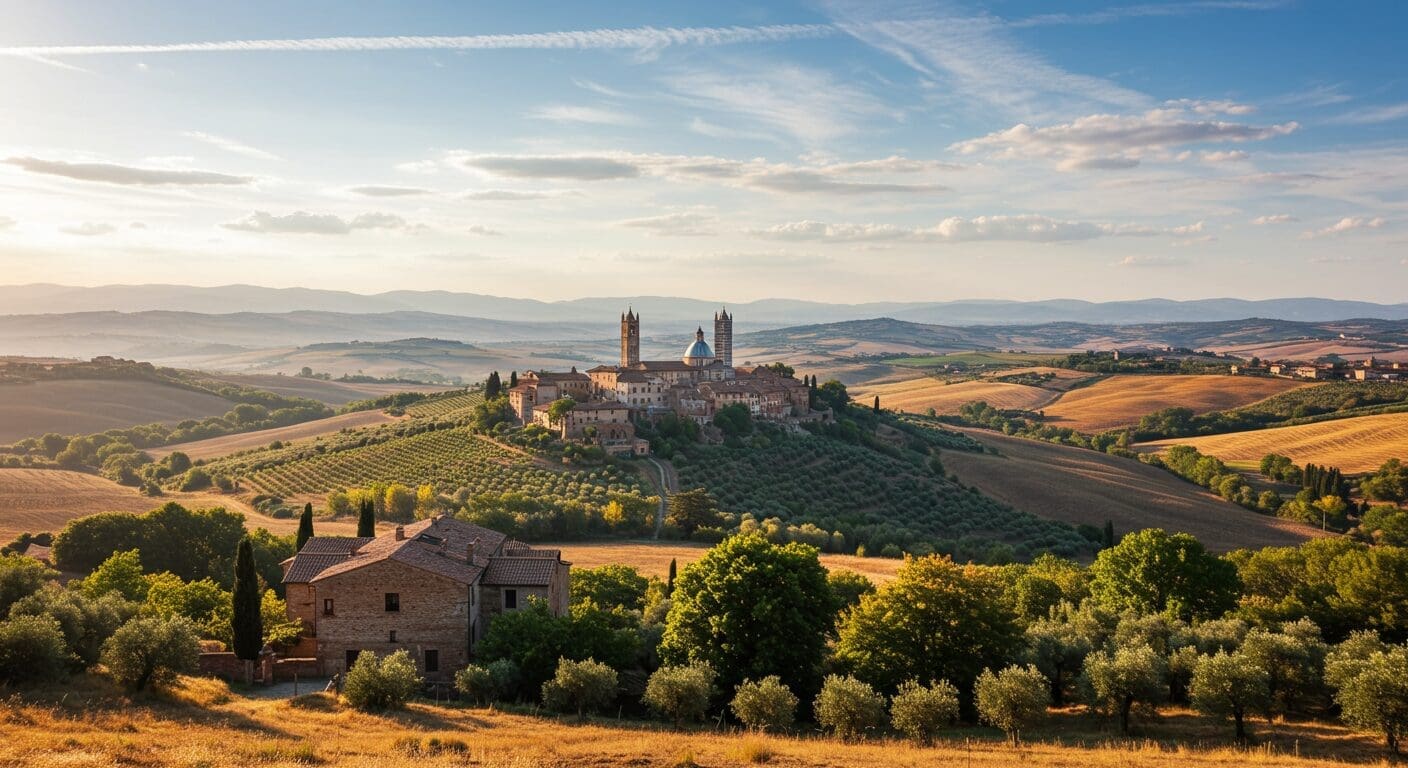
There is a particular quality to the light in the Province of Siena in late September and early October that photographers try to describe and mostly fail. The harvest has just come in, the vines have turned the colour of old copper, and the hills roll away in every direction with the unhurried confidence of landscape that has looked like this for a thousand years and fully intends to keep it up. The summer crowds have largely retreated – back to their offices in Milan and their flights to London and Frankfurt – and what remains is something that feels very close to Tuscany as it actually is: quiet lanes, wood-smoke threading out of farmhouse chimneys, and a glass of Brunello that costs half what it did in August. Autumn here is not a consolation prize for missing summer. It is, quietly and without much fuss, the point.
Finding Your Way In: Airports, Arrivals and the Art of Getting Lost on Purpose
The Province of Siena sits in the heart of Tuscany, which sounds straightforward until you realise that “the heart of Tuscany” covers an enormous amount of gloriously complicated terrain. Most visitors arrive via Florence (Amerigo Vespucci Airport), which is the most convenient option at roughly 70 kilometres from Siena city – around an hour to an hour and a quarter by car, depending on how many times you slow down because the view has temporarily derailed your common sense. Pisa’s Galileo Galilei Airport is a slightly longer drive but often cheaper to fly into, particularly from northern Europe, and handles a wider range of carriers. Rome Fiumicino is the third option for international arrivals, around two and a half hours south – viable if you’re combining a Rome stay, less ideal if all you want is to be on a hilltop with a glass of Vernaccia by sundown.
For the more remote corners of the province – Val d’Orcia, the Maremma border country, the roads that wind south towards Montalcino – a hire car is not a luxury. It is a necessity. The train from Florence to Siena is efficient and genuinely enjoyable, but it deposits you in a city rather than a landscape, and much of what makes a luxury holiday in the Province of Siena extraordinary lies in the in-between places. Hire something with reasonable suspension. The white gravel roads known as strade bianche are part of the experience – and they are not kind to vehicles with ambitions above their station.
The Table Is the Point: Eating Your Way Through the Province
Fine Dining
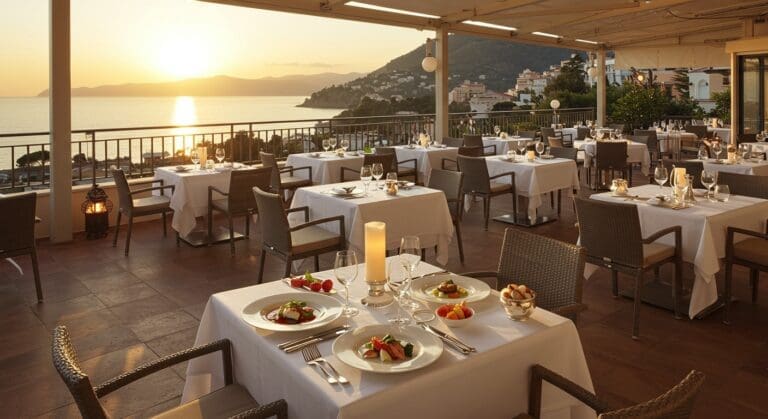
The Province of Siena is one of the great food regions of Italy, which in a country that takes its eating with extraordinary seriousness, places it in rarefied company. The city of Siena itself punches considerably above its size when it comes to serious restaurants, and anyone who assumes that fine dining in the provinces is merely a pale reflection of what Rome or Milan can offer has not yet had dinner at La Taverna di San Giuseppe.
Set inside what was once an Etruscan dwelling, dug directly into the earth below the city’s centro storico and dating to around the 3rd century BCE, La Taverna di San Giuseppe has the sort of atmosphere that cannot be designed or manufactured – it simply accumulates over millennia. The food matches the surroundings: proper Tuscan cooking with the intelligence to know when not to interfere. The tagliata di manzo, served with freshly shaved truffle, is the kind of dish that makes you briefly rethink your other life choices. Michelin-recognised since 2007, it remains Siena’s most accomplished table and manages the impressive trick of feeling neither precious nor overworked.
Osteria Le Logge, on Via del Porrione, operates on a different frequency – more intellectual salon than fine dining room, its walls lined with books, paintings and antiques, its clientele historically drawn from Siena’s artistic and political circles since it opened in 1977. The wine list is, without meaningful exaggeration, the most extensive seen in any restaurant in any Italian city. If you have a weakness for Italian reds and a vague interest in remaining vertical, exercise some caution. The food is refined Tuscan with genuine seasonality, and the Michelin recognition – a red knife-and-fork symbol for one of Italy’s best addresses – is well earned.
Where the Locals Eat
Compagnia dei Vinattieri, on Via delle Terme, is where Siena comes to exhale. An authentic enoteca with an extensive wine list that doesn’t require a sommelier’s degree to navigate, a courtyard for outdoor dining when the evenings allow it, and a kitchen that takes genuine pride in its homemade pici – the thick, hand-rolled pasta that is as Sienese as the Palio itself. The pici with leaf cabbage and bacon is the sort of simple construction that only works when every ingredient is doing exactly what it should. The guinea fowl with persimmon sauce is worth ordering for the conversation it starts alone.
For wine and food shopping beyond the restaurant circuit, the weekly markets in Siena and the smaller towns are essential. Pienza, barely an hour south, produces a pecorino so good it has protected designation of origin status and a small but devoted international following. The Tuesday and Saturday markets in the surrounding towns offer local salumi, aged cheeses, seasonal truffle, honey and preserves that represent the actual larder of this region – and cost a fraction of what the airport boutiques charge for inferior versions on the way home.
Hidden Gems Worth Seeking Out
Osteria Permalico, tucked into the charming Costa Larga just a short walk from Piazza del Campo, is the sort of place that doesn’t make the first Google result and is all the better for it. The pici all’aglione – that robust, garlicky tomato sauce that functions equally as dinner and mild prophylactic – is a benchmark version, and the tagliatelle al ragù di Cinta Senese uses the prized belted pig that has been raised in this territory since the 14th century. Locals eat here. The prices reflect that. Go on a Tuesday.
Then there is Tre Cristi Enoteca, tucked into Vicolo di Provenzano, which distinguishes itself in Siena by taking seafood seriously in a city more famous for its land-locked larder. It is an unexpected pleasure – a beautifully curated wine list, market-driven fish cookery, and a level of calm professionalism that makes it feel like a discovery even on your third visit. In a province where truffle and wild boar tend to get all the attention, it is quietly doing something rather different, and doing it well.
A Landscape That Actually Looks Like the Painting: The Geography of the Province
The Province of Siena covers roughly 3,800 square kilometres of central Tuscany, and it contains more distinct and remarkable landscapes than most regions three times its size. Understanding the geography helps you plan – but more than that, it helps you grasp why this particular corner of the world has been inspiring artists, poets, and people who simply couldn’t bring themselves to leave since the Etruscans first decided it was worth settling.
The city of Siena sits on its three hills in the northern part of the province – Gothic, proud, and entirely surrounded by landscape that appears to have been arranged by someone with a very good eye. Moving south and east, you enter the Val d’Orcia, a UNESCO World Heritage Site whose rolling clay hills, isolated cypresses and honey-coloured farmhouses have appeared in more Renaissance paintings than any art historian has properly catalogued. The Val d’Orcia is genuinely one of the most beautiful valleys in the world. This is stated not as hyporia but as something approaching geological fact.
Southwest of Siena, the Crete Senesi present a starker, more austere beauty – pale clay hills eroded into strange lunar formations, almost entirely unpopulated, producing a silence that people with busy lives find either deeply restorative or faintly alarming, depending on what they’re used to. Further south still, the Maremma begins – wilder, lower, with a coastal character that feels almost like a different region. Montalcino sits in the south-central province, commanding views over valleys in three directions and producing, from its Sangiovese Grosso vines, the wine – Brunello di Montalcino – that arguably defines the entire Italian fine wine canon. Montepulciano, to the east, makes the rival claim with its Vino Nobile. They have been arguing about this politely for centuries. The visitor’s sensible response is to drink both.
What to Actually Do: Activities That Justify the Journey
The best things to do in the Province of Siena resist easy categorisation, which is precisely what makes a week here feel so much longer – in the best possible sense – than a week almost anywhere else. The activities are not packaged and branded. They emerge from the place itself.
Walking the Val d’Orcia between the thermal spa towns is an education in why Tuscany has the reputation it does – the routes between Bagno Vignoni, Castiglione d’Orcia and Montalcino offer full days of walking through medieval villages, across farmland and through oak forest, with almost no traffic and, in the right season, almost no other people. The thermal baths at Bagno Vignoni, which fill a 16th-century piazza-pool in the village centre, are free and extraordinary – a Renaissance hot tub that appears to have been forgotten about by everyone except those who most need it.
Wine tourism in this province operates at a level of sophistication that makes it a serious itinerary in itself. The wine estates around Montalcino, Montepulciano and Castelnuovo Berardenga offer cellar visits, barrel tastings and producer lunches that can be arranged through good concierges or directly with the estates. Some of the smaller producers – family-run, with no marketing department and a dog that greets you at the gate – offer an intimacy that the famous names cannot match. A private wine tour, tailored to your actual preferences rather than whoever pays the commission, is one of the great pleasures of this province and well worth spending on.
Truffle hunting with a local guide and a trained dog in the oak woods around San Giovanni d’Asso is a genuinely memorable half-day that ends, as all the best half-days do, with eating what you found. Cooking classes using local ingredients – pici-making, Sienese pastry, the arcane art of lardo di Colonnata – are widely available and vary significantly in quality. Ask your villa concierge for the ones that don’t involve wearing an apron with a slogan on it.
Hot air ballooning over the Val d’Orcia at dawn is the experience that sounds implausible until you’re actually in the basket, watching the mist burn off the valley floor, and then it becomes the thing you tell people about for years. Several reputable operators run flights from the province, and the combination of altitude and landscape is genuinely difficult to put down in words – though generations of painters have had a reasonable go at it.
Moving Through the Landscape: Cycling, Hiking and the Roads Less Travelled
The Province of Siena is, for cyclists, a borderline obsession – which explains why serious riders from across the world make pilgrimages here annually, and why the roads around Montalcino and the Val d’Orcia look, on certain spring and autumn weekends, like a particularly scenic cycling event that nobody told you was happening. The Strade Bianche – those unmade white gravel roads connecting farms, hilltops and wine estates – are the roads in question. They are beautiful to cycle and, as professional races have demonstrated, genuinely punishing. The L’Eroica, a famous vintage cycling event held each October around Gaiole in Chianti on the northern province border, draws thousands of riders on pre-1987 steel bikes. The sight of it is almost as good as the spectacle of taking part.
Road cycling on the paved routes – the climbs to Montalcino, the long valley roads through the Crete Senesi – is more forgiving and no less rewarding scenically. Good hire bikes and e-bikes are available in Siena and most of the larger towns, and guided cycling holidays based from a villa are an excellent way to cover serious ground without navigating blind.
Hiking here is less dramatic and more meditative than mountain hiking – this is a walking landscape rather than a climbing one, and the paths through the Riserva Naturale della Val d’Orcia and the forests around the Abbazia di Sant’Antimo reward the unhurried. The walking from Pienza along the ridgeline to Montefollonico, or from San Quirico d’Orcia into the valley, takes you through landscape that feels largely unchanged since the 14th century. It probably was. Horse riding across the Val d’Orcia and the Crete Senesi is available from several agriturismo and specialist operators, and the pace of it – slower even than walking, more syncopated – suits the landscape perfectly.
Families Who Stay, Rather Than Rush: The Province of Siena with Children
Families with children – particularly those who have graduated from the theme-park holiday and are looking for something with more substance and less queuing – find the Province of Siena surprisingly well-suited to their particular requirements. The province works well not because it has been engineered for children but because it hasn’t, and children respond well to that. There is space here – physical, temporal, psychological – of the kind that is increasingly rare.
A luxury villa in the Province of Siena with a private pool, a kitchen garden, and three or four hectares of grounds gives children the kind of freedom that is essentially unavailable in a hotel, however well-staffed. They can run. They can collect things. They can spend an afternoon doing nothing of particular note and nobody is asking them to be quiet in the corridor. Older children and teenagers respond well to activities with genuine content: truffle hunting, which has an inherent treasure-hunt quality; pasta-making classes that produce a meal they actually eat; cycling on the strade bianche, which is muddy enough to feel like an adventure. Younger children need the pool and a garden, and the better villas provide both in abundance.
Siena city itself is manageable with children and has the advantage of being largely car-free within the walls. The Museo delle Biccherne at the State Archive has illuminated manuscripts that appeal to anyone with a taste for miniature detail, however young. The medieval town of Montalcino has a fortress with actual battlements. San Quirico d’Orcia has a garden with box hedges and gravel paths where nobody will tell you to stop running. These are not curated children’s experiences. They are simply places that happen to be extraordinary and also happen to welcome everyone.
History in Every Stone: The Art, Architecture and Traditions of a Medieval Powerhouse
Siena was, for much of the medieval period, one of the most powerful cities in Europe – a banking and trading centre whose wealth funded an artistic tradition that preceded, competed with, and in some respects outpaced Florence. The fact that a plague in 1348 effectively ended Siena’s political ascendancy had the collateral effect of preserving the medieval city largely intact. There was not enough subsequent wealth to rebuild. The result, with the dark irony that history occasionally deploys, is one of the best-preserved medieval cities in Italy.
The Piazza del Campo needs no introduction, though it earns one anyway: a vast, fan-shaped square that functions as the social heart of the city and twice a year as the venue for the Palio, the extraordinary bareback horse race between the city’s seventeen contrade – districts – that has been run since the 13th century and remains, despite everything modernity has attempted, one of the most intensely tribal and viscerally exciting events in the European calendar. The Palio runs on July 2nd and August 16th each year. It is chaotic, passionate, occasionally controversial, and completely unlike anything else. Watching it is a privilege that requires advance planning – grandstand seats must be booked months ahead.
The Duomo di Siena is a masterwork of Gothic striped marble that stops most people in the street before they’ve even gone inside, and inside it gets more intense – the floor alone, inlaid with 56 marble panels depicting biblical and allegorical scenes, took 200 years to complete. The Museo Civico in the Palazzo Pubblico houses Simone Martini’s Maestà, one of the great works of Sienese Gothic art, in a setting – a medieval council chamber – that adds considerably to the impact. The province’s small towns each carry their own layers: the Renaissance perfection of Pienza, designed by Pope Pius II as an ideal city and then substantially left alone; the Romanesque grandeur of the Abbazia di Sant’Antimo, which has been conducting Gregorian chant since the 8th century; the thermal baths of Bagno Vignoni, where Lorenzo de’ Medici used to take the waters.
What to Bring Home: Shopping the Province Without Embarrassing Yourself at Customs
The Province of Siena produces a remarkable range of things worth buying – and the best of them are not available in airport shops or online. Knowing what to look for, and where, saves both money and the mild shame of returning home with something wrapped in generic Tuscany packaging that was made in a factory near Prato.
Pecorino di Pienza – the semi-aged sheep’s cheese produced around the small Renaissance town – is the cheese to bring home. Buy it from the specialist cheese shops on Pienza’s main street, choose one aged in walnut leaves or ash for something genuinely unusual, and wrap it carefully. It travels well and arrives significantly better than anything a deli at home can offer. The same town produces excellent local honey and saffron, both of which are grown in the surrounding countryside and have none of the supply chain ambiguity of supermarket versions.
Brunello and Vino Nobile are the obvious wine choices, and worth buying directly from estates – both for the quality advantage and because many of the smaller producers sell library vintages that don’t appear in retail. A few bottles of Vernaccia di San Gimignano, the white wine produced in the northwest of the province, travels well and remains underrated outside Italy. Cinta Senese salumi – the cured products of that prized local pig – are worth seeking out from the better alimentari in Siena and the surrounding towns. Panforte, the dense, spiced Sienese cake that has been made here since the 13th century, keeps indefinitely and makes a better gift than anything wrapped in a ribbon. Ricciarelli, the almond biscuits that are essentially panforte’s more elegant relation, are equally transportable.
Siena city’s historic centre has excellent independent ceramics and leather shops, and the Wednesday market outside the city walls is worth the early start for textiles, local food and the unscripted theatre of provincial Italian commerce.
A Few Things It Helps to Know Before You Arrive
The currency is the euro, and while credit cards are widely accepted in restaurants and shops, cash remains genuinely useful in smaller towns, markets and the sort of roadside stalls selling local honey and olive oil where a card machine would feel mildly absurd. ATMs are plentiful in Siena and the larger towns; less so in the remoter villages, so plan accordingly.
Italian is the language, and it is worth making the effort. Even a convincing attempt at buongiorno and grazie is received with warmth and frequently rewarded with things not on the menu. English is spoken in most tourist-facing businesses in Siena city and the main towns; in smaller villages and rural restaurants, it is less reliable. A pocket translation app is a reasonable compromise with one’s dignity.
Tipping is not the obligation it is in the United States – a coperto (cover charge) is standard in most restaurants, and rounding up or leaving a euro or two per person at the end of a good meal is entirely appropriate. A ten percent addition is generous and will be noticed.
The best time to visit for a luxury holiday in the Province of Siena depends somewhat on what you’re after. Spring (April to early June) brings wildflowers, cooler walking temperatures and the soft green of new vines – popular with good reason. Summer (July and August) is hot, busy and expensive, though the Palio and the evening buzz of Siena’s piazzas have their own compensations. September and October are, as mentioned, quietly excellent: the harvest, the light, the emptier roads, the wine. Winter is genuinely cold – frosts in the Val d’Orcia are common – but the province takes on a stripped-back quality, the truffle season is at its peak, and a wood-burning fire in a stone farmhouse villa makes a compelling argument for the off-season.
Safety is not a meaningful concern. Dress modestly when entering churches (shoulders and knees covered); this is enforced in Siena’s Duomo and taken seriously throughout. Driving on the strade bianche requires attention but not expertise. ZTL zones in historic towns – restricted traffic zones – are signed and enforced by camera; your villa concierge or hire company can advise on where not to accidentally drive.
Why a Villa Changes Everything: The Case for Staying Private in the Province of Siena
There are hotels in the Province of Siena that do their jobs perfectly well. There are also converted monastery stays, agriturismo with tasteful rooms, and boutique options in Siena’s centro storico where the views compensate for the walls being very close together. And then there are the private villas – the old stone farmhouses, the converted tower houses, the manor properties with their cypress-lined drives and private olive groves and swimming pools that face southwest specifically so that the evening light hits them at an angle that makes conversation temporarily impossible because everyone is just watching the sky.
A private luxury villa in the Province of Siena is not simply an accommodation upgrade. It is a fundamentally different way of experiencing the place. Families and multi-generational groups – three generations who have been wanting to do something properly memorable together – get the space they actually need: separate wings, multiple bedrooms with real bathrooms, living areas large enough that proximity doesn’t become tension, and a pool that belongs to nobody but you. For couples on a milestone anniversary or honeymoon, privacy at this level – waking up to a valley view that no other guest will share – is something no hotel, however excellent, can replicate.
Groups of friends who have been planning the “proper trip” for years find that a villa delivers on the promise in ways that booking a block of hotel rooms never quite does. You cook together, eat together, decide at 10pm that you want to open another bottle and nobody from the front desk has any opinion on the matter. The kitchen garden produces tomatoes. There is a bocce pitch. Someone finds a tortoise and the afternoon takes an unexpected turn.
For wellness-focused travellers, the combination of outdoor living, long walks, exceptional food and genuine quiet that the province’s villas provide is the reset that proper wellness retreats charge considerably more to approximate. Many of the better properties come with outdoor fitness equipment, yoga terraces, or access to the famous thermal spas at Bagno Vignoni and Terme di Petriolo – a natural thermal circuit that has been drawing those in need of restoration since Roman times.
Remote workers – and there are increasing numbers of them doing a month in Tuscany between projects, which is not a life choice that requires much defence – will find that the better luxury villas in the Province of Siena now come with high-speed connectivity and, in some cases, dedicated workspace arrangements. The quality of the thinking that emerges from working with a view of the Val d’Orcia outside the window is, anecdotally, considerably higher than the open-plan office in central London.
With over 27,000 properties worldwide, Excellence Luxury Villas has a curated selection of the finest private properties across the province – from intimate two-bedroom retreats above Montalcino to grand estate villas with full staff in the Val d’Orcia. Browse our collection of luxury holiday villas in Province of Siena and find the property that turns this landscape – already one of the most beautiful on earth – into something you’ll never quite recover from. In the best possible sense.
More Province of Siena Travel Guides
- Best Restaurants in Province of Siena: Fine Dining, Local Gems & Where to Eat
- Province of Siena Food & Wine Guide: Local Cuisine, Markets & Wine Estates
- Province of Siena with Kids: The Ultimate Family Holiday Guide
- Best Time to Visit Province of Siena: Month by Month Weather, Crowds & Tips
- Province of Siena Luxury Itinerary: The Perfect 7-Day Guide
- Romantic Province of Siena: The Ultimate Couples & Honeymoon Guide
What is the best time to visit Province of Siena?
Spring (April to early June) and autumn (September to October) are the two standout windows. Spring brings wildflowers, cooler temperatures and the vivid green of new growth; autumn delivers the harvest, the truffle season, copper-toned vines and significantly lighter crowds. July and August are peak summer: beautiful, lively, hot and expensive. December through February is cold and quiet, but the truffle season is at its most intense and villa rates are at their lowest – a combination worth considering if you know what you’re after.
How do I get to Province of Siena?
Florence (Amerigo Vespucci) is the closest major airport to Siena city, around 70 kilometres and roughly an hour by car or hire vehicle. Pisa (Galileo Galilei) is around 100 kilometres and serves more budget carriers across Europe. Rome Fiumicino is the main international hub for long-haul arrivals, around two and a half hours south by road or rail. A hire car is strongly recommended for anyone staying in the countryside or visiting the smaller towns and wine estates – the province’s greatest pleasures are distributed across its landscape rather than concentrated in any single point.
Is Province of Siena good for families?
Genuinely yes – particularly for families who want space, freedom and real experiences rather than resort infrastructure. The province is not engineered for children in the theme-park sense, which turns out to work in its favour: there is room to run, outdoor activities with real content (truffle hunting, horse riding, cycling), and a pace of life that allows children to actually decompress. A private villa with a pool and grounds is the ideal base – it provides the freedom and flexibility that hotel stays with children rarely do. Siena city and the smaller historic towns are manageable and engaging for older children and teenagers.
Why rent a luxury villa in Province of Siena?
A private luxury villa here gives you something no hotel can match: an entire Tuscan property – stone farmhouse, pool, grounds, kitchen, outdoor terraces – that belongs entirely to your party for the duration of your stay. The privacy-to-space ratio is transformative, particularly for families and groups. The better villas come with dedicated concierge services, private chefs available on request, and access to experiences – wine estate dinners, private truffle hunts, exclusive tastings – that aren’t available to general visitors. The staff-to-guest ratio in a well-staffed villa is simply in a different category from a hotel of any standard.
Are there private villas in Province of Siena suitable for large groups or multi-generational families?
Yes – and this is one of the province’s real strengths as a villa destination. There are estate properties sleeping twelve to twenty guests across multiple bedrooms, with separate guest wings that give different generations genuine privacy while sharing communal spaces – pool terraces, dining rooms, gardens. Large-group villas in the province typically come with full domestic staff, a private pool (often two), multiple reception rooms and professional kitchen facilities. Multi-generational bookings are one of the most common villa configurations here: grandparents, parents and children sharing a property in a way that a cluster of hotel rooms can never approximate.
Can I find a luxury villa in Province of Siena with good internet for remote working?
Increasingly, yes. Connectivity has improved significantly across rural Tuscany, and a growing number of the better luxury villas now have fibre or Starlink installations that provide reliable high-speed internet – sufficient for video calls, large file transfers and all the demands of contemporary remote work. When enquiring about a property, it is worth specifically asking about connectivity speed and dedicated workspace provision. Properties in or near Siena city have the most consistently reliable connections; more remote valley locations are worth verifying on a property-by-property basis. Our team at Excellence Luxury Villas can confirm connectivity specs before you book.
What makes Province of Siena a good destination for a wellness retreat?
The combination of thermal spa access, clean air, outstanding food, extensive outdoor activity and genuine quiet makes the Province of Siena one of the best natural wellness destinations in Europe – without any of the organised wellness resort packaging. The thermal baths at Bagno Vignoni and Terme di Petriolo have been used for restoration since Roman times and remain wonderfully unthemed. Long walks through the Val d’Orcia, cycling the strade bianche, horse riding in the Crete Senesi – these are physical activities that also happen to be beautiful. Many luxury villas in the province have outdoor pools, gym equipment, yoga terraces and private gardens that support a self-directed wellness stay, and private chefs can accommodate any dietary approach with the exceptional local produce.