Rhodes Travel Guide: Where to Stay, Eat & Explore in Luxury
What if the most overrated island in the Mediterranean turned out to be secretly, stubbornly magnificent? Rhodes has a reputation problem – not because it’s bad, but because it’s too easy to dismiss. Too popular, people say. Too touristy. Too many package holidaymakers queuing for cocktails at the beach. And yes, in August, in the resort strips around Faliraki, that version of Rhodes absolutely exists. But the island is 1,400 square kilometres of medieval streets, volcanic hillsides, wildflower valleys, and coastline so varied it can look like a different country depending on which direction you’re facing. The tourists aren’t wrong to come. They’re just not always looking in the right places. This guide is for the ones who want to look properly.
Rhodes rewards a particular kind of traveller – several kinds, actually, and they often arrive in the same villa. Families seeking genuine privacy rather than the choreographed performance of a hotel holiday find exactly what they’re after here: private pools, space for three generations to coexist without anyone feeling ambushed, and beaches calm enough that you don’t spend the entire week counting heads. Couples marking milestone moments – a significant anniversary, a honeymoon that got delayed by various global inconveniences – find that the island’s combination of ancient history and serious food and wine creates something more layered than a standard sun-and-sea escape. Groups of friends who have been trying to book “the big trip” for two years will find the villa rental market here genuinely exceptional. And increasingly, the island draws remote workers who have discovered that reliable high-speed connectivity, golden light, and a 7am swim before the first call of the day is not actually an unreasonable way to spend a Tuesday. Wellness-focused travellers, meanwhile, should know that hiking trails wind through valleys where the silence is almost aggressive. Rhodes, it turns out, contains multitudes.
Getting Here Is Easier Than You Think (Which Is Either Good News or a Warning)
Rhodes is served by Diagoras International Airport – IATA code RHO, located about 14 kilometres southwest of Rhodes Town on the northern tip of the island. Direct flights operate from across Europe, with particularly strong connections from the United Kingdom – British Airways, easyJet, Jet2 and TUI all fly direct from multiple UK airports during the summer season, with journey times hovering around three and a half to four hours from London. From Athens, Olympic Air and Aegean Airlines offer multiple daily flights of around 45 minutes, which is also useful if you’re combining Rhodes with a few days on the mainland.
The airport transfer situation is worth thinking about before you land, because the choices are stark. There are taxis, there are organised transfers, and there are hire cars. The taxis work well for Rhodes Town. For a villa in Lindos or the island’s southern tip, a private transfer arranged in advance is the civilised option – most villa concierge services handle this and it removes the specific anxiety of explaining to a driver exactly where your villa is when you have a combination of jet lag, children, and luggage that suggests you packed for a different climate.
A hire car is genuinely worth having for the duration of your stay. The island is large enough that relying on taxis for everything adds up financially and logistically. Roads in the north are well-maintained; some of the mountain roads in the interior require a certain philosophical attitude to passing places, but nothing that a driver of reasonable experience can’t handle. Scooters are popular in the resort towns and beloved by A&E departments throughout the Aegean. The ferry network connects Rhodes to other Dodecanese islands – Kos, Symi, Patmos – for day trips or island-hopping extensions.
Where to Eat on Rhodes: From Two Toque-Winning Tasting Menus to a Table Under a Vine in Apollona
Fine Dining
The food scene on Rhodes has quietly, determinedly become one of the best in the Aegean – which is a big claim on an island whose neighbours include some formidable competitors. Two restaurants in particular represent the ceiling of what’s available here, and they couldn’t be more different in approach.
Noble Gourmet Restaurant at the Elysium Resort & Spa on the island’s northeast coast is the place for a genuinely serious tasting menu experience. Executive Chef George Troumouchis and head chef Spyros Kougios have built something rare: a restaurant that earns its reputation without embarrassment or pretension. The menu focuses on authentic Rhodian cuisine interpreted through a contemporary fine-dining lens – pitaroudi pie with crab and mushrooms, lamb kapama with marinated eggplants, dishes that reference the island’s culinary history while being assembled with serious technical skill. Two Toque d’Or awards and a ranking among the top 25 restaurants in Greece tells you what you need to know. Book well ahead.
Then there is Mavrikos in Lindos. Established in 1933 and currently run by brothers Dimitris and Michalis Mavrikos, this is the kind of restaurant that doesn’t need to try to be legendary – it simply is. The New York Times has written about it. Every serious food guide includes it. The menu celebrates local produce with a commitment to sustainability and seasonality that predates both those words becoming marketing language. There is no equivalent of walking into Mavrikos for the first time and understanding immediately why it has survived for more than ninety years. Go for lunch. Take your time. Order the fish.
Where the Locals Eat
Rhodes Old Town has the advantage of being genuinely old and genuinely lived-in, which means the restaurants embedded in its medieval streets tend to have a character that’s harder to fake elsewhere. Mama Sofia is the exemplar of this – tucked into the labyrinth of the old town with a menu that functions as a love letter to Greek culinary heritage. Moussaka, souvlaki, the kind of cooking that reminds you why these dishes became classics in the first place. The staff speak excellent English, there are gluten-free and vegetarian options, and the place is busy enough that booking ahead is strongly recommended. Go without a reservation in August and you will learn patience.
Tamam, also in the Old Town, occupies a different and arguably more fascinating space – a cultural crossroads where Mediterranean and Middle Eastern culinary traditions collide in a cozy corner setting. Tapas-style presentations, layers of flavour, a lively atmosphere that somehow manages to feel intimate. It’s the kind of meal that goes on longer than you planned and is better for it.
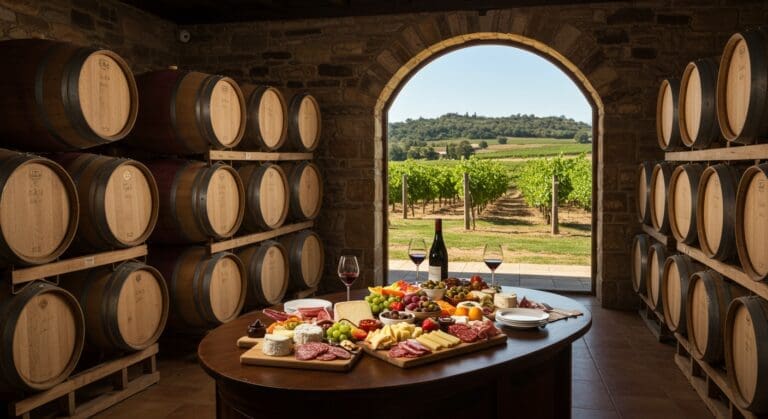
The local wine culture deserves attention too. Rhodes has its own wine appellation – CAIR and Emery are the main producers – and the island’s volcanic soil produces whites in particular that pair with the local seafood in a way that feels almost conspiratorially convenient. Any decent taverna will have carafe wine from local production that costs almost nothing and tastes considerably better than that sounds.
Hidden Gems Worth Seeking Out
Apollona is a village that most visitors to Rhodes never reach, which is precisely why it belongs in this section. Taverna Paraga sits at the village entrance, in a building that once housed an Italian officers’ club – the island’s Ottoman and Italian occupation history turns up in the most unexpected architectural corners. Chef Yiannis Efthymiou is described locally as a living legend, which could sound like hyperbole until you sit down to one of the age-old Rhodian classics served at long communal tables in the open-air dining space. This is the kind of place that becomes the highlight of the whole trip. You’ll talk about the meal for months. The drive through the interior to get there is worth doing anyway.
Rhodes Beyond the Postcard: Getting to Know the Island’s Geography
Most people’s mental image of Rhodes is shaped by two things: Rhodes Town in the north and Lindos in the south. Both deserve their reputations. Neither tells the full story of an island that is significantly more varied than its package-holiday legacy suggests.
The northern tip of the island is where Rhodes Town sits – a combination of the medieval Old Town (a UNESCO World Heritage Site and one of the best-preserved medieval cities in the world), the commercial New Town that grew up around it, and the Mandraki Harbour where the Colossus of Rhodes supposedly once stood. Whether it actually stood astride the harbour entrance or merely beside it is a question that has occupied classicists for centuries. The tour guides confidently explain both versions, often on the same tour.
Moving south along the east coast, the landscape shifts between resort development – Faliraki, Afantou, Kolymbia – and stretches of genuinely beautiful coastline that the development hasn’t yet reached. Tsambika Bay is one of those beaches that justifies the journey: a sweep of sand with water so clear it would look fake in a photograph if you weren’t standing in it. The monastery above the bay, reached by 297 steps, is one of those excursions that feels considerably more appealing at sea level.
Lindos sits about 55 kilometres from Rhodes Town on the east coast – a whitewashed village climbing a hillside to an acropolis with a Doric temple of Athena and panoramic views over a double bay. Vehicles aren’t allowed in the village itself, which means a donkey ride or a walk up narrow cobbled streets. The village is beautiful and knows it, which keeps prices high and crowds dense in peak season. An early morning visit – before the day-trip coaches arrive – is a different and considerably more rewarding experience.
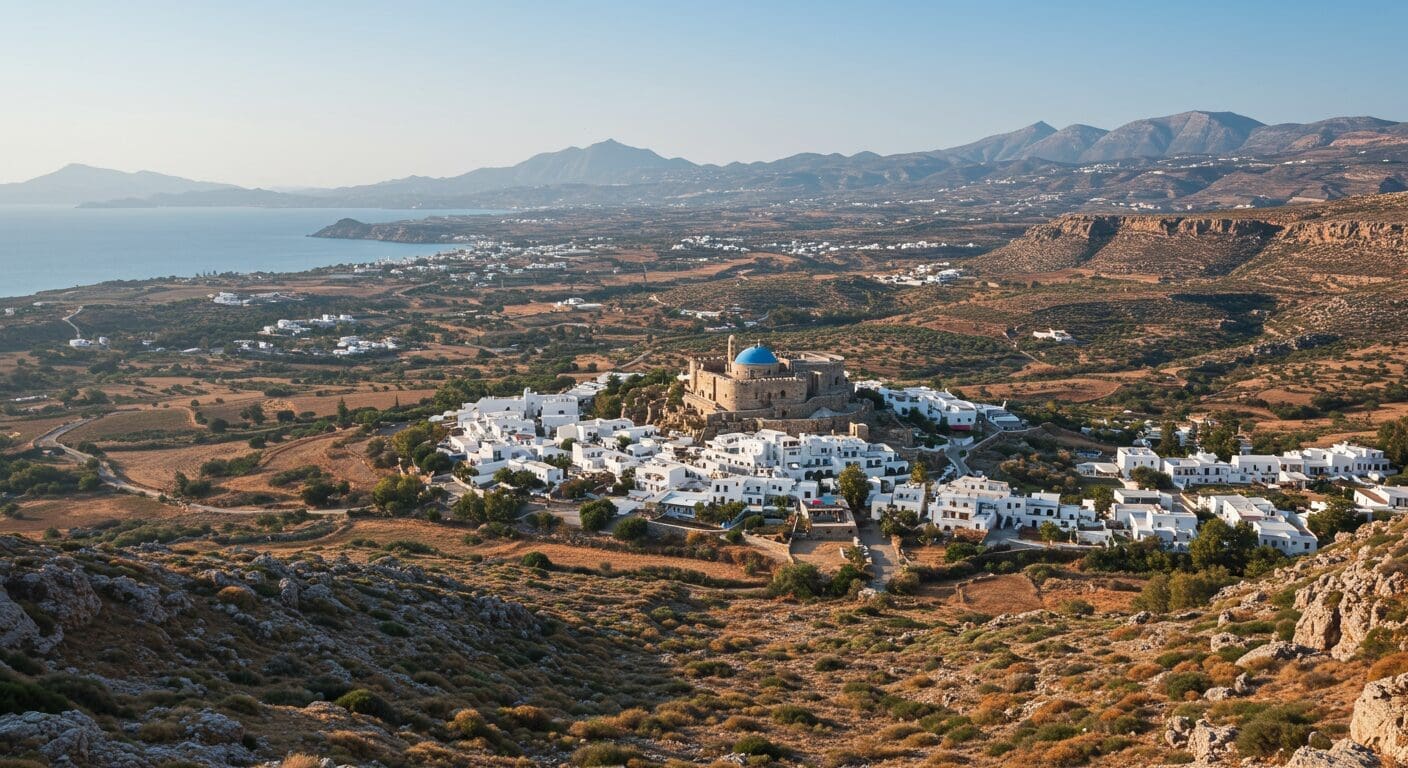
The west coast is wilder, windier, and largely ignored by package tourists, which makes it interesting. The Valley of the Butterflies – Petaloudes – is a legitimate natural wonder: a wooded gorge where Jersey Tiger moths gather in their thousands during summer, draping the trees in what appears to be living tapestry. Further south, the Prasonisi peninsula at the island’s tip is where the Aegean meets the Mediterranean and the wind becomes philosophical. The interior of the island – villages like Embonas, Siana, Apollona – has a quieter, older character that feels genuinely removed from the coastal bustle.
The Best Things to Do in Rhodes: From Ancient Citadels to Open Water
The activity proposition on Rhodes is broader than most visitors initially appreciate, and the best things to do in Rhodes tend to involve making choices between history and sea and food in roughly equal measure.
The medieval Old Town of Rhodes is the obvious starting point and should not be skipped even by travellers who are, in principle, done with old towns. This is the oldest continuously inhabited medieval city in Europe and the Street of the Knights – where the crusading orders had their inns – is the kind of thing that stops you mid-stride. The Palace of the Grand Master has been heavily restored and occasionally attracts criticism for being too polished, but the scale and drama of the original structure comes through regardless. Allow at least half a day. Allow a full day and you’ll still find corners you missed.
The ancient Acropolis of Rhodes sits above the modern city and is less visited than the Old Town – which is surprising, because the views across to Turkey on a clear day are extraordinary. The site includes the Temple of Apollo and a restored ancient stadium where athletes competed two millennia before the term “wellness tourism” was invented.
Boat trips deserve a serious mention. Day cruises to the island of Symi – a pastel-coloured harbour village that looks almost too beautiful to be real – are among the most popular excursions from Rhodes and for good reason. Symi takes about an hour by fast boat and offers excellent swimming, better fish tavernas, and a pace of life that makes Rhodes Town feel metropolitan by comparison. Private yacht charter is available from Rhodes marina for those who want their own version of this without the narrated commentary.
For a luxury holiday in Rhodes, the combination of cultural visits, private boat trips, and evenings at restaurants like Mavrikos creates a rhythm that’s hard to improve on. The days fill themselves without much effort.
Wind, Water & Gradient: Adventure on Rhodes
The west coast wind that rattles the taverna awnings and makes certain beaches feel like a wind tunnel in July is not an accident of geography – it’s the reason Prasonisi, at the island’s southern tip, has become one of the best kitesurfing and windsurfing locations in the Mediterranean. The spit of land that connects the peninsula to the mainland creates two bodies of water with different conditions: the rougher Aegean side for more experienced riders, the calmer Mediterranean side for beginners. Schools operate on site with lessons and equipment hire. It’s the kind of place that attracts people who came for two days and booked another two weeks.
Scuba diving around Rhodes reveals an underwater landscape that the surface gives no hint of. The sea floor holds ancient amphora, reef systems, and visibility that frequently exceeds 30 metres in summer. Several dive centres operate out of Faliraki, Lindos, and Rhodes Town, with PADI-certified instruction and guided dives for all experience levels. The wreck dive community tends to know about the various freighters and transport vessels scattered around the coastline; the fish, for their part, simply live there and seem unbothered.
Hiking has grown considerably as an activity on Rhodes, partly because the landscape genuinely rewards it and partly because a certain type of traveller has realised that the best views on the island aren’t from the road. The Seven Springs area near Kolymbia offers a manageable and genuinely lovely trail through pine and eucalyptus forest to a lake populated by peacocks – which sounds like it was designed by committee but is actually rather magical. More serious hikers head for the Attavyros summit at 1,215 metres, the island’s highest point, where the views on a clear day extend to Crete.
Sea kayaking along the coastline south of Lindos, mountain biking through the interior villages, and horse riding through the valleys are all well-established options. Rock climbing has a small but dedicated following on the limestone cliffs of the eastern coast. The island, in short, doesn’t require passivity.
Why Rhodes Works Remarkably Well for Families
The family case for Rhodes is built on several pillars, but the most important one is practical: the island is calm-water friendly. The east coast beaches – Tsambika, Anthony Quinn Bay, Agathi – have water conditions that allow children of almost any age to swim safely, which removes the specific parental anxiety that accompanies any beach holiday where waves have opinions. The west coast is windier and less suitable for small children in the water; it’s better for teenagers who have discovered kitesurfing or simply want to be on a different beach from their parents.
Renting a private villa with pool in Rhodes transforms the logistics of a family holiday in ways that anyone who has navigated a hotel pool at peak season will immediately understand. A private pool means no towel politics, no queuing for the shallow end, and the ability to eat lunch at whatever time your smallest family member has decided is acceptable. Villas with garden space and outdoor dining mean that the rhythms of family life – naps, mealtimes, the particular chaos of getting four children ready for anything – don’t need to be performed in public. For multi-generational families where grandparents are part of the trip, the space and privacy of a villa becomes even more valuable.
The island’s history is presented in ways that hold children’s attention better than many historical sites manage. The medieval Old Town has towers, battlements, and a palace – all the architectural elements that make history feel like an adventure rather than an obligation. The story of the Colossus, one of the Seven Wonders of the Ancient World, has the kind of scale that children find satisfying. Water parks in the northern resort area provide exactly the kind of commercially reliable entertainment that saves many a holiday afternoon.
Rhodes also has something harder to quantify but genuinely important for families: the Greek attitude to children in restaurants. Late evenings at a taverna with children running around are not just tolerated but welcomed with something approaching enthusiasm. It’s the kind of thing that makes travelling with small children feel like a pleasure rather than an apology.
Crusaders, Colossus & Cobblestones: The Cultural Depth of Rhodes
Rhodes has been ruled by an improbable sequence of powers – the Dorians, the Romans, the Byzantines, the Knights of St John, the Ottomans, the Italians, and finally the Greeks in 1947 – and the accumulated layers of this history are visible in the architecture in a way that nowhere else quite replicates. Walking through the Old Town is a genuinely disorienting historical experience: a Byzantine church that became a mosque that became a museum within the same building, Ottoman fountains surrounded by Gothic archways, Italian Art Deco municipal buildings around the corner from ancient Greek foundations.
The Knights of St John are the dominant historical presence in the Old Town, having built the fortifications, the hospital (now the Archaeological Museum), and the Palace of the Grand Master during their occupation from 1309 to 1522. The Street of the Knights is the most complete medieval street surviving in Europe – each inn representing a different language group within the order – and it has the rare quality of being both obviously significant and genuinely beautiful rather than just one or the other.
The Archaeological Museum of Rhodes, housed in the Knights’ Hospital, contains the island’s most important ancient artefacts including the marble Aphrodite of Rhodes – a Hellenistic sculpture that caused considerable excitement when excavated and continues to justify the entrance fee. The Museum of Modern Greek Art in the New Town covers a different but equally serious chapter of cultural history.
Local festivals are worth building a trip around where timing allows. The Medieval Rose Festival in the Old Town recreates the atmosphere of the Knights’ era with theatrical performances and period markets. Easter in Rhodes is celebrated with the particular intensity that Orthodox communities bring to the occasion – the midnight service and the subsequent feasting is one of those experiences that lands differently when you witness it rather than read about it. Wine festivals in Embonas during harvest season connect the island’s agricultural past with its present in a way that’s considerably more enjoyable than a museum exhibit.
What to Bring Home from Rhodes (Beyond the Sunburn and the Wine)
Rhodes Old Town is where most of the serious shopping happens, and the range is wider than the souvenir shops crowding the main tourist arteries suggest. The trick is to walk past the first three layers of shops – the ones selling ceramic owls and “I Love Rhodes” merchandise – and into the quieter interior streets where the more interesting commerce takes place.
Leather goods are a traditional strength – sandals made to measure in the Old Town is one of those experiences that sounds touristy until you receive a pair of sandals that fit perfectly and last years. Jewellery made in the Byzantine and ancient Greek tradition, often using local craftspeople working on the premises, represents genuine value compared to the equivalent in northern European cities. Rhodes gold and silver work has a long history and several Old Town workshops maintain it properly.
Rhodian honey – thyme honey in particular, from bees working the wild herbs of the interior valleys – is something you’ll want to bring home in quantities that exceed what your hand luggage allows. The island also produces excellent olive oil, mountain tea from the interior, and several herbal preparations with medicinal claims that date back far enough to be difficult to verify. The local spirit is souma, distilled from figs – you either love it or you learn something about yourself.
The wine from CAIR and Emery vineyards is available throughout the island. Bringing bottles home is feasible in checked luggage and considerably cheaper than buying Greek wine from a specialist retailer back home. The wine market in Embonas, at the foot of Mount Attavyros, is the best place to taste and buy from the source – and the drive through the interior to get there is worth doing regardless of your interest in wine.
Practical Things Worth Knowing Before You Arrive
Rhodes uses the Euro. Greece has been on the Euro since 2002, so this won’t surprise most European visitors; American and British travellers should note that ATMs are widely available in Rhodes Town and resort areas but thinner on the ground in rural villages. Inform your bank before you go – this remains relevant advice that banks have been giving since the 1990s and travellers have been ignoring for just as long.
The language is Greek, which is to say an entirely different alphabet and a vocabulary that offers almost no handholds to English speakers outside of “yassas” (hello/cheers, conveniently dual-purpose) and “efharisto” (thank you). English is spoken widely in tourist areas and at the better restaurants; in villages and local shops, a phrasebook app earns goodwill that significantly improves service. A little effort goes a long way in Greece.
Tipping is expected at roughly 10 percent in restaurants – leave it on the table in cash rather than adding it to a card payment. For taxis, rounding up the fare is standard. Hotel and villa staff who have been particularly helpful are tipped at the end of the stay according to the usual conventions.
The best time to visit Rhodes for a luxury holiday depends almost entirely on what you’re optimising for. May and June offer warm weather, manageable crowds, and the island in full bloom – the best months by most objective measures. July and August are hot (35°C is not unusual), busy, and expensive, but also the most reliably sunny and the period when the full complement of activities and restaurants are operating. September and October are genuinely excellent – warm sea temperatures, dramatically reduced crowds, and a softening in the light that makes the landscape look different in ways that photographers understand immediately. November through March is quiet to the point of hibernation: most tourist businesses close, the island returns to its local character, and accommodation prices drop significantly. Spring arrives meaningfully in April.
Rhodes is safe by any reasonable measure. The main practical precautions are universal Mediterranean common sense: protect yourself from sun that is considerably stronger than it looks, drink more water than you think you need, and be careful on scooters if you haven’t ridden one since a holiday in the 1990s that you’d prefer not to remember.
Why a Private Villa in Rhodes Makes Everything Better
There’s a version of a luxury holiday in Rhodes that involves a hotel with a sea-view room, breakfast buffets with the same six options every morning, and a pool that you share with eighty strangers at varying levels of enthusiasm for personal space. That version is fine. It is not, however, what private villa rental offers, and the difference is worth articulating clearly for anyone who hasn’t experienced it.
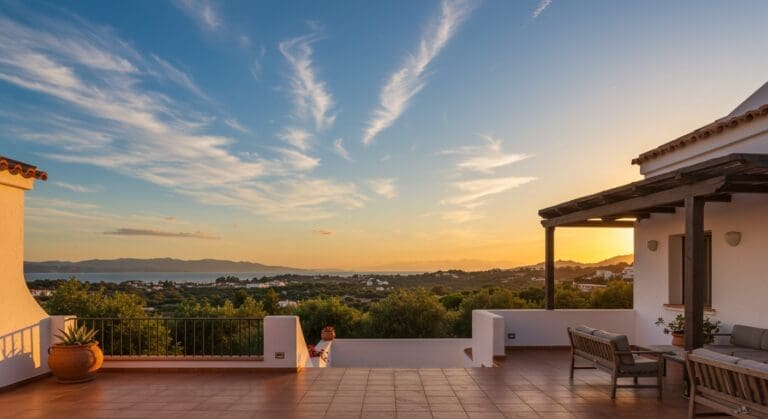
A private villa in Rhodes means a private pool that belongs to your party alone – an apparently simple distinction that changes the entire texture of a holiday. Spontaneous 6am swims. Children in the pool at midnight if the mood takes them. No one rearranging your towels or questioning your sunscreen choices. The pool is yours, the terrace is yours, and the view – whether it’s the Aegean or the Old Town or the valley leading to the interior – is a backdrop you don’t have to share with the couple from the next room who are on honeymoon and making everyone aware of it.
The space that villas offer is transformative for families and groups in ways that can’t be replicated by hotel room adjacency. A villa sleeping twelve has kitchen facilities, outdoor dining, separate living spaces, and a level of domestic self-determination that means the group can operate as a household rather than a collection of hotel guests who happen to know each other. Multi-generational families – grandparents, parents, children – find that a villa with separate wings or levels allows everyone to coexist happily in a way that three adjacent hotel rooms never quite achieves.
For remote workers, the premium end of the Rhodes villa market increasingly offers reliable high-speed connectivity – some properties have Starlink installations that deliver consistent speeds regardless of location. A terrace overlooking the Aegean with a solid WiFi connection and a cup of Greek coffee is, objectively, a better office than most alternatives. The time zone works comfortably for European business hours, and the ability to close the laptop and be in a private pool within thirty seconds addresses the work-life balance question rather effectively.
Wellness-focused guests will find that the better villas include amenities – private gyms, hot tubs, yoga decks, massage services arranged through villa concierge – that combine with the island’s hiking trails, clean air, and quality of local food to create the kind of genuine reset that wellness retreats charge considerably more for. The Greek way of eating – abundant vegetables, olive oil, fresh fish, late unhurried dinners – has been a wellness proposition for several thousand years before the industry formalised it.
Villa concierge services at the premium end of the Rhodes market handle restaurant reservations, private boat charters, airport transfers, grocery stocking, and itinerary planning – effectively providing the personalised service of a luxury hotel with none of the constraints. With over 27,000 properties worldwide and a curated selection across this island, Excellence Luxury Villas can match the right property to the right trip. The full collection of private villa rentals in Rhodes is the logical next step.
More Rhodes Travel Guides
- Best Restaurants in Rhodes: Fine Dining, Local Gems & Where to Eat
- Rhodes Food & Wine Guide: Local Cuisine, Markets & Wine Estates
- Rhodes with Kids: The Ultimate Family Holiday Guide
- Best Time to Visit Rhodes: Month by Month Weather, Crowds & Tips
- Rhodes Luxury Itinerary: The Perfect 7-Day Guide
- Romantic Rhodes: The Ultimate Couples & Honeymoon Guide
What is the best time to visit Rhodes?
May, June, September and October are the strongest months by most measures – warm enough for swimming, cool enough for comfortable sightseeing, and significantly less crowded than July and August. July and August are reliably sunny and the island is operating at full capacity, but they are also the most expensive and busiest months, particularly in Lindos and the Old Town. For a relaxed luxury holiday with pleasant weather and more availability in restaurants and villas, late spring and early autumn are difficult to improve on. Sea temperatures remain warm through October, which is a genuine bonus for those who find the Mediterranean in May slightly bracing.
How do I get to Rhodes?
Rhodes is served by Diagoras International Airport (RHO), located approximately 14 kilometres southwest of Rhodes Town. Direct flights operate from across Europe throughout the summer season, with particularly good connections from the United Kingdom – British Airways, easyJet, Jet2 and TUI all fly direct from multiple UK airports, with flight times of around three and a half to four hours from London. From Athens, Aegean Airlines and Olympic Air operate multiple daily flights taking approximately 45 minutes. Pre-booked private transfers are recommended for villa guests, particularly those staying in Lindos or the southern part of the island.
Is Rhodes good for families?
Rhodes is very well suited to family holidays, particularly for families with children of varying ages. The east coast beaches – Tsambika, Agathi, Anthony Quinn Bay – offer calm, clear water that is safe for young swimmers. The medieval Old Town captures children’s imaginations in the way that only real castles and battlements can. Greek culture is genuinely welcoming to children in restaurants and public spaces, which removes much of the low-level anxiety that accompanies family dining in some other European destinations. Private villa rental significantly enhances the family experience – a private pool, outdoor dining space, and kitchen facilities give families the flexibility and privacy that hotel stays rarely provide.
Why rent a luxury villa in Rhodes?
A private luxury villa in Rhodes offers a fundamentally different holiday experience to a hotel. The most immediate advantage is a private pool – exclusive to your party, available at any hour, with no competition for sunloungers or shallow-end access. Beyond the pool, the space that a villa provides is transformative: separate living areas, outdoor dining, kitchen facilities, and the freedom to operate as a household rather than hotel guests. Premium villa concierge services handle restaurant bookings, private boat charters, grocery stocking, and airport transfers, delivering the personalised service of a luxury hotel with considerably more flexibility. For families and groups, the staff-to-guest ratio and level of personalisation is simply not replicable in a hotel context.
Are there private villas in Rhodes suitable for large groups or multi-generational families?
Yes – the Rhodes villa market includes a strong selection of larger properties designed specifically for groups and multi-generational families. Many premium villas sleep ten to sixteen guests and are structured with separate wings, independent bedroom suites, or multiple living areas that allow different generations to share a property without crowding each other. Private pools – sometimes multiple pools at the larger estates – are standard at the luxury end. Staff including housekeeping, private chefs, and concierge are available at many properties, which significantly changes the experience for larger groups who don’t want to spend their holiday managing logistics. Availability for large properties in peak summer should be booked well in advance.
Can I find a luxury villa in Rhodes with good internet for remote working?
Increasingly, yes. The premium villa market on Rhodes has responded to the growth in remote working demand, and many higher-end properties now offer reliable high-speed broadband as standard. Some villas in more rural or coastal locations have installed Starlink satellite internet, which delivers consistent speeds regardless of the property’s position on the island. When booking with connectivity as a priority, it is worth confirming the specific setup directly with the villa manager – fibre, cable, or Starlink installations all deliver meaningfully different performance. Rhodes sits in a compatible European time zone for remote workers based in the UK or western Europe, and the combination of a terrace overlooking the Aegean and a solid connection is, by most accounts, a significant improvement on a standard office.
What makes Rhodes a good destination for a wellness retreat?
Rhodes offers a combination of natural environment, quality of local food, and villa amenities that creates a genuine wellness proposition without the structured programme that formal retreats impose. Hiking trails through the interior valleys, sea swimming in exceptionally clean water, and the particular quality of light and silence that the island’s quieter areas deliver all contribute to the kind of physical and mental reset that people pursue wellness travel for. The Mediterranean diet in its actual Rhodian form – olive oil, vegetables, fresh fish, local herbs – is substantive rather than performative. Premium villas often include private gyms, hot tubs, yoga terraces, and access to in-villa massage and treatment services. The pace of life, particularly outside the resort areas, does the rest.