Rome Food & Wine Guide: Local Cuisine, Markets & Wine Estates
It begins before you have fully decided to be awake. The smell of espresso from somewhere below, the particular quality of Roman morning light falling through wooden shutters, and a growing awareness that today – unlike most days – involves no particular obligation except to eat well. You wander out into a street that has been here since before your country existed. A market is already in full cry two corners away, someone is arguing cheerfully over the price of artichokes, and a bar the size of a cupboard is dispensing perfect cornetti to people who drink their coffee standing up and consider this entirely normal. This is Rome at the table. It asks nothing of you except attention. And appetite. Considerable appetite.
This Rome food and wine guide is for travellers who understand that eating in Rome is not a supporting act. It is the main event. From the markets of Testaccio to the wine estates of the Castelli Romani, from truffle-laced pasta in a private dining room to learning the alchemy of cacio e pepe with your own hands, what follows is a map to the city’s edible soul – written for those who would rather spend two hours over lunch than two hours in a queue.
For broader context on the city, our full Rome Travel Guide covers everything from the best neighbourhoods to the cultural unmissables.
The Philosophy of Roman Cuisine
Roman food is the most misunderstood major cuisine in Italy, which is a remarkable achievement given that it is essentially defined by simplicity. The clichés about Italian food – fresh ingredients, not too many of them, nothing fussy – are nowhere more rigorously observed than in Rome, and yet visitors still manage to be surprised by it. There are no long, baroque sauces here. No unnecessary flourishes. Roman cooking emerged from what historians politely call cucina povera – the cooking of poverty – and it has the confidence of something that has nothing to prove.
The Roman kitchen has always been defined by what was local, seasonal, and honest. Offal features heavily, because historically nothing was wasted. Dried pasta takes precedence over fresh in many iconic dishes, because semolina keeps and eggs are precious. The cheeses – pecorino romano above all – are sharp and functional, cutting through rich sauces with more precision than ceremony. Even the olive oils from the surrounding Lazio countryside have a personality: grassy, slightly peppery, forward. This is not Tuscany. Nothing is trying to be elegant. It is trying to be true.
The result is a cuisine that rewards those who stop expecting it to perform, and simply surrender to it. Which, in Rome, is excellent advice on almost every subject.
The Signature Dishes You Need to Know
There are four pastas that define Roman cooking, and any serious engagement with this city’s food culture begins with understanding them. Cacio e pepe – pecorino, black pepper, pasta water, and nothing else – sounds like something you might eat when there is nothing in the fridge. In the hands of someone who knows what they are doing, it is transcendent. The technique is everything: the starch in the water, the heat of the pan, the movement of the wrist. It takes years to master and approximately three minutes to destroy.
Carbonara is the second pillar – egg yolk, guanciale (cured pork cheek, not bacon, never bacon), pecorino, black pepper. If you are served carbonara with cream anywhere in Rome, the establishment has made an error of judgement that extends well beyond the kitchen. Amatriciana brings tomato into the equation alongside guanciale and pecorino, with its origins in the town of Amatrice in the hills of Lazio. Gricia – the oldest of the four, essentially an amatriciana before tomatoes arrived in Europe – rounds out the canon.
Beyond pasta: coda alla vaccinara is oxtail braised with tomato, celery, and a long, patient afternoon. Abbacchio al forno – slow-roasted milk-fed lamb with rosemary and white wine – is the Sunday dish, the Easter dish, the dish that makes Romans homesick when they leave. And the artichoke, that great Roman obsession, appears either alla giudia (fried flat and crisp, a Jewish ghetto speciality) or alla romana (braised with mint and garlic, collapsing softly into itself). Both arguments are valid. Both are worth having.
Food Markets: Where Romans Actually Shop
If you want to understand a city’s food culture, ignore the restaurants briefly and go to the markets. Rome’s markets are where the actual negotiating, deciding, and arguing happens – and where you will learn more in an hour about the seasonal rhythms of Lazio than you could from any menu.
The Mercato di Testaccio is the one serious food lovers visit first and keep returning to. Housed in a former slaughterhouse district (appropriately, given Rome’s relationship with offal), it operates six days a week and is largely free of the tourist theatre that has crept into markets elsewhere. The stalls here are devoted to good produce: puntarelle in winter, the season’s first figs in late summer, local cheeses, cured meats, fresh pasta, and Roman street food served from small counters where the queue is the only review you need. Supplì – fried rice balls with a molten core of tomato and mozzarella – are the mandatory entry point.
Campo de’ Fiori, by contrast, has been mostly claimed by tourism at this point, though early morning retains something of its original character. The produce is fine; the atmosphere is photogenic; the prices reflect the postcode. Go for the experience, buy your coffee nearby, and calibrate accordingly. For something more residential and genuinely local, the Saturday market at Piazza San Cosimato in Trastevere is quieter, less performed, and considerably more charming.
The Wines of Lazio and the Castelli Romani
Lazio is not a region that tends to appear on wine lists in London or New York with any great frequency, which means that drinking it in Rome has a pleasing sense of discovery. The wines of the Castelli Romani – the volcanic hills south-east of the city, including Frascati, Marino, and Colli Albani – have historically been the house wine of Rome: abundant, inexpensive, and drunk with the same cheerful pragmatism that characterises Roman eating generally.
The dominant white grape is Malvasia, blended traditionally with Trebbiano. At its best – from a producer who is actually trying – Frascati Superiore can be genuinely lovely: floral, crisp, with a mineral edge that comes from the volcanic tufa soil. At its worst, it is the wine equivalent of a shrug. The gap between the two has narrowed considerably as a younger generation of winemakers has taken quality more seriously, and the Frascati DOCG classification now rewards the better producers.
For reds, Cesanese is the grape to seek. Grown in the hills of Anagni and Piglio, still relatively under the radar, it produces wines that range from light and fragrant to genuinely structured and age-worthy. Local restaurants that know their cellar well will steer you towards the right producers. Ask. Romans enjoy being asked about wine almost as much as they enjoy the wine itself.
Wine Estates Worth Visiting
The Castelli Romani sit within easy reach of Rome – 30 to 45 minutes by car, which in Roman traffic terms means you may wish to leave before noon. The wine estates here are not, by and large, the grand château affairs of Bordeaux or the converted farmhouse glamour of Tuscany. They are working estates, often family-owned, with a directness that suits the culture. What they lack in spectacle they tend to compensate for in generosity.
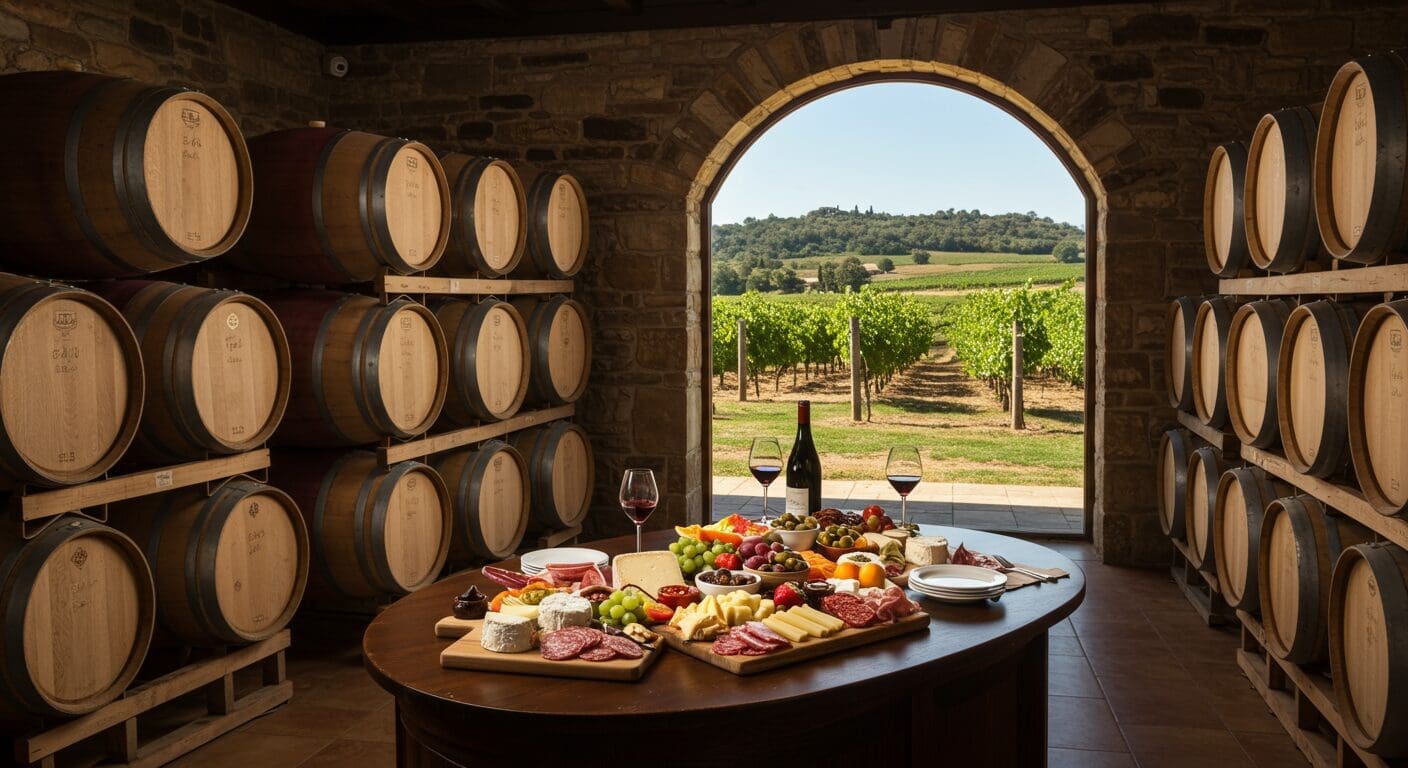
Several estates in the Frascati zone welcome visitors for tastings and cellar tours, often with the opportunity to walk the vineyards above the city and understand how the volcanic soil shapes what ends up in the glass. The views back towards Rome from these hills – the dome of St Peter’s hovering in the haze – are the kind that make you wish you had come here first rather than last.
If you are serious about wine, Piglio in the Ciociaria hills is the destination for Cesanese del Piglio DOCG – Italy’s only DOCG from Lazio and one that deserves considerably more attention than it receives. Small producers here make wines with real character, and a visit typically involves the kind of kitchen-table hospitality that reminds you why you travel to eat and drink rather than simply eating and drinking at home.
Further afield, the Maremma coastline of Lazio – down towards Tarquinia and Montalto – produces some interesting reds that are beginning to attract the attention they merit. Worth exploring if your itinerary extends beyond the city itself.
Cooking Classes and Hands-On Food Experiences
There is a certain type of traveller who photographs their food, and a different type who learns to make it. Rome caters generously to both, though the latter will arguably leave with something more lasting than a camera roll of carbonara.
Cooking classes in Rome range from market-to-table experiences – where the morning is spent shopping at a local market before retreating to a private kitchen – to focussed technical sessions dedicated to a single dish or technique. The quality varies considerably, and the distinction between a genuine culinary experience and a tourist activity wearing an apron is worth making before you book.
The best classes are typically small – four to eight people – led by someone who cooks professionally or has spent a career immersed in Roman food culture, and set in a working kitchen rather than a stage set. A half-day that takes you through cacio e pepe, a supplì, and a Roman-style artichoke will teach you more about this city’s food philosophy than any guidebook including, one assumes, this one. Many luxury villa rentals can arrange private chef experiences and cooking classes as part of the stay – worth requesting when you book.
Truffle Season and the Riches of Lazio’s Hills
Truffles in Rome are not, strictly speaking, a Roman product – but Lazio’s relationship with the surrounding regions of Umbria and the Sabine hills means that they arrive at the table with a regularity that feels local by association. The black truffle of Norcia, just over the regional border, is the workhorse: earthy, robust, and available for most of the cooler months. The white truffle of Alba gets the more breathless press coverage, and the more breathless prices, appearing from October through December.
Several agriturismo estates in the hills north of Rome – in the Sabina area, where the olive groves begin – offer truffle hunting experiences between autumn and early spring. A morning with a trained lagotto romagnolo dog, working through oak woodland for something that smells of soil and season, is one of the more quietly extraordinary food experiences available in the region. The truffle hunt is followed, naturally, by lunch. It would be uncivilised otherwise.
In Rome itself, the best restaurants handle truffle with appropriate restraint – shaved over a simple tajarin, folded into a risotto, placed where they can actually be tasted rather than merely signalled. If a menu in November or December doesn’t feature them at all, ask the sommelier. They usually know where they are hiding.
Olive Oil: The Liquid Gold of the Sabina
The Sabina hills, north-east of Rome along the Tiber valley, are one of Italy’s oldest and most distinguished olive oil producing zones, with a DOP designation that dates the cultivation of olives here to before the Roman Republic. The dominant variety is Carboncella – small, ancient, giving an oil that is bright green when fresh, with a grassy intensity and a clean, peppery finish that is quite unlike the butter-soft oils of Liguria or the richer Sicilian varieties.
Visiting an olive oil producer in harvest season – late October through November – is a sensory experience that tends to reframe permanently how you think about the ingredient. The cold pressing process at a modern frantoio is precise and scientific; the smell of fresh-pressed oil is something that no description adequately captures. Producers in the Sabina welcome visitors during harvest, and many offer tastings with local bread and cheese that constitute a lunch by any reasonable definition.
Buying oil directly from a producer to take home is one of the more sensible acts of luggage management available to a Rome visitor. A litre of properly stored, freshly pressed DOP Sabina oil will survive a careful journey home, and will make everything you cook in January taste of this particular afternoon in the hills above Rome. Which is not nothing.
The Best Food Experiences Money Can Buy in Rome
Rome’s highest culinary tier is not as exuberantly starred as Milan or as internationally celebrated as the Modena universe, but it is serious, committed, and – at its best – deeply moving in the way that only food rooted in place can be. The city has a handful of restaurants operating at the level where the evening becomes an event: the service is unhurried and intelligent, the wine list requires a conversation rather than a scan, and the cooking is in dialogue with tradition without being enslaved to it.
Private dining is an option that suits Rome particularly well. Several chefs offer in-home experiences, working in your villa’s kitchen to produce a menu built around that morning’s market visit. This is, to be direct about it, an excellent use of a Wednesday evening. You eat at your own pace, in your own space, and the conversation about the food happens with the person who made it. No one is waiting for your table.
Wine dinners pairing Roman dishes with wines from Lazio, Umbria, and the wider central Italian canon – led by a sommelier who knows both the wines and the city – are available through various specialists and are worth the investment on a longer stay. Food tours of specific neighbourhoods – the Jewish Ghetto, Testaccio, Prati – with a guide whose knowledge extends to both the historical and the culinary, are among the more genuinely informative ways to spend a morning. The best guides are the ones who know which bar to stop at and when. Rome has a great many bars. Not all of them deserve your time. This is the knowledge worth paying for.
Stay Well, Eat Well: Luxury Villas in Rome
The best way to eat in Rome is to live in it – at least briefly, at least enough to fall into its rhythms. A morning coffee at a nearby bar that recognises you by the second day. A kitchen where your market discoveries can become an evening’s experiment. A terrace where the city’s light changes slowly over a glass of something cold from the Castelli Romani. This is what a private villa offers that no hotel, however excellent, quite replicates.
Explore our collection of luxury villas in Rome – from historic properties in the centro storico to garden retreats on the Aventine – and let the city’s table come to you on your own terms.
What is the best time of year to visit Rome for food and wine experiences?
Autumn – October through November – is arguably Rome’s finest food season. Truffle season is at its peak, the olive oil harvest in the Sabine hills is underway, local wine estates are releasing their new vintages, and the markets are at their most abundant with seasonal produce: porcini, chestnuts, late-season tomatoes, and the first of the winter artichokes. Spring is the other high point, when Roman artichokes and fresh broad beans dominate the markets and abbacchio (milk-fed lamb) is at its best for Easter. Summer is vibrant but hot; the city quietens in August, with some smaller restaurants and markets operating reduced hours.
Which Roman dishes should I prioritise if I only have a few days in the city?
Focus on the four classic Roman pastas – cacio e pepe, carbonara, amatriciana, and gricia – and understand that quality varies enormously between establishments. Carciofi alla giudia (Jewish-style fried artichokes) in the Ghetto, supplì from a good market stall, and abbacchio al forno (slow-roasted lamb) round out a short but essential introduction. For wine, ask specifically for local Lazio labels – a Frascati Superiore from a quality producer or a Cesanese from the Piglio zone – rather than defaulting to Tuscan or Piedmontese bottles. You are in Rome. Drink Roman.
Can I visit wine estates near Rome as a day trip?
Yes, and it is highly recommended. The Castelli Romani – including the wine zones of Frascati, Marino, and Colli Albani – are 30 to 45 minutes south-east of central Rome by car. Most estates welcome visitors for tastings and cellar tours, though advance booking is advisable, particularly for smaller family producers. The Cesanese del Piglio estates in the Ciociaria hills are approximately 90 minutes from Rome and reward the longer journey with wines of genuine character and the kind of unhurried hospitality that makes it difficult to leave before dinner. A driver for the day is a sensible investment if wine tasting is the primary objective. Delegation has its virtues.