Romantic Rome: The Ultimate Couples & Honeymoon Guide
Here is what the guidebooks consistently miss: the single most romantic thing you can do in Rome is get lost. Not in a hashtag-worthy, Instagram-caption sense – genuinely, deliberately lost. Turn off your phone, pick a direction from whichever piazza you happen to be standing in, and walk. You will stumble upon a fountain that isn’t on any tourist map, a vine-covered courtyard where someone is hanging washing, a bar where the barista knows everyone by name and you are greeted with the warm suspicion reserved for people who wandered in by accident. This is Rome operating at its truest frequency – intimate, serendipitous, completely indifferent to your itinerary. And it is precisely this quality that makes Romantic Rome: the ultimate couples & honeymoon guide both a joy to write and, in some ways, a contradiction in terms. You can plan a romantic trip to Rome. You just have to leave room for Rome to do its own thing.
Why Rome Is Exceptional for Couples
Most cities that bill themselves as romantic are working fairly hard to earn the description. Rome doesn’t try. The romance is structural – it is baked into the topography, the light, the collective cultural agreement that beauty matters and that dinner should take at least two hours. Where other cities hustle, Rome lingers. Where others renovate, Rome layers. The result is a place where you are perpetually surrounded by evidence that humans have, across several thousand years, cared deeply about making things beautiful for other people. That tends to put you in a certain mood.
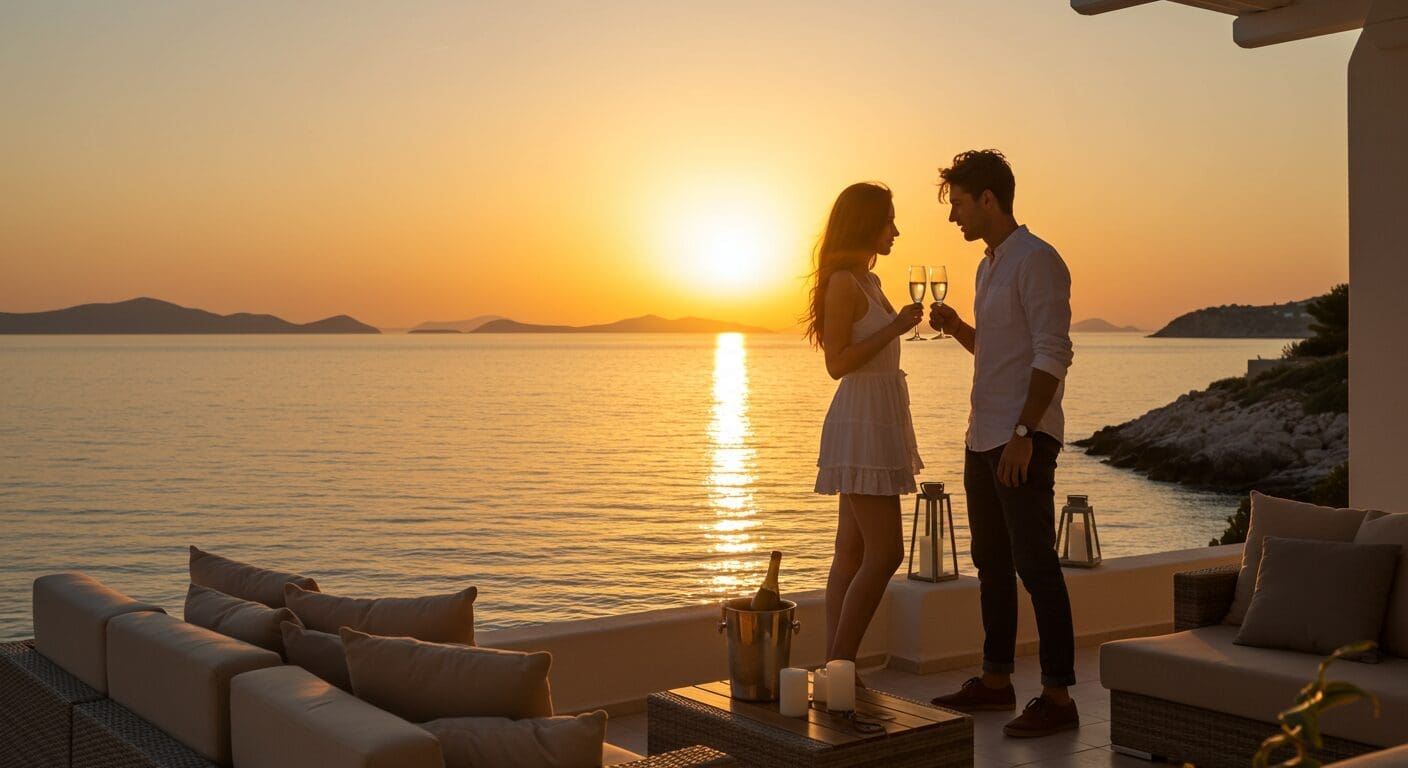
For couples, this translates into something specific. There is an ease to romantic gesture here that doesn’t exist in the same way anywhere else. A glass of wine at dusk on a terrace overlooking the Forum doesn’t require booking three weeks in advance or knowing the right person. The city’s pace encourages slowness – long lunches, afternoon pauses, evenings that begin at nine and end when they end. Couples who arrive with packed itineraries often find that by day three they have quietly stopped consulting the list. Rome has a way of editing your plans for you, and the result is usually better than what you had in mind.
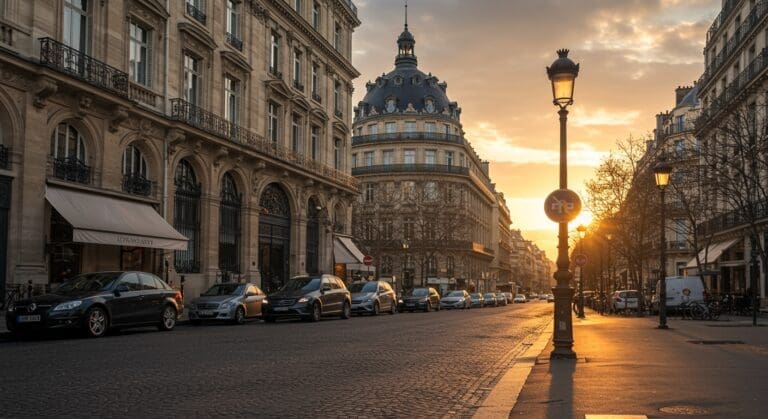
There is also the matter of beauty as backdrop. Whether you are celebrating an anniversary, a honeymoon, or simply the fact that you are somewhere extraordinary together, the city provides constant visual reward. Golden hour here is not a photographic effect – it is the actual colour of the stone, the actual quality of the late afternoon sun. It has been making people feel things for millennia. It will work on you too.
The Most Romantic Settings in Rome
The Pincian Hill terrace above the Borghese Gardens at dusk deserves its reputation entirely. The view west over the domes of the city as the sky moves through copper and rose is the kind of thing that, if it appeared in a film, you would find slightly implausible. It isn’t. Go on a weekday, go late, and take something to drink. The city will provide the rest.
The Aventine Hill is less visited and arguably more affecting – a quiet residential ridge where the Orange Garden looks out over the Tiber and St Peter’s dome sits perfectly framed in the distance. There is also, on the Aventine, a keyhole in a large wooden door belonging to the Knights of Malta, through which you can see that same dome aligned at the end of a long garden avenue. It is a small, slightly absurd, entirely Rome thing to do together. It costs nothing and you will talk about it for years.
Trastevere at night operates as its own romantic ecosystem – cobbled lanes lit by warm lantern light, the sound of a guitar from somewhere, trattorias spilling onto the pavement, cats regarding everything with magnificent disdain. For couples who want atmosphere that doesn’t feel engineered, this neighbourhood after 9pm is difficult to improve upon. The Campo de’ Fiori, by contrast, is better in the early morning before the market packs up – the flowers are extraordinary, the light is low and golden, and for an hour at least, it belongs to you.
The Best Restaurants for a Special Dinner
Rome rewards those who resist the obvious. The restaurants around the major monuments are, without exception, best avoided – they exist to serve people who won’t be coming back and are priced accordingly. The genuinely memorable meals happen elsewhere.
For a special occasion dinner, look to the restaurants of the Prati neighbourhood, just north of the Vatican – less touristic than Trastevere, more relaxed than the centro storico, with a neighbourhood confidence in the kitchen. A table outside, candles on the cloth, a bottle of something from Lazio or further south, and the particular pleasure of ordering something you don’t entirely recognise on a menu in Italian – this is the shape of a great Roman evening.
In the centro storico itself, the streets around Piazza Navona conceal some genuinely serious cooking alongside a great deal of perfectly pleasant mediocrity. The distinction is usually made by looking at who is eating there – if the table next to you contains three Roman families arguing happily, you are probably in the right place. For rooftop dining with views over the city’s tiled rooftops, hotels in the Parioli and Esquilino areas often have terraces open to non-guests, and the combination of altitude, warmth and wine is reliably effective.
What matters most is pace. Don’t rush it. Order the pasta course and the main. Ask for the wine list rather than ordering by the glass. Stay until the candles burn low. In Rome, lingering at a table is not an imposition – it is an expectation, and a very sensible one at that.
Couples Activities: Beyond the Sightseeing List
The best couples experiences in Rome are the ones that create a shared memory rather than a shared photograph. A cooking class in a private kitchen – learning to make cacio e pepe properly, which is harder than it looks and immensely satisfying when it works – gives you something to bring home that isn’t a fridge magnet. Several operators offer these in apartment kitchens around Trastevere and the centro storico, typically over two to three hours with a market visit beforehand to select ingredients. The market trip alone, with a knowledgeable guide pointing out what’s seasonal and what the vendors are actually proud of, is worth the morning.
Wine tasting in the Castelli Romani – the volcanic hill towns thirty minutes south of the city – makes for an ideal day trip that feels nothing like a day trip. This is where Romans have always come to drink and eat properly, and the cellars here produce white wines, particularly Frascati and its neighbours, of real character. A private tour with a sommelier who can explain the volcanic soil without making you feel like you’re in a lecture is the version to book.
For something more active, cycling along the Appian Way on a quiet Sunday morning – when the road is closed to traffic – is unexpectedly peaceful. The ancient cobblestones are hell on your wrists and the road is not forgiving, but cycling between Roman tombs and umbrella pines on a clear morning with someone you love is the kind of experience that doesn’t require any embellishment. Sailing on the coast near Ostia or Civitavecchia is available through charter companies and makes for a thoroughly different perspective on the city’s reach – Rome, after all, once ruled the sea. The coastline here isn’t the Amalfi, but the light on the Tyrrhenian in late afternoon is something entirely its own.
Spa experiences in Rome tend to be either historic or contemporary – and occasionally both. The Roman obsession with bathing is not merely historical, and several of the city’s luxury hotels maintain serious spa facilities. For a more theatrical experience, thermal baths in the nearby countryside at Viterbo or along the Via Aurelia offer outdoor thermal pools in volcanic landscape. Sitting in warm sulphurous water while looking at rolling Lazio hills in October is not everyone’s idea of glamour. Those people are wrong.
The Most Romantic Areas to Stay
Where you base yourself in Rome shapes the entire texture of the trip. The centro storico – the historic centre bounded roughly by the Tiber, the Pantheon and Piazza Navona – offers the densest concentration of beauty and the most immediate sense of being inside the city rather than adjacent to it. It is also the most visited, which means the streets immediately around the major sites require a certain tolerance for crowds. For couples who want to step out of the door and be immediately in the middle of everything, it remains the right choice.
Trastevere is the most atmospheric neighbourhood for romantic stays, particularly in a private villa or apartment. Its medieval street plan means you are essentially living inside a film set, except the coffee is genuine and the neighbours are real. It is louder than you might expect on Friday and Saturday nights – the area has a thriving nightlife – but by Sunday morning it reverts to something almost village-like in its calm.
Prati, north of the Vatican, is less discussed but increasingly preferred by visitors who want good restaurants, easy walking to the river, and a slightly more residential sense of the city. The Parioli neighbourhood to the north-east is where prosperous Romans have always lived, and a villa here places you in a context that feels genuinely private – tree-lined streets, fine mid-century architecture, and a sense that you are living as a Roman rather than as a tourist.
For couples who want complete privacy, the villas on the edges of the Borghese Gardens or overlooking the Janiculum Hill offer both the city and a retreat from it. This is the configuration that works best for honeymoons in particular – close enough to walk everywhere, far enough from everything to feel like the city is yours alone. Our Rome Travel Guide covers the neighbourhoods in more detail if you want to understand the city’s geography before you choose.
Proposal-Worthy Spots
Rome is, by any reasonable measure, one of the best cities in the world in which to propose. The difficulty is that it knows this about itself, and several of the most obvious spots have developed a faint quality of theatrical expectation that can work against the moment. The Spanish Steps on a summer Saturday are many things. Intimate is not one of them.
The places that work best are the ones with grandeur but without crowds – and in Rome, with a little timing, these are not hard to find. The Pincian Hill terrace very early on a weekday morning, before the joggers arrive and long before the tour groups, has a quality of stillness that is almost theatrical in the right direction. The Roseto Comunale, the rose garden on the Aventine open only in late spring, is one of the least-visited beautiful places in all of Rome – a terraced garden of roses above the Circus Maximus with views to the Palatine Hill that are, in the early evening light, quite disarming.
The Forum at sunset, viewed from the Capitoline Hill terrace, provides a backdrop of such extraordinary historical weight that anything said in front of it feels consequential. If you prefer something more intimate, the courtyard of a private villa, arranged with flowers and wine by a discreet concierge, has the considerable advantage of being yours alone. No strangers applauding. No pigeons.
Anniversary Ideas in Rome
Rome rewards return visits in a way that very few cities do – every visit reveals something the last one missed, and couples returning for anniversaries frequently report that the city feels both familiar and continuously surprising. This is not magic. It is density. There is simply too much here to absorb in one visit, or five.
For a milestone anniversary, consider structuring the trip around a single experience each day rather than a list of sites. A morning at the Borghese Gallery (which requires advance booking and limits numbers, which is exactly what you want) followed by a long lunch in Parioli. An afternoon in a private wine cellar in the Castelli Romani followed by dinner as the sun goes down. A morning walk through the Protestant Cemetery in Testaccio – where Keats and Shelley are buried among cypress trees and cats in a corner of the city that most visitors never find – is one of those experiences that is simultaneously melancholy and deeply peaceful, and somehow entirely romantic for it.
A private guided tour of the Vatican’s less-visited areas, or an after-hours visit to a museum or gallery, can be arranged through specialist operators and transforms the experience entirely. Standing in front of the Raphael Rooms or the Caravaggio paintings in Santa Maria del Popolo without anyone else present is to understand these works differently. The scale of them. The darkness of them. The fact that someone made these things by hand in rooms not entirely unlike this one.
Honeymoon Considerations
Rome is well-suited to honeymoons but requires some thought about timing. July and August are the months when the city is at its most crowded, its most expensive, and its warmest – which is to say, extremely warm. Many Romans leave in August. The restaurants they leave behind are, in the nicest possible way, not their best ones. Late September and October is the configuration most worth defending: warm evenings, lower light, fewer visitors, and a city that has settled back into its own rhythms after the summer. April and May are beautiful and increasingly popular – spring in Rome has a particular quality of light and temperature that is hard to fault.
For honeymooners, privacy is everything. A private villa rather than a hotel room changes the nature of the experience completely – you have your own kitchen for the mornings when you don’t want to go out, your own terrace for the evenings when you don’t want to share the view, and the particular luxury of space and quiet in a city that otherwise offers a great deal of neither. This is the version of Rome that stays with you.
Budget well for food and experiences rather than spreading thinly across too many things. Two weeks of doing everything at half the pace and twice the quality is infinitely preferable to a fortnight of rushing. Rome, more than almost any other city, rewards the visitor who slows down and lets the city come to them. It will. It always does.
Your Romantic Roman Base
The difference between a hotel room and a private villa in Rome is the difference between watching the city and living in it. With a villa, you wake up to your own terrace, your own kitchen, your own version of the city’s morning sounds – coffee from somewhere nearby, the bells of a church you will eventually identify, the particular Roman quality of Sunday morning light falling across a courtyard. For couples, for honeymooners, for anyone who has come to Rome to be somewhere rather than simply to see it, this is the configuration that makes everything else make sense.
A luxury private villa in Rome is the ultimate romantic base – not because it offers more than a great hotel, but because it offers something entirely different: a version of Rome that is yours, arranged around your rhythms, bookended by your own terrace rather than someone else’s lobby. That is the trip worth planning. And worth returning for.