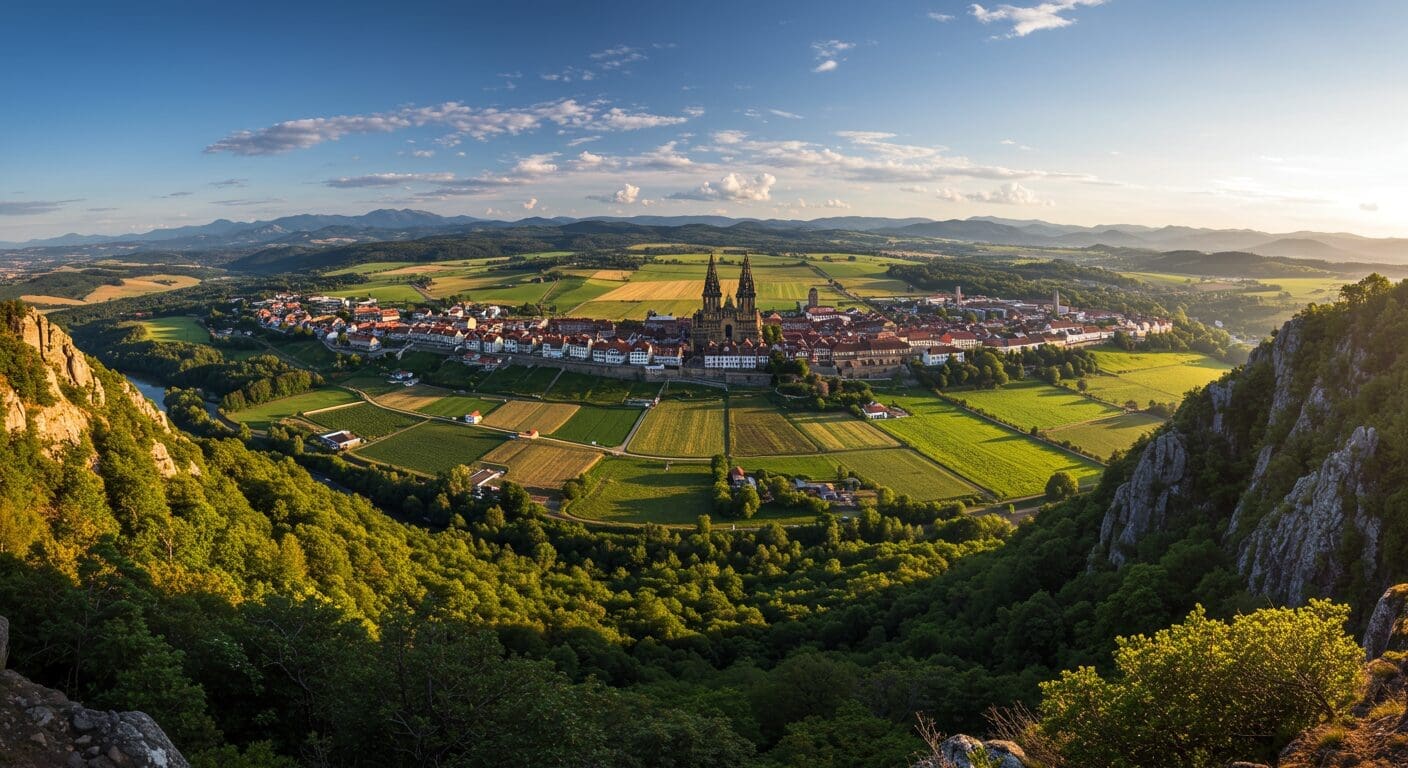
Saint James Travel Guide: Where to Stay, Eat & Explore in Luxury
There is a particular quality of light on Long Island’s North Shore in late September that photographers talk about in hushed, slightly evangelical tones. The summer crowds have dissolved back to Manhattan, the humidity has finally relented, and the whole of Saint James seems to exhale. The maples along Lake Avenue begin their slow turn from green to amber, the farm stands are piled high with late-season corn and heirloom tomatoes the size of a child’s fist, and the Long Island Sound takes on that deep, theatrical blue that you only see when the angle of the sun drops low enough to mean business. This is when Saint James is, quietly, magnificent. Not in a way that announces itself. In a way that rewards the people who bother to notice.
Saint James, New York – a village of around five thousand souls tucked into the North Shore of Long Island’s Suffolk County – has long been the kind of place that those who know it guard with mild possessiveness. It is ideal for couples on milestone trips who want something rooted and real rather than merely expensive, for families seeking the sort of privacy that a genuine community affords (rather than a gated resort designed to simulate one), and for groups of friends who want a proper base in which to eat, drink, and argue pleasantly about which hiking trail to take the next morning. Remote workers have discovered, with considerable satisfaction, that Saint James offers the kind of reliable connectivity and civilised pace that makes a working week from a private villa not just possible but actively enjoyable. And for those with wellness on their mind, the combination of coastal air, wooded trails, and a growing farm-to-table food culture makes for a genuinely restorative week – without the faint humiliation of being told to breathe deeply by a twenty-two-year-old in linen trousers.
Getting to Saint James: Easier Than You Think, More Rewarding Than You’d Expect
Saint James sits on Long Island’s North Shore roughly fifty-five miles east of Midtown Manhattan, which in practical terms means it is considerably more accessible than its quiet, unhurried atmosphere would lead you to believe. John F. Kennedy International Airport is the most logical gateway for transatlantic arrivals, sitting around forty-five miles to the west and offering direct connections from most major cities across the United States, as well as long-haul flights from Europe and beyond. LaGuardia Airport is marginally closer but considerably smaller in terms of international connections. MacArthur Airport in Ronkonkoma is the local option – a compact, pleasingly unhurried regional airport that sits less than fifteen minutes from Saint James by car and handles a useful number of domestic routes if you are connecting from elsewhere in the country.
From JFK, a private car transfer to Saint James takes approximately an hour in moderate traffic, though if you are arriving on a Friday afternoon in summer, add another thirty minutes and a quiet philosophical acceptance of the Long Island Expressway. The Long Island Rail Road’s Port Jefferson Branch stops at the village of Saint James itself, making it one of the few luxury destinations in the North Shore accessible without a car at all – though most visitors choose to hire one, since the pleasures of this part of Long Island are usefully spread out. Having your own transport means you can follow the back roads at will, stop impulsively at a farm stand, and generally move at the pace the place itself encourages.
Where to Eat in Saint James: A Food Scene That Punches Considerably Above Its Weight
Fine Dining
For a village of its size, Saint James maintains a dining scene that would embarrass towns three times as large. Voilà The Bistro, on Lake Avenue, is the anchor piece – a proper French-inflected bistro of the sort that inspires the kind of quiet devotion usually reserved for childhood homes. The five-course menu is the thing to order: pork tenderloin medallions and escargot arrive with the kind of calm confidence that signals a kitchen not remotely interested in impressing you with fireworks, just in producing food that is correctly, beautifully done. The chocolate soufflé, made to order and arriving exactly as promised, has been described by Long Island food writers as a reason in itself to make the drive from the city. The service is warm without being familiar, and the ambiance – chic without being effortful – strikes the balance that French-influenced restaurants spend decades trying to achieve.
Husk & Vine has established itself as the go-to destination for serious wine enthusiasts and those who appreciate small plates that reward attention. Chef Fran’s approach is fusion in the best sense – genuinely curious, technically grounded, never arbitrary – and the curated wine list is the kind that makes you read it twice and then ask sensible questions of the staff, who know the answers. The guided pours and wine flights are particularly good for the sort of evening where the conversation is the point and the food and drink simply facilitate it. It has been a Saint James date-night institution long enough that couples who first visited a decade ago now bring their grown-up children here. That is not a small compliment.
Where the Locals Eat
The Stone Goat Restaurant and Brewery is the kind of two-storey American establishment that urban food writers occasionally overlook and then feel quietly embarrassed about. The ground floor manages to be simultaneously elevated and genuinely welcoming – New American cuisine built around local and seasonal ingredients, a bar that knows what it is doing, and live music on Friday and Saturday evenings that tends toward the pleasurable rather than the intrusive. Upstairs, the Pub Room offers television access and an outdoor terrace, while the Beer Garden – with its food truck, picnic tables, lawn games, and reliably pet-friendly atmosphere – is where Saint James comes to be collectively at ease on a warm evening. If you are trying to understand what makes this village tick, sit in the Beer Garden on a Saturday and pay attention.
The Trattoria Saint James is, by local consensus, an absolute five-star Italian extravaganza – and the locals are not wrong. Family-owned and operating with the kind of conviction that only comes from genuine culinary heritage, it produces rustic Italian dishes from fresh, high-quality ingredients with a consistency that chain restaurants spend millions trying and failing to simulate. It is the sort of place where you eat too much pasta and feel specifically good about it. Booking ahead is advisable and not merely a suggestion.
Hidden Gems Worth Seeking Out
Maureen’s Kitchen is breakfast and brunch distilled to its finest, most honest form. The cow-themed decor is either charming or eccentric depending on your disposition, and the portions are what Long Island would call “generous” and what the rest of the world might call “genuinely alarming.” The pancakes are the cornerstone of the menu and the reason the queue forms before the doors open on weekend mornings. The inventive specials change with enough regularity to reward repeat visits. Go early, go hungry, and don’t make plans for the two hours following. You won’t be in any state to execute them.
Beyond the restaurants, Saint James is connected to a broader network of North Shore farm stands and local producers that form the real infrastructure of the food scene. Mills Pond Road takes you through landscape that changes with the seasons but always seems to have something worth stopping for – whether that is fresh corn in August, pumpkins in October, or preserves and cider that make excellent gifts for people back home who didn’t come with you and should have.
The Lay of the Land: Long Island’s North Shore and Why This Corner of It Matters
Saint James sits within the broader geography of Suffolk County’s North Shore – a stretch of coastline and hinterland that has been quietly beloved by New Yorkers of means for well over a century. The village itself is anchored by Lake Avenue, a proper Main Street of the kind that American towns spend considerable energy trying to manufacture and Saint James simply has. The surrounding landscape is a genuine mix of residential calm, preserved woodland, agricultural land, and shoreline – not the beach-resort shoreline of the South Shore, but the more complex, ecologically richer edge of the Long Island Sound, with its rocky beaches, tidal marshes, and views across to Connecticut on a clear day.
The wider region rewards exploration. Smithtown, the surrounding township, contains a network of back roads and preserved landscapes that make aimless driving a legitimate activity. The Nissequogue River – which flows through the area before emptying into the Sound – provides a ribbon of natural beauty that justifies its state park designation. The North Shore broadly runs from the wealthy familiarity of the Hamptons’ northern counterpart through villages like Stony Brook – with its historic district and natural history museum – to Port Jefferson, a genuine small harbour town with a working ferry connection to Connecticut and a restaurant scene worth the short drive.
Saint James itself does not try to be anything other than what it is: a historic North Shore village with good bones, excellent food, genuine community, and the kind of architectural character that comes from buildings actually being old rather than designed to look it. The Long Island experience on offer here is fundamentally different from the Hamptons spectacle – lower key, more rooted, and arguably more interesting for it. The people who have discovered this tend to feel strongly about keeping it to themselves. They are not always entirely successful.
Things to Do in Saint James: From Shoreline Hikes to History Worth Learning
Sunken Meadow State Park is the activity anchor for any serious stay in Saint James, and it earns that status without difficulty. Located minutes from the village, the park offers access to the Long Island Sound via a wide beach that manages to feel genuinely expansive even on busy summer weekends, largely because the park’s topography – a genuine variety of bluff, marsh, woodland and open grassland – distributes visitors rather than concentrating them. Six miles of hiking trails run through the park, including the northern terminus of the Suffolk County Greenbelt Trail, which means that serious walkers can use Sunken Meadow as the starting point for a much longer journey south through Long Island’s interior. Swimming, fishing, cycling, and horseback riding are all on the programme, and the views across the Sound to the Connecticut shore on a clear day have the specific quality of making you feel considerably better about existence generally.
Stony Brook Village, a ten-minute drive from Saint James, is worth half a day of anyone’s time. The Three Village area – which encompasses Stony Brook, Setauket, and Old Field – contains some of the best-preserved eighteenth and nineteenth century architecture on Long Island, along with the Stony Brook Grist Mill, a functioning mill from 1751 that manages to be genuinely interesting rather than merely historic. The Stony Brook University Art Museum and the Long Island Museum round out a cultural offering that is substantive enough to justify real engagement rather than a polite half-hour visit.
Port Jefferson, a twenty-minute drive east, provides harbour atmosphere, a variety of independent restaurants and shops, and the particular pleasure of watching the Cross Sound Ferry make its way to Connecticut – a pleasure that is approximately three times as enjoyable if you are on a terrace with a drink. The town has enough architectural character and culinary confidence to merit a full afternoon and an early dinner before the drive back.
Active Pursuits: What the North Shore Does Extremely Well
The geography of Saint James and its surrounding area creates a surprisingly varied menu of outdoor activity. The Long Island Sound is the dominant physical fact, and it shapes what is possible. Kayaking and paddleboarding along the North Shore coastline are the most immediately accessible water activities, with the calmer, more protected waters of the Sound making them viable for a wider range of experience levels than the open Atlantic alternatives to the south. Fishing is taken seriously here – striped bass and bluefish in season, with a network of local knowledge about where and when that takes genuine years to accumulate and that local charter operators are generally willing to share for considerably less.
Hiking through Sunken Meadow’s trail network has already been noted, but it bears some expansion. The Suffolk County Greenbelt Trail is a forty-mile route running south from Sunken Meadow to Heckscher State Park, making it one of Long Island’s most significant long-distance walking routes. Day-hikers can access substantial sections of it from Saint James without needing to commit to the full distance, and the variety of landscape it traverses – coastal bluff, freshwater wetland, second-growth forest, agricultural edge – makes even short sections rewarding rather than merely aerobic.
Cycling along the North Shore’s back roads is a genuinely pleasurable activity in the shoulder seasons, when traffic is minimal and the scenery – particularly in October, when the tree cover turns properly spectacular – justifies the effort. Road cyclists will find the terrain gently rolling rather than punishing, and the network of quieter county roads makes it possible to cover interesting ground without spending the morning negotiating highway traffic. Golf is available at several nearby courses, including those in the Stony Brook area, for those whose idea of an active morning involves rather more standing still than the above options suggest.
Saint James with Children: A Holiday That Doesn’t Require Constant Negotiation
Saint James works extremely well for families, and the reason is not complicated. It combines the kind of outdoor space and natural variety that keeps children genuinely occupied with a food scene grown-up enough that parents are not required to subsist entirely on chicken fingers for a week. The formula sounds obvious; it is, in practice, surprisingly rare.
Sunken Meadow State Park is the cornerstone of any family visit. The beach is wide and the Sound is calmer than the Atlantic beaches to the south, making it appropriate for younger swimmers. The hiking trails grade from the entirely flat and pushchair-friendly to the sufficiently challenging to satisfy teenagers who need to believe they are doing something serious. The open meadow areas and picnic facilities make it easy to spend a full day without making any particular decisions, which is precisely what family holidays frequently require.
The farms and farm stands of the surrounding area offer a kind of agricultural education that children absorb without realising it – corn mazes in autumn, pick-your-own produce, the specific pleasure of buying something that was in the ground three hours ago. These are the experiences that end up in family mythology, which is worth considerably more than most ticketed attractions.
A private luxury villa in Saint James transforms the family holiday equation in the most fundamental way. Private pool access means no negotiation about swimming times, no shared facilities, and the freedom to decide that the morning’s plan is to do nothing in particular. Generous indoor and outdoor space means that the hours between activities – the hours that make or break family holidays – are absorbed comfortably rather than anxiously. The kitchen facilities in a well-appointed villa mean that breakfast is on your own terms, picky eaters can be managed without drama, and the rhythm of the day belongs entirely to you.
History and Culture: More Than You Were Expecting, Less Obscure Than You Fear
Saint James has a deeper history than its current quiet prosperity might immediately suggest. The area was originally settled by English colonists in the mid-seventeenth century as part of the Smithtown patent – a land grant whose origin story involves a man named Richard Smythe, a bull, and a boundary-setting journey that local historians tell with varying degrees of straight-faced conviction. The result is a landscape that has been continuously inhabited and shaped for nearly four centuries, and the evidence of that accumulation is visible in the built environment in ways that reward attention.
The Saint James General Store, operating since 1857 and holding a place on the National Register of Historic Places, is one of the longest continuously operating general stores in the United States. It is the kind of place that makes you recalibrate your sense of what continuity looks like. The broader Smithtown area contains a significant number of historic structures and sites maintained by the Smithtown Historical Society, including the Caleb Smith House and the Frank Melville Memorial Park – a designed landscape of the early twentieth century that has weathered its years with considerable grace.
The arts scene on Long Island’s North Shore is more substantial than casual visitors tend to expect. The Stony Brook University community generates a consistent programme of lectures, performances, and exhibitions accessible to visitors. The Long Island Museum in Stony Brook offers a genuinely interesting survey of American art and Long Island history, and its carriage collection is – this is not a sentence one writes lightly – one of the most significant in the country. The proximity to New York City means that cultural gravity always pulls somewhat westward, but Saint James and its neighbours have enough of their own identity to resist complete absorption.
Shopping in Saint James: Local, Considered, and Pleasingly Unhurried
Shopping in Saint James is emphatically not a duty-free-and-designer-boutique proposition. It is something more interesting than that. Lake Avenue provides the village’s commercial backbone – a street of independent businesses that has maintained enough character to be genuinely pleasant to walk rather than merely functional to navigate. Antique and vintage shops appear with enough regularity to make a morning of browsing a legitimate activity, and the quality of what turns up in this part of Long Island – where generations of prosperous families have been furnishing substantial houses for well over a century – is reliably higher than the surroundings might lead you to expect.
The Saint James General Store remains a working retail operation as well as a historic landmark, and the two roles sit together more naturally than you might imagine. It stocks a thoughtful selection of local products, gifts, and provisions that make it worth visiting on its own terms rather than purely as a heritage site. The farm stands that dot the roads through the surrounding agricultural landscape are the best source of things to bring home – jams, preserves, local honey, and cider that travel well and arrive as gifts of genuine provenance rather than generic holiday souvenirs.
Port Jefferson, a short drive east, adds a further layer of retail variety with its harbour-town collection of independent shops and galleries. The density of independently owned businesses along its main commercial streets reflects a town that has maintained enough economic vitality to support genuine variety – including bookshops, art galleries, and the kind of clothing and homeware stores that stock things you might actually want rather than things designed to fill the space between the restaurant and the ferry terminal.
What to Know Before You Go: Practical Matters Handled Briefly
The United States dollar operates here, as it does everywhere in the country. Credit cards are accepted almost universally. Tipping remains the custom it is throughout the country – fifteen to twenty percent at restaurants is the baseline expectation, and the service culture in Saint James’s better establishments is good enough that twenty percent is rarely begrudged. Sales tax in New York adds approximately eight to nine percent to purchases, which is worth knowing before you experience the arithmetic at the register.
The best time to visit Saint James depends entirely on what you are here for. Summer – June through August – brings warm temperatures, full beach activity, and the social life of a Long Island community fully alive to the season. It also brings the most competition for the better restaurants, and the Long Island Expressway on a summer Friday afternoon is an experience that has broken people with considerably more patience than you possess. September and October are the months that regulars tend to prefer: the weather remains genuinely warm well into October, the crowds have eased, the foliage begins its performance in earnest, and the farm stands reach their autumnal peak. Spring – May and early June – offers cool, clear days and a sense of the landscape waking up that has its own particular appeal.
Winter is quiet. Very quiet. Some of the restaurants operate on reduced schedules, and the beach at Sunken Meadow has the specific, entirely different beauty of a North Shore shore in January – dramatic, cold, and restorative in a bracing rather than a relaxing way. For those who seek solitude and don’t require reliable restaurant access, there is something genuinely appealing about this off-season version of the village. Those who require their comforts reliably available should come between May and October and plan accordingly.
Safety presents no particular concerns. Saint James is a residential community of the suburban North Shore variety – low-crime, well-maintained, and the sort of place where the most significant local controversy tends to involve zoning. Drive on the right, observe the traffic laws that New York State takes with varying degrees of seriousness, and be aware that speed limits in residential areas are enforced with more consistency than they appear to be.
Why a Private Luxury Villa in Saint James Makes Everything Better
The case for renting a private luxury villa in Saint James is, at its core, a case for a different category of holiday – one where the accommodation is not merely the place you return to after the day’s activities, but an active contributor to the experience itself. Hotels in this part of Long Island offer what hotels offer: consistent service, managed expectations, and the faint background awareness that the person in the next room is also on holiday and may have different opinions about what constitutes a reasonable hour to be moving around.
A private villa offers something categorically different. For families, the advantage is obvious – the children have space, the pool is yours without a reservation system or a towel-on-sun-lounger arms race, and the kitchen means that breakfast happens when you want it to happen, not when the dining room opens. For groups of friends, a villa provides the communal infrastructure – shared living space, a proper dining table, outdoor areas large enough to contain a party without reorganising it – that a cluster of hotel rooms simply cannot replicate. For couples on milestone trips, the privacy and the quality of space transform the texture of a week in ways that are difficult to fully explain until you have experienced the difference.
Luxury villas in Saint James with strong connectivity have become the preferred choice of remote workers who have discovered that the combination of high-speed internet, a dedicated workspace, and the ability to eat lunch on a terrace overlooking a private garden changes the nature of a working week fundamentally. The question of whether this counts as work or holiday becomes productively blurred. The answer, broadly, is that it counts as both and is better for it.
Wellness-focused guests find that a well-appointed villa – with pool, garden, and the kind of calm that comes from genuine seclusion – creates a baseline of restorative quality that supplements whatever hiking, beach time, and farm-to-table dining the surrounding area provides. There is something about having your own pool and your own kitchen stocked with local produce that supports the kind of genuinely restful week that wellness in the marketed sense promises but rarely delivers.
At Excellence Luxury Villas, we offer a curated collection of private villa rentals in Saint James that genuinely reflects what this part of Long Island has to offer – space, quality, privacy, and access to a landscape and food culture that rewards the attentive traveller. Browse the collection and find the property that makes this particular version of a luxury holiday in Saint James yours.
More Saint James Travel Guides
- Best Restaurants in Saint James: Fine Dining, Local Gems & Where to Eat
- Saint James Food & Wine Guide: Local Cuisine, Markets & Wine Estates
- Saint James with Kids: The Ultimate Family Holiday Guide
- Best Time to Visit Saint James: Month by Month Weather, Crowds & Tips
- Saint James Luxury Itinerary: The Perfect 7-Day Guide
- Romantic Saint James: The Ultimate Couples & Honeymoon Guide
What is the best time to visit Saint James?
September and October are widely regarded as the finest months by those who know Saint James well. The summer heat and crowds have receded, the foliage begins to turn in earnest from mid-October, the farm stands are at peak autumn abundance, and the restaurant scene operates at full capacity without the summer pressure on reservations. That said, June through August offers the full beach and water-sports programme at Sunken Meadow State Park and the warmest weather for pool and outdoor living. May and early June are excellent for those who prefer cooler days, lower prices, and the particular pleasure of a landscape in spring. Winter is quiet and cold and has its own austere appeal, but visitors should verify restaurant and attraction opening hours before committing to a December or January trip.
How do I get to Saint James?
The most practical gateway for international visitors is John F. Kennedy International Airport, approximately forty-five miles west of Saint James and offering extensive connections from across the United States and from major cities in Europe and beyond. LaGuardia Airport is a viable alternative for domestic connections. MacArthur Airport in Ronkonkoma is the local regional option, located less than fifteen minutes from Saint James by car and useful for domestic connections. Private car transfer from JFK takes approximately one hour in moderate traffic. The Long Island Rail Road’s Port Jefferson Branch serves Saint James directly, making rail access from Penn Station in Manhattan straightforward – roughly ninety minutes to two hours depending on service. A hire car is recommended for most visitors, as the best of what the surrounding area offers is spread across the landscape rather than concentrated in a single walkable centre.
Is Saint James good for families?
Saint James is an excellent choice for families, combining outdoor space and natural variety with a food scene that accommodates adults rather than merely tolerating them. Sunken Meadow State Park provides beach access on the calmer Long Island Sound, hiking trails at multiple difficulty levels, cycling, fishing, and open meadow space for younger children. The agricultural landscape surrounding the village adds farm stands, pick-your-own produce operations, and seasonal activities that tend to become family memories rather than mere itinerary items. Renting a private villa dramatically improves the family holiday dynamic – private pool access, generous indoor and outdoor space, and kitchen facilities that put meals and schedules on your own terms rather than the hotel’s. The proximity to Port Jefferson and Stony Brook adds further variety for families spending a week or more in the area.
Why rent a luxury villa in Saint James?
A private luxury villa in Saint James provides a fundamentally different holiday experience to any hotel alternative. Privacy is the most immediate advantage – your own pool, your own garden, your own outdoor dining space, without shared facilities or managed schedules. For families and groups, the space to coexist comfortably – separate bedrooms, generous communal living areas, proper outdoor entertaining space – transforms the quality of time spent together. The kitchen facilities in a well-appointed villa make the area’s exceptional local produce directly accessible: farm stand ingredients, local seafood, and the fruits of the surrounding agricultural landscape all become part of your daily rhythm rather than something you encounter only in restaurants. Staff and concierge services available through Excellence Luxury Villas can handle reservations, provisions, and local logistics, leaving guests to do nothing more demanding than decide what to do next.
Are there private villas in Saint James suitable for large groups or multi-generational families?
Yes. The villa collection available through Excellence Luxury Villas includes properties suited to groups and multi-generational families of varying sizes, from spacious four-bedroom properties through to larger estates that provide the kind of space where different generations can share a holiday without experiencing it as a test of patience. Key features to look for include multiple bedroom wings or floors providing genuine privacy within the group, large communal outdoor spaces including private pool and garden areas, generous kitchen and dining facilities suited to group meals, and staff options including housekeeping and concierge services that remove the domestic logistics of a large-group stay. Contact our villa specialists to discuss your group’s specific requirements and we will match you with the most appropriate properties from the collection.
Can I find a luxury villa in Saint James with good internet for remote working?
Connectivity in Saint James and the broader North Shore area of Suffolk County is generally solid, with fibre and cable broadband infrastructure serving most residential and rental properties at speeds fully adequate for video conferencing, large file transfers, and the other practical demands of remote working. Many premium rental villas are equipped with high-speed internet as standard, and some properties in more rural settings have added Starlink satellite connectivity to ensure consistent performance regardless of local infrastructure. When booking through Excellence Luxury Villas, our team can confirm the specific connectivity specification of any property and, where required, identify villas with dedicated workspace areas suited to extended remote working stays. The combination of reliable internet, private outdoor space, and access to Saint James’s excellent restaurant scene makes for a working week that is considerably better than the office alternative.
What makes Saint James a good destination for a wellness retreat?
Saint James offers a combination of natural environment, pace of life, and food culture that supports genuine restoration rather than the packaged wellness experience. Sunken Meadow State Park provides immediate access to coastal air, varied hiking trails, and the particular restorative quality of shoreline landscape – the Long Island Sound is calmer and more contemplative than the open Atlantic, which suits walkers and paddleboarders as well as swimmers. The farm-to-table food culture, anchored by genuinely good restaurants and accessible local produce from surrounding farms, makes eating well effortless rather than effortful. A private luxury villa adds the infrastructure of a personal wellness retreat: private pool for morning and evening swims, garden space for outdoor yoga or simply quiet sitting, and the fundamental luxury of a schedule that answers to no one. Properties with gym facilities, outdoor hot tubs, and al fresco dining terraces are available through Excellence Luxury Villas for guests prioritising the wellness dimension of their stay.