San Bernardino County Travel Guide: Where to Stay, Eat & Explore in Luxury
The morning light hits the high desert at an angle that makes you wonder, briefly, whether you’ve accidentally stumbled onto the set of a film about the American West. You’re sitting on the terrace of your villa with coffee that’s better than it has any right to be at this altitude, watching the Joshua trees throw long shadows across the pale earth, and somewhere in the middle distance a hawk is doing something impressive that you would photograph if you could be bothered to move. Later, you’ll drive the old Route 66 corridor through San Bernardino city, stop for the kind of taco that changed fast food history without meaning to, and by afternoon you’ll be back in the mountains with a glass of something cold and the particular silence that only very large, very empty landscapes can produce. This is San Bernardino County – the largest county by area in the contiguous United States, which almost nobody outside California can locate on a map, and which absolutely does not mind.
The county stretches from the suburban edges of Los Angeles across the Mojave Desert and into the San Bernardino Mountains with a geographical ambition that borders on the theatrical. It rewards travellers who are willing to do a little homework – and it richly rewards those who choose to base themselves properly, with space and privacy, rather than in a hotel corridor. Couples celebrating milestone anniversaries come here for the drama of the desert landscape and the seclusion that the mountains provide. Families seeking genuine privacy – away from the choreographed chaos of theme parks and resort pools – find that a luxury villa in the San Bernardino County mountains or desert gives them a kind of holiday they genuinely didn’t expect. Groups of friends who have been attempting to organise a trip for approximately three years finally manage it here, partly because the value proposition is compelling and partly because someone mentions Joshua Tree and everyone immediately agrees. Remote workers who have discovered that a reliable broadband connection and a private pool constitute a perfectly functional office arrangement will find the infrastructure increasingly solid across the region. And wellness-focused travellers – those who need the combination of altitude, clean air, hiking trails and the specific psychological benefit of very large sky – find this county quietly transformative in a way that doesn’t require a single crystal or sound bath (though both are available, if you need them).
Getting Here Without Losing the Feeling Before You Arrive
San Bernardino County is deceptively well-connected, given how wild much of it feels once you’re there. Ontario International Airport (ONT) is the smart choice for most visitors – significantly less chaotic than LAX, with direct flights from major hubs across the country and shorter ground transfer times into the heart of the county. From Ontario, you can be in San Bernardino city in under thirty minutes, up in the mountain towns of Lake Arrowhead or Big Bear Lake in under an hour and a half, or out to the Joshua Tree area in around two hours. Los Angeles International Airport (LAX) remains an option for those arriving on international routes, and Palm Springs Airport (PSP) is worth considering if the desert east is your primary destination – it’s smaller, calmer, and has a genuine mid-century charm that sets the tone nicely.
Car hire is not optional here. This is not a public transport destination, and anyone who tells you otherwise is working from theory rather than experience. The distances are significant, the landscapes between points of interest are worth experiencing at your own pace, and the freedom to stop at a roadside date shake stand on Highway 62 at eleven in the morning is one of the quiet pleasures of the trip. A sturdy SUV is advisable if you plan to spend time in the mountains, particularly in winter when Big Bear receives genuine snowfall. Fuel up regularly in populated areas – the Mojave has a way of making petrol stations feel more theoretical than actual.
Where to Eat: From Historic Route 66 to the Mountains
Fine Dining
San Bernardino County doesn’t have a Michelin-starred restaurant situation to worry about, which is partly a limitation and partly, depending on your perspective, a relief. What it does have is a food scene that is entirely honest about what it is – regional American cooking with strong Mexican, Japanese and Southern BBQ threads running through it, executed by people who have been doing this for decades and have no interest in foam. The mountain towns of Big Bear and Lake Arrowhead support a handful of genuinely accomplished restaurants that know their audience well: visitors who have been skiing or hiking all day and want something serious on the plate without having to change out of comfortable shoes. Seasonal menus built around local produce and game are increasingly common in this altitude bracket, and the wine lists have quietly improved. If you’re staying in a luxury villa in the mountains and want a proper evening in, many properties now offer access to private chef services – which, when you can eat at a table with a view of the San Bernardino National Forest and a fire crackling nearby, is the obvious choice.
Where the Locals Eat
There is no more honest test of a food culture than where the locals eat on a Tuesday, and San Bernardino city passes it with some authority. Mitla Café on Route 66 has been in business since 1937, which is a fact worth sitting with for a moment. This family-owned institution is the oldest Mexican restaurant in the Inland Empire, and its place in food history is somewhat involuntary – Glenn Bell reportedly visited repeatedly before founding a chain whose name rhymes withaco Hell, borrowing liberally from the menu in the process. The original, needless to say, is better. The tacos here are the real article: proper, unflashy, deeply flavoured, served in a room that has been feeding people since your grandparents were young. Come hungry, order more than you think you need, and don’t let anyone talk you out of it.
For something smoky and unapologetically carnivorous, Spirit of Texas Craft BBQ delivers ribs and brisket with the kind of conviction that makes you slightly embarrassed about salads. The jalapeño cornbread sides are almost as good as the meat itself, which is high praise in a county where the BBQ conversation is taken seriously. Miyagi Sushi, in the Seccombe Way area, produces fish as fresh as anything on the coast – which always surprises people who assume geography makes this impossible, and which the kitchen takes quiet satisfaction in.
Hidden Gems Worth Seeking Out
Alfredo’s Italian Restaurant is the kind of place that doesn’t need Instagram to survive, which is a recommendation in itself. The pizza crust achieves the chewy-crispy balance that most pizzerias spend careers chasing, and the pasta sauces are the sort you want to address with bread long after the official eating has concluded. New ownership has reportedly sharpened the service without disturbing the soul of the place – a transition that doesn’t always go well but, here, has. India’s Clay Oven rounds out the picture with authentic Indian cooking – korma curry, tofu tikka, proper kheer and kulfi – in an atmosphere that manages to be both relaxed and lively. The spice levels are calibrated for those who actually want to taste spice, which is more than can be said for many Indian restaurants catering to cautious diners. The aromas hit you before you sit down. Follow them.
The Landscape: Three Counties in One, Essentially
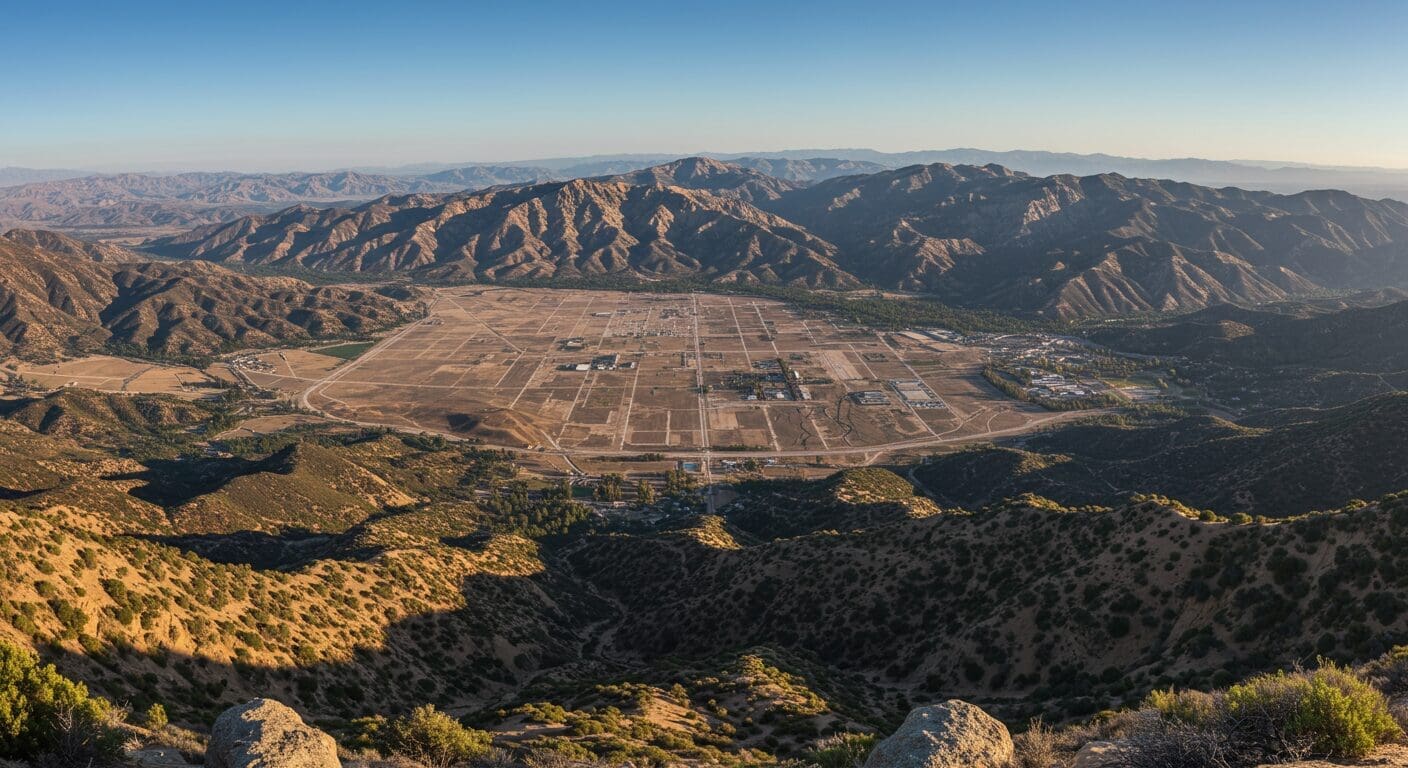
To understand San Bernardino County, it helps to temporarily abandon the idea that a county is a thing with consistent character. This one isn’t. It contains, within its 20,000 square miles, the ski slopes of Big Bear Mountain, the wild rock formations of Joshua Tree, the Mojave Desert in its full improbable splendour, the mountain resort culture of Lake Arrowhead, the Route 66 heritage corridor of San Bernardino city, and the transition zone where the desert meets the mountains in a way that looks like two different film sets meeting unexpectedly. The San Bernardino Mountains, rising to over 11,000 feet at San Gorgonio Mountain – the highest point in Southern California – provide a physical drama that the rest of the county uses as a kind of backdrop. Snow in winter, wildflowers in spring, perfect hiking temperatures in autumn. The Mojave section, meanwhile, operates on its own terms entirely: ancient, vast, indifferent to the opinions of visitors, and beautiful in a way that takes a day or two to properly register.
Lake Arrowhead, the resort community in the San Bernardino Mountains roughly ninety minutes from Los Angeles, has the feeling of a place that knows it has a good thing going and is not going to overdo it. The lake itself is private – access is restricted to property owners and their guests, which makes staying in a villa here a considerably different proposition than day-tripping. Big Bear Lake, further east and higher in elevation, has a more democratic energy: ski resort, summer water sports, a walkable village strip, and the kind of mountain-town atmosphere that works reliably for all ages. Both are worth your time. The question is only which version of mountain California appeals.
Things to Do: The Desert, the Mountains and the Road in Between
The single most compelling activity the county offers is also the most straightforward: drive out to Joshua Tree National Park. The park sits right in San Bernardino County and is one of the great experiences of California, which is a state not short of great experiences. The Joshua trees themselves – those improbable, arm-waving desert plants that look as though Dr Seuss designed them on an ambitious day – are the headline, but the park is substantially more than its vegetation. The rock formations in the Wonderland of Rocks area are extraordinary: vast granite boulders piled by geological time into formations that read as abstract sculpture. The night sky here is among the darkest in Southern California, making Joshua Tree one of the best stargazing locations in the state. Come at dusk, stay after dark, and bring a jacket – the desert drops temperature with considerable speed once the sun leaves.
Rock climbing in Joshua Tree has an almost mythological status in the climbing community. Routes range from beginner-friendly to routes that will quietly reorganise your understanding of what hands are for. The park’s famous cracks and face climbs attract serious climbers from across the country, and guiding services operate for those who want technical instruction. Hiking options are extensive at all difficulty levels – the Hidden Valley trail is a classic for a reason, and the Skull Rock nature trail rewards even the most casual walker with landscape that earns the trip.
Back in the mountains, Big Bear Mountain Resort operates year-round: skiing and snowboarding in winter (typically December through April), mountain biking and hiking via lift in summer. The contrast between the ski season and summer mountain activity makes this one of the more versatile resort destinations in Southern California. Lake Arrowhead offers kayaking, paddleboarding and boating in warmer months, alongside the kind of lakeside village browsing that passes a pleasant afternoon without requiring any particular agenda.
Adventure and Sport: What the Terrain Demands
The county’s physical geography is essentially a standing invitation to do something athletic, and it would be impolite to refuse. Hiking is the dominant activity, and the San Bernardino National Forest provides over 800 miles of trails with which to make serious progress on that ambition. The Pacific Crest Trail passes through the county, and day-hiking accessible sections of it is one of those experiences that sounds modest on the itinerary and turns out to be genuinely memorable. San Gorgonio Mountain, at 11,503 feet, is the county’s high point and a legitimate mountaineering objective – the summit hike requires a wilderness permit and a reasonable level of fitness, but the views from the top extend on clear days to the Pacific.
Mountain biking in Big Bear has developed a serious reputation, with the Bear Mountain Bike Park operating during summer with lift-accessed downhill trails that range from approachable to punishing. Cross-country trail networks in the surrounding national forest extend the options considerably. In winter, the skiing and snowboarding at Bear Mountain and Snow Summit – both in Big Bear – provides proper vertical drop and enough variety to keep intermediate and advanced riders occupied for several days. Snow Summit in particular has a devoted following among Los Angeles weekenders who treat it as their local mountain, which it essentially is.
Off-road driving and ATV experiences in the Mojave and surrounding high desert offer something different: the particular satisfaction of covering large, empty terrain at speed, through landscapes that seem specifically designed to make you feel small in the best possible way. Hot air ballooning over the desert is available through several operators, and it produces the kind of photographs that look impossibly good and require approximately no skill to take. The desert, in this respect, is doing most of the work.
San Bernardino County with Children: Space to Roam Without the Queue
This is not a destination built around children’s entertainment in the theme-park sense – which, depending on your family’s preferences, is either a limitation or the entire point. What San Bernardino County offers families is something increasingly hard to find near major cities: actual space, genuine nature, and the absence of anybody trying to sell your child something at every turn. A private villa in the mountains or desert with its own pool becomes the operational base for a holiday that feels both adventurous and relaxed – children have room to run, parents have space to breathe, and nobody is standing in a ninety-minute queue for anything.
Joshua Tree is excellent for older children and teenagers in particular – the rock scrambling opportunities in Skull Rock and Wonderland of Rocks areas require no formal climbing skill and produce the kind of physical confidence that structured activities rarely manage. Big Bear’s lake and ski resort are straightforwardly excellent for families: learn-to-ski programmes at Snow Summit are well-established, summer lake swimming is free of the conditions that make ocean swimming complicated, and the mountain village has ice cream and enough low-key entertainment to fill the gaps between outdoor activities. The dark skies of the desert make for extraordinary stargazing sessions that consistently impress children who have grown up under urban light pollution – a low-effort, high-impact activity that costs nothing and tends to produce questions you weren’t entirely expecting.
History, Culture and the Long Road Through the Desert
Route 66 passes through San Bernardino city in a way that feels less like a heritage attraction and more like a living artery – businesses that have been on this stretch for decades sit alongside newer ones, and the road retains a gritty authenticity that the more tourist-groomed sections of the Mother Road sometimes lack. The California Theatre of the Performing Arts in downtown San Bernardino is a 1928 Spanish Colonial Revival building of genuine architectural splendour, and its continuing life as a performance venue is the kind of institutional stubbornness that makes old buildings worth saving.
The county’s Native American heritage is present and ongoing rather than purely historical. The Serrano and Cahuilla peoples have inhabited this region for thousands of years, and the Twenty-Nine Palms Band of Mission Indians and several other tribal nations maintain cultural and administrative presence in the county today. The San Bernardino County Museum in Redlands offers a solid regional history programme covering geology, palaeontology and human history with enough depth to reward a proper visit. Redlands itself – a small city of Victorian-era architecture and Smiley Library, one of the most beautiful small public libraries in California – is worth an afternoon that most visitors don’t give it.
The arts scene in the county is less concentrated than in neighbouring Los Angeles but more present than the desert landscape might suggest. Twentynine Palms, the town adjacent to Joshua Tree National Park, has developed a small but genuine arts community with galleries and studios that feed on the landscape’s particular quality of light. The Joshua Tree Music Festival, held twice annually in the park, draws a devoted crowd and has the atmosphere of something that hasn’t yet been discovered by the wrong people – which is the ideal festival state.
Shopping: What to Take Home That Isn’t a Cactus
San Bernardino County’s shopping landscape mirrors its terrain: spread out, slightly unpredictable, and occasionally surprising. The mountain towns of Big Bear and Lake Arrowhead support a range of boutiques, galleries and craft shops that skew heavily toward the outdoors aesthetic – quality outdoor gear, mountain-made ceramics, artisan food products, and the kind of locally made candle that smells of pinyon pine and will confuse your house back home in a pleasant way. The Lake Arrowhead Village retail area is compact and walkable, well-curated by mountain resort standards.
The Twentynine Palms and Joshua Tree township strip along Highway 62 has become, over the past decade, a genuinely interesting shopping corridor for vintage furniture, desert art, handmade jewellery and the kind of eclectic Americana that Los Angeles interior designers have been quietly plundering for years. Prices remain more honest than in the city, largely because the shops are run by artists rather than retailers. The Pioneertown area, originally built as a Western film set in the 1940s, houses a small cluster of shops and Pappy and Harriet’s – a legendary honky-tonk bar and music venue that has hosted everyone from Paul McCartney to Robert Plant and continues to operate as though it hasn’t quite noticed how famous it’s become.
San Bernardino city itself has the commercial infrastructure of a large California city, including the standard anchor mall options for those who need them. The Inland Empire Premium Outlets in nearby Ontario cover the luxury brand bases for those pursuing a more specific retail mission.
Practical Matters: What You Actually Need to Know
San Bernardino County operates on Pacific Standard Time, uses US dollars throughout, and tips at the standard American rate of 18-20% in restaurants and for most service interactions. Credit cards are accepted everywhere except a handful of small market stalls and craft vendors in the more remote areas, where cash remains useful to carry. The county is generally safe across its main visitor areas, though urban San Bernardino city has neighbourhoods that warrant the same common-sense awareness you’d apply in any large American city.
The best time to visit depends almost entirely on which part of the county you’re heading to. The desert sections – Joshua Tree, the Mojave – are ideal in spring (March to May) when temperatures are comfortable and the wildflower bloom can be extraordinary, and in autumn (September to November) when the heat has relented. Summer in the low desert is serious – temperatures above 100°F are not unusual and not theoretical. The mountains run on an opposite logic: summer brings perfect hiking weather and lake activities, while winter delivers skiing conditions and the cosy cabin atmosphere that the mountain resort towns do very well. Altitude affects some visitors, particularly in the San Gorgonio and Big Bear areas – allow a day of acclimatisation if you’re arriving from sea level and plan to be active immediately.
California driving laws apply throughout, with a zero-tolerance approach to mobile phone use while driving. Wildlife on mountain roads – deer particularly – is a genuine hazard after dark. Drive accordingly. And carry sunscreen at all times, at all altitudes. The desert sun at elevation is not merciful, and it has no interest in your complexion preferences.
Luxury Villas in San Bernardino County: The Case for Doing This Properly
There is a version of San Bernardino County that involves a chain hotel room in the valley, a theme park day trip, and a meal at whatever is closest to the car park. That version is fine. It is not this version.
The private villa proposition in San Bernardino County is, frankly, unusually compelling. This is a destination defined by landscape scale and solitude – the kind of place where what you actually want is a terrace with a view, a private pool that you don’t share with strangers doing lengths at 7am, and the ability to return from a day in Joshua Tree to something that feels like a home rather than a room. The luxury villas san bernardino county offers range from mountain lodges in the San Bernardino National Forest with exposed timber beams, hot tubs and wood-burning fireplaces, to desert retreats near Joshua Tree with architect-designed mid-century aesthetics, heated pools and outdoor showers that make washing feel like a lifestyle choice.
For families, the villa model eliminates the particular friction of hotel logistics – children have their own space, meals happen on your schedule, and the private pool provides a self-contained activity that removes any pressure to entertain continuously. For groups of friends, the economics make easy sense: split a five-bedroom villa and the per-person cost compares favourably with hotel alternatives while the experience is considerably better. For couples on anniversary trips or honeymoons, the privacy quotient of a properly secluded mountain or desert villa – where the nearest neighbours are a reasonable walk away – is something no hotel corridor can replicate.
Remote workers have discovered that San Bernardino County villas increasingly offer the reliable high-speed connectivity that makes a working holiday genuinely functional rather than aspirationally theoretical. Several properties have invested in dedicated workspace setups, and the combination of mountain or desert scenery outside the window and a serious broadband connection inside it is a productivity equation that holds up. Wellness guests will find that the altitude, air quality, proximity to hiking trails and the psychological benefit of genuine quiet make luxury holiday san bernardino county one of the more effective reset destinations in the American West – before you’ve added a private pool, a home gym, or the option to arrange in-villa yoga instruction.
Excellence Luxury Villas offers a carefully curated portfolio across the county – from the mountain retreats of Big Bear and Lake Arrowhead to the desert escapes near Joshua Tree. Browse our full collection of private villa rentals in San Bernardino County and find the property that fits your version of the trip.
More San Bernardino County Travel Guides
- Best Restaurants in San Bernardino County: Fine Dining, Local Gems & Where to Eat
- San Bernardino County Food & Wine Guide: Local Cuisine, Markets & Wine Estates
- San Bernardino County with Kids: The Ultimate Family Holiday Guide
- Best Time to Visit San Bernardino County: Month by Month Weather, Crowds & Tips
- San Bernardino County Luxury Itinerary: The Perfect 7-Day Guide
- Romantic San Bernardino County: The Ultimate Couples & Honeymoon Guide
What is the best time to visit San Bernardino County?
It depends on which part of the county you’re visiting. For Joshua Tree and the Mojave Desert, spring (March to May) and autumn (September to November) offer the most comfortable temperatures and, in spring, the possibility of spectacular wildflower blooms. Summer in the low desert routinely exceeds 100°F and is best avoided unless you’re specifically heat-tolerant. The mountain areas – Big Bear Lake, Lake Arrowhead – are excellent in summer for hiking and water activities, and in winter for skiing, with peak snow conditions typically between December and March. If you want to experience both the mountains and the desert on a single trip, late April or early October offer the best compromise across both elevations.
How do I get to San Bernardino County?
The most convenient airport for most visitors is Ontario International Airport (ONT), located in the western part of the county with direct domestic flights from major US hubs and significantly less congestion than Los Angeles International (LAX). LAX is the primary international gateway and is roughly 60-90 minutes by road depending on traffic and your destination within the county. Palm Springs Airport (PSP) is the best option for visitors heading primarily to the Joshua Tree and eastern desert areas. Car hire is essential throughout – San Bernardino County is not served by public transport to any practical degree across its visitor destinations, and a car gives you access to the Route 66 corridor, mountain switchbacks and desert highways that are half the experience.
Is San Bernardino County good for families?
Very much so, though in a different way from theme-park destinations. The county’s appeal for families lies in genuine outdoor adventure – rock scrambling and hiking in Joshua Tree, skiing and lake activities in Big Bear, mountain biking and forest trails in the San Bernardino National Forest – combined with the space and privacy that a private villa rental provides. Children who have grown up in cities respond strongly to the scale of the desert landscape and the dark-sky stargazing that Joshua Tree offers. Families with teenagers tend to find the county particularly successful: the activity range is serious enough to engage older children, the scenery is dramatic enough to impress them, and the absence of manufactured entertainment is, for most families, a feature rather than a flaw.
Why rent a luxury villa in San Bernardino County?
Because the destination itself is defined by space, solitude and landscape – and a hotel room is an inefficient way to experience those things. A private luxury villa in San Bernardino County gives you a private pool (essential in desert heat and a genuine pleasure at mountain elevation), the ability to return from a day in Joshua Tree or on the ski slopes to something that feels like a home, and a staff-to-guest ratio that no hotel can match. For families, it eliminates the logistics friction of hotel living. For couples, it provides the seclusion that makes a milestone trip feel genuinely private. For groups, the economics are straightforwardly better and the shared experience of a villa – communal spaces, private bedrooms, a kitchen that enables real meals – is fundamentally more enjoyable than a cluster of adjacent hotel rooms.
Are there private villas in San Bernardino County suitable for large groups or multi-generational families?
Yes – the villa portfolio in San Bernardino County includes properties well-suited to large groups and multi-generational travel, particularly in the Big Bear and Lake Arrowhead mountain areas and in the Joshua Tree desert corridor. Larger properties typically offer five to eight bedrooms with separate living wings that give different generations or friend groups their own zones within the property. Private pools, hot tubs, games rooms, home cinema setups and outdoor entertaining areas are standard features at the upper end of the market. For multi-generational families in particular – where grandparents, parents and children are travelling together – the villa model solves the competing needs for communal time and private retreat in a way that no hotel floor can replicate.
Can I find a luxury villa in San Bernardino County with good internet for remote working?
Connectivity has improved considerably across the county in recent years, and many luxury villas now explicitly offer high-speed broadband as a feature. In the mountain areas around Big Bear and Lake Arrowhead, fibre connectivity is increasingly available in established residential areas. In more remote desert locations near Joshua Tree, Starlink satellite internet has become the practical solution and is offered by a growing number of villa properties, delivering reliable speeds that support video conferencing and cloud-based work without the interruptions that older satellite solutions produced. When booking, it’s worth specifying remote working as a requirement so that your villa specialist can confirm connectivity specs – dedicated workspace setup, connection speeds and backup options – before you arrive and discover the desert has other ideas.
What makes San Bernardino County a good destination for a wellness retreat?
Several things converge here that don’t always converge elsewhere. The altitude – particularly in the San Bernardino Mountains – delivers genuinely clean air and the kind of deep sleep that low-altitude, high-pollution environments make difficult. The landscape scale produces a psychological reset that urban environments can’t manufacture. Hiking trails in the San Bernardino National Forest and Joshua Tree National Park provide the kind of sustained outdoor exercise that wellness programmes charge considerable sums to approximate. The Mojave Desert’s extraordinary night skies – genuinely dark, genuinely quiet – have a meditative quality that requires no instruction. And a luxury villa with a private pool, hot tub, home gym and the option to arrange in-villa massage, yoga or nutrition services creates a self-contained wellness environment where the pace is entirely your own. The county doesn’t market itself as a wellness destination in the way some places do, which may be why it works so well as one.