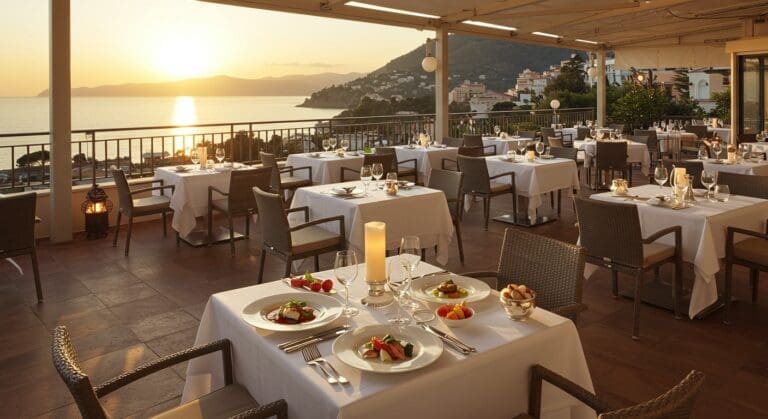
San Diego County Travel Guide: Where to Stay, Eat & Explore in Luxury
There are places in the United States that do sunshine well. Florida does it loudly. Hawaii does it dramatically. But San Diego County does something rather more difficult: it does sunshine reliably, quietly, and without making a fuss about it. The Mediterranean climate here – 70 degrees and largely cloudless for an almost indecent proportion of the year – is the kind of weather that other destinations claim in their brochures and fail to deliver. San Diego County actually delivers it. And then it piles on top: forty miles of beaches that range from urban cool to wild and empty, a food scene now serious enough for three Michelin stars, a hinterland of mountains and desert that most visitors never discover, and a Pacific coastline so photogenic that the locals have presumably learned to simply stop noticing it. It adds up to something that nowhere else in California – and arguably nowhere else in the country – quite replicates.
The question of who this place is for has a pleasingly broad answer. Families seeking genuine privacy – the kind that comes from a villa with a gated pool rather than a corridor-accessed hotel room – find San Diego County exceptionally rewarding: the beaches are safe, the culture is child-friendly without being infantilised, and the outdoor activities are extensive. Couples marking milestone moments will find it equally well-suited: there are three-Michelin-star restaurants, wild coastal sunsets, and enough sense of occasion to do justice to an anniversary or honeymoon. Groups of friends arrive for the craft beer, the surf culture, and the kind of long golden evenings that seem engineered for lingering. Wellness-focused travellers come for the hiking, the Pacific air, and the region’s quietly serious spa scene. And a growing wave of remote workers – the sort who require reliable high-speed connectivity alongside an ocean view – have discovered that San Diego County is, in practical terms, one of the finest places in the world to work from. The infrastructure is excellent. The distraction of the Pacific is a known occupational hazard.
How to Arrive Without Losing Half a Day to Logistics
San Diego International Airport (SAN) sits with almost implausible convenience on the edge of downtown – a matter of minutes from the waterfront, and rarely more than thirty from most coastal destinations in the county. International visitors typically connect through Los Angeles (LAX), San Francisco (SFO), or Dallas-Fort Worth, though direct transatlantic flights into LAX with a short onward hop are increasingly the preferred route for European travellers. If you are arriving from the United Kingdom, British Airways and Virgin Atlantic both serve Los Angeles directly, making the connection to San Diego straightforward. For those staying in the northern reaches of the county – Carlsbad, Del Mar, Encinitas – it is worth noting that Los Angeles International is actually closer in miles, though not always in spirit.
Getting around San Diego County is, in truth, a car conversation. The county spans over four thousand square miles, from the Pacific coast to the Anza-Borrego Desert, and while downtown San Diego has reasonable public transport options, the wider region rewards those who drive. Rental cars are plentiful and well-priced at the airport. The freeways – particularly the coastal I-5 – run smoothly by the standards of Southern California, which is admittedly not a high bar, but better than the alternative further north. For villa guests, arriving by private transfer with a driver who actually knows the back roads is worth every penny; the difference between a relaxed arrival and forty minutes of Google Maps negotiation in rental car darkness is not a trivial one.
Where to Eat: From Three Michelin Stars to Calabrian Perfection
Fine Dining
The headline – and it is a genuine headline – is Addison at the Fairmont Grand Del Mar. Chef William Bradley holds three Michelin stars here, placing Addison among the most decorated restaurants in the entire country. This is not the sort of place you book on the day; reservations are coveted months in advance, and the experience is as considered and precise as the reservation process suggests. The setting inside the Grand Del Mar resort adds an element of theatre without descending into excess: this is Californian fine dining with the kind of gravitas that Europe usually claims for itself.
Carlsbad, somewhat against expectations for a coastal town best known to the outside world for its outlet mall and LEGOLAND, has quietly become a serious dining destination. Jeune et Jolie holds one Michelin star and has earned a place on OpenTable’s Top 100 US restaurants list – the significant detail being that this list is compiled from real diner reviews, not critics. Modern French cooking with California instincts, a room that manages warmth alongside elegance, and cooking that justifies the drive north from the city. A mile or so away, Lilo arrived in the 2025 Michelin Guide as San Diego’s newest one-star restaurant: twelve courses, twenty-two guests per evening, a design-forward room, and the kind of intimacy that makes a tasting menu feel like a conversation rather than a performance. Booking at Lilo feels genuinely exclusive in a way the word is usually deployed carelessly to describe.
In downtown San Diego’s East Village, Callie brings California-Mediterranean sensibility to a room that consistently outperforms its surroundings. Another OpenTable Top 100 honouree, Callie is the kind of restaurant that becomes a genuine anchor point for any luxury holiday in San Diego County – the place you return to a second night when you had only planned one.
Where the Locals Eat
Little Italy on the San Diego waterfront has long been the neighbourhood that rewards an aimless morning more than almost any other in the city. The weekly Saturday Mercato – one of the largest farmers’ markets in California – draws both serious cooks and those who simply want a very good coffee and somewhere to stand in the sunshine feeling pleased with themselves. The neighbourhood’s restaurant scene rewards exploration, and the craft cocktail bars that have opened along India Street over the past decade are a reliable evening destination for those who have graduated from tourist-facing Gaslamp Quarter and have not looked back.
North County – the stretch of coast from Del Mar up through Solana Beach, Encinitas, and Carlsbad – has a dining culture that rewards those who slow down long enough to find it. Encinitas in particular has an almost implausibly good independent food scene for its size: farm-to-table restaurants that predate the trend, serious fish tacos, and a café culture that feels genuinely local rather than performed.
Hidden Gems Worth Seeking Out
Civico 1845 in Little Italy has been delivering standout Italian cooking for ten years – a span of consistency that in the restaurant industry is approximately the equivalent of geological time. Chef Pietro’s bold Calabrian flavours anchor a menu built on real ingredients cooked with the kind of conviction that keeps rooms full on Tuesday nights. It is the opposite of a hidden gem in that regulars are fiercely protective of it, which is really just another way of saying: book ahead and do not tell too many people.
The craft beer bars of North Park are the other thing worth knowing about. San Diego has more craft breweries per capita than almost any city in the United States, and while the industry has matured to the point where ‘craft brewery’ no longer automatically means ‘somewhere to stand on concrete’, North Park’s independent bar scene remains genuinely convivial. Stone Brewing’s Liberty Station outpost is the obvious entry point; the smaller taprooms along 30th Street are where the real conversations happen.
The Lay of the Land: Understanding San Diego County’s Extraordinary Range
San Diego County rewards those who resist the temptation to stay in one place and call it done. The geography here is absurdly varied for a single administrative region. On the coast, you have the dense urban energy of downtown San Diego and the Gaslamp Quarter, the cliffs and coves of La Jolla, the surf villages of Encinitas and Oceanside, and the quieter, more residential stretches of Coronado Island – a peninsula shaped like a question mark that sits across the bay from downtown, connected by a bridge of satisfying architectural drama.
Drive east from the coast and the landscape shifts with almost cinematic abruptness. Within thirty minutes of the Pacific, you are climbing through the Peninsular Ranges into the Cleveland National Forest – oak woodland, chaparral, and mountain meadows that see actual snow in winter. Continue east and the terrain opens into the Anza-Borrego Desert State Park, the largest state park in California, where in a good wildflower year the desert floor erupts in colour so improbable that photographs of it look manipulated. It is not manipulated. San Diego County simply contains more landscape than it has any right to.
The wine country of Temecula Valley sits in the county’s northern interior – rolling hills planted with vineyards, a genuinely charming old town, and a wine scene that has spent the last two decades quietly improving to the point where comparison with Spain‘s smaller appellations no longer sounds like flattery. Day trips from the coast take around an hour. The value proposition, compared to Napa, is considerable.
The Best Things to Do in San Diego County: A Selective and Opinionated List
La Jolla Cove is, by any reasonable measure, one of the finest snorkelling spots on the US Pacific Coast. The cove is an ecologically protected deep-water bay carved into sandstone sea cliffs, and the water clarity on a calm morning is remarkable. Sea lions haul themselves onto the rocks with the particular indifference of animals that have concluded they are more interesting than the tourists photographing them (they are probably right). Below the surface, leopard sharks patrol the sandy floor with impressive nonchalance, and the California Garibaldi – a fish of such emphatic orange it looks like a costume choice – moves through the kelp with the self-assurance of something that knows it is the state fish and acts accordingly. Kayaking through the sea caves here, including the famous bootlegger’s tunnel, is one of those activities that sounds mildly adventurous on paper and delivers something considerably more memorable in practice.
A San Diego Bay cruise provides the kind of perspective on the city that you simply cannot get from land. The natural harbour stretches from Point Loma to Coronado Island, and the views of the downtown skyline, the Naval fleet, and the Coronado Bridge from the water are genuinely arresting. Most tour departures are easily walkable from Little Italy, Seaport Village, or the Gaslamp Quarter. The evening sunset tours are the obvious recommendation for couples; the daytime narrated tours deliver more geography, which is useful context if you are arriving without prior knowledge of the bay’s extraordinary range.
Balboa Park deserves more attention than it typically receives from visitors who focus exclusively on the coast. The 1,200-acre park houses fifteen museums, the world-famous San Diego Zoo, multiple performance venues, and some of the most interesting Spanish Colonial Revival architecture in California. An afternoon here – particularly on a weekday when the crowds thin – is one of the best-value experiences in the region.
For Those Who Want the Landscape to Push Back a Little
Torrey Pines State Natural Reserve is the kind of place that makes you embarrassingly evangelical to anyone who will listen. The reserve is named for the Torrey pine – a rare, wind-sculpted species found only here and on one island off Santa Barbara – and the trails that wind along its sandstone cliffs above the Pacific are among the most dramatic coastal hikes in Southern California. The Broken Hill Trail covers around 2.5 miles and delivers panoramic views of the ocean that reward the modest exertion involved. The reserve also connects to a five-mile beach that, depending on the tide and the season, can feel either populated or genuinely wild. Either version is worth the visit.
Surfing is, as one might expect, available in considerable quantity. The breaks at Blacks Beach (accessible by trail from Torrey Pines), Ocean Beach, and Pacific Beach run from beginner-friendly to seriously demanding, and surf schools operate at most major beach towns along the county. Paddleboarding has colonised the calmer bays and lagoons with the thoroughness of an idea whose time has clearly come, and kayak rentals are available at multiple points along the coast.
For those willing to drive east, mountain biking in the Cuyamaca Rancho State Park covers terrain that surprises people who arrived expecting flat coastal paths. Trail runners who have done the Torrey Pines trails discover an entirely different kind of running in the Cleveland National Forest – longer, harder, and away from anyone who might ask you to pose for a photograph with a sea lion in the background.
Scuba diving off the Point Loma Kelp Forest is a well-kept secret that the diving community has not yet entirely surrendered to the internet. The giant kelp here reaches sixty feet in height and creates an underwater cathedral quality that has no real equivalent on the East Coast. Visibility, on a good day, is exceptional.
San Diego County with Children: Why It Actually Works
The honest answer to ‘is San Diego County good for families?’ is yes, but not for the reasons most travel guides cite first. LEGOLAND California in Carlsbad and the San Diego Zoo are the obvious anchors – both are genuinely excellent in their category, and the Zoo in particular has an international reputation that it has earned rather than inherited. But the deeper reason San Diego County works for families is the consistency of the outdoor offer. On any given day, the Pacific is warm enough to swim (warmer, certainly, than the Atlantic beaches most British families are used to), the beaches are clean and well-managed, and the range of activities – from tide-pooling at La Jolla to kayaking at Mission Bay – is extensive enough to survive a two-week visit without repeating.
For families staying in luxury villas in San Diego County, the private pool becomes something close to a social institution. The ability to arrive from the beach, rinse off, and spend the afternoon in a private pool without negotiating a hotel’s towel policy or queue for the water slide is one of those quality-of-life improvements that parents tend to describe as transformative and mean it without irony. Villa layouts with separate sleeping wings allow grandparents and teenagers to maintain the diplomatic fiction that they are choosing to spend time together. The kitchen facilities in a well-appointed villa – and the option of a private chef for special evenings – solve the perennial family holiday problem of restaurants that work for everyone simultaneously.
The Sea World San Diego experience, Mission Bay Park, and the Children’s Pool at La Jolla (where harbour seals now occupy the beach year-round, to the very mixed feelings of the local community) round out the family-specific offer considerably.
History, Culture, and the Art of Looking Properly
San Diego County’s history begins considerably earlier than its reputation as a beach destination might suggest. This was the site of the first European settlement in California – the Spanish established the Mission San Diego de Alcalá here in 1769, and the Mission still stands in Mission Valley, having been rebuilt several times after various combinations of earthquake, fire, and conflict. It is one of the most historically significant sites in the American West, and the kind of place that rewards an hour of genuine attention rather than a passing photograph.
Old Town San Diego State Historic Park preserves the character of the city’s Mexican and early American period with more authenticity than the gift shops suggest at first glance. The adobes, the working historic demonstrations, and the context they provide for the landscape around them are genuinely interesting – particularly for visitors who arrived with no particular expectation of history in a destination they associated primarily with sunshine and surf. San Diego has the habit of confounding expectations quietly.
The Museum of Contemporary Art San Diego operates across two sites – downtown and La Jolla – and its permanent collection is stronger than the city’s arts-destination profile might lead you to expect. La Jolla itself has a gallery scene and an architectural heritage (including buildings by Irving Gill and Louis Kahn) that rewards slow walking. The Salk Institute for Biological Studies, designed by Kahn and completed in 1965, is one of the most significant pieces of twentieth-century architecture in California and is open for guided tours. The view from its central courtyard toward the Pacific is the kind of thing that makes architects cry, quietly, behind their sunglasses.
The Filipino, Vietnamese, and Mexican communities that shape San Diego’s cultural life are woven through its neighbourhoods in ways that become apparent only when you move beyond the obvious tourist geography. Barrio Logan’s Chicano Park – its freeway pillars covered in murals of enormous ambition and political force – is one of the most significant pieces of public art in the American West and sees a fraction of the footfall it deserves.
What to Buy, Where to Find It, and Why You Should Not Leave Empty-Handed
The Saturday Farmers’ Market in Little Italy – the Mercato – is the obvious place to start. Running along West Cedar Street every Saturday morning, it covers everything from locally grown citrus and avocados (San Diego County grows the majority of California’s avocado crop, a fact the county mentions whenever possible and is entirely entitled to) to artisan cheese, fresh flowers, and prepared food of sufficient quality to constitute a proper breakfast rather than a consolation prize. The market also attracts a good concentration of independent craft producers whose work ranges from genuinely beautiful to enthusiastically optimistic.
La Jolla’s Girard Avenue and Prospect Street house a concentrated strip of independent galleries, jewellers, and boutiques that run from the quietly expensive to the frankly aspirational. The gallery scene here is legitimate – not merely decorative retail – and there are ceramicists and jewellers whose work is worth seeking out specifically.
For wine, a trip to Temecula Valley wine country provides both the experience and the opportunity to buy direct from small producers whose bottles do not travel widely. The olive oil produced in the region’s smaller farms is similarly worth carrying home in greater quantities than you initially planned. North Park and South Park have excellent independent record shops, bookshops, and vintage clothing stores for those whose luxury instincts run in that direction. No judgement. Some of the best things in San Diego County are not on the obvious list.
The Practical Matters: What You Actually Need to Know
San Diego County operates on Pacific Standard Time (UTC-8 in winter, UTC-7 during daylight saving). The currency is the US dollar, and card payment is accepted virtually everywhere – cash is useful primarily at farmers’ markets and some food trucks, but the county is effectively cashless by inclination. Tipping culture follows standard US conventions: 18-20% in restaurants, $2-5 per bag for porters, $1-2 per drink at a bar. International visitors from Europe and the UK consistently find this the most disorienting aspect of American travel, and it remains so however many times one has been.
In terms of when to visit: the honest answer is that San Diego County is good almost year-round, which is not something that can be said of many destinations and should be taken seriously. The locally notorious ‘June Gloom’ – a marine layer that can keep the coast overcast through late May and June – catches visitors by surprise but typically clears by early afternoon. July through October is the warmest, clearest, and busiest period. Spring (March to May) offers the best wildflower displays in Anza-Borrego, crowds that have not yet arrived at summer volume, and pleasant temperatures across the board. Winter is mild by any international comparison – rarely below 55°F on the coast – and feels meaningfully quieter than the peak season without sacrificing the essentials.
Safety in San Diego County is, relative to other major US destinations, genuinely good. Standard urban precautions apply in downtown San Diego at night. The coastal areas, North County communities, and La Jolla are consistently low-concern. The county has an excellent emergency healthcare system, and for international visitors, travel insurance with comprehensive medical cover is recommended as a baseline for any US travel.
The language is English, though Spanish is widely spoken across the county and some basic Spanish is received warmly in border-adjacent communities. San Diego sits eighteen miles from Tijuana, and the cultural exchange across that border is not merely historical – it is ongoing and genuinely alive in the food, music, and community character of the county.
Why a Private Villa is the Only Sensible Way to Do This
There is a version of San Diego County that involves a hotel room with a partial ocean view, a continental breakfast served in a room full of strangers, and the mild daily anxiety of whether the hotel pool will be crowded. This version exists, and it is fine in the way that many fine things are: acceptable, functional, and unremarkable. The version that involves a private luxury villa in San Diego County is a different experience in kind, not merely in degree.
The practical case starts with space. A well-appointed villa provides room for a family or group to actually live together – separate bedrooms with en-suite bathrooms, living spaces that do not require anyone to sit on the bed, and kitchens that allow for the kind of long, unhurried mornings that are the particular currency of a genuinely good holiday. The private pool, which in a hotel is a shared amenity subject to operating hours and noise bylaws, becomes a private amenity subject only to your own preferences about when to use it and how loud to be. For families with young children, this distinction is the difference between a relaxed holiday and a vigilant one.
For couples on milestone trips, the privacy of a villa with a private pool and, in many cases, views that no hotel corridor can replicate, creates the sense of having a place that is yours for the duration – not a room you have rented but a home you have borrowed, fully stocked and prepared for your specific requirements. Many properties in San Diego County come with optional concierge and private chef services, which resolve the perennial dilemma of whether to cook in or go out by making both options equally appealing.
The remote working dimension has become genuinely significant. San Diego County’s luxury villas are now reliably equipped with high-speed broadband – fibre connections in most coastal properties, with Starlink increasingly available for more remote or hillside locations. The ability to take a video call from a terrace above the Pacific and then be in the ocean by noon is not a fantasy; it is a Tuesday for an increasing number of villa guests. The work-from-villa market here has matured to the point where properties are specifying their connectivity credentials in the same sentence as their pool dimensions, which is the clearest possible indication that this is no longer a niche request.
For wellness-focused guests, the combination of a private villa with gym and pool facilities, direct access to hiking trails, the Pacific air, and a county that has genuinely internalized the outdoor-wellness culture produces something that purpose-built spa hotels often fail to replicate: the feeling that wellbeing is the natural state rather than the programme. You do not have to schedule your peace here. It tends to arrive uninvited, which is the best way.
Excellence Luxury Villas offers an extensive portfolio of properties across the region, from La Jolla cliffside estates to Carlsbad coastal retreats and inland hillside villas with views that stretch to the Pacific on clear days. Browse our full collection of luxury villas in San Diego County with private pool and find the property that fits the holiday you actually want, rather than the one you settled for.
More San Diego County Travel Guides
- Best Restaurants in San Diego County: Fine Dining, Local Gems & Where to Eat
- San Diego County Food & Wine Guide: Local Cuisine, Markets & Wine Estates
- San Diego County with Kids: The Ultimate Family Holiday Guide
- Best Time to Visit San Diego County: Month by Month Weather, Crowds & Tips
- San Diego County Luxury Itinerary: The Perfect 7-Day Guide
- Romantic San Diego County: The Ultimate Couples & Honeymoon Guide
What is the best time to visit San Diego County?
San Diego County is genuinely good year-round, which places it in rare company. The warmest, clearest period runs from July through October – peak season, busier and more expensive, but dependably excellent. Spring (March to May) is arguably the most rewarding time for those who want comfortable temperatures, lower crowds, and the chance to see the Anza-Borrego Desert in wildflower bloom. Be aware of ‘June Gloom’ – a marine layer that keeps the coast overcast through late May and June, typically clearing by early afternoon. Winter is mild (rarely below 55°F on the coast), genuinely quieter, and a strong option for those coming from colder climates who simply want to be warm without the summer crowds.
How do I get to San Diego County?
San Diego International Airport (SAN) is the primary gateway – conveniently located on the edge of downtown, minutes from the waterfront, and well-connected to major US hubs including Los Angeles, San Francisco, Dallas-Fort Worth, and Denver. International visitors from Europe typically connect through Los Angeles (LAX) or San Francisco (SFO). Direct transatlantic services into LAX with a short onward flight to San Diego are the most common route from the UK and Europe. For visitors staying in northern San Diego County – Carlsbad, Del Mar, Oceanside – Los Angeles International Airport is worth considering as an alternative arrival point. From SAN, the coastal villa areas are typically 20-45 minutes by car or private transfer.
Is San Diego County good for families?
Exceptionally so. The combination of clean, swimmable beaches, an extensive outdoor activity offer, LEGOLAND California in Carlsbad, the world-famous San Diego Zoo, and Mission Bay Park creates a family destination of genuine depth. Beyond the headline attractions, the Pacific coast is warm, calm in most areas, and safe for children, and the region’s culture is genuinely child-friendly without feeling designed exclusively for them. Families staying in private villas gain a significant advantage: private pools, full kitchens, and separate sleeping arrangements make the logistics of family travel considerably more relaxed than shared hotel facilities typically allow.
Why rent a luxury villa in San Diego County?
A private luxury villa transforms the quality of a San Diego County holiday in ways that are difficult to overstate once you have experienced them. Privacy is the foundation: your pool, your terrace, your schedule. For families, the space to spread out – multiple bedrooms, living areas, a full kitchen – removes the daily friction that makes hotel stays with children a test of patience rather than a holiday. For couples, the intimacy of a private property with views and outdoor space creates a sense of occasion that no hotel room replicates. Many villas offer concierge services, private chef options, and staff ratios that exceed anything a large hotel can provide. The value per person, for groups of four or more, is typically competitive with comparable hotel rooms – often significantly so.
Are there private villas in San Diego County suitable for large groups or multi-generational families?
Yes, and in considerable variety. San Diego County’s luxury villa portfolio includes properties sleeping anywhere from four guests to twenty or more, with configurations ranging from single-level coastal estates to multi-wing hillside properties with separate guest accommodations. Multi-generational families particularly benefit from villas with distinct bedroom wings, allowing grandparents, parents, and children to share a property without sharing every moment of it. Private pools, outdoor dining areas, and spacious communal living spaces make large-group gatherings genuinely comfortable. Properties with optional staffing – housekeeping, private chef, concierge – are available for groups who want the villa experience with hotel-level service.
Can I find a luxury villa in San Diego County with good internet for remote working?
Reliably, yes. San Diego County’s luxury villa market has responded directly to the growth in remote and hybrid working, and high-speed broadband is now a standard specification in the premium villa category. Fibre connections are available across most coastal communities including La Jolla, Del Mar, Carlsbad, and Coronado. For more rural or hillside properties, Starlink satellite connectivity is increasingly available as an alternative, delivering speeds that support video conferencing, cloud working, and multiple simultaneous users without difficulty. It is worth confirming connectivity specifications with your villa manager before arrival if remote working is a specific requirement – Excellence Luxury Villas’ team can advise on properties best suited to guests who need reliable workspace facilities alongside their outdoor lifestyle.
What makes San Diego County a good destination for a wellness retreat?
Several things converge here that are difficult to find in combination elsewhere. The climate – warm, reliably sunny, with clean Pacific air – creates a baseline for outdoor living that is genuinely restorative. Hiking trails at Torrey Pines State Natural Reserve and the inland mountain parks offer daily physical engagement at a level you choose. The Pacific coast supports swimming, surfing, paddleboarding, and kayaking year-round. The county has a mature spa culture, with destination spas at properties including the Grand Del Mar and Golden Door, one of California’s most celebrated wellness retreats, located near San Marcos. Private villas with pools, gym facilities, and outdoor spaces designed for morning yoga or evening dining further support a wellness-oriented pace of life. This is a destination where feeling well is, to a large extent, what the environment is designed for.