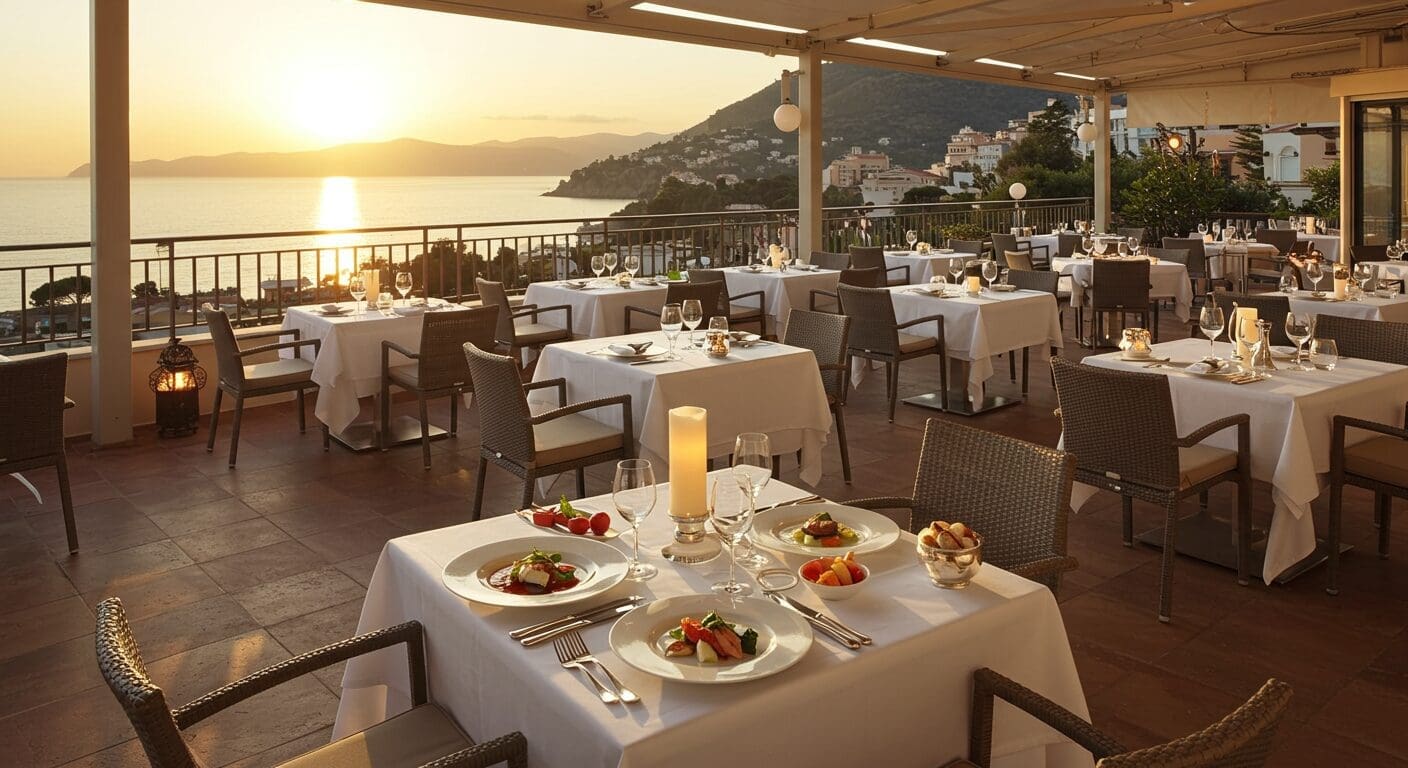
Best Restaurants in Setúbal: Fine Dining, Local Gems & Where to Eat
Early morning in Setúbal, and the harbour smells of salt, diesel, and something frying. The fishing boats are already back. The cuttlefish is already on ice. Somewhere down a side street, a kitchen door swings open and releases a brief, extraordinary cloud of garlic into the cool air. This is a city that takes its food seriously – not in the performative way of a destination that has recently discovered itself, but in the quiet, unshakeable way of a place that has been feeding people well for centuries and sees no reason to make a fuss about it. If you have come to Setúbal thinking it is merely a gateway to the Arrábida coast, you are technically correct. You are also missing the point entirely.
The best restaurants in Setúbal range from a Michelin-recognised kitchen reinventing the city’s beloved cuttlefish with cannoli and garlic emulsion, to a family-run institution that has been frying that same cuttlefish since 1974 and draws queues that suggest nothing has needed changing since. In between, there are dockside fish restaurants where you choose your catch from a display case before it has had time to consider its fate, and steakhouses so good they feel like a private discovery. Setúbal does not shout. It simply delivers.
The Fine Dining Scene: Michelin Recognition in an Unlikely Setting
Setúbal is not the first Portuguese city that comes to mind when you think of Michelin recognition. Lisbon, Porto, the Alentejo – these are the names that tend to dominate that conversation. Which makes Restaurante Xtoria something of a quiet revelation.
Awarded a Bib Gourmand in the 2025 MICHELIN Guide Portugal – the guide’s distinction for exceptional quality at sensible prices – Xtoria sits close to Setúbal’s fishing wharf and represents exactly the kind of cooking that earns that particular accolade. This is not food that is trying to be something it isn’t. It is intelligent, technically accomplished Portuguese cuisine rooted in what the sea delivers each morning, treated with creativity rather than reverence. The Cannoli de choco – cuttlefish cannoli with garlic emulsion, roe, and cured tuna – is perhaps the best single argument for why Setúbal’s food scene deserves your full attention. It takes the city’s most iconic ingredient and reimagines it without condescending to it. Chef and team work with seasonal, locally sourced produce, and the result is a menu that changes as the seasons do. Inaugurated in 2019 and already twice recognised by the Michelin Guide, Xtoria is ranked among the very top of the city’s 392 or so restaurants. Booking well in advance is not a suggestion. It is a necessity.
For luxury travellers accustomed to the temples of gastronomy in Lisbon or the Douro Valley, Xtoria offers something slightly different: the pleasure of discovering a genuinely serious kitchen before the word gets out too loudly. That moment has already passed, as it happens, but the restaurant retains the feeling of a find.
Casa Santiago: The King of Choco Frito
There is a rule, unwritten but universally observed, that you do not visit Setúbal without eating choco frito. Fried cuttlefish, battered and golden, served with rice and lemon. It is the city’s signature dish and its most reliable pleasure. And if you are going to eat choco frito in Setúbal – which you are, because there is truly no good reason not to – then Casa Santiago is where you go.
Established in 1974 by Virgílio Santiago, Casa Santiago trades under the name O Rei do Choco Frito – the King of Fried Cuttlefish – and has spent the better part of five decades earning that title without apparent effort. The setting is informal, a glazed terrace that feels more like a beloved local institution than a polished dining room, which is precisely what it is. The queues outside are not a deterrent. They are a recommendation. Locals queue here. Visitors queue here. Everyone queues here and nobody seems to mind, because the end result justifies the patience. The cuttlefish is fresh, the batter is crisp, and the whole experience has the comfortable authority of a dish that has been perfected over generations and simply refuses to be improved upon.
This is the kind of restaurant that luxury travellers sometimes walk past in favour of somewhere with a longer wine list and softer lighting. That would be a mistake of the first order.
O Batareo: Dockside Fish Done Properly
If the measure of a great fish restaurant is the simplicity of its proposition – here is what the sea gave us today, would you like some? – then O Batareo, sitting on Setúbal’s docks with a view across the Sado River, makes its case the moment you walk through the door. The showcase at the entrance, where the day’s catch is displayed for your consideration, is one of those pleasantly old-fashioned rituals that the best Portuguese restaurants have quietly maintained while the rest of the world moved on to digital menus and QR codes.
The fish here is line-caught and the menu shifts accordingly: butterfish, mullet, sea bream, sea bass, sole – whatever arrived this morning and nothing that didn’t. The grilling is expert. The ambiance is uncomplicated. Reviewers who call it a must-visit for serious fish lovers are not exaggerating, and the dockside setting gives meals here a particular atmosphere – the faint sound of water, the light off the estuary, the sense that the gap between sea and plate has been kept reassuringly short.
For guests staying in a private villa in the Setúbal region, O Batareo offers the kind of honest, superlative seafood experience that no amount of private chef excellence can entirely replicate – because the context is part of the dish.
Feito ao Bife: For Those Who Came for the Meat
Setúbal is so thoroughly associated with fish and seafood that ordering a steak here might feel, to the uninitiated, like a minor act of heresy. It is not. Feito ao Bife – opened in 2019 and rapidly acquiring a reputation that leaves the TripAdvisor algorithm briefly short of adjectives – is a genuinely excellent steakhouse with a menu built around serious cuts: chuletón, wagyu, entrecôte, each treated with the kind of considered simplicity that good beef demands.
The room is warm and intimate, red tones and a wooden ceiling creating an atmosphere that manages the difficult trick of feeling cosy without tipping into cliché. The sides – wild rice, grilled courgettes – are not afterthoughts. The homemade desserts, particularly the caramel and vanilla mille-feuille and the chocolate mousse with popping candy (which delivers a gentle, childlike surprise to the most composed of dinner companions), are worth saving room for. The mini grill option, for those who prefer to take proceedings into their own hands, adds a personalised touch that works well for groups.
A perfect score on TripAdvisor, sustained across multiple sources and reviews, is either a sign of exceptional consistency or a town-wide agreement not to post bad reviews. Either way, the food here is very good indeed.
Sem Horas and the Hidden Gems Worth Seeking Out
Beyond the well-known names, Setúbal has the kind of local dining culture that rewards a certain willingness to wander. Sem Horas – the name translates loosely as “No Hours,” which is either a relaxed attitude to timekeeping or a philosophical statement about the proper pace of a good meal – has built a loyal following among those who know the city’s restaurant scene well. It represents the kind of unpretentious, carefully cooked food that appears on no international radar but is precisely what the locals are eating when they are not performing for visitors. Find it. Sit down. Order whatever they suggest. This approach has not yet failed anyone.
The wider city has a number of smaller family-run restaurants scattered through the older streets, where the menus lean heavily on the day’s catch, the bread arrives immediately, and the house wine is poured without ceremony and drunk with great satisfaction. These are not places that exist in guidebooks. They exist in the knowledge of a good hotel concierge, a local villa manager, or a conversation struck up at the right moment with someone who grew up here.
Food Markets, Local Produce & What to Drink
The Mercado do Livramento in Setúbal is one of those markets that makes you wonder, briefly, why you have spent money on restaurant meals at all. An extraordinary early-morning assembly of fresh fish, local cheeses, seasonal vegetables, and the particular controlled chaos of vendors who have been here since before you were awake. The azulejo tile panels inside are worth a look on their own terms. The clams and oysters from the Sado estuary – the river that defines Setúbal’s western edge and much of its culinary character – are the things to seek out specifically.
On the subject of drinks: the Setúbal peninsula sits within the Moscatel de Setúbal appellation, and the local fortified Moscatel – amber, sweet, complex, with that particular honeyed depth that comes from extended ageing – is not merely a local curiosity. It is genuinely excellent and vastly underrated outside Portugal. Order it as a digestif and watch the table’s conversation improve immediately. The Palmela DOC wines, produced in the same peninsula, offer reds made primarily from Castelão that pair remarkably well with the local grilled fish. A well-stocked wine list in Setúbal’s better restaurants will lean heavily on both, as it should.
For something less elaborate: a cold Super Bock on a warm afternoon, with a plate of choco frito, in a spot with a view of the water. This is not a hardship.
Beach Clubs and Casual Dining Around the Coast
The restaurants of Setúbal proper are one thing. The coastline that surrounds it – the Arrábida Natural Park stretching south and west, the beaches descending to the Serra da Arrábida – offers a different register of eating entirely. Casual beach restaurants and cliff-top terraces serve grilled fish and cold wine to people who have been swimming since mid-morning and are entirely at peace with the world. The quality, at the better establishments, is higher than the informality suggests. This is Portugal, after all, where the gap between a simple beach shack and genuinely excellent cooking is considerably smaller than elsewhere.
Several beach-adjacent spots around Portinho da Arrábida and the surrounding coves offer the kind of lunch that becomes, without planning, an extended afternoon. Bring no schedule. The light changes beautifully around four o’clock and the wine list, while short, is entirely appropriate to the situation.
Reservation Tips and Practical Eating Advice
Setúbal operates, broadly, on Portuguese mealtimes: lunch from around 12:30 to 15:00, dinner rarely before 20:00 and very much alive until midnight. Attempting to eat dinner at 18:30 will result in a largely empty restaurant and a gentle but unmistakable sense that the kitchen is not yet fully engaged. Work with the rhythm of the place.
Xtoria requires advance reservation – ideally several days ahead during the summer season, and a week or more is not excessive. Casa Santiago does not take reservations in the conventional sense, which is why the queue exists and why arriving early is the correct strategy. O Batareo and Feito ao Bife both benefit from booking ahead, particularly at weekends. For the smaller, unlisted local restaurants: walk in, make eye contact, look hopeful. This usually works.
The set lunch menus – menus do dia – at many Setúbal restaurants offer extraordinary value even by Portuguese standards: two or three courses with bread, wine, and coffee for a price that would not buy a single cocktail in most Lisbon hotel bars. Ordering à la carte at dinner is the right approach for a long evening. Combining both, across different restaurants, across several days, is the correct way to understand what Setúbal’s food scene actually is.
If you are staying in a luxury villa in Setúbal, many properties can arrange a private chef to bring this extraordinary local larder – the Sado estuary seafood, the Arrábida-caught fish, the local Moscatel and Palmela wines – directly to your table. It is a different pleasure from restaurant dining, but no less of one. For a full picture of what to see, do, and experience across the region, the Setúbal Travel Guide covers the destination in full.