Best Beaches in Sicily: Hidden Coves, Beach Clubs & Coastal Secrets
What if the most beautiful coastline in the Mediterranean isn’t the one everyone is already queuing for? Sicily sits at the crossroads of three seas – the Tyrrhenian, the Mediterranean, and the Ionian – and behaves accordingly: dramatically varied, occasionally contradictory, and quite impossible to reduce to a single type of beach experience. There are wide sandy crescents for families, volcanic black-sand coves that feel like the end of the earth, beach clubs where the aperitivo arrives without being asked, and hidden inlets so quiet you’ll feel faintly guilty for finding them. This is a guide to all of it.
San Vito Lo Capo – Best for Families and Flat-Calm Water
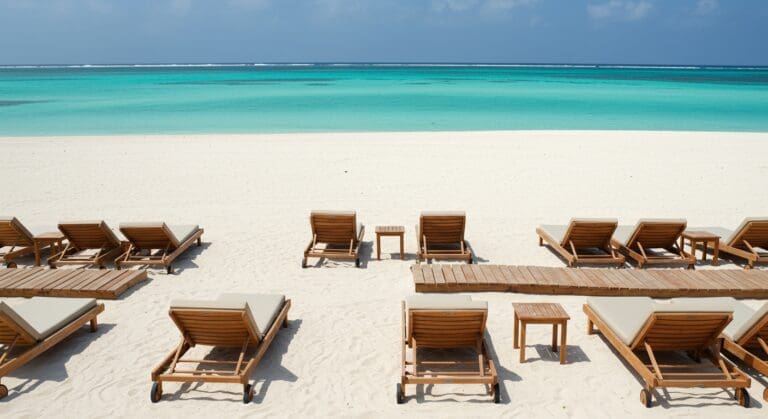
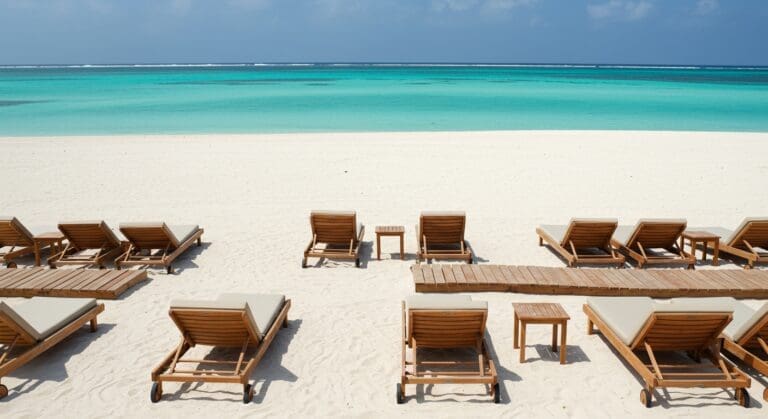
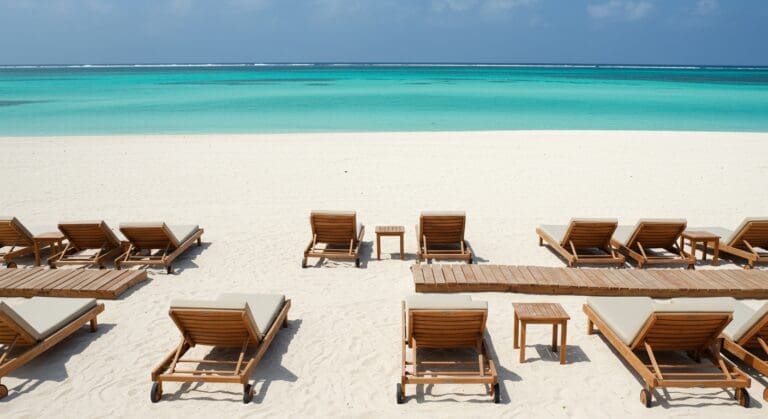
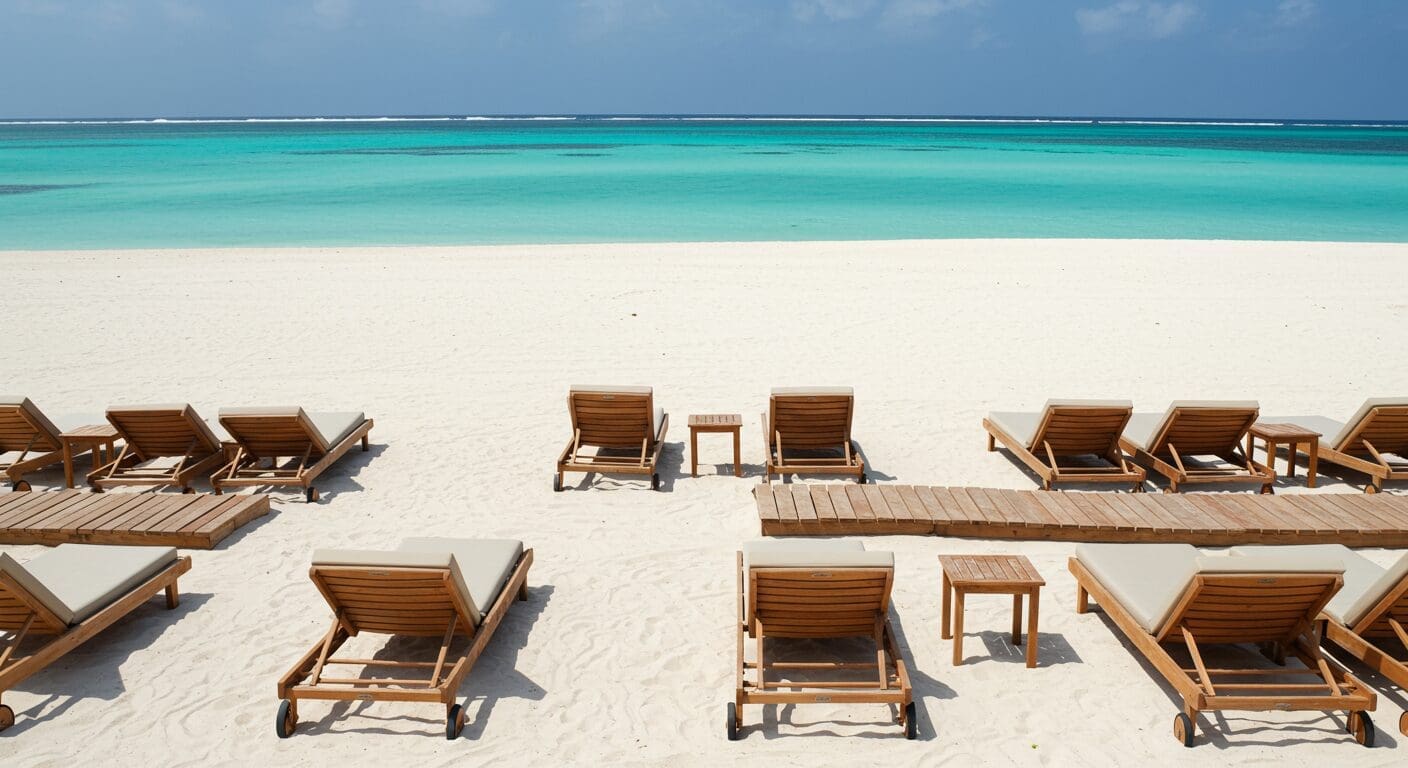
There is a reason that San Vito Lo Capo consistently appears on Italian “best beaches” lists, and for once, the consensus is correct. Set beneath a dramatic limestone headland on Sicily’s northwestern tip, the beach is a long, generous arc of fine white sand – the kind that squeaks underfoot, which children find deeply satisfying and adults learn to live with. The water is shallow, genuinely turquoise, and so calm in summer that it’s practically polite.
For families travelling with younger children, the gradual entry into the sea is a significant practical advantage. There are no sudden drops, no strong currents, no drama. The town behind the beach is well-equipped without being overrun: sunbed and parasol rentals are plentiful, restaurants line the promenade, and the local couscous festival in September – yes, couscous, a nod to North African proximity – is one of Sicily’s great cultural events.
Parking can be a test of character in July and August. Arrive early, or accept that you will be walking further than planned. The beach itself is long enough that even in peak season you can find breathing room if you’re willing to extend slightly beyond the main cluster of sunbeds. Water quality here is excellent – consistently Blue Flag rated, with excellent visibility right through the season.
Scala dei Turchi – Most Dramatic and Most Photographed
Scala dei Turchi is extraordinary in the way that natural things occasionally are when they seem to have been arranged by someone with very good taste. The cliffs are made of white marl – a soft sedimentary rock that erosion has carved into natural stepped terraces, gleaming against the deep blue of the Agrigento coast. The beach below is a mix of fine sand and pale pebbles, and the water is clear and relatively deep.
It must be said: this beach is no longer a secret. The photographs have seen to that. In high summer, the terraces are busy with people who have all independently decided they are discovering something. You still should go – just go early morning or late afternoon when the light is better anyway and the crowds thin to something manageable. There is limited shade, limited infrastructure, and a walk from the nearest parking that ranges from ten minutes to considerably more depending on where you leave the car. Facilities are basic: a kiosk or two in season, nothing more.
For water quality, Scala dei Turchi consistently performs well. The swimming is good, though not a beach for small children given the rocky entry points. It is, however, one of those places that makes you understand why people move their entire lives to the Mediterranean. Worth every logistical inconvenience.
Lido Tao Beach Club, Taormina – Best for Atmosphere and Aperitivo
Taormina has been seducing visitors since the days of the Grand Tour, and Lido Tao Beach Club is where contemporary luxury travellers do their seducing. Sitting on Taormina’s stretch of the Ionian coast, Lido Tao operates across two private beach areas, each with sun loungers, 4-person cabanas, and the kind of effortless service that makes you wonder why you ever went anywhere else.
By day, it’s all water sports and light lunches – fresh Sicilian seafood, naturally, because here there is no other kind. As afternoon softens into early evening, the bar terrace comes into its own: aperitivi with the Ionian Sea spreading out below, the coast of Calabria faintly visible on the horizon, live DJs providing an appropriately understated soundtrack. It does not feel like effort. It feels like how things should always be.
After dinner – which you should absolutely have here; the seafood is excellent and the location is deeply unfair to anywhere else you might subsequently eat – the bar transitions into a proper evening venue. Lido Tao is the definitive answer to the question of how to spend a beach day in Taormina without compromising on any front: comfort, food, water quality, or atmosphere. Access from Taormina town involves a short drive or the famous Taormina cable car, which is itself worth the journey.
Cala dei Turchi and the Zingaro Nature Reserve – Most Secluded
For those who define luxury not by thread counts but by the absence of other human beings, the Riserva Naturale dello Zingaro is a necessary pilgrimage. This protected coastal reserve between San Vito Lo Capo and Scopello has no roads running through it – which means the only way to reach its coves is on foot, which helpfully deters a significant proportion of the people who might otherwise be there.
The reserve’s beaches – Cala Marinella, Cala dell’Uzzo, Cala Capreria among them – are small, pebbly, and backed by dramatic limestone cliffs. The water is some of the clearest in Sicily, with visibility that makes snorkelling here less an activity and more a form of meditation. The €5 entry fee to the reserve is not a deterrent so much as a small act of gratitude to the people sensible enough to preserve this stretch of coast.
Wear proper shoes for the walk. Bring water. Bring everything you need, because there is nothing to buy once you’re in. This is a beach experience that requires a degree of self-sufficiency which some luxury travellers find unexpectedly refreshing and others find quietly horrifying. Both responses are valid.
Puravita Beach Club, Portopalo di Capo Passero – Best for Sunsets
At the very southern tip of Sicily – further south, in fact, than Tunis – sits Portopalo di Capo Passero, and on Dune Beach, Puravita Beach Club operates with a conviction that this remote corner of Italy deserves to be taken seriously as a luxury destination. It is correct.
Puravita’s location on the dunes facing the open Mediterranean means the sunsets here are categorically different from those elsewhere on the island. Without headlands or promontories interrupting the view, the sun descends into a flat horizon of deep blue water in a way that is genuinely affecting. The food matches the setting: fresh seafood sourced directly from local boats, simply prepared, and served with the unhurried pace that this part of Sicily seems to enforce on everyone eventually.
Portopalo itself remains refreshingly un-touristy – it’s a working fishing town that hasn’t yet been aestheticised into something it isn’t. Getting here requires commitment: it’s a significant drive from Palermo, and even from Catania it’s the better part of an hour and a half. Those who make the journey tend to wonder why more people don’t know about it. That, of course, is the point.
Mondello – Best Urban Beach and Beach Club Scene
Mondello is Palermo’s beach, beloved by Palermitans in the way that locals always have a slightly proprietary relationship with their nearest stretch of coast. The bay is sheltered, the sand is pale and fine, and the art nouveau bathhouse – the Stabilimento Balneare Mondello, which opened in 1913 – provides one of the more architecturally distinguished backdrops of any beach in Italy.
It is not a quiet beach. In August, Mondello contains a significant proportion of Palermo’s population, which is both part of its charm and a useful piece of practical information. The beach club culture here is robust: private lido establishments line the bay offering sunbeds, umbrellas, showers, bars, and restaurants, with the casual professionalism that Italians bring to organised leisure. The water quality in the bay is generally good, and the swimming is gentle.
Mondello is best experienced as a proper Sicilian beach day rather than a remote escape – which is to say, with arancini from a nearby kiosk, cold granita at midday, and an unhurried late lunch at one of the seafront restaurants. It is a beach that rewards the Italian approach to time, which involves significantly more of it than most visitors initially allocate.
Isola Bella, Taormina – Most Iconic
Isola Bella is the small island – technically a nature reserve, connected to the shore by a narrow shingled spit – that appears in approximately half of all photographs ever taken in Taormina. The small cove around it is everything the photographs suggest: clear water, dramatic rocky surrounds, the island itself a tangle of Mediterranean vegetation. The snorkelling around the island’s base is excellent.
The access involves either stairs down from Taormina – many stairs, and all of them must be climbed back – or the cable car from town to the Mazzarò beach area. Sunbed hire is available on the pebble beaches either side of the spit. Facilities are reasonable by Taormina standards: several beach establishments, cafes, and bars in the vicinity.
The cove can be crowded in peak season. This is not negotiable. The solution is the cable car first thing in the morning, when the light on the water has a quality that makes the whole scene feel briefly yours alone. After which you can take a short walk to Lido Tao for a properly organised day on the Ionian coast.
Capo d’Orlando and the Nebrodi Coast – Best for Water Sports
Less visited than the southeastern and northwestern coasts, the Tyrrhenian shoreline between Cefalù and Messina has its own quiet argument for attention. The Capo d’Orlando area, backed by the Nebrodi mountains, offers clear water, reliable winds, and a range of water sports infrastructure that more famous beaches don’t always match.
Windsurfing and kitesurfing are well-established here, particularly at spots around Sant’Agata di Militello where the conditions are consistent in summer. The beaches in this stretch tend to be less crowded than their counterparts further west, the towns more working-Sicilian than tourist-oriented, and the overall experience has a texture that regular Sicily visitors often prefer. Diving operators in the area run trips to rewarding underwater sites along the Aeolian chain.
Practicalities are generally straightforward: parking is less tortured than at more popular beaches, facilities adequate if not extravagant. This is a part of Sicily that rewards travellers who approach the island as a place to inhabit rather than a set of sights to process.
Where to Eat After the Beach
Sicily’s restaurant scene has matured considerably, and if the beaches are the reason to come, the food is the reason to stay longer than planned. In Taormina, Principe Cerami at San Domenico Palace – one Michelin star, ingredients from Etna’s volcanic slopes – is where a beach day becomes a full sensory argument for not leaving. Chef Massimo Mantarro’s interpretations of Sicilian classics have the confidence of someone who knows exactly what he’s working with.
Also in Taormina, the intimate Vineria Modì by Chef Dalila Grillo earned its first Michelin star with the kind of focused, intelligent cooking that small restaurants occasionally produce when the people running them care deeply about what they’re doing. The wine list deserves proper attention.
Further afield but worth any journey, Duomo in Ragusa Ibla – two Michelin stars, Chef Ciccio Sultano at the helm – transforms Sicilian ingredients in ways that challenge comfortable assumptions about what the cuisine can be. In Licata on the south coast, La Madia under Chef Pino Cuttaia holds the island’s other second star, which makes Licata significantly more interesting as a destination than it might first appear on a map.
In Catania, Sapio – one star, Chef Alessandro Ingiulla, a beautifully restored 16th-century space that also functions as an art gallery – offers the kind of dinner that reframes an entire trip. Mount Etna’s produce is the thread running through everything, which makes complete sense when you can see the volcano from the city’s streets.
Practical Notes for Beach-Going in Sicily
A few things worth knowing before you go. Sicily’s beach season runs meaningfully from late May through early October, with July and August being both the most beautiful and the most heavily attended. Parking at popular beaches is a genuine consideration – arriving before 9am solves most problems. Many of the best beaches involve some kind of walk, whether from a parking area or from a villa, and appropriate footwear matters more than people tend to anticipate.
Water quality across Sicily is generally excellent. The island takes its EU Blue Flag obligations seriously, and the combination of limited heavy industry near the coastline and robust tourism-driven incentives to maintain standards means the sea is reliably clean and clear. Jellyfish appear in warm years, typically in August, as they do across the Mediterranean. This is worth knowing and almost never worth worrying about excessively.
Beach clubs charge for sunbeds and umbrellas – typically €15-30 per person per day for the combination, more at premium establishments in Taormina. This is not extortion; it is a reasonable exchange for a comfortable and well-serviced day on the water. Free beach (spiaggia libera) exists alongside almost every private lido, and Sicilians use it without embarrassment or apology.
The Best Base for Sicily’s Beaches
Sicily’s coastline is long enough – over 1,000 kilometres – that where you stay genuinely determines what’s accessible. The north coast and Taormina area covers the Ionian beaches and Cefalù; the western tip gives you San Vito Lo Capo and Zingaro; the south requires commitment but rewards it with emptiness and Portopalo’s particular brand of end-of-the-world calm. Staying in a luxury villa in Sicily puts the best beaches within easy reach and, crucially, gives you the kind of private terrace from which a post-beach Aperol Spritz tastes exactly as it should. For everything else you need to know about planning your time here, our Sicily Travel Guide covers the island in full.
What is the best time of year to visit Sicily’s beaches?
Late June through early September offers the warmest water temperatures and the most settled weather, but July and August bring the largest crowds at popular beaches like San Vito Lo Capo and Mondello. Late May, June, and September are often the sweet spot for luxury travellers: the sea is warm enough for comfortable swimming, the beaches are significantly less busy, and the light has a quality that photographers and people who simply like looking at things tend to appreciate. October is increasingly viable on the south coast and around Taormina, with calm seas persisting well into autumn.
Which beaches in Sicily are best for snorkelling and clear water?
The coves within the Zingaro Nature Reserve consistently offer the clearest water on the island, with visibility that rivals the Maldives on a good day. Isola Bella in Taormina is excellent for snorkelling around the island’s rocky base, and the Portopalo di Capo Passero area in the far south – including Dune Beach near Puravita Beach Club – has remarkably clear open-Mediterranean water. For dedicated diving, the waters around the Aeolian Islands, accessible from the northeastern coast, are among the most rewarding in the southern Mediterranean.
Are there beaches in Sicily suitable for young children?
Several of Sicily’s beaches are very well suited to families with young children. San Vito Lo Capo is the standout choice: the water is exceptionally shallow with a very gradual shelf, which makes it safe for small swimmers and genuinely stress-free for parents. Mondello near Palermo is another strong option, with calm, sheltered water in the bay and easy access to facilities. Cefalù’s main beach, in the shadow of its famous Norman cathedral, offers a similar combination of gentle water and good infrastructure. For families who prefer a private lido experience, Lido Tao in Taormina offers cabana rental and full service that takes significant organisational pressure off a beach day.