Best Restaurants in Sicily: Fine Dining, Local Gems & Where to Eat
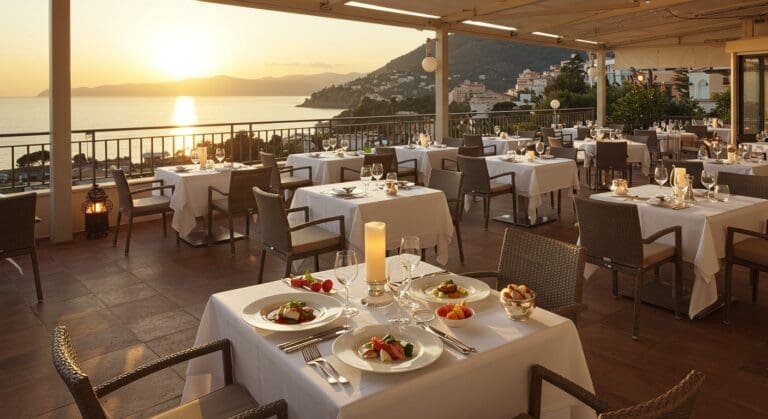
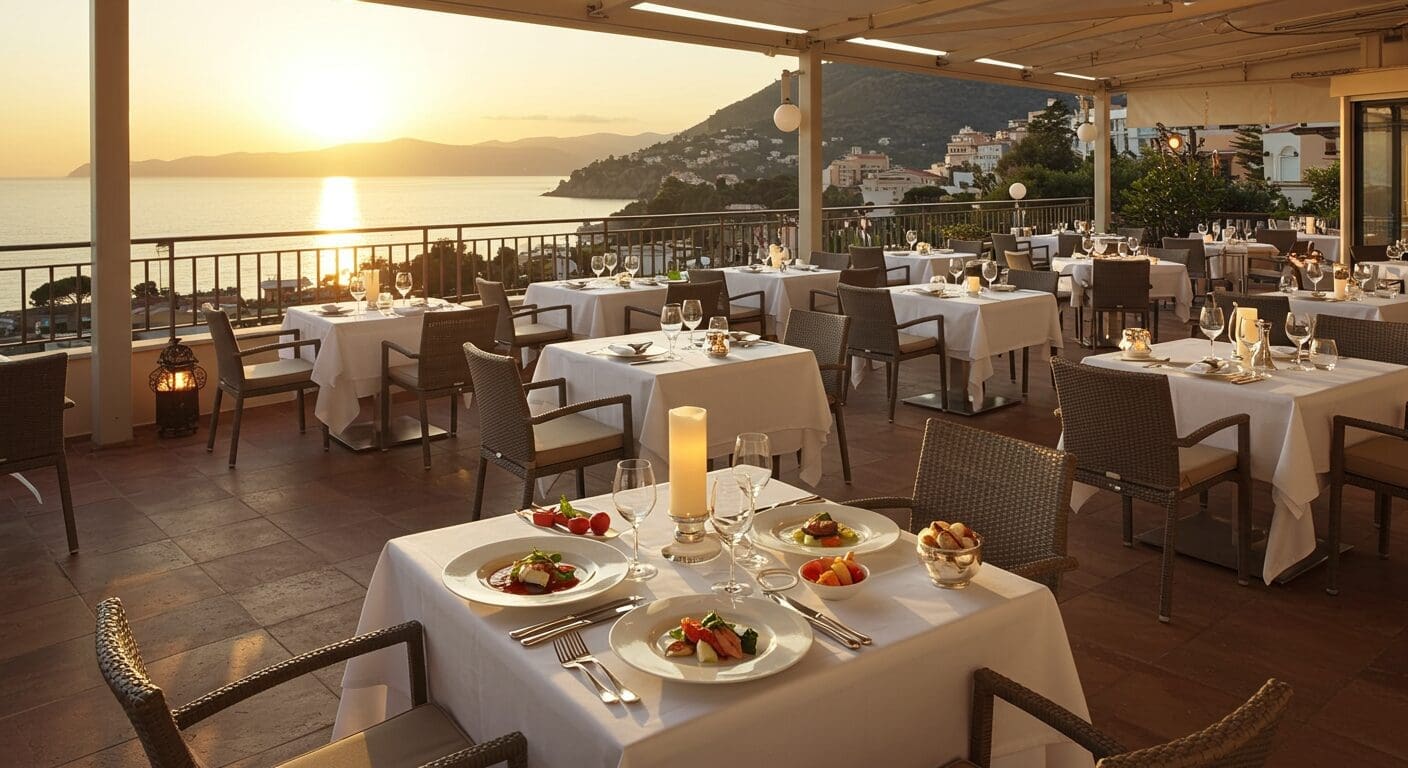
What does it actually mean to eat well in Sicily? Not in the abstract, aspirational sense that travel writing tends to favour – but genuinely, memorably, hat-tiltingly well? The island has a case to make that no other region in Italy can quite match: an Arab-Norman-Greek-Spanish culinary history that reads like a fever dream, a volcanic interior that produces ingredients of almost embarrassing quality, and a coastline that treats seafood as both art form and religion. You can eat a Michelin-starred tasting menu one evening and a paper cone of fried street food the next morning, and both will feel entirely correct. This guide covers all of it – the fine dining rooms with their white linen and their ambitions, the trattorias that have been feeding people since before your guidebook was printed, the beach clubs, the markets, the wine, and the dishes you absolutely should not leave without having eaten.
Sicily’s Fine Dining Scene: Michelin Stars on the Mediterranean
For a long time, Sicily occupied a curious position in the fine dining conversation – endlessly praised as a source of extraordinary ingredients, but somehow overlooked as a destination for serious restaurant cooking. That has changed, decisively, in the last decade. The island now has a constellation of Michelin-starred restaurants that would hold their own in any European capital, each one doing something distinctly Sicilian rather than simply applying continental technique to local produce.
The undisputed flagship is Duomo in Ragusa Ibla, which holds two Michelin stars and is the project of Chef Ciccio Sultano – a chef who approaches Sicilian culinary identity with something close to philosophical rigour. The baroque town of Ragusa Ibla provides the setting, all warm sandstone and dramatic shadows, and Sultano provides the food: a menu that draws equally on the island’s rural traditions and its aristocratic past, transforming entirely ordinary ingredients into something extraordinary. A vegetable lasagna made without pasta. Warm ricotta with prawns lifted by caviar. These are dishes that make you reconsider what Sicilian cooking even is. A reservation here is non-negotiable for any serious food traveller – book weeks in advance, not days.
In Taormina, Vineria Modì is the restaurant that earned the town its first Michelin star, and it does so with a refreshing lack of ceremony. Tucked into a narrow side street away from the tourist promenade, it is run by a young couple – chef and sommelier – whose commitment to Sicilian and Italian producers runs through every element of the meal. The red shrimp carpaccio with burrata, orange, and bitter cocoa is the kind of dish that sounds improbable and tastes inevitable. The wine list is excellent and leans intelligently into Sicilian appellations. The intimacy of the room means it fills quickly; book ahead, and tell them it is a special occasion even if it is not. It usually becomes one anyway.
In Catania, Sapio makes a compelling argument for the city’s place on the serious dining map. Chef Alessandro Ingiulla works in a beautifully restored 16th-century space that functions as both restaurant and art gallery – a combination that could easily feel affected, and somehow doesn’t. The cooking focuses on ingredients from the Mount Etna region, which is not merely a marketing decision; the volcanic soil and altitude genuinely produce produce of unusual intensity. The presentation is refined without being fussy, and the tasting menu moves with real intelligence through the flavours of the region. One Michelin star, though the cooking often feels like it is auditioning for a second.
Just north of Catania, near Riposto, the Zash Restaurant at the Zash Country Boutique Hotel offers what it describes as a “slow dining experience” – which, in practice, means an immersive evening led by Chef Giuseppe Raciti, who has held his Michelin star continuously since 2019. The setting, a former vinification space within a working estate, gives the meal a sense of place that many hotel restaurants struggle to achieve. The cooking is rooted in local terroir but never timid about invention. If you are staying in the Etna area, this should be your first call.
In Palermo, MEC Restaurant carries the city’s Michelin star under Chef Carmelo Trentacosti, a figure well-regarded in Sicilian gastronomic circles whose creative, refined cuisine has made MEC a reference point for serious eating in the capital. Palermo’s food scene is chaotic, joyful, and often brilliant at street level – which makes MEC’s composed elegance feel like a different conversation happening in the same city. Both are worth having.
Local Trattorias, Tavernas & the Art of Eating Like a Sicilian
Here is something nobody tells you before you arrive: some of the best meals in Sicily will cost you twelve euros and be served by someone who has never considered writing a menu in English. The island’s informal dining culture is as sophisticated as its fine dining scene, just differently expressed – in handwritten menus, in breadbaskets replenished without being asked, in pasta sauces that have been made the same way for forty years because there is no earthly reason to change them.
In the interior, particularly around Ragusa, Modica, and the Val di Noto, family-run trattorias serve the cucina iblea – a cuisine of the inland plateau that leans on rabbit, pork, wild herbs, and aged ricotta rather than the seafood of the coast. Order the pasta al ragù di maiale, or anything involving ricotta infornata – the baked ricotta that appears grated over pasta or eaten in thick slices. It tastes like someone has distilled a Sicilian hillside into a cheese.
In Palermo, look for restaurants that serve the traditional street food canon as a proper meal – panelle (chickpea fritters), arancini, pasta con le sarde. The instinct to eat these things standing up from a paper cone is correct and should be indulged, but sitting down with a carafe of local white wine and working through a full antipasto spread is its own pleasure. In the fish markets of Palermo and Catania, look for raw bars and counters serving freshly caught ricci di mare – sea urchin – on toast with a squeeze of lemon. It is one of those flavours that is very difficult to describe and very easy to understand the moment it is in your mouth.
Seek out agriturismo dining experiences in the countryside – farms that cook their own produce for guests. The quality is inconsistent, but when it is good, it is very good: olive oil pressed from trees on the property, vegetables from the kitchen garden, lamb from the fields you can see through the window. There is something about the directness of the transaction – from that soil to this plate – that is specific to Sicily and specific to this kind of eating.
Beach Clubs & Casual Dining by the Water
Sicily does beach club dining with considerable style, and the casual end of the market is rather less casual than it sounds. The seafood at a well-run beach club lunch – grilled fish, a cold seafood salad, fried courgette flowers stuffed with ricotta – is often the freshest you will eat anywhere, precisely because the supply chain is short enough to carry in one hand.
In Taormina, Lido Tao Beach Club is the place to spend a day if your ambitions include both sea swimming and serious eating. The views over the Ionian Sea are the kind that make people fall silent mid-sentence, and the Sicilian seafood on offer at lunch is genuinely accomplished rather than merely convenient. You can rent a sun lounger or a private cabana, work through an aperitivo on the terrace as the light changes, and then stay for dinner and whatever the DJs are proposing. It is a full-day proposition and worth treating as one.
At the southern tip of the island, Puravita Beach Club in Portopalo di Capo Passero offers a different proposition – quieter, more remote, the kind of place that feels like a discovery rather than a destination. Southern Sicily is undervisited relative to its quality, and Portopalo is perhaps the most undervisited part of it. The sea here is extraordinarily clear – the colour requires no filter and no hyperbole – and the food at Puravita makes the most of what is directly in front of it: the tuna from the straits of Sicily, the prawns, the fresh catch of the day grilled simply and served with local capers and olive oil.
Hidden Gems & Food Markets Worth Getting Up Early For
The Ballarò market in Palermo is one of the great urban food experiences in Europe – not in a curated, artisan-produce-hall way, but in the genuinely chaotic, Arabic-inflected, centuries-old way that the city has never quite modernised out of existence. Arrive early. Buy a sfincione (Palermo’s thick, spongy pizza, topped with onion, tomato and anchovy) from whoever is selling them loudest, and eat it walking. The fish section, in particular, is extraordinary – whole swordfish, lurid heaps of sea urchin, displays of octopus arranged with more artistry than many restaurant plates.
In Catania, the Pescheria fish market behind the cathedral operates with similar energy, framed by the dramatic baroque architecture of the Piazza del Duomo. Fishmongers here have a theatrical quality that owes something to the proximity of Mount Etna – everything is loud, physical, and faintly operatic. (Catania is Bellini’s birthplace. Perhaps it explains something.)
For hidden gem restaurants, the principle is simple: follow the locals away from the waterfront and away from the piazza. In small towns, the restaurant that does not have a translation on its menu and has photographs of old football teams on the wall is almost always the one worth sitting down in. Ask your villa’s property manager or concierge – they will know, and they will tell you.
What to Eat: Dishes to Order in Sicily
Start with arancini – the fried rice balls that Sicily considers its own and everyone else has got wrong. In Palermo they are round; in Catania they are cone-shaped, and this is a point of genuine civic pride that it is wise not to dismiss. The filling should be ragù, or ragù and peas, or – in more creative versions – pistachio and sausage, or aubergine and provola cheese.
Pasta alla norma is the Catanian essential: spaghetti or rigatoni with tomato, fried aubergine, ricotta salata, and basil. It is one of those dishes that appears simple and is entirely unforgiving of a poor aubergine or a lazy sauce. Order it in Catania where it was invented, or don’t bother ordering it at all. Pasta con le sarde – pasta with sardines, wild fennel, pine nuts, raisins, and saffron – is the Palermitan counterpart: Arab-inflected, sweet-savoury, unlike anything else in Italian cooking.
For secondi, fresh grilled swordfish or tuna is the obvious choice on the coast. In the interior, rabbit alla cacciatora (hunter’s style, with olives and capers) is the local benchmark. Finish with cannolo – the pastry shell filled with fresh sheep’s milk ricotta – which should be assembled to order so the shell stays crisp. Anyone who assembles a cannolo in advance has given up.
Wine & Local Drinks
Sicily has undergone something of a wine renaissance, and the island that once quietly supplied anonymous bulk wine to mainland producers is now making bottles that appear on the wine lists of serious restaurants across Europe. The volcanic soils of Mount Etna produce Nerello Mascalese – a red of real elegance and complexity that invites comparison with Burgundy, though Sicilian winemakers prefer you don’t push that analogy too hard. Etna Bianco, made from Carricante, is the white equivalent: mineral, saline, and quite unlike any Italian white you may have encountered elsewhere.
Beyond Etna, look for Nero d’Avola from the southeastern corner of the island – fuller, warmer, excellent with the meat-based cooking of the interior – and the whites of Marsala’s hinterland, where Grillo and Catarratto produce wines of considerable character. Marsala itself, the fortified wine, has a checkered reputation due to cheap supermarket versions, but a serious, aged Marsala Superiore from a reputable producer is a revelation. Ask at any good wine bar in western Sicily and they will show you what it should taste like.
For something non-alcoholic, granita is Sicily’s contribution to breakfast civilisation: a semi-frozen slush of almond, coffee, pistachio, or lemon, served with a brioche for dipping. Eating granita for breakfast feels like a small act of rebellion that turns out to be entirely orthodox. Start here. It sets the tone.
Reservation Tips & Practical Advice
Michelin-starred restaurants in Sicily, particularly Duomo in Ragusa Ibla and Vineria Modì in Taormina, book out weeks ahead during summer. July and August are unforgiving – if you have not reserved before you arrive, you have not reserved. Contact restaurants directly by email where possible; many have English-language booking forms, and Italian restaurant managers are generally more responsive to a direct, polite email than to third-party booking platforms.
For smaller trattorias and local restaurants, the culture is more flexible, but calling ahead the morning of the day you want to eat is courteous and usually welcome. Sunday lunch is sacred in Sicily in a way that is difficult to overstate – book ahead for Sunday, wherever you plan to eat.
Lunch, incidentally, is often the meal at which Sicilian cooking is at its most relaxed and its most honest. Many of the island’s best value meals are three-course lunches with wine, served to locals between 1pm and 3pm in unpretentious rooms with overhead fans. The evening meal is longer, later, and more ceremonial. Both are worth the time. Sicilians, on the whole, have understood something about the pace of eating that the rest of us are still working out.
If you are exploring the island from a luxury villa in Sicily, it is worth asking your property about private chef options – many villas can arrange an in-house dinner using local market produce, which is a particularly satisfying way to spend an evening when you have already eaten out three nights running and the kitchen is too beautiful to ignore. For everything else – transport to restaurants, table bookings, wine recommendations, market guides – the broader Sicily Travel Guide has the full picture.