
South America Food & Wine Guide: Local Cuisine, Markets & Wine Estates
It begins, as so many great things in South America do, with fire. Not metaphorical fire – actual fire, coaxed from hardwood logs in the pre-dawn dark of an Argentine estancia, tended by a gaucho who has the quiet authority of someone who has never once in his life consulted a recipe. By the time you sit down, a vast cut of grass-fed beef has been slow-cooking over open embers for the better part of three hours. There is no sauce. There is no garnish. There is a glass of Malbec the colour of a bruised plum, and there is this: the understanding that South America’s relationship with food is not about performance. It is about time, land, and a kind of unshowable pride that ends up on the plate anyway.
This is a continent of extraordinary culinary range – from the high-altitude kitchens of the Andes to the seafood shacks of coastal Peru, from the vine-striped valleys of Mendoza to the lush farm country of southern Chile. Any serious food and wine guide to South America has to make peace, early on, with the fact that this is not one food culture. It is dozens, laid over each other like geological strata. The reward for paying attention is considerable.
Argentine Cuisine: Meat, Fire and the Art of Doing Very Little
Let us be honest about Argentina: the country has built an entire culinary identity around one technique, and it has been entirely right to do so. The asado – the slow-grilling of meat over wood or charcoal – is less a method of cooking than a social institution. Sunday asados at private homes can last six hours. Patagonian lamb is cooked on iron crosses leaning over open fires. In Buenos Aires, the parrilla restaurants of Palermo and San Telmo serve cuts that most of the world’s steakhouses have never heard of: the entraña (skirt steak), the vacío (flank), the tira de asado (short ribs). The quality of Argentine beef, raised on the Pampas grasslands, is genuinely difficult to overstate.
Beyond the grill, there is empanada culture – regional, fierce, and the subject of arguments nobody wins. Mendoza’s are baked, Salta’s are fried, everyone believes theirs are correct. There are medialunas (crescent pastries, better than most croissants, do not tell the French) eaten at marble-topped café tables with strong, short coffee. There is provoleta, a grilled round of provolone with oregano that sounds simple and somehow keeps you thinking about it for weeks. Argentina is also where you discover dulce de leche, the caramelised milk spread that finds its way onto, into and underneath nearly everything sweet. One quickly stops apologising for eating it from the jar.
Peru: The Continent’s Most Electrifying Food Culture
If Argentina is about depth and repetition, Peru is about velocity and complexity. Lima has quietly – then not so quietly – become one of the great food cities of the world, and the cuisine that drives it draws on an astonishing convergence of influences: indigenous Andean, Spanish colonial, Japanese, Chinese, African. The result is something genuinely unlike anything else.
Ceviche is the obvious entry point. Fresh raw fish cured in citrus juice – almost always leche de tigre, the fierce, chilli-spiked marinade – with red onion, corn and sweet potato. Eaten at midday, ideally within view of the Pacific, it is one of the great dishes of any continent. Alongside it sits tiradito, the Japanese-inflected cousin with thinly sliced fish and no onion. Lomo saltado, a stir-fry of beef, peppers and tomatoes served with rice and chips simultaneously (it makes more sense than it sounds), is comfort food elevated to something worth ordering twice.
Luxury travellers to Lima will find some of the world’s most celebrated restaurants operating at full altitude. Tasting menus here tend to be acts of cultural archaeology as much as gastronomy – exploring quinoa varieties from 4,000 metres above sea level, Amazonian fruits with no name in English, potatoes in forms and colours that supermarkets haven’t imagined yet. The Peruvian Amazon, meanwhile, offers its own remarkable larder: river fish, heart of palm, cacao in wild forms. This is a destination that rewards the seriously curious.
Chile: Wine Country, Seafood and the Long Road South
Chile’s food story is shaped by its extraordinary geography – a country that runs 4,300 kilometres from the driest desert on earth to near-polar wilderness, pressed between the Andes and the Pacific. This has consequences. The seafood alone – sea urchin, razor clams, king crab from the far south, locos (abalone) with mayonnaise – could sustain serious interest for weeks. In coastal towns from Valparaíso down to Puerto Montt, the local fish markets are worth any early alarm call.
Chilean wine, meanwhile, has undergone something of a quiet revolution. The country long had the grape varieties but not always the ambition – that has changed substantially. The Colchagua Valley produces Carménère of real distinction; Casablanca and San Antonio deliver cool-climate Sauvignon Blanc and Pinot Noir that make very respectable arguments for themselves. Further south, the Bío Bío and Itata valleys are producing old-vine País and Cinsault that have caught the attention of natural wine enthusiasts worldwide. These are not names that need to feel apologetic any longer.
The Wine Estates of Mendoza: Argentina’s Viticultural Heart
Mendoza sits at around 700 to 1,100 metres above sea level, which is part of why its wines taste the way they do. High altitude means intense UV radiation, cooler nights, and a diurnal temperature variation that preserves acidity and builds structure. It also means that the light has a particular quality in the afternoon – sharp and golden – that makes sitting on a winery terrace with a glass of Luján de Cuyo Malbec feel like something a travel writer would invent if they didn’t have to.
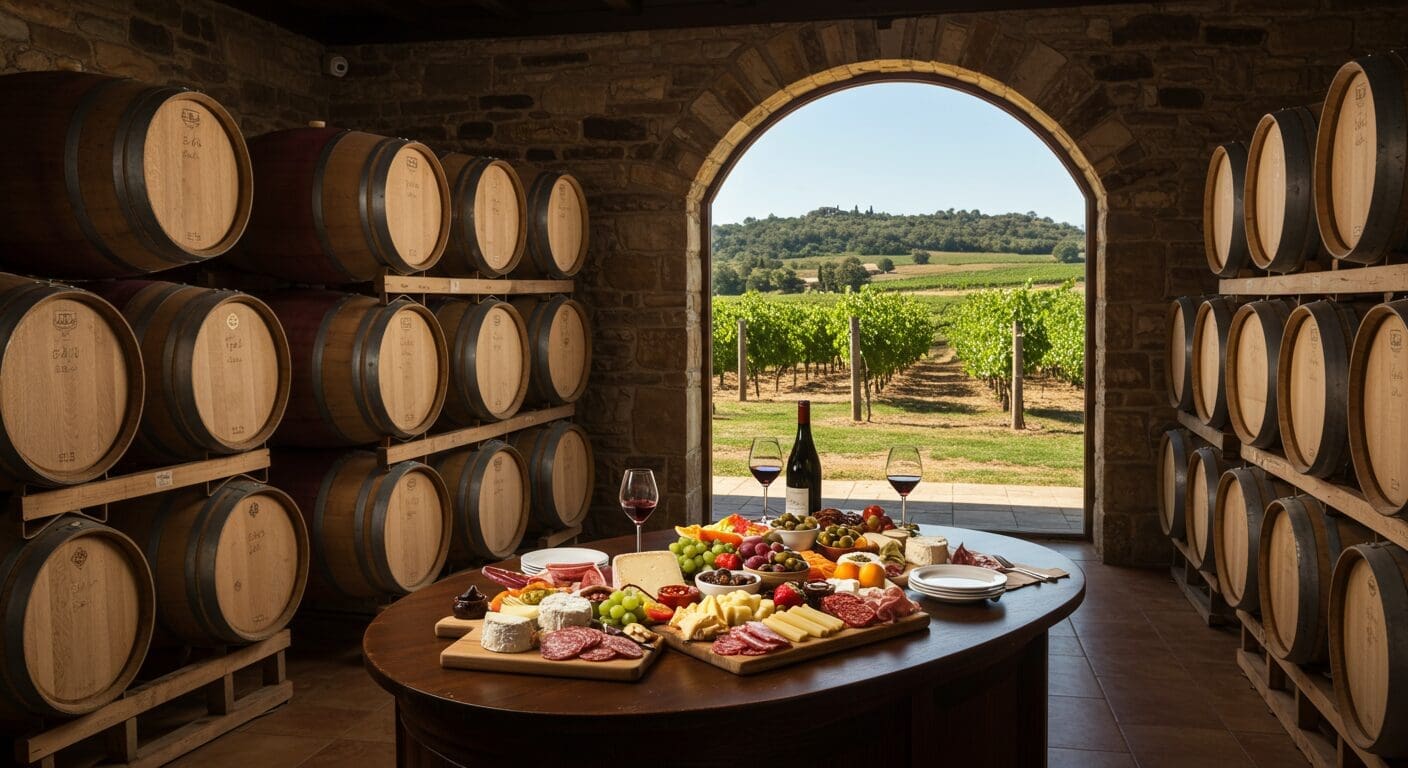
The top estates here – including the likes of Zuccardi Valle de Uco, Catena Zapata, Clos de los Siete and Achaval Ferrer – operate at the level of serious Bordeaux or Napa properties, with architecture, gastronomy and wine experiences to match. The Valle de Uco, in particular, has become the area to watch: higher, cooler, and producing wines of greater elegance and complexity than some of the more traditional Mendoza zones. Winery visits here include private tastings in cave cellars, chef’s table lunches among the vines, and – at the upper end – blending sessions with winemakers who treat the subject with appropriate seriousness. This is not the sort of winery experience where you’re handed a leaflet at the door. Not even close.
Food Markets Worth Losing a Morning To
South America’s markets are among the most vivid and instructive places on the continent. Buenos Aires has Mercado de San Telmo, a 19th-century iron-and-glass building with antique dealers, coffee stands, butchers, and enough atmosphere to write a novel in. Mercado del Puerto in Montevideo – where the parrillas operate from midday onwards and the smoke drifts through the old iron structure – is genuinely one of the great market lunch experiences in the Southern Hemisphere.
In Lima, the Surquillo markets and the Miraflores market are where chefs shop. The range of chilli peppers alone – ají amarillo, ají panca, rocoto, mirasol – deserves serious attention. In Bolivia, the Mercado Rodríguez in La Paz offers an almost overwhelming encounter with Andean ingredients: freeze-dried potatoes (chuño), mountain herbs, fresh quinoa, and cuts of meat that require a certain open-mindedness. Santiago’s Mercado Central is the place for caldillo de congrio, the eel soup that Pablo Neruda once wrote an ode to, which tells you something about the cultural seriousness with which Chileans approach their fish.
Cooking Classes and Culinary Experiences for Serious Travellers
The best cooking experiences in South America go well beyond learning to make empanadas in someone’s kitchen, though that has its pleasures too. In Lima, several operators offer market-to-table sessions that begin with a guided tour of the city’s wholesale markets before moving into a professional kitchen for hands-on instruction in Peruvian technique – ceviche, causa, anticuchos, the fundamentals. These are led by chefs who actually know what they’re doing, which one mentions only because it is not universal.
In Mendoza, private cooking classes at wine estates pair instruction with tailored wine flights – learning to make regional dishes while working through single-vineyard Malbecs is the kind of afternoon that makes other afternoons feel insufficient. In Chile’s Lake District, farm-to-table experiences at small agricultural estates offer a slower, more immersive encounter with southern Chilean produce: wild mushrooms, smoked meats, hand-made cheese, local apple varieties for cider. Uruguay, often overlooked, has developed a quietly excellent culinary scene around its estancias – grass-fed beef, local sheep’s cheese, tannat wine from the Canelones region.
Olive Oil, Truffles and the Quieter Pleasures
Argentina and Chile both produce olive oil of genuine quality, largely from estates in the Mendoza foothills and Chile’s Atacama and Elqui valleys. The oils tend toward the fruity and grassy end of the spectrum – well-suited to the local cuisine. Several Mendoza wine estates now operate dual olive oil and wine production, and private tastings covering both are available for those who find the idea of comparing extra-virgins over a long lunch to be a reasonable way to spend time. It is.
Truffle hunting is not, it should be said, South America’s most celebrated culinary pursuit – but black Périgord truffles have been successfully cultivated in parts of Chile, particularly in the cooler southern regions and the foothills near the Andes, where the climate and soil conditions have proven more accommodating than one might expect. Specialist operators offer truffle hunting experiences with dogs, followed by truffle-focused lunches, for travellers who cannot quite face the idea of Europe without their fungi. South America’s most underrated food luxury, however, may simply be the quality of the raw ingredients – the extraordinary freshness of its seafood, the flavour of its grass-fed beef, the range of its Andean vegetables – experienced in a private villa kitchen with a local chef who knows exactly what to do with them.
The Best Food Experiences Money Can Actually Buy
The private asado at a working estancia outside Buenos Aires, with a gaucho at the fire and a sommelier working through a vertical of single-vineyard Malbec. The dawn visit to Lima’s wholesale markets followed by a private lunch cooked by a chef whose restaurant has a waiting list of six months. A private harvest-season lunch at a Valle de Uco estate, seated among the vines in October, with barrels still open in the cave beneath you. A sea urchin tasting on the Chilean coast, pulled fresh that morning, with a cold glass of coastal Chardonnay. A lamb cooked on a cross over open fire in Patagonia, in the kind of landscape that makes you forget there are other landscapes.
These are not merely meals. They are, in the way that only food eaten in the right place at the right time can be, experiences that recalibrate your sense of what a meal is capable of. South America is, it turns out, exceptionally good at this. It has had a long time to practice.
For more on planning your journey across this remarkable continent, our South America Travel Guide covers everything from itinerary planning to regional highlights – a sensible first stop before you begin narrowing things down.
When you are ready to base yourself properly – with a private kitchen, a terrace, and space to receive a case of wine without it being an event – explore our hand-selected luxury villas in South America. The kind of places where a chef can be arranged, the cellar is stocked with local producers, and the asado terrace is already waiting.