South America Travel Guide: Where to Stay, Eat & Explore in Luxury
What if the most extraordinary travel destination on earth has been hiding in plain sight all along – not behind a paywall or a secret society membership, but simply because it’s too big, too varied, and frankly too good to be summarised in a single breathless Instagram caption? South America is not a destination. It’s an argument – a continent-sized case for why the world still has the power to genuinely astonish you. Rainforest canopy so dense the sky disappears. Wine country so quietly confident it barely bothers advertising itself. Cities where food has become a kind of philosophy. Salt flats that make the word “landscape” feel embarrassingly inadequate. If you’ve been circling South America on the mental list for years, wondering whether the journey justifies itself, this is your answer. It does. Emphatically.
The question isn’t whether South America rewards the effort – it’s which version of South America is calling your name. Families seeking the rare gift of genuine privacy – not a hotel corridor but a private villa with its own pool, garden, and staff who actually remember how your children take their breakfast – will find it here in abundance. Couples marking milestone anniversaries or honeymoons will discover a continent almost embarrassingly well-designed for romance: candlelit parrilla dinners in Buenos Aires, pisco sours at altitude in Cusco, wine tastings in Mendoza as the Andes turn amber at dusk. Groups of friends on long-delayed reunions will find the space to properly inhabit a place rather than just photograph it. Remote workers who’ve quietly discovered that reliable connectivity increasingly follows you even to the edges of the world will find luxury villas across Brazil, Uruguay, and Colombia that offer fibre broadband as a matter of course – occasionally Starlink where fibre doesn’t quite reach. And the wellness-focused traveller will find a continent that practises restoration not as a spa menu add-on, but as a way of life: jungle lodges, thermal springs, yoga retreats with actual mountains behind them.
Getting Here Is Part of the Adventure (The Transfer Less So)
South America’s gateway airports vary considerably in their charms. São Paulo’s Guarulhos International is the continent’s busiest hub, handling flights from across Europe, North America, and beyond – it is efficient, occasionally chaotic, and operates with the energy of a city that never quite sleeps. Buenos Aires lands you at Ezeiza International, which is perfectly functional and about 35 kilometres from the city; budget a private transfer and approximately 45 minutes if the traffic cooperates, which it sometimes does. Lima’s Jorge Chávez International is the portal to Peru – compact by major airport standards, recently expanded, and considerably more navigable than its reputation suggests. Bogotá’s El Dorado is Colombia’s main entry point, well-connected and dramatically positioned at 2,600 metres above sea level, which means your first experience of the country involves your lungs having a quiet word with your ambitions.
Long-haul flights from the United Kingdom to South America typically run 11-14 hours depending on destination; from the United States, 8-11 hours. Airlines including LATAM, British Airways, Iberia, Air France, and American offer direct and one-stop routing. Within the continent itself, flying is almost always the sensible option for covering serious distances – the geography makes overland travel romantic in theory and genuinely exhausting in practice once you’ve been at it for eight hours and are still in the same country. Domestic carriers LATAM and Avianca connect the major cities reliably; book early, allow generous connection windows, and always confirm schedules closer to travel.
Where South America Eats: A Continent That Takes the Table Very Seriously
Fine Dining
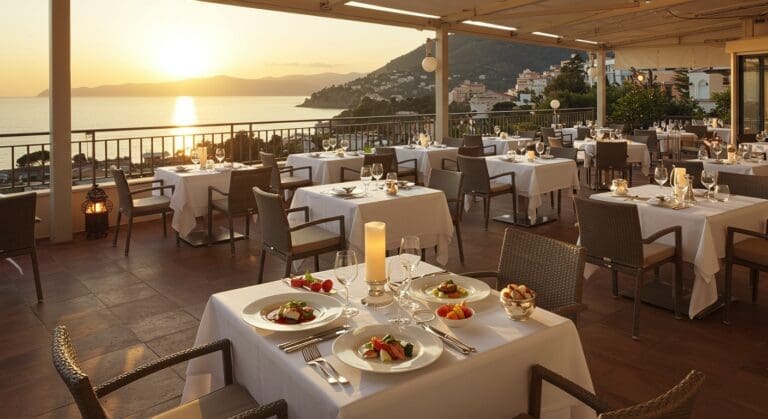
South America’s fine dining scene has not simply arrived – it has comprehensively taken over. Lima, in particular, has quietly positioned itself as one of the most important food cities on the planet, and the evidence is rather hard to argue with. Maido, Chef Mitsuharu “Micha” Tsumura’s temple to Nikkei cuisine – the fusion born from Japanese immigration to Peru – was named the World’s Best Restaurant in 2025. This is not a regional accolade or a well-meaning gesture towards geographical diversity; it is exactly what it sounds like: the best restaurant in the world, full stop. The Maido Experience tasting menu draws ingredients from the Andes, the Amazon, and Peru’s northern coast, and the result is cuisine that makes you rethink what “flavour” means as a concept. Book as early as humanly possible. Then book again, because you’ll want to return.
Also in Lima, Kjolle – Chef Pía León’s solo project, ranked ninth in the world and second in Latin America in 2025 – is a companion essential rather than a consolation prize. León’s kitchen champions native Peruvian ingredients with an almost fierce devotion: cushuro algae, high-altitude tubers, botanical flowers. Kjolle won the Art of Hospitality Award 2025, which will surprise no one who has sat at one of its tables. The hospitality is warm in the deepest sense – it makes you feel as though Peru itself is pleased you came.
In Buenos Aires, Don Julio stands at number ten in the world’s global rankings – which is an extraordinary thing to say about what is, at its generous heart, an Argentine steakhouse. But what a steakhouse. Grass-fed Aberdeen Angus and Hereford cattle, organic produce from the restaurant’s own fields, wine from the country’s finest cellars, and a parrilla tradition that turns a piece of beef into something close to an argument for the existence of civilisation. Book well in advance and arrive hungry. This is not the moment for restraint.
Bogotá’s El Chato, led by Chef Álvaro Clavijo, claimed the title of Latin America’s Best Restaurant in 2025 – a remarkable achievement for a contemporary Colombian bistro that approaches its ingredients with the reverence usually reserved for sacred texts. Heart of palm with rambutan, coconut, and seaweed is the kind of dish that sounds improbable until the first mouthful. In Cartagena, Celele took the Sustainable Restaurant Award 2025, with Chef Jaime Rodríguez spending years documenting recipes from Colombia’s Caribbean coast before building a restaurant around them. There is something quietly heroic about a kitchen that treats culinary heritage as something worth protecting.
Where the Locals Eat
The real South America, if such a thing can be pinned down, is found in the markets. Lima’s Mercado de Surquillo is where the city’s best chefs do their morning shopping – which tells you everything you need to know about what’s available. Ceviche at a market counter at 10am is not unusual here; it is, in fact, encouraged. Buenos Aires’ neighbourhood parrillas – the ones where the menu is written in chalk and the wine arrives in carafes – are worth every bit as much of your time as the fine dining institutions. São Paulo’s Liberdade neighbourhood, home to South America’s largest Japanese community, offers a parallel food universe that is entirely its own. In Cartagena’s old town, freshly made arepas from street vendors at dusk are the kind of thing that lodges permanently in the culinary memory.
Hidden Gems Worth Seeking Out
In Medellín, the Laureles neighbourhood has developed a quietly confident restaurant scene that hasn’t yet been fully discovered by international travel press – visit before that changes, which it will. In Montevideo, Uruguay’s capital, a seafood lunch at the Mercado del Puerto is an experience that combines excellent produce with theatrical preparation and a local crowd who know exactly what they’re doing. Argentina’s wine regions – Mendoza for Malbec, Salta for Torrontés at high altitude – offer cellar-door tastings at estates where the winemaker himself might pour your glass and tell you about the harvest with genuine emotion. In the Colchagua Valley in Chile, small-production wineries produce bottles you’ll spend years trying to find again once you’re home.
A Geography That Refuses to Be Reasonable
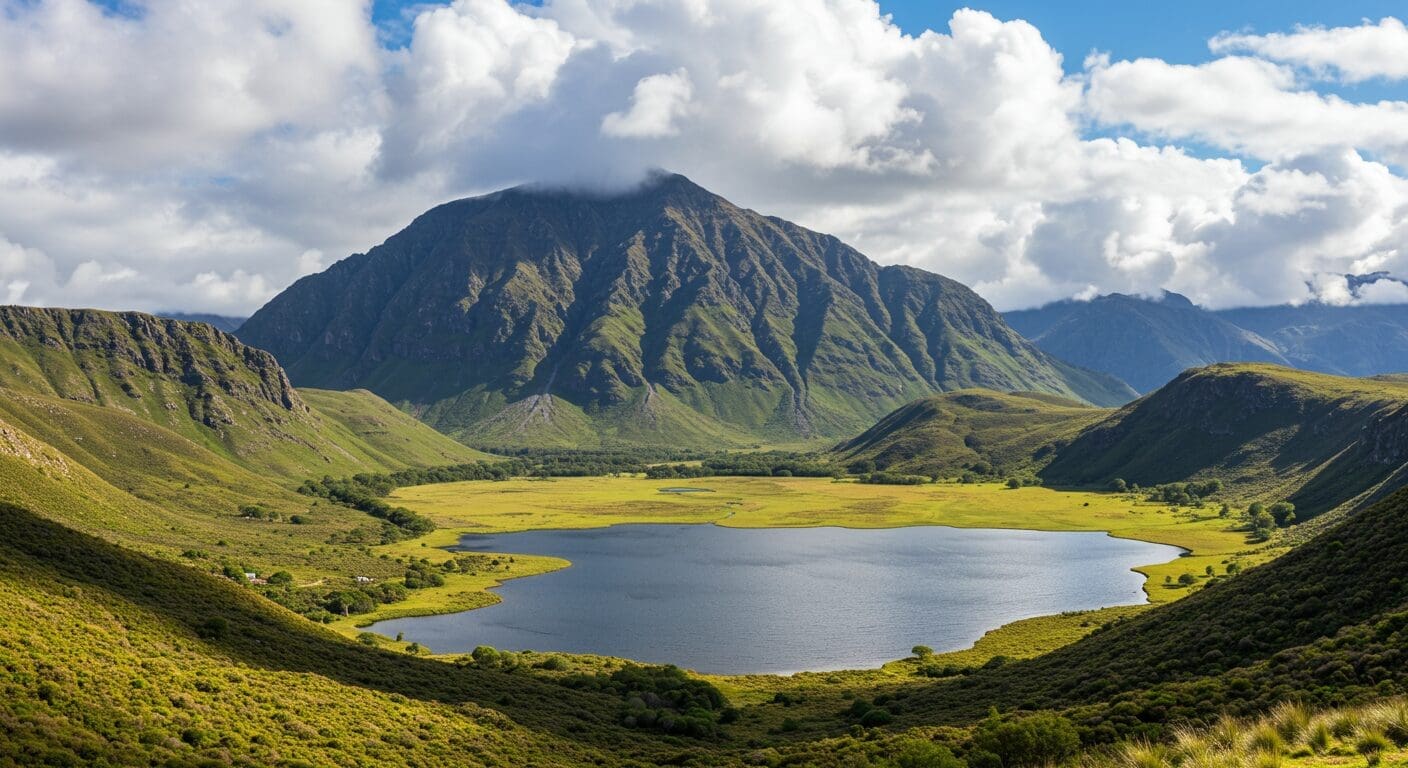
South America occupies roughly 17.8 million square kilometres, which is another way of saying it refuses to be understood in a single visit or a single paragraph. The continent contains the world’s largest tropical rainforest, its longest mountain range, its highest navigable lake, its driest desert, and some of its most wildly fertile agricultural land – often within the same country, which gives travelling here a slightly surreal quality, as though someone assembled the world’s greatest landscapes and then decided to put them all in one place to see what would happen.
Brazil is the obvious headline – vast, charismatic, occasionally overwhelming. Rio de Janeiro operates on its own terms: the combination of mountains, ocean, and urbanism is genuinely unlike anywhere else, and Copacabana and Ipanema beaches are exactly as beautiful as their reputation suggests, which is rare. The Pantanal – the world’s largest tropical wetland – offers wildlife encounters of a quality that makes an African safari feel crowded. The Amazon, of course, defies adequate description. It is the size of the continental United States and contains approximately ten percent of all species on earth. A river cruise or a lodge stay in the Peruvian or Brazilian Amazon is one of those experiences that recalibrates your sense of scale permanently.
Argentina stretches from the subtropical north to the glacial south, where Patagonia – shared with Chile – delivers landscapes of such theatrical grandeur that photographs of it look implausible. The Iguazú Falls, straddling the Argentine-Brazilian border, make Niagara look like a garden feature. The Atacama Desert in northern Chile is among the world’s driest places and the world’s best stargazing location – the night sky at altitude, without light pollution, is an experience that words handle badly. Bolivia’s Salar de Uyuni, the world’s largest salt flat, creates natural mirror effects after rainfall that need to be seen to be properly believed, and even then.
What to Do When You’re Not Simply Standing There in Admiration
The activities available across South America cover a range that is frankly unfair to summarise. In Peru, the Inca Trail to Machu Picchu remains one of the world’s great hikes – four days through cloud forest and mountain passes, arriving at the ancient citadel at sunrise when the mist is still sitting in the valleys. The alternative, Salkantay Trek, is equally spectacular and considerably less crowded, which says something important about the wisdom of alternative routes. In Chile, Torres del Paine National Park offers world-class trekking with the Towers – three improbable granite pillars – as the headline act. The W Trek or the full O Circuit are both among the finest multi-day walks on the planet.
Cultural experiences deserve equal attention. Buenos Aires’ tango scene is not a tourist show – it is alive in the milongas, neighbourhood dance halls where couples in their seventies move with a precision and intimacy that is quietly moving to witness. In Brazil, a capoeira demonstration in Salvador’s Pelourinho district – where the art form originated – is elemental. Peru’s Sacred Valley, the Colca Canyon, and the floating reed islands of Lake Titicaca each offer something impossible to replicate: encounters with living cultures that have continued largely unchanged for centuries and seem faintly unimpressed by the cameras pointed at them.
For the culinary traveller, cooking classes in Lima, coffee farm tours in Colombia’s Zona Cafetera, wine harvest experiences in Mendoza, and chocolate-making workshops in Ecuador’s Arriba region are all experiences that send you home with knowledge rather than just memories. For wildlife, the Galápagos Islands – Ecuador’s extraordinary archipelago – remain genuinely among the most remarkable places on earth, with animals so unafraid of humans that they’ll sit next to you on a rock and regard you with mild curiosity. The feeling is mutual.
For Those Who Prefer Their Landscapes to Come With an Adrenaline Surcharge
South America is, for the adventure-inclined, essentially a gift. Surfing in Brazil’s Santa Catarina state, or on the powerful Pacific breaks of Peru’s north coast around Máncora, draws serious wave-riders from around the world. Kitesurfing at Cumbuco in Brazil’s Ceará state benefits from consistent trade winds and warm shallow water – conditions that make it one of the sport’s premier global destinations. Windsurfing at Jericoacoara, a few hours further north, is similarly acclaimed.
Whitewater rafting on the Urubamba River in Peru’s Sacred Valley offers Class III-IV rapids with Inca ruins visible from the water, which is the kind of thing that makes adventure sports in other parts of the world feel comparatively unstaged. Chile’s Futaleufú River is considered one of the world’s great whitewater destinations – Class V rapids through Patagonian wilderness for those who take their river experiences seriously. Mountain biking in Bolivia, particularly the so-called “Death Road” from La Paz down to the Yungas valley, has something of a dramatic name but is now a well-managed and thoroughly popular day excursion. The name does still lend the experience a certain frisson.
Diving in the Galápagos Islands offers encounters with hammerhead sharks, whale sharks, manta rays, and marine iguanas that exist nowhere else on earth. The visibility is exceptional and the biodiversity extraordinary. Scuba diving along Brazil’s Fernando de Noronha archipelago – a UNESCO marine reserve with warm clear water and remarkable coral formations – is, frankly, one of South America’s better-kept secrets. Rock climbing, paragliding over the Andes, ice trekking on Patagonian glaciers – the continent’s adventure menu is comprehensive to the point of being slightly daunting.
South America With Children: Space, Wonder, and the Education No Classroom Provides
South America has a particular gift for travelling families – and it is this: it is one of the few destinations on earth where children are not an inconvenience to be managed but a presence that actively enhances the experience. The wildlife alone is transformative. A child who has watched a sea turtle nest on a Brazilian beach, or spotted a capybara wandering nonchalantly past a Pantanal lodge, or held a star map above the Atacama Desert at night, has had an education that no classroom can replicate. This matters. Travel remembered from childhood shapes how people see the world for the rest of their lives.
The practical consideration for family holidays in South America is privacy and space – and here, a private luxury villa makes an argument that hotels cannot win. A villa with its own pool means children can swim on their schedule rather than a hotel’s. Private grounds mean teenagers can have independence without parents losing their minds. A dedicated kitchen and staff who can accommodate dietary preferences without the production of a formal request means mealtimes are pleasures rather than negotiations. Families with young children will find that a villa concierge can arrange child-appropriate day trips, local guides who know how to engage children, and babysitting services that allow parents to actually have an evening together, which they deserve.
Brazil’s beach resorts – Trancoso, Búzios, Florianópolis – are particularly well-suited to families, combining safe swimming beaches with cultural richness and the kind of easy, unhurried atmosphere that allows everyone to decompress properly. Peru’s Sacred Valley is extraordinary for older children with a genuine curiosity about ancient civilisations – Machu Picchu seen through the eyes of a ten-year-old is an entirely different experience from the adult version. Colombia’s Caribbean coast, with its warm shallow water and colour-saturated culture, is a sensory education for children of any age.
History, Art, and the Cultures That Built a Continent
South America’s cultural depth is layered in ways that reward curiosity at every level. The pre-Columbian civilisations alone – the Inca Empire at its height controlled four million square kilometres of western South America – left a physical legacy that remains among the world’s most extraordinary. Machu Picchu is the headline, but Sacsayhuamán, Chan Chan, Tiwanaku, and the Nazca Lines – geoglyphs etched into the Peruvian desert and visible only from the air, their purpose still debated – are equally remarkable in their own ways. The central mystery of Nazca, incidentally, has kept archaeologists, enthusiasts, and documentary filmmakers in steady employment for decades. No consensus has emerged. This seems appropriate.
The colonial cities of South America are architectural documents of a complex history. Cartagena de Indias, Colombia’s walled Caribbean city, is a UNESCO World Heritage Site of considerable beauty – Spanish colonial architecture in shades of yellow, ochre, and white, bougainvillea cascading over balconies, and a history that includes pirate raids, the slave trade, and García Márquez, which is quite a combination. Old Havana – technically the Caribbean rather than South America, but worth the digression – exerts a similar gravity. In Peru, Cusco sits at 3,400 metres and combines Inca stonework foundations with Spanish colonial architecture built directly on top of it, which is a physical metaphor for the continent’s layered history.
Buenos Aires is South America’s art capital – the Museo Nacional de Bellas Artes, the MALBA contemporary art museum, and a gallery scene in Palermo and San Telmo that punches considerably above its weight internationally. São Paulo’s São Paulo Museum of Art, with its famous basement gallery design by Lina Bo Bardi, is one of the great art museums of the Americas. Brazil’s carnival season – not just Rio, but Bahia’s Salvador and Recife’s Galo da Madrugada – is an expression of cultural identity that goes considerably deeper than the tourism brochure version suggests. The music, the costumes, the rhythm are the real thing: centuries of African, Indigenous, and European cultural fusion made physical.
Shopping: What to Look For, Where to Look, and Why the Alpaca Matters
South America produces some of the world’s finest craft and artisanal goods, and shopping here has the particular pleasure of feeling genuinely connected to the culture rather than manufactured for export. Peru’s textile tradition – specifically the hand-woven alpaca and vicuña products from the altiplano – represents one of the world’s great artisanal inheritances. The quality difference between machine-made tourist market pieces and genuine hand-woven textiles is significant; Cusco’s San Blas neighbourhood has artisan workshops worth seeking out, and Pisac market in the Sacred Valley on Sunday mornings offers the real thing alongside considerable colour and atmosphere.
Buenos Aires is a surprisingly sophisticated shopping city – Palermo has design boutiques and independent leather goods makers producing work of exceptional quality at prices that feel almost unreasonably reasonable compared to European equivalents. Argentine leather – particularly shoes, belts, and bags – is a standard gift that requires no explanation. Chilean lapis lazuli jewellery, found only in a small region of Chile and Afghanistan, is the kind of thing you buy once and wear for thirty years. Colombian emeralds, when bought from reputable dealers in Bogotá’s Candelaria district, are among the world’s finest.
In Brazil, the craft markets of Bahia’s Salvador – particularly the Mercado Modelo – offer candomblé ritual objects, musical instruments, handmade lace, and local ceramics that are entirely specific to the culture. Havana’s second-hand book market along the Plaza de Armas, if you find yourself there, rewards an hour’s browsing in the particular way that only books do. Coffee from Colombia’s Zona Cafetera, brought home in properly sealed pouches, is the gift that keeps delivering across the following months. The friends who receive it will not be ungrateful.
The Useful Bits: Practical Information Without the Fine Print Tone
South America spans multiple currencies, languages, and time zones, and it helps to be prepared for the logistical reality before you arrive. Brazil uses the Brazilian Real, Argentina the Argentine Peso – Argentina’s currency situation warrants particular attention, as official and unofficial exchange rates have historically diverged significantly; check the current position before travel and take advice from people who know the current situation well. Peru uses the Sol, Colombia the Colombian Peso, Chile the Chilean Peso. US dollars are widely accepted in tourist areas across the continent; euros less so outside major cities. Credit cards work well in cities and established hotels and restaurants; cash remains essential for markets, rural areas, and smaller transactions.
Language: Portuguese is spoken in Brazil; Spanish everywhere else, with the exception of the Guianas, which speak English, French, and Dutch respectively – a linguistic left turn that surprises people. A basic working knowledge of Spanish is genuinely useful across most of the continent, and locals respond warmly to the effort. Brazilian Portuguese has a particular warmth as a language; even halting attempts at it are appreciated.
The best time to visit depends almost entirely on where you’re going, because the climate variation is extreme. Generally: Brazil’s beach season runs November to March; Patagonia is best visited November to March (southern hemisphere summer); Peru’s dry season runs May to October, which aligns with the most comfortable conditions for hiking. The Galápagos are visited year-round. Colombia, due to its equatorial position, is visited year-round with two dry seasons per year. Bogotá sits at altitude and maintains a fairly consistent spring-like climate throughout the year, which is a rather civilised arrangement.
Safety varies considerably by country, city, and neighbourhood, and generalising about a continent this size is not useful. The practical guidance: take the same sensible precautions you would in any major city – be aware of your surroundings, use reputable private transfers, keep valuables unobtrusive, and take local advice seriously. The vast majority of visits pass without incident. Tipping is generally expected in restaurants across the continent – 10% is the standard in most countries. Some restaurants add a service charge; check before adding more. Altitude sickness is a genuine consideration in Peru, Bolivia, and parts of Ecuador and Colombia – take it seriously, ascend gradually where possible, and allow acclimatisation time before any strenuous activity.
Why a Private Villa Changes Everything About How You Experience South America
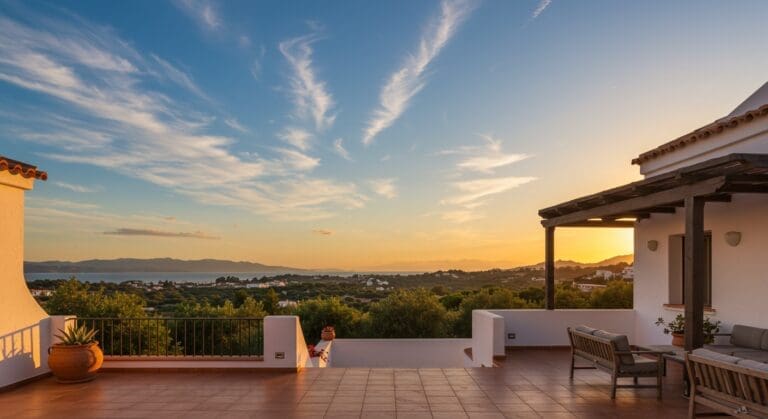
The luxury holiday in South America question, at some point, comes down to this: do you want to experience the continent, or do you want to truly inhabit it? The difference matters more here than almost anywhere else, because South America operates on a rhythm and a sensory intensity that rewards immersion. A hotel, however excellent, puts you at the intersection of other people’s schedules. A private villa puts you on your own.
This is not a minor distinction. Consider what it actually means: breakfast whenever you want it, prepared in a kitchen stocked with produce from the market you visited yesterday. A private pool that isn’t shared with forty other guests and doesn’t operate on rotation. Space – genuinely generous, unhurried space – for a family to coexist without compression. For a group of friends, the ability to gather in the evening without negotiating restaurant reservations or hotel lobbies. The kind of privacy that allows you to actually recover from the extraordinary things you’ve been doing all day.
Across Brazil’s coastal regions – Trancoso, Búzios, Florianópolis, and the Bahian coast – private villas sit directly above beaches or within walking distance of them, often with infinity pools, outdoor entertaining areas, and staff that include private chefs who can replicate the regional cuisine you’ve been eating all week. In Colombia’s Cartagena and the coffee region, restored colonial haciendas offer experiences that are architecturally and culturally specific to the place in a way no modern hotel can be. Uruguay’s Punta del Este has long been the preferred beach destination of Argentina’s most discerning travellers, and the villa rental market there reflects that – properties with private pools, landscaped gardens, and every amenity.
For wellness-focused guests, South America’s private villas increasingly offer dedicated yoga platforms, outdoor treatment spaces, personal trainer arrangements, and access to the kind of natural environments – rainforest, mountain air, ocean – that make recovery feel genuinely restorative rather than performative. For remote workers, the connectivity situation has improved dramatically; many luxury villas across the continent now offer high-speed internet as standard, with Starlink increasingly available in more remote locations for guests who need reliability wherever they are. The view from the desk is, it has to be said, considerably more interesting than an office in a city.
Multi-generational groups and large parties are particularly well-served by the South American villa market, where properties regularly accommodate 10-16 guests across separate wings or pavilions, maintaining privacy within a shared setting. The staff-to-guest ratio in a staffed villa – a private chef, housekeeper, concierge, and pool attendant, typically – creates a level of personalised service that no hotel achieves at equivalent guest numbers. A luxury holiday in South America, experienced from a private villa, is simply a different thing from the same destination experienced through a hotel. It is the difference between visiting and arriving.
Browse Excellence Luxury Villas’ full collection of private villa rentals in South America to find the property that suits your particular version of this extraordinary continent.
More South America Travel Guides
- Best Restaurants in South America: Fine Dining, Local Gems & Where to Eat
- South America Food & Wine Guide: Local Cuisine, Markets & Wine Estates
- South America with Kids: The Ultimate Family Holiday Guide
- Best Time to Visit South America: Month by Month Weather, Crowds & Tips
- South America Luxury Itinerary: The Perfect 7-Day Guide
- Romantic South America: The Ultimate Couples & Honeymoon Guide
What is the best time to visit South America?
It depends significantly on your destination, because South America’s climate varies as dramatically as its landscapes. For Peru and the Inca Trail, the dry season from May to October offers the most reliable conditions. For Patagonia in Argentina and Chile, November to March – the southern hemisphere summer – is when the weather cooperates. Brazil’s beach season peaks from November through March, though Rio and the northeast coast are visited year-round. The Galápagos Islands are rewarding at any time of year, with different seasons offering different wildlife encounters. Colombia’s position near the equator means it has two dry seasons per year – December to February and June to August – and Bogotá’s altitude gives it a pleasant spring-like climate throughout. If you’re planning a multi-country itinerary, April to June and August to October offer reasonable conditions across multiple regions simultaneously.
How do I get to South America?
The main international gateway airports are São Paulo Guarulhos (GRU) for Brazil, Ezeiza International (EZE) for Buenos Aires, Jorge Chávez International (LIM) for Lima, El Dorado International (BOG) for Bogotá, and Arturo Merino Benítez (SCL) for Santiago. From the United Kingdom, direct flights operate to São Paulo, Buenos Aires, Bogotá, and Lima with British Airways, LATAM, and Iberia among the major carriers; journey times are typically 11-14 hours. From the United States, flights run 8-11 hours depending on departure city and destination. Within South America, LATAM and Avianca are the dominant domestic and regional carriers, connecting major cities efficiently. For remote or natural destinations – the Amazon, Galápagos, Patagonia – small charter flights and transfers are typically arranged through lodges or tour operators as part of a wider itinerary.
Is South America good for families?
South America is genuinely excellent for families, particularly those travelling with children old enough to engage with extraordinary natural and cultural environments. The wildlife encounters available – sea turtles, jaguars, giant tortoises, marine iguanas, capybaras – are transformative for children in a way few destinations match. Brazil’s beach resorts offer safe swimming and a relaxed family atmosphere. Peru’s Sacred Valley and Machu Picchu captivate children with a genuine curiosity about ancient history. Colombia’s Caribbean coast provides colour, warmth, and sensory richness. The practical advantage of renting a private villa rather than staying in a hotel is significant for families: private pools, flexible mealtimes, staff who can accommodate children’s preferences, and space for different generations to have their own rhythms. A concierge can arrange age-appropriate day trips and guides who know how to engage children meaningfully.
Why rent a luxury villa in South America?
A private luxury villa offers something a hotel fundamentally cannot: the experience of actually inhabiting a place rather than passing through it. In South America specifically, where the landscapes, cultures, and rhythms are so vivid and immersive, having a private base – with your own pool, your own kitchen, your own outdoor space – changes the texture of the holiday entirely. The privacy it affords is genuine rather than nominal. The staff ratio – typically a private chef, housekeeper, and concierge in a staffed villa – creates personalised service at a level that no hotel achieves at equivalent numbers. For families, the flexibility is invaluable. For couples, the seclusion is the point. For groups, the shared space creates the kind of unhurried communal experience that defines the best holidays. Many properties also come with curated concierge services to arrange local guides, transfers, restaurant reservations, and excursions – so you get the independence of a villa with the supported experience of a managed itinerary.
Are there private villas in South America suitable for large groups or multi-generational families?
Yes, and in considerable variety. The South American luxury villa market includes a substantial number of properties designed to accommodate 10-16 guests comfortably, often across separate wings, pavilions, or outbuildings that preserve privacy within a shared setting. Multi-generational families benefit from this arrangement particularly: grandparents can have their own quiet space while children have the run of the pool and gardens. Large friend groups can gather in communal entertaining areas – often including outdoor kitchens, terraces, and living spaces – without being on top of each other constantly. Staffed villas in Brazil, Colombia, Uruguay, and Peru regularly include private chefs, housekeepers, pool attendants, and concierge staff as part of the rental, creating a hotel-level service environment within a private setting. Specific requirements – accessibility features, baby equipment, dedicated workspace for remote workers – can typically be arranged through the property manager in advance.
Can I find a luxury villa in South America with good internet for remote working?
Increasingly, yes. Connectivity across South America’s major villa destinations has improved significantly in recent years, and high-speed fibre broadband is now standard at luxury properties in Brazil’s coastal resorts, Colombia’s cities and Caribbean coast, Uruguay’s Punta del Este, and urban areas of Peru, Argentina, and Chile. In more remote locations – Patagonian lodges, jungle retreats, high-altitude Andean properties – Starlink satellite internet is increasingly available, providing reliable connectivity even where traditional infrastructure doesn’t reach. If consistent, high-speed internet is a non-negotiable requirement, it’s worth specifying this clearly when enquiring about a property, so the concierge team can confirm the specific setup and speeds available. Many luxury villas in the region now explicitly cater to remote workers, with dedicated workspace areas and strong connectivity as standard features rather than afterthoughts.