South Carolina Travel Guide: Where to Stay, Eat & Explore in Luxury
Most first-time visitors to South Carolina spend their entire trip in Charleston, eat shrimp and grits three times, and fly home convinced they’ve seen the state. They haven’t. They’ve seen the cover. South Carolina is one of those places that rewards the curious and quietly disappoints the itinerary-checkers – a state of low-country marshes and moss-draped oaks, Blue Ridge foothills and barrier islands, Revolutionary War history and James Beard award-winning kitchens, all packed into a geography that takes roughly four hours to cross and considerably longer to understand. The mistake isn’t coming here. The mistake is not staying long enough, or staying in the wrong kind of place, or thinking that a hotel room in a city is the same as actually inhabiting a destination. It isn’t. It never is.
South Carolina has quietly become one of the most versatile destinations in the United States – and the range of people it suits is broader than you might expect. Families seeking privacy find it in the palmetto-shaded islands of the Lowcountry, where a villa with a private pool means children can run barefoot from breakfast to bedtime without a hotel corridor in sight. Couples marking milestone anniversaries discover in Charleston a city that manages to be romantic without trying too hard – all candlelit dining rooms and cobbled lanes and the particular satisfaction of a perfect Lowcountry oyster. Groups of friends discover that renting a substantial coastal property is not only more fun than a hotel but, divided across eight or ten people, often better value too. Wellness-focused travellers come for the long morning runs through maritime forest, the paddleboard sunrises, the hammock afternoons. And remote workers – the modern tribe who’ve noticed that a reliable broadband connection and a private pool are not mutually exclusive – have identified South Carolina’s coastal rentals as among the most liveable work-from-anywhere bases on the eastern seaboard. The only category South Carolina doesn’t suit is people in a hurry. For them, there’s always somewhere else.
How to Actually Arrive – and Why the Journey Sets the Tone
The main entry point for most international visitors is Charleston International Airport (CHS), which sits just north of the city and handles a solid mix of domestic routes as well as direct transatlantic connections. Delta, American, United and Southwest all serve it well, and the drive from the terminal to the Historic District takes about fifteen minutes – which, after a long-haul flight, feels almost suspiciously civilised. Myrtle Beach International (MYR) serves the Grand Strand region on the north coast and is useful if you’re heading straight to beach house territory without the Charleston detour. Columbia Metropolitan Airport (CAE) is the state capital’s hub, better for inland explorations or Blue Ridge approaches from the south.
Car hire is essentially non-negotiable outside Charleston’s walkable centre. South Carolina rewards road-trippers – the distances are manageable, the scenery on the secondary roads is often vastly better than the interstates suggest, and arriving at a private villa in your own vehicle rather than on a shuttle bus is one of those small pleasures that compounds over a week. The coastal highway system connecting Charleston to the Sea Islands and down to Hilton Head is particularly good. Hilton Head Island sits about 45 minutes south of Beaufort and just over an hour from Savannah’s airport across the Georgia border – a useful option if you’re combining the two states or prefer a slightly less hectic arrival city. Drive times in South Carolina rarely feel punishing. The flat coastal plain and the wide, canopied roads through the ACE Basin have a particular quality of arrival that tells you immediately you’re somewhere worth slowing down for.
Where to Eat: From Michelin Stars to Moss-Covered Pitmaster Sheds
Fine Dining
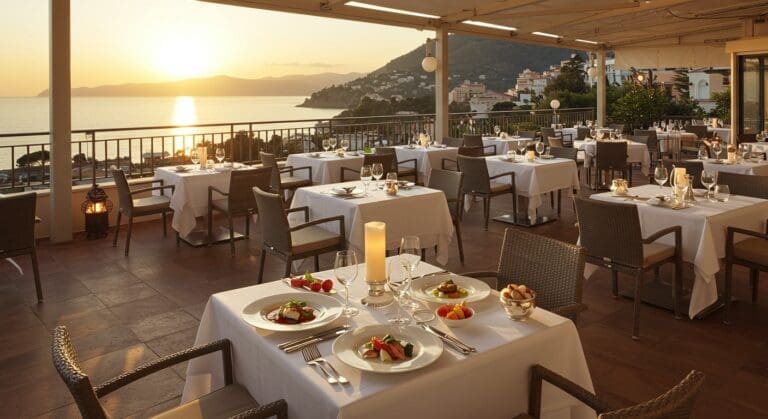
Charleston has become one of the genuinely serious food cities of the American South, and its restaurant scene can now hold its own against almost anywhere on the eastern seaboard. The benchmark is FIG – Food Is Good, since you asked – on downtown Charleston’s Meeting Street. Mike Lata’s modern American restaurant has been at this since 2003, has two James Beard Award-winning chefs in its lineage, holds a Michelin Star, and still manages to feel like someone’s particularly well-connected dinner party rather than a trophy restaurant. Reservations are tight – people queue for walk-in spots before the door opens, which tells you everything. Go. Plan around it if you have to.
Wild Common earned its own Michelin Star in 2025 and deserves the attention. Chef Orlando Pagán brings a layered, inventive sensibility to his tasting menu – $95 per person at the time of writing, which for the quality on offer is almost absurdly reasonable. Riffs on pho and local oysters give way to seared scallops and dry-aged strip steak, with optional supplements including a caviar-spiked eggs Benedict that sounds like a provocation and tastes like a revelation. The Australian wagyu supplement is also worth considering, particularly if someone else is paying.
Where the Locals Eat
The answer to that question, if you’re anywhere near Folly Beach, involves Jack of Cups Saloon. It ranked 17th on Yelp’s national Top 100 Restaurants list for 2025 – a ranking built on volume and quality of reviews, not PR campaigns – and serves Indian and Asian-inspired plates in a setting that could generously be described as relaxed. It is the kind of place that surprises you, and then you think about it for the rest of the trip. Folly Beach has that effect on people generally. It’s scruffier than Sullivan’s Island and considerably more interesting for it.
For barbecue – and in South Carolina you should absolutely eat barbecue – there is one name that requires no qualification: Rodney Scott. His whole hog BBQ on King Street in Charleston is the kind of place food writers have been making pilgrimages to for years, and with good reason. Scott won the James Beard Award for Best Chef: Southeast in 2018, and what he does with a whole hog over wood coals is not so much cooking as an act of patience and will. The crackling alone warrants the trip. South Carolina is widely considered the birthplace of American barbecue, which means eating Rodney Scott’s food here carries a certain weight. Do not eat a light lunch beforehand.
Hidden Gems Worth Seeking Out
If your South Carolina itinerary takes you inland to Florence – and it should, if only to understand the full texture of the state – Town Hall is the restaurant to know. Farm-driven, seasonally led, Southern-inspired without being nostalgic about it, Town Hall sources ingredients from a nearby family farm and changes its menu accordingly. It has the calm assurance of a restaurant that doesn’t need to shout. Florence itself is often overlooked by visitors moving between Charlotte and the coast, which is somewhat their loss and entirely Town Hall’s advantage. Book ahead, order whatever involves the farm produce most directly, and resist the urge to rush.
The Lay of the Land: Five South Carolinas in One State
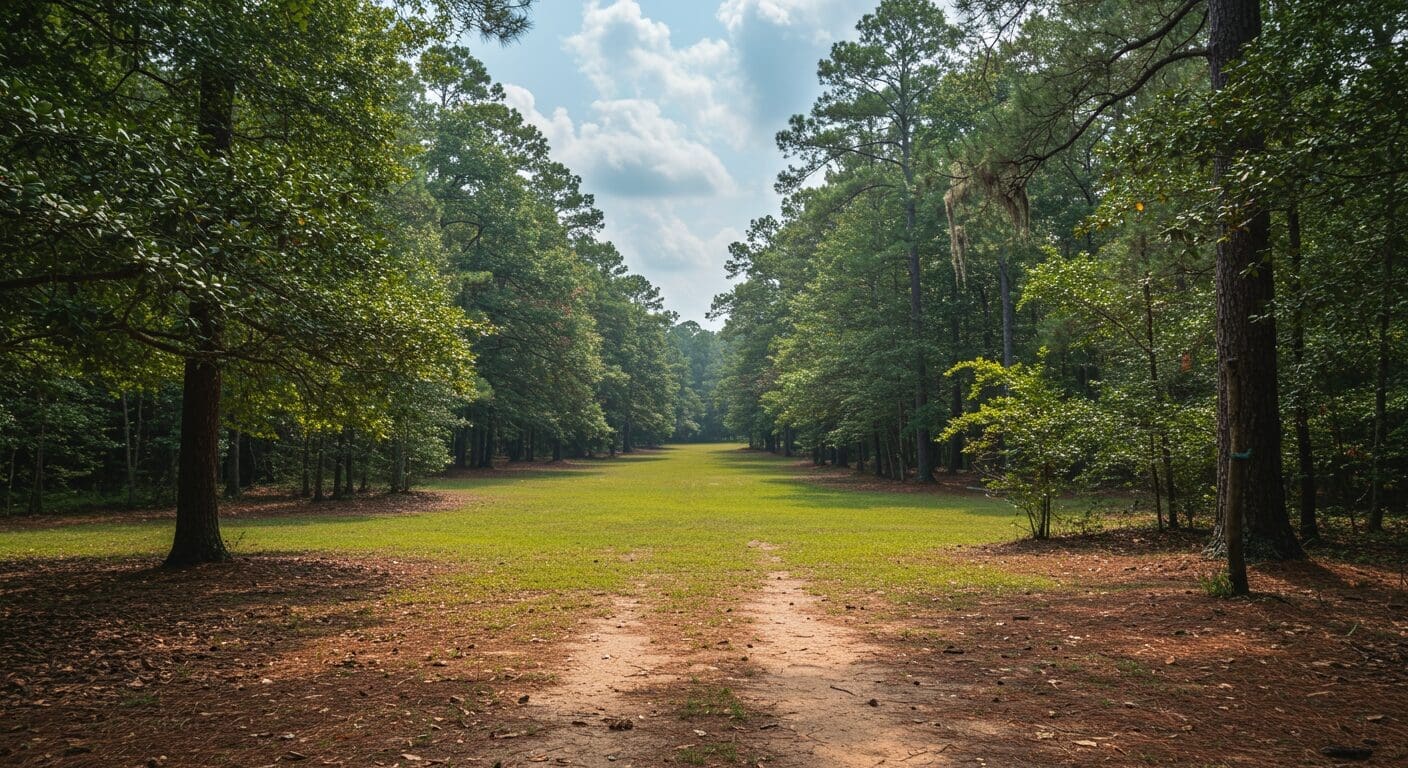
It helps to think of South Carolina as five distinct territories that happen to share a border. The Lowcountry – that long, liquid strip of coast, marsh, sea island and tidal creek running from Charleston south to Hilton Head – is the one most visitors know, and it has an atmosphere so particular it feels almost botanical. The light is different here. The Spanish moss hanging from the live oaks does something to the afternoon that no other landscape quite replicates.
Moving north from Charleston, the Grand Strand unspools for sixty miles of Atlantic coastline, anchored at its centre by Myrtle Beach – a city that has enthusiastically embraced the concept of entertainment, occasionally to excess, but which also contains stretches of genuinely beautiful beach if you know where to walk. North Myrtle Beach and Pawleys Island, just south, are considerably more appealing for those seeking a quieter version of the coast.
Inland, the Midlands – the broad central swath of the state – contains the capital Columbia, which is warmer than the coast, often overlooked, and home to the University of South Carolina and a surprisingly lively arts scene. Further northwest, the Upcountry climbs into the Blue Ridge foothills: waterfalls, state parks, mountain towns and a pace of life that makes the coastal bustle feel very far away. Table Rock State Park and Caesar’s Head State Park offer landscapes that would not disgrace the Appalachian Trail proper. And threading between all of it, the ACE Basin – one of the largest undeveloped estuaries on the east coast, home to migratory birds, ancient cypress swamps and an almost ecclesiastical quiet on a winter morning. South Carolina doesn’t do monotony.
What to Do: The Long List Nobody Gives You at the Airport
The obvious things are obvious for good reason. Charleston’s Historic District deserves the afternoon you’ll spend walking it – the antebellum architecture of the Battery, the rainbow-painted houses of Rainbow Row, the market where Gullah basket weavers continue a craft tradition that stretches back centuries. The Spoleto Festival USA, held each May and June, turns the city into one of the most concentrated performing arts events in North America. If your dates align, arrange your whole trip around it. If they don’t, the city’s gallery scene and live music calendar make most weekends worth having.
Beyond Charleston, the Congaree National Park near Columbia protects the largest intact expanse of old-growth bottomland hardwood forest in the southeastern United States – champion trees of extraordinary girth rising from tannin-dark floodwaters, with boardwalk trails that feel like walking through a very slow cathedral. It is profoundly undervisited. Fort Sumter, accessible by ferry from Charleston Harbour, is where the American Civil War began in April 1861 – a small fort with enormous historical gravity, and one of those rare sites where the weight of the past is entirely unmanufactured. The Middleton Place plantation gardens, dating to 1741, are among the oldest landscaped gardens in North America. The history here is complicated, as plantation history must be – the site now confronts that complexity honestly, and is worth visiting for the fullness of the story it tells.
Adventure on the Water and in the Hills: South Carolina’s Outdoor Edge
The coast is the obvious starting point. Kayaking through the sea island marshes is one of those experiences that sounds like a minor activity and turns out to be transformative – the channels narrow, the birds are extraordinary (wood storks, roseate spoonbills, painted buntings on the right day), and the silence is so complete that it feels slightly impolite to talk. Outfitters across the Lowcountry offer guided paddling tours, and many private villas have kayak or paddleboard access baked in. Surfing at Folly Beach has a properly credible scene – the waves are modest but the atmosphere is excellent, and beginner lessons are widely available. Deep-sea fishing charters out of Georgetown, Murrells Inlet and Hilton Head access the Gulf Stream reasonably quickly, with sailfish, mahi-mahi and king mackerel as the primary targets depending on season.
In the Upcountry, the hiking is serious. The Foothills Trail runs 77 miles through the Blue Ridge escarpment, taking in Whitewater Falls – the highest cascade east of the Rockies – and the kind of panoramic ridge views that remind you South Carolina is considerably more three-dimensional than its beach reputation suggests. Cycling is strong in the Sea Island region, where the flat terrain and quiet backroads make for effortless days. The Swamp Fox Passage of the Palmetto Trail covers 47 miles of coastal forest through Francis Marion National Forest – more demanding, more atmospheric, and almost entirely free of other people. That last quality is, depending on your disposition, either a warning or a selling point.
South Carolina with Children: A Natural Advantage
Few destinations in the American South do family travel as instinctively well as South Carolina’s coast and sea islands. The barrier islands – Kiawah, Seabrook, Fripp, Hunting – were essentially designed for children, though this was probably not the primary motivation of their geological formation. Wide, gently shelving beaches mean safe swimming even for small ones. The loggerhead sea turtles that nest on Kiawah Island’s shore between May and October are a genuinely thrilling wildlife encounter, particularly for children old enough to understand why everyone is being asked to keep quiet and stay behind the tape. The turtles are not impressed by enthusiasm. This is an important lesson.
Myrtle Beach offers the full complement of family attractions – waterparks, mini golf, the SkyWheel Ferris wheel over the ocean, aquariums, go-karts – in a density that can either delight or slightly alarm depending on how you feel about themed entertainment districts. For families who prefer a quieter version, the Sea Islands or the North Myrtle Beach area offer beach days with considerably less noise. The private villa advantage is obvious here: children have a garden, a pool and the freedom to be loud without any neighbouring guests to disturb. Parents have the evening back once the children are in bed, without having to worry about hotel corridors. A private chef or catered breakfast is not a luxury with small children – it is a survival strategy.
History, Gullah Culture and the Architecture of Memory
South Carolina’s history is layered and, in places, uncomfortable – which is to say it is honest, and worth engaging with. The state was central to the transatlantic slave trade; Charleston was the largest point of entry for enslaved Africans arriving in North America, and the International African American Museum, which opened on the Charleston waterfront in 2023 on the precise site of Gadsden’s Wharf, is one of the most significant cultural institutions to open in the country in recent years. It is careful, rigorous and moving without being manipulative. A half-day here will change how you see the rest of the state.
The Gullah Geechee cultural corridor – stretching from North Carolina through South Carolina and Georgia to northern Florida – preserves the language, foodways, basket-weaving traditions and spiritual practices of the descendants of enslaved West and Central Africans. On the Sea Islands, where geographic isolation preserved Gullah culture through the centuries, you can still hear the language spoken, buy the coiled sweetgrass baskets at the Charleston City Market, and taste the food – rice-centric, West African-inflected, deeply flavoured – that underpins much of what the world now calls Southern cuisine. This is not peripheral. It is central. Understanding it makes the rest of the food, music and architecture considerably more legible.
Architecturally, Charleston is in a class of its own on the American east coast. The single houses – those narrow structures built side-on to the street to catch the sea breeze, with their characteristic piazzas running along one side – are a uniquely South Carolinian form, and the concentration of 18th and 19th century buildings that survived the Civil War (the city wisely surrendered rather than burning) is extraordinary. Walking the French Quarter or south of Broad is one of the finest urban walks in the country. The Spoleto and Piccolo Spoleto festivals in late May and early June fill every available venue – churches, courtyards, theatres, outdoor stages – with opera, dance, theatre and chamber music. The city has always had a taste for the arts. It shows.
What to Buy and Where to Find It
South Carolina is not a destination for luxury retail in the conventional sense – you won’t find the boutique density of a European capital here, and you shouldn’t be looking for it. What you will find is considerably more interesting: genuinely local craft, food and art with nowhere else to buy it. The sweetgrass baskets woven and sold by Gullah artisans at the Old Charleston City Market are among the most beautiful and culturally significant crafts made anywhere in the American South. They are also not cheap, which is entirely appropriate given the skill involved and the cultural legacy they carry. Buy one if you can.
King Street in Charleston is the city’s main retail artery, running from antiques at the southern end – genuinely good antiques, the kind you might actually want in a house – to boutiques and independent retailers as you move north toward the upper King neighbourhood. The Saturday farmers’ market in Marion Square runs from April to November and is the best single-stop introduction to what’s in season: Sea Island peas, Carolina Gold rice (the heirloom variety that was once the foundation of Lowcountry agriculture and has been quietly revived by a dedicated group of farmers), local honey, Lowcountry preserves and the kind of artisanal hot sauce that comes with a backstory. For art, the Charleston gallery scene on Broad Street and in the French Quarter has genuine depth – local artists working in everything from contemporary abstraction to detailed Lowcountry landscape painting. The Gibbes Museum of Art has been collecting American art since 1905 and contains a quietly excellent permanent collection that most visitors walk past on their way to the Battery.
The Practical Stuff: When to Come, What to Bring and How to Behave
South Carolina uses the US dollar, operates on Eastern Time, and tips at the standard American rate – 18 to 20 percent at restaurants, a few dollars for hotel services, ten to fifteen percent for taxi drivers. The language is English, delivered in a variety of accents ranging from the particular slow cadences of the Lowcountry to the more Appalachian inflections of the Upcountry. Both are pleasant to listen to. Manners are valued here in a way that is not performative – people hold doors, say thank you and mean it, and the service culture in good restaurants and hotels is genuinely warm rather than professionally choreographed. Arriving as someone in a hurry does not play well. Adjust accordingly.
The best time to visit for most travellers is late September through November – the heat has broken, the crowds have thinned post-Labour Day, the light on the marshes in October is among the finest things the eastern seaboard has to offer, and restaurant reservation availability opens up noticeably. Spring, from March through May, is the other premium window: azaleas blooming, temperatures in the mid-60s to 70s Fahrenheit, and the gardens of Charleston at their most theatrical. Summer – June through August – is genuinely hot and humid, beach-season busy, and should be approached with appropriate sunscreen and a villa with a strong air conditioning system. Hurricane season runs officially from June through November, with the peak risk in August and September; it’s worth checking weather forecasts in those months rather than being philosophical about it. Winter is mild by any reasonable standard – temperatures rarely drop below 40°F on the coast – and offers the quiet rewards of having the place largely to yourself.
Why a Private Villa is the Only Sensible Way to Do This
There is a category of travel experience that hotels, however excellent, cannot provide. It is the experience of having a place of your own – a kitchen where someone else has stocked the fridge, a pool that belongs to you and not to forty other guests, a garden where children can be left to their devices while adults have the terrace and a bottle of something good. South Carolina, with its sprawling sea island properties, its plantation-style houses with wide covered porches, and its tradition of generous, private-feeling space, is a destination that actively rewards villa rental.
On Kiawah, Seabrook, Fripp and the other barrier islands, private homes and villas come with direct beach access, private pools and the kind of coastal setting that looks expensive even when it’s reasonably priced. The space available – multiple bedrooms arranged across separate wings, outdoor dining areas large enough for a genuine gathering, private docks on some tidal creek properties – makes villa rental the obvious choice for multi-generational family holidays, groups of friends who want to spend time together without being on top of each other, or couples who simply want the solitude that no hotel corridor can provide.
For remote workers, South Carolina’s villa rental market has caught up with the demand: fibre and high-speed broadband connections are increasingly standard in well-maintained properties, and a private study or dedicated workspace is common enough in larger villas to be specifically requested rather than hoped for. The wellness-focused traveller will find that a private pool, a morning run along a deserted beach trail, and a kitchen stocked for clean eating is a more coherent wellness experience than most dedicated retreat programmes – and considerably more flexible. A private chef, available through most premium villa concierge services, means you can eat at Rodney Scott’s for the whole hog experience and come home to a nutritionist-approved dinner on Tuesday. South Carolina is broad-minded in that way.
Excellence Luxury Villas holds a curated collection of properties across the state’s most sought-after coastal and inland locations. Browse luxury villas in South Carolina with private pool and find the property that makes this extraordinary state feel, properly, like yours.
More South Carolina Travel Guides
- Best Restaurants in South Carolina: Fine Dining, Local Gems & Where to Eat
- South Carolina Food & Wine Guide: Local Cuisine, Markets & Wine Estates
- South Carolina with Kids: The Ultimate Family Holiday Guide
- Best Time to Visit South Carolina: Month by Month Weather, Crowds & Tips
- South Carolina Luxury Itinerary: The Perfect 7-Day Guide
- Romantic South Carolina: The Ultimate Couples & Honeymoon Guide
What is the best time to visit South Carolina?
Late September through November is the sweet spot for most visitors – temperatures drop to a very comfortable range, summer crowds have dispersed, and the Lowcountry light in October is genuinely spectacular. Spring (March to May) runs it close, particularly for Charleston’s gardens and festival season. Summer is hot, humid and busy on the coast; it works best if you have a private villa with a well-maintained pool and air conditioning you trust. Winter on the coast is mild and quiet – rarely dropping below 40°F – and offers the particular pleasure of having the barrier islands largely to yourself.
How do I get to South Carolina?
Most international visitors fly into Charleston International Airport (CHS), which has direct domestic connections from major US hubs and some transatlantic routes. Myrtle Beach International (MYR) serves the Grand Strand coast directly and is worth considering if the northern beaches are your primary destination. Columbia Metropolitan Airport (CAE) is the state capital’s hub, useful for inland itineraries. Car hire is strongly recommended – South Carolina rewards road travel and most villa and sea island destinations are not accessible without your own vehicle. Savannah/Hilton Head International Airport (SAV) in neighbouring Georgia is also a practical option for Hilton Head Island and the southern Lowcountry.
Is South Carolina good for families?
Exceptionally so, particularly on the barrier islands and along the Lowcountry coast. Kiawah Island and Seabrook Island have wide, gently shelving beaches ideal for young swimmers, loggerhead sea turtle nesting encounters in summer, and the kind of unhurried pace that suits families who don’t want to spend their holiday queuing. Myrtle Beach offers a full entertainment infrastructure – waterparks, aquariums, mini golf, the SkyWheel – if that’s the energy you’re after. Private villa rental is the clear advantage for families: a private pool, outdoor space for children, and the ability to maintain normal routines around naps, meals and bedtimes without hotel logistics.
Why rent a luxury villa in South Carolina?
Because no hotel room gives you a private pool, a covered porch with rocking chairs facing a tidal creek, a kitchen stocked to your preferences, and the freedom to have your family or friends around you without a corridor separating you. South Carolina’s sea island and Lowcountry properties are built for exactly this kind of occupation – generous, private, connected to landscape rather than insulated from it. Many premium villas include access to concierge services, private chefs and beach equipment. The staff-to-guest ratio in a well-staffed private villa is, frankly, difficult to replicate in any hotel at a comparable price point.
Are there private villas in South Carolina suitable for large groups or multi-generational families?
Yes – the Lowcountry and barrier island property market includes a strong supply of larger homes with four to eight bedrooms, multiple bathrooms, private pools, outdoor kitchens and sometimes private dock or beach access. Properties on Kiawah, Seabrook, Fripp and Hilton Head are particularly well-suited to groups: the island layouts naturally provide separation between adult and children’s spaces, and many larger properties have guest wings or separate cottages within the grounds. Concierge services, private chef arrangements and catered meals can be arranged through Excellence Luxury Villas for groups who want full service without the hotel format.
Can I find a luxury villa in South Carolina with good internet for remote working?
Increasingly, yes. The premium villa market in South Carolina has responded to remote working demand, and high-speed fibre or cable broadband connections are now standard in well-maintained coastal properties. Some more rural or island-based properties have adopted Starlink satellite internet, which delivers reliable connectivity even in locations where ground-based infrastructure is limited. When booking through Excellence Luxury Villas, it’s worth specifying your connectivity requirements at the time of enquiry – our team can confirm actual speeds and workspace availability. A dedicated study or home office space is common in larger properties and can be specifically requested.
What makes South Carolina a good destination for a wellness retreat?
The pace, the landscape and the physical environment combine to make South Carolina unusually well-suited to wellness-focused travel. The Lowcountry coast offers morning paddleboard sessions, long beach runs, kayaking through marsh channels and cycling on quiet sea island paths – all before breakfast, if you’re that way inclined. The natural setting – open water, forest trails, birdsong rather than traffic – does something measurable to stress levels. On the villa side, private pools, outdoor showers, yoga decks and hot tubs are common features in premium properties, and private chef arrangements make clean eating straightforward. Several Sea Island resorts and spas – most notably the Sanctuary at Kiawah Island – offer day spa access that can be arranged as an add-on to a private villa stay.