Best Restaurants in South West France: Fine Dining, Local Gems & Where to Eat
It is half past twelve on a Tuesday, and the market square in Périgueux is already at full tilt. A woman in a linen dress is holding a wedge of Périgord walnut cake to the light as if appraising a diamond. Two men in their seventies are locked in what appears to be a serious dispute about saucisson. A chalkboard outside a cave à vins promises three courses and a carafe for fourteen euros, and somehow, impossibly, this turns out to be the best meal you eat all week. This is South West France. The food is not a feature of the trip. It is the trip.
From the Michelin-starred dining rooms of Bordeaux to the salt-flecked terraces of the Basque coast, the question of where to eat in this part of France is not whether you’ll eat well. You will. The real challenge is the queue at the fromagerie, the reservation you forgot to make in February, and the fact that your villa’s private chef has just prepared something so good you are genuinely reconsidering the restaurant entirely. We’ll get to all of that.
This guide covers the full picture – the finest tables in the region, the neighbourhood bistros that have no business being as good as they are, the food markets worth rearranging your itinerary for, what to drink, what to order, and the insider knowledge that separates a good trip from an extraordinary one. For context on the broader region, start with our South West France Travel Guide.
The Fine Dining Scene: Michelin Stars and Grand Tables
South West France has long been taken seriously at the very highest levels of European gastronomy, and the 2025 Michelin Guide made clear that the region is not merely keeping pace – it is setting it. Bordeaux in particular has emerged as one of the most exciting fine dining cities on the continent, with a constellation of two-star restaurants that would be remarkable in Paris, let alone a city better known for its wine cellars than its tasting menus.
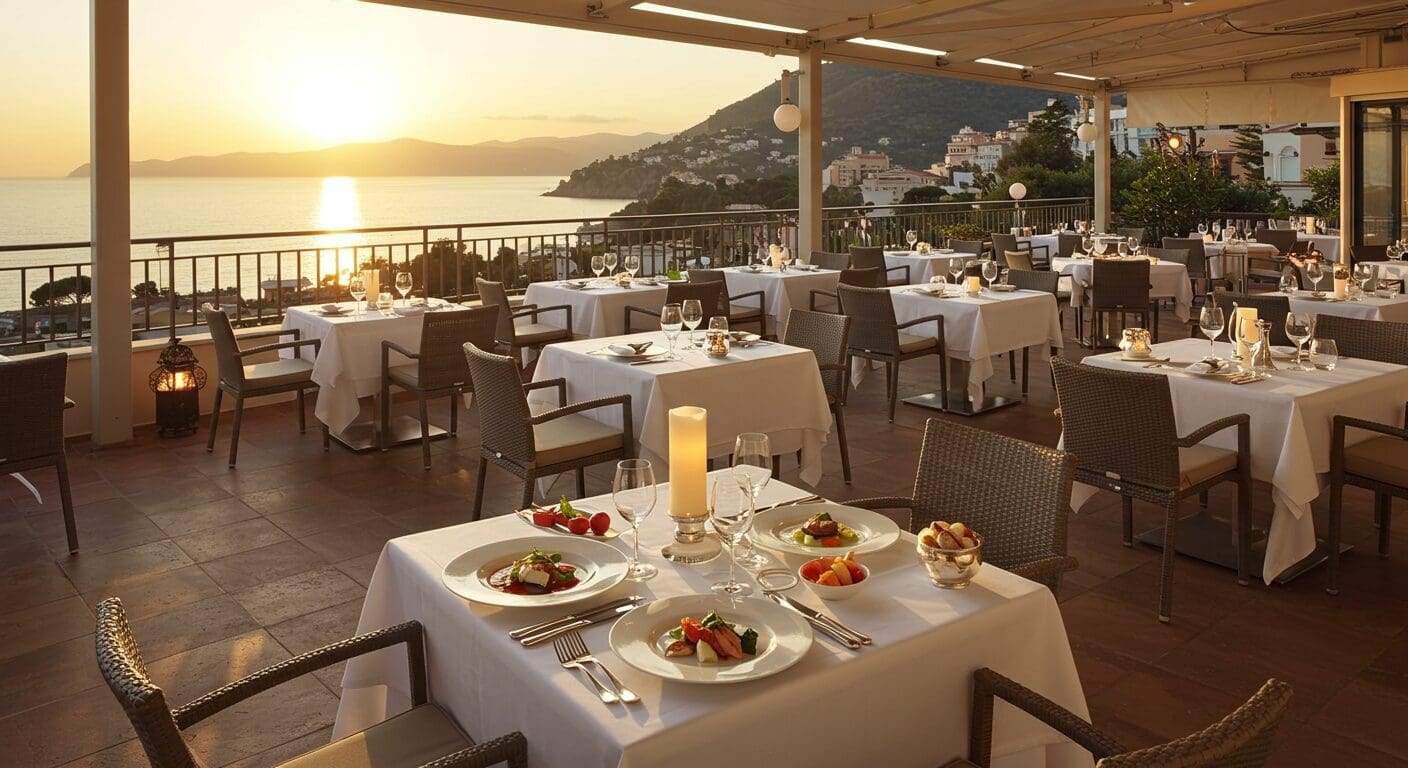
The most celebrated address is Le Pressoir d’Argent – Gordon Ramsay, housed within the Grand Hôtel de Bordeaux and carrying two Michelin stars. Whatever your feelings about celebrity chefs (and one is allowed to have complicated ones), the cooking here is serious, precise, and rooted in the exceptional produce of the Gironde. The signature dish involves a theatrical pressing of lobster at the table – a ritual that is equal parts theatre and technique, and which works rather better than you might expect from something that sounds like it should come with a drum roll. Book months in advance. This is not a suggestion.
Across the city, Maison Nouvelle – Philippe Etchebest earned its second Michelin star in 2025, cementing Etchebest’s place as one of the defining chefs of the region. His mushroom ravioli has become something of a local legend, and his reinterpretation of entrecôte Bordelaise – that most iconic of regional dishes – manages to be both reverent and quietly revolutionary. The atmosphere is warmer than the starred dining room formula sometimes allows, which makes the whole experience considerably easier to enjoy.
Then there is L’Observatoire du Gabriel, where Bertrand Noeureuil has added a second star to what is already one of Bordeaux’s most architecturally arresting venues. Noeureuil trained under Arnaud Donckele and it shows – in the complexity of the sauces, the patience of the technique, the sense that nothing has been rushed. His elaborately crafted chabrot – a Gascon tradition of adding wine to the last of one’s soup – is reimagined and served, wonderfully, at the heart of the kitchen itself. It is the sort of touch that makes you feel you have been let in on something.
Outside Bordeaux, the Basque coast has its own star to consider. Ekaitza, Guillaume Roget’s two-star restaurant in Ciboure, just across the river from Saint-Jean-de-Luz, is one of the most talked-about openings in recent years. Roget cooks the Basque coastline – the fish, the salt, the particular light of the Atlantic – with an intensity that feels almost personal. The setting is modest. The cooking is not. Ciboure has been quietly eating well for decades; it is simply that the rest of France is only now paying attention.
And then there is the patriarch. Les Prés d’Eugénie, Michel Guérard’s legendary restaurant in the thermal village of Eugénie-les-Bains, has been one of the great tables of France for the better part of half a century. Guérard was a founding figure of nouvelle cuisine, and the restaurant remains a pilgrimage destination for anyone who takes French cooking seriously. The wood-grilled Landes meats are extraordinary. The setting – a 19th-century spa village that appears to have been preserved in amber – makes the whole experience feel genuinely timeless. If you visit one grand table in the entire southwest, let it be this one.
Local Bistros and Hidden Gems: Where the Regulars Eat
The Michelin stars are worth chasing. But the restaurants that South West France does better than almost anywhere else in the world are the ones that don’t have them. The small, stubborn, fiercely seasonal bistros where the menu changes daily, the wine list is handwritten, and the proprietor looks faintly wounded if you ask for anything other than the house pâté to start.
In the Dordogne, the tradition of the auberge runs deep. These are places built on duck confit that has been slowly curing since before you arrived, on walnut salad dressed with the local oil, on magret de canard cooked to a precise rosy pink by someone who has been doing exactly this for thirty years and has no intention of changing. You will find them in Sarlat, in Domme, in the villages around the Vézère valley – often identified by nothing more than a handwritten menu in a window and the sound of a busy lunch service within.
The Basque country has its own version: the pintxos bars of Saint-Jean-de-Luz and Bayonne, where the counters are piled high with small bites of breathtaking quality – anchovy on bread, salt cod croquettes, jambon de Bayonne draped over everything. The etiquette is to order a glass of Txakoli, point at three or four things that appeal, and then immediately order three or four more. This is not a formal dining experience. It is, however, extremely good.
Along the Bordeaux wine roads, the village restaurants that surround the grands châteaux have learnt something important: when your neighbours are some of the finest wine estates in the world, your cooking had better be worthy of them. Look for restaurants in Saint-Émilion’s medieval quarter and the villages around Pomerol – the cooking tends to be rich, generous, and unapologetically French, which is precisely what it should be.
Beach Clubs and Casual Dining: The Côte Basque
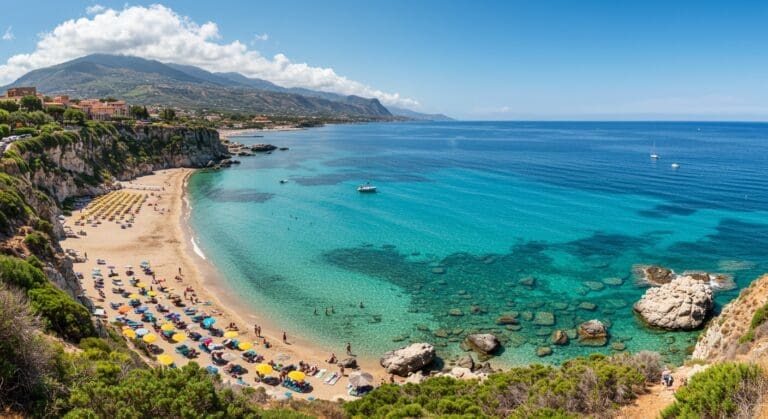
Biarritz rewards the visitor who is prepared to eat well at every register. The grand dining rooms exist – and are excellent – but the city’s real genius is in its casual coastal eating: the oyster bars that set up on the promenade, the beach clubs where a plateau de fruits de mer arrives at a table literally feet from the Atlantic, the market stalls in the covered Les Halles that serve grilled fish with a glass of something cold at ten in the morning, which feels transgressive until it doesn’t.
La Grande Plage and the area around the Rocher de la Vierge are lined with terraces that range from perfectly good to genuinely excellent. The key is to resist the first place you see (a rule applicable well beyond Biarritz) and walk until something feels right. The coastal restaurants between Biarritz and Hendaye tend to serve the freshest fish on the coast – turbot, dorade, and the legendary ttoro, the Basque fish stew that has been fuelling fishermen and tourists in equal measure for centuries.
In summer, the beach clubs along the Landes coast – particularly around Hossegor and Capbreton – have developed their own refined-casual aesthetic: good wine by the glass, wood-grilled fish, the sound of surf in the background, a menu that changes according to what arrived at the port that morning. It is, frankly, a very good way to spend an afternoon. Several afternoons, if you can manage it.
Food Markets: The Real Highlight Reel
No guide to eating in South West France is complete without a serious discussion of the markets, because they are, in many respects, the whole point. The morning market is the restaurant before the restaurant – the place where you understand what will appear on menus later, where you can taste before you buy, and where the social life of a French village or town is on vivid, slightly chaotic display.
Périgueux hosts one of the finest markets in the region on Wednesday and Saturday mornings – the marché du Coderc – where foie gras, black truffles (in season, and the season matters), walnuts, cheese and charcuterie are sold with the kind of directness that comes from producer meeting consumer with no intermediary in sight. The truffle market in Sarlat, held on winter Saturday mornings, is something of a spectacle. Men arrive with small paper bags and large opinions.
Bayonne’s covered market is another essential, particularly for Basque specialities – the jambon, the cheese from the Pyrenean farms, the Espelette pepper in every form imaginable. Saint-Émilion has a Sunday morning market in the square that pairs rather naturally with a wine tasting at one of the surrounding châteaux. Bordeaux’s Marché des Quais, along the waterfront on Sunday mornings, is a lesson in how to do an urban market well – broad, well-organised, and staffed by producers who know their products with an intimacy that most people reserve for family members.
Buy the charcuterie. Buy more of the cheese than you think you need. Accept the small cup of something that is offered to you. This is not an optional activity.
What to Order: The Dishes That Define the Region
South West France encompasses several distinct culinary traditions – Gascon, Périgourdin, Basque, and Bordelais – and they agree on remarkably little except that the food should be excellent and the portions should be honest. Here is what to eat, by territory.
In the Dordogne and Gascony: duck in every possible form – confit, magret, rillettes, foie gras both mi-cuit and poêlé. Walnut everything. Black truffle when in season (December through February), which transforms even the simplest scrambled egg into something that requires a moment’s silence. Cassoulet is technically a Languedoc dish but appears throughout the southwest and should be ordered whenever you see it, particularly in cooler months.
On the Basque coast: ttoro (the fish stew), grilled sea bass or turbot with piperade, the extraordinary local tuna from Saint-Jean-de-Luz prepared in every conceivable way, and jambon de Bayonne which has been cured in the mountain air of the Pyrenees and requires nothing more than good bread and perhaps a glass of something cold.
In Bordeaux: entrecôte Bordelaise with its bone-marrow-and-shallot sauce is the canonical dish – order it medium-rare or accept the consequences. Oysters from the Arcachon Basin are served throughout the city and are among the finest in France. The canelé – the small, caramelised-exterior, custardy-interior pastry that Bordeaux invented and the rest of the world has been trying to replicate ever since – should be consumed at every available opportunity. They don’t travel well. Eat them immediately.
Wine, Txakoli and What to Drink
You are, it should be noted, in the middle of one of the greatest wine regions on earth. The wines of Bordeaux – Saint-Émilion, Pomerol, the Médoc, Pessac-Léognan, Sauternes – need no introduction and will not be getting one here. What is worth saying is that the appellation wines are only part of the story. The Côtes de Bordeaux wines represent some of the best value in French wine – serious, characterful bottles at prices that make drinking well entirely sustainable over a fortnight’s stay.
Further south, the wines of Jurançon and Madiran are less celebrated internationally and considerably more interesting for it. Jurançon’s sweet whites – made from Petit Manseng and Gros Manseng – are among the most underrated dessert wines in France. Madiran’s Tannat grape produces reds of real structure and depth, and pairs with the duck and cassoulet of the region with an almost suspicious perfection.
In the Basque country, Txakoli – the sharp, slightly sparkling white wine poured from a height in the pintxos bars – is the right drink for the right moment, which is any moment involving seafood or an afternoon in the sun. Armagnac, produced throughout the Gers, is the region’s answer to Cognac, and the right answer: more rustic, more characterful, and produced by people who give the impression they have been making it since before history was being kept. A glass after dinner is not optional.
Reservation Tips: The Practical Business of Eating Well
The two-starred restaurants in Bordeaux require planning on the scale you might apply to, say, a transatlantic crossing. Le Pressoir d’Argent and Maison Nouvelle in particular are booked weeks if not months in advance during the summer season, and attempting to walk in is an exercise in optimism that the maître d’ will gently but firmly redirect. Book as far ahead as possible. Many now take reservations via their own websites or through platforms such as TheFork (La Fourchette in France); WhatsApp enquiries sometimes work for smaller establishments.
Les Prés d’Eugénie in Eugénie-les-Bains and Ekaitza in Ciboure should be approached with the same planning. Ekaitza in particular has a reputation that has grown faster than its table count.
For markets, timing matters more than reservations: arrive within the first hour of opening. The best producers sell out. The best stalls have queues by nine in the morning, which tells you everything about the quality and nothing about the convenience.
A final note: if you are staying in a luxury villa in South West France, many properties offer access to a private chef who can bring the region’s finest produce directly to your kitchen – or to a long table on a shaded terrace with a view of vineyards or the Pyrenees. Having eaten out every night, this option tends to reveal itself somewhere around day four as the most sensible decision anyone has made. The chef sources locally, the wine comes from the cave you visited that morning, and nobody needs a reservation.
South West France does not ask much of the visitor. Only that they arrive hungry, plan slightly better than they think they need to, and resist the urge to photograph the canelé before eating it.