Best Time to Visit South West France: Month by Month Weather, Crowds & Tips
Here is what the guidebooks consistently fail to mention: South West France in October smells extraordinary. The vendange is over, the walnut trees are dropping their harvest onto country roads, and somewhere nearby someone is almost certainly cooking duck in a way that would make a cardiologist weep and a food writer weep harder. The light goes golden at four in the afternoon, the markets are full of ceps the size of small dogs, and the tourist coaches have gone home. This is not a secret the locals are particularly keen to share, which is precisely why we’re sharing it.
The question of the best time to visit South West France – and it’s a genuinely complex one – depends enormously on what you’re actually here for. The Dordogne, the Lot, the Basque Country, Bordeaux wine country, the Gers and the Pyrenean foothills are all distinct worlds with their own rhythms, their own peak seasons, their own particular moods. What follows is an honest, month-by-month account of how it all works. For a broader picture of the region, our South West France Travel Guide covers everything from where to eat to how to get there without losing your mind.
Spring: March, April & May – The Region Wakes Up
March in South West France is tentative. The mimosa has already had its moment, the vines are beginning to show the first pale green buds, and the Dordogne is running high and grey-green from winter rain. Temperatures hover between 8°C and 15°C – cool enough to need a proper coat, warm enough to sit outside at lunch if you choose your terrace wisely and face south. Most major châteaux and prehistoric cave sites reopen around Easter, which makes late March a genuinely interesting time to arrive if you’re drawn to places like the Vézère Valley, where you can walk through a site without thirty other people breathing on you.
April is where things begin to feel properly alive. The countryside turns that specific shade of green that landscape painters have been arguing about for centuries. Temperatures nudge toward 17°C, rainfall remains possible but not constant, and the famous markets of Sarlat, Périgueux and Cahors start filling out again. Prices at good villas and hotels reflect the shoulder season, which is to say they are considerably more civilised than July. This is ideal territory for couples who want long lunches without the ambient chaos of peak season, and for walkers tackling sections of the GR65 pilgrim route before the summer crowds arrive in their well-meaning thousands.
May is arguably the most underrated month in the entire calendar. The days are long, the flowers are out, everything is open, and the French themselves – particularly the Parisians, who descend on the Périgord with the same seasonal inevitability as the swallows – haven’t quite arrived in force yet. Expect temperatures between 15°C and 22°C. The Bordeaux wine estates are particularly worth visiting now: tastings are unhurried, the châteaux staff have not yet developed the thousand-yard stare of high summer. Book ahead, but not desperately.
Summer: June, July & August – Heat, Crowds and Why You Should Go Anyway
Let’s be honest about July and August. In the most popular corners of the Dordogne and Lot valleys, you will share your experience with approximately half of northern Europe. The queue for the weekly market at Sarlat on a Saturday morning in August is not a queue so much as a gentle collective shuffle in the general direction of foie gras. This is not necessarily a reason to stay away – the region can absorb crowds better than most, the food remains excellent regardless, and the energy of a full French summer market has its own pleasures – but it is a reason to plan carefully, book your villa well in advance, and perhaps choose accommodation in the less-trafficked Lot or Gers rather than the Dordogne heartland.
June is a different matter. It’s warm – reliably 24°C to 28°C across much of the region – the days are at their longest, and the schools haven’t broken up yet. This is peak season without quite peak-season density. Families who can travel before mid-July are in a particularly fortunate position. The Atlantic coast around Biarritz and the Basque Country hits its stride in June, with surf conditions building, the restaurants in full operation, and the Pyrenean foothills offering excellent hiking before the heat of July makes the lower paths uncomfortable.
August is unambiguously high season. Prices for luxury villas in South West France reach their peak, availability is tight, and the roads between Sarlat and Les Eyzies on a Tuesday afternoon can test the patience of a saint. But the festivals are superb: Sarlat hosts its theatrical festival, various village fêtes run through the whole month, the Bastille Day celebrations on the 14th of July (technically late July for planning purposes) are genuinely festive rather than performative, and the Basque Country comes alive with its own extraordinary calendar of pelota tournaments, running-of-the-bulls events in smaller villages, and the magnificent food festivals of the Basque interior. August suits groups and families who want full-on summer and don’t mind paying for it.
Autumn: September, October & November – The Insider’s Season
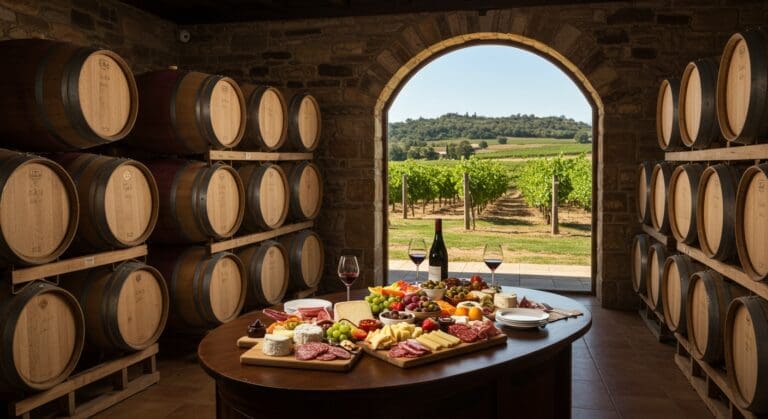
September is the month the region reclaims itself. The French school year restarts in early September, and with it goes a remarkable proportion of the tourist population. What remains is warm sunshine – temperatures staying around 22°C to 25°C well into the month – emptier roads, easier restaurant reservations, and the beginning of the vendange across the Bordeaux wine country and the Cahors appellations. The grape harvest is not a passive spectacle: many estates offer harvest experiences, and the villages of the Entre-Deux-Mers and the Marmandais are busy in the most pleasingly purposeful way.
October, as mentioned at the outset, is exceptional in ways that deserve emphasis. The truffle season begins in earnest in the Périgord Noir, with black winter truffles starting to appear at specialist markets. The cep (porcini) mushroom season peaks, and good local restaurants build menus around them with the kind of focused reverence that the French reserve for a very small number of things. The Dordogne valley in mid-October, with the poplars turning gold and the mist lifting off the river at nine in the morning, is one of the genuinely lovely sights of France. Temperatures drop to a range of 12°C to 18°C – comfortable for walking and cycling, cool in the evenings. This is the season for couples who know what they want and are not looking for validation from a crowd.
November sees the region slow considerably. A number of smaller restaurants and some seasonal attractions close, and the days shorten quickly. But the truffle markets intensify – the first proper black truffle markets of the season at Sainte-Alvère, Périgueux and Sarlat run from late November – and the atmosphere in the towns is genuinely local in a way that July cannot touch. Prices drop. Villas are available. If you are the kind of traveller who enjoys a destination on its own terms rather than dressed up for your arrival, November in the Périgord or the Gers is a quietly satisfying experience.
Winter: December, January & February – The Off-Season Case
There is an honest case for South West France in winter, and it is this: it is profoundly, uncomplicatedly peaceful. December brings the truffle markets to full swing – the grand marché au truffe in Périgueux on the first Saturday of December is a genuine occasion – alongside Christmas markets in Bordeaux, Bayonne and Biarritz that manage to be festive without being relentlessly commercialised. The Basque Country has a particular appeal in winter: the Atlantic keeps temperatures milder than the interior (rarely below 6°C), the surf is at its most serious, and the pintxos bars of Biarritz and Saint-Jean-de-Luz operate with the unhurried attention they deserve.
January and February are the quietest months. Much is closed – particularly smaller restaurants, cave sites, and rural attractions – and the weather across the Dordogne and Lot can be genuinely cold, with temperatures dropping to 3°C and occasional frosts. But this is skiing season in the Pyrenees, and the resorts above Pau and Tarbes offer serious skiing without the queues or prices of the Alps. For anyone combining a few days on the slopes with time in a villa in the Gers or the Basque interior, this is a genuinely appealing winter proposition. The cuisine is at its richest – cassoulet, confit, game terrines – and the concept of staying indoors by a fire with excellent food and wine requires no further justification.
Shoulder Season: The Sweet Spots Worth Knowing
The two shoulder seasons in South West France – roughly April to early June, and September to mid-October – are not a compromise. They are, in many respects, the intelligent choice. Villa prices are meaningfully lower than July and August, availability is better, and the experience of the region is simply less contested. The markets, the restaurants, the cave visits, the wine tastings: all of these work better when you are not competing for attention with thousands of other people who have all, understandably, also read that this is one of the most beautiful and food-rich corners of Europe.
Families travelling in early June or mid-September – if school schedules allow – will find a region that is fully operational and considerably more relaxed. Couples and groups at any point in these shoulder windows are in an excellent position. The one thing worth noting is that spring can bring rain, particularly in March and April, and that shoulder-season visitors should pack accordingly. A week of damp Dordogne weather is manageable and often beautiful; it is simply best not to be surprised by it.
Quick Month-by-Month Summary
January & February: Very quiet, some closures, Pyrenean skiing, mild Basque coast. Best for independent travellers who genuinely value solitude.
March: The region reopens. Cool and green. Excellent for cave visits and walking without crowds.
April: Shoulder season proper begins. Good weather building, competitive prices, markets in full swing.
May: Arguably the best month. Warm, fully open, pre-crowd. Bordeaux chateaux visits at their most pleasant.
June: Early summer at its best – peak warmth without peak crowds. Families travelling pre-school-holidays are in an enviable position.
July: Full summer. Festivals, markets, heat. Plan carefully, book everything, enjoy the energy.
August: Peak season. Highest prices, most visitors, best festivals. Worth it with the right accommodation and the right mindset.
September: The crowd disperses but the warmth stays. Vendange season. Probably the single most enjoyable month for unhurried visitors.
October: Truffle season begins. Cep mushrooms. Golden light. One of the great months in French travel.
November: Quieter, some closures, early truffle markets. For those who want the region entirely on their own terms.
December: Christmas markets, truffle markets at their most theatrical, Basque coast at its atmospheric best.
Plan Your Stay: Villas for Every Season
The right villa changes everything about how a region feels. In summer, you want space – a pool, a proper outdoor kitchen or terrace, room for children to be children without restaurant staff giving you meaningful looks. In autumn or winter, the priorities shift: fireplaces, serious kitchens, proximity to markets and good restaurants, the kind of generous interior that makes a rainy day feel deliberate rather than disappointing. South West France, fortunately, offers all of these things in abundance.
Whether you’re planning a golden October week in the Périgord Noir, a full-summer family fortnight on the edge of the Basque Country, or a spring escape to the Lot valley before the rest of the world catches on, the right property makes the difference between a good trip and one you’ll be talking about for years. Browse our collection of luxury villas in South West France and find the base that suits your season.
What is the best month to visit South West France?
May and September are consistently the most rewarding months for most visitors. May offers warm weather, long days and full operation of restaurants, markets and attractions – before the summer crowds arrive. September retains the warmth of summer while shedding most of the crowds, and adds the particular pleasure of the grape harvest season across Bordeaux and Cahors wine country. October runs both of them very close, especially for food-focused travellers interested in truffles and autumn produce. The honest answer is that it depends on what you’re there for – but if you want the region at its most generous and least contested, these three months are your best starting point.
How hot does South West France get in summer?
July and August regularly reach 28°C to 33°C across the Dordogne, Lot and Gers – occasionally higher during heat events, which have become more frequent in recent years. The Atlantic coast around Biarritz and the Basque Country tends to be several degrees cooler, moderated by sea breezes, and rarely exceeds 26°C. Evenings throughout the region cool down pleasantly, even in high summer, which is one of the things that makes a villa with a terrace particularly well-suited to this time of year. Air conditioning is less universal than in some southern European destinations, so it’s worth checking villa specifications if summer heat is a concern.
Is South West France worth visiting in winter?
For the right kind of traveller, yes – emphatically. December brings the truffle markets of the Périgord to life, with the grand markets at Périgueux and Sarlat offering a genuinely local experience that has nothing to do with tourism season. The Basque coast remains mild and atmospheric, and the Pyrenean ski resorts above Pau are excellent value compared to the Alps. January and February are the quietest months, with some seasonal closures to factor in, but for those combining the region’s exceptional winter cuisine – cassoulet, confit, game, and the first black truffles of the season – with the peace of an uncrowded landscape, a winter visit to South West France is a very specific and very satisfying kind of pleasure.