South West France Food & Wine Guide: Local Cuisine, Markets & Wine Estates
What if the most rewarding thing you did on your entire French holiday had nothing to do with a beach, a château, or a museum? What if it was a Tuesday morning in a covered market, a glass of something local in your hand before eleven, watching an elderly farmer argue pleasantly with a cheese vendor about something that happened in 1987? South West France rewards the curious and the hungry above almost anywhere else in the country – and in France, that is not a casual claim. This is a region where food is not a backdrop to life. It is the point of it.
The Character of the Cuisine
Forget the delicate minimalism of Parisian gastronomy. South West France cooks with conviction. Duck fat is not a guilty pleasure here – it is a cooking medium with the same unapologetic status as olive oil in Provence. Geese are force-fed to produce the silky, deeply savoury foie gras that has made Périgord and the Gers internationally famous, and wildly controversial everywhere except the kitchens that use it. Cassoulet, that magnificent slow-cooked alliance of white beans, duck confit, and various smoked meats, turns up across the region in forms that vary just enough to cause genuine local argument.
The Basque Country in the south west brings a completely different personality – bold, colourful, shot through with Espelette pepper, and absolutely certain of its own identity. Pipérade, the slow-cooked pepper, tomato and egg dish, is the Basque answer to almost every question. The region’s pintxos culture, borrowed from – or arguably shared with – across the Spanish border, means that a well-chosen bar crawl can function as a perfectly respectable meal. This is not advice we’d give in many places.
Then there is the Dordogne, with its black truffles and walnuts and impossibly dark foie gras, and the Landes, its forests hiding artisanal farms producing everything from asparagus to armagnac. Each sub-region has its own culinary logic, its own non-negotiables. Together they form one of Europe’s great food landscapes.
The Wines of South West France
Bordeaux gets all the headlines, and frankly, it has learned to live with the attention very comfortably. But the wines of South West France extend far beyond the Médoc’s famous châteaux, into appellations that are producing some of the most interesting bottles in the country – often at prices that would make a Pauillac collector weep with envy.
Cahors is the place to start if you want to understand the region’s red wine soul. Made predominantly from Malbec – called Côt here, because it arrived long before Argentina got involved – the wines can be ink-dark, tannic and brooding, or increasingly elegant and structured depending on the producer. This is serious wine that repays serious attention.
Bergerac, to the east of Bordeaux and often dismissed as its poorer cousin, is having something of a quiet renaissance. Producers working with Merlot, Cabernet Franc and Sauvignon Blanc are making wines of real substance. The sweet wines of Monbazillac, golden and honeyed and made from botrytis-affected grapes, are world-class by any measure – and still underpriced, which is either an opportunity or an injustice, depending on your position.
Jurançon, in the foothills of the Pyrenees, produces both dry and sweet whites from the Petit Manseng and Gros Manseng grapes – varieties you won’t find quite like this anywhere else on earth. The sweet Jurançon is extraordinary: apricot, honey, a hit of spice, backed by a bracing acidity that keeps everything alive. Madiran, nearby, produces powerful reds from the Tannat grape that practically demand a plate of confit duck alongside them. The wines and the food of this region have been evolving together for centuries. It shows.
Wine Estates Worth Your Time
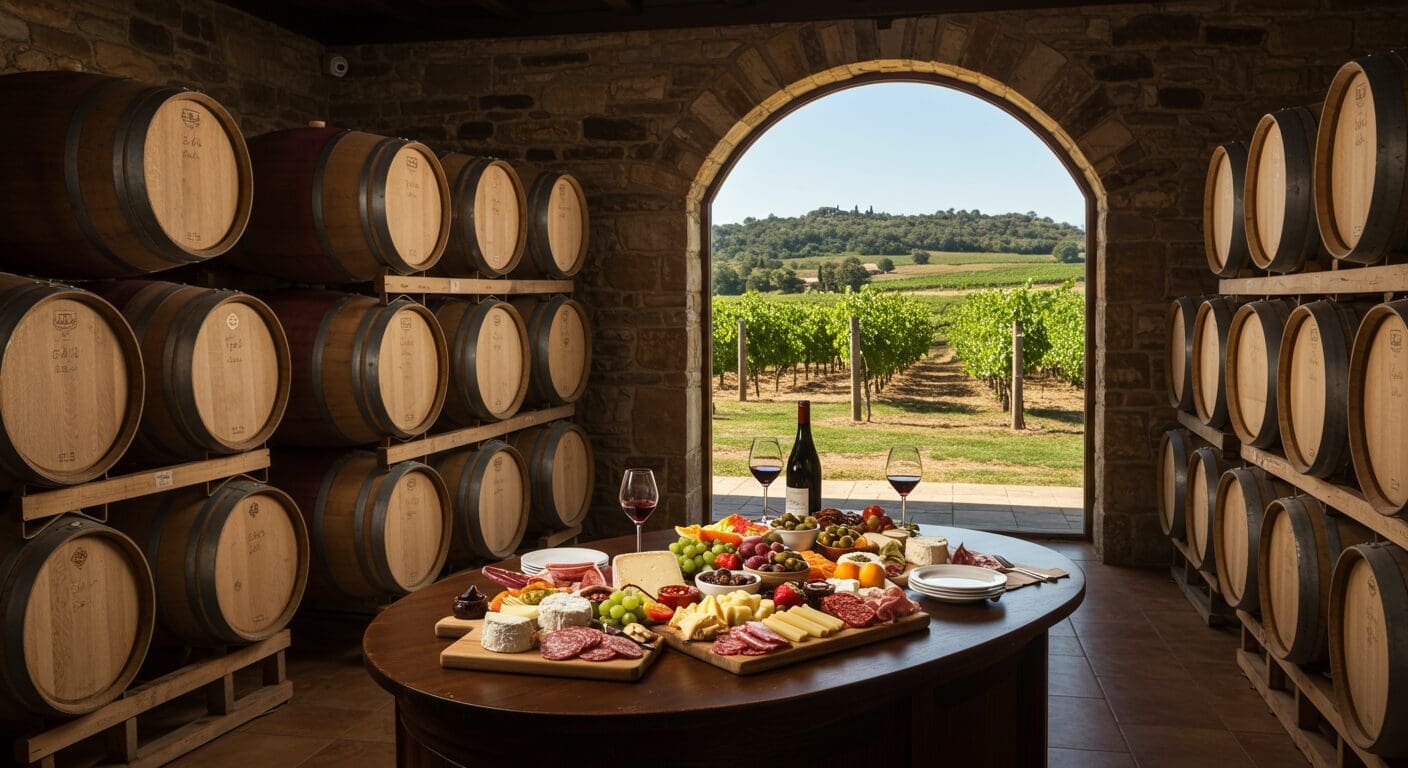
Visiting a wine estate in South West France is a different experience from the polished, choreographed tastings of Burgundy or the Loire. Things are often smaller, more personal, more likely to involve the actual winemaker appearing from somewhere muddy and pouring you something experimental with a conspiratorial look. This is, it should be said, entirely a compliment.
In the Bordeaux appellation, the great châteaux of the Médoc – Margaux, Latour, Pichon Baron, Léoville-Barton among them – offer private visits by appointment that go well beyond the standard cellar tour. These are immersive, beautifully staged experiences that include vertical tastings of multiple vintages, architectural tours of genuinely extraordinary properties, and occasionally lunch. Book months in advance and expect to pay accordingly.
Beyond Bordeaux, the Cahors appellation rewards exploration on a more human scale. Small domaines in the Lot Valley welcome visitors with a directness that is refreshing. Producers in Jurançon and Madiran are similarly accessible. A good local guide or a villa concierge worth their salt will know which estates are genuinely welcoming and which have recently started charging tourist prices for the privilege of standing in a car park. There is a difference, and it matters.
The Markets: Where It Actually Begins
Every serious conversation about food in South West France starts in a market. Not metaphorically – literally. The markets here are not artfully curated experiences for visitors, though visitors are very welcome. They are working markets, functioning as they have for centuries, supplied by farmers and producers who drove in before dawn and would very much like to be home for lunch.
Sarlat-la-Canéda in the Dordogne runs one of the most celebrated markets in the region, held on Saturday mornings in its medieval centre. Ducks, geese, foie gras, walnuts, truffles in season, cheese, wine, hand-thrown pottery, someone selling a suspiciously comprehensive range of hunting knives – it is everything a market should be. The Wednesday market is smaller and rather better for actually buying things without negotiating around a photography tour.
The Basque markets of Bayonne and Saint-Jean-de-Luz operate at a different pace and temperature – louder, more colourful, the stalls heavy with Espelette peppers hanging in strings, mountain cheeses, and the particular charcuterie that the Basque do better than almost anyone. The covered market in Bayonne is exceptional: a grand nineteenth-century hall that smells exactly as a market hall should.
Further inland, the markets of Auch, Agen and Périgueux each have their own character. Agen, the prune capital of France – a title the town wears with remarkable dignity – has a Saturday market of real quality. Périgueux on Wednesday and Saturday draws producers from across the Périgord, making it the best single market in the Dordogne département.
Truffles: The Black Gold of Périgord
If you have not spent a winter morning in the Périgord watching a dog locate something underground that will shortly cost more per gram than most metals, you have missed one of the genuinely theatrical pleasures of French rural life. The black truffle – Tuber melanosporum, known locally as the black diamond – grows in the limestone soils around Périgueux, Sarlat and the surrounding villages, and its harvest season runs roughly from December through March.
Truffle hunting experiences in the Dordogne range from casual farm visits to fully guided half-day expeditions with knowledgeable hosts, trained truffle dogs, and a cooking demonstration at the end that shows you exactly what to do when you get home. The answer is almost always: butter, pasta, restraint. The truffle does the work. Several estates and farms in the region offer these experiences for small private groups – your villa management team should be able to arrange something that goes beyond the standard tourist format.
The Sorges Truffle Market, held on Sunday mornings in season, is the best place in the region to buy truffles directly from producers. Prices are as high as you’d expect but the quality is guaranteed and the experience of watching transactions conducted in near-whispers, as though the truffles themselves must not be disturbed, is worth the trip alone.
Cooking Classes and Culinary Immersion
There is a school of thought that says you should not cook on holiday. There is another school that says spending a morning learning to make duck confit and walnut tart from a local chef, in a farmhouse kitchen in the Périgord, then eating the results with a glass of Bergerac, is not work. The second school is correct.
Cooking classes in South West France span the full spectrum from hands-on half-day sessions at local cookery schools to residential programmes at private estates where you spend several days cooking, visiting markets and producers, and emerging considerably more knowledgeable than you arrived. The Basque Country has a particularly strong culture of culinary education, with classes focused on everything from traditional Basque cooking to the pintxos tradition.
Private chefs – arrangeable through your villa – can also offer personalised market visits followed by an in-villa cooking lesson and dinner. This is perhaps the most intimate version of the experience: you choose what you want to learn, you shop for your own ingredients, and you eat in the comfort of your own terrace. For families with children who actually want to engage with food, it can be genuinely transformative. For families with children who do not, it is at least an excellent photograph.
The Best Food Experiences Money Can Buy
South West France rewards investment. Not the investment of arriving somewhere and paying for exclusivity – the investment of time, of curiosity, of letting someone who actually knows the region show you where the interesting things happen.
A private Bordeaux château visit with a négociant guide, culminating in a tasting of classified growth wines paired with a lunch prepared by a house chef, is one of the great food and wine experiences in the world. Full stop. The combination of architecture, history, and what ends up in the glass is difficult to replicate anywhere.
In the Dordogne, a private truffle dinner prepared by a local chef using truffles sourced that morning – shaved over scrambled eggs, folded into a risotto, paired with an aged Cahors – costs significantly less than you might expect and stays in the memory significantly longer than you’d predict. The Landes offers private tours of foie gras farms that are conducted with a seriousness and transparency that puts the cheap imported alternatives to shame.
In the Basque Country, a table at one of the region’s highly regarded restaurants – several of which hold Michelin stars while managing not to feel suffocating about it – is the kind of meal that reorganises your understanding of what Spanish and French culinary traditions can achieve when they stop competing and start collaborating. Book well ahead. Dress reasonably. Arrive hungry.
For the most indulgent single experience in the region, consider a private wine tour of the Médoc conducted by a specialist guide with access to estates not on the standard circuit, followed by dinner at a Bordeaux restaurant working with the region’s best seasonal produce and a cellar that takes its South West France selections as seriously as the Bordeaux classics. This is a day that requires no justification whatsoever.
Plan Your South West France Food Journey
The honest truth about eating and drinking in South West France is that the barrier to entry is remarkably low and the ceiling is extraordinarily high. A market, a baguette, a wedge of local cheese and a bottle from a roadside cave cooperative can be as satisfying as a meal that took three months to book. The region is generous in that way. It does not require you to spend extravagantly to eat magnificently – though if you choose to, it will absolutely meet you there.
What it does require is a willingness to slow down, to follow your nose – sometimes literally, through a market hall – and to take the recommendations of people who actually live here. For more on planning your time in the region, including where to stay, what to see, and how to get around, our South West France Travel Guide covers the full picture.
When you are ready to find your base – somewhere with a proper kitchen for those market hauls, a terrace for evening wines, and enough space to feel genuinely at home in one of Europe’s great food regions – explore our collection of luxury villas in South West France. A well-chosen villa is not just accommodation here. It is the beginning of every good meal.