South West France Travel Guide: Where to Stay, Eat & Explore in Luxury
There are places in Europe that do one thing brilliantly. Tuscany does golden hills and olive oil. The Algarve does sea cliffs and sunshine. Provence does lavender and the smug satisfaction of having been to Provence. South West France, rather unfairly, does everything. It gives you the Atlantic surf and the ancient vineyards. It gives you medieval bastide towns drowsing in the afternoon heat and Michelin-starred kitchens taking dinner very seriously indeed. It gives you the Pyrenees on the horizon, the Dordogne at your feet, and a Basque coastline that looks like it was designed by someone who had studied both drama and architecture. Most destinations ask you to choose what kind of holiday you want. South West France simply refuses to make you.
Which is precisely why it suits such a range of travellers so well. Families seeking genuine privacy – the kind that means children can make noise and adults can decompress without a hotel corridor’s worth of strangers involved – find here a landscape built around slow, spacious living. Couples marking milestone birthdays or anniversaries arrive for the wine estates and end up staying for the light. Groups of friends who want to argue pleasantly about which vineyard to visit next, while someone else handles the pool temperature, thrive in the region’s larger villa properties. Remote workers who have discovered that a reliable fibre connection and a terrace facing sunflowers is more productive than any open-plan office have been quietly colonising the Gers and the Lot-et-Garonne for years. And those in pursuit of something more restorative – the long walk, the clean food, the unhurried morning – find that the rhythms of this corner of France make wellness feel less like a programme and more like a way of being. A luxury holiday in South West France is not a single thing. It is, depending on who you are, quite possibly several of the best things.
Getting Here Is Easier Than You’d Think (and the Drive Is Half the Holiday)
The region’s sheer scale means there is no single gateway – which is either a mild inconvenience or a pleasant geographical puzzle, depending on your disposition. Bordeaux-Mérignac Airport is the most obvious entry point for the northern reaches of the region: it receives direct flights from London, Amsterdam, Dublin, and a growing number of European cities, and the city itself is barely twenty minutes from the terminal. Biarritz Airport – small, civilised, occasionally charming in the way only genuinely small airports can be – serves the Basque Country and the Atlantic coast, with connections from Paris and a handful of UK airports. Toulouse-Blagnac is the gateway to the south-eastern quarter, to the Canal du Midi, to Carcassonne and the Pyrenean foothills. Bergerac Airport, modest in scale but usefully central for the Dordogne and Périgord, receives Ryanair and Flybe routes from various UK airports.
If you are travelling from the United Kingdom, the Eurostar to Paris and then a TGV south is genuinely competitive with flying once you factor in airport theatre – and considerably more pleasant. Bordeaux is two hours from Paris by train; Toulouse slightly less. Once in the region, a hire car is non-negotiable. The countryside here does not have a bus timetable. It has a Sunday market schedule and a general understanding that things will happen when they happen, and frankly that is part of the point.
The Table: Where South West France Wins Arguments
Fine Dining
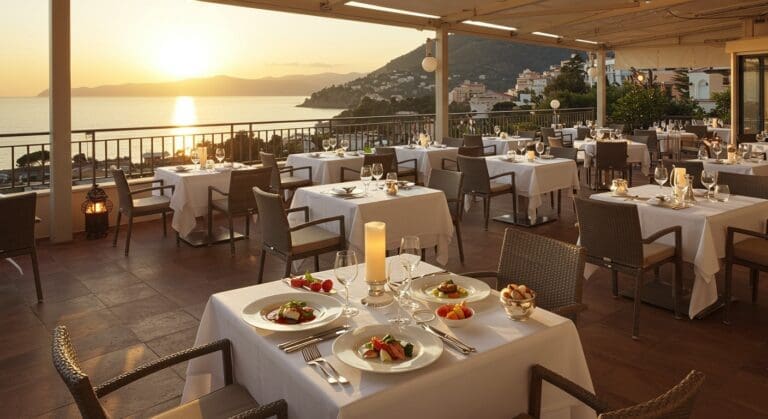
This is a region that takes its Michelin stars seriously – not as performance, but as natural consequence. The produce is simply that good. At Le Pressoir d’Argent – Gordon Ramsay in Bordeaux, two stars and a grand hotel setting combine to produce something that manages, against reasonable odds, to feel intimate rather than institutional. The focus is on luxury ingredients treated with precision and the kind of creative intelligence that remembers food is also pleasure. Book well in advance. Then book again slightly earlier than that.
For a different kind of revelation, make the journey to the Sauternes region and Lalique at Château Lafaurie-Peyraguey in Bommes – also two Michelin stars, also extraordinary. Chef Jérôme Schilling builds menus around Aquitaine’s finest raw materials, and the setting, within a working château surrounded by Sauternes vines, gives the meal a sense of place that no amount of interior design could manufacture. It is one of those evenings that earns the phrase “worth the drive” without irony.
Down in the Basque Country, Guillaume Roget at Ekaitza in Ciboure has earned his two Michelin stars by doing something unusual: resisting the temptation to import ideas and instead going deeper into what already grows, swims, and wanders around him. His hake confit cooked in duck fat with chanterelles and coffee is the kind of dish you describe to people who weren’t there and watch their eyes glaze over. Politely.
In Carcassonne, La Table de Franck Putelat brings two Michelin stars to a city already doing well on medieval drama. The cuisine is inventive, rooted in Occitanie tradition but never confined by it – an elegant argument that the south-west is not simply Bordeaux and Basque, but a culinary region of genuine breadth.
Where the Locals Eat
For a more grounded experience – one involving stone walls, firelight, and the distinct impression that someone’s grandmother is in charge – La Tupina in Bordeaux is essential. It is not cheap, and it makes no apology for that. What it offers in return is the authentic soul of south-western French cooking: foie gras terrine, potatoes rendered magnificent by duck fat, cassoulet that justifies the entire concept of cassoulet. It is a Bordeaux institution in the way that only genuinely good places become institutions – not through marketing, but through decades of being exactly what they claim to be.
Beyond the lauded addresses, look for the regional markets. The Saturday market in Sarlat is one of the finest in France – alive with foie gras, truffles in season, walnuts, cheese, and producers who have been coming for thirty years and see no reason to stop. The market at Bayonne, in the Basque Country, operates at a different register entirely: more briny, more spiced, with piment d’Espelette on everything and a general atmosphere of cheerful local pride. Eat breakfast there before you do anything else.
Hidden Gems Worth Seeking Out
The villages of the Lot and Lot-et-Garonne departments hide small restaurants of the kind that have no social media presence and no need of one – tables outside under plane trees, a handwritten menu, wine from the producer two villages over. These places exist on local knowledge and are best found by asking the owner of your villa, your nearest boulangerie, or the mechanic who fixed someone’s hire car in 2019 and has been recommending the same place ever since. The Gers, home to Armagnac and the world’s most unapologetic foie gras production, rewards the curious driver who stops when something looks interesting. It usually is.
The Geography of the Place – Which Is to Say, the Whole Beautiful Problem of It
South West France is not one region; it is a loose confederation of landscapes with a shared commitment to the good life and a certain competitive pride about whose chestnuts, truffles, or grapes are superior. Understanding its geography is the difference between a holiday and a truly considered one.
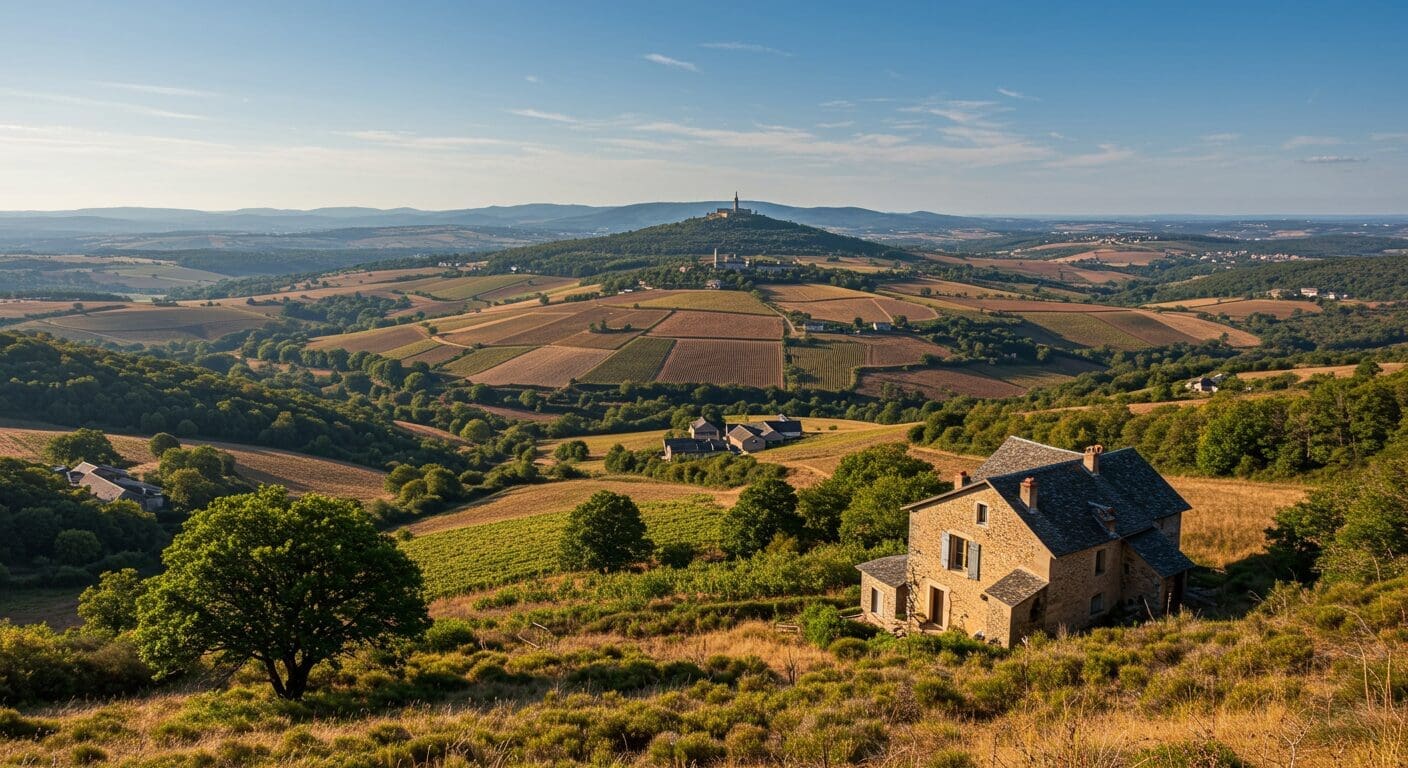
The Dordogne – known variously as Périgord Noir, Périgord Blanc, Vert, and Pourpre, a colour-coding system the French appear to find perfectly sensible – runs through the northern part of the region in a series of wide, wooded river valleys that contain more prehistoric cave art, more castles, and more walnut orchards than seems reasonably possible. The villages of Beynac, La Roque-Gageac, and Domme sit above the river in the specific way that French medieval architecture tends to: as if choosing this spot was simply obvious and no further explanation is required.
The Lot valley, to the south, is slightly less visited and considerably more photogenic for it. Cahors, home to the inky Malbec-based wines that pre-date Bordeaux’s international reputation by several centuries (a fact Cahors mentions with restraint), sits in a loop of the river beneath limestone cliffs. The Célé and Vers gorges, east of the town, are the sort of landscape that silences children and makes adults put their phones down.
West and south lies Gascony – the Gers department specifically – flat, golden, planted with sunflowers and maize and the occasional Armagnac estate operating with the relaxed confidence of a producer who knows their product is undervalued and isn’t entirely bothered. The Pyrenees rise at the region’s southern edge, separating France from Spain with considerable theatrical flair. And then there is the Atlantic coast – the Landes, the Basque Country – vast pine forests giving way to Europe’s longest stretch of surfable beach and, eventually, to the brisk, brine-and-pelota-scented streets of Bayonne and Biarritz.
Each of these areas rewards a different pace. The coast demands energy. The river valleys reward slowness. The wine estates of Bordeaux and Saint-Émilion invite a very specific combination of intellectual engagement and horizontal recovery. Planning a south west France travel guide that covers all of it would take a lifetime. Which, for some people, is rather the point.
What to Do When You’re Not Eating (There Will Be Some Hours)
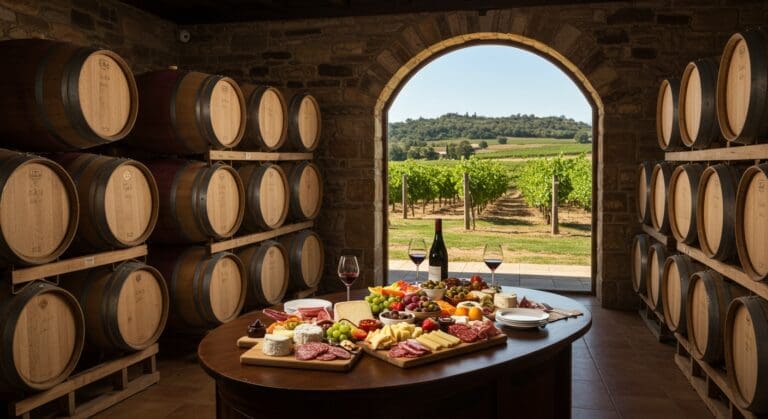
Wine tasting in Saint-Émilion is the kind of activity that sounds obligatory but turns out to be genuinely transformative – provided you approach it with curiosity rather than obligation. The town itself is a UNESCO World Heritage Site, its limestone streets and monolithic church carved from the same rock that produces the grand crus, and a free walking tour covers the medieval history before you get to the important work of tasting. The vineyards here are small by Bordeaux standards, many still family-owned, and the better-organised visits include tours of the underground cellars that are, depending on the season, either deliciously cool or the only place within miles that resembles shade.
The Canal du Midi – a 17th-century engineering project so ambitious it seems implausible – runs from Toulouse to the Mediterranean through some of the region’s most leisurely landscapes. Hire a barge and travel at four miles an hour through plane tree-lined waterways, past ancient locks with lock-keepers who have clearly made their peace with tourists. Or simply cycle the towpath sections near Carcassonne, where the canal runs below the fortified city with the casual incongruity of the genuinely historic.
Carcassonne itself merits a day without being rushed. The Cité – the medieval walled city perched above the modern town – is one of the best-preserved fortified citadels in Europe. Yes, it is busy in summer. Yes, there are souvenir shops. It is still extraordinary. Go early, before the heat and the tour groups arrive, and you will have twenty minutes of stone ramparts and views that feel entirely personal.
In the Dordogne, the Lascaux cave art complex – specifically Lascaux IV, the technologically sophisticated replica and interpretation centre at Montignac – offers an encounter with 17,000-year-old bison and horses that has no real equivalent anywhere in the world. The original caves are closed to preserve them; the experience at Lascaux IV manages, improbably, to make the reproduction feel entirely adequate to the subject matter.
For Those Who Want Their Holidays to Have a Physical Component
Surfing in Biarritz is less an activity than a local religion. The city is where surfing arrived in continental Europe – introduced by Peter Viertel during the filming of The Sun Also Rises in 1959, a piece of cultural history the Basques have been gratefully elaborating upon ever since. The breaks at Côte des Basques produce long, rolling waves ideal for beginners. La Grande Plage, in the centre of town, is where the more technically ambitious waves arrive, with a backdrop of Belle Époque hotels that makes the whole scene look slightly unreal. Further along the coast, towards Hossegor and Capbreton, the beach breaks become faster and hollower – some of the best in Europe, and very well attended by people who appear to have arranged their entire lives around this fact.
The Pyrenees offer hiking of serious quality, from family-friendly routes through the Val d’Azun to the GR10 long-distance trail that follows the entire mountain range from the Atlantic to the Mediterranean. The Cirque de Gavarnie – a natural amphitheatre of cliffs and waterfalls in the heart of the Pyrenean National Park – is a three-hour round walk from the village of Gavarnie that earns every metre of it. In winter, ski resorts including Cauterets, Saint-Lary-Soulan, and La Mongie receive reliable snowfall and considerably smaller crowds than their Alpine equivalents. The trade-off being that they are, in places, slightly more… rustic. Which is a polite way of saying the ski lifts occasionally reflect a certain relaxed attitude towards maintenance schedules.
Cycling through the vineyards of the Médoc or the Lot valley is an increasingly well-served pursuit, with route-marked itineraries and a growing number of electric bike rental operations that have done much to democratise the idea of “light exercise.” Kayaking down the Dordogne or Célé rivers is the sort of activity children demand and parents discover they also loved. The rivers are calm, the limestone cliffs are dramatic, and the swim stops are cold enough to be memorable.
Why South West France Works Brilliantly for Families
The French summer – roughly July and August – is when South West France becomes a very particular kind of family paradise. The climate is reliable without being punishing, the countryside is varied enough to maintain interest across age groups, and the culture of outdoor eating, evening markets, and long afternoon pauses suits families rather well. Children are welcomed in restaurants here in the genuine way, not the performative way – menus are rarely adapted for small people because the food is already simple, ingredient-led, and honest in a way that small people tend to respond to instinctively.
The practical advantages of a private villa for families are considerable in this context. A private pool – standard in the luxury villa market – transforms the afternoon hours. Children swim; adults read. Nobody negotiates with a hotel pool’s schedule or competes for sun loungers with strangers. A villa with multiple bedrooms and living spaces gives everyone the room to exist independently while still being, technically, on the same holiday. (Multigenerational trips, in particular, depend on this architecture of proximity and distance.) The kitchen matters too: the ability to stock up at a Saturday market, cook simply one evening and go out the next, to feed a toddler at six without causing a restaurant’s carefully managed evening service any stress – these are not small things.
For activities, the Dordogne valley is almost comically well-equipped: canoeing, horse riding, prehistoric caves, markets, swimming holes, cycling routes, medieval villages with ramparts designed for exactly the kind of scrambling that eight-year-olds find natural. The Atlantic coast adds body-boarding, surf lessons, vast beaches and the long evening light of the Basque summer. It is, if not actually designed for families, an extremely convincing coincidence.
History Here Is Not a Museum Exhibit – It’s Just the Backdrop
One of the quietly remarkable things about South West France is that its history is not curated behind glass. It is present in the landscape, the architecture, the food, and occasionally the conversation. The Dordogne was fought over for centuries during the Hundred Years’ War, and the castles that resulted – Beynac and Castelnaud facing each other across the river as if mid-argument – are neither restored to sterility nor left to ruin. They exist, stone by stone, as the thing they are.
The bastide towns of the south-west – Monpazier, Monflanquin, Domme – are 13th-century planned settlements of extraordinary geometric elegance, their arcaded central squares little changed since Edward I of England and Alphonse de Poitiers built them to consolidate their respective claims on the region. Walking their arcaded streets and sitting in the market square at dusk is the kind of historical experience that requires no guide and generates its own atmosphere.
The Basque Country adds a layer of cultural distinctiveness that has no parallel in France – a language with no known relatives, a cuisine that belongs to nobody else’s tradition, a pelota court in every village and a pride that is quiet, deep, and entirely unperformative. The festivals of the Basque summer – Bayonne’s Fêtes de Bayonne in late July, five days of white-linen-and-red-sash celebrations of considerable exuberance – are among the best participatory events in Europe. San Fermin this is not. It is louder, friendlier, and the txakoli wine considerably easier to drink.
The pilgrimage route of the Camino de Santiago crosses the region via Saint-Jean-Pied-de-Port, the small Basque town at the foot of the Pyrenean pass where hundreds of thousands of pilgrims begin the long walk west each year. You don’t need to walk to Spain to appreciate it. Simply arriving in Saint-Jean-Pied-de-Port at the end of May and watching the preparations is enough to feel, briefly and pleasantly, as though you are part of something larger than your itinerary.
Shopping – From Truffle Markets to Armagnac Cellars
South West France does not have the luxury retail density of Paris or the designer outlet villages of Provence – and that is, largely, to its credit. What it offers instead is the pleasure of buying things that you cannot buy anywhere else, made by people who have been making them here for generations.
Foie gras, the region’s most contested export, is best purchased directly from a producer – in the markets of Sarlat, Périgueux, or Gaillac, or from farm shops along the Dordogne valley. Truffles, in season (November to March for the black Périgord truffle, summer for the less famous but still excellent tuber aestivum), are found at the dedicated truffle markets of Périgueux, Sarlat, and Lalbenque – the last of these a small Lot town that hosts France’s most important truffle market every Monday from December to March, which operates with a gravity entirely proportionate to the product.
Armagnac, the region’s brandy – older than Cognac as a production tradition, rougher and more individual in character – is sold across the Gers at estates where you can taste before you buy and load your car with bottles you will drink slowly over the following decade and always wish you had bought more of. The potteries and linen producers of the Basque Country produce homeware of genuine quality: the traditional Basque linen in its bold stripes travels well and lasts indefinitely.
Bayonne is worth an afternoon’s wander for its chocolate history alone – it is where chocolate production first arrived in France, brought by Jewish refugees from the Iberian peninsula in the 17th century, and the artisan chocolatiers of the old town maintain a tradition that predates anything in Belgium or Switzerland. They will not mention this unless asked. But they are aware of it.
The Practical Intelligence – What to Know Before You Go
The currency is the euro. French is the working language, though in the Basque Country, Basque (Euskara) appears on road signs and menus as a matter of cultural assertion that the French state has learned to accommodate. English is spoken widely in tourist areas, less so in smaller villages, where a willingness to attempt even inadequate French will be received with warmth and occasionally corrected gently but with good humour.
Tipping is not the cultural obligation it is in the United States. Service is included in restaurant prices; rounding up, or leaving a few euros for genuinely good service, is appreciated but never expected. Pressing cash on a waiter who didn’t ask for it will not earn you special status. It will earn you a polite smile and a private assessment of your cultural understanding.
The best time to visit depends on what you want. June and September are, for most purposes, the correct answer: the light is excellent, the crowds at major attractions manageable, the heat present but not aggressive, and the restaurant terraces open without being full. July and August are high season in every sense: warmth, life, festivals, and the company of approximately half of France doing the same thing simultaneously. The Dordogne and Atlantic coast in particular fill up; advance booking of restaurants and activities is not optional in this period. Spring – April and May – is exceptional for walking, cycling, and exploring without crowds. Winter in the Pyrenees is for skiing; winter on the Atlantic coast is bracing and worth it for the wild ocean and the near-total absence of anyone else.
The region is very safe. Standard European precautions apply in cities. In the countryside, the primary hazards are sunburn, the temptation to open another bottle, and occasionally forgetting where you parked.
Why a Luxury Villa in South West France Is the Only Sensible Answer
There is a version of a south-west France holiday that takes place in hotels – perfectly good hotels, some of them excellent – and it is fine. It is also, if you have experienced the alternative, permanently compromised by the memory of what it could have been. A luxury villa in South West France is not simply a place to sleep between experiences. It is the experience – or rather, it is the frame around which all other experiences find their proper proportion.
Space, to begin with. A villa of genuine scale – a converted farmhouse in the Périgord, a Basque manor house above the Pyrenean foothills, a wine estate property outside Saint-Émilion – gives a family or group of friends a home rather than a set of adjacent rooms. The difference, in practice, is between a holiday where everyone moves through the same corridor and shares the same pool schedule and one where mornings can be entirely individual and evenings entirely communal. For multigenerational families – grandparents and grandchildren under the same generous roof – the private villa’s separate wings, multiple terraces, and quiet corners make the difference between a trip everyone enjoyed and a trip everyone survived.
The private pool is, in a French summer, not a luxury in the indulgent sense but in the practical one. It is the axis around which the afternoon organises itself. Children are occupied. Adults are horizontal. The temperature is yours to control. In the evenings, it belongs to whoever finds it first with a glass of something cold.
For remote workers – and the south-west has become a serious destination for the laptop-and-longer-stay market – the better villa properties now offer fibre broadband or Starlink connectivity that makes a week’s work from a terrace in the Gers not merely possible but, professionally speaking, one of the more productive weeks you will have had in years. The combination of clean air, a simple routine, and no commute does something good to the thinking brain that no wellness programme has quite managed to bottle.
Concierge services offered through villa rental operators can arrange private wine tastings at châteaux, book tables at Michelin-starred restaurants before they disappear from availability, organise transfers, private chefs for a dinner on the terrace, and guided truffle hunts of the kind that are genuinely illuminating rather than mildly theatrical. The staff-to-guest ratio available at the luxury villa end of the market is simply incomparable with any hotel at any price point – and the attention is personal rather than procedural.
For those seeking something more restorative, the right villa provides everything needed without the scheduling of a wellness resort: a pool for morning laps, outdoor space for yoga, a kitchen to cook simply and well, and a surrounding landscape that has been conducting an unofficial argument for the therapeutic benefits of the French countryside for several centuries running. The Pyrenees offer thermal spas at Cauterets and Ax-les-Thermes. The Basque coast has thalassotherapy centres of genuine distinction. But mostly, the cure is the place itself.
If South West France is where you are going – and by this point it should be – the only question remaining is which property, which valley, which view. Browse our collection of luxury villas in South West France with private pool and begin making the decision you will not regret.
More South West France Travel Guides
- Best Restaurants in South West France: Fine Dining, Local Gems & Where to Eat
- South West France Food & Wine Guide: Local Cuisine, Markets & Wine Estates
- South West France with Kids: The Ultimate Family Holiday Guide
- Best Time to Visit South West France: Month by Month Weather, Crowds & Tips
- South West France Luxury Itinerary: The Perfect 7-Day Guide
- Romantic South West France: The Ultimate Couples & Honeymoon Guide
What is the best time to visit South West France?
June and September are broadly the ideal months – warm, light-filled, and manageable in terms of crowds. July and August bring the full energy of the French summer: festivals, markets at their most vivid, the coast and Dordogne at peak animation, and restaurants requiring advance booking. Spring is excellent for walkers and cyclists. Winter in the Pyrenees serves skiers well; the Atlantic coast in winter is wild, empty, and more atmospheric than its reputation suggests.
How do I get to South West France?
The main international airports are Bordeaux-Mérignac, Toulouse-Blagnac, Biarritz, and Bergerac – each serving a different part of the region. Direct flights operate from London, Amsterdam, Dublin, and other European cities. From the UK, the Paris Eurostar connecting to a TGV south is a comfortable and competitive alternative to flying, with Bordeaux reachable in around two hours from Paris by high-speed train. Once in the region, a hire car is strongly recommended.
Is South West France good for families?
Exceptionally so. The Dordogne valley offers canoeing, prehistoric caves, swimming holes, cycling, medieval villages and horse riding – enough to sustain a fortnight without repetition. The Atlantic coast adds surf lessons, vast beaches and long evening light. Children are genuinely welcomed in restaurants throughout the region. A private villa with pool is the natural accommodation choice: it gives families space, flexibility with meal times, and the independence of a proper home base rather than a hotel with a children’s club.
Why rent a luxury villa in South West France?
The villa model suits South West France particularly well. The region rewards slow, exploratory travel – morning markets, afternoon swims, long dinners – and a private property provides the pace and space for exactly that. A private pool means afternoons entirely on your own terms. A well-equipped kitchen lets you engage properly with the region’s extraordinary produce. Concierge access unlocks private vineyard tastings, chef services, and restaurant reservations before they disappear. The staff-to-guest ratio at the luxury villa level is simply not achievable in any hotel setting.
Are there private villas in South West France suitable for large groups or multi-generational families?
Yes – the region has an exceptionally strong supply of large villa properties designed for groups and extended families. Many former farmhouses and manor houses have been converted with multiple bedroom wings, separate living areas, and more than one private pool. This architecture of proximity and independence – where grandparents and grandchildren share a property but have genuine space from each other – is what makes the luxury villa the preferred choice for multi-generational travel. Staff can be arranged to cover catering, childcare support, and transfers.
Can I find a luxury villa in South West France with good internet for remote working?
Increasingly, yes. The south-west has become a meaningful destination for longer-stay remote workers, and the better villa properties now specify fibre broadband or Starlink satellite connectivity – particularly in the more rural departments of the Gers, Lot, and Lot-et-Garonne. When booking, confirm connection speeds with the property directly if reliable connectivity is essential. Many villas also offer dedicated workspace or a quiet study separate from the main living areas – which, combined with a terrace facing open countryside, makes a working week here considerably more productive than it has any right to be.
What makes South West France a good destination for a wellness retreat?
The landscape itself is the primary asset: clean air, open countryside, river valleys built for walking, and a pace of life that slows you down whether or not you intended to slow down. The Pyrenees offer thermal spa towns – Cauterets and Ax-les-Thermes among them – with serious thalassotherapy traditions. The Basque coast has dedicated marine therapy centres. Many luxury villas come equipped with private pools, outdoor gyms, and access to hiking routes directly from the property. The food culture – ingredient-led, seasonal, unhurried – supports the whole thing without requiring any effort on your part.