Romantic Southern Italy: The Ultimate Couples & Honeymoon Guide
Romantic Southern Italy: The Ultimate Couples & Honeymoon Guide
Southern Italy does something that almost no other destination manages: it makes romance feel inevitable rather than engineered. There is no performative candlelight here, no tourist-board-approved sunset viewpoint with a sponsored hashtag. Instead, you get crumbling baroque piazzas that have been making people fall in love since long before Instagram existed, food so good it constitutes a form of seduction in itself, and a pace of life that quietly insists you stop rushing and pay attention to each other. The light alone – that particular gold that settles over the Amalfi cliffs or the Puglian plains in the late afternoon – has probably been responsible for more proposals than any jewellery advertisement ever made. If you are looking for the most genuinely, unselfconsciously romantic corner of Europe, southern Italy is it. This guide tells you exactly how to do it properly.
Why Southern Italy Is Exceptional for Couples
Most celebrated romantic destinations require a certain suspension of disbelief. Venice is magnificent, but you will share it with several thousand other people, all of whom have also read the same list. The Maldives is idyllic, but it is also quite deliberately manufactured – beauty delivered on a platter, with very little texture or surprise. Southern Italy is different. It is layered, complicated, occasionally chaotic, and all the more romantic for it.
The south encompasses an extraordinary diversity of landscapes and moods within a relatively compact area. The Amalfi Coast delivers vertical drama – white villages stacked against impossible cliffs above a sea that shifts between aquamarine and deep cobalt depending on the hour. Puglia, by contrast, is horizontal and ancient: endless silver-green olive groves, flat-topped trulli houses, and a quieter, more intimate beauty. The Aeolian Islands offer volcanic geology and near-total escape. Basilicata gives you Matera, one of the most extraordinary cities on earth, where cave dwellings carved into a ravine have been transformed into some of the world’s most original hotels. Campania has Pompeii, Herculaneum, and the kind of coastal villages that make you question why you ever lived anywhere cold.
What unites all of it is a culture that takes pleasure seriously. The table is sacred. The afternoon is for sleeping. The evening begins properly at nine. For couples, this is not merely convenient – it is genuinely conducive to togetherness. Southern Italians are not in the habit of rushing, and they do not expect you to be either.
The Most Romantic Settings and Experiences
The Amalfi Coast remains one of the most visually arresting coastlines in the world, and the drive along the SS163 – or better, a private boat trip that bypasses the road entirely – is the kind of shared experience that becomes part of a couple’s mythology. Positano, with its pastel-stacked descent to the sea, is at its best in the early morning before the day-trippers arrive, or in September when the summer crowds have thinned and the light takes on a softer, more melancholy quality.
Ravello, perched high above the coast with views that drop straight down to the sea, operates at a different register entirely – quieter, more cerebral, rather more suited to long walks and long conversations than beach days. The Villa Rufolo gardens, where Wagner reportedly found inspiration for Parsifal, have an atmosphere that is almost unnervingly beautiful, particularly at dusk.
In Puglia, the Valle d’Itria is where the most discerning couples tend to disappear. The trulli country around Alberobello and Locorotondo has a strange, dreamy quality – whitewashed lanes, cone-roofed houses, local wine poured without ceremony into unassuming glasses that turn out to contain something rather good. The masserie – converted farmhouses that function as boutique hotels – sit in landscapes so unhurried they feel like another century. Which is, of course, more or less the point.
Matera deserves its own category. The Sassi – the ancient cave city – has been inhabited for around nine thousand years, which puts most romantic getaways in a useful perspective. Walking through it at night, with the stone glowing amber under low lights and the ravine falling away below, is one of those genuinely rare experiences that stops even the most well-travelled person mid-sentence.
The Best Restaurants for a Special Dinner
Southern Italian food is, by any honest assessment, among the finest in the world – and it achieves this without trying very hard, which is perhaps the most impressive thing about it. The further south you go, the more the cooking relies on the quality of raw ingredients rather than elaborate technique: tomatoes grown in volcanic soil, olive oil pressed from trees that predate most European nations, pasta made the way it has always been made, in kitchens that have not felt the need to innovate.
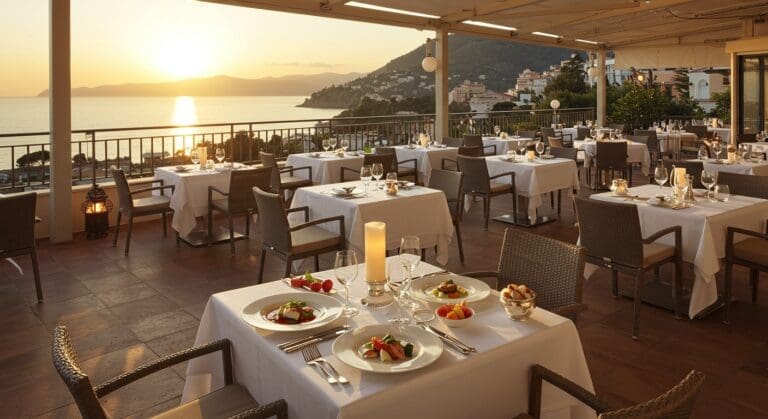
For a genuinely special dinner on the Amalfi Coast, seek out restaurants in Ravello or Sant’Agata sui Due Golfi rather than the busier resort villages – the quality tends to be higher and the atmosphere less performative. Cliff-edge terraces with vertiginous sea views are practically a standard feature of the better establishments in this region, and while that sounds like hyperbole, it genuinely is not.
In Puglia, the best dining experiences are often the least obvious: a masseria kitchen dinner, a table at a small family-run osteria in one of the Valle d’Itria towns, a long lunch that begins at one and ends at four with no clear sense of when the transition from antipasto to dolce occurred. This is not a region that does theatrical fine dining particularly well. It does honest, ingredient-driven cooking extraordinarily well, and for couples who eat together rather than photograph together, that is a considerably better deal.
On the Aeolian Islands, the food takes on a different character – capers, swordfish, sweet Malvasia wine from Salina – and even a simple meal eaten on a terrace above the sea, with a volcano visible on the horizon, acquires a certain weight. The setting does a great deal of the work, and the kitchen rarely lets it down.
Couples Activities: Sailing, Spas, Wine and More
A private sailing charter along the Amalfi Coast or between the Aeolian Islands is, without much competition, the finest thing two people can do together in southern Italy. The coastline that is merely dramatic from the road becomes something else entirely from the water – you can access coves and sea caves that have no road access, anchor off uninhabited stretches of cliff, and swim in water that is absurdly clear. Half-day charters are lovely; full-day charters with a captain and a small crew who produce lunch from somewhere below deck are transformative.
Wine tasting in this part of the world rewards curiosity. Puglia alone produces more wine by volume than Germany, much of it from native grape varieties – Primitivo, Negroamaro, Nero di Troia – that are barely known outside the region. A visit to one of the established cantinas in the Salento peninsula or the Murgia hills, with a knowledgeable guide and a long table under a pergola, makes for an afternoon that is educational in the most pleasurable sense possible.
Cooking classes – and there are excellent ones available from the Amalfi Coast to the tip of Salento – are a genuinely enjoyable couples activity, partly because making fresh pasta together has a pleasantly absurd quality that tends to produce laughter, and partly because you eat what you make at the end, which is a significantly better reward than most activities offer. Look for classes hosted in private homes or working masserie rather than commercial teaching kitchens.
Spa culture in southern Italy has evolved considerably over the past decade. The better hotels and villa complexes in both Campania and Puglia now offer serious wellness facilities – treatments using local ingredients (olive oil, volcanic mud, regional herbs), hydrotherapy pools, and the kind of unstructured time that couples who have been travelling hard genuinely need. A spa day built around doing as little as possible, deliberately, is sometimes the most romantic decision you will make.
The Most Romantic Areas for Accommodation
Where you stay in southern Italy shapes the entire character of the trip, and the choices are usefully distinct. The Amalfi Coast delivers maximum visual impact – staying in or above Positano, Ravello, or the smaller village of Praiano puts you inside a landscape that is borderline hallucinatory in its beauty. The trade-off is access: the road is narrow, the parking essentially fictional, and the steps are genuinely numerous. For couples who want drama and don’t mind a workout, it’s worth every inconvenience.
Puglia has become the sophisticated choice for couples who have done the obvious things and want something more interesting. The Valle d’Itria – the triangle between Alberobello, Martina Franca, and Locorotondo – offers the most character-rich accommodation in the south: restored trulli for two, converted masserie with private pools, old farmhouses surrounded by olive groves that have been transformed into something genuinely extraordinary without losing their essential nature. It is also significantly less crowded than the Amalfi Coast, which for the right couple is not a minor consideration.
Matera is the choice for couples who want to sleep inside a nine-thousand-year-old city, which sounds uncomfortable and is, in fact, the opposite. The boutique cave hotels in the Sassi have been designed with considerable imagination, and waking up to a view over the ravine that has barely changed since the Bronze Age is an experience that even the most jaded traveller tends to find genuinely affecting.
The Aeolian Islands – particularly Panarea and Salina – attract a very specific kind of couple: those who want near-total escape, limited mobile signal, and the kind of beauty that requires no commentary. Getting there takes effort. Once you are there, you will immediately understand why people come back every year.
Proposal-Worthy Spots
Southern Italy has no shortage of locations where a proposal would be received with unanimous enthusiasm by everyone present, including any passing strangers who happened to witness it. The question is less where and more when – time of day and season matter considerably.
The terrace of the Villa Cimbrone in Ravello – the Belvedere dell’Infinito, where a balustrade of marble busts looks out over a drop to the sea so vertiginous it makes the heart contract – at dusk in late September is about as close to a guaranteed yes as geography can provide. It is also, genuinely, one of the most beautiful viewpoints in Europe, which helps.
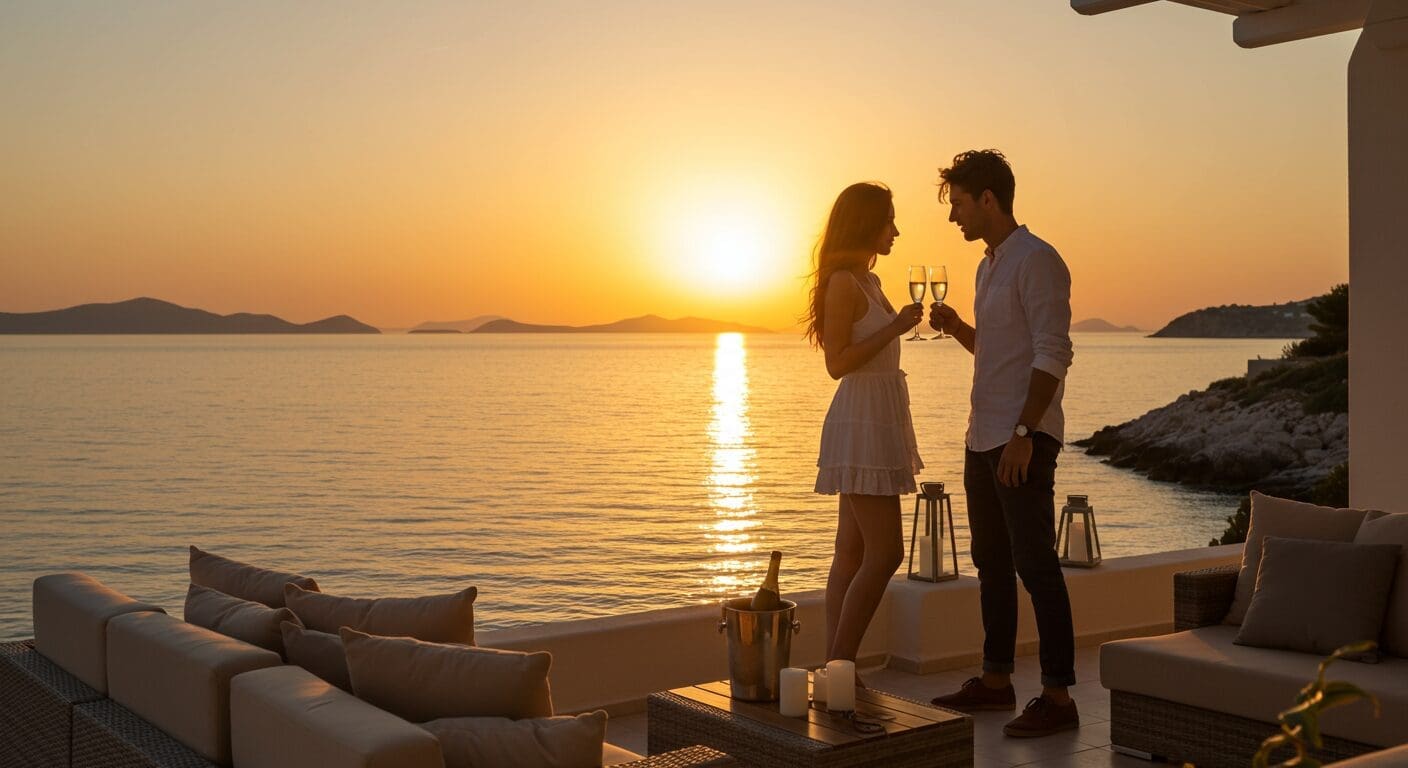
A private boat at sunset off the Faraglioni rocks at Capri, or anchored in a sea cave on the Amalfi Coast, removes the risk of an audience while adding the kind of cinematic backdrop that photographs entirely without effort. The logistics require planning – a good charter company and a captain willing to position the boat correctly – but the result is worth the organisation.
In Puglia, a proposal at a working masseria surrounded by olive groves at golden hour has a completely different quality – earthier, quieter, more private. For couples who find cliff-edge drama slightly exhausting, this is the more intimate option, and not a lesser one.
Matera, at night, from one of the lookout points above the Sassi, is genuinely other-worldly – the ancient city glowing below, the ravine falling away into darkness, the silence broken only by the occasional owl. It is not for everyone. For the right person, it is unforgettable.
Anniversary Ideas
Southern Italy rewards those who return, which makes it unusually well suited to anniversary travel. A couple who spent their honeymoon on the Amalfi Coast might come back for a fifth anniversary and go somewhere they have never been – deep into the Cilento national park, or across to the Aeolian Islands, or down to the Salento coast, where the water takes on Caribbean clarity and the baroque architecture of Lecce makes a strong case for being the most beautiful city in the south. There is always more here than any single trip can contain.
For a milestone anniversary, chartering a private sailing yacht for a week – either along the Campanian coast or between the Aeolian Islands – and combining it with private villa stays at either end creates the kind of itinerary that a couple will still be discussing in twenty years. Add a helicopter transfer from Naples to avoid the coast road and the mood is established before you have even unpacked.
A cooking and wine itinerary built around the food culture of Puglia – visiting producers, eating in family-run restaurants, learning to make orecchiette at a table in someone’s kitchen – is the kind of experience that generates lasting memories rather than simply photographs. It also happens to be very enjoyable. The two things are not unrelated.
Honeymoon Considerations
Southern Italy works exceptionally well as a honeymoon destination, with a few practical considerations that are worth knowing before you arrive full of post-wedding optimism.
The Amalfi Coast in July and August is extremely busy. If your wedding is in the summer and you want the coast, either go in June or wait until September – the difference in crowd levels is considerable, and the early autumn light is arguably more beautiful anyway. Alternatively, base yourself in a private villa above the main road and treat the coast as something you visit rather than live in.
Puglia’s high season is slightly different – the domestic Italian tourism peak runs through August, but the region is large enough that escaping the crowds is straightforward with the right villa. The best time for a Puglian honeymoon is late May through June, or September and October, when the heat is sensible, the harvest season brings the landscape to life, and the tourists have largely departed to somewhere noisier.
A combination itinerary – a few days on the Amalfi Coast, then south to Puglia, possibly ending with a few nights on one of the Aeolian Islands – covers the full range of what southern Italy offers and gives a honeymoon real shape and variety. The internal logistics require planning, but this is precisely what a good villa rental company is for.
Budget for private transfers where possible. The road between Naples airport and Positano, driven by a good driver in a comfortable car while you recover from a wedding and a flight, is an infinitely better introduction to the south than a shared shuttle. Some luxuries are genuinely practical.
For the full picture of what this part of the world offers, our Southern Italy Travel Guide covers the region in comprehensive detail – the best times to visit, how to move between areas, and what to know before you arrive.
The Ultimate Romantic Base: A Private Villa
There is something about a private villa that changes the quality of a trip in ways that are difficult to articulate but immediately felt. No shared breakfast room. No neighbours audible through a wall. No lobby to cross in a dressing gown. Just a private pool, a terrace with a view that belongs entirely to the two of you, a kitchen where someone has left good local wine and olive oil and fruit, and the particular freedom that comes from having somewhere that feels, for a week, genuinely yours.
In southern Italy, this calculates rather nicely. A cliff-top villa above the Amalfi Coast with a private infinity pool and a sea view that changes colour every hour. A restored masseria in Puglia surrounded by centuries-old olive trees, with a kitchen garden and a shaded loggia for long afternoons. A whitewashed property on Salina with a terrace that faces directly toward Stromboli. These are not hypothetical – they exist, they are available, and they are a considerably more romantic option than even the finest hotel, because they give a couple complete privacy, complete flexibility, and the sense of having found something rather than simply booked it.
For honeymooners, anniversary travellers, and couples who simply want to spend a week doing things at their own pace and in their own company, a luxury private villa in Southern Italy is the ultimate romantic base – and the place from which everything else described in this guide becomes not just possible, but genuinely effortless.
When is the best time of year for a romantic trip to southern Italy?
Late May through June and September through October are the ideal windows for most couples. The weather is reliably warm, the light is exceptional, and the summer peak crowds have either not yet arrived or have already left. July and August are beautiful but busy, particularly on the Amalfi Coast – if you’re travelling then, a private villa rather than a hotel makes a significant difference to how the experience feels. For Puglia and the Aeolian Islands, autumn can be particularly magical, with the harvest season adding texture and the sea still warm enough for swimming well into October.
Is southern Italy suitable for a honeymoon, or is it better suited to established couples?
Southern Italy works beautifully as a honeymoon destination – it has the scenery, the food, the pace, and the privacy (particularly in a villa) that a honeymoon requires. It also rewards couples who already know each other well, because the depth of the region – its history, its food culture, its variety of landscapes – gives you something to explore together over multiple visits. It is, in that sense, a destination that can grow with a relationship rather than belonging only to one moment in it. Many couples who honeymoon here find themselves back for a fifth or tenth anniversary, which is perhaps the most honest endorsement possible.
How do you get around southern Italy as a couple without a car?
The honest answer is that a car – or, better, a series of private transfers – makes the trip considerably easier, particularly outside the major towns. The Amalfi Coast road is too narrow and busy to make self-driving particularly relaxing, but a private driver for key journeys (airport arrivals, day trips, restaurant evenings) is a reasonable solution. Puglia has good road connections between its main towns, and a hire car is genuinely useful in the Valle d’Itria. The Aeolian Islands require only ferries and feet once you’ve arrived. Your villa rental company should be able to arrange all necessary transfers and local transport – this is one of the practical advantages of booking through an experienced operator rather than piecing things together independently.