Best Restaurants in Türkiye: Fine Dining, Local Gems & Where to Eat
There is one thing that separates Türkiye from almost every other great food destination on earth, and it is this: the cuisine has never needed to borrow from anywhere. French cooking built an empire on technique. Italian food conquered the world through simplicity. Turkish food did both, quietly, for about three thousand years, without particularly needing your approval. From the smoke-charred kebab houses of Gaziantep to the tasting menus reinterpreting Anatolian grain traditions in Istanbul rooftop restaurants, eating in Türkiye is not a side note to the trip. It is, very often, the point of it.
For the discerning traveller who thinks seriously about where the next meal is coming from – which, if you are reading this, you probably do – Türkiye rewards that instinct at every turn. This guide covers the best restaurants in Türkiye across fine dining, local gems and where to eat everything in between, from the Michelin-starred tables of Istanbul to the charcoal grills of the country’s gastronomic heartland.
The Fine Dining Scene: Michelin Stars and Modern Anatolian Cuisine
Istanbul joined the Michelin universe relatively recently, but it made up for lost time. The city now has a small but genuinely impressive constellation of starred restaurants – and at the very top sits Turk Fatih Tutak, located in the Bomonti neighbourhood inside the Now Bomonti building. It holds not one but two Michelin stars, making it the only two-star restaurant in the country and, rather remarkably, the first Turkish restaurant anywhere in the world to reach that distinction. The chef’s table is the move here: you sit at the pass and watch the kitchen operate in real time, which sounds like the sort of thing that could feel theatrical but is, in practice, genuinely gripping.
The tasting menu threads together the seven geographical regions of Türkiye – each cocktail is crafted to reflect a different region’s produce, which is either a gimmick or a revelation depending on how open you are to being surprised. It is a revelation. The meal concludes with what the restaurant calls the “Sweet End” – a finale that refuses to be predictable, in the way that most Michelin dessert courses quietly do. Book well in advance. Then book further in advance than that.
A different kind of excellence can be found at Neolokal, housed inside the Salt Galata building with floor-to-ceiling windows looking out over the Golden Horn. It holds both a Michelin star and a Michelin Green Star – the latter awarded for its commitment to working with producers and farmers who practise clean, fair and traditional methods. This is not greenwashing dressed in linen napkins; the sourcing philosophy runs deep through every dish. Neolokal is also one of the few tasting-menu restaurants in Istanbul that takes dietary restrictions seriously, offering dedicated vegetarian, gluten-free, lactose-free and nut-free menus. Which is, frankly, more thoughtful than many restaurants in cities that have been doing Michelin for decades.
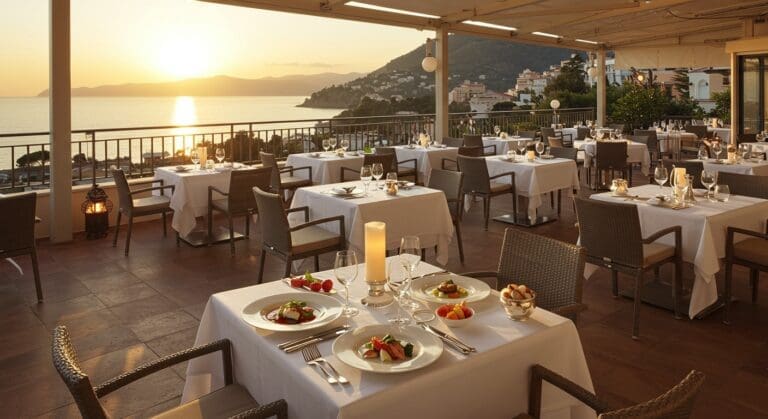
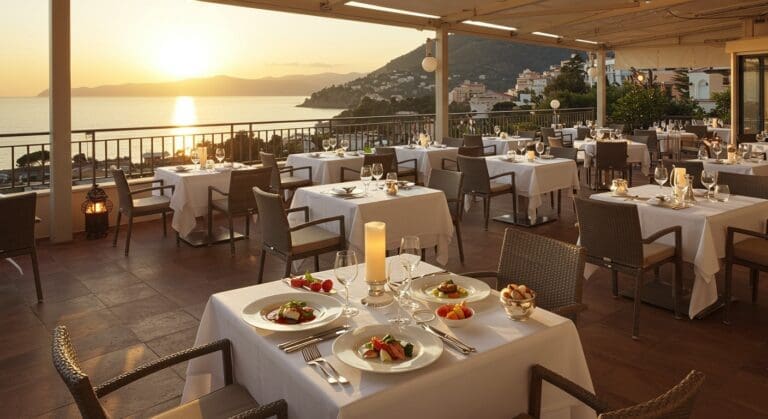
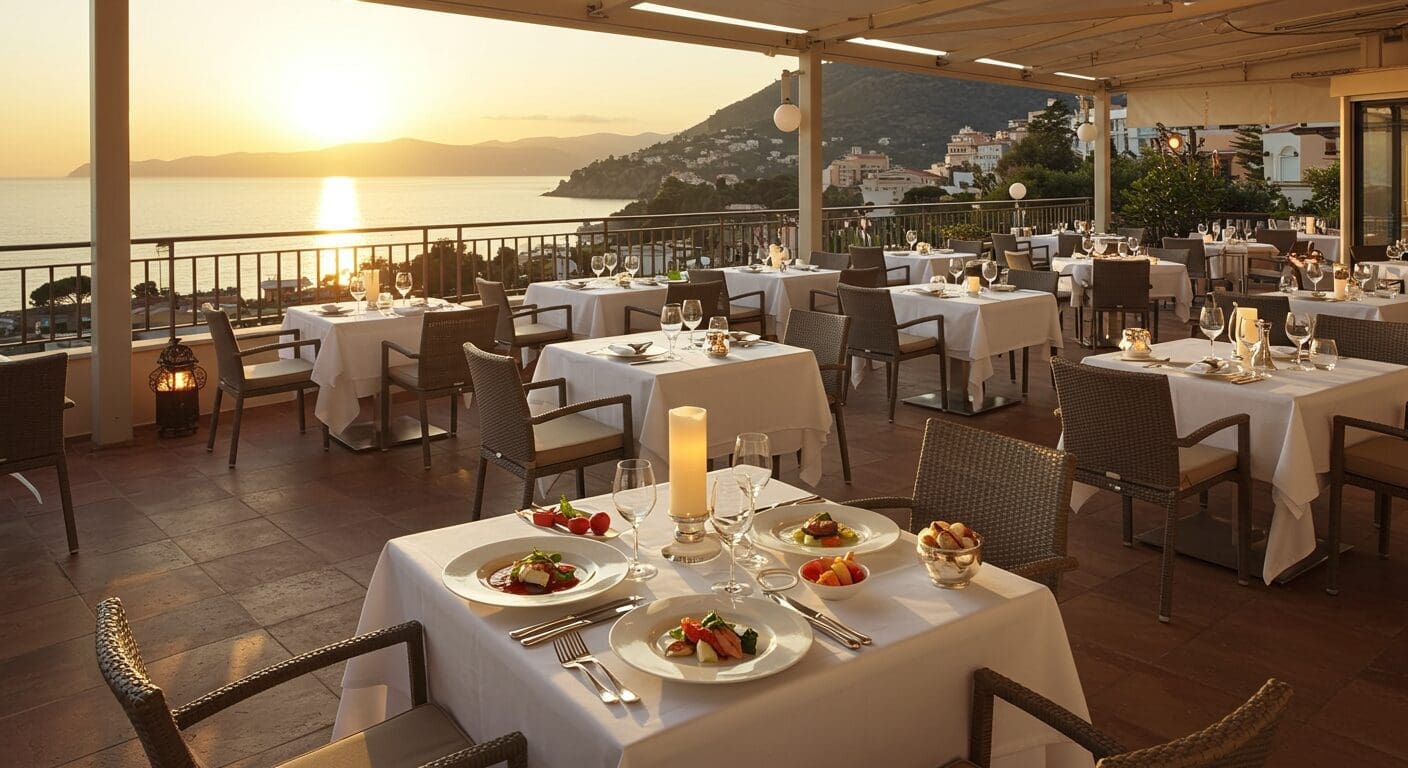
Then there is Mikla, which has earned its place among the city’s most respected tables through sheer consistency. The views of Istanbul at dusk are the kind that make you forget what you were saying mid-sentence – the city spreads out below in terracotta and gold – but the food is serious enough to pull your attention back to the plate. Chef Mehmet Gürs blends Anatolian flavours with Nordic-influenced contemporary technique, resulting in a cuisine that feels genuinely his own rather than borrowed from a culinary trend. If you visit only one high-end restaurant in Istanbul that is not a tasting menu, make it this one.
Local Gems: Where Locals Actually Eat
The most important thing to understand about eating in Türkiye is that the locals are not keeping secrets from you out of coyness. They are keeping secrets from you because the best places seat forty people, have no website, and do not need one. Finding them requires either local knowledge, considerable luck, or the kind of instinct that comes from wandering a neighbourhood with no particular plan and following your nose.
In Istanbul, that instinct will eventually lead you past the Blue Mosque and Hagia Sophia – where the tourist density reaches its peak and the restaurants nearest to both are, let us say, variable in quality – and onto Divan Yolu Caddesi, where Tarihi Sultanahmet Köftecisi Selim Usta has been serving its legendary köfte since 1920. A century of meatballs is not nothing. The izgara köfte here are grilled over charcoal until they are smoky, springy and unapologetically simple, served with white beans and a side of bread. It is a two-hour queue at peak times. It is worth it. Think of it as part of the experience – you are essentially eating at a culinary monument.
Further afield from Istanbul, the city of Gaziantep – a UNESCO Creative City of Gastronomy and the kind of place that food writers describe with a reverence usually reserved for Lyon or Bologna – operates on an entirely different register. Halil Usta, founded in 1972, is the institution to know. The yarım simit kebabı is the order, or the rare küşleme, made from fatless lamb neck cuts grilled over charcoal in the traditional manner. The baklava is made with natural, local ingredients and is nothing like the sugar-saturated version you have eaten elsewhere. Service is fast, portions are generous, and the prices are quietly embarrassing given the quality. It sits conveniently close to the Zeugma Mosaic Museum, should you wish to justify the visit culturally as well as gastronomically.
Beach Clubs and Casual Dining
Along the Aegean and Mediterranean coasts – the stretch of turquoise shoreline running through Bodrum, Göcek, Marmaris and Kaş – the dining landscape shifts to something looser and more sun-bleached. Beach clubs here operate on a sliding scale from the conspicuously chic to the genuinely relaxed, and both have their pleasures depending on what kind of afternoon you are having.
The better beach club restaurants along the Bodrum peninsula tend to serve long, slow lunches of grilled sea bass, octopus braised in olive oil and tomato, platters of white cheese with watermelon, and cold ayran in the afternoon heat. The quality of the fish is almost unfairly good when you are sitting two hundred metres from where it was caught. Meyhanes – the Turkish equivalent of a Greek taverna, though any Greek will tell you that comparison is fighting talk – are the social institution of the Turkish coast, built around long tables, many small plates, and raki poured generously over ice.
In the beach towns, look for restaurants operating off handwritten daily menus that change with what came off the boats that morning. If the menu looks the same every day, keep walking.
Food Markets and Street Food
The best way to understand what Turkish cooking is actually built on is to spend an hour in a proper market before you eat anything else. Istanbul’s Egyptian Spice Bazaar (the Mısır Çarşısı) in Eminönü is the obvious starting point – though it has become tourist-facing enough that the serious spice shopping now happens in the surrounding streets. The real discovery is in neighbourhood bazaars: the Kadıköy market on the Asian side of Istanbul is a working, breathing food district where fishmongers, cheese sellers, pickle stands and pastry shops operate in cheerful proximity.
Street food in Türkiye deserves its own extended essay. Simit – the sesame-encrusted ring bread sold from wheeled carts across every city – costs almost nothing and is best eaten warm in the early morning. Balık ekmek (fresh fish sandwiched in bread) from the boats moored at the Galata Bridge is a cliché that became a cliché for very good reasons. And midye dolma – mussels stuffed with spiced rice and sold by the shell from street vendors along the Bosphorus – is the kind of thing that has no business being as good as it is.
What to Order: The Essential Dishes
You could spend three weeks in Türkiye eating seriously and still not exhaust the regional variations worth knowing. A short, useful shortlist: meze to start, always – the spreads of hummus, cacık, patlıcan salatası (smoky aubergine), muhammara (walnut and red pepper paste) and stuffed vine leaves that begin a proper Turkish meal should be treated as a course in their own right, not a warm-up act. Lahmacun – the thin, flatbread topped with spiced minced meat – is better than most pizza you have eaten, though this is not a comparison Turkish cooks particularly need you to make. Menemen, the egg dish cooked with tomatoes, peppers and butter, is the correct answer to breakfast.
For meat, the variations on the kebab are too numerous to list exhaustively, but the Adana kebab (spiced and hand-pressed onto a flat skewer) and the Iskender (doner laid over bread and drenched in tomato sauce and browned butter) are the two most essential. In Gaziantep, eat the küşleme at Halil Usta and nothing more. It requires no accompaniment.
Wine, Raki and What to Drink
Türkiye has been producing wine for approximately six thousand years, a fact that the international wine world only recently found interesting. Domestic varieties – particularly Öküzgözü and Boğazkere from Eastern Anatolia, and Narince for whites – are worth seeking out and are rarely exported in any meaningful volume. The wine lists at Istanbul’s finer restaurants have grown considerably more serious over the past decade, and a sommelier worth their salt will steer you toward bottles you will not find at home.
Raki, the anise-flavoured spirit that turns milky white when water is added, is the national drink and the companion to meyhane dining. It is drunk slowly, over ice, alongside food – never as a shot. The ritual matters. Şerefe, they say when they raise the glass, which means “to honour.” It is a pleasanter toast than most.
Non-alcoholic options are genuinely excellent. Turkish tea, served in its tulip-shaped glass, is drunk at all hours. Ayran – the cold, salted yoghurt drink – is the natural partner to grilled meat and is wildly underrated. Şalgam suyu, a fermented turnip juice from the south, is an acquired taste that is worth acquiring.
Reservation Tips and Practical Advice
For Istanbul’s Michelin-starred restaurants, the general rule is: book as early as possible and then book earlier than you think necessary. Turk Fatih Tutak in particular operates with a tasting menu and limited covers – the chef’s table has obvious appeal and limited availability. Most top Istanbul restaurants accept reservations online, though a follow-up confirmation call is advisable.
Outside Istanbul, in coastal resorts during July and August, the best restaurants fill quickly – particularly those in Bodrum with any kind of sea view. Booking three to four weeks ahead for high season dinner reservations is not overcaution; it is basic strategy. Many local meyhanes and köfte houses do not take reservations at all. For these, the approach is to arrive early, accept the queue cheerfully, and use the waiting time to decide what you are ordering before you sit down. Dithering at a busy köfte counter is considered, at best, impolite.
Tipping is expected in restaurants at roughly ten percent, though many upscale establishments now include a service charge. Checking the bill is not rudeness – it is due diligence.
When it comes to combining great food with exceptional comfort, few arrangements improve on a luxury villa in Türkiye with a private chef option – allowing you to experience the country’s extraordinary culinary tradition on your own terms, in your own kitchen, with the market ingredients of the morning turned into the dinner of the evening. For more on planning your time in the country, the full Türkiye Travel Guide covers everything from the coast to Cappadocia.