Türkiye Travel Guide: Where to Stay, Eat & Explore in Luxury
The tea arrives before you ask for it. That is perhaps the first thing you need to understand about Türkiye. You sit down somewhere – a carpet shop in Istanbul’s Grand Bazaar, a harbour-side cafe in Bodrum, a stone terrace in Cappadocia as the sun drops behind the valleys – and a small tulip-shaped glass of çay appears as if by quiet magic. It is amber, strong, and served with exactly two cubes of sugar on the saucer. Whether you take sugar is your business. Whether you drink the tea is not really a question. This is a country that runs on hospitality the way other countries run on bureaucracy, and the tea is merely the opening statement.
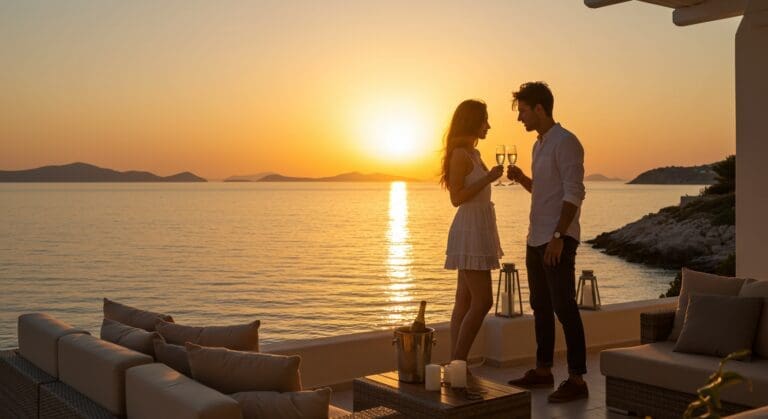
Türkiye is not a destination that fits neatly into a single category, which is precisely why it attracts such a varied cast of travellers – and why it rewards them all differently. Couples marking a significant anniversary find themselves undone by the romanticism of the Aegean coast, where whitewashed villages cling to hillsides above water that shifts between green and blue depending on the hour. Families seeking genuine privacy – the kind that a hotel with 300 rooms and a poolside DJ cannot provide – discover that a luxury villa in Türkiye with its own pool, its own stretch of garden, and its own kitchen is not a luxury so much as a revelation. Groups of friends celebrating milestone birthdays or simply escaping the noise of ordinary life find a country that meets them at exactly the right volume. Wellness-focused travellers come for the hammams and the mountains and leave with something they struggle to name. And remote workers, increasingly making their office wherever the Wi-Fi is reliable and the view is worth the commute, have quietly colonised the hill towns of the Turquoise Coast with their laptops and their reasonable satisfaction about life choices. Whoever you are, Türkiye has a way of making you feel it was expecting you.
Getting Here Is Easier Than It Has Any Right to Be
For a country of Türkiye’s size – it bridges two continents, contains multitudes, and takes roughly 24 hours to cross by car – the logistics of arrival are pleasingly uncomplicated. Istanbul Airport (IST) is one of the largest in the world and operates direct flights from virtually every major European city, as well as long-haul connections from North America, the Gulf, and beyond. Turkish Airlines, which has something of a cult following among frequent fliers for its in-flight catering, operates an impressively comprehensive network. From London, you are looking at roughly three and a half to four hours in the air. From New York, Turkish Airlines flies direct to Istanbul in around ten to eleven hours.
For those heading straight to the coast rather than the city, Bodrum-Milas Airport serves the southwestern peninsula, Dalaman covers the Turquoise Coast including Göcek, Fethiye and Marmaris, and Antalya is the gateway to the Lycian Way and the broader Mediterranean region. Cappadocia is served by both Kayseri and Nevşehir airports, with connections through Istanbul. Transfers from these airports to a private villa can be arranged with dedicated drivers – a significant improvement on a shared shuttle that stops at six resorts before yours.
Getting around within Türkiye is a study in contrasts. The intercity bus network is genuinely excellent, modern, and absurdly cheap – a national point of pride. Domestic flights are frequent and affordable. But for a luxury villa holiday where flexibility matters, a private car or driver is worth every lira. Roads in coastal areas are largely good, though the mountain routes can be dramatic in both the scenic and the white-knuckle sense. Turkish drivers operate with a certain creative confidence that is worth being aware of.
A Food Culture That Has Been Hiding in Plain Sight
Fine Dining
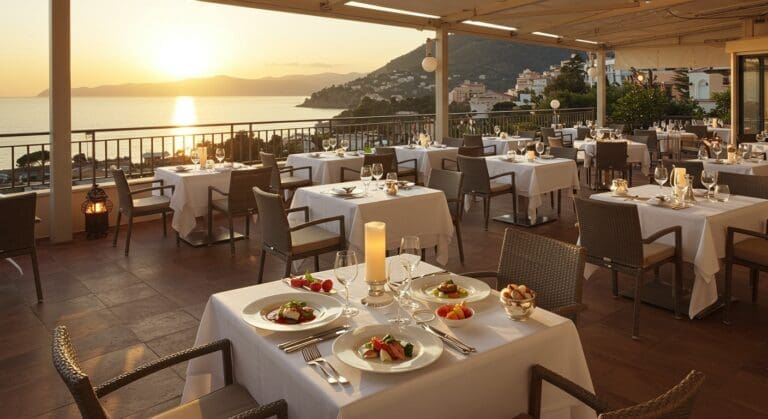
For years, the world’s fine dining conversation happened elsewhere while Türkiye quietly got on with having one of the most sophisticated culinary traditions on the planet. That has changed. The breakthrough moment came with Chef Fatih Tutak’s eponymous restaurant Turk Fatih Tutak in Istanbul’s Bomonti neighbourhood – the world’s first and only two-Michelin-Star Turkish restaurant and a World’s 50 Best Discovery, no less. The tasting menu here is a considered journey through Turkish culinary history, reimagined with technical precision and real emotional intelligence. The cocktails are crafted from products across all seven of Türkiye’s geographical regions. Dinner ends with a “Sweet End” – a surprise dessert experience that you will not see coming and will not stop thinking about. This is Turkish cuisine as it deserves to be understood: complex, deeply rooted, and more than capable of holding its own against any kitchen in the world.
Neolokal, housed inside the landmark Salt Galata building in Istanbul, holds both a Michelin Star and a Green Star – the only restaurant in Türkiye to hold both. The green designation reflects a serious commitment to working with producers who practice clean, fair, and traditional agricultural methods. Floor-to-ceiling windows frame views of the Golden Horn that are frankly distracting. The tasting-menu format is supplemented by genuinely thoughtful options for those with dietary restrictions – a vegetarian tasting menu and a gluten, lactose and nut-free menu available – which is rarer in fine dining than it should be. Then there is Mikla, which has long been the reliable pillar of Istanbul’s gastronomic scene – Anatolian cuisine refined through a contemporary lens, with rooftop views that make even the bread basket feel ceremonial.
Where the Locals Eat
The places that matter most in Türkiye are rarely the ones with a sign outside. They are the meyhane down a side street in Istanbul’s Beyoğlu district where the meze arrives in relays and the rakı flows and someone eventually starts singing. They are the breakfast tables laden with olives, cheeses, tomatoes, eggs, and honey that appear in every decent Turkish home and many of the better pensions. Turkish breakfast – kahvaltı – is not a meal, it is a philosophy. Budget at least two hours and cancel whatever you had planned afterwards.
For something more specific, Gaziantep – Türkiye’s answer to the UNESCO Creative City of Gastronomy designation, and one it wears with justified pride – is home to Halil Usta, a restaurant that has been operating since 1972 and which makes the case for traditional craft as compellingly as any tasting menu. The yarım simit kebabı and küşleme (a fatless lamb neck cut, grilled over charcoal) are the reasons people travel specifically to eat here. The locally made baklava finishes the meal with the kind of sweetness that makes you understand why Gaziantep considers Istanbul’s version merely a rumour of the real thing.
Hidden Gems Worth Seeking Out
Tarihi Sultanahmet Koftecisi Selim Usta has been serving izgara köfte – grilled meatballs, perfected and unapologised for – since 1920. It sits close to Hagia Sophia and the Blue Mosque, which means it should by rights have descended into tourist-trap territory decades ago. It has not. The köfte remain exactly what they should be: chargrilled, simply seasoned, served with white beans and pickled chillies, eaten fast, forgotten slowly. On the coast, look for the family-run fish restaurants that open only when the day’s catch is good enough to serve. There is no menu. There is no reservation system. There is just someone’s grandmother deciding what you’re eating. This is the correct way to have lunch.
A Country That Cannot Be Summarised on a Map
Türkiye spans approximately 783,000 square kilometres – larger than France and Germany combined – and the geography reflects that ambition. Istanbul straddles two continents and rewards weeks of wandering: the Bosphorus, the old city with its minarets and markets, the contemporary neighbourhoods of Karaköy and Nisantasi where the city’s creative class has set up shop. The west and southwest coasts – the Aegean and Mediterranean shores that form the Turquoise Coast – are what most European visitors picture when they think of Türkiye: deep blue bays, whitewashed hilltop villages, ancient ruins quietly subsiding into the hillside.
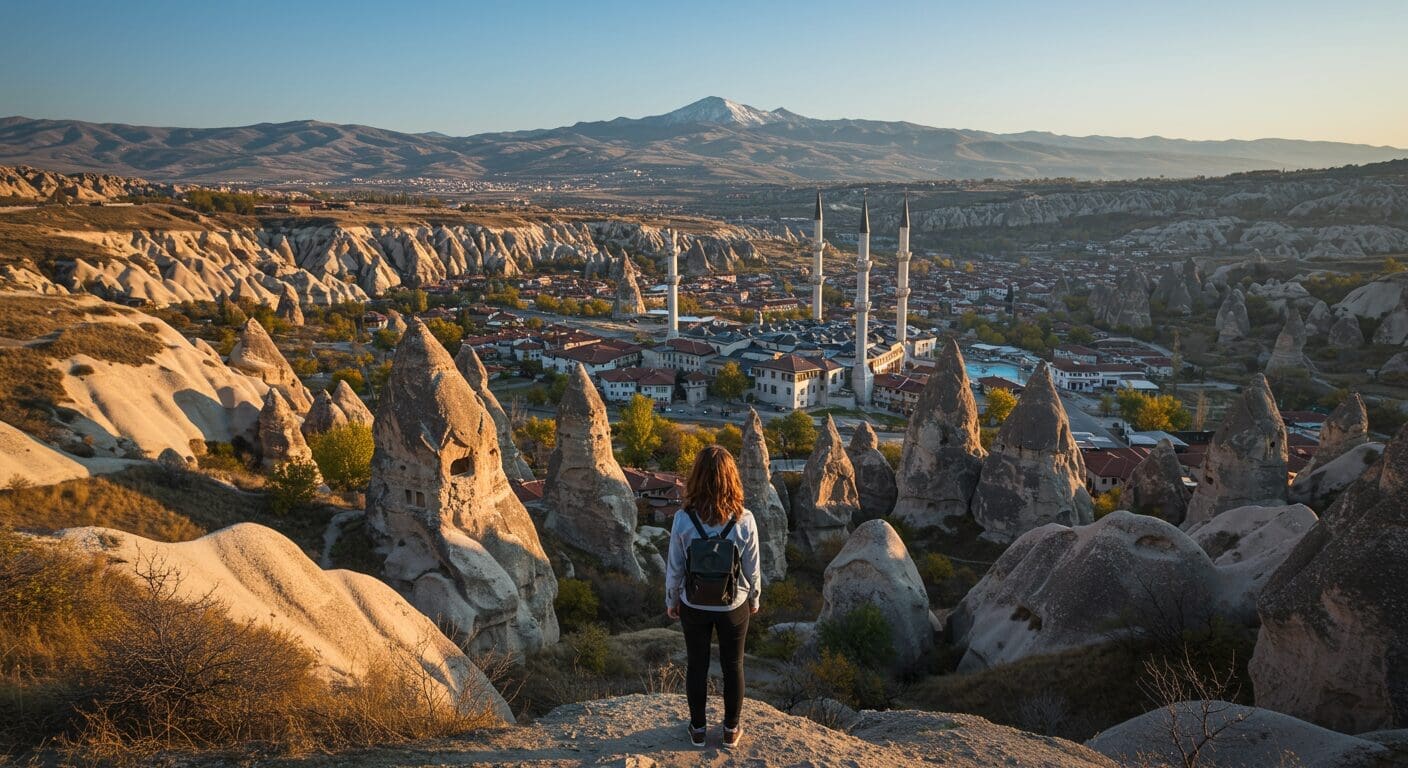
Bodrum peninsula has long attracted the discerning end of the European visitor market, and for good reason – the combination of cultural texture (the ancient Mausoleum of Halicarnassus, the Crusader castle in the harbour), sophisticated dining, and some of the most architecturally considered luxury villas in Türkiye makes it a destination that holds up to repeated visits. Fethiye and the surrounding valleys offer a different mood: wilder, greener, with the Ölüdeniz lagoon providing one of the more photographed coastlines in the Mediterranean. And Cappadocia, in the central Anatolian plateau, is simply unlike anything else on earth – a landscape of volcanic rock formations, underground cities, cave hotels, and dawn balloon flights that make you briefly question whether you have accidentally wandered onto a different planet.
Further east, the country opens into something altogether less visited and more rewarding for it. The Black Sea coast, with its tea plantations and Byzantine monasteries. The southeast, anchored by Gaziantep and Şanlıurfa, where the layers of history run so deep that walking through a market feels like wading through several civilisations at once. Türkiye is not one place. It is many places sharing a name and a remarkable tea habit.
What to Do With Your Days (The List Is Long)
Türkiye’s activity range is absurdly generous. In Cappadocia, the hot air balloon ride at dawn is one of those experiences that earns its reputation – the fairy chimneys rising from the valleys below, the sky filling with dozens of vivid, enormous balloons, the silence broken only by the occasional burst of the burner. It is surreal in the best possible sense, and the photographs you take will look like someone else took them somewhere fictional. Book early, book with a reputable operator, and accept that you will need to wake up at an hour that would normally be unacceptable.
On the Aegean and Mediterranean coasts, gulet cruising – aboard traditional wooden sailing boats – offers a form of slow travel that the modern world should recommend more aggressively. The Blue Voyage (Mavi Yolculuk) route through the bays between Bodrum and Fethiye remains one of the finest itineraries in the Mediterranean. In Istanbul, the experience is almost entirely about wandering: the Grand Bazaar (1,200 shops, and it feels like it), the Spice Bazaar, the Bosphorus ferry between continents for less than a pound, the rooftop bars at dusk, the mosques at prayer time when the call echoes across the city and everything briefly stops.
Cultural day trips reveal layers at almost every turn. Ephesus, near Selçuk, is one of the best-preserved Roman cities in the world and significantly more impressive than your school textbook suggested. Pamukkale’s thermal terraces – white calcium formations cascading down a hillside above the ancient city of Hierapolis – belong on any itinerary that extends beyond the coast. The Lycian Way, a 540-kilometre marked hiking trail along the southwestern coast, is considered one of the world’s great long-distance walks. You do not have to walk all of it. Nobody actually walks all of it.
Adventure at Altitude and Depth
For those who measure holidays by adrenaline rather than sunset colours, Türkiye delivers on multiple fronts. The waters along the Aegean and Mediterranean coastlines are warm, clear, and populated with the kind of marine life that makes diving worthwhile. The Bozburun Peninsula, Kaş, and the sunken city of Kekova (where you can snorkel directly over submerged Byzantine ruins, which is a sentence that should not require further embellishment) are among the top dive and snorkel sites. Kaş, in particular, has a small but serious dive community and excellent operators.
Kitesurfing has found a committed home at Akyaka, on the Gulf of Gökova, where the reliable thermal winds funnel down the valley in the afternoon with the sort of consistency that makes instructors very happy and beginners briefly airborne. Alaçatı, on the Çeşme peninsula near Izmir, is another kitesurfing and windsurfing hub with a chic side village that would not look out of place in the Greek islands. (This is not a coincidence. The geography doesn’t care about borders.)
In the interior, the mountain ranges – particularly the Taurus Mountains running along the southern coast – offer serious trekking, rock climbing, and in winter, skiing. Uludağ, near Bursa, is the most accessible ski resort from Istanbul. Palandöken in the east gets genuinely deep snow and significantly fewer people. White-water rafting on the Köprülü Canyon near Antalya offers a half-day of foam and mild panic that most participants describe as excellent.
Why Families Should Pay Attention
Türkiye has a deep cultural affection for children that goes well beyond the performative. Children are welcomed in restaurants at all hours, fussed over by strangers in markets, and generally treated as full human beings rather than inconveniences that adults have unfortunately brought along. This creates a baseline warmth that families notice immediately and appreciate throughout.
The practical case for a family luxury holiday in Türkiye is equally strong. A private villa with a pool removes the daily choreography of hotel dining times, shared beach space, and the particular misery of four people sharing one bathroom. Children can be in the pool at seven in the morning if they choose. Teenagers can disappear to a separate terrace. Parents can have a drink at noon without performing contentment for strangers. The space, the privacy, and the flexibility that a well-appointed villa provides are especially meaningful when you are travelling with people of different ages and different ideas about how a good day should be structured.
Many of the best luxury villas in Türkiye are positioned within easy reach of beaches that are calm, shallow, and child-appropriate – the bays of the Bodrum peninsula, the sheltered coves around Göcek, the lagoon at Ölüdeniz. The combination of safe swimming, easy access to ancient ruins and boat trips, excellent food, and genuinely warm local culture makes a luxury holiday in Türkiye with children less a compromise and more an upgrade on most alternatives.
Where Civilisations Came to Make Their Point
The history embedded in Turkish soil is almost unfair in its density. This is a country where you can visit Göbekli Tepe – currently regarded as the world’s oldest known temple complex, predating Stonehenge by roughly seven thousand years – and then drive four hours to a beach. The layers of civilisation that have occupied this land include the Hittites, the Phrygians, the Greeks, the Romans, the Byzantines, and the Ottomans, each leaving architectural evidence that ranges from modest to staggering.
Istanbul’s Hagia Sophia encapsulates this compression of history in a single building: constructed as a Byzantine cathedral in 537 AD, converted to a mosque after the Ottoman conquest in 1453, turned into a museum in 1934, and reopened as a mosque in 2020. Standing beneath its dome, you are simultaneously in several centuries at once. The Topkapi Palace, which served as the administrative heart of the Ottoman Empire for four centuries, contains rooms of extraordinary craftsmanship and the sort of treasury that recalibrates your sense of what wealth looked like at its most concentrated.
Local traditions hold firm alongside all of this. The hammam – Turkish bath – remains a genuinely living cultural institution rather than a museum piece. Finding a good traditional hammam (the Çemberlitaş or Süleymaniye in Istanbul, for instance) and submitting to the ministrations of a tellak (the bath attendant) is simultaneously relaxing and slightly alarming, and you will leave with skin you had forgotten you possessed. Ramadan transforms city evenings across the country. Local festivals – Kirkpinar oil wrestling in Edirne, the Mesir Paste Festival in Manisa, the whirling dervish ceremonies of Konya – offer windows into a cultural life that has very little interest in performing itself for visitors.
Shopping: What to Buy and What to Leave on the Shelf
Türkiye is an excellent country in which to shop, provided you arrive with some sense of what you are looking for and a willingness to engage with the process. The Grand Bazaar in Istanbul is both genuinely historic (operating since 1461, 61 covered streets, somewhere in the region of four thousand shops) and a full-contact experience that requires neither introversion nor a small budget. It rewards patience and the ability to say no with warmth rather than aggression.
What is actually worth bringing home: Turkish carpets and kilims, which range from tourist-grade synthetic to genuine works of art woven over months by skilled craftspeople – the difference is visible to any eye and worth the time it takes to learn. Hand-painted ceramics from the Çini tradition of Kütahya and Iznik. Spices from the Spice Bazaar, where the colours alone justify the visit. Natural olive oil soaps, particularly those from Antakya. Meerschaum pipes from Eskişehir. Turkish towels (peshtemals) – lighter, more absorbent, and more elegantly designed than anything you own at home.
The coastal resort towns have their own retail ecosystems – Bodrum’s waterfront shopping is genuinely stylish by the standards of beach-town retail, with a mix of local designers and Turkish jewellery that goes well beyond trinket territory. Alaçatı’s boutique-lined stone streets reward slow browsing. What to leave on the shelf: the leather jackets aggressively promoted to every tourist who makes eye contact in Istanbul. Just leave those.
The Practical Matters (Worth Knowing Before You Go)
The currency is the Turkish lira (TRY). The exchange rate has shifted significantly in recent years, which has made Türkiye exceptional value for visitors holding euros, pounds sterling, or US dollars. What would be a very good meal in Europe costs a fraction of the equivalent here, and accommodation, activities, and transport follow the same pattern. This does not mean Türkiye is cheap – the best luxury villas in Türkiye and the finest restaurants command proper prices – but it does mean you tend to get more than you expect for what you spend.
The language is Turkish, which has no particularly close relatives in western Europe and will not yield to anyone who speaks reasonable Italian and hopes for the best. That said, English is widely spoken in tourist areas, hotels, and restaurants. Learning a handful of phrases – merhaba (hello), teşekkür ederim (thank you), lütfen (please) – is received with genuine pleasure and mild surprise.
Tipping is expected in restaurants (ten percent is standard, fifteen percent in finer establishments), for taxi drivers, and for guides. It is done in cash, at the table or in person, and is important to the people who receive it. Dress conservatively when visiting mosques – shoulders and knees covered, shoes removed at the entrance. Women will need a headscarf, which can usually be borrowed from a box near the door. Safety is generally excellent in the main tourist regions. Standard urban awareness applies in major cities, as it does everywhere.
The best time to visit depends heavily on where you are going. Istanbul is a year-round city – spring (April to June) and autumn (September to November) are the sweet spots, with warm days and manageable crowds. The Aegean and Mediterranean coasts peak in July and August – hot, busy, and fully operational. May, June and September offer the same sea temperatures with significantly fewer people and more comfortable air temperatures. Cappadocia is magnificent in spring and autumn, and has a particular magic under winter snow if you can cope with cold mornings and a balloon flight at near-freezing temperatures. Gaziantep and the southeast are best visited from October to April, when the summer heat has relented.
The Villa Argument: Persuasive, But We’ll Let the Fact Do the Talking
There is a version of a Turkish holiday that involves checking into a large resort hotel, sharing a poolside that resembles a moderate music festival, eating from a buffet of industrially proportioned ambiguity, and returning home with a tan and a mild sense that you have visited the idea of Türkiye rather than the place itself. Then there is the other version.
A luxury villa in Türkiye offers something that no hotel, regardless of its star rating, can replicate: the feeling that you are actually living somewhere rather than staying there. The pool is yours, which means it is quiet at the hour you choose, occupied by the people you actually like, and available at seven in the morning without guilt. The kitchen – in the hands of a private chef if that is what you want, or your own if that is your preference – fills with the smell of Turkish bread and good coffee. The terrace is where dinner happens when the evening is warm enough, which in Türkiye is most evenings from May to October.
For families, the spatial logic of a villa is simply better: children can be noisy without being a problem; teenagers can have their own room; grandparents can read on a shaded terrace while the pool is occupied by the next generation. For groups of friends, the shared house dynamic is infinitely more convivial than a corridor of hotel rooms. For couples on a milestone trip, a clifftop villa above the Aegean with a private infinity pool delivers a form of romance that a hotel room, however well-appointed, simply cannot match.
The concierge possibilities in a well-managed Turkish villa are considerable: a private chef sourcing produce from the morning market, a boat arranged for the day, a hammam experience booked in advance, a guide who actually knows the ruins rather than reciting from a laminated card. For remote workers, the combination of reliable high-speed internet (many properties now offer Starlink-grade connectivity), a proper workspace, and a view that makes the working day feel unreasonably pleasant has created a category of guest who arrives for two weeks and starts quietly researching longer stays. Wellness guests find the combination of private pools, space to move, clean air, and the natural pace of Turkish coastal life does what no spa brochure can quite describe.
Excellence Luxury Villas offers an extensive portfolio of private villa rentals in Türkiye – from sleek modernist properties on the Bodrum peninsula to traditional stone houses in the olive groves above the Turquoise Coast, from Cappadocian cave dwellings to expansive seafront estates with direct water access. Whatever your version of the perfect Turkish holiday looks like, it almost certainly comes with a private pool and a terrace where the çay arrives before you ask.
More Türkiye Travel Guides
- Best Restaurants in Türkiye: Fine Dining, Local Gems & Where to Eat
- Türkiye Food & Wine Guide: Local Cuisine, Markets & Wine Estates
- Türkiye with Kids: The Ultimate Family Holiday Guide
- Best Time to Visit Türkiye: Month by Month Weather, Crowds & Tips
- Türkiye Luxury Itinerary: The Perfect 7-Day Guide
- Romantic Türkiye: The Ultimate Couples & Honeymoon Guide
What is the best time to visit Türkiye?
It depends where you are going. Istanbul is excellent year-round, with April to June and September to November being the most comfortable months – warm, manageable crowds, and all the cultural institutions fully open. The Aegean and Mediterranean coasts are at their most sociable and fully operational from June to September, with July and August being peak season – hot, busy, and brilliant if that is what you want. May, June, and September offer warm swimming temperatures with fewer people. Cappadocia is special in spring and autumn and genuinely atmospheric under winter snow. The Gaziantep region and the southeast are best visited October to April. If your priority is a luxury villa holiday with private pool and access to the sea, May to June and September to October are the sweet spots – warm enough for everything, quiet enough to enjoy it.
How do I get to Türkiye?
Istanbul Airport (IST) is a major international hub with direct flights from virtually every significant European city and long-haul connections worldwide. Turkish Airlines operates one of the most comprehensive networks in the world. From London, the flight to Istanbul takes approximately three and a half to four hours. For those heading directly to the Aegean or Mediterranean coast, Bodrum-Milas Airport serves the Bodrum peninsula, Dalaman covers Fethiye, Göcek and the Turquoise Coast, and Antalya is the gateway to the Lycian Coast and surrounding region. Cappadocia is served by Kayseri and Nevşehir airports via connections through Istanbul. Private airport transfers to a villa can be arranged in advance – considerably more civilised than a shared shuttle that stops at every resort between the runway and your destination.
Is Türkiye good for families?
Genuinely yes, and for reasons that go beyond the obvious. Turkish culture has a deep and unperformative warmth towards children – they are welcomed in restaurants at all hours and fussed over by locals in markets and streets. The practical environment is also favourable: calm, shallow bays suited to young swimmers along the Aegean and Mediterranean coasts, abundant boat trips and cultural day trips accessible to children, excellent food that tends to accommodate even selective eaters, and a generally safe and welcoming atmosphere. A private villa with its own pool removes the logistical friction of a hotel stay with children – morning pool access, flexible mealtimes, separate spaces for different ages, and the freedom to structure the day around the family rather than the hotel’s schedule. For multi-generational groups in particular, the combination of space, privacy, and the warmth of Turkish hospitality makes this a destination that works for everyone simultaneously.
Why rent a luxury villa in Türkiye?
The short answer: space, privacy, and a pool that belongs entirely to you. The longer answer involves the difference between staying somewhere and actually living somewhere – even briefly. A well-chosen luxury villa in Türkiye provides a private pool, generous indoor and outdoor living space, a kitchen that can be used independently or by a private chef, and a concierge infrastructure that can arrange everything from a gulet for the day to a hammam booking in the nearest town. The staff-to-guest ratio in a private villa is simply incomparable to any hotel. Families can establish their own rhythm. Couples have genuine seclusion. Groups have room to gather or disperse according to mood. And the views from the best villas on the Turquoise Coast or the Bodrum peninsula are the kind that make you look up from whatever you are doing and remember where you are.
Are there private villas in Türkiye suitable for large groups or multi-generational families?
Yes, and in considerable number. The Turkish villa market is well-developed at the larger end of the scale, with properties sleeping anywhere from eight to twenty-plus guests across multiple bedrooms, often with separate wings or guest houses that provide privacy within a shared property. Many larger villas include more than one pool, generous outdoor entertaining areas with covered dining terraces, fully equipped kitchens, and the option to engage staff including a chef, housekeepers, and a dedicated villa manager. For multi-generational groups where grandparents, parents, and children are all in the same party, this kind of spatial flexibility makes the difference between a holiday everyone genuinely enjoys and one that requires careful management. Excellence Luxury Villas can advise on properties specifically suited to large or multi-generational groups throughout Türkiye.
Can I find a luxury villa in Türkiye with good internet for remote working?
Increasingly, yes. High-speed fibre broadband is standard in most well-appointed villas in the main resort areas, and a growing number of properties in more remote locations now offer Starlink satellite connectivity, which has been something of a game-changer for guests working from coastal and rural properties. When booking a villa for remote working purposes, it is worth specifying this requirement explicitly so that connectivity can be verified in advance – particularly for properties on more secluded peninsulas or hillside locations. Many luxury villas also have dedicated desk spaces or shaded outdoor working areas, and the combination of a reliable connection, a spectacular view, and the freedom to close the laptop at noon and go swimming is exactly as good as it sounds.
What makes Türkiye a good destination for a wellness retreat?
Several things, and they layer well together. The hammam tradition – properly experienced in a historic bath house – is one of the most effective forms of enforced relaxation available anywhere in the world. The natural environment offers outdoor swimming, hiking (the Lycian Way is one of the world’s great long-distance trails), yoga on clifftop terraces, and a pace of life that slows down without requiring you to do anything in particular. A private luxury villa adds its own wellness infrastructure: a private pool for morning swims, outdoor spaces for yoga or meditation, the option of a private chef preparing clean, produce-led Turkish cuisine, and the absence of any obligation to be sociable with strangers. Some properties include gyms, hammam facilities, and dedicated spa treatment rooms. The Mediterranean climate – long, warm, dry summers and mild shoulder seasons – provides the kind of sustained sunshine that is itself a form of therapy.